EU Industry Commissioner Stéphane Séjourné on Friday called on EU businesses to diversify their suppliers as trade tensions with China escalate.
The comments come at a time when Beijing’ has repeatedly made threats against AB’ in recent weeks, and Brussels is trying to strengthen ’'s legislation against its Asian rival.
Last year, China restricted the export of rare earth and chips, which are strategic for AB’'s green technologies, defense and automotive industries.
Séjourné, ABAfter meeting with ’'s 27 trade ministers in Brussels’, he told EU businesses that “ %Don't make your 100’ in one country, ” said. He added: The global geopolitical situation shows that your ability to provide yourself abroad must also depend on other types of countries, as well as on European production.“
The European Commission has so far issued guidance for EU companies, and Séjourné has signalled that if they do not take action, the EU administration will probably have to take the next step, “.
Workers use machinery to excavate rare earth mine in Baotou’'s Baiyunebo mining area in Inner Mongolia’, July 6, 2010
Measures force automakers to diversify
According to Euronews’, the Commission is internally working on a proposal that would force automakers to source chips from multiple suppliers. has been clarified.
Last year, a dispute between the Dutch government and Dutch-based Chinese chip company Nexperia caused chip shortages in EU industries after Beijing ’ blocked exports in retaliation.
EU Trade Chief Maroš Šefčovič is said toEuronews At the time, ’ wrote that “ was arming critical materials for the EU industry.
There have been disputes between Brussels and Beijing since AB’ submitted several proposals restricting ’'s access to the EU single market.
Chinese chip maker Nexperia’'s head office October 14, 2025’te seen at Nijmegen’
The so-called “ Industrial Accelerator Act aims to support EU companies in public procurement and impose strict conditions on Chinese ”'s investments in the bloc. The Cyber Security Act, meanwhile, could exclude Chinese telecommunications companies from the EU market.
Direct from Beijing was threatenedThe EU will face retaliation if it moves forward with these proposals. China has repeated its threats following media reports about potential EU measures against cheap Chinese imports flocking to the EU market.
As AB’'s trade deficit with China is becoming more critical each month, there will be a referral discussion among EU commissioners at ’ in Brussels on May 29th to decide on AB’'s strategy.
Chinese President Xi Jinping tried to show a conciliatory tone with American business leaders during US President Donald Trump’'s state visit to Beijing, telling executives that China’ ’ will only open its door wider, and “ said China-US economic and trade relations are mutually beneficial and win-win.
The statement comes at a time when China’ is trying to use Trump’'s visit to reflect economic stability and present itself as an attractive destination for foreign investment at a time when growth is slowing and geopolitical uncertainty is rising.
According to statements by China's foreign ministry and state-run Xinhua news agency, Xi said Beijing ’ will continue to expand market access and improve conditions for foreign companies operating in the country.
Even the Chinese president, “, went so far as to say that ’ businesses are deeply involved in China’'s reform and opening-up efforts, and that ” and the country welcome further mutually beneficial cooperation from its main economic rival.
Xi also described economic globalization as “, an irreversible historical trend; Because the Chinese state media on the summit focused predominantly on economic cooperation, China portrayed ’i as a country that supports open global markets and stable supply chains.
Despite positive messages about Trump ’'s visit, major disputes between Washington and Beijing, particularly in the tech sector, remain unresolved.
Both the Biden and Trump administrations imposed restrictions on China ’e's exports of advanced semiconductor technology due to national security concerns. Beijing has repeatedly criticized these measures, arguing that China has unfairly curtailed ’'s technological development.
No concrete development has yet been shared with the public on reaching an agreement on easing these restrictions or resolving problems in other sectors.
Even so, both governments seemed willing to present the visit constructively; Beijing has used the presence of leading American executives to reinforce the message that China’ is open to trade, despite ongoing tensions with Washington.
CEO’s meet with Chinese Prime Minister Li Qiang
In addition to the headline meeting between Chinese President Xi Jinping and US President Donald Trump, many senior American executives held separate meetings with Chinese Prime Minister Li Qiang and other senior economic officials in Beijing’.
According to reports in Chinese state media, the bilateral talks mainly focused on market access, investment conditions and cooperation in the high-tech sectors.
Executives including Tesla CEO Elon Musk, dismissed Apple CEO Tim Cook and Nvidia CEO Jensen Huang’, as well as other representatives of major financial and industrial companies, reportedly discussed supply chains, artificially intelligent electric vehicles and semiconductor policy with their Chinese counterparts.
While concrete agreements were not made public, Chinese officials underlined continuity and economic stability.
According to state-linked sources that emerged after the meetings, Chinese Prime Minister Li Qiang reiterated Xi’'s message that China’ will continue to improve the business environment for foreign companies and expand its outreach policies.
Nvidia CEO Jensen Huang speaks to media as he attends a meeting in Beijing’ with Chinese Prime Minister Li Qiang and other US’ business representatives, May 14, 2026
The bilateral institutional meetings reflected Beijing ’'s broader strategy of separating trade relations from broader political disagreements with Washington ’, and underlined the increasingly central role played by large multinational companies in US-China diplomacy.
For Beijing, Trump’'s visit, as well as the hosting of leading American executives, allows Chinese leaders to have confidence in themselves at a time of economic pressure and growing scrutiny by Western governments.
For the companies involved, the trip offers a rare opportunity to interact directly with China’'s top leaders amid ongoing uncertainty over tariffs, export controls and regulatory hurdles.
However, analysts with quotes quoted by many international publications warned that while the opinions are positive, the talks are unlikely to resolve the deeper structural tensions that have shaped the relationship between the two superpowers.
As US President Donald Trump arrives at Beijing ’ on Wednesday for a three-day summit to be completed on Friday, even symbolism alone is of paramount importance.
This was Trump’'s first official visit to China since his previous visit to ’ in early 2017, nearly nine years ago.
The geopolitical background of this visit is much more unstable than at the time. The Iran war has shaken global energy markets, disrupted shipping routes and renewed concerns over a broader regional tension.
Meanwhile, China has sought to position itself as a source of economic continuity and diplomatic stability by strengthening trade ties between Southeast Asia, the Gulf and parts of Africa and Latin America ’.
In addition to its participation in the Middle East ’, the United States is actively consolidating its influence in the Western Hemisphere “ through the renewed ”Monroe Doctrine’.
The Trump administration effectively removed the Venezuelan regime from China ’ through military action, economically pressured the Cuban administration to the brink of collapse through sanctions, and with many Latin American and Caribbean countries, “A created a new security coalition called ’'s Shield.
American strategy has reintroduced military and economic priority in the region with the aim of reducing Chinese influence and securing critical supply chains. For example, the United States and China are currently in a heated dispute over port control in the Panama Canal.
The U.S. is still richer, but China has reshaped the global economy
Since Trump’'s 2017 visit to China in ’, the United States has continued to lead the global economy.
According to IMF’'s latest estimates released in April, US nominal GDP’ is expected to exceed $30 trillion (25.5 trillion euros) in 2026’, while China’ is expected to exceed about $20 trillion (17 trillion euros); This is the turn of the global economy. and represents his share of ’.
The U.S. and China have been ranked in the top two in nominal GDP rankings for over a decade; But while the difference is huge, China is shrinking as it grows faster.
According to IMF figures, China’'s real GDP annual growth rate has averaged 5.48 percent since 2017’'s, USA’'s 2.5 percent and the world's 3.26 percent. In fact, the Chinese economy is growing at twice the rate of its American rival and well above the global growth rate.
ChinaOne of the key contributors to ’'s above-average performance was that it was the only major country to end 2020’ with economic growth after the COVID-19 pandemic ravaged the global economy.
China ’'s annual real GDP growth for this year %4,4, USA’nin %2.3 and the world. %It is expected to be 3.1.
China also surpassed the U.S. ’ in purchasing power parity (PPP) in 2016 to have a larger share of the global economy, and since then the gap has widened further. The measure is adjusted to domestic price levels and reflects the true scale of production and consumption in an economy.
This shift underscores how China’ has become central to global production, supply chains and commodity demand.
However, the living standards between the two countries are still quite different.
IMF estimates that by 2026 the U.S. ’'s GDP per capita will be over $94,000’ (€79,850), while China's is close to $15,000’ (€12,750) and the world's is almost $16,000 (€13,600).
Despite decades of rapid growth, China's economy still faces structural challenges such as poor domestic consumption, high youth unemployment, a slowdown in the real estate sector and demographic pressures due to an aging population.
Supply chains and export-related conflicts
The latest debate over supply chains was triggered in April when U.S. Secretary of State Marco Rubio ’ accused China’ of committing ’bully ’ by detaining dozens of Panama-flagged ships after China’ overturned contracts earlier this year allowing Hong Kong“'s CK Hutchison company to manage two port terminals.
Despite several rounds of negotiations last year, trade tensions remain at the heart of the U.S.-China relationship.
Although both countries eased some tariffs and export restrictions in late 2025’, disputes remain over semiconductors, electric vehicles, artificial intelligence and access to critical minerals.
US President Donald Trump's list of business leaders attending ’'s trip to China underscores the main issues discussed. The group of more than a dozen senior executives includes Elon Musk, departing Apple CEO Tim Cook and Nvidia CEO Jensen Huang.
The Trump administration has restricted the sale of Nvidia’'s H200 AI chips to China’e, citing the possibility that they could be used for military purposes. Exports are limited under a number of conditions, such as third-party testing to verify performance capabilities before shipping to Chinese customers.
Since then, Nvidia has been lobbying the White House ’ to lift restrictions.
In general, Washington accuses Beijing’i of using state subsidies and industrial policy to distort global markets, while Chinese officials argue that U.S. export controls are designed to slow China’'s technological development.
China’'s external reserves
Beijing has significant financial firepower as it continues to grow.
According to data from the Chinese State Foreign Exchange Administration, as well as reports from the state-run Xinhua news agency, China’in foreign exchange reserves amount to more than $3.2 trillion (€2.8 trillion), continuing to be the world's largest foreign exchange reserves.
These funds provide policymakers with a significant capacity to manage financial volatility and support the Chinese yuan or renminbi.
The U.S. has relatively smaller reserves but continues to benefit from the global dominance of the dollar, which remains the primary currency used in international trade and central bank reserves.
Gold assets reflect another dimension of competition. According to the World Gold Council, the United States officially holds the largest national gold reserve of more than 8,100 tons.
However, as Beijing seeks to divert its reserves from dollar-denominated assets and strengthen long-term confidence in the yuan, China has steadily expanded its own holdings in recent years.
As of this month, the People's Bank of China has entered an 18-month buying streak, China's central bank's longest non-stop gold buying spree. Total stocks have reached new records and are over 2,300 tons.
Artificial intelligence and military spending have become central battlefields
Economic rivalry between Washington and Beijing is increasingly inseparable from military and technological rivalry.
According to data released last month by the Stockholm International Peace Research Institute (SIPRI), the top three countries in the world that spend militarily are the United States, China and Russia, respectively, which together account for the global total of is ’ini.
2025’te US spent $954 billion (EUR 810.3 billion); This figure is actually about the same as the previous year. %It was 7.5 lower, but this was due to the fact that no new financial aid to Ukraine’ya was approved.
The country has still increased investments in nuclear and conventional military capabilities in order to maintain its dominance in the Western Hemisphere ’, which is set as the priorities of the new US National Security Strategy, and to deter the Indo-Pacific ’ of China.
Expenditure approved by the U.S. Congress for this year has already risen to over $1 trillion (849.4 billion euros); This is according to 2025’e %5Represents an increase of more than ’, and US President Donald Trump, if ’'s latest budget proposal is accepted, could jump even further to $1.5 trillion (1,275 trillion euros) in 2027’.
SIPRI estimates that ’'s defense budget for 2025 is around $336 billion, but some analysts believe that broader spending on security could technically push the real figure even higher.
While China has rapidly modernized its military over the past decade by expanding its naval capacity, missile systems and cyber warfare capabilities, the United States still maintains a significant advantage through its global alliance network, including NATO partnerships and security ties with Indo-Pacific ’te Japan, South Korea and Australia.
It's a FILE. Chinese People's Liberation Army’'s (PLA) Eastern Theatre Command’na-affiliated warplanes conduct joint combat training exercise around Taiwan Island, August 2022
Taiwan remains the most sensitive issue in the relationship. Beijing sees the autonomous island as part of its territory and has repeatedly criticized US ’'s military assistance to Taipei’.
Washington argues that maintaining stability in the Taiwan Strait ’ is vital to regional security and global trade flow, especially given Taiwan ’'s central role in advanced semiconductor production.
Technology, that is, artificial intelligence, has emerged as perhaps the defining field of competition.
The U.S. has significant strengths in advanced chip design, aerospace, software and research capacity. Meanwhile, China has established dominant positions in the fields of electric vehicle batteries, renewable energy infrastructure, telecommunications equipment and industrial production.
According to Bruegel and SNE Research ’, Chinese companies now have the capacity to produce solar photovoltaics globally. %More than 90’ and the global EV battery market %It makes up more than 70’.
These sectors are seen by Beijing as strategically important for future economic impact.
At the same time, Washington has tightened restrictions on advanced semiconductor exports due to concerns over artificial intelligence and military applications.
Trump ’'s visit, therefore, will likely be judged not on urgent agreements, but on whether competition helps prevent further deterioration of relations between the two powers, which are increasingly shaping global trade, investment and security.
The U.S. remains the dominant military and financial force backed by the global role of the dollar and the depth of American capital markets.
But China has become a systemic competitor with industrial scale, export access, and state-sponsored investment capacity that could impact supply chains, infrastructure, and geopolitical alignments around the world.
For Beijing, the summit offers an opportunity to reflect confidence and stability amid wider international uncertainty. For Washington, this is a test of whether ’ can continue to shape the economic and strategic rules of an increasingly multipolar world.
European Commission President Ursula von der Leyen, speaking at the Mercator Institute for Chinese Studies in ’ last March, announced the European bloc's intention to reduce economic dependence on China’e. Von der Leyen used the term ’riski reduction“, which states the need to reduce risks from Beijing”e overdependence.
China already supplies 98-100 percent of Europe ’'s heavy rare-earth element needs, Turkey 98 percent of its boron needs, and South Africa 71 percent of its platinum needs.
So how will the European Union implement its risk mitigation strategies while relying on imports from China’, which are necessary to create low-emission technologies for a greener future?
Creating a stable and resilient economic environment
John Seaman of the French Institute of International Relations, ’, explained that the transition to a net-zero society is making Europe’ increasingly dependent on China’e because it needs more batteries for electric cars, solar panels and other renewable energy components.
“The question now is: How do you reduce the risks associated with these dependencies? And how do you negotiate with China to ensure that China does not use ’'s resources in ways that harm European ’'s own interests?
EU put forward the European Critical Raw Materials ActMarch 2023The ’te Council of Europe adopted its position on the proposal in June.
As part of a broader strategy, the EU aims to diversify its supply chains in the digital, green and health sectors, make better use of existing trade rules, defend critical sectors and boost trade with other countries.
FILE – Workers use machinery to excavate rare earth mine in Ganxian county, central China’in Jiangxi province, December 30, 2010
Do these ambitions resonate with industrial players?
by Emilie Jolivet the Road GroupA consulting firm headquartered in Lyon’, southeast of ’, thinks: “Most of our customers want to regain control over their packaging, especially predominantly from China and Taiwan’. For example, they want to move to Southeast Asia’.
The EU has also started the European Chips Actchip production capacity to meet the needs of the global market by 2030. %He's aiming for a 20’sine.
Jolivet, “We cannot solve supply chains where complex and component cost are also very important. The European Union’'s effort to invest 43 billion Euro’ is very important. Achieving full autonomy in semiconductors will not be enough, but this is the first step towards specializing or re-specializing in this sector, ” said.
European Commissioner for the Internal Market Thierry Breton speaks at the signing ceremony for the Chips Act at the EU headquarters in ’, Brussels, on Tuesday (February 8, 2022).
France leads the charge
World Bank says demand for critical raw materials due to accelerating green transition by 2050 %He says it's expected to increase by 500 percent. France is trying to rebuild its supply chains, especially for semiconductors and batteries.
The CEA isIt is a French government-funded technological research organization that carries out innovation projects along the industrial value chain. Simon Perraud, deputy director of the Grenoble plant, explained that if France and Europe want to control ’'s future energy systems, they need to control and diversify their industrial value chains.
Perraud, “For example, it is important to invest and continue research and development to support this entire industrial ecosystem through the expansion of the autonomy of electric vehicles, the use of less critical materials in batteries, and the development of battery recycling processes to recover more metals. And all of this at a lower cost, ” said.
Making batteries with less critical materials is the goal of French startup Olenergies’in. It is developing cobalt- or manganese-free Lithium Iron Phosphate (LFP) batteries to power large renewable energy storage or data centers.
Olenergies’in CEO’ and founder Julien Le Guennec, “We choose to use materials that can be found almost anywhere on the planet and easily recycled; This will allow us to produce batteries that last at least four times longer than traditional lithium batteries and, above all, are very sensitive to digital optimization, ” said.
New supply chains are turning into rising costs
These batteries, which are less powerful but more environmentally friendly, can be adapted thanks to artificial intelligence. However, China is 20% more expensive than ’ imports. In order to stand out in the highly competitive LFP battery market, it is necessary to produce large quantities quickly.
Olenergies hopes to open its first giga factory in the race for technological breakthroughs by 2026.
FILE Niila Inga, reindeer shepherd from the – Laevas Sami community, 27 November 2019’da SwedenWalking in the snow as the sun sets on Longastunturi mountain near ’in Kiruna.
Swedish state-owned mining company LKAB has announced that it has discovered one million metric tons of rare earth metals in Kiruna’ in the north of the country in January 2023’te.
Although it will take time to extract these very important minerals, Europe serves as ’'s largest deposit. EuropeIt is predicted that these metals will become more important than fossil fuels in ’'s transition to more renewable energy use.
This is positive news for Europe, but as John Seaman’ warned, rebuilding Europe’'s supply chains will lead to higher prices and therefore higher inflation.
Special thanks to “CEA Grenoble”a for providing us with some of the images used in this section.
At the end of March, Apple secretly chartered six cargo flights to transport the 600-ton iPhone’ from ’ in India to ABD’, Reuters’ reported, citing unnamed sources.
Each of the cargo planes reportedly has a capacity of 100 tons. The report said the move was aimed at US President Donald Trump ’'s intention to pass future tariffs on “.
According to the calculation of the news source, a total of 1.5 million iPhones were carried on airplanes.
Apple also launched a negotiation at Chennai airport called ‘green corridor’ to speed up customs clearance and reduce the 30-hour process to six hours. This is an application that Apple’ regularly follows in China’, where it produces a large number of its products.
Apple is increasing its stockpiles in the U.S. ’ to reduce the impact of tariffs on imports from India and China’.
Apple plans to ship more iPhones from India ’ to the US ’ to offset the high cost of Chinese tariffs, the Wall Street Journal’ reported on Monday. Last year, the company exported more than $17 billion (€15 billion) of iPhones from the South Asian country. IndiaProduction in ’ could potentially cover half of the U.S. iPhone market.
Meanwhile, China, the company's traditional manufacturing hub, is caught in the middle of a trade war with the United States. The world's second-largest economy announced on Friday that the Trump administration has imposed on imports from China ’. %Customs duties on U.S. goods in response to 145 customs duties as of April 12 %the 84 ’ 5’e announced the arrangement.
India, meanwhile, has announced a 90-day halt to the so-called ‘ reciprocal tariffs on U.S. ’ye exports before the so-called ’ reciprocal tariffs go into effect this week. %He was faced with a customs duty of 26’. Currently IndiaGoods imported from ’ are at U.S. customs are subject to customs duty.
A $3,000 iPhone?
As Apple’'s supply chain is largely based in China, fears are growing that prices for iPhone’s manufactured in most Asian countries, as well as other everyday tech products such as laptops and headphones, will rise significantly.
Apple has been producing most of its iPhone’s since the first model was released in China ’ 18 years ago; both parties to each other's imports %Since it imposes more than 125’ taxes, the United States is a country where ’ is about to freeze trade.
According to experts, it could take several years and billions of dollars for the tech giant to change decades of practices and move its supply chain outside of China’.
Dan Ives, an analyst at Wedbush Securities, told “ that the idea of producing iPhones in ’ is not the starting spot; This is a widely accepted view in the investment community. If production were to shift to the U.S. ’, China or India estimated that the current $1,000 price tag for an iPhone manufactured in ’ would rise above $3,000 (€2,647). And he believes that moving production domestically probably won't be done until 2028 at the earliest. As trade policies develop rapidly, it is unclear whether the tech giant will be willing to make this investment.
Apple has yet to publicly discuss Trump’'s response to tariffs on China’, but the issue could be raised on May 1, when Apple CEO Tim Cook’ will answer analysts' questions during a quarterly conference call to discuss the company's financial results and strategy.
Apple’'s stock price since Trump’ raised tariffs on April 2 ’ %It dropped 15 percent and reduced the company's market value by $500 billion (€442 billion).
Euronews contacted Apple’'s press team to receive further comments on the shipment of cargo from ’, India to USA’.
BMW sells in the first three months of the year %It declined 1.4 times and delivered a total of 586,149 vehicles.
Automobile company Europe sells more models in ’ on an annual basis %With an increase of 6.2’, global sales %It was pulled down by China, which recorded a decline of 17.2’.
This is the carmaker's worst first-quarter figure since 2020’ in China.
Meanwhile Germany’da BMW sales %While it fell by 1.3, consumers in the U.S. and U.S. ’ bought more vehicles. Sales in these regions %5.4 and %It's up 4.1.
While BMW has struggled to compete with local competitors in China’, such as automaker BYD, demand in the country has also been hit by the real estate crisis and the economic negativity that followed.
Other European automakers, such as Porsche, Mercedes-Benz and Volkswagen, suffer the same fate; Chinese sales are taking a hit.
Bright spot for BMW, Europe’ on an annual basis %There was demand for electric vehicles, which recorded an increase of 64.2.
Automobile manufacturer to customers worldwide in the first three months of the year %A total of 109,516 fully electric BMW, MINI and Rolls-Royce vehicles were delivered, up 32.4 percent.
Jochen Goller, member of BMW’'s Board of Directors in charge of customers, brands and sales, said in a statement that “EuropeOne of the three MINI’ sold in ’ and one of every two MINI’ sold in China’ were all-electric.
Goller, “Especially in our domestic market, Germany, ’, we feel safe thanks to the significant increase in new orders in all drive technologies, ” added.
The success of BMW’'s EV models came at a time when other automakers were trying to move away from gasoline and diesel vehicles. Companies in Europe’ complain about changing emissions targets, inadequate stimulus plans, competition from cheaper Chinese competitors, and slower-than-expected rollout of charging infrastructure.
European companies that dilute EV targets include Sweden's ’in Volvo and Germany's ’'s Porsche’si.
Thursday's announcement nonetheless gives a snapshot of the fate of BMW’ before President Trump’'s car tariff goes into effect.
The US president introduced a 25 percent tax on imported cars last week, while tariffs on auto parts will begin on May 3rd, ’.
BMW told the Wall Street Journal in March that trade tensions between the US, China and the European Union expected its earnings to be $1.1 billion (€987 million) this year.
Car manufacturers will face a choice: USATo cover the cost of sending cars to ’ consumers, to pause shipments to the country or to move production to ABD’.
The second scenario may sound like music to the Trump administration, but experts doubt its feasibility.
Trump’'s trade policies are now so volatile that firms are worried about eliminating tariff-based operations that could change. Another deterrent is a potential economic downturn that would destroy business profits if investment and consumer spending slowed.
A Chinese company has announced that it is testing the first prototype of a commercial transport aircraft that can travel almost twice as fast as the Concorde ⁇ , the world's first supersonic passenger-carrying aircraft.
According to the company, all the composite structures of the aircraft successfully withstood many conditions during the test flight.
Chinese Space Transport, known as Lingkong Tianxing Technology in China, announced the first successful test flight of the Yunxing prototype aircraft, according to Sputnik ⁇ .
According to the company's theses, the aircraft can fly at Mach 4 or about 3,69 miles per hour.
According to local media, the aircraft will be able to make its first flight in 2027.
CONCORDE STAYING BACK?
The Concorde aircraft broke all records of supersonic passenger travel when it was first introduced to the market. Concorde, which was designed and produced by Sud Aviation and later became part of France's Aerospatiale and British Aircraft Corporation, is still known as one of the masterpieces of aviation technology.
The Concorde was known as the first turbojet-powered supersonic passenger plane to carry passengers through the Atlantic at twice the speed of sound, and could reach Mach 2 or a maximum speed of 1,330 miles per hour.
The Chinese company aims to break the record by introducing a commercial aircraft that can now reach the Mach 4 face. It is claimed that the company's new aircraft can arrive from Beijing to New York in a journey that takes about two hours. Theoretically, this means that the plane could fire full medicine around the Earth in seven hours.
The new aircraft prototype, designed by China Space Transport, also has different features, such as taking off vertically and flying at an altitude of about 20,000 meters.
the People's Bank of China (PBOC) ter announcing additional easing measures aimed at achieving the annual growth target of 5 ⁇ , Europe's leading indicators opened up on Tuesday morning.
Euro Stoxx 50 futures %1.14, FTSE 100 futures %0.52 and DAX futures %It's up 0.73.
China unveils biggest package to boost economy
Following the Federal Reserve's massive rate cut last week, the People's Bank of China (PBOC) has set the Reserve Requirement Rate (RRR), which represents the percentage of deposits that banks must hold reserves at the central bank. %He announced a 0.5% discount.
At a seven-day repo interest rate on this rare move, companied by a decrease of 0.2 ⁇ . In addition, the PBOC announced a historic $5.3 trillion (€4.8 trillion) package aimed at lowering mortgage rates and down payment terms for second-home buyers.
In addition, Governor Pan Gongsheng announced that a liquidity injection of 500 billion yuan (€64 billion) will be carried out to support the stock markets; Thus, securities and insurance companies were allowed to invest in stocks through central bank debts.
Related to
EU, China fail to make progress on electric car dispute, but talks will intensify
Brussels takes Çin ⁇ i to DTÖ ⁇ due to ⁇ suspicious ⁇ investigation into EU dairy products
In response, stock markets rose across Asia; the Hang Seng Index %over 3 ⁇ , while the mainland markets of China are %It has increased by more than 2.
The MSCI Asia Pacific Index rose 0.7%. However, the Australian ASX 200 Index recorded a slight decline after the Reserve Bank of Australia (RBA) kept its cash interest rate stable and maintained a hawkish outlook.
European mining stocks expected to recover
PBOC ⁇ 's comprehensive incentive measures to support the real estate market have also increased growth-sensitive commodity prices.
Copper futures rose 2.1 percent to $4.44 per pound, the highest since July. Precious metals also saw a sharp rise; Spot gold prices rose above $2,635 per ounce, while gold futures rose above $10 to $2,663 per ounce.
Silver futures at 07:00 CEST %It increased by 1.22 to $31.47 per ounce.
Energy commodities such as crude oil and natural gas followed suit, taking advantage of the broad-based commodity rise. Iron ore futures (SGX TSI Iron ore ) %It rose 1.1 percent to $92.40 per metric ton.
Related to
How does China's stagnant real estate market affect global mining stocks?
As domestic production quotas approach, legislators urged to address mining waste
The increase in metal prices is expected to support the industrial and material sectors by supporting European mining and energy stocks.
China's efforts to stabilize the besieged real estate market are expected to increase demand for industrial metals and critical minerals, which are the main outputs of major mining companies such as Rio Tinto, Glencore, Anglo American and BHP.
The mining sector has been underperforming globally for the past four months due to a decline in raw material prices.
Euro Stoxx 600 Index of Basic Ingredients %The Pan-European Stoxx 600 Index has been down 4.67 since the beginning of the year. %It's up 7.9.
Interest rate cut is expected to trigger market recovery in the near term
As global central banks are likely to accelerate their relaxation cycles, stock markets may continue to benefit from pro-growth monetary policies in the short term.
The European Central Bank (ECB) is expected to deepen interest rate cuts for the rest of the year following unexpected sharp drops in business activity on Tuesday.
The data revealed that manufacturing and service PMIs contracted further in major European economies, including France and Germany.
But investors can be increasingly cautious as business conditions worsen and the risk of a global economic downturn arises.
Fears of stagnation continue, fueled by worsening economic data and rising geopolitical tensions, as well as ongoing conflicts in the Middle East and Ukraine.
Things are going badly for the European auto industry. Fewer cars are sold than expected, and most of the new electric models remain available. Volkswagen (VW) is not the only one facing forced factory closures; Renault and Fiat are also producing more cars than they can sell.
According to a study by Bloomberg Intelligence, one in three plants in Europe - BMW, Mercedes, Fiat, Renault and Volkswagen - is operating below capacity due to low demand. At present, some factories cannot produce even half of the cars that can leave the production lines.
The situation is particularly dire at the Mirafiori plant in Turin, where Stellantis Group ⁇ 's fully electric Fiat 500e ⁇ is produced. Production here fell by more than 60 percent in the first half of 2024. In Belgium, the Audi factory, where the expensive Q8 e-tron is produced, is also on the verge of collapse.
Europe's rival China
Sales problems are also depressing at the Renault plant in Douai ⁇ in northern France and the VW plant in Dresden ⁇ . Electric cars produced here can hardly find buyers, and manufacturers are hurting.
In a statement to ING chief economist Carsten Brzseski DW ⁇ ye, ⁇ We are in the midst of a structural change. This applies not only to VW, but to the entire automotive industry. We can see that this international trend towards increased electromobility leads to more competition.
The pressure on Europe's car manufacturers, especially from China, is increasing. Despite the penal duties imposed by AB ⁇ on electric cars made in China, manufacturers from the People's Republic ⁇ are determined to have a permanent place in the EU market.
In addition to the Geely brand, Lynk & Co., Chery, Great Wall Motor and BYD want to produce e-cars in their own factories in Europe in the future.
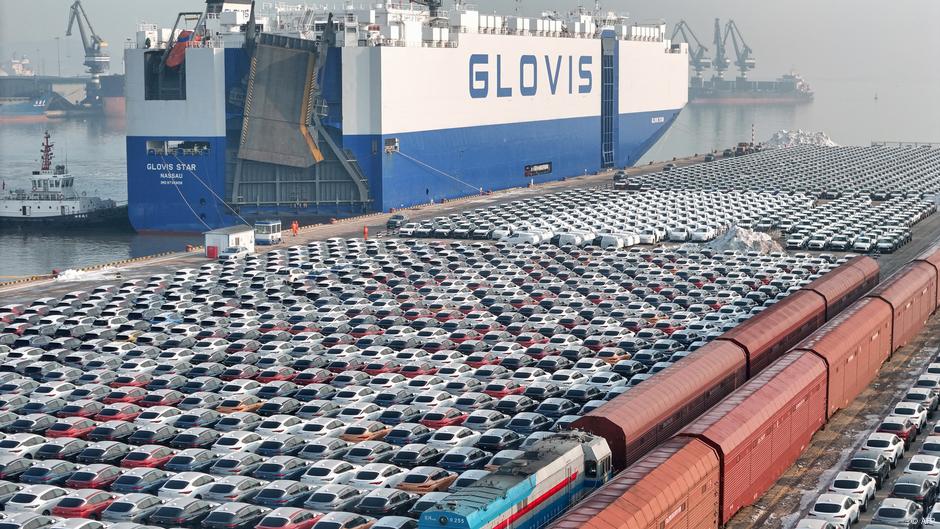
Cars waiting to be loaded on board in the Yantai Port of ChinaPhoto: AFP
Have the Car Managers Failed?
Why are European car manufacturers having such a hard time switching to electromobility? Did the managers miss the train, unlike their counterparts in China?
Carsten Brzeski says the industry is struggling with many problems at the same time. Many problems come together in the automotive sector, such as stronger international competition and lower competitiveness among Europeans.
Hans-Werner Sinn, who has been president of the Ifo Institute in Munich for many years, does not see this as a management failure in an interview with DW: For example, we cannot say that Volkswagen or others have missed the trend in the market. Rather, European politicians failed to realize that China was acting swiftly and decisively in this area. This may be a deficiency. ⁇
Stating that the agreement called ⁇ Green Agreement ⁇ , prohibition of internal combustion engines in AB ⁇ from 2035 ⁇ and increasingly strict emission standards have radically invalidated market laws in a short time and put the sector on a politically-driven transformation route, Sinn argues that if a route correction is not made, Europe will be the loser.
According to Sinn ⁇ e, the increase in e-car production in China and France was seen as an opportunity to break the technological dominance of German automotive manufacturers in internal combustion engines. However, countries such as France and Italy have begun to question the issue again. Because they realized that the Chinese benefited the most from the radical change towards electromobility.
The zigzags drawn by politicians also have an impact on these uncertainties, Carsten Brzeski writes: What will happen to the internal combustion engine now? Will he stay or not? When will it be phased out? Will it be extended again or not? In addition to these uncertainties, the German government's decision to remove the e-car incentive premium by the end of 2023 also sowed salt and pepper in the wound. In this case, it should not be surprising that e-vehicles remain in the hands of manufacturers. ⁇
Prosperity will be in jeopardy
According to ING chief economist Brzeski ⁇ , there is no doubt that a possible decline in the automotive industry in Germany and Europe will jeopardize the current prosperity. In Germany alone, the automobile industry, together with suppliers, sub-industry and all other companies that indirectly do business with car manufacturers, account for seven to eight percent of the economic output.
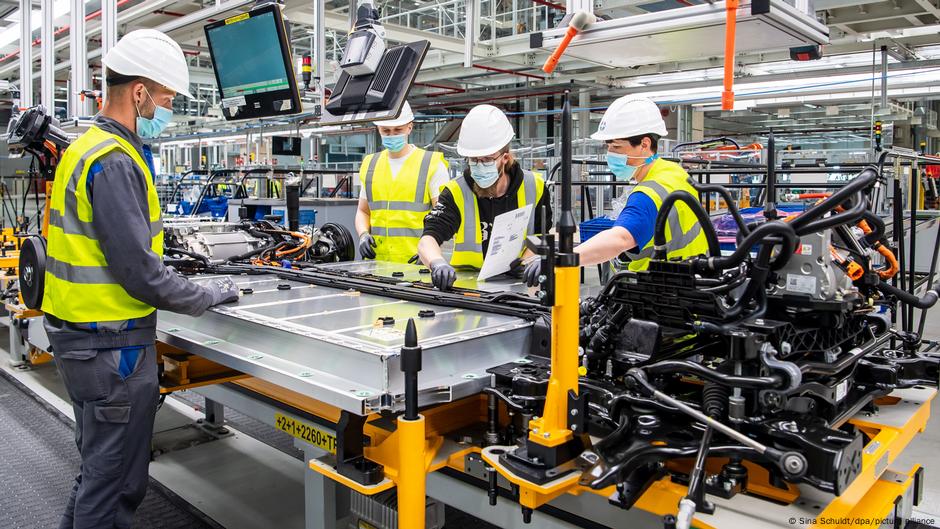
Production of the ID.4 model car at the Volkswagen factory in Emden, GermanyPhoto: Sina Schuldt/dpa/picture alliance
International climate club call
Munich economist Sinn ⁇ in has in mind a ⁇ climate club ⁇ of the largest CO2 emitter, as proposed by German Chancellor Olaf Scholz. All major players, such as China, India, Brazil, the US and the EU, will have to limit fossil fuel production and use. Sinn believes that this idea, put forward by Nobel Prize-winning US economist William Nordhaus, could actually help the climate. Everything else would be a dark central planning policy that doesn't really belong to the market economy.
EU plans such as the ⁇ Green Agreement ⁇ or ⁇ taxonomi ⁇ , which make the entire economy subject to climate and environmental protection, seem fundamentally well-intentioned. But these plans run the risk of undermining prosperity as they would override market laws. As an economist, Sinn sees this as a catastrophic scenario: You can end up ruining the economy this way. I recommend an urgent U-turn from this error. ⁇
Pressure on politicians and unions?
Frank Schwope of the School of Applied Sciences (FHM) for SMEs in Hannover ⁇ is relatively comfortable: The fact is that Volkswagen makes high net profits. For example, in 2023, it reached a record profit of 22.6 billion euros. Analysts expect a profit of 20 billion euros this year. In other words, the crisis has not reached here yet, but it will definitely make itself felt in the future. ⁇
According to Sinne ⁇ e, the VW administration is trying to put pressure on politicians and unionists by creating a ⁇ threat scenario ⁇ to bring down current salary demands and introduce new electric car incentive premiums.
The decline in sales continues
One of the brands that hit the brakes was Italian automotive giant Fiat. Production of the Fiat 500e at the Mirafiori plant in Turin was halted for a month due to a decline in sales.
Hans-Werner Sinn summarizes the current picture in the automobile industry as follows: Volkswagen is just an early victim. New ones will be added to this soon.
When Western countries announced that they would impose sanctions on Russia, which occupied Ukraine, the Kremlin responded by banning all European and North American airlines from flying over Russia.
Virgin Atlantic has cancelled flights from London to Shanghai, while British Airways has suspended flights from London to Beijing.
According to sources working in the field of air transport, one of the reasons behind this was the Russian airspace ban and the extra cost it brought to the airlines.
However, the ban imposed by Moscow did not apply to Chinese-based airlines. As a result, Chinese companies, which aim to expand globally, have managed to take away a significant portion of their Western competitors' market share.
However, considering that China's economic growth slowed after the pandemic, the expected improvement in air transportation could not be achieved at the desired level. On the other hand, geopolitical tensions between China and the United States have caused some airlines to have to restrain their targets.
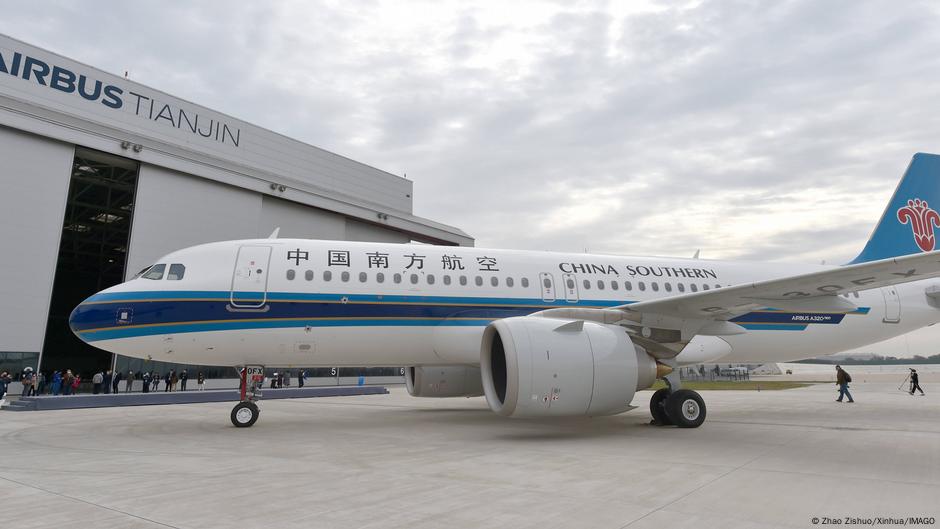
The right to use Russian airspace, which Western companies do not have, and cheap costs give China-based airlines a huge advantagePhoto: Zhao Zishuo/Xinhua/IMAGO
The price of passing Russia ⁇ tangent
John Grant, chief analyst at OAG ⁇ , the company that collects data in the aviation field, says the Russian airspace ban is a big problem for airlines. Grant stated that under normal conditions, Beijing could be reached and returned from England within 24 hours, and flights to Beijing and Shanghai allowed an aircraft to be evaluated effectively. However, the airspace ban required five and a half hours to be added to that period. That's a big problem for us, he says.
Grant said that this extra time spent in the air means extra fuel and salary costs for airlines, and he emphasized that more should be paid for airports with heavy traffic.
The Qantas riddle
Australia-based airline Qantas ⁇ 's announcement in July that they had ended flights on the Sydney-Shanghai line, although the Russian airspace ban did not affect them, raised questions for many.
Yi Gao, who works in the field of aviation and transportation technologies at Purdue University in Indiana, USA, points out that Qantas ⁇ 's flights to mainland China have always been ⁇ limited ⁇ . Gao is of the opinion that it would be a wrong approach to conclude that the recent interruptions in the flights of Western airlines to China are widespread.
In the face of this, Gao points out that Chinese companies are becoming increasingly competitive with Western companies, and this has an impact on the decisions of Western companies. In his assessment of DW ⁇ ye, Gao said that the competition brought by ⁇ Chinese airlines plays a vital role. Taking advantage of the cost advantage, Chinese airlines are able to offer attractive prices on flights from Chinese cities and to Chinese cities, he says.
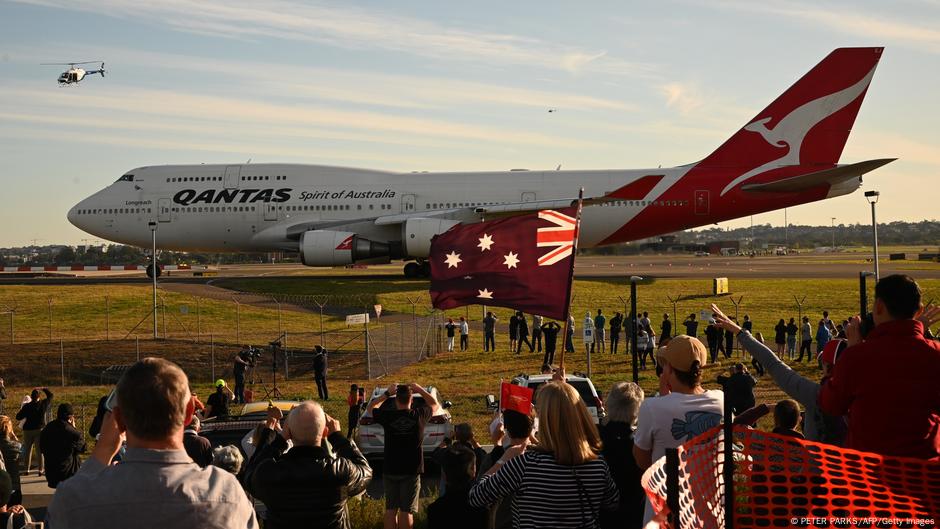
The fact that the Australian-based airline Qantas ⁇ has stopped flights to Çin ⁇ e despite being able to fly in Russian airspace says a lot about the growth of Chinese companiesPhoto: PETER PARKS/AFP/Getty Images
Singapore-based aviation analyst Brendan Sobie likewise says that growing competition is behind Qantas ⁇ 's decision. Speaking to DW ⁇ ye, Sobie says ⁇ Qantas has a hard time competing with Chinese airlines ⁇ . Pointing out that the demand for travel has also increased during this period, which has returned to the conditions before the pandemic, Sobie says that Chinese companies have turned this into an advantage:
In the few years before the pandemic, Chinese airlines were aiming for a strategic expansion into international markets. After the pandemic, we see the same thing coming back. Many people want to put the responsibility on the issue of Russian airspace, and this is definitely a decisive factor for foreign airlines. However, I think that the rise of Chinese companies will happen without a Russian air ban.
Pandemic hits Chinese aviation
Chinese airlines have increased the volume of flights to European cities such as Istanbul, London, Budapest, Madrid and Milan since 2019. Apart from the North American and Indian markets, Sobie points out that the international capacity of Chinese companies is returning to the pre-pandemic era.
The pandemic had dealt a major blow to China's aerospace ambitions. Months before the virus took over the world, Beijing Daxing International Airport opened with great enthusiasm. On the other hand, Chinese people who travel abroad have been at the top of the list of those who spend money on international tourism and airlines in the world for years. However, severe pandemic restrictions imposed by the government severely hampered the Chinese's chances of traveling by 2023.
John Grant, ⁇ China ⁇ 's goal was to create a ⁇ hub ⁇ in Beijing Daxing ⁇ , followed by a ⁇ hub ⁇ in Shanghai. There, domestic flights were planned to be connected with international flights, and even international flights were planned to be connected with other international flights. However, the pandemic has destroyed these targets, he says.
Nevertheless, the attractiveness of the international flight capacity and prices of China-based airlines to Chinese consumers, coupled with the pressure on Western-based airlines, has enabled China to increase its market share in the field of air transportation.
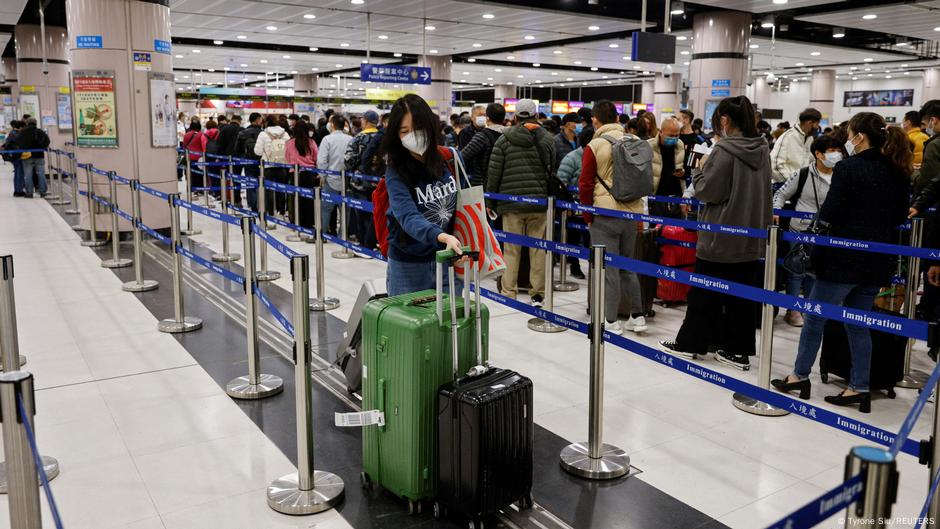
Although Chinese travel abroad has increased in 2024, pre-pandemic conditions have still not been achieved. Tyrone Siu and Reuters
The U.S. and China: The planes are still in the hangar.
While it is observed that Chinese companies are increasingly opening up to Europe, the same cannot be said for the North American market. The two main reasons for this are the weakness of the competitiveness of Chinese companies in this market and the geopolitical tension between the US and China.
As Beijing tightened border controls with the pandemic, travel opportunities between the U.S. and China disappeared. Although China is keen to resume flights between the two countries, the number of flights available between the two countries today is 15% of the number in 2019.
Washington, on the other hand, is not warm enough to increase flights. In an environment where geopolitical competition is intensified, the US is afraid that this step will give Chinese airlines more advantages than American companies. U.S.-based airlines such as Grant, United, Delta and American have no interest in flying China more than they currently do. Just as European companies have no interest, they evaluate ⁇ .
While aviation experts agree that post-pandemic travel habits and geopolitical issues will continue to determine the relationship between Western-based airlines and China, the Chinese market remains important to major players. Grant believes that Lufthansa, Air France and British Airways will want to resume flights to Beijing in the long run:
In time, they will all want to return to the Chinese market. Although China has not grown as much as everyone expects, it is still a big market.