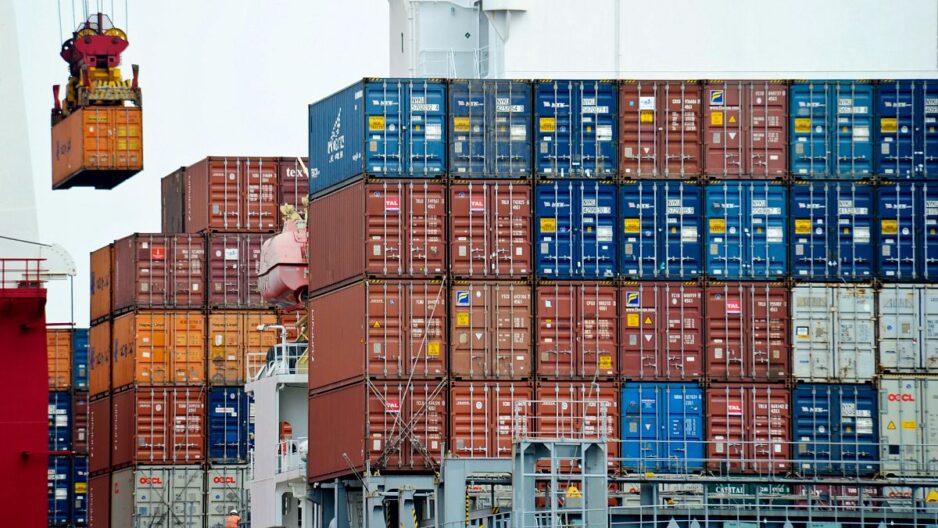
Struggle to prevent AB’ from exceeding China’'s customs duties

While the EU is trying to protect its market from the rise in low-cost Chinese imports, alarm is mounting in the face of a new phenomenon in the European Union: Chinese companies are introducing ways to overcome the bloc's tariff barriers.

France, Italy, Spain, the Netherlands and Lithuania are increasingly fuzzy and complex actions to avoid EU customs duties, the European Commission jointly warned “ on ”.

In an informal proposal last month, which did not name any Chinese company, the quartet called for ’ improvements to AB“'s anti-skipping tool, which would allow ’AB” to guarantee the legal effect and effectiveness of existing trade defense measures.

Euronews found that online Chinese companies offer ways to explicitly avoid EU trade defense measures, including anti-dumping duties imposed on imports sold at AB’ at prices below their normal values in Brussels’in China’.

Skipping practices include setting up production facilities or making small changes to products in countries where EU extra tariffs are not targeted. Not all of this is illegal unless businesses at AB’ provide solid evidence that they are harming their industry, but many are thought to be at least controversial, prompting the European Anti-Fraud Office (OLAF) to launch an investigation into the true origin of certain products.

As the EU faces a wave of China's ’ overcapacity, exceeding tariffs has become an even more pressing concern. European ​​manufacturers have filed a growing number of complaints against Commission’a, alleging unfair trade practices in various sectors and the strain on the resources of EU officials.

Transfer through third countries

One of the ways Chinese companies are already pursuing is to establish production facilities in so-called “gate countries, such as Morocco, Tunisia, Turkey or various southeast Asian countries, which benefit from favorable trade agreements or are not subject to EU anti-dumping taxes.

Other methods include minor product changes designed to change the customs classification and minor changes designed to transfer goods through ’gate “ countries to create the impression that the goods were actually manufactured there, even though they were entirely made in China”.

Euronews’in research has revealed that some Chinese companies do not hide their activities and openly offer online services to overcome trade barriers.

Xin Rui Da Logistics, a logistics supplier from Shenzhen’, specializes in “anti-dumping research and providing transit trade solutions for third countries. the Website.

The company says it has solved the problems of many Chinese businesses and foreign importers with restricted products in “, such as anti-dumping, compensatory, quota restrictions and trade barriers such as CIQ (Customs, Inspection and Quarantine), ” says, and “ explains that it has re-exported from Malaysia, Sri Lanka, Taiwan, India, Thailand, Singapore, Indonesia, Bangladesh, Hong Kong”.

Xin Rui Da Logistics is currently working on a variety of products, from e-bikes to steel, aluminum and plywood product categories; All of these have been hit by AB’'s anti-dumping taxes in recent years.

The company did not respond to the interview request.

Sale of converted chemicals

The chemical sector, where competition between the EU and China is particularly intense, is particularly exposed to the risk of exceeding customs tariffs. European ​​manufacturers are already under pressure due to the surplus of China’in production capacity, which is flooding the EU market with imports and increasing competitive pressure.

On the complaint of EU producers, the European Commission imposed an anti-dumping tax on a specific chemical imported from China’: titanium dioxide (TiO2), a strategic chemical used in green technologies and aerospace. The missions were temporarily brought to ’ on July 2024 and finalized on January 9, 2025.

But some Chinese producers are looking for ways to adapt to the new tariffs to export the chemical to AB’.

ChinaZontai Titanium Dioxide ’in manager Nina Zhu, a company based in Guangdong province, south of ’, He wrote itA few months before AB’ introduced its customs duties on LinkedIn’de: “AB’'s anti-dumping taxes will be introduced at the end of the year. It is advisable to prepare inventory in advance to provide you with a variety of titanium dioxide solutions.”

Euronews’in contacted Zhu, who confirmed that the company can supply products with TiO2 content below 80 percent’ to avoid EU tariffs.

Linkedin (linked

Later, 2025’te NanJing Titanium Industry International described in theThe recently commercialized new type of mixed TiO2’ “, with excellent performance, qualifies as the highest quality”, adding: “Furthermore, its unique features allow you to bypass certain regional anti-dumping taxes, saving you significant costs. It's a game-changer for your business!”

The company did not respond to Euronews’'s requests for comment.

Linkedin (linked

In some cases, as soon as the EU launches an anti-dumping investigation that could result in additional taxes, Chinese companies begin offering such services.

This is what led to the introduction of new tariffs in January 2025, following the Commission's decision to launch an anti-dumping investigation against Chinese TiO2 producers in ’ on 13 November 2023.

In a LinkedIn post on January 23, 2024, an executive of Titan Industry’, a Shandong-based company, offered EU customers certificates of origin for shipments via “ Vietnam or Thailand to deal with anti-dumping taxes imposed by ”AB. Such certificates may have obscured the true origin of the product produced in China’.

Since then, the company has removed the post from social media, saying it has stopped offering such transfer solutions because Euronews’e is not allowed to.

Instead, “ said it would build a new TiO2 factory in ’, Vietnam.

‘Shoot the mole’

Like many other Southeast Asian countries, Vietnam is often seen as ’, a country where Chinese companies invest in exporting to AB“. However, in some cases, companies cannot maintain a real production presence in the country.

The situation is hitting a ’ mole, according to Deborah Elms’e, a trading expert from the Hinrich Foundation ’ in Singapore“ problem.

Euronews’e said: “If you go after a particular company for illegal transfer, you'll discover that this is the mailbox address of a company that changed its name and moved to another location very quickly.”

“If the tariffs are high enough, there is always an incentive for companies to try to circumvent this illegally.”

Linlin Liang, spokesman for the Chinese Chamber of Commerce ’'s European Union (CCCEU), told Euronews’e that CCCEU’ is not aware of Chinese companies offering online solutions to overcome EU tariffs.

Liang, “Generally, the risks of circumvention are not specific to any country” said, adding that AB’ has a rooted anti-survival system“, and the important thing is that these ”tools are implemented in a transparent, evidence-based and proportionate manner“.

“Unfortunately, EU trade defence measures have so far largely targeted imports from China’, ” said.

Beijing has repeatedly threatened to retaliate if AB’ tightens its trade defence measures. But with AB’'s trade deficit with China reaching a record high of 359.9 billion euros in 2025’te, the European Commission announced last week that the current state of the “ trade and investment relationship is not sustainable.

AB’'s executive branch is expected to propose strengthening AB’'s trade defence system to EU leaders, who will meet for a summit in mid-June. The draft results shared by diplomats do not include the name Çin’in, but China’in is expected to be at the center of the discussions when the leaders meet.

OLAF is investigating

In its 2025 annual report, it said the issue of exceeding tariffs had become important enough for OLAF’ to take over investigations into such cases.

In particular, the report pointed to a case involving e-bikes, which would likely be imported from Indonesia’ to AB’, if the bloc's anti-fraud authority had not intervened.

It turns out that most of the components are actually of Chinese origin and are processed only in Indonesia’; This means that the goods must be labeled as of Chinese origin. OLAF assessed that if the products are exported to AB’, this plan could lead to €7.2 million avoiding EU import taxes. In the end, they weren't.

Thomas Grjebine, an economist at the French Centre for Research and Expertise in World Economy ’, Euronews’e “ChinaThe greater ’'s competition, the more difficult it will be, ” said.

In an important report for the French government's advisory body recently, it warned of the impact of Chinese competition on EU industry.

Grjebine, “We will not launch investigations into thousands of products, this is a complicated situation, ” said. Moreover, the investigations are carried out at the European level and customs checks are mostly carried out at the national level.“

Beyond commercial defense measures targeting specific products, industries such as the EU's automotive, metals and chemicals are facing an increase in cheap Chinese imports, while questions about the protection of all industrial sectors are also being raised.

But Morocco, Tunisia and Turkey, China, which has invested billions of dollars in building factories in ’, already knows how to overcome industry-wide tariffs, leaving AB’ with even more challenges.

EPP chief warns AB’ must act before China’ disrupts European industries

Manfred Weber, head of the European People's Party in the European Parliament, ’, warned that “ needs to turn a new page in its relations with China. Bild am Sonntag.

“ called on the bloc to defend its economic interests more clearly and consistently and to reset its relations with China.

Ahead of the EU summit in ’, FranceMany ’-led member states are pressuring Beijing to take a tougher stance on ’, and China warns that ’'s overproduction and low-priced exports are undermining the already fragile European economy.

Think tanks, politicians and the media are sounding the alarm about the upcoming EU-China trade war. On May 29, the European Commission said in a press release that although China is a critical partner of ’, the current state of the ’ trade and investment relationship is not sustainable.

EU Trade Commissioner Maroš Šefčovič confirmed this idea after meeting with his Chinese counterpart, trade envoy Li Chenggang, at Paris’te on Thursday. He told reporters that EU and Chinese officials would engage in deeper dialogue to resolve the trade deficit with “China, which has become unsustainable.

Weber echoed that sentiment and said: The picture is“ said the nearly one billion-euro ” trade deficit per day puts Europe’'s industrial base and high-quality jobs at risk. Either we resist “, or he'll cripple parts of our Chinese industry. The EU must now use its trade policy tools resolutely and without hesitation.”

He cited AB’'s tariffs on China’'s electric vehicles as an example of vehicles that Brussels’ should be prepared to use more widely, and perhaps even expand.

He also addressed criticism that EU funds indirectly benefit Chinese firms. A recent case involved EU-backed development assistance used to supply the Senegal’e 380 natural gas buses, in which China​​'s lower-cost offering outperformed a European ’ opponent.

He insisted that this should never happen again: “ European development assistance funded by taxpayers should not benefit Chinese companies.”In the future, everyone who wants to sell on “ must play by European rules, ’ added.

However, a tougher trade stance brings with it potential negativities. Beijing could retaliate by restricting the export of critical materials such as rare earth elements, which could pose a risk to European production, especially Germany. Existing trade agreements with partners, including Canada, Mercosur countries and India, may not fully compensate for such disruptions.

Weber argues that Europe’ has significant influence and stresses that access to a single market is vital for China. “, arguing that this dependency should be used to ensure fair competition, said ’, China” needs us.

Trade commissioner promises ‘new vehicle’ to diversify suppliers and reduce dependence on China’e

EU Trade Commissioner Maroš Šefčovič promised on Friday a new tool designed to help European ​​ enterprises diversify suppliers and prevent the shortage of critical materials from China’.

Šefčovič at the Brussels Economic Security Forum’, organised by the European Policy Centre and in partnership with Euronews’, said “Diversification now requires a special tool. “Recent industrial cases, particularly the supply of chips and rare earths, have strengthened my belief that a step change is necessary.”

His announcement followed disruptions in European strategic industries last year when China’ blocked exports of green technologies and rare-earth elements needed for the defense sector, as well as chips used by the automotive industry.

But such a move could exacerbate tensions with Beijing, which threatens retaliation if AB’ closes its market to Chinese companies.

“Industry must do its part”

Šefčovič later told Euronews’e that the approach would require companies to source from three different suppliers, but that “ still had to decide what to actually do with the ” legal proposal.

The proposal will ensure that companies do not fully trust a single supplier, such as China. However, businesses in AB’ may be reluctant to support such a measure if it increases production costs.

The commissioner said economic security is a common “ responsibility, and European ” companies should address geopolitical risks as part of their ​​ core business.

“Industry is on the front line. We have to look out for them, but the industry has to do its part. - ”

In 2025, Dutch authorities took over chip maker Nexperia’ due to concerns that Chinese owner Wingtech Technology’ could move important operations and intellectual property rights to China’e. Beijing responded by temporarily blocking the export of Nexperia’'s products and the chips required for the European automotive industry.

The threat facing Europe’ is not solely due to the supply of chips. This is also the block ’i is also due to its dependence on the rare lands of China, refined and processed by the Asian giant.

During trade tensions with the U.S. last year, China also halted rare-earth exports. The shipments resumed after several weeks of negotiations, but the truce was agreed to only for one year until October 2026, when the Sword of Damocles ’ hung over the European ’.

Relations between China and the EU are increasingly tense as Brussels prepares new tools to protect itself from China’'s increased capacity surplus. The bloc faces a record trade deficit of 359.9 billion Euro’, and despite continuous dialogue efforts, Beijing continues to struggle to achieve equal terms with ’.

At the same time, European ​​ enterprises complained about China’'s unfair trade practices, while several member states, including France, Italy, Spain, the Netherlands and Lithuania’, urged the Commission to take a tougher stance through new trade defense tools.

But two proposed EU legislations (the so-called Industrial Accelerator Act and the Cyber Security Act), aimed at tightening Chinese companies' access to the EU market, have already received threats of retaliation from Beijing’, raising the possibility of a trade war if AB’ advances further.

EU trade chief to meet Chinese envoy amid growing trade tensions

Euronews’e confirmed on Wednesday that EU trade chief Maroš Šefčovič’in will meet with his Chinese counterpart trade envoy Li Chenggang on the sidelines of the OECD ministerial meeting in Paris’ on Thursday.

The visit comes at a time when EU-China relations remain strained, with Brussels’ trying to solve China’'s overcapacity problem and Beijing’le trying to solve its record 359.9 billion-euro trade deficit.

Following AB’'s announcement of the Industrial Accelerator Act and the Cyber Security Act, which could exclude Chinese companies from the EU market, China said, was threatenedThe retaliation fuels fears of a trade war between the two trading partners.

Tensions escalated last week when EU commissioners met to discuss the bloc's strategy for the Asian giant.

In a statement after the meeting, the Commission said that the current state of the “Trade and investment relationship is not sustainable, ” said.

Euronews’e, an EU official, said a majority of the Commission members had agreed to strengthen AB’'s commercial defence tools to counter China’. The proposals will be presented to EU leaders at a summit in ’ on 18 June.

However, member states are divided over EU’'s China policy. A document signed by France, Italy, Spain, the Netherlands and Lithuania called for faster use of tariffs and quotas on imports that threaten EU industrial sectors, with China being ’'s main target. The idea is to create equal conditions against Chinese trade practices, which many in the European ’ describe as unfair.

Among the countries that have adopted a different attitude is Germany, whose policy is to protect their companies' access to the Chinese market despite facing a deep trade deficit.

Meanwhile, the Commission said it would continue its relations with China. There are reports that Trade Minister Wang Wentao’ may visit Brussels’ on 28 and 29 June, but the visit has not yet been made public.

ChinaRecession in ’ factory operations in May sparked doubts about the economy

China’'s major factory sector lost momentum last month, renewing questions about how long the world's second-largest economy can withstand the deepening global energy crisis and stubborn problems with domestic demand, according to official figures released on Sunday.

The official manufacturing purchasing managers index (PMI), published jointly by China's National Bureau of Statistics (NBS) and China's Logistics and Purchasing Federation, fell 0.3 percentage points from April to a full 50 percentage points in May, the lowest reading of the index since February.

On a scale from 0’ to 100’, the shape is precisely at the threshold that separates the expansion from the contraction; This is a mathematically neutral result and is far from reassuring in context.

The detail behind the headline number raises concern.

New orders fell from 50.6’ to 49.9’ in April, while production fell to 51.2’ and raw material stocks fell to 48.6’.

However, according to the chief statistician of NBS’, Huo Lihui’, a relative power has emerged; high-tech manufacturing PMI’ increased from the previous month to 52.9’a and 52.1’e for equipment manufacturing.

An energy shock that could inevitably affect China’i

2026Most of the global economic debates in ’ have been dominated by the Iranian war and the closure of the Strait of Hormuz, where about one-fifth of the world's oil flows in peacetime, since March.

This cut caused oil prices to rise, which the International Energy Agency (IEA) described as one of the biggest supply shocks in the history of global oil markets. For most Asian countries, the main importers of oil flows at the crossing point, the consequences were severe.

But China has been relatively sheltered so far.

Beijing’in is estimated to have accumulated about 1.4 billion barrels of strategic and commercial oil reserves before the conflict began; This represents approximately 220 days of import coverage.

Increasing combustion of other fossil fuels, such as coal, rapid investments in renewables and diversified supply lines further mitigated the impact.

In a research note last week, HSBC’'s chief economist for Asia, Frederic Neumann, wrote that although the “Energy crisis remains the dominant wind for Asia, China is relatively more sheltered given its robust energy security structure, ”.

However, as the Iran war prolongs, the risks to the Chinese economy increase.

It's a FILE. Coal piles stand near a chemical factory in ’in Datong city, 14 March 2026

Exports stand but the domestic front struggles

Where Beijing's economy continues to show its deepest fissures, the decades-long slump in the real estate sector erodes consumer confidence, while HSBC notes that April figures are only the softest reading since the pandemic period. ter reaching 0.2, China has sharply revised ’'s 2026 forecast for retail sales growth. %from 5.2’den %He dropped 2.8’e.

Morgan Stanley ’'s chief economist in China, Robin Xing, wrote last week: “ Domestic demand is declining, but high-end manufacturing and exports remain at the border.”

Beijing, the lowest rate for 2026 since 1991’ %With a 4.5 %It set a one-year growth target of between 5 and “ of the previous three years. %5” went one step down from its target.

Morgan Stanley thinks ’'s annual economic growth target is achievable, but marks global oil market conditions as the defining joker.

U.S. exports to ’ have fallen year-on-year for most of the past twelve months, but global sales remain strong, particularly in Europe and Southeast Asia.

US President Donald Trump's meeting with Chinese leader Xi Jinping in Beijing in mid-May has brought back some optimism about bilateral trade.

Is Europe finally waking up to China’e?

Tensions between China and the EU have intensified in recent months, prompting the European Commission to gather most of ’'s commissioners for a strategic reassessment during a “ orientation debate on Friday.

In a statement following the discussion, the Commission said “China is a critical partner and participation and dialogue will continue. At the same time, the current state of trade and investment relations is not sustainable.“

Calling the relationship “ non-sustainable” may indicate the depth of the break less than it is.

Relations have deteriorated steadily since European Commission President Ursula von der Leyen’ described Pekin’i ’ as a systemic competitor in her landmark 2023“ speech. But tensions rose to a new level when EU policymakers finally resolved their differences over the EU-US trade deal that had consumed Brussels’i for months, freeing the bloc's greater focus on China’e.

Last year, the bloc registered a record trade deficit of 359.9 billion euros with Beijing’le, and Brussels fueled growing calls at ’ to better protect the EU market from cheap Chinese imports, which threaten all sectors, including the metals, chemical and automobile industries.

Speaking to Euronews’e on condition of anonymity, an EU official, “, said that over the past few weeks we have seen a panic attack in China’. The Chinese issue has been ignored for too long, “ added.

2024In the EU industry since ’, – has lost a total of 200,000 European jobs, especially in the energy-intensive and automotive sectors; Automobile construction alone is projected to lose another 600,000 jobs in this decade.

On Friday, the commission said that the “comprehensive approach remains risk-reducing rather than discriminating, signaling that the bloc is pursuing targeted efforts to reduce its dependence on China”e, rather than severing economic ties altogether. But the risk of a full-scale trade war has never been more realistic.

Here are five key points on how the situation got to this point and where it could go next:

1. Fines andthe Regulatory Printing

During the previous legislative period, the EU adopted a law that angered Beijing ’, especially measures aimed at curbing foreign direct investment. And China has stepped up its fight against the so-called dumping’e, where public subsidies are used to lower the price of competitors through exports sold below market prices in ’.

The European Commission has become increasingly ambitious to counter China’'s subsidized approach, including imposing tariffs on imports of battery-powered electric vehicles. Various product-specific researches are also ongoing.

Earlier this week, the Commission fined Chinese e-commerce giant Temu’ya €200 million for selling unsafe products, and JD.com launched a large-scale investigation into ’'s acquisition of e-commerce retailer MediaMarkt’.

EU lawmakers and governments are also discussing this issue. the Industrial Accelerator Act, global market share in a particular sector. A proposed law that would impose strict conditions on investments in batteries, electric vehicles, solar panels and critical raw materials from the countries that control its ’.

A separate proposal (a renewed Cyber Security Act) could push Chinese equipment suppliers such as Huawei and ZTE away from critical infrastructures.

GermanyContainers in ’ – April 2025.

2. A more systematic approach

In April, the EU agreed to double tariffs on steel imports exceeding EU quotas to counter China’'s overcapacity. The measure is a so-called ’ security measure, a tool backed by some of AB’'s largest economies, including France, Italy, Spain, the Netherlands and Lithuania, which calls for expansion into sectors beyond metals.

In a statement, these countries argued that the protection measures were more “chevik” than other EU vehicles targeting cheap export products. The document also calls for economic security to be taken into account in assessing AB’'s interests when deciding on commercial defence measures.

The European industry is also increasing pressure on China's cheap imports of ’, and the Commission calls on ’ to use its commercial defense measures as “, which is more flexible, faster and preventive.

An important wake-up call for EU policymakers was that Dutch-based chipmaker Nexperia’, acquired by Chinese giant Wingtech, remained in the crossfire of US-China trade tensions and caused serious disruptions in the automotive sector.

The Commission is now preparing to demand that sectors such as the auto industry diversify chip suppliers in certain situations and consider supply chain risks in purchasing decisions.

Despite these various initiatives, EU policymakers have begun to be cautious that current rules are moving too slowly for a fast-moving competitor. After taxes were imposed on electric vehicle batteries, China’'s focus shifted to hybrid vehicles.

Brussels is now moving towards a more systematic approach and sees trade defence as a toolbox for rebalancing relations with China. One of the potential additions is the overcapacity tool to limit imports in certain sectors.

3. China’'s threats of retaliation

Over the past few weeks, China has was threatenedThe EU could retaliate if it continues to close its market to Chinese goods.

Both the “Made in Europe” legislation and the Cyber Security Act Beijing drew ’'s anger, leading to intense lobbying in Brussels and EU member states with warnings that the implementation would trigger a reaction.

Europeans are walking a tightrope, aware that their decisions could trigger a trade war. After AB’ imposed tariffs on ’ electric vehicles in 2024, Beijing also imposed tariffs on EU pork, brandy and dairy products.

At a press conference Thursday, Chinese Foreign Ministry spokesman Mao Ning said “International trade is a two-way street. There is no mandatory trade. China-EU trade relations are inherently based on a win-win relationship. China does not target trade surpluses, ” said.

Ning said “AB’ needs to put its trade ties with China into perspective and honor its commitment to free trade. China will closely follow AB’'s moves and take all necessary measures to protect legitimate rights and interests, ” added.

Some argue that it is too late for Europeans, who depend on China’ for key components of their supply chains - components that Beijing’ can weaponize at will.

In 2025, China blocked the export of rare earth elements vital to AB’'s green technology and defense, as well as the chips required for the European automobile industry. Beijing can also benefit from operating licenses for EU companies and restrict access to its market at any time.

4. Departments of Europe

Europe is far from uniting on China.

Despite its troubled trade deficit with Beijing’, Germany has been slow to move away from a co-operation approach that prioritizes securing German companies' access to the market in China’.

Berlin did not endorse the non-paper agreement last weekend, backed by other major EU economies. Instead, German Economy Minister Katherina Reiche reiterated this week that Germany's ’'s top priority is to avoid jeopardizing exports to China’e.

But the economic cost of Beijing ’e dependence may force Berlin’i to reconsider its stance. The German government is reportedly weighing a tougher line that will signal a significant shift in Chinese policy.

For years, German industry had a relationship with the Chinese market, which critics described as poisonous; This relationship has hampered any meaningful attempt to rebalance the trade deficit for fear of losing commercial access to the broad Asian market.

Spain has become the other major EU country that is reluctant to take action against China’. With relatively cheap energy costs, Spain has become attractive to foreign investors, for which Beijing’ has a growing share.

After initially appearing to support the French-led non-newspaper organisation, he withdrew and claimed to have only participated in the debates, his stance this week has been a source of embarrassment for Madrid.

Spain's Trade Minister Carlos Cuerpo, “, said there was no special political support for anything off-paper” and added that AB’ should establish “ contact with Chinese officials via ”dialogue“.

5. What's going to happen now?

The reassessment process of ’'s attitude towards China’ has been under construction for a long time, based on decades of deepening economic dependence. But the latest acceleration also resulted from a change in the stance of ABD’; The most prominent was President Donald Trump's recent visit to Beijing.

Friday's orientation debate by the commission was only the first step in a process that could translate into a broader repositioning. Given internal divisions and the threat of retaliation, it remains deeply unclear where this will lead.

The results of this exercise are expected to contribute to the debate on economic security at the next European Council meeting in ’ on 18-19 June. China has been on the agenda of EU leaders several times in recent years, but has been pushed aside due to more urgent crises.

While Brussels is considering adding new tools to its policy toolbox, political will remains the main determining factor. Nowhere is this gap as sharp as in the way AB’ uses the anti-pressure tool, also known as “trade bazooka”, designed to counter economic pressure and unfair trade restrictions.

Although we were under a lot of pressure, the anti-pressure vehicle was never used, “ said. “We really need the tools we're willing to use.”

China Shock 2.0: Beijing targets German industry as it looks at Berlin’e

Germany's economy has been struggling with weak growth for years. In economic policy debates, this is attributed above all to high costs, lack of innovation, and structural problems that have accumulated over many years.

Many economists think that the real need for reform is within the country. For example, Clemens Fuest, president of Ifo, calls on the federal government, as he himself said. the Capital City ,implement far-reaching changes to encourage investment, foster innovation and create new momentum for growth. What is needed, according to Fuest’, is “Germany, a comprehensive strategy on how ’ can achieve stronger growth in the long run.

A new study challenges this prevalent view, at least in part. Economists Sander Tordoir and Brad Setser of the British think tank “European Reform Centre, ”China shock 2.0 “ GermanyThe cost of –'s indifference Under the title ’, Germany”'s economic weakness is mainly due to pressure from Chinese industry. They say Chinese companies are becoming increasingly dominant in key markets and are able to push European ​​ competitors aside.

China has achieved a particularly strong position in areas such as raw materials, rare earth elements and basic chemical inputs for the pharmaceutical industry in recent years. The same applies to future-oriented industries such as semiconductors, robotics, batteries and electronics. Electric Vehicles (Electric Vehicles. In the opinion of the authors, China now dominates most of these markets both technologically and economically.

This development is especially evident in the automotive sector. Since the end of the coronavirus pandemic, Chinese manufacturers have significantly strengthened their position in the global market. According to Tordoir and Setser’, this is a sign of how quickly industrial power balances can change and potentially have serious consequences for traditional manufacturing centers.

China’in exports are increasing

The authors expect that European ​​ companies will continue to lose market share not only in international markets but also in Europe ’ in the coming years. For example, they show ’'s solar energy sector, Germany, which was once a global showcase industry and is now almost extinct. The decline of industrial centers in ’ in the 2000s also serves as a warning to them about what might happen in the industrial areas of ’ in Germany.

While many economists predominantly criticize high labor costs, bureaucracy and lack of competition, Tordoir and Setser see the main cause of the problems in China’'s targeted economic and industrial policy. Through market barriers, comprehensive government support, strategic control of raw materials and direct economic policy interventions, People of ChinaIt has provided significant benefits to their companies.

According to the research, the results are already clearly visible. China’in exports have recently grown much stronger than global trade in general, while Germany has been declining in business with China since 2023’. According to the authors, this has a significant impact on industrial value creation and employment.

Tordoir and Setser make concrete policy recommendations based on their analysis. They are advocating stronger protective measures against Chinese competition. These include higher import tariffs in sensitive industrial sectors, higher priority on European products, and stricter requirements for Chinese companies looking to produce in Europe’. They also think that the rules of the joint venture modeled on China’i are plausible.

Germany renounces China ’'s tough stance

Germany has so far reacted cautiously to such proposals. The reasons for this include close economic ties with China and concerns about possible retaliation. At the same time, Europe remains dependent on Chinese supply in key areas such as critical raw materials and industrial intermediates.

Minister of Economy in order to strengthen economic relations between Germany and Beijing Katherina Reiche(CDU) will travel to China’e in person this week. He will be accompanied by a delegation of about 40 business representatives who want to explore potential cooperation projects.

Disappointment is also growing within the European Union: France, Spain, Italy, the Netherlands and Lithuania are calling for an unofficial opinion document calling for a tougher response to ’'s commercial practices. Germany did not participate in this initiative. In March, Chancellor Friedrich Merz (CDU) called for a trade agreement with Beijing. Brussels rejected the idea.

Germany resists EU members' efforts to take a tougher stance against China’

German Trade Minister Katherina Reiche travels from ’ to China’e Monday to Friday as the trade deficit with Berlin’in Beijing’le continues to deepen.

The trip comes two days after several of AB’'s largest economies (France, Spain, Italy, the Netherlands and Lithuania) issued a statement calling for AB’ to take action against overcapacity and unfair trade practices.

However, Berlin did not approve the call.

Germany remains the main narrow spot in AB’'s strategy for China’e. Previously on Euronews has been reportedGermany, which said the publication of ’'s trade deficit with Beijing’ late last year was a turning point for the EU administration, which sought to sharpen its means of commercial defense, continues to support cooperation with China.

In March, German Chancellor Friedrich Merz called for a trade deal with Beijing. City of Brussels was pushed backagainst the idea.

Olof Gill, vice-president of the Commission ’, said at the time: There are a number of concerns and real challenges that “ constantly expresses, and we need to see them address it in a meaningful way before we talk about any future deal or anything like that.’

Berlin hopes Beijing will keep the ’ market open to German industry, despite a record trade deficit of €87 billion with China, obstacles faced by EU companies in China’, and a strategy to reduce the Asian giant's dependence on foreign products.

Access to the Chinese market

The main purpose of Reiche’'s visit this week is to discuss potential economic cooperation. According to the German government, the strategy is to explore opportunities for future cooperation while maintaining dialogue with the Chinese leadership.

Despite the ever-increasing trade deficit, China continued to be ’'s most important trading partner in 2025. According to the Federal Statistical Office, the volume of bilateral trade reached 250 billion Euro’. About 5,200 German companies operate in ’, making the country one of ’'s most important foreign markets for the automotive, mechanical engineering and electrical industries.

During the trip, Reiche’ is expected to hold political talks, attend a business forum and visit local companies. He will be accompanied by a business delegation representing about 40 companies. The focus will also be on the development of energy technologies.

Oliver Oehms, Executive Director of the German Chamber of Commerce in ’, China, said: "We hope that our visit to “ will help transfer the insights gained on the ground to the political debates in Berlin’ and further develop bilateral exchange.

In a survey published by the Chamber in May, 51 percent of German companies operating in China’ supported policies that support partnerships with Chinese companies, while 42 percent supported the use of ’strategic’ with information obtained through such partnerships.

But these sectors are also increasingly under pressure as Chinese competitors benefit from extensive state subsidies.

According to a report published in May by the European Reform Centre, an EU think tank, the concentration of global automobile, machinery and chemical production in China’ could undermine innovation in traditional manufacturing centers and increase Beijing’'s influence over Berlin through the threat of supply disruption, similar to the blockade imposed on rare-earth exports in 2025’te.

The report also noted that the demand generated by Germany's fiscal stimulus after ’ eased the debt brake could increase Chinese imports instead of supporting Berlin’'s domestic industry.

Germany’'s China’e exports on an annual basis %9.7 imports of Chinese goods such as electronics, electric vehicles and components while falling %Significantly increased by 8.8 percent.

According to the report, “China has already eaten most of the German industry's lunch and is preparing to start dinner, ” said.

The Industrial Sovereignty: Five sectors in which AB’ is critically dependent on China’e

Europe’'s dependence on Chinese goods has grown so structurally in certain sectors that reliable alternatives have virtually disappeared.

The pressure intensified in 2025’te, where Washington’ imposed extensive customs duties on Chinese goods; This raised fears that Beijing ’ would divert excess production to European markets at discounted prices.

Commission President Ursula von der Leyen, at last year's G7 summit in ’, Canada, described it as “, a new Chinese shock, and Beijing warned that ” is flooding global markets with subsidized surplus capacity that its own consumers cannot afford.

Last week, Stéphane Séjourné, AB’'s Commissioner for Industry, called on EU businesses to diversify their suppliers as trade tensions with China escalate as Beijing’in constantly threatens AB’ and Brussels’in seeks to strengthen legislation to protect its markets from dependence on China’.

According to Eurostat’, EU’'s imports from China’ reached a total of 559.4 billion euros in 2025’te; this figure since 2015’ increased, creating a trade deficit of 359.8 billion euros. Only in 2025 AB’'s China’e exports %6.5 Decrease in imports %Increased by 6.4.

China is by far AB’'s largest source of imports and main supplier of dependent products. ’sini exports to the bloc and represents roughly half of the total import value, and 404 billion Euro’ represents about 206 billion Euro’.

Dependent products refer to the parts and raw materials needed to create the final product. For example, the demand for a smartphone battery depends on the number of finished smartphones a company plans to manufacture.

Although the U.S. is the second-largest supplier of AB’-dependent products, according to a recent analysis by the Center for Economic Policy Research (CEPR), published this month, %Less than 10’ and the total import value is only is ’ini.

Combined with other data showing broader strategic dependence, five sectors in which AB’'s exposure to Beijing’ is structural are revealed: solar energy, critical raw materials, industrial robot technology, chemicals, textile and wood products.

In each of these sectors, Euronews compiled an overview of some of the causes of AB’'s extraordinary dependence on China’e.

Green transition made in China’

Of all AB’'s dependencies on Pekin’e, the one buried deep within its green agenda is arguably the most important.

According to Eurostat’, China plans to import all solar panels to AB’ in 2024. ’ini was formed. The total value of these imports decreased from Euro’te 19.7 billion in 2023 to Euro’te 10.9 billion in 2024; This was not because volumes were declining, but because Chinese prices were collapsing.

The exact figures for last year's solar panel imports have not yet been released.

In a report published this year by the think tank Loom also found that China’in, AB’in's imports of lithium-ion batteries for electric vehicles in 2019’in ’inden 2025’te ’ini was provided.

The vulnerability extends far beyond finished products.

Research department of the European Parliament’, AB’'s rare earth magnets, including materials required for electric vehicle motors, wind turbines and defense systems %He found that he supplied 98’ini from China’.

Data from the European Commission’ also show that AB’ has been linked to Beijing ’e dependence on magnesium. %It says it's 97. In addition to being essential for next-generation batteries, which are an alternative to lithium-ion technologies, the mineral is also used for hydrogen storage and light renewable infrastructure.

Due to this overwhelming single-country dependence, the European Commission has placed it on the bloc's Critical Raw Materials list to accelerate domestic extraction, processing and recycling initiatives.

Finally, according to a report from the Geopolitical Intelligence Services, Chinese firms believe that the global solar photovoltaic production capacity from polysilicon production to finished modules %It controls more than 80’.

In short, the European ’'s transition to green is based on foundations that it does not control.

It's a FILE. Workers transport lithium-ion batteries at a factory in Taizhou’ in eastern China’in Jiangsu province, July 2018

The robot surge

Industrial robot technology tells the story not only of addiction, but also of increased displacement.

According to data published by the European Commission’'s import surveillance task force, from the beginning of 2025’ to the beginning of 2026’'s import of industrial robots from AB’'s China’ %Increased by 315, while average prices is down.

China’'s dominance in this sector is not accidental.

Backed by government subsidies, cheap credit and tax incentives, the “ Made in China 2025” industrial strategy helped the country's advanced robotics sector triple the number of companies registered since 2020’.

Domestic overproduction has pushed Chinese manufacturers to aggressively export at prices that European ​​ competitors cannot afford.

According to the International Federation of Robotics, ’, China now produces more industrial robots than Germany, South Korea, Japan and the United States combined.

Chemicals, textiles and wood: old addictions, new depths

In the chemical sector, the European Commission said ’'s surveillance data showed that some chemical compounds were imported at rates 36 times higher than in the year before China’, and that prices %It turned out to be as low as 95’e.

March 2025’te The Commission launched special monitoring for certain ethylene and ammonia-based chemicals, citing production capacity surpluses in China’ and a sharp increase in EU market shares.

Textiles and wood products tell a similar story.

While some of the production has shifted to lower-cost Southeast Asian competitors such as Vietnam, clothing and footwear from China’ still represent a significant portion of AB’'s overseas supply.

According to Eurostat’, China, on the basis of value of the European Union, ’'s total out-of-home clothing and footwear imports are approx. %From 30 to ’ini is provided.

Wood products, China’den assembled parquet flooring imports more than ten times in a single year, prices creased by 77% and commissioned by ’ in July 2025 to protect an industry valued at €1.3 billion, which employs more than 10,000’ people. %with 21.3 %Wood products have become a newer flashpoint as it has led to the imposition of taxes between 36.1 and

Do this to secure more than 2,000’ jobs in Europe’ %with 26.4 %The ’te decor paper followed in August 2025, when taxes were imposed between 26.9 and 2025.

In all five sectors, the Commission's response was largely reactive and tariffs were imposed after the damage occurred.

The deeper question is whether Europe can maintain industrial capacity and political will to build real alternatives before ’'s dependence becomes irreversible and thus Beijing becomes a lever ’ can use freely.