What does the U.S. and Japan's chip restriction plan for China aim for?

United States of America and the History of Japan, It is chinesee the Chip Chip technology has reached the final stage in an important agreement to restrict its exports. But Japanese companies are concerned about possible threats of retaliation from China following these export restrictions. Well, China's chip production share of market What is it? What are the main objectives of the agreement? China USA and Japan The chip industry What are the possible retaliation strategies against export controls on it? China chip productionWhat are their strategic goals and what policies are they implementing to achieve them? What can be said about China's long-term chip production strategy? the Turkish Asian Center for Strategic Studies⁇ nden (TASAM) Prof. Dr. Sedat Aybar Thoughts on the subject Sputnik ⁇ e (disambiguation) He told me privately.

China is considering reducing its dependence on the outside in manufacturing in chip-using industries

Prof. Dr. Sedat AybaIndicating China's role in the global chip industry, he said that the country is considering reducing its dependence on outside production in chip-using industries.; “People of China⁇ in (disambiguation) the Chip IndustryIts global share has risen considerably, especially recently. China, which dominated 3 percent of the global chip market in 2010, increased its share to 5 percent as of 2022. Industries and products that use chips Considering the prevalence of the basis of China's production, this rate is not very much.. What this reality reveals is that the import dependence of the chips used in Çin ⁇ in products is high. Therefore, China will increase its chip production capacity from $10 billion in 2020. It aims to increase to 100 billion dollars by 2025. Thus, it considers reducing its dependence on imports and external dependence in the industries and production of products using chips. While China is reducing its import dependence, it wants to be a major player in the global chip supply chain by making such a serious breakthrough, especially to compete with Taiwan and South Korea in its region..”

China is implementing a series of policies to take over the scientific field in which the West is unquestionably superior.

Aybar, Talking about the Chinese government's incentives to the chip industry, “China is implementing a series of policies to take over the scientific field in which the West is unquestionably superior. He completes his thoughts on the subject with these words:

In order to achieve the goals of the Chinese government, In 2021, it invested $150 billion in the chip industry. Chinese companies producing chips were provided with tax reductions and Since 2020, large amounts of incentives have been provided for R&D studies through the Semiconductor Industry Development Fund. Chip production covers capital-intensive, high-tech production and labor processes. The sustainability of the technological infrastructure to carry out such production requires academic/scientific/intellectual advanced processes. This imposes a capacity building. The formation of such capacities, which are very expensive, and the scientific infrastructure did not exist in China until recently. The Chinese government is working to make breakthroughs in digital breakthroughs, technological applications that can land on the dark side of the moon, the use of Big Data, robotics, artificial intelligence, etc. In addition, he has recently made serious attempts to create a scientific/academic infrastructure. The resources allocated to R&D studies and efforts to transfer scientific publications to China should always be seen as part of these incentives. China is implementing a series of policies to take over the scientific field in which the West is unquestionably superior. China predicts that their output will produce a series of results for chip production.

The main issue of China is to be able to manage a very large economy without overthrowing it.

Prof. Dr. Sedat Aybar, China's long-term strategies “It aims to meet 70 percent of semiconductors with domestic production by 2025“ He stated in his sentence and “China's most important strategic goal, which feeds its appetite for such an increase in chip production, is to reduce external dependence on its production and thus to maintain its cost advantage in international competition. In particular, due to the increasing wages in the country, there is an effort to make its own economic internal and external balances sustainable behind its orientation to products with high technological added value. It is part of the desire to prevent the surplus economy from evolving into the deficit economy due to the increasing reality of total consumption at home. The main reason for the drive to promote chip production should be seen as a smaller part of the economic policy package to harmonize internal and external balances. This is different from the explanations that are emphasized too much in the West and emphasize the efforts to achieve a global leverage of power. The main problem of China is to be able to manage a very large economy with a very large population without overthrowing it. In addition, global power projections can possibly be explained in scenarios involving international relations. While all these scenarios are being set up It should be noted that Çin ⁇ in pursues policies such as supporting domestic companies in chip production, encouraging technology transfer and especially establishing international collaborations.“ He said it.

⁇ US and Japan's agreement to restrict Chinese exports causes a contraction in China's chip industry ⁇

Aybar, The U.S. and Japan said the agreement to restrict China's chip technology exports would cause a significant contraction in the Chinese chip industry if it came into force.

The fact that ABD ⁇ limits the export of high-tech semiconductors inevitably causes a significant contraction in China's chip industry. The main objective of this type of U.S. trade strategy towards China is to limit its military and strategic capabilities by blocking the access of high-tech semiconductors to China. In this way, Çin ⁇ in considers to control the situations where it can strengthen the semiconductor industry and reduce the impact of trade sanctions that can be imposed on it. ⁇

The U.S. predicts that if the deal is completed, China could lead to a contraction of up to 30 percent in the chip industry.

Prof. Dr. Sedat Aybar stated that the main goal of the new export controls planned by ABD ⁇ is to cause a contraction in the Çin ⁇ in chip industry and stated the following on the subject:

“The United States foresees that sanctions and trade controls could lead to a contraction of up to 30 percent in China's chip industry and does not want to lose this advantage. Therefore, the It also wants countries such as its allies South Korea, Taiwan and Japan to cooperate with it and restrict the export of high-tech semiconductors.. The U.S. provides financial and R&D support to help maintain the competitiveness of companies in this country, which is likely to be adversely affected by this situation. As a result of such supports, global chip supply times are projected to increase by 20-30 percent. Thus, further regional decomposition of the chip industry and the creation of independent semiconductor markets should be expected. ⁇

Italy wants to rebalance trade with China

Italian Deputy Prime Minister and Minister of Foreign Affairs Antonio Tajani met with Chinese Trade Minister Vang Vıntao this morning and discussed economic-commercial relations between the two countries, as well as developments in the international arena, according to a written statement from the Italian Foreign Ministry.

Tajani said that relations between Italy and China are going through a revival phase.

China is our first trading partner in Asia and second among non-EU countries after the USA. I wanted to reiterate the need for fair access to the Chinese market and equal conditions for our companies, especially SMEs and companies in the agri-food sector. From this point of view, we want to continue working with our Chinese partners to strengthen economic cooperation and rebalance the trade balance sheet between Rome and Beijing.

In the statement, it was stated that Tajani ⁇ discussed with Chinese minister Vang Vıntao the war in Ukraine, the crises in Gaza and the Red Sea, and re-introduced the issue of military supplies to Russia.

Tajani ⁇ also conveyed to his guest that cooperation for the security of the Red Sea, which is important for China's freedom of navigation and export security, is vital.

The two ministers discussed the protection of intellectual property, commercial shopping and investment in the agri-food sector, and expressed satisfaction that China Eastern Airlines will start direct flights between Venice and Shanghai on September 26.

Italy entered the Belt and Road Initiative, which is known as the modern Silk Road of Çin ⁇ , in 2019 ⁇ and left in December 2023 ⁇ on the grounds that it did not create the desired effect. Since then, the Italian government has said it wants to maintain a strong trade relationship with China in a different way. In this context, Italian Prime Minister Giorgia Meloni visited Çin ⁇ i on 27-31 July and announced that they signed a 3-year action plan to try new ways to re-launch and advance cooperation with China.

Tariff response from China to USA

China has reacted to the tariff increases that the U.S. imposed on some products imported from China on the grounds of protecting strategic industries.

China's Commerce Ministry said in a statement that all measures will be taken to protect the interests of Chinese companies while calling on the U.S. to return from its mistake.

China has previously protested against tariffs based on section 301 of the U.S. Trade Act, while the World Trade Organization has ruled that these tariffs violate trade rules, and China is extremely uncomfortable with and opposes tariff increases on some products.

Section 301 of the U.S. Trade Act of 1974 authorizes the President of the United States to take appropriate tariff-based and non-tariff-based measures, including retaliation, to counteract the effects of any act, policy, or practice of a foreign government violating international law.

PwC ⁇ ye Evergrande penalty from China

PwC Zhong Tian ⁇ a, the Chinese unit of PwC ⁇ , was fined 441 million yuan ($62.2 million) and banned from activities for 6 months, the Ministry of Finance said in a statement.

In the statement, it was stated that the company failed to detect the frauds in Evergrande ⁇ 's accounts and the real financial outlook of the company during the audits carried out in 2018-2020, and therefore reported a misleading audit opinion.

While the company was fined 5 times its income from account audits in 2018 and 10 times its income in 2019 and 2020, this was the most severe sanction against a financial consultancy and independent audit company to date.

On the other hand, the company was banned from its activities in China for 6 months, while the business license of its office in the city of Guancou, which supervises Evergrande ⁇ , was revoked.

Headquartered in Shanghai, China, PwC Zhong Tian undertook account audits of the sunken real estate giant for more than 10 years before terminating its contract in January 2023 due to disputes.

Irregular debt bonds with deceptive balance sheets

Evergrande, one of China's largest construction and real estate companies, was in a deepening debt crisis after the decline in the real estate sector during the Covid-19 period.

The company, whose total debt obligation exceeded $300 billion, defaulted on its debts because it could not pay it when it was due. In the lawsuit filed by the creditors in Hong Kong, the court decided to liquidate the company's assets in order to pay the debts.

In addition to debt problems, an investigation was launched by regulatory agencies and judicial authorities, and Chairman Hui Ka Yan was placed under judicial supervision.

China's Securities Regulatory Commission (CSRC) reported that Evergrande ⁇ 's main subsidiary, Hengda Real Estate Group, had issued irregular debt bonds by reporting more income and profitability on its financial balance sheets in the process of sinking.

China's call to electric vehicle manufacturers: Don't take the technology out, assemble it wherever you go

While Turkey has taken a critical step in terms of foreign investments with Chinese electric vehicle manufacturer BYD ⁇ 's $1 billion investment plan, recent news from Çin ⁇ has raised questions especially about technology transfer.

According to Bloomberg, the Chinese government has called on automakers to ensure that advanced electric vehicle technologies remain in the country.

Speaking to Bloomberg, sources said that important parts of a vehicle were to be produced in China and sent to the countries where production was made for the final assembly phase.

The call comes at a time when companies such as BYD Co. and Chery Automobile Co. are intensifying their plans to build factories in many countries, from Spain to Thailand and Hungary.

Turkey is already negotiating with BYD and Chery for factory investments in the country.

BYD decided to invest in Turkey

China's first electric vehicle manufacturer, BYD, signed an investment agreement for a billion dollar investment in Turkey in July.

In statements from BYD officials, it was stated that the facility, which will emerge as a result of the investment, will have an annual capacity of 150,000 vehicles. At the same time, it was envisaged that the company would establish an R&D center in Turkey.

BYD Vice President and CEO of BYD America Stella Li stated that they plan to produce 8-12 models at the factory.

Li, who said that they liked the land in Manisa ⁇ very much, ⁇ Here we will be like a local Turkish company ⁇ had made statements.

China's deflationary spiral enters a dangerous new phase

China's ongoing deflation since last year is now showing signs of spiraling, threatening to worsen the outlook for the world's second-largest economy and increasing calls for urgent policy action.

Data released on Monday confirmed that, at a time when revenues were falling, the increase in consumer prices, with the exception of food costs, was hardly recorded in large parts of the economy.

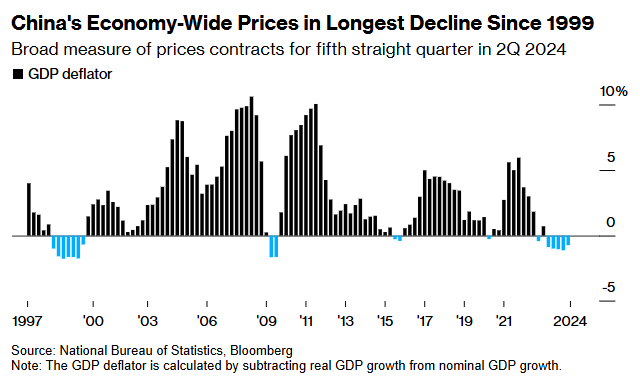
According to analysts at banks including Bloomberg Economics and BNP Paribas SA, a broader measure of prices across the economy, known as a gross domestic product deflator, will likely continue its current five-quarter decline in 2025.

Robin Xing, Morgan Stanley's chief Chinese economist, said: "We are definitely in deflation and probably going through the second phase of deflation, referring to evidence from wage declines. Experience from Japan shows that the longer deflation lasts, the more incentives China will need to overcome the debt-deflation problem.

The danger for China is that deflation will grow like an avalanche, encouraging households shaken by falling paychecks to cut spending or postpone purchases because they expect prices to fall further. Company revenues suffer, investments stall, and lead to further pay cuts and layoffs, driving families and companies into bankruptcy.

Special surveys show that this is already happening. According to findings by Caixin Insight Group and Business Big Data Co., in government-preferred economic sectors such as electric vehicle production and renewable energy, entry-level salaries are almost as high as in the peak of 2022 in August. is down. A survey of 300 company executives by the Cheung Kong Graduate School of Business showed that growth in labor costs last month was the weakest since China's first Covid lockdowns began to ease in April 2020.

This is a cycle that the world has seen ⁇ during the recession that followed a bubble that exploded in the real estate and financial markets ⁇ during a period previously known as ⁇ lost decades ⁇ in Japan ⁇ beginning in the 1990 ⁇ . While Chinese officials are trying to suppress discussions about deflation, warning analysts to refrain from using the term, the term is beginning to enter into public dialogue.

Former Central Bank Governor Yi Gang said last week that eradicating deflation should be a priority for policymakers, and he made a rare confession by a leading figure in China that falling prices threaten the outlook.

Yi called for proactive fiscal policy and supportive monetary policy at a panel at the Bund Summit in Shanghai on Friday, saying authorities should focus on combating deflationary pressure. He added that China's immediate goal should be to turn the GDP deflator positive in the coming quarters.

So far, officials have not signaled any significant deviation from the panacea methods of encouraging production rather than addressing weak demand through steps such as greater government spending on public services and consumer subsidies.

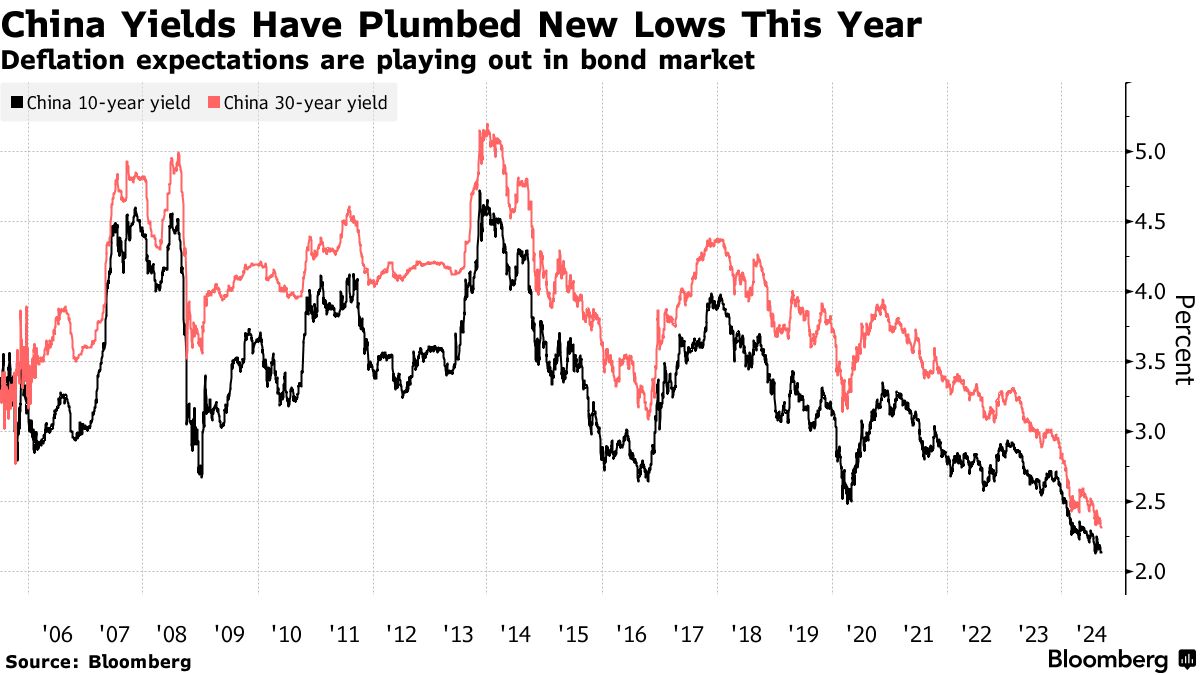
China's core inflation, which excludes volatile items such as food and energy, fell to a three-year low in August as a sign that price pressures have weakened further. Deflation expectations are reflected in the markets, triggering a bond rally that pushes bond yields to record lows and raises official concerns that banks are too exposed to interest rate risks.

Weak price pressures, China's second quarter only %4 is clearly seen in the growth rate of the growing nominal GDP ⁇ of the country this year %It is well below the real economic growth target of around 5. Luo Zhiheng, chief economist at Yuekai Securities Co., wrote in a note earlier this month that nominal expansion is a more beneficial indicator when price increases are weak because it better reflects changes in wages, profits and government revenues.

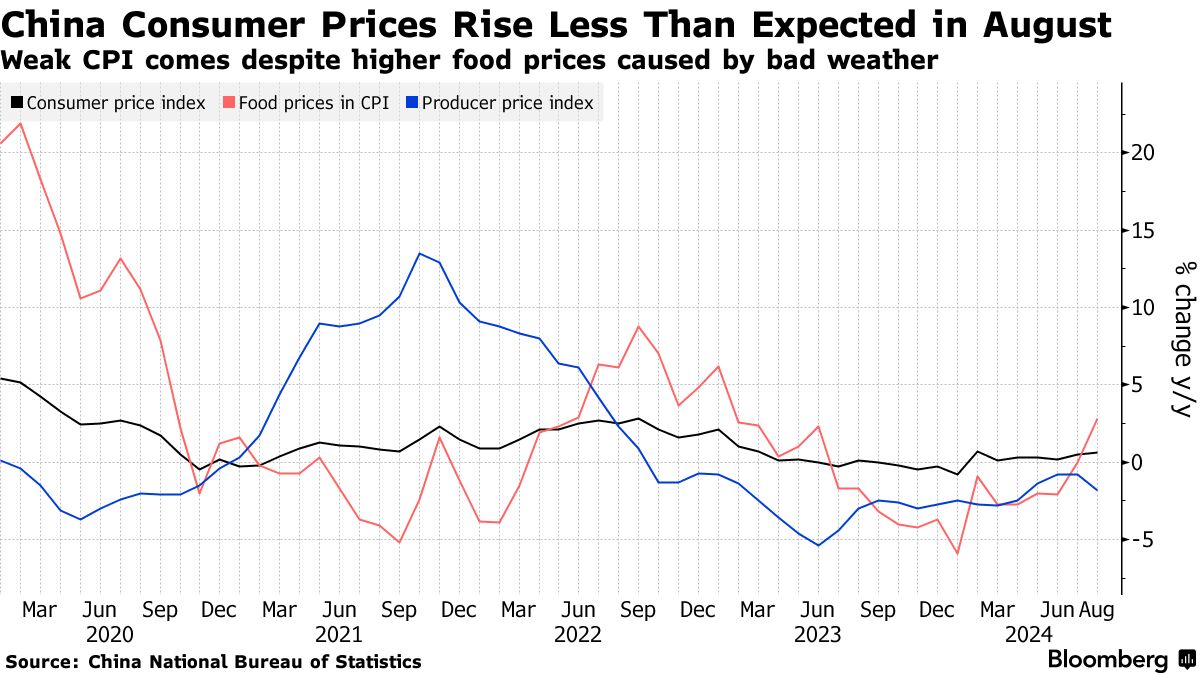
Inflation was weaker than forecast in three of the last four months, only in August. %0.6 has increased ⁇ this increase is largely due to the increase in food prices %This is due to an increase of 2.8.  Core inflation last month only %Increasing by 0.3 in the 18th month %It's down to 1. The fall in producer prices since late 2022 underscores the pressure on inflation. According to official data, raw material and sales prices of manufacturers contracted in the second month in August, while the wages of service and construction companies decreased the fastest since April 2020.

The dilemma that even monetary easing in China can be deflationary due to the supply side of the economy is controversial. Meanwhile, the deflationary mindset is beginning to settle. Consumer confidence is at a record low, with households reporting an increased desire to save rather than spend or buy a home. According to Liu ⁇ , an aluminum industry employee, the solution lies with policymakers in Beijing as the pain deepens. The government needs to take at least some concrete measures to increase consumption and improve people's expectations.

China's exports exceed expectations

China's exports increased by 8.7 percent year-on-year in August, according to data from China's Customs Administration. Economists expected an increase of 6.6 percent.

In imports, your expectations are very high. Under the increased by 0.5 percent. Expectations were for imports to be 2.5 percent.

Looking at the first 8 months of the year, exports increased by 4.6 percent, while imports increased by 2.5 percent.

China's main trading partners; Exports to the United States, the European Union and the Association of Southeast Asian Countries increased in August compared to a year ago. Exports to AB ⁇ increased by 13 percent and became the highest growing exports. The data showed that China's imports from ABD ⁇ increased by 12 percent in August compared to a year ago, while imports from AB ⁇ den decreased.

Finally, the data showed that China's imports from Russia decreased by 1 percent, while its exports increased by 10 percent.

China's trade secret revealed: 2,500 secret powers!

From the Jiangsu (Suzhou) International Railway Logistics Center in Suzhou, located in Jiangsu province of China, a wide range of products such as household appliances, auto parts, chemicals and passenger vehicles set out to be exported to Europe. Many of these goods will reach the warehouses of Chinese companies in Budapest, the capital of Hungary, and from there they will be distributed to Central and Eastern European countries.

REVOLUTION IN LOGISTICS STRATEGY

Chinese exporters are using cross-border e-commerce and overseas warehouses as a strategic advantage to increase competition in global trade. Traditionally, multinational companies would set up offices to test the market before investing in China. But with the opportunities offered by the fast-growing Belt and Road Initiative, Chinese exporters are leaving this old approach behind and investing directly in overseas warehouses.

TRADE SUPPORTED BY BIG DATA AND TECHNOLOGY

Overseas warehouses offer companies the flexibility to adapt quickly to changing market conditions. For example, Xuzhou Weijia Light Industry Co., Ltd, located in Jiangsu ⁇ , is rapidly delivering its products to the South American market with the overseas warehouse it has established in Brazil ⁇ . This warehouse accelerates the distribution of Chinese goods in the region, ensuring the continuity of the trade chain.

RISE OF INTERNATIONAL WAREHOUSE

According to the data of the Ministry of Commerce, the number of China's overseas warehouses has exceeded 2,500, and these warehouses cover a total area of 30 million square meters. 1,800 of these warehouses are dedicated to meet the needs of cross-border e-commerce. With targeted policy measures launched in June, the construction of overseas warehouses continues rapidly and private sector involvement is encouraged.

A STRONG TRADE INFRASTRUCTURE

Overseas warehouses serve as a strategic intermediary hub for Chinese goods. In addition to reducing logistics costs, these warehouses also play a critical role in dealing with shipping cost fluctuations during peak season. In addition, local storage reduces the need for expedited shipping, increasing trade volume and supply chain resilience.

This new strategy of China in international trade is considered an important step to overcome disruptions in the global supply chain and plays a vital role in the development of China's foreign trade.

China-Africa Cooperation Forum opens in Beijing

the Forum Opening People of China⁇ in Head of State the Xi Jinpingas well as the leaders of the visiting African countries and the Secretary-General of the United Nations Antonio Guterres He spoke to me.

President Xi, in his speech, started in 2000. the China-Africa Cooperation Forumof the ⁇ (The FOCAC), China is a turning point in its relations with African countries, that cooperation has brought tangible gains to the lives of billions of ordinary Chinese and Africans in the last 24 years, and that they are protecting the legitimate rights and interests of their countries at a time of transformations seen in the world once a century.

Stating that China-Africa relations are in the best period of history, Xi said that bilateral relations with all of Africa ⁇The Strategic Relationshipto the level of ⁇ , and the general characterization of China-Africa relations ⁇China-Africa community sharing common future for the new era under all circumstancesHe suggested that they define it as ⁇ .

Xi said that modernization is the indispensable right of all countries, that the Western approach to modernization causes suffering in developing countries, 2. He noted that third world countries such as China and African countries, which gained their independence after World War II and are on the way to development, are trying to eliminate the historical injustices of the modernization process.

Pointing out that the total population of China and Africa accounts for one third of the world's population, Xi said, ⁇There can be no global modernization without modernization. The joint modernization of China and Africa will create a new wave in the Global South, a new era of community building that shares a common future.He said ⁇ .

The Chinese leader has 10 items in the fields of industry, trade, infrastructure, development cooperation, health, agriculture, livelihood, cultural interaction, green transformation and security for the modernization of Africa.the Joint Action⁇ proposed the plan.

⁇ China's big market will turn into Africa's big opportunity ⁇

Stating that China will make a first among the big economies and reset customs tariffs with the least developed countries, including 33 African countries, so that it will open its market more externally, Xi said that China's big market will turn into Africa's big opportunity.

Xi, China will develop industrial supply chain cooperation with Africa, the Sino-African Economy and the the Trade Cooperation Pilot ZoneHe announced that he would promote the formation of ⁇ , implement a program to strengthen small and joint-scale companies, and launch 20 sample projects for digital technology collaboration.

Emphasizing that China will continue to support Africa in the field of infrastructure, Xi said that it will carry out 30 infrastructure and connectivity projects to promote high-quality Belt and Road cooperation, as well as improve logistics and financial cooperation to contribute to the formation of interregional connections that will support the development of the African Continental Free Trade Zone.

⁇ Small but beautiful ⁇ subsistence support projects

Xi has a thousand ⁇ in Africa to deepen cooperation within the scope of the Global Development InitiativeSmall but beautiful⁇ stated that they will implement the subsistence support project.

Stating that they are ready to establish a network of hospitals and common health centers with Africa in the field of health, Şi said that they will send 2,000 health personnel to Africa, encourage Chinese companies to invest in Africa's pharmaceutical industry, and support the development of the African Center for Disease Control and Prevention and the fight against epidemics.

Xi announced that they will provide Africa with 1 billion yuan ($140 million) of emergency food assistance, create 6,670 hectares of standard agricultural land, and implement 500 programs for the livelihood and welfare of rural communities.

Stating that China will carry out 30 clean energy projects in Africa, Xi said that they will help to establish systems for weather forecasting, early warning, disaster prevention and remediation and protection of biodiversity, and that they will launch a forum for peaceful use of nuclear energy.

$50.6 billion in financing over three years

The Chinese leader stated that they will provide 360 billion yuan ($50.6 billion) of financing to the continent over the next 3 years for these joint actions, of which 210 billion yuan ($29.6 billion) will be transferred as loans, 80 billion yuan ($11.2 billion) as aid and 70 billion yuan (9.8 billion yuan) as investments by Chinese companies.

It is Þi, Africa's Future-Vocational Education Cooperation Plan He stated that they will establish an engineering technology academy and 10 of the Luban Workshops, China's vocational training centers abroad, and create 60,000 educational opportunities, mostly for women and children.

Stating that they will share experience in the field of state administration with African countries, Xi said that they will establish 25 research centers on the continent and invite a thousand politicians and state officials from different countries to China.

Xi stated that China wants to improve cooperation with Africa within the scope of the Global Security Initiative and announced that they will donate 1 billion yuan (140 million dollars) of military aid to African countries, train 6,000 military personnel, 1,000 police and law enforcement officers, and invite 500 young officers to China.

From the struggle against colonialism to the non-alignment movement

The FOCAC team Chairman of the African Presidency Senegal ⁇ in Bassirou Diomaye Faye At a time when the world is facing war, violence, extremism and prolonged economic and social crises, he underlined the importance of the forum's focus on the theme of modernization, the ideal of achieving common goals.

Pointing out that the FOCAC cooperation produces positive results in agriculture, vocational education, water resource management, industry, health and other strategic areas, the Senegalese leader emphasized that the China Belt and Road Initiative also contributes greatly to the construction of Africa's infrastructure and transportation networks.

Stating that African countries were the first countries to provide vaccines and protective clothing during the Covid-19 pandemic and that they did not forget their support at the darkest moment, Faye said that China helped establish the African Center for Disease Control and Prevention and supported the continent to develop its capacity to fight infectious diseases.

Pointing out that Africa and China have a tradition of friendship and solidarity that goes back to the struggle against colonialism and the non-alignment movement, Faye said that they support the global development, security and civilization initiatives led by China in the new period.

⁇ Afrika ⁇ needs Çin ⁇

Republic of Mauritania President and Chairman of the African Union Mohammad al-Waled Ghazvani Peace and development of the China-Africa partnership.It sets an example for South-South cooperation.⁇ highlighting that he noted:

Given the internal problems facing the African continent today and the devastating consequences of economic, security and environmental crises, it needs China's support to weep for security and stability, promote economic growth and make its voice heard in international forums.

New Chinese step from Tesla ⁇

Tesla plans to launch an advanced driver assistance system called Fully Autonomous Driving (FSD) technology in China and Europe in the first quarter of next year, if approved by authorities.

Tesla AI ⁇ 's official X account released a roadmap on Thursday, outlining upcoming technology launches.

The company, which is working on new technologies to increase sales and stay ahead of Chinese competitors working on similar driver assistance systems, is currently in the process of obtaining permission from regional authorities.

Tesla has made great progress in getting approval for the Chinese market after passing data security assessments and reaching a mapping and navigation agreement with technology giant Baidu. The company also received permission to test FSD technology on the streets of Shanghai.

CEO Elon Musk attributes Tesla's future to solving autonomy.

Despite the name of the technology, Tesla and industry experts emphasize that drivers should keep their hands on the wheel and pay attention to the road when using the software.

Musk said at a revenue meeting in July that he expects the FSD drive system to be approved in Europe, China and other countries by the end of the year. He also stated in April that it would soon be possible to roll out FSD technology via platform X in China.

In China, Tesla's largest overseas market, there are many competing brands that have narrowed their market share and developed their own driver assistance technologies. In this competitive environment, the approval of FSD ⁇ may contribute to Tesla ⁇ 's maintenance of its leadership in Çin ⁇ . According to data from the China Passenger Car Association, Tesla ⁇ 's shipments to China in the first eight months of this year decreased by about 6 percent compared to last year.