Global steel production capacity continues to increase despite weak demand, which threatens to cause prices to fall and competition to deteriorate.
Steel is a critical material for a wide range of industries, from construction and manufacturing to electric vehicles and data centers.
The OECD says government subsidies are a major driver of global surplus capacity, with most of the increase in steel production capacity over the past two decades occurring outside OECD countries, often with government support.
According to OECD’, in 2024, the average Chinese steel firm received subsidies equivalent to 15 times the subsidies received by producers elsewhere based on total assets.
At the same time, Chinese steel producers exported a record 131 million tons of steel in 2025’te; This is according to 2020’ %With an increase of 153, the European Union was more than ’'s total steel production that year.
The warning comes at a time when OECD’ expects global steel surplus capacity to increase from 640 million tons in 2025’ to 745 million tons in 2028’, as steel production capacity continues to increase much faster than demand.
Global steel demand is expected to increase by only 34 million tons between 2026 and 2028, while producers plan to add up to 139 million tons of new capacity in the same period.
China’in is expected to play an important role in this expansion, with plans to increase its steel production capacity to 38.6 million tons by 2028; This is the largest increase planned by any country.
If these projects continue, the OECD says the global overcapacity will exceed the current annual steel production of all OECD countries by almost 320 million tons, underlining the extent of the imbalance the sector faces.
Policymakers fear that permanent surplus capacity could undermine the profitability and long-term viability of local steel industries, increasing dependence on imports of a material deemed strategically important for construction, defense, energy infrastructure and manufacturing.
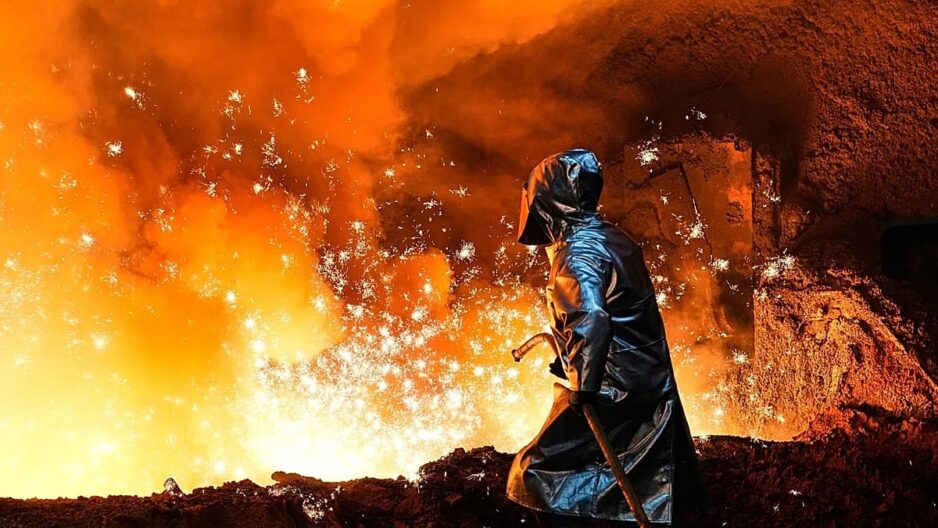
5 November 2025’te DuisburgSteel production at the ThyssenKrupp steel mill in ’
Speaking at the OECD Council of Ministers Meeting, OECD Secretary General Mathias Cormann said: “We need to address the root causes, including harmful subsidies and other non-market applications. This means stronger international cooperation and an equal playing field for steel producers everywhere.”
The OECD also found evidence that some exporters have overcome trade barriers by sending semi-finished steel to Southeast Asia ’ for processing before re-exporting it to OECD markets. China’in exports semi-finished products to the region %The 300’ increase points to a possible route to avoid customs duties and anti-dumping measures.
Energy costs and trade tensions increase pressures
At the same time, the sector is grappling with rising energy costs in connection with the Iran war. Energy, steel production costs %It can make up 40’, making the industry especially vulnerable to high prices.
The report also highlights the increasing pressure on the supply of raw materials. No country producing steel is completely self-sufficient in the inputs required for steel production; Export restrictions on basic materials are increasing worldwide. Forty-two countries are now restricting the export of steel scrap, an important raw material for the production of electric arc furnaces.
Europe is particularly vulnerable to these pressures. The region's steel producers often face higher labor and energy costs, as well as stricter environmental standards, compared to many international competitors.
As a result, European producers are generally less able to withstand long-term low prices compared to their competitors, who enjoy lower costs or stronger government support.
If current trends continue, the long-term viability of the sector and the economic security of many countries will weaken.
China’'s major factory sector lost momentum last month, renewing questions about how long the world's second-largest economy can withstand the deepening global energy crisis and stubborn problems with domestic demand, according to official figures released on Sunday.
The official manufacturing purchasing managers index (PMI), published jointly by China's National Bureau of Statistics (NBS) and China's Logistics and Purchasing Federation, fell 0.3 percentage points from April to a full 50 percentage points in May, the lowest reading of the index since February.
On a scale from 0’ to 100’, the shape is precisely at the threshold that separates the expansion from the contraction; This is a mathematically neutral result and is far from reassuring in context.
The detail behind the headline number raises concern.
New orders fell from 50.6’ to 49.9’ in April, while production fell to 51.2’ and raw material stocks fell to 48.6’.
However, according to the chief statistician of NBS’, Huo Lihui’, a relative power has emerged; high-tech manufacturing PMI’ increased from the previous month to 52.9’a and 52.1’e for equipment manufacturing.
An energy shock that could inevitably affect China’i
2026Most of the global economic debates in ’ have been dominated by the Iranian war and the closure of the Strait of Hormuz, where about one-fifth of the world's oil flows in peacetime, since March.
This cut caused oil prices to rise, which the International Energy Agency (IEA) described as one of the biggest supply shocks in the history of global oil markets. For most Asian countries, the main importers of oil flows at the crossing point, the consequences were severe.
But China has been relatively sheltered so far.
Beijing’in is estimated to have accumulated about 1.4 billion barrels of strategic and commercial oil reserves before the conflict began; This represents approximately 220 days of import coverage.
Increasing combustion of other fossil fuels, such as coal, rapid investments in renewables and diversified supply lines further mitigated the impact.
In a research note last week, HSBC’'s chief economist for Asia, Frederic Neumann, wrote that although the “Energy crisis remains the dominant wind for Asia, China is relatively more sheltered given its robust energy security structure, ”.
However, as the Iran war prolongs, the risks to the Chinese economy increase.
It's a FILE. Coal piles stand near a chemical factory in ’in Datong city, 14 March 2026
Exports stand but the domestic front struggles
Where Beijing's economy continues to show its deepest fissures, the decades-long slump in the real estate sector erodes consumer confidence, while HSBC notes that April figures are only the softest reading since the pandemic period. ter reaching 0.2, China has sharply revised ’'s 2026 forecast for retail sales growth. %from 5.2’den %He dropped 2.8’e.
Morgan Stanley ’'s chief economist in China, Robin Xing, wrote last week: “ Domestic demand is declining, but high-end manufacturing and exports remain at the border.”
Beijing, the lowest rate for 2026 since 1991’ %With a 4.5 %It set a one-year growth target of between 5 and “ of the previous three years. %5” went one step down from its target.
Morgan Stanley thinks ’'s annual economic growth target is achievable, but marks global oil market conditions as the defining joker.
U.S. exports to ’ have fallen year-on-year for most of the past twelve months, but global sales remain strong, particularly in Europe and Southeast Asia.
US President Donald Trump's meeting with Chinese leader Xi Jinping in Beijing in mid-May has brought back some optimism about bilateral trade.
Iran, in a new attempt to put West’ under economic pressure, raises the idea of implementing ’ access fee“ to undersea internet cables passing through the Strait of Hormuz”; This is a move that could further strain global trade following the blockage of the transition.
The plan was first proposed by Tasnim, an Iranian news agency affiliated with the ’na (IRGC) of the Islamic Revolutionary Guard Corps.
Questions arose about who exactly should pay such tariffs and what types of services will be targeted.
From a logistical point of view, companies that operate cables under the Strait Iran’a will have to pay a “access fee”, while from a regulatory point of view, tech giants such as Google, Meta, Microsoft and Amazon will have to vaguely follow the rules defined as “Iranian laws.
Third, the Islamic Republic can also undertake cable maintenance in the Strait of Hormuz and charge more accordingly.
the " Movements" can produce itup to 13 billion Euro’ for the country.
From Ege’ to Spain’ya: How does Europe get involved?
According to the Submarine Telecom Forum’, European ’ firms from France, Italy, Greece and the UK own or are part of a management consortium of at least four cables that run under Hormuz.
Two of these cables are particularly important as they connect the Asya’ to the European’.
The first of these is Asia Africa Europe-1 (AAE1)’, whose owners include Italy’'s Retelit and Greece’'s OTEGLOBE’. Crete, Bari and Marseille reach the ’ landing points.
Secondly, PEARLS/2Africa, part of the world's largest undersea cable system, runs under the ’ of Sicily before arriving in Genoa, Marseille and Barcelona’.
Strait of HormuzDetail of ’'s Submarine Cable Map
How much do wages pose a threat to Europe?
Currently, there is no consensus among experts on the threats posed by Iran’.
Some argue that if the country actually imposes wages, the results will likely extend far beyond telecommunications infrastructure, affecting global trade, maritime law, military strategy, internet governance, and big power policies.
Meredith Primrose Jones, president of geopolitics and risk and compliance consulting firm Leidra’, said: “European finance institutions, cloud providers, telecommunications firms and multinational companies rely heavily on low-latency submarine cable networks for banking operations, digital services, energy trading and industrial operations.”
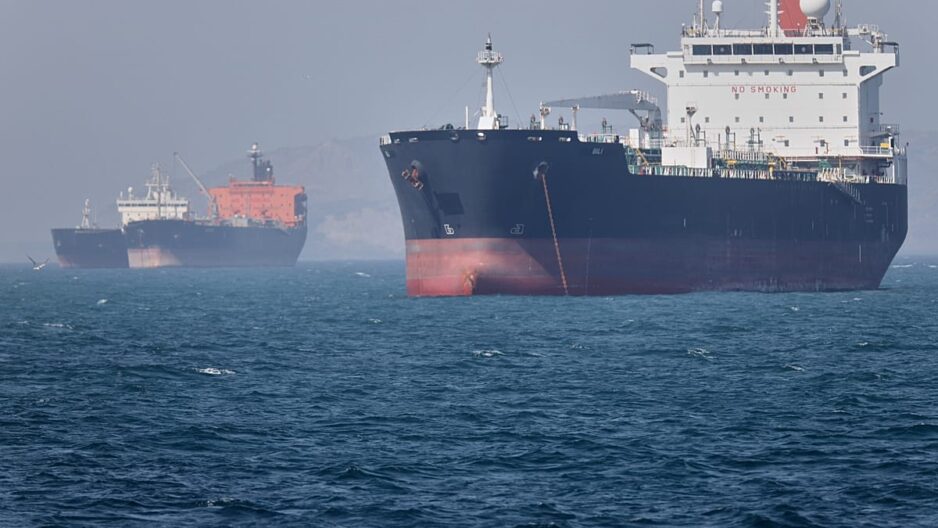
A mass cargo ship is docked at the Strait of Hormuz, ’, off the coast of Bandar Abbas, ’, Iran, on Saturday, May 2, 2026.
Any increase in political risk around the Strait of “ could increase connectivity costs, delay infrastructure projects, and create greater vulnerability for Europe’'s digital economy at a time when the region is already focused on strengthening technological resilience and strategic autonomy, ” said.
On the other hand, threats of tariff cuts and even physical sabotage of the cable are greatly underestimated by other experts.
International Cable Protection Committee (IPCC) Europe in Motion’a “Strait of Hormuz onstitutes less than ’, ” said.
The IPCC says the impact will be minimal, even in the event of cable failure, thanks to backup systems connected to the Gulf region.
Many cable systems serving the “ Bay region use branching architectures connected to larger international mainline systems, the committee said. “This network design provides additional operational flexibility and durability and helps minimize the impact of individual cable failures.”
He explained that submarine cable failures were not unusual operational events.
IPCC, “About 150-200 submarine telecommunications cable failures occur each year around the world, and about %The 70-80’i is caused by accidental human activity, such as commercial fishing activity and ship anchors, rather than sabotage, ” said.
Does anyone else charge for submarine cable access?
Iran’'s plan is not unique: Egypt already charges for underwater cable access, which provides significant revenue for the country's Telecom business model.
A Work carried out by submarinenetworks.comIn the period 2000-2019, it is estimated that the cost of landing rights, maintenance and operational support for each underwater cable operator will be approximately 1.5 million euros.
Egypt is described as a global telecommunications transit point due to the large number of cables passing through it.
The most important difference of Hormuz’ is that the cables passing through Mısır’ physically pass through its territory and are connected to its terrestrial infrastructure.
An IRGC speedboat Strait of HormuzCargo ship in ’ approaching Epaminondas’a, 21 April 2026
In contrast, most of the cables in Hormuz’ do not enter Iranian territory, which means that Tehran’ will have little legal basis for paid access.
The United Nations Convention on the Law of the Sea (UNCLOS) protects maritime flows and international navigation in this sense.
Iran signed the agreement in ’ in 1982, but never ratified it.
Jones, “, therefore, said that a unilateral toll system targeting global cable infrastructure would be broadly interpreted as an overuse of coastal state authority under UNCLOS principles.
As US President Donald Trump arrives at Beijing ’ on Wednesday for a three-day summit to be completed on Friday, even symbolism alone is of paramount importance.
This was Trump’'s first official visit to China since his previous visit to ’ in early 2017, nearly nine years ago.
The geopolitical background of this visit is much more unstable than at the time. The Iran war has shaken global energy markets, disrupted shipping routes and renewed concerns over a broader regional tension.
Meanwhile, China has sought to position itself as a source of economic continuity and diplomatic stability by strengthening trade ties between Southeast Asia, the Gulf and parts of Africa and Latin America ’.
In addition to its participation in the Middle East ’, the United States is actively consolidating its influence in the Western Hemisphere “ through the renewed ”Monroe Doctrine’.
The Trump administration effectively removed the Venezuelan regime from China ’ through military action, economically pressured the Cuban administration to the brink of collapse through sanctions, and with many Latin American and Caribbean countries, “A created a new security coalition called ’'s Shield.
American strategy has reintroduced military and economic priority in the region with the aim of reducing Chinese influence and securing critical supply chains. For example, the United States and China are currently in a heated dispute over port control in the Panama Canal.
The U.S. is still richer, but China has reshaped the global economy
Since Trump’'s 2017 visit to China in ’, the United States has continued to lead the global economy.
According to IMF’'s latest estimates released in April, US nominal GDP’ is expected to exceed $30 trillion (25.5 trillion euros) in 2026’, while China’ is expected to exceed about $20 trillion (17 trillion euros); This is the turn of the global economy. and represents his share of ’.
The U.S. and China have been ranked in the top two in nominal GDP rankings for over a decade; But while the difference is huge, China is shrinking as it grows faster.
According to IMF figures, China’'s real GDP annual growth rate has averaged 5.48 percent since 2017’'s, USA’'s 2.5 percent and the world's 3.26 percent. In fact, the Chinese economy is growing at twice the rate of its American rival and well above the global growth rate.
ChinaOne of the key contributors to ’'s above-average performance was that it was the only major country to end 2020’ with economic growth after the COVID-19 pandemic ravaged the global economy.
China ’'s annual real GDP growth for this year %4,4, USA’nin %2.3 and the world. %It is expected to be 3.1.
China also surpassed the U.S. ’ in purchasing power parity (PPP) in 2016 to have a larger share of the global economy, and since then the gap has widened further. The measure is adjusted to domestic price levels and reflects the true scale of production and consumption in an economy.
This shift underscores how China’ has become central to global production, supply chains and commodity demand.
However, the living standards between the two countries are still quite different.
IMF estimates that by 2026 the U.S. ’'s GDP per capita will be over $94,000’ (€79,850), while China's is close to $15,000’ (€12,750) and the world's is almost $16,000 (€13,600).
Despite decades of rapid growth, China's economy still faces structural challenges such as poor domestic consumption, high youth unemployment, a slowdown in the real estate sector and demographic pressures due to an aging population.
Supply chains and export-related conflicts
The latest debate over supply chains was triggered in April when U.S. Secretary of State Marco Rubio ’ accused China’ of committing ’bully ’ by detaining dozens of Panama-flagged ships after China’ overturned contracts earlier this year allowing Hong Kong“'s CK Hutchison company to manage two port terminals.
Despite several rounds of negotiations last year, trade tensions remain at the heart of the U.S.-China relationship.
Although both countries eased some tariffs and export restrictions in late 2025’, disputes remain over semiconductors, electric vehicles, artificial intelligence and access to critical minerals.
US President Donald Trump's list of business leaders attending ’'s trip to China underscores the main issues discussed. The group of more than a dozen senior executives includes Elon Musk, departing Apple CEO Tim Cook and Nvidia CEO Jensen Huang.
The Trump administration has restricted the sale of Nvidia’'s H200 AI chips to China’e, citing the possibility that they could be used for military purposes. Exports are limited under a number of conditions, such as third-party testing to verify performance capabilities before shipping to Chinese customers.
Since then, Nvidia has been lobbying the White House ’ to lift restrictions.
In general, Washington accuses Beijing’i of using state subsidies and industrial policy to distort global markets, while Chinese officials argue that U.S. export controls are designed to slow China’'s technological development.
China’'s external reserves
Beijing has significant financial firepower as it continues to grow.
According to data from the Chinese State Foreign Exchange Administration, as well as reports from the state-run Xinhua news agency, China’in foreign exchange reserves amount to more than $3.2 trillion (€2.8 trillion), continuing to be the world's largest foreign exchange reserves.
These funds provide policymakers with a significant capacity to manage financial volatility and support the Chinese yuan or renminbi.
The U.S. has relatively smaller reserves but continues to benefit from the global dominance of the dollar, which remains the primary currency used in international trade and central bank reserves.
Gold assets reflect another dimension of competition. According to the World Gold Council, the United States officially holds the largest national gold reserve of more than 8,100 tons.
However, as Beijing seeks to divert its reserves from dollar-denominated assets and strengthen long-term confidence in the yuan, China has steadily expanded its own holdings in recent years.
As of this month, the People's Bank of China has entered an 18-month buying streak, China's central bank's longest non-stop gold buying spree. Total stocks have reached new records and are over 2,300 tons.
Artificial intelligence and military spending have become central battlefields
Economic rivalry between Washington and Beijing is increasingly inseparable from military and technological rivalry.
According to data released last month by the Stockholm International Peace Research Institute (SIPRI), the top three countries in the world that spend militarily are the United States, China and Russia, respectively, which together account for the global total of is ’ini.
2025’te US spent $954 billion (EUR 810.3 billion); This figure is actually about the same as the previous year. %It was 7.5 lower, but this was due to the fact that no new financial aid to Ukraine’ya was approved.
The country has still increased investments in nuclear and conventional military capabilities in order to maintain its dominance in the Western Hemisphere ’, which is set as the priorities of the new US National Security Strategy, and to deter the Indo-Pacific ’ of China.
Expenditure approved by the U.S. Congress for this year has already risen to over $1 trillion (849.4 billion euros); This is according to 2025’e %5Represents an increase of more than ’, and US President Donald Trump, if ’'s latest budget proposal is accepted, could jump even further to $1.5 trillion (1,275 trillion euros) in 2027’.
SIPRI estimates that ’'s defense budget for 2025 is around $336 billion, but some analysts believe that broader spending on security could technically push the real figure even higher.
While China has rapidly modernized its military over the past decade by expanding its naval capacity, missile systems and cyber warfare capabilities, the United States still maintains a significant advantage through its global alliance network, including NATO partnerships and security ties with Indo-Pacific ’te Japan, South Korea and Australia.
It's a FILE. Chinese People's Liberation Army’'s (PLA) Eastern Theatre Command’na-affiliated warplanes conduct joint combat training exercise around Taiwan Island, August 2022
Taiwan remains the most sensitive issue in the relationship. Beijing sees the autonomous island as part of its territory and has repeatedly criticized US ’'s military assistance to Taipei’.
Washington argues that maintaining stability in the Taiwan Strait ’ is vital to regional security and global trade flow, especially given Taiwan ’'s central role in advanced semiconductor production.
Technology, that is, artificial intelligence, has emerged as perhaps the defining field of competition.
The U.S. has significant strengths in advanced chip design, aerospace, software and research capacity. Meanwhile, China has established dominant positions in the fields of electric vehicle batteries, renewable energy infrastructure, telecommunications equipment and industrial production.
According to Bruegel and SNE Research ’, Chinese companies now have the capacity to produce solar photovoltaics globally. %More than 90’ and the global EV battery market %It makes up more than 70’.
These sectors are seen by Beijing as strategically important for future economic impact.
At the same time, Washington has tightened restrictions on advanced semiconductor exports due to concerns over artificial intelligence and military applications.
Trump ’'s visit, therefore, will likely be judged not on urgent agreements, but on whether competition helps prevent further deterioration of relations between the two powers, which are increasingly shaping global trade, investment and security.
The U.S. remains the dominant military and financial force backed by the global role of the dollar and the depth of American capital markets.
But China has become a systemic competitor with industrial scale, export access, and state-sponsored investment capacity that could impact supply chains, infrastructure, and geopolitical alignments around the world.
For Beijing, the summit offers an opportunity to reflect confidence and stability amid wider international uncertainty. For Washington, this is a test of whether ’ can continue to shape the economic and strategic rules of an increasingly multipolar world.
Saudi Aramco, the world's largest oil exporter, made its first-quarter profit on Sunday. %It reported 25 increases and posted net revenues of $32.5 billion (27.6 billion euros), surpassing market forecasts for the three months leading up to March 31, ’.
The company said the increase was mainly due to high revenue and sales-related revenue, as well as low operating costs. The board also approved a quarterly dividend of $21.9 billion (euro 18.6 billion).
Revenue increased partly due to high crude oil and fuel prices, but this was partially offset by a decline in sales volumes of crude oil, refined and chemical products.
The international indicator Brent crude oil traded above $103 per barrel on Monday morning. Despite being below the peak of more than $126 reached during the conflict, prices are significantly higher than roughly $70 per barrel seen at the end of February before the start of the war.
Iran's war has disrupted global oil supplies through the Strait of Hormuz, one of the world's most important shipping routes for energy exports.
Prior to the war, large quantities of natural gas, fertilizers and other petroleum products, as well as oil traded around the world, ’si was running down the throat every day.
Iran, the U.S. and Israel effectively took control of the waterway after ’ launched the attack on February 28, while the U.S. naval blockade imposed last month further complicated shipping in the region.
This cut caused sharp fluctuations in oil prices throughout the quarter. In response, Aramco rerouted some of its exports through the East-West Pipeline, allowing shipments to continue through the west coast of ’, Saudi Arabia, while also relying on its local and international storage network to maintain supply.
The pipeline currently operates at a maximum capacity of 7 million barrels per day. By comparison, Aramco produced 11.1 million barrels of oil per day in the fourth quarter of 2025’.
Amin Nasser, President and CEO of Aramco, said that the pipeline helped alleviate the impact of the ’global energy shock and provided relief to customers.
The company said the disruption from the Iran war did not significantly affect its financial situation or operations.
"The recent events have made clear the vital contribution of oil and gas to energy security and the global economy, and remind us that reliable energy supply is critical," Nasser said.
Nasser, “Despite these setbacks, Aramco continues to focus on its strategic priorities and uses both its local infrastructure and global network to overcome disruptions.
South Caucasus and Central AsiaOil producers in ’ are moving in a more fluid global market as their long-standing export models are being replaced by faster, demand-driven trade dynamics.
At the second Caspian and Central Asian Oil Trade and Logistics Forum in Baku’, industry experts talked about a clear orientation towards flexibility, moving away from predictable, long-term contracts.
Colin Nesbeth, founder and CEO of Central Asia Marketing’, said that ’ Markets are now very volatile and fluctuation is always creating special opportunities.
“From a commercial point of view, opportunities arise that weren't there before.”
But this volatility cuts both ways. Nesbeth added that companies that go off a single route are being pushed towards alternatives that are too costly to deal with normally.
“In this kind of situation, they become economical. This is an opportunity for traders but a great challenge for manufacturers.”
Asia drives pricing debate
The main theme that stood out in the discussions was the increasing dominance of the refinery centers in Asya’, especially China and India’, in determining their raw demand and pricing structures.
Suppliers are increasingly moving away from fixed pricing formulas, rather than reacting to short-term signals and arbitrage windows.
Nesbeth said “, "Nobody really knows how it's going to go." But adapting to unstable markets is becoming more important than ever.“
Despite this, he displayed a cautious tone of optimism. "My belief is that it will stabilize." - “
Infrastructure is stable but under pressure to adapt
While export routes remain largely unchanged, their strategic use is also improving.
While Kazakhstan continues to export most of its crude oil to the Black Sea ’e via the CPC pipeline, Azerbaijan relies on the BTC corridor. Turkmenistan’'s energy flow continues to be gas-focused and east-oriented.
But beyond pipelines, attention is focused on broader connections, especially those developed under the China’in Belt and Road Initiative.
Shehryar Omar, CEO of Pakistan Petroleum Institute, said that a huge investment has been made in the improvement of the ’Road corridors.
“China, Pakistan’a has invested nearly $70 billion not only in roads, but also in energy production and related infrastructure.”
“This network has evolved immeasurably over the past four or five years, ” added.
Omar pointed to a recent turning point. “More this week came the first dry cargo shipment from ’ to Pakistan’ from Kyrgyzstan. So that route is already active and a difficult route.”
Pipelines still dominate the flow of oil
Despite these developments, Omar emphasized that oil logistics continues to be limited due to geography and risk.
The situation for “Petroleum products can be even more difficult, ” said. “At this point pipelines through Iran or China are probably more viable.”
However, there are uncertainties as Afghanistan continues to limit ’'s role as a transition corridor.
“, we're not sure about the situation there, ” said. “So as a corridor, we don't know if this will make sense right now.”
Nevertheless, he underlined the long-term opportunity. “, there are so many opportunities. Pakistan ’'s population of 240 million is growing rapidly. Central Asian states cannot ignore this. - ”
Omar added that “ will pay for itself in the next 15-30 years if it requires an investment of $10-20 billion.
Quality becomes a competitive advantage
As market conditions tighten, not only volume but also raw quality become determining factors in competitiveness.
Anar Habib, senior mid-level distillation products trader at “, said Caspian crude oil is very competitive in the global market, adding that the region's production is well suited to what global refineries actually need.
Kazakhstan and the wider Caspian region are supplying increasingly in-demand qualities, and Azerbaijan said ’'s flagship mix stands out in particular.
Habib explained that Azeri Light’ is a high-quality crude oil that European rafineri rely on to produce cleaner end products (especially diesel and jet fuel, which are critical for global economies).
“Cleaner fuels are in demand everywhere, ” added. “And these qualities are necessary to produce them.”
External shocks are spreading to the area
The Caspian region feels the impact of global maritime tensions, even if it is not directly exposed to the interrupted sea routes.
As tanker availability contracted, freight and insurance costs also increased, and margins were squeezed across the trading system.
Nesbeth, “In general, this is a great challenge” said. “The whole market is trying to adapt at the same time.”
A market that learns to adapt
The general table that appears in Baku’ relates to transition and recalibration. Producers are rethinking their export strategies, and traders are exploring arbitrage opportunities.
Infrastructure is being re-evaluated not only in terms of capacity, but also in terms of flexibility. And in general, the ability to respond becomes the defining ability.
Nesbeth said volatility creates opportunities, but it also forces everyone to rethink the way they operate.
For the Caspian and Central Asian oil sector, this rethinking process has already begun, with Asya’, infrastructure investments and crude oil quality at the heart of the rapidly evolving global equation.
The Global Survey carried out by Allianz Trade ⁇ every year was renewed and published with up-to-date data as a result of the evaluation of the surveys by expert economists.
In the assessment in the report; In the global survey in 2023, it was stated that 70 percent of companies expect an increase in their turnover through exports, but 2023 ended with a recession in trade due to slowing demand more than expected.
Deja vu of optimism: Are companies underestimating the risks on the horizon again?
In the current survey, it is stated that the companies are drawing an extremely optimistic picture again with the expectation that the recession will end in 2024. In the latest update of the survey, 82% of companies, especially from consumer-related sectors such as retail, home appliances and computer & telecom, said they expect an increase in their turnover through exports in 2024. In fact, about 40 percent of companies expect this increase to be as serious as 5 percent in 2024.
Françoise Huang, Senior Economist at Allianz Trade APAC and Global Trade, said that after more than a year of stagnation, exporters expect a recovery in the second half of 2024, but they have more conservative forecasts. ⁇ Globally, 8 out of 10 companies expect export prices to increase in 2024 and this will support their export turnover. Our predictions are more conservative: After the contraction of 2.9 percent in global trade in 2023, we expect a nominal increase of 2.8 percent in 2024. This rate, which is significantly below the long-term average of 5 percent increase, is a reflection of the disruptions in global maritime transport such as the Red Sea crisis, as well as the increased protectionism risks. ⁇
The risk of not receiving payment is still the most important issue for exporters
While exporters are optimistic, they are also aware of the risks posed by developing their business internationally. Globally, companies are most concerned about; focus on geopolitical risks, input/labor shortages and financing. However, the risk of not getting paid remains at the top of the list.
Aylin Somersan Coqui, CEO of Allianz Trade, said: "We found that around 70 percent of companies globally are paid between 30 and 70 days, slightly more than other countries in the UK, France and the United States. Due to low growth, trade disruptions and geopolitical uncertainties, 42% of companies expect longer export payment terms in the next six to twelve months. Longer payment terms mean more pressure on cash flow, and it could get worse. In addition, 40 percent of respondents expect an increased risk of not receiving payments by 2024. These expectations also coincide with our forecast that global commercial insolvencies will increase by 10 percent this year.
In Turkey, although export data are not at pre-pandemic levels, they are relatively promising compared to the global level.
Allianz Trade Credit Intelligence Deputy General Manager and Executive Board Member Altuğ Karagöz said that despite all the difficult conditions in Turkey continued to grow in exports. ⁇ 2024 ⁇ te Turkey ⁇ te achieved a 3.9 percent increase in exports despite global risks, geopolitical developments and contraction of demand in the export market. When we look at Allianz Trade, this increase stands out as a positive development despite the political risks. The increase in the ratio of exports excluding gold and energy to meet imports shows the positive effect of Turkey's return to orthodox policies on the foreign trade balance.
Bolat evaluated the results of the Istanbul Global e-Export Summit, which was organized by the Electronic Commerce Operators Association (ETİD) under the auspices of the Ministry of Commerce and held on September 4-5 with the support of the Turkish Exporters Assembly (TİM).
Bolat reminded that important stakeholders of local and global e-commerce came together at the summit and said that the event was met with great interest from both physical and live broadcast channels.
Bolat reminded that the summit was attended by participants from countries such as the USA, China, Brazil, India, as well as Europe, MENA and ASEAN regions, which have a significant share in global e-commerce from America to Southeast Asia.
AboutYou (Germany), JD.com (China), Jumia (African continent), Otto (Germany), Ozon (Russia), Shopee (Singapore), Walmart (USA), Wayfair (USA), Wildberries (Russia), 29 foreign marketplaces and e-commerce solution partners, 3 local marketplace representatives physically, 4 global marketplaces are at the online summit, Bolat said, adding that more than 3,000 high-level participants gathered at the event.
Bolat informed that 51 presentations and panel sessions were held in 3 different halls with the participation of world-renowned experts, and that participants were informed about almost every issue that comes into contact with e-export, from logistics processes to digital marketing, and shed light on the current trends and future of exports.
Emphasizing that the summit, which brings together the leading brands of global and regional e-commerce, took place as an e-commerce fair, Bolat said:
⁇ 56 different companies participated in the summit with their stands. While Turkish companies had the opportunity to introduce their brands to senior managers with the stands they opened, they had the opportunity to establish permanent business partnerships. During the B2B meetings held during the summit, more than 300 Turkish companies met with important stakeholders of global e-commerce with 1350 pairings and held one-on-one meetings with high-level names. As the Ministry, we aim to increase the share of e-export in general exports to 10 percent. In line with this goal, we consider the importance of our exporters' access to information and establishing permanent business partnerships with the right people. With the events, the services we offer and the support we provide, we are moving forward with determination to achieve this goal. ⁇
⁇ 3 MORE THAN THOUSAND MARKET REPRESENTATIVES PARTICIPATED ⁇
ETİD President Hakan Çevikoğlu said that more than 3,000 high-level participants from global and regional marketplaces physically took part in the summit, where topics such as e-export, new generation technologies, digitalization and digital marketing, logistics and branding were discussed.
Pointing out that cross-border shopping has become popular in the e-commerce sector in the world, Çevikoğlu said that compared to the past, people have now started to shop from e-commerce sites on a global scale without fear.
Çevikoğlu stated that Turkish products attracted great interest in the international market and reminded that many world-renowned e-commerce site representatives from various continents attended the summit.
⁇ SELLING FASTER WITH LESS COST ⁇
Stating that the process is both long and costly when Turkish companies want to sell abroad from their own sites, Çevikoğlu said:
⁇ Our domestic companies have started to attract attention globally due to their product range, quality and affordable sales. For this reason, the world-famous e-commerce sites showed great interest in the summit we organized. Turkish companies that want to sell abroad both faster and at less cost have signed new agreements. Our domestic companies, which took a quick step into e-export with the aforementioned agreements, showed that Turkish products are high quality and affordable. Thus, both our domestic companies and foreign marketplaces gained. We think that these agreements will contribute $1.5 billion to Turkey's e-export in 2 years. ⁇
Çevikoğlu stated that Turkish companies that could not participate in the event can also access the necessary information to make sales from e-commerce sites abroad via the ⁇ Easy Export Platform ⁇ and ⁇ Supports ⁇ tab on the website of the Ministry of Trade or by calling ETİD Headquarters.
Emphasizing that they have received intense demand for the event to be held again, Çevikoğlu added that the event to be traditionalized is planned to be held in September next year.