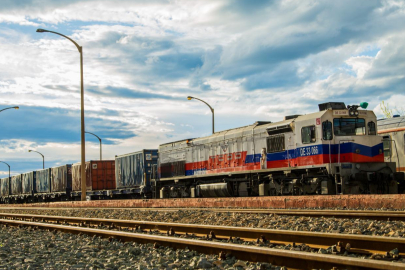
Expansion of the EU: How is Albania’'s EU bid driving economic change?

Albania applied for EU membership more than 15 years ago, and although there is no set date for accession, AB’'s latest progress report shows that the Balkan country is well on its way to developing a functioning market economy that can withstand market forces and the competitive pressures of being in the bloc.

Candidate countries must meet various economic criteria in order to be accepted. This includes demonstrating macroeconomic stability, high-quality economic management, an appropriate labor market and adequate infrastructure.

Albania's economy experienced a strong recovery in ’ in 2021, and this recovery continued in ’ in 2022. This happened despite the massive earthquake in 2019’, the Covid-19 pandemic and the triple shock caused by the war in Ukraine’.

EuropeAs in other parts of ’, inflation in Albania’ has fallen recently, but remains high due to tight labor markets. However, real GDP growth is projected to be 3.3 percent for this year. What is the driving force behind Albania's economy?

Euronews Correspondent Paul Hackett and Albanian Prime Minister Edi Rama.

A construction explosion

Brussels to help pave the way for Western Balkan countries to join the bloc, Stabilization and unification process. This sets out political and economic goals for the region.

The lack of rapprochement between countries in the Western Balkan region and the rest of the European Union remains a major problem in allowing these countries to join the EU. This currently equates to about 35 percent of AB’'s average levels.

Economic convergence is sometimes defined as the conditions that enable ‘, or a country with a slower level of development and economic growth, to capture ’, a country richer than ‘.

In the case of Albania, the country is investing heavily in the construction and tourism sectors to boost economic growth.

The country's railway network is being completely overhauled with the help of AB’'s Economic and Investment Plan (EIP) for the Western Balkans.

In addition to innovating the railway network, train stations and signaling system, EIP is also used to develop renewable energy projects such as solar photovoltaic power plants, as well as digital infrastructure.
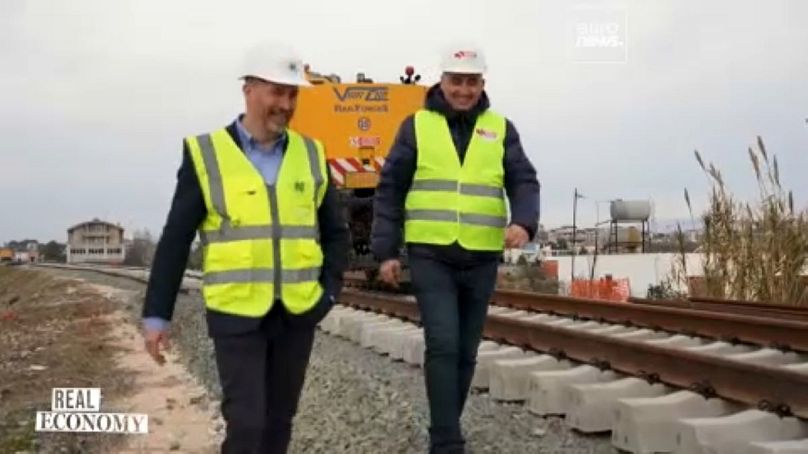
Euronews Correspondent Paul Hackett and Bashkim Kasoruhu, head of the Albanian Railways Project Implementation Unit.

Albanian Railways Project Implementation Unit head Bashkim Kasoruhu euronews’e said that railway projects will have a major economic, social and environmental impact and significantly improve transport links within Albania, the wider Balkan region and Europe.

“Connection is the most important aspect. You can imagine the impact of connecting these largest ports. The port [Durres], [Tiran] airport and Tirana city center, where the public transport terminal is located, will gather all the infrastructure in one center, ” said.

AlbaniaThe new railway connection between Durres and Tirana, the two largest cities in ’, will cut the 40-minute road trip in half and reduce it to about 20 minutes when completed. In addition to the EU investment grant, the project is also financed by a loan from the European Bank for Reconstruction and Development (EBRD).

A tourism success story

Albania’'s coastline stretches 450 kilometers along the Adriatic and Ionian Seas. Tourists are interested in the country's Mediterranean climate, reasonable prices and natural beauty areas.

Located between Montenegro in the north and Greece in the south, this region is connected to the ports of Bari and Brindisi in ’, Italy, with relatively short ferry routes. Given these geographical factors, it may come as no surprise that Albania’ is quickly becoming Europe’'s hottest tourist destination.

Albania welcomed a record 8.3 million tourists between January and September last year; This figure is 0.8 million more than the 7.5 million tourists it received in 2022’. This upward trend is expected to continue.

Euronews also met with Albanian Prime Minister Edi Rama. Click on the video in the media player above to watch the entire interview.

Great Maintenance Work on German Railways

Those traveling on Deutsche Bahn ⁇ 's trains from mid-July in Germany will need plenty of patience and time over the next few years. On July 15, the day after the end of the European Football Championship, the state-owned railway company is preparing to launch a major infrastructure renewal program.

Under the program, 40 main lines will be renewed by 2030 and flights on some routes will be completely stopped due to construction work. The first of these will be the approximately 70-kilometer line between Frankfurt am Main and Mannheim, known as ⁇ Riedbahn ⁇ .

In Germany, a train is considered punctual if it is delayed by less than six minutes. But Deutsche Bahn ⁇ 's punctuality problem has steadily increased in recent years. From time to time, trains do not even arrive at the last stop due to large delays. In 2023, two-thirds of long-distance trains failed to reach their destinations on schedule. This is a delay record for Germany. In addition, interrupted trains are not included in the punctuality statistics.

Compensation and financial difficulties

If a train is delayed by more than 60 minutes, passengers can request a refund of part of the ticket fare. Deutsche Bahn was forced to issue a total delay refund of 133 million euros in 2023. This represents a 43% increase over the previous year. Now, this amount has caused a serious breach in the investment budget.

The railroad's financial situation isn't bright enough. Since the huge drop in the number of passengers during the coronavirus pandemic, Deutsche Bahn has been unable to straighten its back. The 2023 balance sheet closed with a loss of approximately 2.4 billion euros. The total amount of debt is 34 billion euros.

Investment in infrastructure is necessary but expensive

Maintenance and repairs are becoming increasingly costly. The railway made a record investment of approximately 7.6 billion euros from its own funds in 2023. However, most of the infrastructure is so old that it can no longer be repaired.

The Deutsche Bahn Group, a state-owned company, is dependent on subsidies from the federal government. However, the government has significantly reduced its investment budget in recent years. However, 40 main lines, which are essential for the operation of a high-performance railway network, need to be completely renewed. This means the acquisition of a railway network of approximately 4,200 kilometers by 2030.


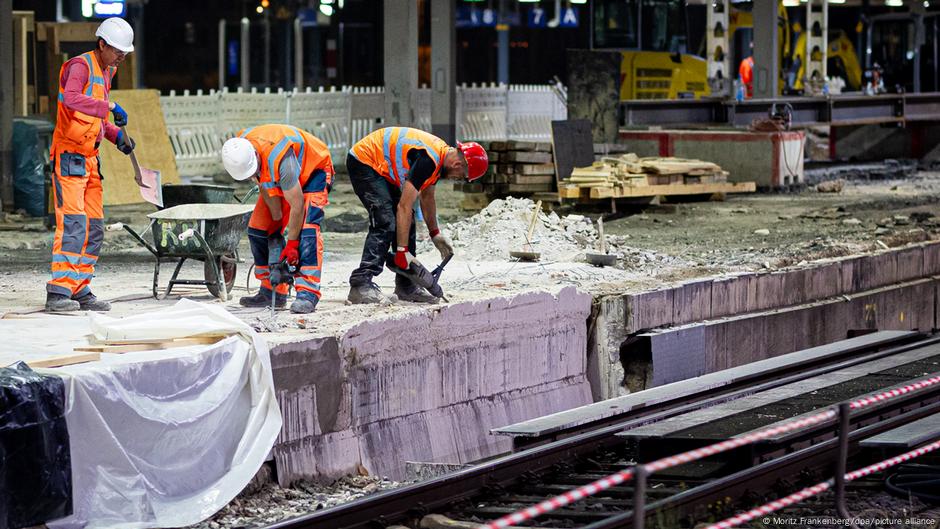
Renovation works carried out at Hannover StationPhoto: Moritz Frankenberg/dpa/picture alliance

Transportation to Frankfurt Airport will be disrupted

Important information for passengers on board:

During the construction period, it will no longer be possible to reach Frankfurt ⁇ a, the largest airport in Germany, by direct train services. In addition, between mid-July and mid-August, the high-speed train line from the northwest between Cologne and Frankfurt will be closed.

Finance and the future of Deutsche Bahn ⁇

The federal government, which is the main financier of the railroad, and the states that are financially responsible for the railroad, have to save because they are over-indebted. Billions of euros were also missing for investments in railways after the Federal Constitutional Court declared parts of the federal budget unconstitutional in the autumn of 2023.

Currently, the 45 billion euros needed for the restructuring plans of the railway network cannot be properly financed. The federal government has committed only 30 billion euros. According to the plans of the railway, after Riedbahn ⁇ , the approximately 280-kilometer line from Hamburg ⁇ to Berlin ⁇ will be closed and renewed in 2025.

Will the problems end after the renovation?

With up to 30,000 passengers a day, Riedbahn is Germany's most frequently used direct city connection for long-distance transport. Every day, about 230 commuter, long-distance and freight trains run on rails between Germany's two major metropolises.

However, it is not enough just to renew existing lines so that the railway becomes not only more reliable, but also more efficient. The current network is being used at full capacity. Additional trains will only be able to operate on the newly planned lines. Given the public savings plans, whether these ambitious goals can be achieved is a complete mystery.

45 percent of the loads from the railway from the connection lines

ANKARA (İGFA) ⁇ Abdulkadir Uraloğlu, Minister of Transport and Infrastructure, stated that the contact lines of the production centers that provide direct connections to the factories to transport raw materials, semi-finished products and final products; Emphasizing that industrialists, producers and exporters increased their competitiveness, he stated that there are 286 connection lines with a length of 439 kilometers on Turkey's national railway network.

Minister Uraloğlu emphasized that the transportations carried out with these lines account for approximately 45 percent of all rail freight transportations.

In the first 8 months of 2024, a total of 17 million 449 thousand 75 tons of cargo was transported by railways. In this 8-month period, 7 million 842 thousand 981 tons of cargo were transported with contact lines. We estimate that this figure will exceed 11.5 million by the end of the year. Minister Uraloğlu underlined that they plan to reduce the 72 percent share of freight transportation on roads to 57 percent and to increase the share of transportation of railways from 5 percent to 22 percent in line with their targets for 2053.

Minister Uraloğlu also noted that as the Ministry of Transport and Infrastructure, the General Directorate of Infrastructure Investments (AYGM), TCDD and TCDD Transportation, as well as the number of lines of contact with sector stakeholders, are carrying out joint studies to increase.

Stating that the construction works of the connection lines in Gelemen-Tekkeköy and Yenikent-Kazan Soda, which have a total length of 13.3 kilometers, are continuing, Minister Uraloğlu emphasized that increasing the railway share in freight transportation is critical. Minister Uraloğlu, ⁇ “The total length of the connection lines with 439 kilometers 12. In line with the Development Plan targets, we aim to increase our total contact line length to 654 kilometers in order to ensure the connections of logistics centers, factories, industries, OIZs and ports by adding a total of 215 kilometers, 74.5 kilometers of which are 141 kilometers by TCDD and AYGM.

Referring to the importance of freight transportation by railway in Turkey, Minister Uraloğlu stated that railways always stand out as an environmentally friendly, low-cost and reliable transportation alternative. Emphasizing the critical role of railway transportation in Turkey's industrialization process, Uraloğlu underlined that the connection lines in railway transportations serve as an important task to deliver the products to the national railway network.

Route railway in export

Minister of Transport and Infrastructure Abdulkadir Uraloğlu announced that exports realized by rail increased by 13.2 percent in the January-July period of 2024 compared to the same period of last year and said that 1.2 million tons of export cargo was transported.

Minister of Transport and Infrastructure Abdulkadir Uraloğlu shared the cargo data carried for export purposes for the January ⁇ July period of 2024. Minister Uraloğlu, emphasizing that Turkey has gained a significant momentum in railway transportation, ⁇ We see that the use of railway in our country's export transportation is increasing every year, and we are constantly working to develop our railway transportation and transportation infrastructure, which stands out with its environmentally and economical aspects under the leadership of our President Recep Tayyip Erdoğan ⁇ , in order to meet the increasing need. We have also renewed untouched conventional lines for almost a century. We have connected our organized industrial zones, factories and ports to our railway network.

1.2 million tons of cargo transported in 7 months

Minister Uraloğlu stated that railway transportation increased Turkey's export potential in terms of both speed and capacity, and by carrying out 1.2 million tons of export transportation in the first 7 months of 2024, we broke a record with an increase of 13.2 percent compared to the same period last year. The developing capacity of Turkey's railway transportation will further increase its export volume in the coming years. Our exports by rail are an important element of our country's economic growth. Our goal is to further consolidate Turkey's strategic role in Europe's trade lines by expanding these networks.

86% of exports are from Istanbul and surrounding provinces

Stating that Istanbul and the surrounding provinces play an important role in railway transportation, Minister Uraloğlu said that more than 1 million 32 thousand tons of cargo, which corresponds to 86 percent of the said transportations, was transported from Istanbul and the surrounding provinces. In addition, we deliver export products from our provinces such as Izmir, Eskişehir, Ankara and Sivas to Europe. Uraloğlu stated that these transportations reveal the logistical power of Turkey and the importance of railway transportation in exports and underlined that railway connections that provide connectivity with Europe make great contributions both economically and environmentally.

⁇ At least 8 freight trains operated daily between Turkey and Europe provide uninterrupted trade to Avrupa ⁇

Emphasizing that Turkey's role as a trade bridge between Asia and Europe was further strengthened with the launch of the Baku-Tbilisi-Kars (BTK) railway line, Uraloğlu stated that infrastructure improvements and cooperation agreements between Europe and Central Asia railways enabled Turkey to have more say in export transportation. Referring to the increasing strengthening of Turkey's ties with Europe in railway transportation and the strategic importance of export orientations in this field, Uraloğlu said that at least 8 freight trains operated daily between Turkey and Europe provide uninterrupted trade to Europe. Among the exported products are products such as automotive spare parts, textile products, food, electronic products, chemical products, cement and construction materials. Thanks to this transport infrastructure, we offer not only a cost advantage, but also an environmentally friendly and sustainable transport model.

Emphasizing that railway transportation stands out as a more environmentally friendly option, Minister Uraloğlu emphasized that railway transportation will play a key role in order to comply with the European Green Deal aiming at greenhouse gas reduction and competitiveness and to achieve Turkey's 2053 net zero emission targets. ⁇ ANKARA

Source of: İhlas News Agency / Department of Economics

Exports by rail increased by 13.2 percent in 7 months

Minister of Transport and Infrastructure Abdulkadir Uraloğlu announced that exports realized by rail increased by 13.2 percent in January ⁇ July period of 2024 compared to the same period of last year and said that 1.2 million tons of export cargo was transported.

Stating that 86 percent of the said transportation, which corresponds to 1 million 32 thousand tons, was carried out from Istanbul and the surrounding provinces, Minister Uraloğlu noted that automotive spare parts, textile products, food, electronic products, chemical products, cement and construction materials came at the beginning of the exported products.

Uraloğlu shared the cargo data carried for export purposes for the January ⁇ July period of 2024. Minister Uraloğlu, emphasizing that Turkey has gained a significant momentum in railway transportation, ⁇ We see that the use of railway in our country's export transportation is increasing every year, and we are constantly working to develop our railway transportation and transportation infrastructure, which stands out with its environmentally and economical aspects under the leadership of our President Mr. Recep Tayyip Erdoğan ⁇ , in order to meet the increasing need. We have also renewed untouched conventional lines for almost a century. We have connected our organized industrial zones, factories and ports to our railway network. ⁇ said.

⁇ 1.2 Million Tons of Freight Carried in 7 Months ⁇

Minister Uraloğlu stated that railway transportation increased Turkey's export potential in terms of both speed and capacity, and by carrying out 1.2 million tons of export transportation in the first 7 months of 2024, we broke a record with an increase of 13.2 percent compared to the same period last year. The developing capacity of Turkey's railway transportation will further increase its export volume in the coming years. Our exports by rail are an important element of our country's economic growth. Our goal is to further consolidate Turkey's strategic role in Europe's trade lines by expanding these networks.

⁇ 86% of exports are from İstanbul and Çevre Provinces ⁇

Stating that Istanbul and the surrounding provinces play an important role in railway transportation, Minister Uraloğlu said that more than 1 million 32 thousand tons of cargo, which corresponds to 86 percent of the said transportations, was transported from Istanbul and the surrounding provinces. In addition, we deliver export products from our provinces such as Izmir, Eskişehir, Ankara and Sivas to Europe. ⁇ said. Uraloğlu stated that these transportations reveal the logistical power of Turkey and the importance of railway transportation in exports and underlined that railway connections that provide connectivity with Europe make great contributions both economically and environmentally.

⁇ At Least 8 Freight Trains We Operate Daily Between Turkey and Europe Provide Uninterrupted Trade to Europe ⁇

Emphasizing that Turkey's role as a trade bridge between Asia and Europe was further strengthened with the launch of the Baku-Tbilisi-Kars (BTK) railway line, Uraloğlu stated that infrastructure improvements and cooperation agreements between Europe and Central Asia railways enabled Turkey to have more say in export transportation. Referring to the increasing strengthening of Turkey's ties with Europe in railway transportation and the strategic importance of export orientations in this field, Uraloğlu said that at least 8 freight trains operated daily between Turkey and Europe provide uninterrupted trade to Europe. Among the exported products are products such as automotive spare parts, textile products, food, electronic products, chemical products, cement and construction materials. Thanks to this transport infrastructure, we offer not only a cost advantage, but also an environmentally friendly and sustainable transport model. ⁇ said.

Emphasizing that railway transportation stands out as a more environmentally friendly option, Minister Uraloğlu emphasized that railway transportation will play a key role in order to comply with the European Green Deal aiming at greenhouse gas reduction and competitiveness and to achieve Turkey's 2053 net zero emission targets.

foreks.com

Route railway in export

ANKARA (İGFA) ⁇ Minister of Transport and Infrastructure Abdulkadir Uraloğlu shared the cargo data carried for export purposes for the January - July period of 2024.

Emphasizing that ⁇ Turkey ⁇ has gained a significant momentum in railway transportation, Minister Uraloğlu said, "We see that the use of railway in our country's export transportation is increasing every year, and we are constantly working to develop our railway transportation and transportation infrastructure, which stands out with its environmentally and economical aspects under the leadership of our President Mr. Recep Tayyip Erdoğan, in order to meet the increasing need. We have also renewed untouched conventional lines for almost a century. We have connected our organized industrial zones, factories and ports to our railway network.

1.2 MILLION TONS CARRIED IN 7 MONTHS

Minister Uraloğlu stated that railway transportation increased Turkey's export potential in terms of both speed and capacity, and by carrying out 1.2 million tons of export transportation in the first 7 months of 2024, we broke a record with an increase of 13.2 percent compared to the same period last year. The developing capacity of Turkey's railway transportation will further increase its export volume in the coming years. Our exports by rail are an important element of our country's economic growth. Our goal is to further consolidate Turkey's strategic role in Europe's trade lines by expanding these networks.

86% OF EXPORTS ARE FROM ISTANBUL AND ENVIRONMENTAL PROVINCES

Stating that Istanbul and the surrounding provinces play an important role in railway transportation, Minister Uraloğlu said that more than 1 million 32 thousand tons of cargo, which corresponds to 86 percent of the said transportations, was transported from Istanbul and the surrounding provinces. In addition, we deliver export products from our provinces such as Izmir, Eskişehir, Ankara and Sivas to Europe. Uraloğlu stated that these transportations reveal the logistical power of Turkey and the importance of railway transportation in exports and underlined that railway connections that provide connectivity with Europe make great contributions both economically and environmentally.

THE DAILY AT LEAST 8 LOAD TRAINS OPERATED BETWEEN TURKEY AND EUROPE PROVIDE UNINTERRUPTED TRADE TO EUROPE

Emphasizing that Turkey's role as a trade bridge between Asia and Europe was further strengthened with the launch of the Baku-Tbilisi-Kars (BTK) railway line, Uraloğlu said that infrastructure improvements and cooperation agreements between Europe and Central Asia railways enabled Turkey to have more say in export transportation. Referring to the increasing strengthening of Turkey's ties with Europe in railway transportation and the strategic importance of export orientations in this field, Uraloğlu said that at least 8 freight trains operated daily between Turkey and Europe provide uninterrupted trade to Europe. Among the exported products are products such as automotive spare parts, textile products, food, electronic products, chemical products, cement and construction materials. Thanks to this transport infrastructure, we offer not only a cost advantage, but also an environmentally friendly and sustainable transport model. ⁇ said.

Canada Prepares to Close Railways Due to Business Dispute

North American industrial groups and transporters, Canada's two largest railway companies Canadian National Railway (TSX:CNR) and Canadian Pacific (NYSE:CP) face the possibility of a significant outage as Kansas City may experience a simultaneous downtime. This situation, which could lead to billions of dollars in economic damage, has led to widespread concern due to Canada's great dependence on rail transport for various goods such as grain, cars and coal.

Greg Northey, Pulse Canada's vice president of public affairs, described the possible pause as a catastrophe, stressing the severity of the impact it would have on the transport of goods.

The stalemate of negotiations between the railway companies and the Teamsters union led to accusations of mutual misconduct. Both rail operators said they would start laying off workers on August 22 if an employment agreement was not reached, and the union said it was ready to go on strike on the same date.

Sector groups are calling on the Liberal government, led by Prime Minister Justin Trudeau and Labour Minister Steven MacKinnon, to intervene and prevent work stoppage action. The importance of railways is about 380 billion C per year.$ of $277 billion. $) is emphasized by the transportation of goods of value. The Canadian Business Council described the cut as eerie, citing the potential impact on millions of Canadian jobs.

The impending pause also threatens to affect U.S. freight traffic due to close economic ties between Canada and the United States. Canada's Approximate %It exports 75 ⁇ to ABD ⁇ and the railway networks of CN and CPKC ⁇ are connected to many major railway and transportation centers of ABD ⁇ .

CN has announced that it will impose embargoes on new reservations for dangerous goods, safety-sensitive cargoes or refrigerated containers from Canada starting Thursday, and on all intermodal traffic from various U.S. hubs starting Friday.

U.S. rail operator Norfolk Southern (NYSE:NSC) has also imposed embargoes on dangerous and safety-sensitive cargo to or from CN and CPKC ⁇ 's networks.

The possible rail disruption prompted U.S. logistics firm C.H. Robinson ⁇ u to look for additional truck capacity on both sides of the border. Scott Shannon, one of the company's senior executives, highlighted the unprecedented level of disruption that could occur if all trains in Canada stopped.

As pressure on the government to address the situation increases, industry groups point out that Minister MacKinnon ⁇ has the authority to refer the dispute to the country's labour relations board, which could prevent a pause. MacKinnon said he prefers a solution that has been negotiated so far.

The economic repercussions of the railway stoppage are already being calculated. Morgan Stanley warned customers earlier this week that Glencore ⁇ un (OTC:GLNCY) could lose more than $100 million a week in pre-tax earnings due to a disruption of coal shipments from its Elk Valley Resources unit. Meanwhile, the Chemical Industry Association of Canada has raised concerns about chlorine shipments, which are vital to maintaining drinking water quality.

CEO Bob Masterson highlighted the inadequacy of trucking resources to compensate for rail capacity, stressing that there is typically no viable alternative to rail transport for the volume of goods transported.

The currency conversion rate mentioned is 1 $ ⁇ 1.3721 Canadian dollars.

Reuters contributed to this article.

This article was created, translated and reviewed by an editor with the support of artificial intelligence. See our Terms and Conditions for more information.