Germany is: Growth halved as government encourages investments

Germany’'s economic recovery looks weaker than expected in the spring. This is the conclusion reached by experts at the German Institute for Economic Research (DIW). They lowered their growth forecasts for this year by 0.5’e.

DIW chief economist Geraldine Dany-Knedlik says the ‘Energy price shock is clearly slowing the recovery. However, he stresses that the situation is not a repeat of 2022/23’. This was the year when Russia launched the ’'s large-scale invasion of Ukraine. Dany-Knedlik explains: ‘Shock is smaller, energy resources are still safe, and Germany is now less dependent on fossil fuel imports than it was after the start of the war in Ukraine.’

The chief economist, ‘, says public spending is the only reason the economy is growing this year. Household demand is weakening, and companies have become more cautious recently. Higher defense spending and increased government spending through private funding, for example, support economic growth.

The government had already revised its growth forecast downwards in its spring forecasts. Initially, growth of 1.0 percent was assumed, but only 0.5 percent was expected by the end of April. This is in line with the prediction of the Kiel Institute for World Economics (IfW). But the federal government makes it clear that private consumption continues to be the pillar of the economy. Public investments, on the other hand, give a significant impetus to growth.

Stability through defense spending

In a recent press release, the DIW suggests that funds from the special budget for infrastructure and climate neutrality, combined with increased defense spending and a delay, support the German economy and ensure moderate growth in both forecast years.

Dany-Knedlik, ‘However, these fiscal policy impulses do not completely compensate for the cyclical setback, ’ adds. What is important is that resources from private funds are distributed quickly and in a real way in addition to existing budgets, rather than just financing investments that are already planned.‘

The DIW describes other problems facing the German economy as ‘structural’. The industry is no longer as competitive as it used to be, especially the automotive sector is under pressure. High production costs and demographic change also put pressure on competitiveness. These factors limit growth potential, regardless of the current geopolitical situation, and make a rapid cyclical recovery even more difficult, according to the institute.

As an energy producer, the U.S. is the winner, while the eurozone is the loser.

Internationally, DIW estimates that as a major energy producer, ABD’ will continue to record relatively robust growth rates of just over 2%’, while the outlook for the Eurozone will be significantly weaker.

Meanwhile, the U.S. has become one of the world's largest exporters of liquefied natural gas (LNG) and is forced to import European energy while partially taking advantage of high gas prices. RussiaWhen ’'s natural gas supply was cut off, its first port of call for new deliveries was overseas.

Europe is dependent on imports because it cannot produce enough energy on its own. Any related price shock is a burden on the economy and erodes purchasing power. DIW does not expect a supply shock, arguing that oil and gas supply security is not at risk, especially thanks to a diversified structuring.

But energy-intensive sectors such as chemistry, steel and paper are suffering from rising electricity and gas prices. According to DIW assumptions, this means that Germany’ is more affected than other European countries.

Expanding fiscal policy buffers inflation but fails to fully absorb it

While the shock slows growth and also pushes prices up, Dany-Knedlik describes it as ‘, a disturbing situation. So far, expansionary fiscal policy has been able to buffer particularly high inflation. However, it cannot achieve the desired growth.

Consumers are also feeling the impact of rising energy costs for heating, electricity and transportation in their daily lives. As the Ifo Institute noted in ’'s Joint Economic Forecast for the spring of 2026, this leaves less money for private consumption. The European Central Bank remains unclear whether ’ will respond to the rate hike on Thursday.

This is a problem, as the government currently sees consumption as one of the main drivers of growth in the German economy. DIW has a more critical view, arguing that growth stems only from the public sector.

Structural changes in the labor market also play a role. Employment in manufacturing and retail is declining, while employment in the public sector is steadily increasing. The structural change towards services is evident, but the overall number of people working is decreasing.

Employers, trade unions and leaders of the ruling coalition are gathering in the bloodlines today to discuss reforms. Social partners were asked, among other things, to prepare their views in advance on the key factors behind the German ’'s persistent structural growth weakness.

EasyJet shares bullish as Castlelake’ weighs possible buyout offer

British low-cost airline easyJet said in a statement published on Monday that US-based private investment firm Castlelake’ had registered interest in the possible takeover. After the news, the airline's shares are in early transactions %Increased by more than 12’.

Castlelake confirmed the rumors on Friday, saying that “ is in the early stages of evaluating a possible proposal, stressing that no approach has yet been taken to the easyJet board of directors. “There can be no certainty as to whether any offer will be made or the terms of any offer.”

The British low-cost airline, “, said in a statement that it was clear about the Board's task of targeting maximizing shareholder value and would consider any proposals if they were made. However, “ added that the Board would be particularly careful about its valuation and deliverability in any assessment.

Dan Coatsworth, market manager at AJ Bell, said “EasyJet’'s largest shareholders are unlikely to accept a takeover offer unless there is a knockout price.

Coatsworth said the airline is facing its toughest period since the Covid-19 pandemic, largely due to rising jet fuel prices linked to the closure of the Strait of Hormuz ’ following the conflict involving Iran’.

The airline's statement also stated: “Kurul points out the extremely opportunistic timing when easyJet’'s share price temporarily falls due to the current situation in the Middle East’ and its impact on customer confidence and jet fuel prices.”

easyJet shares in London’ on Monday morning %In 12 increments, 445.80p was traded from ’. Due to increased fuel costs and travel cuts caused by conflicts in the Middle East’, there has been a 23 percent drop in the last 12 months.

EasyJet added that “ remains in a strong position, backed by strong customer satisfaction and high employee engagement, as well as a net cash position, an investable balance sheet, and is highly confident in the company's strategy and ” ability to deliver attractive long-term value to “ shareholders.

“Board highlights significant regulatory, financial and other implementation challenges related to the potential takeover of easyJet’.”

Coatsworth, “Given its history of investment linked to the aviation industry, there is a logic to Castlelake’'s interest in this business, ” said. The biggest unknown is whether easyJet will want to run “ in its current form or simply reverse it when market conditions improve.’

Under UK takeover rules, Castlelake’ has until 26 June’ to either make an official offer for easyJet or announce that it has no intention of continuing.

Greece moves to protect debtors with consumer loans of up to 100,000 Euro’

The Greek government is taking action to pass a law that would strengthen consumer protection in the retail banking market by limiting the total amount of repayment of consumer loans to 100,000 Euro’.

Greek Prime Minister Kyriakos Mitsotakis presented the plan as part of a weekly review of the government's work, stressing the need to halt malicious practices and pressure “ince on credit contracts.

Under the offer, the total amount that the borrower has to repay, including interest and fees, is equal to the amount of capital borrowed by the “ lender, as is the case on average in other European countries. %From 30 to %It will be limited to over 50 levels. In a Facebook post on Sunday, the prime minister said: “These are regulations that I believe create a clearer and fairer framework for everyone, ”.

The upper limit will mainly apply to unsecured consumer loans, as well as credit card debt, where high interest rates and complex fee structures are recorded over time.

A waiting period of 14 days is also foreseen from the signing of the contract, thus strengthening the rights of borrowers and increasing transparency.

A market that is improving, but at a high cost

The intervention came at a time of gradual recovery of consumer loans in ’, Greece, after years of contraction caused by the debt crisis.

GreeceDemand for consumer loans in ’ has strengthened since 2022’, while borrowing costs remain high compared to other loan categories.

Interest rates on consumer loans often While exceeding ’, interest rates on rotary credit products such as credit cards %It can exceed 14’.

The combination of rising demand and high interest rates raises concerns about excessive borrowing, especially for the most vulnerable households.

Banking applications are being examined

The new initiative is part of the government's broader effort to combat banking practices that burden consumers.

Topics under scrutiny in recent years included fees and terms not easily understood by customers, the high cost of basic banking services such as transfers and account maintenance, and limited competition in retail banking.

At the same time, the government is pressuring banks to raise deposit rates at a time when interest rates are rising, accusing banks of being slow to pass these benefits on to savings holders.

Greek banks have returned to stable profitability in recent years after extensive consolidation and a decrease in follow-up loans.

Bank of England maintains interest rates as Iran war pushes oil prices to new highs

IranCentral Bank of England interest rates due to the war in ’ and Tehran’'s de facto closure of the Strait of Hormuz, bringing oil prices to their highest level in four years %That's 3.75 ’te.

Thursday's decision was widely expected after the U.S. Federal Reserve's ’ failed to change interest rates at its third consecutive meeting the day before, and Japan's central bank took a similar stance on Tuesday.

International indicator Brent crude oil surged above $126 per barrel (€108) at Thursday's session due to traders' claims that the Strait of Hormuz ’ will remain closed for the long term; Russia, Ukraine, the highest level since ’'s full-scale invasion of ’.

In peacetime, about a fifth of the world's crude oil passes through waterways.

February 28Financial markets in the spring of inflation, before the war began in ’ %Considering that it would fall towards its two targets, the Bank of England expected ’ to lower interest rates.

The conflict has since overturned these expectations; Oil and energy prices have risen sharply.

As the uncertainty about the strait deepens, energy costs have risen again in the last few days. BritainInflation in ’ hit a three-month high in March, driven by a sharp rise in pump prices since the start of the war. %Increased to 3.3’e.

Nine members of the ’ are expected to vote largely on retention, while one or two members are likely to support a quarter-point increase as a preventative move against further inflation.

Economists say the committee could provide clues that there could be an increase in the future if the conflict in the Middle East ’, where a fragile ceasefire is currently underway, continues to push prices up.

Investec economist Sandra Horsfield said that the reflections of the “ conflict are still strongly felt and uncertainty about how the situation could develop is also high.

More important than the interest rate decision itself may be its quarterly economic forecasts published alongside Banka’ and a press conference led by President Andrew Bailey.

Estimates from the U.S. and Israel, for the first time since ’'s attack on Iran, will likely boost inflation forecasts and lower growth forecasts.

Chancellor Rachel Reeves, whose cost of living plans have been hampered by the Middle East crisis, said she was ready to provide support to households and businesses when and where needed.

How the Sichuan-Tibet Railway to be Built in the World's Toughest Geography Fights These Tough Conditions (Technology and Engineering Can Leave Your Mouth Open!)

In the chinese with engineering solutions The projects that attract attention manage to make a name for themselves on the world stage.

the Sichuan-Tibet Railway With a budget of $50.6 billion, it stands out as a huge transportation infrastructure.

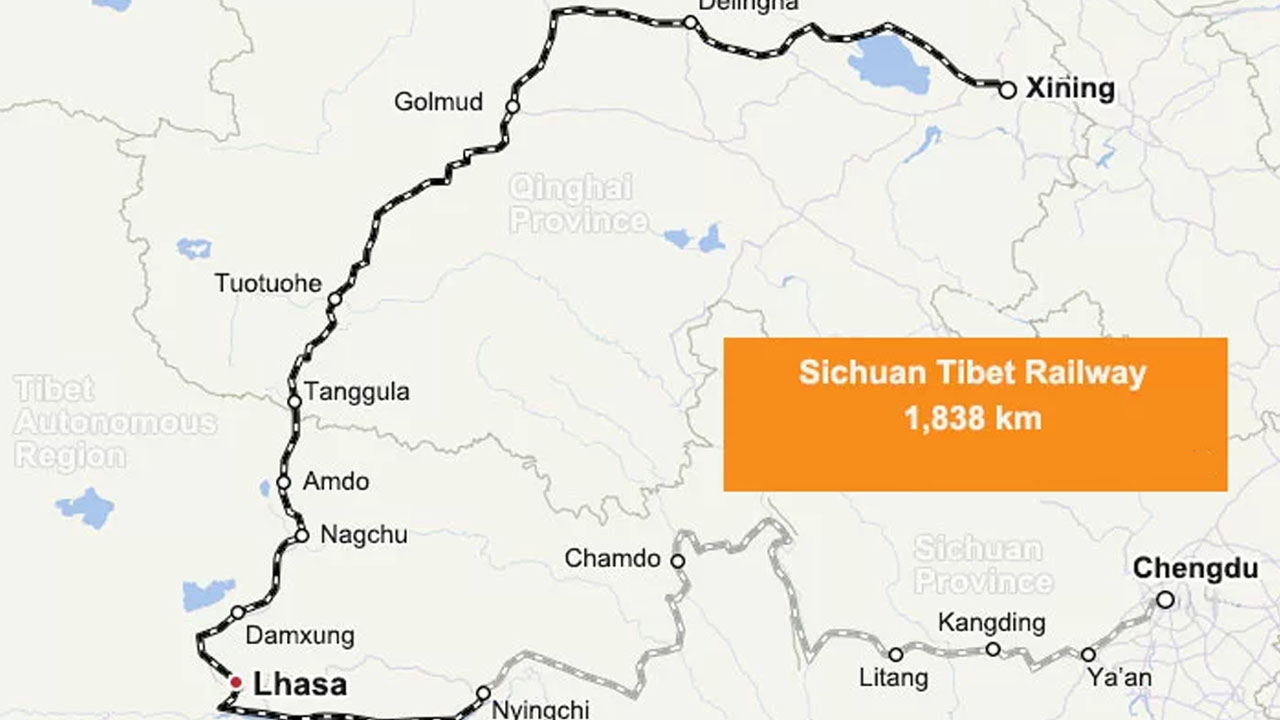
This railway, which is exactly 1838 kilometers, connects the province of Sichuan to the Tibet Autonomous Region!

This railway, the foundations of which were laid in 2020, Until 2026 It is intended to be completed.

This railway will pass through areas known for high-altitude mountains, deep valleys, active fault lines and frequent earthquakes. in one of the most challenging geographies in the world They say it will be built.

Despite the difficult geography in question, the realization of this project is an important step in the engineering world. The turning point isIt is stated that it will be seen.

This project was completed by crossing the Qinghai-Tibet Railway, one of the highest railway lines in the world when completed. Breaking a new record It is stated that it will succeed.

So how do engineers deal with these challenging conditions using engineering solutions?

Modern tunneling machines and High seismic resistance bridge designs is among the most remarkable engineering solutions of this project.

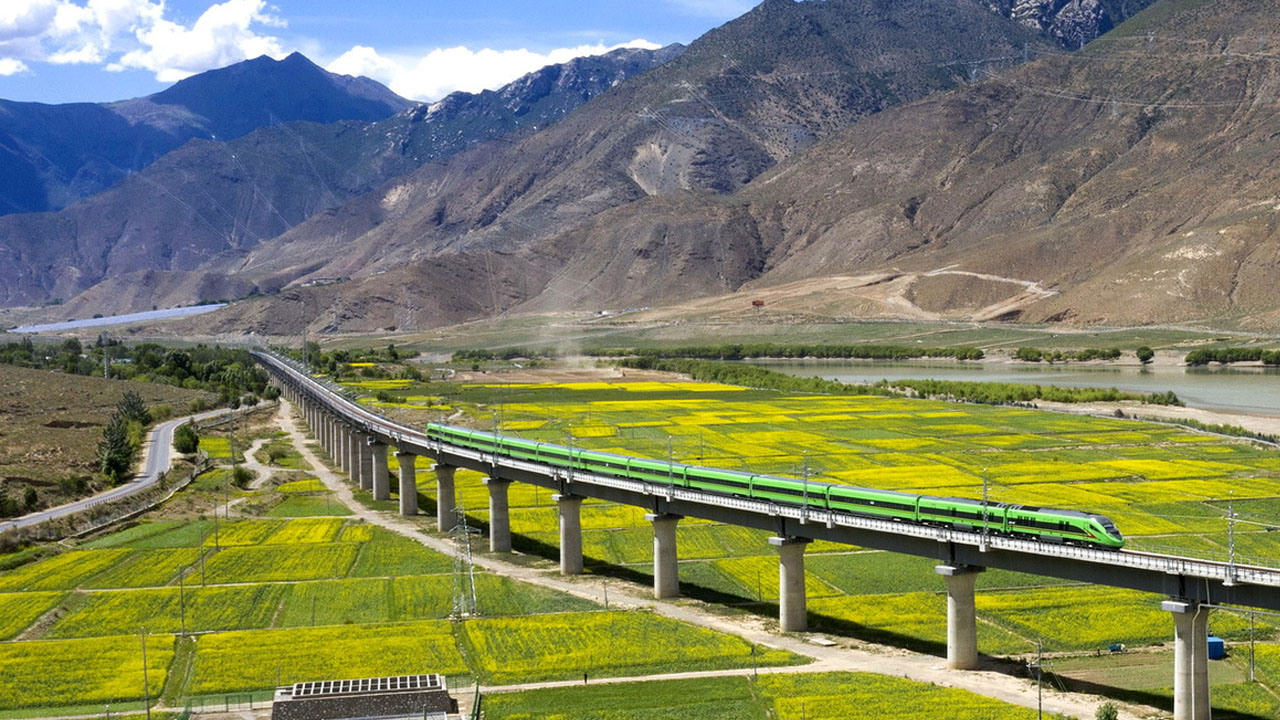
In addition, some parts of the road will be built High Speed Train Lines It is intended to provide passengers with a comfortable and safe travel experience.

In addition, this project will include tunnels with a total length exceeding 1000 kilometers, and most of the tunnels Altitude over 4000 meters It is said that he will have.

Along the railway line, bridges need to be built to cross many rivers and valleys, and engineers need to build bridges to increase the durability of the bridges. carbon fiber and high strength The Steel It is added that it uses advanced technology materials such as.

Bridges equipped with seismic sensors can automatically adapt to sudden movements that may occur during an earthquake.

In addition, by using designs that select construction materials suitable for the harsh climatic conditions of the region and minimize the environmental impacts, the University of Sustainability It is also emphasized that it is kept in the foreground.

The travel time from Sichuan ⁇ dan Lhasa ⁇ ya to Sichuan ⁇ dan Lhasa ⁇ ya is approximate, making it possible for high-speed high-speed train lines with advanced technology to travel at a speed of 200 km per hour on this railway. From 36 hours to 13 hours It is stated that it can be lowered.

Automatic control systems and advanced signaling technologies, This will allow the trains to travel safely.

In a nutshell, Sichuan-Tibetan railway It shows not only China's success in infrastructure and transportation projects, but also its innovative vision in the field of engineering and technology.

Source of: South China Morning Post and China Discovery