As economic relations enter a new phase following the agreement brokered by Trump’, the eyes of ABD’ have been turned to Azerbaijan’'s share in the pipelines

Washington signalled ’'s desire to deepen its presence in a region that has long been dominated by Russia and China, a senior US ’ official said on Thursday, saying the US ’ wants a direct share of Azerbaijan’'s pipeline and energy infrastructure.

Speaking at the first Azerbaijan-U.S. Economic Dialogue in Baku’, Caleb Orr, Deputy Secretary of State for Economy, Energy and Commercial Affairs, said that ABD’ sees opportunities that extend far beyond traditional hydrocarbons.

“ABD wants a bigger role in pipeline infrastructure and other energy infrastructure that Azerbaijan’ is building, ” said.

Orr also pointed out Washington’'s support for the growing role of Azerbaijan’ as a transit hub, highlighting the Central Corridor’, the trade and transportation route connecting Asia and Europe’ through the Caspian region.

“AzerbaijanWe expect to help ’ grow its role as the central node of the Central Corridor’ for the energy transition to Europe’ya and the rest of the world, ” said.

The US has already settled in the energy sector of Azerbaijan ’ through ExxonMobil and Chevron.

Orr noted that ExxonMobil’ signed a memorandum of understanding for new exploration activities at last year's Baku Energy Week’, while US ’ oil giant Chevron’ also signed a new working agreement at this year's event.

Orr went on to say that “Azerbaijan’ is now a critical energy producer for the world. “And the United States is really benefiting from this relationship, and we expect this relationship to grow significantly over the next few years.”

From Peace Accords to Investments

The event, held in Baku’, capital of Azerbaijan’, brought together government officials and business representatives to discuss cooperation in four strategic areas: regional connectivity and transit, energy security and critical mines, investment, artificial intelligence and digital infrastructure.

EuronewsWhen asked about the importance of the relationship between Azerbaijan and the United States, Azerbaijani Economy Minister Mikhail Jabbarov said strong political ties create favorable conditions for deeper economic cooperation.

“, you're right. Thanks to the leadership of President Aliyev and President Trump’, we have a really strong and developing political relationship, ” said.

Economic dialogue follows a landmark moment in U.S.-Azerbaijan relations.

August 8, 2025’te Trump hosted Azerbaijani President Ilham Aliyev and Armenian Prime Minister Nikol Pashinyan at the White House’; where the two leaders signed a joint declaration committing to a peaceful relationship after more than three decades of conflict; This was a breakthrough mediated in Washington ’ instead of Moscow or Brussels, which were previously key political capitals where the Armenia-Azerbaijan relationship was managed.

As part of the agreement, the United States said it would help build a major transit corridor connecting the Azerbaijani ’ to Nakhchivan ’ through the territory of Armenia, to be called the Trump Route or TRIPP for International Peace and Prosperity.

Forward-looking priorities

According to Jabbarov’, cooperation between the two countries is increasingly focused on four strategic priorities.

The first of these is the regional link covering trade, transit and the Central Corridor. He described it as a natural space for cooperation. He also said the cooperation includes energy infrastructure, logistics networks and the Alat Free Economic Zone ’ni.

The special economic zone is located in the Port of Alat’ on the Caspian coast, south of Baku’, and Azerbaijanis one of the most ambitious economic projects of ’; is essentially a purpose-built business center designed to attract foreign investment and position Baku’ as a regional commercial center.

In addition to the long-standing presence of U.S. energy giants in the Azerbaijani sector, Jabbarov also marked critical minerals as a growing boundary in the relationship.

“Critical mines are a new addition to our bilateral cooperation, ” said, adding that both countries see significant potential in developing their supply chains and exploring new discoveries.

Artificial intelligence and digital infrastructure also came to the fore, reflecting Baku’'s effort to go beyond hydrocarbons and create new areas of technological expertise.

Jabbarov, “We believe that artificial intelligence is an area and space that has an impact on all areas of economic development.

Azerbaijan said ’ wants not only data centers and digital infrastructure, but also a wider ecosystem built around innovation, productivity and human capital.
Stellantis invests €1 billion in French operations for new HOUSING and hybrid production

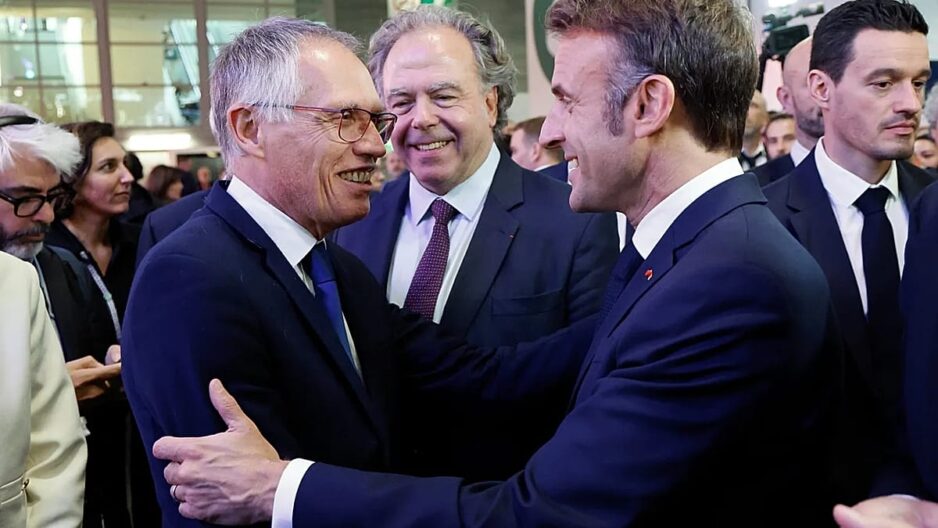
Peugeot, Fiat and Jeep’ owner Stellantis said on Tuesday that from 2029’ will invest €1 billion in the Mulhouse plant in eastern France to develop and produce three new Peugeot electric or hybrid models.

This move comes at a time when European ​​ automakers are grappling with weak demand, increased global competition and tariffs in China’. At the same time, Chinese brands such as BYD, MG Motor and Chery are also gaining a place in the market. Europe’'s growing EV marketThis encourages automakers to invest heavily in new technologies and more affordable models.

Announcement forms part of Stellantis’in announcement Broader strategy of 60 billion Euro’We aim to restore profitability in the next five years. This also confirms the site plans outlined by French President Emmanuel Macron ’ last month.

According to Stellantis’e, the new vehicles will include compact sedans and SUV’s, which means that Peugeot’'s car sales in Europe are about %It will strengthen its position in the market segment that makes up its 30’.

Stellantis believes that the new models will be compact sedans and SUV’s, and that Peugeot’'s European car sales will be %The ’ key segment, which makes up its 30“, said it would strengthen its presence in ”.

European ​​ automakers are facing increasing pressure as they transition to cleaner vehicles, while competing with increasingly popular Chinese brands, many of which offer lower-cost electric models.

Earlier this year, Stellantis CEO Antonio Filosa admitted that the company overestimated demand for electric vehicles. The group then recorded a depreciation of €22 billion in connection with EV investments and launched a strategic review.

Since then, Stellantis has introduced a new STLA One electric vehicle platform designed to reduce production costs and accelerate the development of new models.

The world's fourth-largest automaker is concentrating its resources on four of its 14 brands (Peugeot, Fiat, Jeep and Ram), while Europe has a production capacity in ’ that is equivalent to about 800,000 vehicles per year. %Reduces by 20.

The company is also expanding its cooperation with Chinese partners to strengthen sales in France, ’da and abroad. Chinese automaker Dongfeng recently signed a joint venture agreement with Stellantis covering its production, sales and engineering activities in Europe’.

New Sky Line train at Frankfurt airport breaks down shortly after launch

Welcome to Frankfurt Airport’; The new Sky Line train (Line 2) is out of service until further notice. This is what passengers are told at the facility and anyone who checks the website of Germany's ’'s largest airport will read.

The reason for the suspension “necessary technical reviews and adjustments in the general system”. Passengers will now have to use shuttle buses instead of the new train commuting between Terminals 1, 2 and 3 every day.

However, the new Sky Line Frankfurt Airport opened just a month ago at ’. The self-driving train, on its 5.6-kilometer route, Terminal 1’ to Terminal 3’e, is designed to carry up to 4,000 ’ and non-Schengen passengers per hour. The aim was to provide a fast, efficient and free service by getting passengers to their destinations in just eight minutes. Twelve trains, each consisting of two wagons, are planned to work on the line that will connect the regional and long-distance train stations of Frankfurt Airport’ to Terminal 3’.

It is not yet clear when Sky Line’ will fulfill these promises once again. Operator Fraport asked for the passengers' understanding and said he was working to get the train back into service as soon as possible.

According to Frankfurt Airport’, Terminal 3’ is intended to usher in a new era. The transition from Terminal 2’ to Terminal 3’e is scheduled to be completed on June 9, and the operator says the new terminal will have a capacity of 19 million passengers per year. Fraport has invested a total of 4 billion euros in the project. However, the promised “excellent connection” was slightly delayed due to the decommissioning of Sky Line’.

Controversial EU-Mercosur trade deal enters into force temporarily

After more than 25 years of negotiations, the trade agreement between the European Union and Mercosur countries (Argentina, Brazil, Paraguay and Uruguay) came into effect temporarily on Friday.

European Commission President Ursula von der Leyen has effectively avoided a parliamentary vote on the full ratification of the agreement, continuing the provisional application despite the legal objection before the Court of Justice of the European Union.

Von der Leyen, X’e wrote: “The temporary application will show the tangible benefits of the agreement.”

“And how legitimate sensitivities are handled.”

The EU president is expected to hold a video conference on Friday to celebrate the agreement with the leaders of the Mercosur nations.

The agreement eliminates customs duties on a large part of trade between the two sides, creating a free trade zone between the EU and Mercosur countries with more than 700 million people.

On Thursday, the EU President called the agreement “ good news for EU businesses of all sizes, good news for our consumers and good news for our farmers, who will get valuable new export opportunities with full protection for sensitive sectors.

Opposition to the agreement

However, the agreement was not welcomed by everyone in the same way. While supporters believe this unlocks new markets vital to the economy, critics warn that this could undermine environmental standards and regulations and harm AB’'s agricultural sector.

The European Commission signed the agreement on January 17, ’, after receiving the support of the majority of member states. However, some member states opposed the agreement, and France was at the forefront of the opposition.

Many EU farmers also expressed their dissatisfaction. Before the signing of the agreement, they took to the streets with their tractors to protest unfair competition from Mercosur imports.

Belgian farmers blocked roads in Brussels' ’ to protest the EU-Mercosur free trade agreement. December 18th, 2026. It's Brussels, Belgium.

In the European Parliament, however, opponents won a majority in the ’ to be referred to the Court of Justice of the European Union, ’na, to assess the legality of the agreement. If the European body decides against it, the agreement will be halted.

Under pressure from supporters of the agreement, such as Germany and Spain, who are eager to access new markets amid mounting geoeconomic tensions, von der Leyen opted for the provisional application.

However, the Commission was only able to do so after at least one Mercosur country ratified and declared the agreement.

Brazil, Argentina and Uruguay have already done so, and Paraguay’ is expected to follow suit.

A meeting was held in Asuncion, ’, Paraguay on Saturday, January 17, 2026, to sign a free trade agreement between the European Union and Mercosur.

President Luiz Inácio Lula da Silva, at a ceremony to celebrate the development in Brasilia’, said that there is nothing better than to believe in the implementation of “Democracy, multilateralism and sincere relations between nations”.

Bolivia, the newest member of the Mercosur’, did not take part in the negotiations but could join the agreement in the coming years.

Mega elevator agreement: Finnish elevator manufacturer Kone acquires German competitor TKE’ in a €29.4 billion deal

Finnish elevator manufacturer KONE announced on Wednesday that it has acquired German competitor TKE’yi in a giant share and cash deal worth €29.4 billion.

The merged group will be almost twice the size of the current KONE group, with more than 100,000 ’ employees in more than 100 ’ countries and annual revenue of approximately €20.5 billion, the two companies said in a statement.

TKE’ is owned by a consortium of private equity groups Advent and Cinven’.

The new group will be based in Finland and will be led by Philippe Delorme, KONE’'s current French general manager.

In a joint statement, “, the transaction that revitalizes the industry, brings together two outstanding global businesses with complementary geographic footprints and innovation platforms, ” said.

This acquisition will allow KONE’ to gain strong access to markets and profitable service and maintenance contracts in the Americas’.

“KONE’'s presence in Asia’ is complemented by TKE’'s footprint on the Americas, and TKE opens up new geographies for KONE, leading to a balanced global presence.”

According to Finnish media, this was the largest corporate acquisition ever made in ’, Finland.

According to the statement, the consortium, which owns TKE’, will acquire 270 million shares worth 5 billion euros and the new KONE’den 15.2 billion euros. %It will have 33.8’ine.

The two groups expect annual synergies in the form of extra profits or cost savings of €700 million from the acquisition. The new company is expected to have a strong investable credit rating, while creating a strong cash flow.

The deal still needs approval from regulatory agencies and shareholders, and will likely be completed by 2027’.

InvestEU: Europe Plans to Mobilize Billions to Increase Decreased Investments

Avrupa’ needs to invest in its business, innovation and infrastructure to achieve its climate goals and initiate an economic recovery.

But almost half of EU companies say they plan to cut investments after the Covid pandemic.

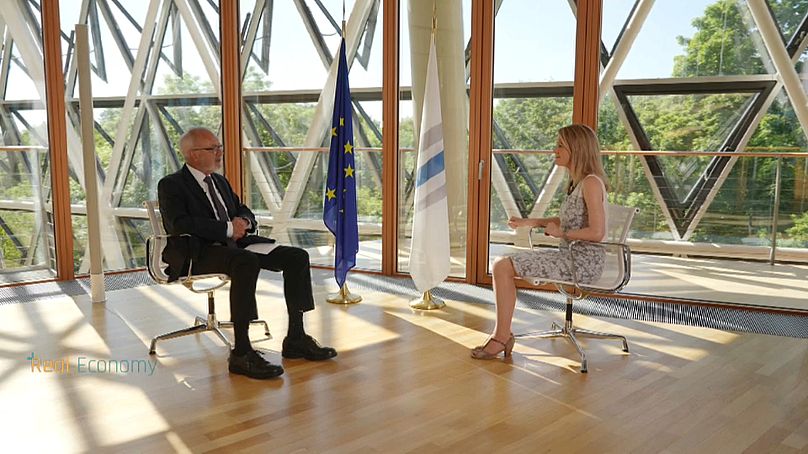
Werner Hoyer, President of the European Investment Bank (EIB), explains that the pandemic has made investment decisions “ more complex: “Income and resources of companies are decreasing steadily”. “Europe’'s competitiveness and its role in the world” is a major concern for “, he says.

How does InvestEU help?

InvestEU, a new EU programme, is mobilizing billions of euros in capital, taking on some financial risks for investors. It guarantees 26 billion euros from the EU budget and 7 billion euros from partner banks. Around 370 billion euros in public and private financing are expected to be mobilized.

The money will be transferred to projects that contribute to innovation and digitalization, SME ’s, especially projects that have been hit hard by the COVID crisis, encourage social participation and strengthen sustainable infrastructure.

Minimum of all investments ’u should contribute to the construction of a greener Europe by supporting the green transition of the European Union.

The European Commission works in partnership with the European Investment Bank ’, as well as other national promotional banks and international financial institutions.

InvestEU is following the steps of the European Strategic Investment Fund ’ (EFSI), also known as the Juncker Plan, which has successfully secured more than €500 billion in extra investments.

What does this investment look like in the field?

The European Union is working to revive the former coal mining town of Wałbrzych’i in the heart of Poland's Silesia’. It's been dependent on coal for 500 years, and that's changing now.

Wałbrzych received a 14m-euro loan from EIB’ to help him overcome the coal age and renovate the city center. The loan was partially backed by the European Commission.

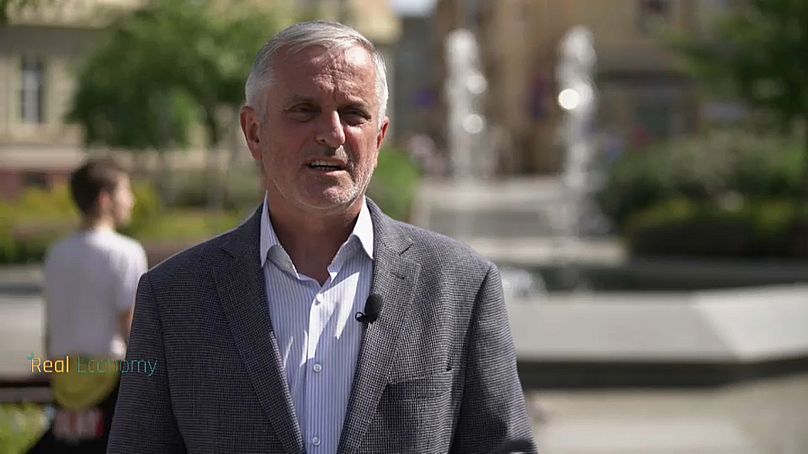
Roman Szelemej, mayor of Wałbrzych, says that this means the reconstruction of a quarter of the Old City of “. This is especially “, who can start a new life, who can provide a new life to the old city” witnessed the revival of “social lives for new families.

Mayor of Wałbrzych Roman Szelemej

EIB’den Werner Hoyer believes that investing in infrastructure and skills training is essential in places like Wałbrzych.

“, the coal miner who jumped out of the last coal mine in Southern Silesia’, will not be in charge of the digital Start-Up’ in two weeks, so we need to help these people move into the next generation of jobs, ” explains.

Werner Hoyer, President of the European Investment Bank, with reporter Naomi Lloyd

Social housing system

Wałbrzych is not the only town to benefit from the European investment plan. PolandPoznan’da, the fifth largest city in ’, focuses on social and affordable housing.

The mayor of Poznan, Jacek Jaskowiak, explains that “, we need to build some apartments for young people and the elderly”.

’ says that if these people take some money and help them settle in Poznan“a, they can find a good job and send their children to kindergarten. Affordable housing is a strategy to bring more life and work back to the city.

The program is expected to create homes for 3,000 to 4,000 people.

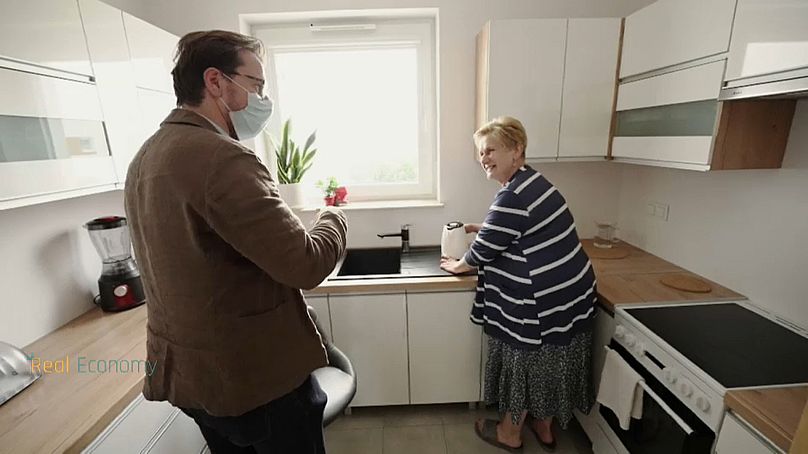
Aleksandra, 69, is already one of the beneficiaries of this project. He says he was thrilled when he was able to move into his new apartment with a balcony.

He says he will never be able to buy a place alone for financial reasons.

Aleksandra Wysocka reporter Guillaume Desjardins’e shows off her new home

EIB security label

To finance this housing project, developer PTBS applied to EIB’ for a loan of half the total cost. It helped make up for investors' reluctance.

PTBS CEO ’ Andrzej Konieczny explains that banks do not trust them at first because the project is different from the business they usually finance. However, “ added that they managed to reach an agreement with the EIB and that they trust ”biz.

Some people take the EIB Finance label as a security measure because the main or key decisions here are made by people with a technical background or science background.

Werner Hoyer
President of the European Investment Bank

The company expects this project to be successful and looks at future projects with the EIB’nin ‘onay seal’.

From July 2021’, InvestEU will replace the Juncker plan. This time, local banks, such as the BGK in ’, Poland, will also work with the EIB.

How is the EU setting a course for a greener future than COVID debt?

Few geopolitical events have shaped AB’'s policymaking as deeply as the COVID-19 pandemic and the war in Ukraine. The joint response of the Brussels institutions to these unprecedented challenges dominated and determined the five-year agenda and achievements of the current Commission and EU parliament. The first was the huge €800 billion NextGenerationEU fund, designed to accelerate the bloc's post-pandemic recovery and transition to green and digital. For the first time, member states were seen issuing common debt; Even at the height of the financial crisis that broke out in ’ in 2010, the so-called ‘-friendly countries were a truly historic development that ’ had previously vigorously resisted. One of the key mechanisms within the NextGenEU fund was the Recovery and Resilience Facility:

Recovery and Endurance Facility

COVID also forced Brussels’i to temporarily abandon its financial borders, another radical step. Since then, many member states have reached record debt/GDP rates; This is a problem exacerbated by the energy shock and high inflation in the 2022’. High spending levels were envisaged as a key component of the bloc's efforts to emerge from the pandemic emergency, but now these levels cast a shadow over the bloc's future spending goals aimed at achieving green targets.

EU DEBT LEVELS

TOWARDS DEBT CONTROL

The recently revised spending rules aim to gradually bring them back under control. April 30, 2024A new framework for economic governance comes into force in ’. The Commission says the main objectives of the new framework are to strengthen the debt sustainability of “ Member States and promote sustainable and inclusive growth in all Member States through growth-enhancing reforms and priority investments. “The framework supports progress towards a green, digital, inclusive and resilient economy, helping AB’ to be more competitive and better prepared for future challenges, ” adds.

The rules mandate a return to old threshold values, such as deficits of 3’ per cent of annual GDP and debt of 60’ per cent, respectively, but significantly different from the previous regime, member states were given more flexibility in how to act on debt reduction.

BALANCE WITH DEBT INVESTMENT

Allegedly, this approach will put the debt on a downward path, adhering to established financial guarantees. The new framework “facilitates and encourages Member States to implement the measures needed to secure green and digital transitions, strengthen economic and social resilience, and strengthen the security capacity of Europe’.”

The policy comes into force as AB’ prepares to exit its uniquely problematic five-year parliamentary term and enter a new one. In the coming cycle, post-pandemic funds are expected to expire in 2026’; This will be a serious test for the new debt control framework and will also reveal how well European ’ is investing in the transition to a green future and competing with global competitors, especially China.