Eurozone inflation falls to two-year low, but Europeans still feel frustrated

Europeans have been overwhelmed by the impact of inflation over the past 12 months. The European Commission published ’'s Autumn Forecast in November, which highlights the dispersion of clouds and the espite falling below ’, growth seems stubbornly low.

Real EconomyIn this part of the ’, we ask whether businesses and consumers really see a drop in prices, and we look forward to how Europe’'s economic growth will develop in the coming months.

Despite the decline in inflation, food prices are rising

Annual inflation in ’ is among the lowest in the eurozone. The prices of energy, transportation and some raw materials have stabilized in recent months. But many customers and businesses don't see a drop in food prices.

Yacin Malkoç, manager of a Belgian grocery store, said that “ is more or less used in fruits and vegetables, especially strong products such as bananas, mushrooms or tomatoes. %There was an increase of 30’, ” said.

“In the past, fruit and vegetables could reach any budget, but today there is a significant decrease in the number of customers due to increasing prices.”

Food prices in ’ continued to rise in 2023’te. For example, in two years, there was an increase of 37 percent in eggs, 53 percent in potatoes and 75 percent in olive oil.

Yacin Malkoç, Head of Grocery

In recent months, however, these prices have risen more slowly. But will companies and households feel the difference in their wallets as European countries' anti-inflation measures come to an end?

European Commissioner Paolo Gentiloni told Real Economy’ye: “According to our estimates, the rise in wages will catch up with inflation. And, of course, this will contribute to purchasing power, this will increase consumption, and the increase in consumption is the premise of restarting growth. So there is a bit of moderate optimism towards 2024’.

In terms of inflation, Commissioner Paolo Gentiloni says energy prices will play a major role.

The decline will continue at a lower pace for now, “ said. “I think there is a high probability that it will start again the growth that is absolutely necessary for our economy.”

Paolo Gentiloni, Member of the European Commission in charge of the economy

Why are European ​​ companies so concerned about energy?

The cost and supply of energy remains a major concern for large industrial companies. Etex, a Belgium-based multinational company, needs a significant amount of energy to produce construction products.

The company's CEO, Bernard Delvaux, says inflation in energy costs is fueling the search for a more efficient alternative.

Everything about reducing “ consumption is clearly important, ” said. We have plans to reduce internal consumption by investing in more efficient technologies in our “160 factory.”

Bernard Delvaux, CEO of Etex’

Annual energy inflation in the Eurozone ’ fell sharply, from 41.5 percent at the end of 2022 to -11.2 percent at the end of 2023.

However, due to the increase in interest rates, the costs of Etex’in increased and the demand for construction fell.

Bernard Delvaux, “Energy is two or three times more expensive than two years ago; This is also much more expensive than ’ in the United States, much more expensive than ’ in China, and much more expensive than ’ in the Maghreb. So why not produce in these countries? And then salaries are clearly higher because of inflation. What we're seeing is that production is becoming increasingly expensive in Europe’, he added.

But if the cost of energy is falling, can we expect more competitive prices in the near future? Energy geopolitics professor Adel El Gammal told Real Economy’ that this is all extremely uncertain“ due to a combination of many factors.

Adel El Gammal, “EuropeIn ’, we still source liquefied natural gas from pipelines and from ’, Russia. Therefore, a complete rupture can indeed put the markets under tension. And then, of course, the crisis in the Middle East’. It is easy to imagine that the prolongation of the conflict –, for example Iran or Saudi Arabia’'s greater integration could clearly disrupt the situation completely.– said.

Adel El Gammal, Professor of Energy Geopolitics

‘This is a balancing action’: Probability of stagflation in the European ’

Adel, meanwhile, points out that according to IMF’, nearly half of the inflation over the past two years has been due to an increase in the profit margins of large companies that have benefited from the price increase.

Although inflation has fallen, the situation remains fragile.

However, it is difficult to return to the 2% “ inflation target. Trying to keep inflation at acceptable rates without going into a recession is a balancing act. Here we clearly see the rather serious specter of possible stagflation, which means economic decline with low economic growth or high inflation. Unfortunately, it is a risk we will face in the coming quarters.”

European Commission’nda Paolo GentiloniWe asked ’ye whether the slowdown in economic growth will continue next year.

“We have achieved near-zero growth at the end of the year. Next year, we forecast a slight recovery in growth, mostly due to the resumption of private consumption and at the same time a slightly better state of international trade. If this turns out to be true, we will be able to prevent a recession and achieve what we call a soft landing despite tight monetary policy. That would be great on its own. - ”

If Europe manages to mitigate the impact of the price crisis in the coming months, consumers will need to be patient and hope that the current geopolitical conflicts are resolved as soon as possible.
How will billions of dollars from ’'s bailout fund transform Spain's economy?

This week, Real Economy visited Spain’, the first country to receive billions of dollars from AB’'s pandemic recovery fund.

We talk to Nadia Calviño, Spain's Minister of Economy and Digitalization, and meet with students at Tenerife’, where rescue funds are spent on vocational training.

The foundations of the European ’ recovery are being laid

Europe’'s response to the pandemic crisis (at current prices) was a historic stimulus plan worth €806.9 billion.

At the heart of this is the €723.8 billion Improvement and Resilience Facility, which aims to help EU countries get back on their feet by investing, creating jobs and building a green and digital future (at current prices).

Spain will receive 69.5 billion Euro’ of this money; This is the largest public investment plan in the country's recent history. So far, it has received €9 billion in emergency pre-financing and received its first installment, €10 billion in ’ in December 2021.

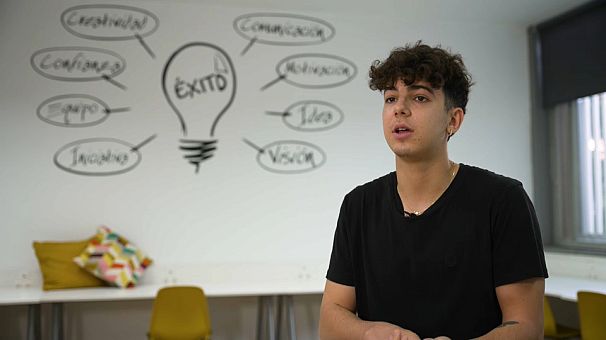
Adrián is taking a professional course in image and sound.

You can get a lot of theory in college, but you can get very little practice.

Canaries like Tenerife’de Adrián learn professional skills to help them find work.

Adrián, “You can get a lot of theory in the university, but very little practice. The good thing about vocational training is that you have the option to do an internship, ” explains.

“If they like the way you work and need people, they'll take you. How do I see my future after this training? Well, I hope I start working on something about that. I would like to work in different countries of the world. The U.S., Germany, the U.K., everywhere, but I work in different places, ” adds.

Although training centres such as Adrián’'s already exist, partly thanks to the European Social Fund, the Recovery Fund’'s €2 billion will be allocated to the creation of 135,000 new vocational training centres in ’, Spain.

Jorge Rivero Antuña, director of the CIFP César Manrique vocational school, says the money is already being used to teach technology and business.

“We receive funding from the European ’, known as the European Social Fund. This includes teachers' salaries and training courses for the unemployed and workers. %Covers 80’ini. Regarding the resilience mechanism, we have already received the necessary money for technology lessons, entrepreneurship, etc. We hope that we will continue to receive funds throughout 2022 and 2023.”

Like many southern European member states, Spain is facing systemic unemployment, especially among young people. Matching student skills with what employers really want is seen as one of the main ways to combat unemployment.

Guillaume Desjardins
Euronews

Carlos says his firm is struggling to find the right candidates with the right skills.

Rise of technology

Tourism remains the main driver of economic activity in Tenerife’, but the archipelago's rapidly growing technology sector also provides business opportunities.

Carlos Rodríguez is the founder of Omnia Infosys’in, a company that helps SMEs and public institutions in the Canary Islands’ in their digital transformation needs. Despite high regional and national rates of youth unemployment, Carlos says the firm is struggling to find the right candidates.

“Currently, people in both the Canary Islands of ’nda and the rest of Spain’ do not have the right education to meet what we need. We don't have all the skills we need, but people don't have them, ” explains.

Despite this difficulty, Carlos concludes optimistically: “This sector will grow a lot. There will be a lot of demand. We need more and more people with different skills because the demand has been incredible since COVID-19’. Growth has tripled or quadrupled in the last two years. And that growth will continue to grow. In fact, there are millions of job openings in this sector in Europe’.

Nadia Calviño, Vice-President of the Government of Spain and Minister of Economy and Digitalization:

Transforming the Spanish economy

To receive its first payment of €10 billion, Spain had to implement dozens of structural reforms, including measures aimed at improving the vocational education ecosystem and reducing gender pay inequality in the workplace.

Other EU member states are also currently encouraging reforms to get their share of the bailout funds.

Real Economy, SpainTo learn more about ’'s national recovery plan and how it plans to use recovery funds to transform the country's economy, spoke with the country's Vice-President of Government and Minister of Economy and Digitalization, Nadia Calviño.

SpainThe present of ’ and the future of Spain’ are very important for future generations.

According to Euronews:“Spain’ya will be given almost 70 billion euros. What will this mean for Spain and the Spanish economy?”

Nadia Calviño, Vice-President of the Government of Spain and Minister of Economy and Digitalization:

“This is the present of ’ in Spain and SpainIt is very important for the future of ’ and for future generations. Our recovery plan focuses on four axes: green, digital, social and regional cohesion and gender equality that drive all our programs. Digital will represent about 30 percent of the total investment.’

According to Euronews:These funds come with a number of structural reforms. How hard was it to meet all these conditions?

Nadia Calvino:“The process was cumbersome and very busy. We were a little bit like guinea pigs, starting the process. Together with the Commission, we are learning how to implement this unprecedented recovery plan.

As for the reforms, we accelerated them throughout 2021, now the main challenge is to complete what is waiting in parliament and maintain the flow of funds that began last year.”

Spain is a big country, a complicated country.

According to Euronews:“Are you sure you have the administrative capacity to do this?”

Nadia Calvino:“This is a very, very important challenge for every administration. Spain is a great country; It's a complicated country. We have a multi-level management. For this reason, we have created a management structure and strengthened the mechanisms we have.

In the coming weeks, we will launch some of the most important strategic plans, such as leading the transition to electric and connected vehicles.

According to Euronews:“How much difference do you think vocational education projects will make in terms of unemployment?”

Nadia Calvino:“Vocational education is one of the keys to unlocking a better functioning labor market in the future. Our unemployment rate has fallen to 13.3%’e, which provides us with a good foundation along with structural reforms, particularly labour market reform, and, at the same time, with a crucial investment effort towards education, vocational training and lifelong learning, Spain, which could allow ’ to finally overcome some of the imbalances that have driven growth and prosperity for decades.

How is Europe financing the pandemic recovery with the sale of billions of dollars in bonds?

This section of the Real Economy’ discusses what AB’'s recovery plans mean for jobs and businesses in Europe’ and how they are financed by the issuance of billions of euros in bonds.

EuropeProtection of employment in ’

Thanks to the European Commission's SURE initiative, which supports ’'s government's permission plans, an estimated 1.5 to 2.5 million businesses in Europe’ were able to employ their employees during the pandemic.

In 18 countries receiving SURE funding, it helped 25 to 30 million workers not lose their jobs during the pandemic.

SURE’'s goal was to protect jobs during the crisis. The next step is AB’'s recovery plan, known as the Next Generation EU, which is scheduled to be implemented in the coming weeks.

How are AB’'s rescue packages funded?

AB’'s SURE and NextGenerationEU rescue packages help countries build more resilient economies after the COVID-19 pandemic.

To finance them, the European Union will issue bonds of up to 850 billion euros (900 billion euros at current prices) over the next 5 years. Debt at the European level means that the economies of all EU countries benefit.

This is the first time the EU has borrowed on such a large scale, making it the new major player in the government bond market.

This also helps to support the euro's international position.

AB’'s high credit rating and ability to guarantee debt mean investors are safer when buying EU bonds. These include social and green bonds; This means that the funds really serve a social or green goal and will be repaid by 2058.

How do recovery packages help businesses?

Slovenia is one of 18 countries that have benefited from the SURE fund and receives 1.1 billion euros as an emergency loan.

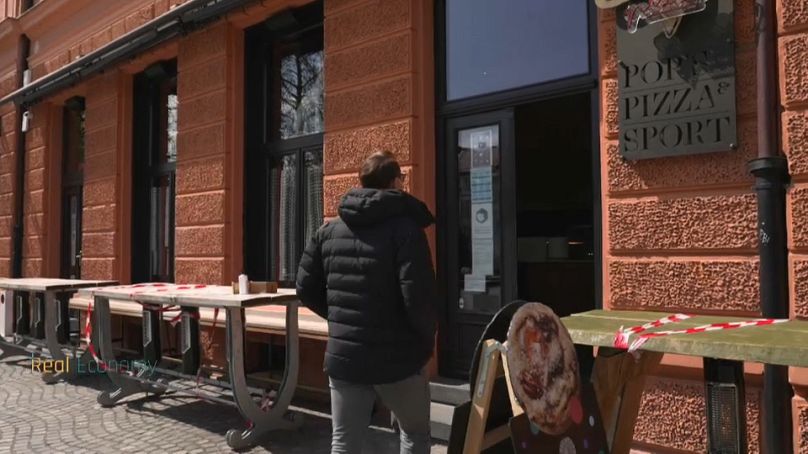
In 2010, after living in ’, Greg Yurkovich returned to his hometown of ’, Slovenia, to open two pizza restaurants in the capital Ljubljana’.

Greg YurkovichOne of ’'s pizza restaurants

A year after the opening of his second restaurant, Greg’in had thirty staff; Then the epidemic broke out, and the first lockdown forced its employees to stay home for six weeks.

Greg wanted to retain his team and skills for as long as possible.

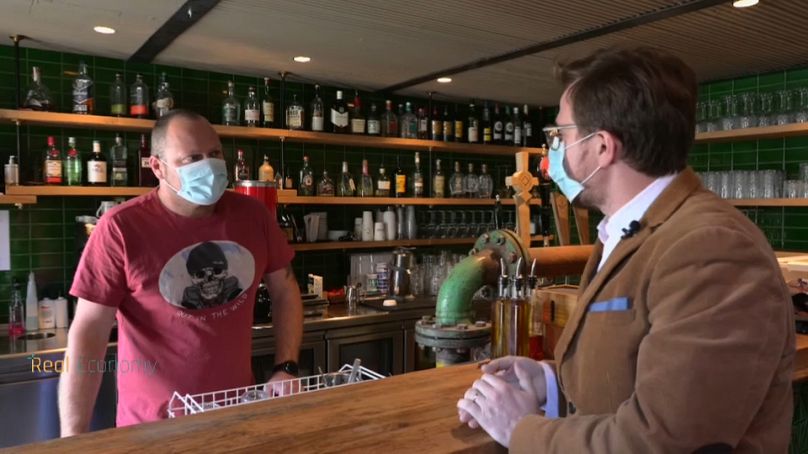
Greg Yurkovich, general manager and executive chief of Pop’s Place’, “The thing is, we had to employ these people for a variety of reasons. Again, it's our obligation, but also in the event that we open up. What happens if these people are released? How do we ensure the continuity of the work? said ”.

Greg Yurkovich, one of ’'s employees, speaks to euronews’e

The Slovenian government, in part thanks to AB’'s SURE program, has provided subsidies to employers like Greg to keep their employees on payroll until they are reopened.

**
Investors' interest in EU bonds**

Guillaume Menuet, a leading eurozone economist at Citigroup’, explained how this could work.

“ For every euro we spend, we hope we can get two, three, four euros back in five or ten years, depending on investment preferences.

“ This loan will naturally be paid out through increased economic growth, but also through the new forms of taxation that AB’ is currently bringing up.

We will wait and see what the next EU budget will bring, “ added, before worrying about it.

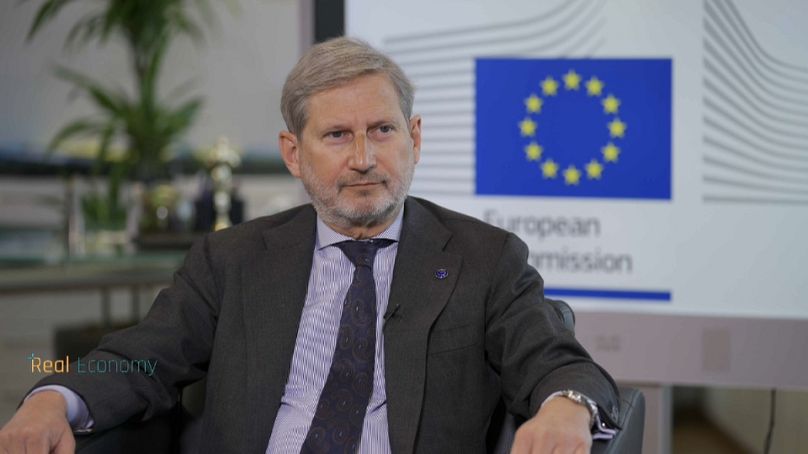
Interview with Johannes Hahn, European Commissioner for Budget and Management.

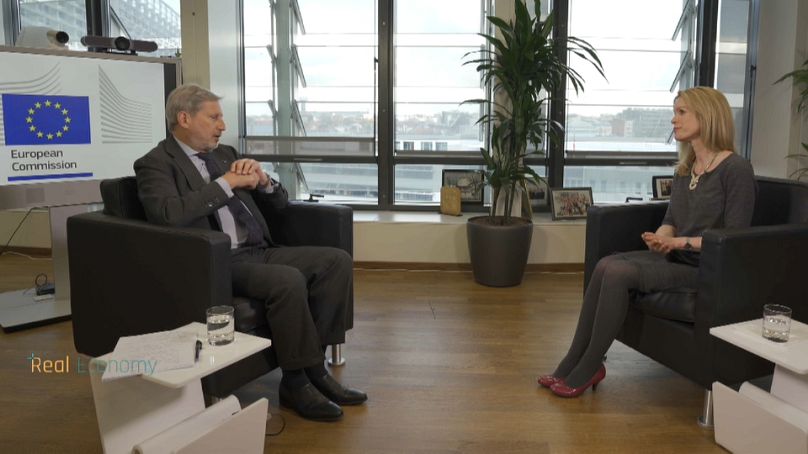
Naomi Lloyd of Real Economy’ spoke to Commissioner Hahn’ about his recovery plans and started by asking him when he thought the commission would start borrowing for the fund.

“Biz is ready at the beginning of June from our own perspective. And hopefully, so far there's nothing pushing this as a goal, we can start opening up to capital markets at the beginning of the second term, ” said.

European Commissioner for Budget and Management Johannes Hahn

About the challenges ahead

When asked about possible difficulties with the timeline, the German court ruled that it was unconstitutional, and Poland threatened not to ratify it.

Hahn, “, I'm pretty sure this will be approved by Karlsruhe, too, –, but first of all, it's important that they lift their reservations. I'm also sure this will be done on time. If you're in politics, you have to be optimistic, and I'm usually right about that, ” said.

About Next Generation AB’ye investor interest

Hahn, “As a result, there was a great deal of interest and there is a great deal of interest because they also see euro’yu and the European Union’ni as a safe asset, a safe haven. And at times like this, it's very important. There is also a strong interest in creating an alternative to the dollar, apparently not in a competitive way, but in a way that really has alternatives, ” added.

Naomi Lloyd speaks with Johannes Hahn, Commissioner for Budget and Management at the European Commission’

On the impact of Euro’ on the international world

I think the “ effect will be huge. That is, we will issue at least 800 billion in euro-denominated bonds, and this is a size we have never done in the past, and this will certainly have a huge impact on the role of the euro. It will also strengthen the euro as a real alternative currency in the worldwide capital market. That's why it also has a very strong economic but also political influence. - ”

EuropeWhat does ’'s financial rule review – mean?

The European Commission recently announced a proposal to reform fiscal rules in the European Union, which were suspended during the ’nde pandemic but are now planned to be reactivated and updated.

AB’de public debt rose to 90 percent of ’'s GDP in 2020’ due to the pandemic. Although 84% of ’ declined in 2022, the Commission is still well above the limits set by ’.

Many countries have spent large amounts of public money in recent years on measures to mitigate the effects of the Covid-19 pandemic, Russia, ’'s war in Ukraine, and the energy crisis.

What are the new financial rules?

The Commission's proposal aims to give EU member states more control over how they meet the financial goals set out in the EU Treaties. These goals include reducing public deficits to less than 3% of ’'s GDP and public debt to less than 60% of ’'s GDP. Budgets of countries %Annual GDP of at least ’ until it reaches the open limit of 3 %They'll have to adjust it at a rate of 0.5’i.

European Commissioner for Economic Affairs Paolo Gentiloni told euronews’e: “The aim, therefore, is to gradually reduce public debt for countries above the limits within 4 or even 7 years, with a country-specific approach.” “On the other hand, reduced penalties will be effectively applied if the rules are not followed.”

Italy, France, Romania, Spain and Malta, including ’, are expected to exceed the budget deficit limit of 3’ per cent in 2023.

Gentiloni explained that Commission’ chose this approach because the previous financial rules were unrealistic and overly complex, which led to a lack of implementation. It is considered unacceptable for the European Union to have financial rules that exist only on paper.

Gentiloni, “With a more gradual approach, I think we can achieve what is unfortunately impossible to achieve with the current rules. Tomorrow is famous %It won't reach 60’. I think we should be clear about that. But if the tide changes from an upward tide to a downward tide, that will be important to the markets and our union, ” says.

Investing in digital transition

The importance of public investment in achieving these goals is seen in examples such as Leonardo, ’'s supercomputer. With co-financing of 240 million euros from the Italian Ministry of Universities and Research and the European initiative EuroHPC’, Leonardo is preparing to contribute to many digital innovation projects. Such investments are vital to improving the competitiveness of European research and industry.

Leonardo Supercomputer in Bologna, Italy

Cineca President Francesco Ubertini and “Leonardo process 250 million billion transactions per second. It is currently the 4th most powerful machine in the world, ” explains.

The sectors in which “Leonardo’ will be used range from weather forecasting to combating climate change, accelerating the development of new drugs and developing new digital twin products in general.”

Although ’'s public debt is already twice the threshold of budgetary rules, this investment is aimed at increasing the competitiveness of Italian and European ​​ research and industry.

‘We need transparency and equality’

Economist Jeromin Zettlemeyer underlines the need for transparency and equal treatment in the debt reduction process while supporting the growth of each country. While there are concerns about ’'s abuse of discretion, the proposed reform includes measures to ensure that debt is lower by the end of the four-year period. Zettlemeyer believes ’'s proposal is consistent and proposes a renegotiation of the interim investment move.

Zettlemeyer, “The basic idea behind this reform is to start and look at the conditions of each country. The problem is that the person who uses discretion when looking at these circumstances has a lot of power that can be abused. And some member states have concerns that the commission may abuse it, or that the person who had political influence over the commission at the time, says ”.

According to the Commission's new proposal, there is a so-called assurance that at the end of these four years, whatever the debt should be lower than the initial one. This excludes a temporary investment move. This needs to be renegotiated. Other than that, I think the commission proposal is interdependent.”

As a result, time will tell how the reform will shape ’'s financial structure by balancing its need for sustainable public finance with investments in key areas such as green and digital transitions.

How does Croatia fit into the euro?

January 1, 2023’te Croatia becomes the 20th country to join the eurozone. The local currency kuna has been replaced by the euro.

The country hopes to make its economy stronger and more stable with a single currency and improve the living standards of its residents.

Some people regret the passing of the kuna

Reactions at the fruit and vegetable market in Zagreb’ are mixed.

One customer says “I'm happy with the change. “This is something new.”

Another, “It's not true that prices are increasing rapidly, says ”. "Perhaps it's gone up a few cents, but that's nothing." - “

Coffee, bread… Prices are now higher than before the new year and people do not have much money to spend.

Ana Knežević
President of the Croatian Consumer Protection Association

Others are less convinced.

An old man, “, the prices are a little high, that's all ” says. I have no problem converting “. You only have to have money!”

Another, “, says we're not happy, we prefer our little kuna”. “In my opinion, a country that does not have its own currency is not a country.”

Majority in favor of transition

45% of Croatians already had a euro account for large expenditures, but now they all need to get used to the single currency for daily purchases.

Ana Knežević is president of the Association for the Protection of Consumers of Croatia’.

“Prices are in euros, so it is difficult for the elderly to calculate how much they are now. We have double prices, so it's easy to compare, says ”.

According to Eurobarometer’, while the elderly are attached to the kuna, the ’i is in favour of adopting the euro. But more than 80 percent are afraid that prices will go up.

“Coffee, bread… prices are now higher than before the new year” continues. “People do not have much money to spend, food is very expensive, heating, electricity is expensive, so it is very difficult to live. Croatia is a small country, pensions are not high, you can guess how they live.”

Support for tourism and production

Transition to the euro and entry into the Schengen area, Croatia %In addition to tourism, which constitutes 24’, GDP %It is expected to increase sectors such as manufacturing, an important export sector that makes up more than 12’.

Končar Group works in the fields of energy, infrastructure and electric railway vehicles. The company's production %It exports more than 60’ and ’i goes to countries in the eurozone.

CEO Gordan Kolak says that if we look at the last 21 years when we have linked our currency kuna“ to the euro, we cannot say that the change will be tremendous ’. “But since our customers will easily understand our offers, we think that the operation of the business will be much easier.

“When we talk about productivity, when we talk about modernization of production, when we talk about digitalization, all these areas are much more important to us than the euro as a currency.”

2020Croatian exports of goods in ’ %More than 70’ in euros, only ’ was traded in US dollars.

For a country where the single currency is already well integrated, it seems natural to adopt the euro.

Croatia’'s GDP’si 2022’de %6 increased, but the 2023 forecast is only due in part to high inflation %1.

The interview is: Governor of the Central Bank of Croatia Boris Vujcic

We met with Croatian Central Bank President Boris Vujcic to get his views on the arrival of Euro’.

Governor of the Central Bank of Croatia Boris Vujcic:I'm happy that we've basically completed the project that we started five years ago. This is something that will bring more resilience to the economy. This will make the Croatian economy more attractive in terms of foreign direct investment. Transaction costs will be lower. This is also important because we are a tourist country, and as a tourist country, 70 percent of our tourists come from eurozone countries. So in many ways this is a good thing for Croatia.

Fanny Gauret, euronews:Given the current inflation in the euro area, do you think it's a good time to switch to the euro?

Boris Vujcic:I think it would be better if we could change it sooner. For a small and open economy like Croatia, being in the eurozone in times of crisis is particularly important. If you look at some of our neighbors, who are not currently members of the Eurozone, members of the European Union, Ukraine, they have experienced quite a lot of pressure in the foreign exchange market this year following the attack on ’. So when you look at the cost of borrowing, these costs are now for companies. %With an 8 for the household. %With a 6 %You can see it's between 9. When Croatia was in ’, we didn't see any pressure on the foreign exchange market, and we didn't have to react to the rate hike like we did in those countries. We are seeing the benefits of this right now because markets have priced us into the eurozone earlier this year.

Now we need to focus on making structural reforms that we still need to make, with the help of a better economic environment created by entry into the euro and entry into the Schengen area.

Boris Vujcic
President, Central Bank of Croatia

Fanny Gauret:How about giving up the ability to set your own interest rates?

Boris Vujcic:Basically, the anchor of our monetary policy was the fixation of the exchange rate to the euro, and this has been the case for the last 30 years. First the German Mark ’na, then the Euro’ya. When you peg your exchange rate to the euro and your capital flow is free, you can't really have an independent interest rate policy. So it's about losing something we didn't have to do in the beginning.

Fanny Gauret:What are the challenges of introducing large amounts of money into the Croatian economy, for example, into the real estate market?

Boris Vujcic:We see nothing in the direction of overheating of the economy. What we've seen is that, as you said, the real estate market is hot, and prices are rising. I think we will see cooling in the real estate sector next year with the increase in interest rates. What won't change is actually the external demand that is expected to increase. Now that we see that about 20 percent of real estate purchases come from abroad, we will become even more attractive.

Fanny Gauret:And finally, what are the challenges ahead?

Boris Vujcic:I don't think that's the magic thing that's going to solve the structural economic problems that we have. Now we need to focus on making structural reforms that we still need to make, with the help of a better economic environment created by entry into the euro and entry into the Schengen area.