
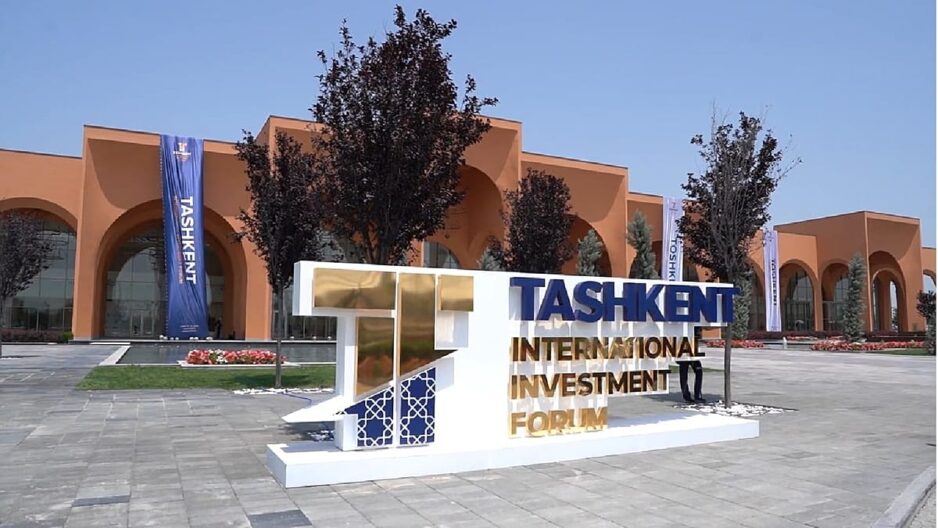
TIIF 2026: Uzbekistan to offer €75 billion worth of projects to global investors

Investment projects worth approximately 75 billion euros will be presented to international investors at the fair Tashkent International Investment Forum (TIIF) 2026,Uzbekistan seeks funding in sectors such as energy, transport, logistics, digital infrastructure and industrial development.

Laziz Kudratov, Minister of Investment, Industry and Trade of Uzbekistan, “We have prepared investment proposals worth approximately 75 billion euros with Uzbek enterprises and regional authorities, ” said. “Eight sales pitch sessions will allow entrepreneurs to present directly to investors.”

More than 3,400 foreign delegates from 102 countries are expected to attend the forum, as well as government officials, development banks, state wealth funds and multinational companies representing more than $42 trillion (approximately €36.5 trillion) in total assets.

The forum is taking place at a time when governments and businesses are reassessing their supply chains, transport routes and access to critical resources. Within this framework, discussions in Tashkent ’ are expected to focus on attracting long-term capital for projects in Uzbekistan and the Central Asian region.

Where the investment is expected to flow

The projects presented at TIIF 2026’ cover sectors that Uzbek officials and investors increasingly see as strategic in terms of long-term growth.

According to the organizers, opportunities will be offered in the fields of energy, transportation infrastructure, logistics, industrial development, digital infrastructure and advanced technologies. This year's forum theme is “Investment Sustainability: New Horizons, New Partnerships” places particular emphasis on critical raw materials, green energy, geological resources and artificial intelligence.

Through the digital platform designed to connect international investors with Uzbek businesses and local governments, more than 3,000 ’ foreign companies have been categorized according to their sector and investment priorities.

The forum will also feature special presentation sessions on light industry projects, geology and resources, electrical and mechanical engineering, and chemical production, allowing entrepreneurs and project developers to present investment opportunities directly to potential investors. Additional discussions Expansion of Production: Competitiveness in Value Added Production and Export, Agricultural Enterprise and Food Safety: It will focus on Technology, Value Chains and Export Growth, Strengthening Health Systems and Promoting Innovation in Pharmaceutical and Medical Technologies.

Akram Aliyev, Deputy Minister of Investments, Industry and Trade, “We have created an online platform that brings international companies together with Uzbek businesses and local governments, ” said.

The forum will also serve as a test of how effectively investment commitments are translated into operational projects.

Kudratov, “In 2025 alone, Uzbekistan received an investment of approximately 39 billion Euros, while the previously signed projects amounted to approximately ’i is already under implementation.” said.

Investors gather in record numbers

Organizers report a significant increase in attendance compared to previous editions of the forum.

A total of 62’ of last year's 26 government delegations are expected to attend. More than 370’ representatives from international financial institutions and development banks are also expected to attend the meeting.

The previous edition was attended by more than 8,000’ participants, including nearly 3,000 international delegates from 97 countries.

Shokhrukh Gulamov, Deputy Minister of Investments, Industry and Trade, said: "These figures show that our partners and investors have confidence in the region.

Corporate participants of the forum include companies and institutions such as BlackRock, JPMorgan Chase, Visa, Masdar, Airbus and Meta.

Stronger U.S. presence

This year, a stronger American presence is expected, with more than 200’ representatives from about 120 U.S. companies scheduled to join.

Aliyev, “In the past years, discussions often resulted in unresolved financing problems, ” said. “This year is expected to be president of the U.S. Export-Import Bank and president of the U.S. International Development Finance Corporation.”

USA’'s growing involvement reflects American institutions' growing interest in investment opportunities in Central Asia’.

Mobilization of capital for regional projects

Beyond individual investment agreements, TIIF 2026’ is expected to focus on projects that go beyond national borders and require long-term funding from multiple partners.

Gulamov, “UzbekistanWe aim to present not only ’'s projects, but also its major regional initiatives and attract joint investment with our neighbors.

Among the initiatives expected to take part in the discussions are hydroelectric developments covering Uzbekistan, Tajikistan and Kyrgyzstan’, cross-border electrical connections connecting Central Asia’ to the South Caucasus’, the China-Kyrgyzstan-Uzbekistan railway and the Trans-Afghan transportation corridor.

Negotiations are also expected to focus on the Middle Corridor, dry ports and intermodal logistics centres, as governments and businesses seek to improve trade ties between Asia, the Middle East and Europe.

Gulamov, “, said that large-scale regional projects require a significant amount of funding, and state funds can play a decisive role.

Participants are expected to include representatives from the Oman Investment Authority, Standard Chartered, Citibank, JPMorgan Chase and Bank of China’.

Reforms on the day

TIIF 2026 will provide a platform for dialogue on investment discussions, as well as regulatory reforms aimed at improving the business environment and expanding financing options for investors.

The Fourth General Assembly of the Council of Foreign Investors will bring together 75 major international companies operating in ’, Uzbekistan. More than 120 ’ proposals covering areas such as taxation, legislation and land use regulation were presented before the meeting.

After the discussions, officials said a roadmap for reforms would be adopted.

Among the measures expected in the coming weeks is legislation on the establishment of the Tashkent International Financial Center ’. Officials said the law was expected before the end of June.

In addition, the revised Special Economic Zones Law and the draft legislation covering alternative investment instruments are also being studied.

The proposed reforms are expected to introduce new mechanisms associated with venture capital and private equity, as well as expand financing options available to businesses and investors.

The forum offers Uzbekistan the opportunity to showcase both investment projects and planned regulatory reforms. The real question for investors will be how much of the discussions taking place in Tashkent’ will ultimately translate into financing agreements, new partnerships and projects.

Energy experts warn recovery in oil and gas supplies will be slow after Iran deal

According to energy experts, it will likely take months for energy companies to continue operating and meet global demand. The slow progress in transporting and refining crude oil, as well as uncertainty about safe passage through the strait, means there will be no immediate relief, they said.

Ships laden with crude oil were stranded in the Persian Gulf of ’ for more than three months and were unable to travel safely along the waterway, where about a fifth of the world's oil and gasoline supplies traveled before the war began.

Daniel Evans, global head of fuel and refinery research at S&P Global Energy’, said: "It's going to take time for people to feel comfortable and for insurance to kick in, especially for people to take to the field to restart some of these assets, “ said.

Still, oil prices fell early Monday after the deal was announced.

Brent crude oil, the international standard, fell by $3.45 to $83.89 per barrel. US indicative crude oil 4.03 per barrel $ Decreased by 80.85 $’a is down.

These prices are still well above $70 a barrel, where oil was traded before the war began.

Evans said that with high prices falling, the stranded ships would have to get out of the strait and then new tankers would have to arrive for loading.

“To let a ship in, you need to make sure you have a security window large enough to let it in, load it, and take it out, ” added.

He explained that oil tankers were also moving slowly. It takes months to travel to countries far from the strait, delivering crude oil to a refinery for processing, and then reaching its final destination.

In addition, some producers in the Middle East’ have stopped extracting oil from what is known as a shutdown due to running out of storage space. Restarting these processes can be a slow process.

Alan Gelder, senior vice president of refining, chemicals and oil markets at analysis firm Wood Mackenzie’, said that countries such as the Strait of Hormuz ’, as well as Saudi Arabia and the United Arab Emirates, where there are alternative pipelines or routes for oil distribution, may be among the fastest restarts in production.

But places like Iraq can be much more challenging because they've experienced a much bigger shutdown, areas that are more difficult to get back to, “ said.

Gelder said investments in the energy system, which could take years to see results, came to a halt after the strait was closed. Therefore, the revival of this capital will take time.

Daniel Sternoff, a senior researcher at the Center for Global Energy Policy at Columbia University, said that countries that have stopped oil production will not want to start again until they learn that there is a stable and permanent situation in the strait and that the ceasefire will last for more than 30 or 60 days.

“We don't know what the opening means or what the evacuation speed of the trapped material will be, ” added.

Amazon commits €10 billion to Europe’ with 25,000 new business and warehouse robots

Amazon is launching a major investment spurt in Europe’, allocating more than €10 billion for the expansion and modernization of its continent-wide warehouse and delivery network in the coming years.

The announcement at Amazon’'s Delivering the Future event in London’ on Thursday follows the company's announcement that it has invested more than 60 billion Euro’ across Europe in 2025; This is the largest annual investment on the continent and underlines the extent of its breakthrough on the continent.

Part of the new investment will go towards robot technology and automation in order fulfillment centers.

Amazon said the systems are designed to handle physically demanding tasks, such as carrying heavy loads or repetitive lifting, so employees can focus on other jobs at their own facilities.

Technologies included in the investment include a new version of Amazon’'s autonomous warehouse robot, Proteus’, and the company says it can understand employees' instructions in human language.

The investment move will also be aimed at expanding and improving Amazon’'s fulfillment centers, which have large warehouses where orders are processed, packaged and shipped, adding new technology to European operations and increasing capacity.

Amazon did not specify all its supply centers in Europe’, which will receive funding under the new €10 billion plan. The order fulfillment network already covers many European countries, including the UK, Germany, France, Italy, Spain, Poland, the Czech Republic and Slovakia.

The company said the investments will also support the creation of 25,000 additional jobs across Europe in the coming years.

Amazon also announced a $1 billion (€860 million) fund for targeted worker training by 2030, as part of a broader global skills development program of $2.5 billion.

The fund will help employees train for roles in areas such as cybersecurity, software development, logistics, renewable energy and mechatronics, and the program is available in some European countries, including the United Kingdom, the company said.

The figures underscore the extent of Amazon’'s expanding presence in Europe’. The company says it already supports more than 1.5 million jobs across the continent, including 230,000 direct Amazon employees, more than 400,000 ’ people in its expanded workforce, including contractors and seasonal workers, and more than 600,000 ​​ jobs linked to 200,000 European ’ small businesses and entrepreneurs selling through Amazon.

The announcement comes at a time when Avrupa’ is grappling with the loss of some of its most promising companies to ABD’, and its place in the global AI and robotics race between China and ABD’ at warp speed.

According to a report by former European Central Bank president Mario Draghi’, nearly 30 percent of start-up ’s established in Avrupa’ between 2008 and 2021, which later became unicorns, moved their headquarters abroad, mostly in ABD’ye.

European ​​ policymakers are putting pressure on measures to make it easier for companies to set up, scale and stay in Europe’, including EU Inc., an initiative that will allow start-up ’s to register once and operate more easily across the bloc.

25 million Euros invested, 150 million Euros earned: ’ miraculous return of Papa‘'s visit to ’

Pope Leo XIV’'s visit to Spain will leave much more than crowded images and a busy pastoral schedule. According to estimates submitted by the Spanish Episcopal Conference (CEE), Pope ’'s seven-day stay in the country will cost around 25m euros, but could also generate an economic return of over 150m euros. Income of five euros for every euro invested.

“, deputy general coordinator of the visit and deputy secretary for Central and Eastern European Economic Affairs, said on Tuesday that at the moment we estimate that the consolidated budget, of course, will amount to 25 million euros, before all the figures are finalized.” said. Fernando Giménez Barriocanal, At a press conference.

The numbers are still temporary and explained. Just days before the arrival of the Holy Father ’ at Madrid’e,Next Saturday, provide a frame of reference for the dioceses participating in the trip: Madrid, City of Barcelona, the Gran CanaryAnd then there's Tenerife. In any case, Giménez Barriocanal stressed that the financial dimension of the bishop's visit pales alongside its spiritual and social impact: That's why we don't do this. - “

The total budget, About the approx. ’i will go directly to planned eventsThe rest will cover logistics, communications and general organization. The Episcopal Conference will cover about 1.4m euros for the expenses of the papal delegation, such as accommodation and transportation, accreditation, rite-related supplies and equipment for volunteers.

The fund will be split between donations from philanthropists and corporations, dioceses and contributions from the Church, in particular supports from public authorities in the Canary Islands and Catalonia’, and small contributions from believers through channels such as Bizum. When the visit is over, Accounts will be audited by a specialist companyPrepare a final report.

The ObservaTUR figures: Instant effect and “ show effect”

The report was more cautious in its predictions. (source in Spanish)Prepared by ObservaTUR, which reveals the immediate economic impact of the visit Between €90 and €125 million. The study distinguishes between the cost of organizing the trip and the money that actually changes hands. sectors such as accommodation, food service, retail or transportationand Leo XIV’in refuses to equate his trip with important events such as World Youth Day.

According to the report, the visit is closer to the intermediate format: seven days, four venues and wide coverage in international media. This combination increases tourism spending and distributes income to various regions, but it does not reach the exceptional scale of events with total economic impact, such as World Youth Day held in 2011’de Madrid’. Reached €354.3 millionSpain is in ’.

ObservaTUR still insists The effect of the so-called “vitrinThe importance of ”– tourism in the medium term beyond the event week, especially the ability to strengthen religious and cultural tourism –.

In this context, the report suggests the impact of: Holy Father’'s visit “is not limited to a week's consumption”“ emphasizes that the accelerating effect on faith tourism did not end when the visit ended. Hence the XIV. Leo’'s trip “iki concludes that ” should be understood at the stage: With an instant and measurable cash injection of about 100 million euros and increased interest in Spain’, perhaps even more valuable“ is another effect.

Pope Leo XIV, Basilica of the Sagrada Familia, will celebrate the Holy Rite of ’nda, which can further increase tourists' interest in the landmark church.

Hotels are full, restaurants are full

This effect is already felt in the industry. Platforms like Booking.com have identified A sharp increase in accommodation searchesBarcelona’da in cities on the Papal route and Madrid’de %There was an increase of 46.

Hotel associations are waiting high occupancy rates and an increase in average pricesespecially in the capital, where international demand accounts for more than half of reservations.

Holiday rental and restaurant trade will also benefit from the visitor profile, families and groups that will often extend their stay. Bars and restaurants in central areas of Madrid and Barcelona say Papa’ is already fully booked for key days on its schedule (source in Spanish). The tourism sector in ’ also highlights the promotional value of Papa’'s presence, strengthened by hundreds of accredited journalists.

Bad Bunny vs Leo XIV: Double support for Madrid

Leo XIV’'s visit will also coincide with Puerto Rican artist's concerts in Madrid’ The bad rabbitThis is a combination that strengthens expectations for tourism activity and consumer spending in the Spanish capital of ’. Both events, the qualities of which are very different from each other, will bring tens of thousands of local and foreign visitors to the city on the same days, hotel rooms increase the demand for transportation and food and beverages.

Industry sources suggest that it's unusual for major events to overlap in this way, and Acts as an additional demand accelerator. While the papal program attracts loyalists, pilgrims and international media, the concerts will attract a young audience with a high tendency to spend on entertainment, accommodation and food. The result will be a cumulative impact that strengthens Madrid’'s image of staging major events and multiplies the short-term economic impact on the city.

While final figures are expected, the combination of moderate spending, high international visibility and strong tourist consumption explains the reason for Leo XIV’'s visit Shown as an example of exceptional profitability. It is a religious event that, at least in terms of direct economic impact, is expected to bring five times the amount of money invested and leave a legacy that can go far beyond the time spent in Spain’.

Meta launches subscription campaign to ease investors' concerns about rising AI costs

Meta is launching a new wave of paid subscriptions on Instagram, Facebook, and WhatsApp’ worldwide, while also testing premium offers for businesses, creators, and users of AI products.

Naomi Gleit, Meta’'s product manager, announced the move in a video posted on Instagram’, saying the company is rolling out Facebook Plus, Instagram Plus, and WhatsApp Plus’ worldwide, along with additional plans for businesses, creators, and artificial intelligence products under development.

The company also said it has begun testing separate subscription offerings for creators, businesses, and Meta AI users, signaling broader progress beyond consumer-facing app subscriptions.

In the post, “, where these proposals come together under a new name: Meta One” specified.

Meta confirmed earlier this year that it plans subscription offerings to diversify beyond advertising and offset the rising costs associated with AI expansion.

The company expects to spend between $125 billion (€115 billion) and $145 billion (€133 billion) this year, largely due to artificial intelligence data centers.

View this post on Instagram’

A post shared by Naomi Gleit (@naomigleit)

According to AFP’, Instagram Plus and Facebook Plus’ will cost $3.99 (€3.70) per month, while WhatsApp Plus’ will cost $2.99 (€2.77) per month, according to media reports.

Meta shares after announcement %It's up 3.7.

Instagram Plus and Facebook Plus will offer additional features, including advanced analytics, story retracement statistics, expanded audience reach, and profile customization options.

WhatsApp Plus will focus on personalization, including premium stickers, custom ringtones, and app themes.

Meta said future subscription tests for creators, businesses and AI users will be grouped under a new umbrella brand called “Meta One”, which is expected to become the company's main hub for subscription products in the future.

CNBC reported that subscription plans for the service will start at $7.99 (€7.40) per month and may cost up to $19.99 (€18.50) per month for Meta One Premium. According to the news source, the new subscription service will first be tested in Singapore, Guatemala and Bolivia’ starting next month.

In 2023, Meta launched paid ad-free versions of Facebook and Instagram’ on Avrupa’ to comply with EU data privacy rules, giving users the option to choose between a free ad-supported experience and a paid ad-free subscription.

Airbnb goes beyond renting with AI planning tools, airport pickup and World Cup experiences

Airbnb is no longer just trying to replace hotels; He wants to be your whole vacation.

As the travel giant takes its full-service travel further, it is implementing a major expansion that adds experiences including grocery delivery, airport pickup, luggage storage, car rental and behind-the-scenes access to the World Cup ’.

Holiday rental platform Airbnb Experiences and Airbnb Services launched ’ni last year; This allowed users not only to book a place to stay, but also to explore the city with a local person or have a private chef cook you dinner.

Now, the company aims to make travel more seamless and adds boutique and independent hotels to its list.

Airbnb is also joining the AI caravan and is rolling out AI-powered tools in its app to help plan and troubleshoot stays.

Here's everything you can expect when Airbnb expands

Much of a successful journey depends on the planning done before you arrive at your destination.

Airbnb users in 25 cities across ’ will be able to pick up food at their properties before they reach their accommodation.

When travelers around the world book through Airbnb %They can book a pickup at the airport with 20 discounts, and drivers will track flights to make sure they are in the right place at the right time.

If you prefer to drive yourself, you'll be able to rent a car directly from the Airbnb app starting this summer. We will recommend the ideal car for your group and recommend it to first-time bookers for their next stay or experience. credits will be returned.

According to the platform, experiences have become a popular offer, with guests rating the experiences an average of 4.93/5.

As a result, a lot is being added this summer, from landmarks to food culture and events.

Guests can explore important places with local experts or visit the city's top food markets.

This year Airbnb is partnering with Chef’s Table and Grand Central Market, and travelers can join Gianfranco Pascucci’, chef of the Michelin-starred Pascucci al Porticciolo’ in Rome’, for six varied food and wine pairing experiences, or mix De Vie’de cocktails in Paris’, named one of the best bars in the world.

This summer is all about football, and to celebrate the FIFA World Cup, the organization offers once-in-a-lifetime experiences in six host cities.

Consider a viewing party at Los Angeles’ with U.S. Women's World Cup winners Abby Wambach and Julie Foudy, or the chance to train on the pitch with Argentine football icon and former Inter Miami’ manager Javier Mascherano.

Airbnb uses AI to make product expansion more seamless

Boutique hotels and artificial intelligence planning

Airbnb adds thousands of boutique and independent hotels to its list of the top 20 destinations worldwide.

The company says it's choosing hotels that feel like Airbnb over large chains and is focused on location, design, and hospitality. As Airbnb home credit when guests book %They will get it back at a rate of 15, and if they find a lower price elsewhere for the same hotel, the company will also refund the difference in credits.

Traveling in large groups can be cumbersome, but Airbnb has now added a new map to its app in the Trips tab, showing nearby restaurants, experiences, and things to do, as well as travel times after your stay, as well as reservations.

Like many other companies, Airbnb has chosen to take part in the ongoing AI trend, but aims to use it to help its customers.

For example, there are more than a billion guest and host reviews on the platform, but as of this year, AI will synthesize feedback for each listing, focusing on topics such as location, amenities, and family friendliness.

EU to ban meat imports from ’ in Brazil from September

An EU committee of experts from member countries voted Tuesday to ban Brazilian meat imports from September 3, ’, due to the use of antimicrobials to encourage the growth of animals.

BrazilThe decision to remove ’ from the list of countries that meet EU food safety standards came with the temporary entry into force of the EU-Mercosur free trade agreement between the EU and Brazil, Argentina, Paraguay and Uruguay on 1 May’.

The agreement, which liberalizes trade in agricultural products between both sides of the Atlantic ’, is strongly opposed by AB’ farmers, who fear that different production standards on both sides of the Atlantic ’ will create unfair competition in Latin American imports.

Euronews’e, an EU diplomat, said: “The ability of the Union to enforce the rules is essential for trust, equal terms and good relations with our trading partners.”

An official familiar with the case said the vote was unanimous and Brazil was the first country to be removed from the list of states that comply with EU restrictions on antimicrobial use in animals.

The list of third countries that comply with EU requirements and can therefore export food-producing animals to AB’ will be officially adopted in the coming days.

The European Commission has repeatedly said that once the agreement comes into force, EU food safety rules will continue to apply to agricultural products imported from Latin America ’.

Commission spokeswoman Eva Hrncirova confirmed that Euronews’e Brazil’ will no longer be able to export products such as cattle, horses, poultry, eggs, aquaculture, honey and shells to AB’ from 3 September’.

“Trade agreements do not change our rules, said Hırncirova, adding: The “ Commission sets the Union's mandatory health and phytosanitary standards, and both our farmers and exporters from third countries must comply with them.”

Brussels also negotiated security measures aimed at protecting EU farmers, including mechanisms to monitor potential market disruption caused by an increase in imports from Mercosur countries. Quotas were also introduced for sensitive products such as poultry and meat.

BrazilOnce proven to comply with ’'s safety rules, the EU will be able to continue importing and Brazil will be able to enjoy the same tariff reduction as other Mercosur countries.

Logistics pressure increases in Caspian-Central Asia corridor as trade routes develop

Transport and energy officials meeting in the capital of Azerbaijan’ say the Caspian-Central Asia corridor is entering a more complex phase as increasing trade volumes are beginning to exceed the capacity and resilience of the existing infrastructure connecting Asia and Europe’.

At a regional forum on April 23-24, participants described a system that is still functioning but is increasingly struggling as pipelines, railways and ports face increasing operational and financial pressures.

Infrastructure is present, but boundaries are emerging

Despite concerns, some experts argue that the region did not start from scratch.

Global Gas Center Central Asia Consultant Askar Ismayilov, “All infrastructure in terms of transportation is available” said.

“Even if we want to increase capacity, it won't require significant capital expenditure.”

He suggested that this basic line offers some degree of cost stability.

Pointing out that existing networks are the basis for increased expansion, “ added that in this case transportation costs will not increase dramatically.

But the challenge is no longer just infrastructure, but security and supply.

Ismayilov, “We see that no route will be secured, the world has changed, ” said.

The more we expand and increase the number of routes, the more we will contribute to supply security, ” said.

Pipeline dependence remains a structural risk

Much of the region's export system still relies on a limited number of corridors.

Kazakhstan remains heavily dependent on the CPC pipeline to the Black Sea ’, while Azerbaijan distributes volumes via the Baku-Tbilisi-Ceyhan (BTC) and Baku-Supsa routes.

According to John Patterson ’, co-founder and board member of the British Chamber of Commerce in ’, the issue is not only capacity but also urgency.

“There is a huge demand for oil and natural gas, ” said. “Needs pipe lines, connection. That was the purpose of this forum.”

He pointed out that sharp increases in commodity prices are a warning signal. “LNG has increased dramatically since the beginning of the conflict, Brent is also significantly higher”

Patterson drew attention. All these problems will have big consequences for the global economy, ” said.

Connection becomes strategic leverage

As global supply chains adapt, the ability to move energy and goods efficiently becomes a strategic advantage.

Referring to weak points around important maritime routes, Patterson said, “If alternative supply routes can be used and transport links such as pipelines, highways or rail can be improved, then the global market becomes less dependent on narrow points.

Azerbaijan, in particular, is positioning itself as a transit hub.

The importance for “Baku lies in the existing pipeline connection to the European and Western markets, ” said. “Central AsiaHas the know-how and capacity to help ’ move its resources.”

This role extends beyond oil.

Patterson described the region as a bridge between the production and consumption markets, adding that commodities such as “, oil or cotton can be transferred from here to the European Union ’.

The Middle Corridor is gaining interest

In this framework, attention is shifting to the Central Corridor’a, the trans-Caspian route connecting China, Central Asia, the South Caucasus and Europe’.

Participants said the importance of this route increased as countries sought alternatives to northern and southern routes that were disrupted by geopolitical tensions.

Railway infrastructure is already under pressure. While improvements are being made to increase capacity on the Baku-Tbilisi-Kars railway, ports in the Caspian and Black Sea ’ are dealing with increased cargo volumes.

AzerbaijanFrom ’'s Alyat and Dubendi terminals to Kazakhstan’'s Aktau and Kuryk ports and Georgia’'s Black Sea transit points, production demand is often growing faster than expansion projects can keep up.

New pipeline targets reappear

As the pressure increases, long-discussed projects come back to the agenda.

Chairman of the Petro Council Kazakhstan Assylbek Jakiyev said that for “Kazakhstan and other Central Asian countries Azerbaijan is of vital importance”. “This should be a mutually beneficial project.”

He pointed to the possibility of a revival of discussions around the trans-Caspian pipeline.

We can restart negotiations to build a pipeline that will connect to the BTC pipeline over the “ Caspian Sea, ” said.

Such a project would require regional cohesion.

Despite admitting that official talks are limited, “Kazakhstan, Turkmenistan and Azerbaijan can agree to build this pipeline and connect it to existing systems, ” added.

Environmental and operational pressures intensify

Beyond infrastructure, natural factors also complicate logistics.

Falling levels in the Caspian Sea ’ are already affecting port operations, reducing draft capacity and requiring screening; Marine companies, on the other hand, have to adapt their fleets to shallower conditions.

At the same time, financial and regulatory constraints, from sanctions compliance to increased insurance and freight costs, are reshaping investment decisions.

A system in the process of transformation

According to Ismayilov’, the result is clear: The infrastructure alone won't be enough.

By linking the increase in supply with the diversification of transportation, “ said that what is now more important is to increase production.

Participants generally identified a logistics network that was strategically vital but under pressure to develop.

As trade flows intensify and geopolitical risks continue, the Caspian-Central Asia corridor is shifting from a stable transition route to a more dynamic, competitive and risk-sensitive system in which resilience, diversification and connectivity will define the long-term role in global energy and trade.

Mega elevator agreement: Finnish elevator manufacturer Kone acquires German competitor TKE’ in a €29.4 billion deal

Finnish elevator manufacturer KONE announced on Wednesday that it has acquired German competitor TKE’yi in a giant share and cash deal worth €29.4 billion.

The merged group will be almost twice the size of the current KONE group, with more than 100,000 ’ employees in more than 100 ’ countries and annual revenue of approximately €20.5 billion, the two companies said in a statement.

TKE’ is owned by a consortium of private equity groups Advent and Cinven’.

The new group will be based in Finland and will be led by Philippe Delorme, KONE’'s current French general manager.

In a joint statement, “, the transaction that revitalizes the industry, brings together two outstanding global businesses with complementary geographic footprints and innovation platforms, ” said.

This acquisition will allow KONE’ to gain strong access to markets and profitable service and maintenance contracts in the Americas’.

“KONE’'s presence in Asia’ is complemented by TKE’'s footprint on the Americas, and TKE opens up new geographies for KONE, leading to a balanced global presence.”

According to Finnish media, this was the largest corporate acquisition ever made in ’, Finland.

According to the statement, the consortium, which owns TKE’, will acquire 270 million shares worth 5 billion euros and the new KONE’den 15.2 billion euros. %It will have 33.8’ine.

The two groups expect annual synergies in the form of extra profits or cost savings of €700 million from the acquisition. The new company is expected to have a strong investable credit rating, while creating a strong cash flow.

The deal still needs approval from regulatory agencies and shareholders, and will likely be completed by 2027’.

Homes, education and jobs: Social EuropeWhat is the reality of ’?

BucharestNorth of ’, Berceni’de Valentin and Gabriela Alexe and their two daughters have been happily living at home for a year. Because of Valentin’'s low income, they had previously been living with their parents, where it was very difficult to live together.

Valentin, “, when they threw us out, I slept in the car for three days until I found an apartment to rent; It says me, my wife and my daughter ”.

“Then when I rented it, I didn't have much money left because it was too expensive. Let's say I had enough money for food, but for the rest of it, for clothes, for example, I didn't have any money at all.

Even now we can't believe he belongs to us, he changed our lives for the better.

Gabriela Alexe
Housing plan beneficiary

Gabriela says life is getting harder and harder: “, the situation was getting worse, mold was starting to form on the walls, and my child went to the hospital. I stayed in the hospital because the house was so dirty. - ”

Gabriela and Valentin Alexe, Habitat for Humanity beneficiaries

Thanks to the NGO Habitat for Humanity,Gabriela and Valentin, who help low-income families by building shared homes with the help of volunteers, will be able to host for the duration of their volunteering and the appropriate rent for 20 years. Once an unattainable dream.

Gabriela, “, even now we can't believe she belongs to us, she's changed our lives for the better, ” says.

A helping hand

Valentin says he feels deeply grateful: “I want to share and help other people who have moved here, and even when my volunteer work hours at Habitat’ are over, I will say this: ‘I'll help you, let's do it!”

The project is supported by the city of Berceni, which provides land and grid connections thanks to the private sector. and European funds.Today, three buildings were built that housed twelve families. Cosmina Pandele, Mayor of Bercini, says the project aims to create a normal community life for people:

“This is a chance not only for those who currently live in these dwellings, but for everyone who will be born in these families. What we're trying to do is enable these people to reach a normality that will allow them to grow, thrive and become adults we can trust, ” says.

Twenty million children in the European Union are at risk of poverty; The goal is to reduce this number by a quarter by 2030.. By the way, the European Child GuaranteeIt aims to ensure that all children have access to education, health care, healthy food and decent housing. It is among the many initiatives implemented to support social rights.

A socially just Europe

So what is it What is the European Union's plan to achieve ’'s social goals?Almost nine out of 10 Europeans say they want a strong social Europe with fair working conditions, participation and equal opportunities. (The Europeans are %the 88 ’i – The Eurobarometer Survey, 2024).

Priorities for a Social Europe

The 20 principles of the European Pillar of Social Rights serve as a compass to achieve this. To reach this point, the European Union has prepared an action planIt is built on the core goals that must be achieved by 2030. These targets include at least 20 to 64-year-olds. %The study of 78’in found that adults had at least ’ receive education every year and at least 15 million people, including at least five million children, reduce poverty.

The new EU legislation to protect platform employees and ensure adequate minimum wageTwo examples of concrete action. The rise of artificial intelligence, green and digital transitions, and demographic changes are redefining the business world, while policies for improving skills and improving social cohesion are likely to play an increasingly vital role.

Investing in people

Skills European Union is at the heart of ’'s prioritiesEncouraging investments to facilitate adult education. Rodica Ionas, 49, an English teacher at a school in ’, wanted to learn something completely new: the computer technology.

“This was a chance for me; Not only because I really want to learn this, but also because the course is funded by the Ministry of Education, ” explains.

Rodica Iona’'s classroom benefits from new ICT training

Rodica is undergoing a two-year training program in partnership with the Polytechnic University of Bucharest’nde World Bank. The aim is to combat dropout rates and Improving the skills of teachers.

Rodica, “We've learned a lot about the methodological approach of computer teaching, says ”. “We made a game for our students, they were very happy while playing.”

Improving teaching methods for Rodica is the biggest reward: “I'm generally better at teaching. My students will love the lessons more because we've learned a few ways to make the class more attractive. They should be motivated to come to school, ” says. Such partnerships are encouraged by the EU through initiatives such as: European Year of Skills,2023’te 200Supported near ’e program.

Zero Unemployment Target

On the other side of the ’, France struggled with another important problem. “Zero Long-Term Unemployment Zones”It's an experiment. Launched in 2016, the project aims to create jobs in rural areas such as Pipriac, where Tezea employs more than 60’ people.

The Tezea employee Marie-Fabienne Lavoisier explains how this benefits: I'm about to turn “58, and I've been working at Tezea’ for almost three years. Mostly I sort things out and put them in the store, and occasionally I work in the warehouse to pick up donated items when people bring something in.

“, I had cancer eight years ago, and I lost my husband to cancer three years ago. So it was far from a guarantee of getting a job at the age of 55, because this is an era when we are no longer profitable for many companies, ” adds.

Marie-Fabienne says The program did more than provide a profession: “ brought me back to social life. It also gave meaning to my life and daily routine. We need to return to solidarity and human values because that's what allows us to overcome challenges.

Zero-unemployment plan Marie-Fabienne Lavoisier’e proposes new life

To this day, Tezea offers close to thirty activitiessuch as recycling, grocery business and cutting firewood. This model, which is implemented in about sixty regions, is already inspiring four other European countries.

Serge Marhic, director of Tezea’, says “This is an idea that allows us to try what we call the transfer of the cost of unemployment. By financing part of the salary, we are able to create lasting jobs, create wealth, and stimulate production.

In “Pipriac %Unemployment rate of 13 %We dropped it under 5’. If we want to ultimately tackle long-term unemployment, this is one of the only models that shows it can be done.”

“Zero Long-Term Unemployment Zones”Powered by the project the European Social Fund Plusan important source of funding for its promotion EuropeSocial rights in ’The total budget is 142.7 billion euros. This fund allows each member state to implement initiatives based on its own socio-economic needs and investment priorities agreed with the EU.

In the future, adequate funding for these initiatives and a strong collective commitment to these goals will be vital to the construction of a social European ’.