
Visa wants to give your ’ credit card to AI ‘ agents

Visa announced on Wednesday that it has partnered with a group of leading AI chatbot developers to connect their systems to Visa’'s payment network.

The goal is to get AI bots to do personal budgeting work. Users will be able to set preferences ​​ and spending limits, after which AI representatives will search for products and complete their purchases.

Partner companies include US firms Anthropic, Microsoft, OpenAI and Perplexity, and French Mistral. Visa is also working on the initiative with IBM, online payment company Stripe and phone maker Samsung.

Pilot projects began on Wednesday ahead of the more widespread use expected next year.

The San Francisco payment processing company believes what now appears to be a futuristic concept could soon become a viable alternative to our most mundane shopping tasks.

He spent the last six months working with AI developers to overcome technical barriers, an important step before introducing the product to consumers.

For emerging AI companies, Visa’'s support can also increase their chances of competing with tech giants Amazon and Google, which dominate digital commerce and develop their own AI intermediaries.

Jack Forestell, chief product and strategy officer at Visa’, said in an interview with “ that we think this could be really important. “ has transformed as much as the advent of e-commerce.”

Limitations of agency AI

The tech industry is already showing what the so-called “ajan” can do with artificial intelligence, but many uses are still available in an experimental form and are not yet publicly available.

Many of these are still redesigned versions of large language models - the prolific artificial intelligence technology behind chatbots that can write emails, summarize documents, or help people code. Because they're trained with huge amounts of data, they can browse the internet and come up with recommendations for things to buy, but they have a harder time going beyond that.

Forestell, “, the first examples of agency-based trading, are starting to do a really good job in the shopping and discovery dimension of the problem, but they are having huge problems with payments, ” said. “You get to a point where agents literally reverse the subject and say ‘OK, go buy’.”

Visa sees itself as having a key role in providing AI representatives with easier and more reliable access to the cash they need for their purchases.

The payment problem is not something that artificial intelligence platforms can solve on their own, Forestell said in “. “That's why we started working with them.”

Category: Digital payments

The new artificial intelligence initiative comes nearly a year after Visa’ announced major changes to how credit and debit cards will function in the U.S. ’; which makes physical cards and 16-digit numbers increasingly insignificant.

Many consumers are already getting used to digital payment systems such as Apple Pay, which turns their phones into credit cards. A similar process for examining someone's digital credentials will empower AI representatives to work on behalf of the customer; Forestell says it needs to reassure buyers, banks and sellers that transactions are legitimate and that Visa’ will resolve disputes.

Forestell said this doesn't mean AI representatives will take over the entire shopping experience, but it could be useful for errands that bore some people (such as groceries, home decor products, and even Christmas lists) or are too complex, such as travel reservations.

Forestell said that in such cases, some people may want a representative of “, who simply provides power and automatically goes and does the work for us.

Forestell said other shopping experiences, such as luxury items, are a form of entertainment, and many customers still want to immerse themselves in choices and comparisons. In this case, he predicts that artificial intelligence agents will still offer help but remain in the background.

Limits of spending

What about credit card debt? According to the New York Federal Reserve, credit card balances of American consumers reached $1.21 trillion (€1.1 trillion) at the end of last year.

Forestell says consumers will offer AI representatives clear spending limits and conditions to reassure them that control is still in human hands. At first, AI representatives are likely to come back to buyers to make sure they don't have problems with a specific air ticket. Over time, these agencies may have more autonomy when it comes to “ spending up to $1,500 on any airline to get me from point A to point B, ” said.

One of the things that attracted some AI developers to the Visa partnership is that, with the customer's permission, an AI representative can leverage a lot of data on past credit card purchases.

Dmitry Shevelenko, chief operating officer of Perplexity’, said “Visa has the ability to allow a user to share their transaction history flows with us.

“When we create a suggestion, let's say ‘Which are the best laptops? — We can ​​ what other transactions you make and therefore the preferences that arise.”

Shevelenko explained that the Perplexity’nin chatbot can already book hotels and make other purchases, but it is still in the early stages of artificial intelligence trading.

The San Francisco-based startup, along with ChatGPT producer OpenAI, told the federal court that it would consider buying Google’'s web browser Chrome’ if the U.S. ’ forced the tech giant to break up in an ongoing antitrust lawsuit.

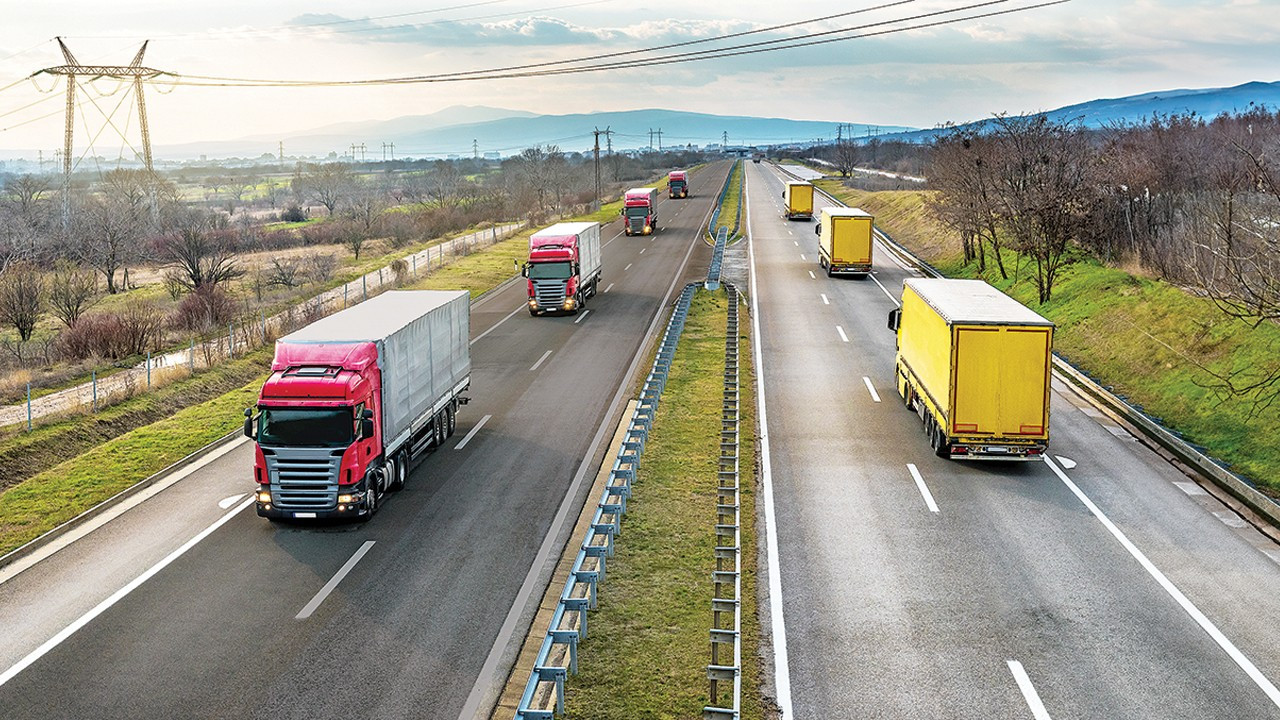
Logistics bring visa barrier to EU courts

Necmi STEEL 's

Dr. Kayıhan Özdemir Turan, Chairman of the Board of Directors of the Logistics Service Providers Association-LojiDer ⁇ in, which was established as a unique civil society organization in the logistics sector, stated that the v ⁇ ze barrier applied by EU countries to Turkish TIR drivers is contrary to the spirit of free ticare ⁇ t and said that they will start a new legal struggle in Europe.

It is planned to open visa cases in EU countries, especially Germany, where the biggest problems regarding visas are experienced. It is learned that interviews with expert law firms and well-known lawyers in this field are also continuing.

Stating that they had high-level interviews on the problems of the sector and new approaches in Ankara ⁇ da Ministry of Transport and Infrastructure and Ministry of Trade in July and August, Dr. Kayihan Ö.Turan pointed out that the negative impact of the cricket experienced in driver visas on the sector is increasing day by day and said that we are working to move the issue to European courts. Turan said: As ⁇ LojiDer, we value this issue with the perspective of preventing free trade within the framework of the criteria determined by the World Trade Organization.

In addition, we see that the process of handling and evaluating driver visas in the same way as normal tourist visas is completely contrary to the European Union norms on which the law is based. The investment price of our companies, which invest in 1 set of ⁇ drawer and semi-trailer ⁇ in the logistics sector, is 7-8 million TL today. The total investment cost of our member, who invests in a fleet of 10 sets, reaches high amounts such as 70-80 million TL. While this investment should add value to the country's economy and exports, it is unacceptable for drivers to remain idle due to the inability to obtain a visa.

Turan stated that visas that are not given to the drivers of vehicles carrying out international transportation are the biggest obstacle to the free realization of trade, and as ⁇ LojiDer, we are doing a detailed study in the direction of starting a judicial court in this direction. Based on the thesis that the visa issue has reached a stage contrary to the spirit of free trade, we are also meeting with expert lawyers in Europe on how to find a solution to the visa barrier. The issue is not to go to the judiciary, we want to make favorable decisions and bring a result to this issue in a way that sets a precedent for all EU countries.

Companies with large car parks are affected

Turan emphasized that another important problem of the sector is the cancellation of the rights of logistics companies with large vehicle parks to have fuel pump station in their own garages and expressed the following views;

⁇ I would like to share with you a decree that negatively affects our members who made national and international road transport last month. We have member companies with 10, 50, 150, 300, 500, 800 vehicles in their fleet.

These members have invested in fuel pump stations in their own garage areas to be given only to their own vehicles within the framework of the right granted to them in the past period and have the opportunity to make improvements in fuel costs, which have a high percentage for transportation services cost items, by purchasing bulk fuel only to fuel their own vehicles. Oil Market Kanu ⁇ 's 9th in the year 5015. In the seventh paragraph of the article, the rights of our members were revoked with a change made by the Decree Law in July. But we don't fully understand why. Our association member companies and sector companies will support every step that our delegate wants to take under the name ⁇ denetim ⁇ .

However, a few bad examples and actions should not cause our companies that do their job correctly and create employment by investing to be negatively affected. Our work continues to revise this decision, which will be implemented on January 1, 2025 ⁇ . We hope that the work we will do will be positive and that we will create a solution that meets the expectations of all stakeholders in this regard. ⁇

Authorization documents and unfair competition environment

Stating that another issue that has been talked about in the sector for many years is unfair competition, Dr. Kayıhan Ö. Turan, regarding the subject of authority documents, we are active in an ecosystem where logistics services are provided with authorization certificates obtained at high prices. However, due to the fact that the audit is not at the desired level, activities carried out without documents cannot be prevented. As a result of this, our certified companies are trying to continue their business in an unfair competition environment. ⁇ said.

We are the new center of attraction of the sector

Describing the Logistics Service Providers Association ⁇ (LojiDer) as the new center of attraction of the sector, Dr. Kayıhan Özdemir Turan, ⁇ We have members in 7 regions and 26 provinces of our country. At the end of the 6-month period, our number of members reached 298 ⁇ as a legal entity. The 2023 turnover of our members is 1.84 billion US dollars, we provide employment to 8 thousand 170 people, and 18 percent of the employment is made up of our women. We have a busy working pace in order to add value to our sector and our country.

We became the first NGO from Turkey to become a member of the European Logistics Association ELA ⁇ , which has a 40-year history involving 28 countries with its international dimension. The NGO, which has a history of 27 years and is a member of TAPA ⁇ or Türkiye ⁇ structured in 3 regions in the world, became LojiDer again.

⁇ It will open a new horizon with the highway train ⁇

Dr. Kayıhan Özdemir Turan, ⁇ In the workshop we attended in Ankara ⁇ in August regarding the regulation that our heavy transportation sector has been waiting for many years, the road train application we propose with an especially innovative approach will be a seminal application for our sector. We are excited that this innovative application will be implemented in 2025. ⁇ With the highway train ⁇ , a very important saving will be provided for the transportations to be made between the loading areas close to the highways and the unloading neighborhoods close to the highways ⁇ .