The right to move and reside freely within the EU is the cornerstone of European citizenship. But while this is possible in theory for many people with disabilities, the reality is very different.
The new EU-wide European Disability Card and the updated EU parking card for people with disabilities aim to solve this issue by allowing users to prove their disability anywhere in the bloc.
According to the European statistical agency Eurostat’, about 101 million people, or 27 percent of EU citizens over the age of 16, are disabled.
Eight EU countries (Belgium, Italy, Finland, Malta, Cyprus, Estonia, Slovenia and Romania) have been piloting the European Disability Card since 2016’. The success of the trial prompted Brussels ’ to press for full implementation throughout the bloc, and on 8 February this year the European Parliament and Council reached a provisional agreement.
MEPs also agreed to update the European Parking Card for Persons with Disabilities with a standard EU design to end the confusion and fraud caused by the current fragmented nature of national cards.
The agreed text is expected to be formally adopted by both the Parliament and the Council and to be put to a vote at the last plenary meeting of the European Parliament, , from 22 to 25 April.
the European Disability Forum“ described recent policy developments as a significant victory, but stressed that they were a first step. For example, the new rules will only apply to short stays of up to three months, except for holders of disability cards who have moved to another member country for a mobility program such as Erasmus+.
In addition, member states will have 30 months to adapt the new rules and 12 months to formally implement them; This means that it will take another three and a half years for the card to become accessible throughout the EU.
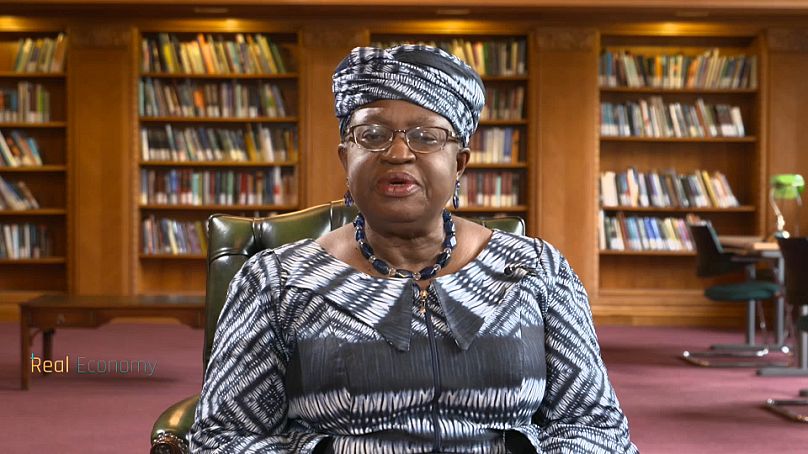
Yannis Vardakastanis, President of the European Forum for Persons with Disabilities (EDF), euronews’e said: “Cards is the first step. They remove some obstacles while traveling. They make it easier, but they don't allow us to take advantage of the right to move, study, and study. Disability assessment needs to be re-evaluated. Our disability does not travel with us.”
More than just making travel easier
Both cards will replace national cards already issued by local authorities. Once the application is submitted, it will be issued in physical or digital format within ninety days, except where longer medical check-ups are required. Receiving and renewing the European Disability Card will be free of charge, except if it is lost or damaged.
Cardholders travelling to other EU countries will be able to benefit from discounts on local transport, assistance on trains and other public transport, reduced or zero entry fees, priority access and reserved parking spaces.
The new rules will also include care support staff or care support animals. Those who don't have additional support and need more help can add the letter ‘A’ to their card, earning extra help when shown.
When a provider, such as a gallery or museum, participates in the program, cardholders in other participating countries have the same rights.
Živa Rogelj, Director of Education National Gallery of Slovenia, explained that they are trying to make the gallery as accessible as possible, “not just free entrance for the people with disabilities but also personalised guided tours or personalised creative workshops free of charge, ” she said.

Former Paralympic athlete Primož Jeralič was almost completely paralyzed from the waist down after a skiing accident at the age of 24. He's using both cards today.
I have been a disabled person for about 16 years and it has been difficult to travel to introduce myself, especially in the European ’. Now that I have an EU Disability Card, I can easily be recognized as a disabled person, ” said.
“I must say that at first I was afraid to show my handicapped card. But I was really surprised because this card is recognized all over Europe’. I travel a lot and have used this card in Belgium’da, Italy’da, Austria’da, Croatia’da, Germany’da and all over Europe’.
Possible next steps
National Council of Disabled Organizations of Slovenia(NSIOS) calls for two cards to be made into a single card to avoid any confusion with local authorities and to make it less stressful for people with disabilities to travel.
Gašper Oblak, NSIOS representative, “We want to raise awareness among people with disabilities. And we want to attract more providers to the card. And finally, we hope that one day the EU card and the parking card will be combined into a single card, ” said.
Pieter is a member of Paul Moen. EDC Fan TeamBelgium’da is a pan-European volunteer organization that strives for better participation of people with disabilities. Pieter’ has autism, and Euronews’e said police sometimes confuse his disability with drunkenness.
“We also want this card to be used in emergency services. You can also use this card when you are in a panic or stressful situation and contact the police, ambulance or hospital. You can prove your disability to doctors or nurses with this condition.”
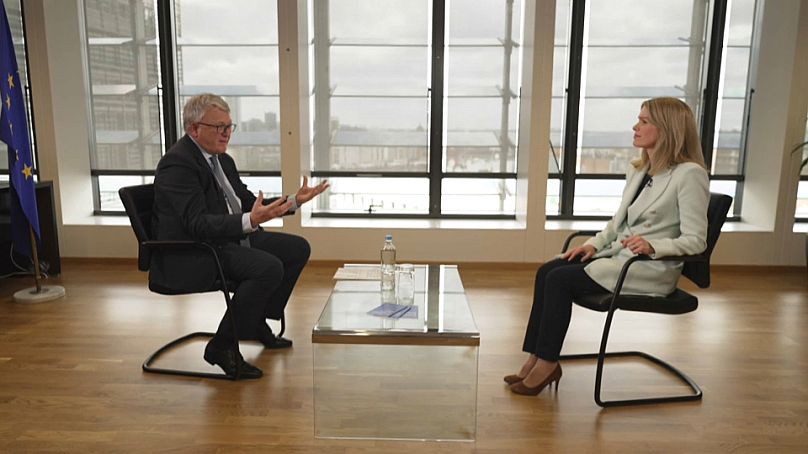
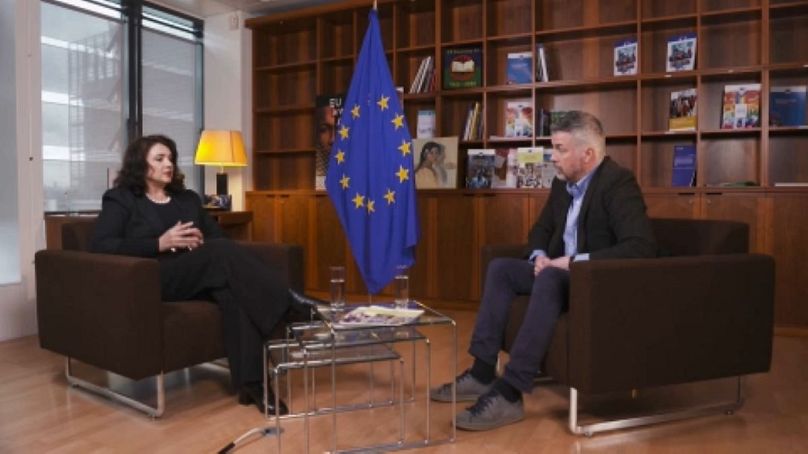
EU Equality Commissioner, Helena Dalli, He explained that the card was a step towards better integration, but also acknowledged that it had some limitations.
“With this card, all the rights that a disabled person has in a country will also apply to all disabled people who visit that country, so this recognition is very, very important.
Euronews’e said: “Of course, we have to abide by the agreements and we cannot go any further than we have done because it is in the jurisdiction of the member states. But this is definitely an improvement over what's happening right now. - ”
The EDF has been petitioning for the EU Disability Card for over a decade. While the organization acknowledges that the new rules will create greater awareness and acceptance, it argues that cards will not make things easier for people with disabilities who want to move permanently to another member country.
The disability card does not include social security, social assistance and other residence-based benefits. In the long term, people with disabilities who want to move to another state will lose their right to benefit from social security-related benefits in their own country. They may have to wait months or even years for assistance to be processed in their new country of residence.
Despite this, Commissioner Dalli explained that the legislative process was rapid: “I am happy to say that this directive is one of the fastest; I mean, I've never passed legislation this fast before. This shows that member states are keen on this card, which is very important and will greatly improve the lives of people with disabilities.”
The EDF also recommended that cards should not be issued automatically unless a disabled person requests them or explicitly agrees to the issuance or renewal of the card. This will eliminate the need for people with disabilities to show cards as proof of disability for better access to services.
If you want to learn more about the European Disability Card or how to get it, click on the link here. Click on the video in the media player above to watch the episode.