SpaceX’in on the stock market: Five Risks Investors Need to Know About

SpaceX is preparing for its biggest stock market launch ever.

Elon Musk’'s rocket company begins trading on Nasdaq’ on Friday under the code SPCX. The company raised $75 billion (64.5 billion euros) by pricing each of its shares at $135, setting the company's value at $1.75 trillion (1.5 trillion euros) in the largest stock market IPO on record.

The deal will comfortably eclipse Saudi Aramco’'s previous record of $29.4 billion set at 2019’, which was later increased by the general allocation option.

SpaceX did something unusual. EuropeA strong driver to attract retail investors, including those in ’. According to Bloomberg’, individual investors placed orders worth about $100 billion (€86.6 billion) through trading platforms such as Robinhood, Fidelity and SoFi during the IPO process.

This demand alone exceeded the company's goal of raising $75 billion (64.5 billion euros) in funding, underscoring the interest of small investors before entering the stock market.

But below this exaggerated advertisement, a few warning lights are flashing. Here are five risks investors should weigh before the SpaceX’ IPO goes live:

1. Is SpaceX’ worth $1.75 trillion?

Investors will value SpaceX’e at a valuation of $1.75 trillion (1.5 trillion euros), about 94 times its annual revenue of $18.7 billion (euro 16.1 billion) at 2025’. By comparison, Nvidia, one of the market's most valuable tech companies, is trading less than a quarter of that level.

Investment research firm Morningstar, which has valued the company at $780 billion (€675 billion), describes the company as “, which is significantly overvalued, while Goldman Sachs data suggests that sustaining the share price will require revenues of over $100 billion (€86.6 billion) by 2030, suggesting that annual compound growth %It says it's over 40’.

2. A valuation based on a small variability

Investors also need to pay attention to the size of the public eye. Although SpaceX’ is valued at $1.75 trillion (1.5 trillion euros), its shares are only %From 3 to %4’ü will initially be open to public trade.

This means that the market value of the company will be determined by trading a relatively small portion of its equity. Reports show that more than 75% of the $75 billion (64.5 billion euros) offer is already allocated to existing investors and insiders, leaving fewer shares in the open market.

According to Morningstar’, limited volatility and strong demand for AI-related stocks can help support the share price in the early stages of trading, even if the company is valued above what the research firm considers fair value. The firm argues that when lockdown restrictions expire and more shares become available for trading, a clearer picture of investor demand may emerge.

But some analysts believe the limited volatility could continue to support the stock. Estimates suggest that when Nasdaq 100’e joins SpaceX’e, passive investment between $22 billion (€19 billion) and $27 billion (€23.4 billion) could flow, creating additional demand from index tracking funds.

History offers a warning note. Research by University of Florida professor Jay Ritter, often referred to as “Bay Public Offering, found that IPOs between 2012 and 2021 averaged on the first trading day. %It increased by 23.6 percent over the next three years. %It turned out to yield a 10.6 percent return.

3. Not profit, but loss.

SpaceX’'s financial results could also cause investors to pause.

The prospectus shows that the company is growing rapidly but still losing money.

The company owns the Starlink satellite internet service, which generates most of its revenue and is its only profitable business. He also owns the artificial intelligence company xAI’, which merged with SpaceX in February.

According to the application, SpaceX posted a cumulative deficit of $41.3 billion (€35.76 billion) as of March 31, and reported a net loss of $4.27 billion (€3.7 billion) in the first quarter of 2026’.

This compares to $528 million (457 million euros) in the same period of the previous year.

Most of the recent losses are due to xAI’. According to SpaceX’'s public offering application, the artificial intelligence business 2025’te recorded operating losses of approximately $6.4 billion (€5.5 billion). The application also showed that xAI’ was spending heavily in the first months of 2026’ while expanding its artificial intelligence infrastructure.

Morningstar argues that the artificial intelligence unit “ poses a material threat to the loss of value, and Grok” has not yet achieved meaningful market share against competing chatbots.

Supporters say losses are a choice, not a structural flaw.

Revenue from the previous year's $14.1 billion (12.2 billion euros) in 2025’te %It rose 33 percent to $18.7 billion (€16.2 billion). The basic launch and satellite business was profitable as recently as 2024. The vulnerabilities largely reflect the intense investment in artificial intelligence infrastructure; The expenditures said by the supporters are already being compensated by new computing contracts.

4.Artificial intelligence growth gambling

Supporters argue that investors are paying for future growth instead of existing profits.

While Starlink remains the company's main source of revenue, the AI business is expected to play a larger role in the coming years.

The bulls also point to SpaceX’'s dominant position in rocket launch and satellite communications, suggesting that the company is uniquely positioned to benefit from the growing demand for connectivity, computing power, and artificial intelligence infrastructure.

SpaceX launches more rockets each year than the rest of the world combined, and has more than nine million Starlink subscribers, but the newest growth driver is the AI data center business purchased through the xAI merger.

Last Friday, Google agreed to pay $920 million (€796.6 million) per month for compute capacity at SpaceX’e xAI data centers in a 32-month agreement that will run from October 2026’ to June 2029’, covering access to approximately 110,000 Nvidia GPU’s.

This was after the agreement in May, when Anthropic’in paid $1.25 billion (EUR 1.08 billion) per month to lease the entire output of the Colossus 1 data center by May 2029, with total annual computing revenue of about $26 billion (EUR 22.5 billion).

The bulls argue that this contracted income, obtained in less than four months, shows how quickly the company can make money from its infrastructure. Skeptics note that both contracts include 90-day termination provisions after December 2026’, with Google’ itself framing the agreement as “bridge capacity” rather than a permanent commitment.

It's a FILE. Gas turbines seen at xAI plant in ’, Memphis, Tennessee, December 2025

5. Risk the size of Elon Musk

SpaceX’'s success, profile, and past performance are closely linked to Elon Musk’, which has helped attract investors, customers, and business partners. This creates what investors call “kilit person risk”; I mean, concerns about how the company would perform if he didn't lead anymore.

The management structure of the company strengthens this dependence. Musk’'s super-voting Class B shares give him an approximate voting power of %He gives away 85’ini, and outside shareholders have little impact on key corporate decisions. In practice, this means that no one but Musk’ can decide whether or not to remain CEO.

Critics also note SpaceX’'s establishment in ’, Texas; Only the least amount of shares %Investors who own 3’ can file derivative lawsuits. The Danish academic pension fund AkademikerPension has blacklisted the stock, describing its management structure as “ Catastrophe”.

Supporters argue that double-class sharing structures are common among U.S. tech firms, including Meta and Alphabet’. They say intense voting control allows founders to achieve long-term goals without pressure from short-term investors.

Musk’'s reputation also brings political risk. U.S. Senator Elizabeth Warren urged the Securities and Exchange Commission to review the listing, warning that its inclusion in the index in the future could expose millions of passive investors to stocks without actively selecting them.

Others noted that SEC’ completed its review faster than expected, suggesting that this allowed the IPO process to proceed without delay and that regulators saw no immediate impediment to listing.

Disclaimer of Disclaimer: This information does not constitute financial advice; Always do your own research to make sure it suits your specific circumstances. Also remember, we are a journalism site and aim to provide the best guides, tips and advice from experts. If you trust the information here, you do so entirely at your own risk.

‘ historic ’ UK trade deal with Gulf countries will bring billions of dollars to British economy

The United Kingdom has signed an important trade agreement with the Gulf Cooperation Council (GCC), which is expected to contribute more than 4 billion Euro’ per year to the British economy.

The agreement is the first of its kind between the Gulf Cooperation Council (GCC), which consists of Bahrain, Kuwait, Oman, Qatar, Saudi Arabia and UAE’, and an important G7 country.

According to the agreement, up to 93 percent of ’'s (Gulf Cooperation Council) customs duties on British goods will eventually be lifted, and the UK's customs duty on ’'s exports of approximately €670 million per year will be removed. About two-thirds of these reductions will go into effect as soon as the agreement enters into force.

UK exports, ranging from cheese and butter to medical equipment and manufacturing goods, will benefit from this; service firms will gain deeper market access in the financial, engineering, legal and consulting sectors.

Deal ‘a big winPraised as ’

British Prime Minister Keir Starmer welcomed the deal, describing it as a major win for British workers and businesses, and reiterating the government's commitment to promoting growth, supporting employment and strengthening the economy.

"The “ Gulf countries are valuable economic partners, and this agreement deepens this relationship, builds trust and opens up new trade and investment opportunities," added ”.

Trade and Trade Minister Peter Kyle echoed these statements, saying the deal sent “ a clear signal of confidence at a time of global uncertainty and trade turmoil.

Gulf Cooperation Council Secretary General Jasem Mohamed Albudaiwi, meanwhile, praised the agreement as a successful result of intensive negotiations and described it as part of a broader vision for “ sustainable and promising economic growth for all parties involved.

Albudaiwi added that at a time when economies in the region are accelerating diversification efforts beyond hydrocarbons and investing heavily in logistics and emerging technologies, the deeper strategic partnerships created by the agreement will benefit both the UK ’ and the Gulf Cooperation Council ’.

Business leaders also welcomed the trade agreement; Many people see the Gulf ’ as a bright spot to invest and expand. They also highlighted opportunities in green technology, infrastructure, healthcare and professional services.

Georges Elhedery, Group CEO of banking giant HSBC’nin, said ’GCC is a region that is growing in strategic importance, has long-term opportunities and where HSBC“'s legacy extends deep.

"We see first-hand the opportunity this agreement can bring, and we are ready to help deepen economic ties and support businesses to connect, invest and grow," “ added.

The agreement also marks a major step forward in improving conditions that will encourage companies to grow confidently in the Gulf region.

Anthony Houghton, CEO of Holland & Barrett, said: “ Fair, reliable and low barrier trade is essential for businesses to compete and grow internationally with confidence. This agreement ensures stability by supporting the growth of companies like us and serving customers across the region.”

Trade in the post-Brexit world

Industry experts say that this agreement, in which London’ aims to expand its commercial partnerships beyond Europe’, underscores the growing economic importance of the Gulf region for Britain.

Chartered Institute of Export and International TradeAccording to ’, the United Kingdom’tan Gulf Cooperation Council’ne (GCC) food and beverage exports already exceed 720 million Euro’ annually; for products such as confectionery and special cheeses %From 5 to %Customs duties between 25 and 25 will now be reduced or abolished.

Marco Forgione, managing director of the Chartered Institute of Export and International Trade, said that the UK-Gulf Cooperation Council (GCC) trade agreement will unlock important new markets for “ British exporters in sectors such as advanced manufacturing and renewable energy.

Another outcome could be opportunities from major Gulf infrastructure projects linked to regional trade diversification efforts triggered by disruptions in the Strait of Hormuz.

Given that UK-Gulf Cooperation Council (GCC) trade currently reaches around €66 billion ’ each year, the new agreement will see the flow of bilateral trade over time. %It will increase up to 20’.

How does Dropbox make things work remotely with more companies returning to the office?

As large companies push employees more and more into offices, Dropbox stands behind the remote working model it adopted during the Covid-19 pandemic.

The San Francisco-based cloud storage company, “, says its pre-virtual” structure delivers business benefits and helps it achieve financial goals, from stronger staff retention to lower operating costs.

The company implemented this policy in 2020, becoming one of the first major technology firms to adopt long-term remote work on a large scale.

Since then, many employers in the technology, finance and consulting sectors have reversed flexible work arrangements, arguing that greater personal collaboration increases productivity and innovation.

But Dropbox says it's committed to making remote work the standard arrangement for most employees.

In a recent interview, Melanie Rosenwasser, Managing Director of Human Resources, “Pandemi tested our assumption that we need to be in person to be productive, ” said.

The firm has also deliberately avoided adopting a hybrid system that requires employees to divide their time between home and office.

Rosenwasser, “We're obviously not hybrids. "We think it's the worst of all worlds, with our employees going on long journeys just to sit on Zoom’, because most of our colleagues are scattered," ” explained.

Creating a Remotely Prioritized Culture

Dropbox organizes work within the framework of remote collaboration by default, while bringing teams together face-to-face for planning sessions, team building, and social events at least quarterly.

The approach reflects a broader shift in workplace expectations during the pandemic. Rosenwasser said that Dropbox’ increasingly sees “ as a key element of flexibility and representation to attract and retain workers in a competitive labor market.

The company has also reduced much of its traditional office footprint in favor of smaller coworking spaces, known internally as “Dropbox Studios”, designed for occasional face-to-face meetings instead of daily attendance.

Dropbox says it has spent several years developing systems aimed at making distributed work more effective.

Employees work within “ designated ” core collaboration hours, which coincide with four-hour periods reserved for meetings and group discussions at different time periods. Outside of these hours, staff largely manage their own schedules.

Dropbox Studio Austin, Texas’ta

The company has also introduced strict internal rules regarding meetings.

Rosenwasser said meetings should only be held as part of an effort to reduce fragmented schedules and increase productivity when teams need “ to discuss, discuss or decide something.

Rosenwasser, “There's a perception that when you're in the office and you can physically see the people on your team, you can assume they're doing what they're supposed to be doing, but I think we all know from working in offices that this isn't necessarily true.

Dropbox has also tried initiatives aimed at relieving remote work fatigue, including “Meet & Move”, a pilot program that encourages employees to join phone meetings on foot rather than sitting in front of a screen.

A broader discussion of the future of work

The future of remote work continues to be a point of tension across the corporate sector.

Companies like Amazon, JPMorgan Chase and Google have spearheaded tightening back-to-office requirements over the past two years, despite resistance from some employees accustomed to flexible schedules.

Supporters of office engagement argue that face-to-face interaction strengthens collaboration and company culture.

Advocates of remote work, on the other hand, suggest that flexibility improves work-life balance and extends access to talent beyond expensive urban centers.

Dropbox is among a smaller group of companies that continue to show that working entirely remotely can be successful on a large scale, provided organizations redesign their management structures, communication systems, and performance metrics.

Where do ’ employees work the most on weekends?

Hundreds of thousands of people across Europe don't consider the weekend as free time.

According to the latest Eurostat data, more than one in five workers across Europe (.3) He regularly works shifts on Saturdays and Sundays.

And in some countries, especially the Balkans and the Mediterranean ’, the average is well above that.

GreeceEmployees and self-employed in ’ ’i is dramatically active on weekends; Bosnia and Herzegovina’te and Malta, Cyprus and North Macedonia’da is ’.

At the same time, the north and east of the continent show much lower rates. LithuaniaOnly workers in ’ %4’ü, Hungary’da %7 and Poland’da %7.5’i works on weekends.

It's probably no big surprise that business owners take fewer weekend vacations than employees: the Employees ' %Compared to 18.5’ine ’ needs to be at work.

Greece, Cyprus and North Macedonia only when it comes to employees While ranking first with rates above ’, Slightly below ’ followed by Switzerland and Malta.

Greece again on the self-employed/employers front %It shows the highest rate at a staggering 75. the Belgium (Belgium) and France (’) The table changes slightly in the lower rows where it takes place.

Working often on weekends doesn't mean working more in general. But in the case of Greece’, the figures are consistent. Other Eurostat dataIt shows that Greeks tend to work more hours than anyone else at AB’.

Which sector is most likely to work on weekends?

Working shifts also depend heavily on the business sector.

For example, almost half of service and sales employees (.6) in agriculture, forestry and fishing (.2) employees work regularly on weekends.

It is also called “ basic professions” (.7) is also a norm for many people; This means routine manual labor, which often requires considerable physical effort.

Which countries are trying the four-day work week?

The current trend in Europe’ seems to be geared towards compressing rather than extending the working week.

The last country to try this was Poland’, a fast-growing economy. Problems with burnout.

In the summer of 2025, he launched a pilot project aimed at reducing the weekly working time from 39 hours to 35 hours without salary cuts.

Employees could choose one of three options: working six hours a day, spending three days on the weekend, or taking extra vacation days.

The experiment, launched by the Ministry of Labor on 90 public and private workplaces and 5,000 employees, is planned to be evaluated in 2027.

Each participating workplace was compensated up to 210,000 Euro’ to help cover any workflow disruption caused by the reduced work schedule.

Other European countries that tried the four-day work week were the UK, Germany, Portugal, Iceland, France and Spain.

Inside ’'s Supply Chains: Why are companies sourcing from ’ in the UK?

European ​​manufacturers are increasingly moving their supply chains across borders, leveraging suppliers, skills and production in multiple countries. For companies like Bosch, the UK plays a special role in this network and contributes to a unique set of skills and expertise.

Steffen Hoffmann, managing director of Bosch UK and Ireland, says “Europe is a largely integrated economy, and ”It won't be enough to search for talent in just one country.“

Like many major manufacturers, Bosch operates across Europe through a network of production facilities, research centers and national businesses, supplying components from different countries and supplying multiple markets.

Hoffmann explains how this works in practice: “Birmingham and ScotlandUnited KingdomWe have numerous plants for industrial products in ’, including hydraulic drives in ’, and a plant for heating boilers in Worcester’. They all work with suppliers, some are based in the UK, but they all supply multiple countries.”

Suppliers provide components such as mechanical parts, materials and electronic systems and are selected not only for their ability to serve a local plant, but also for their competitiveness across Europe.

Jo Shepherd, CEO of Worcester Bosch’, Bosch’'s UK-based heating business, says ’ that frictionless trade is vital to “ supply chain efficiency and speed to market, helping to ensure consistent quality and reliability across markets.

Durability and innovation

Sourcing decisions are increasingly being shaped by broader economic and geopolitical factors. For European ​​ companies, resilience and independence are becoming increasingly important, and this cross-border model also helps manage risk in an increasingly uncertain global environment.

Durability and reliability are absolutely essential for every manufacturer, and this approach, “ adds, gives us more flexibility and less short-term exposure to global geopolitical fluctuations.

Access to talent and innovation is another important factor in resource-finding decisions. ’'s research base supports the development of new technologies that directly feed supply chains.

Hoffmann says: “We have a great university environment; Not only in Oxford and Cambridge’, but also in London’ and elsewhere in the country, we provide a good alumni and talent pool and a very lively start-up ​​ stage.”

This combination of academic strength and entrepreneurial activity fosters the broader competitiveness of Avrupa’, creating opportunities for cooperation and investment.

Local expertise, on a European scale

Operating in more than one country also presents challenges. Products and services need to be adapted to local regulations and customer expectations in each market.

For Worcester Bosch, this means combining insights from business across Europe with local knowledge from ’ in the UK. Shepherd, UKReferring to how products and services are specifically designed for customers in ’, “ says it's important to take what you've learned and apply it with true local care.

This combination of shared knowledge and the ability to respond to local needs is central to maintaining performance in different markets.

Strategic value in a changing world

As companies build more integrated supply chains across Europe, this approach is also strengthened at the policy level. As Her Majesty's European Trade Commissioner Ceri Morgan’ explains, the focus of the UK’ is now on strengthening cooperation and creating a more stable environment for businesses operating across borders.

The relationship with his words “starts from a very strong foundation”; Europe, the United Kingdom, continues to be ’'s largest export market.

Hoffmann, “We need to try to maintain a certain [regional] independence, ” says. “If we want to be taken seriously, we need to have a footprint, which requires independence from some other parts of the world.”

In this context, with its strong research capacity, established supply chains and stable business environment, the role of ’ as a partner in Europe’ is becoming part of a wider business decision.

UK Government policy reinforces this position. ’'s Industrial Strategy aims to support fast-growing industries, strengthen supply chains and attract global talent while providing long-term stability for business and investors.

A practical partnership

Both Hoffmann and Shepherd, UK, are clear that ’'s value lies not in a single advantage, but in how it adapts to a wider European system of cooperation.

For Bosch, sourcing from ’ is part of an integrated approach that combines talent, innovation and reliable supply chains. This is a practical partnership shaped by day-to-day cooperation rather than abstract policies.

As European ​​ companies continue to adapt to a more complex global environment, this model, based on common standards, local expertise and cross-border cooperation, will continue to be at the heart of sourcing and growth methods.

How can working abroad start the careers of young NEET’s?

Advancing a person's education and navigating the job market can be a daunting task…

Especially if you are a young person who is already struggling to find a job in Avrupa’, has poor access to educational programs or drops out of school without any qualifications.

If you find yourself ticking these boxes and you are between the ages of 16 and 29, you may have entered the category of unemployed youth (a young person who is not in employment, education or training) officially known as NEET’s in Europe’.

This phenomenon is not only limited to Europe, it is a global phenomenon. The International Labour Organization reports that in 2023, one-fifth of people between the ages of 15 and 24 worldwide were classified as NEET.

According to EU data, factors such as having a low family income, having a disadvantaged family history, or disability can increase a person's risk of becoming NEET.

But can a work experience abroad help people get out of this precarious situation?

Both Hatice Fahel and Jasmin Nsimba Kanza think so; They both joined AB’. the ALMA initiativeIt is a program that offers disadvantaged NEET’s under the age of 30 professional and personal experience abroad.

An opportunity at Bel Paese’

Hatice, a 20-year-old German girl, spent two months after high school in Vercelli, Italy, focusing on her future prospects.

Euronews’e said: “I made a lot of new Italian friends and learned a new language. I loved working in a hotel there and learned a lot in my job. I feel freer and safer now. So it opened my eyes and my perspective on other things. - ”

Thanks to professional and culturally intensive experience, Hatice has now prepared a career plan with the support of her mentors.

Hatice Fahel, ALMA program participant

“, my dream career is to be a doctor someday. Go study medicine. Wherever you need, for example, exams, so yes, I still need to figure this out. And he said ” to start my career.

A total of almost €11 billion has been invested in this EU plan, and Germany is one of the 15 participating countries.

Andrea Moraru, project manager of NGO RE-INIT’in, which coordinates the program in Recklinghausen, Germany, explained how the program participants will manage their own money and learn how to become more independent.

Speaking to Euronews’e, Moraru said: "We are trying to strengthen them to motivate them to achieve things they didn't even know they could achieve. It's the first time they've been able to stand on their own two feet, ” said.

ALMA participants are mentored for four months when they return, and the results are clear, Moraru’ explains: More than 50 percent of “ in the last group found work or were admitted to an education or training program’ explained Moraru.

Advancing a person's education can reduce a teenager's likelihood of falling into the NEET category. For example, in 2022’de EuropeOnly eight percent of highly educated young people in ’ fall into this category, while the proportion of low-educated young people was 13.6 percent.

First experiences in the Land of the Gods

Jasmin, who went to ’, Greece two years ago, said she had been thinking about going abroad with such a program for a long time because familial conditions prevented her from receiving higher education.

Jasmin Nsimba Kanza, ALMA programme participant and Euronews correspondent Fanny Gauret

“I've learned a lot and it's been a lot of first experiences for me. For example, I went to the beach and the sea, met new people and experienced an entirely new culture, ” explained.

Jasmin found work in the restaurant of a hotel in ’, Greece, and came to the conclusion that she felt very supported throughout the venture.

“Now that I'm more open to change and have more courage, I'm ready to change. After this experience, I applied for a media and communication-oriented design course at a vocational school and was accepted. I'm starting in the fall. - ”

Germany has one of the lowest NEET levels in the European Union’, and it's clear that both Jasmin and Hatice’ benefited from the ALMA project, but they wouldn't be where they are today without their proactive and positive mindset.

Due to the various social and economic challenges that exist throughout the EU, it may be easier for some to find the motivation and opportunities needed to advance their careers than others.

NEETS: ‘More likely to live a life of social exclusion’

Mark Levels, a quantitative sociologist and professor at Maastricht University ’, explained in an interview with Real Economy why it is much easier for some NEET’s to find a way out of this apparent uniformity, and why social integration remains a major challenge.

Fanny Gauret, euronews:What are the consequences of being classified as NEET for the individual and society?

Professor Mark Levels, University of Maastricht:The state of NEET’in is related to a number of social problems. So NEET’s are much more likely to be poor, much more likely to live a life of social exclusion, and much less likely to move on to the labor market later. For society, the total cost in terms of missing labor productivity, the cost of social programs, as well as the cost of trying to regulate crime, etc., is huge. That's about 142 billion euros a year.

Euronews correspondent Fanny Gauret and Professor Mark Levels

Fanny Gauret, euronews:Can having the experience of living and working abroad lead to permanent change?

Professor Mark Levels, University of Maastricht:Such experiences can signal that you can accomplish a lot of things that can be in a lot of demand. I mean, they can work, but they don't work for the most vulnerable, the underqualified here. And that requires a completely different approach.

Fanny Gauret, euronews:Are there countries or policies that can model your research?

Professor Mark Levels, University of Maastricht:Germany’ has a very well-functioning vocational education system. Here we see that the transition from school to work actually works and works very well. The problem is that you can't take an education system from one country and apply it in another. You have completely different cultural environments, which makes exporting a bit difficult.

Fanny Gauret, euronews:What steps should governments and educational institutions take to help young people and NEET’s transition from education to work?

Professor Mark Levels, University of Maastricht:If there's one thing we know that can predict a situation as vulnerable as NEET, it's leaving school early. So invest in your education system. Invest in keeping people on board. Invest in programs that teach children skills that are in demand in the job market. You then reduce the likelihood that they are NEET, and secondly, you focus on the most vulnerable children and put them front and center.

Click on the video in the media player above to watch the full Fanny Gauret’in report.

The chemical limits: Are AB’'s new rules on toxic substances in the workplace going far enough?

The dangers that lead brings to human health have been known for decades. Although metal is no longer used in our pipes and oil, it is still common and key to our modern world.

Europe uses millions of tons of lead each year to insulate car batteries, high-voltage cables and energy-saving buildings. So what happens when lead-containing products end their useful life?

the Kampin CampEurope is one of ’'s largest leading recycling companies. Every year, the company re-evaluates large quantities of metal at its facilities in ’, Belgium and France.

Campine CEO Willem De Vos said in a statement to Euronews’e at the company's headquarters in ’, northern Belgium, that ’ is recycling scrap containing about 90,000-95,000 tons of lead.

De Vos explained that most of the recycled lead products are car batteries, with around 10,000 units recycled per day at the plant.

The camp plays a vital role in reducing lead waste. Exposure to lead-contaminated soil and water near industrial landfills can lead to lead poisoning, which can be harmful, especially if exposed to young children.

De Vos, “If we hadn't recycled these batteries, they would have gone somewhere in the dumpster, which is definitely not a good thing. Meanwhile, the industry needs lead, so we'll have to get it from mines in or outside Europe’, which again isn't good for the environment, ” added.

Recycling lead: The Catch-22

Almost all parts of the lead-acid battery can be recycled, but lead can be released at any stage of the recycling process. While recycling lead is important to meet the global demand for refined lead metal, recycling metal can be a dangerous business and poses open environmental and health risks.

As a result, Campine adheres to strict safety protocols to ensure the safety of its staff. Employees are required to wear protective equipment as well as comply with clear guidelines. They also need to do regular blood tests to monitor the concentration of lead in the blood.

Campine’'s lead exposure limits are well below AB’'s current standards, but the new rules mean it should go even further.

The new legislation will require employers in the sector to limit their lead concentration to only 15 micrograms per 100 milliliters of blood from 2026’, bringing the occupational exposure limit to one-fifth of the current level.

“The effects of lead on health have long been known. But we now have more data to show that these health effects also occur and occur at lower levels of exposure. So we need to lower these levels to prevent chronic disorders, such as cancer, for example.” Lode GodderisKU Leuven-IDEWE Professor of Occupational Medicine and Toxicology Euronews’e said:

Current preventive measures

Employers in AB’ are required to take the necessary measures as specified in the European Union Regulation ’ to prevent or reduce exposure to harmful chemicals. Regulation, Evaluation, Authorization and Restriction of the Chemicals Authority (REACH).

This regulation replaced many European directives and regulations with a single system in 2007. REACH aims to increase the competitiveness of the EU chemical industry and allow free movement of substances in the EU market. It also provides strict guidelines for environments where hazardous chemicals can be used.

Better ventilation, alternating work tasks, personal protective equipment and adequate safety procedures are encouraged. To minimize health risks, pregnant employees who are at risk of exposure should be allowed to change roles during pregnancy.

For example, in ’, Finland, a statute of the Health Insurance Act of ’ guarantees that pregnant persons have the right to special maternity leave and the right to receive allowances by the Social Insurance Institution in the event that safe work cannot be achieved.

If a role requires exposure to a list of agents thought to be harmful or requires a level of exposure that could pose a danger to reproductive health, then the role is not considered safe.

What do the new rules mean for employees?

Workers' representatives welcome the new rules, but insist they must be implemented throughout the bloc.

Claes-Mikael Ståhl, Deputy Secretary General the European Trade Union ConfederationEuronews’e said functional union representatives, labour inspectors and guidelines are needed to ensure that rules are enforced in workplaces. Ensuring these rules are applied equally across Europe is a challenge, “ said.

In addition to lead, Europe has also taken action for the first time to limit exposure to a class of chemical compounds called diisocyanates, which are known to cause respiratory ailments such as asthma.

Exposure to other carcinogenic chemicals also remains a health risk. For example, benzene is widely used in the petrochemical industry, but European Agency for Safety and Health at Workreported bad effects after prolonged exposure; Women exposed to benzene reported fetal loss, decreased fertility, and low birth weight.

In the iron and steel industry, welding is known to release fumes containing harmful chemicals such as nickel, chromium, cadmium and carbon monoxide. Under the new EU guidelines, exposure limits to nickel, chromium and cadmium have all been reduced.

Nikolaj Villumsen, a member of the European Parliament, told Euronews’e that the changes are important: “, we're talking about saving people's lives. Fewer workers will get sick on the way to work. Fewer workers will die. - ”

Metal workers, industrial workers, those who build wind turbines, those who build batteries, those who are actually at the forefront of the green transition will be better protected thanks to this legislation.

Nikolaj Villumsen
Member of Parliament

But Villumsen also stressed that he didn't think the new values went far enough. “If you ask me, or if you ask the majority in parliament, no. But these are still important developments for workers, ” said.

The European Parliament member added that thanks to the review clause in the legislation, the new limits will be re-evaluated within five years, thus allowing time for the assessment of additional harmful effects on new technologies and subsequent changes.

Villumsen briefly said: “Because of the green transition, more workers will be exposed to these dangerous substances. For this reason, it is very important to ensure that workers are better protected, that those who are part of the green transition, that workers who do this in the field, do not lose their lives or get sick due to their jobs.”

After its entry into force, the 27 Member States must apply the new European ’ chemistry rules to national laws within two years.

How can child care help Ukrainian mothers integrate into the host country?

Russia’ UkraineTwo years after ’'s large-scale invasion of , how are millions of Ukrainian women and children adjusting to life in their new host country? Are they getting the support they need?

Access to childcare is a crucial step in the integration process. In this latest episode of Real Economy’, Euronews correspondent Fanny Gauret traveled to ’, Poland, to hear the words of the women who supported and benefited from these childcare facilities.

Learning a new language, looking for a job or recognizing their qualifications are just some of the challenges Ukrainian refugees face when trying to rebuild their lives elsewhere.

Ukrainian conscription laws prevent men between the ages of 18 and 60 from leaving the country; Therefore, women who run away with their families are often the sole caregivers of young children, making it almost impossible to find a job without childcare in host countries.

the Comenius Foundation2000Founded in the early years of ’ to provide better conditions for children in their first year, the company has 37 kindergartens in Warsaw’.

Not just these’ The spynkas are‘ created safe spaces for refugee children to learn and play, and also gave Ukrainian mothers time to find work in ’, Poland.

Child psychologist Maria Odinets Euronews’e said: “When we came here, my child barely spoke due to stress, but I see changes in my youngest son, he started talking and communicating with other children for the first time… made friends here; You can say you're happy. - ”

Odinets, together with his wife and three children, fled Ukraine ’ six months ago and hopes that his diploma will soon be recognized in Poland ’ in order to find a job.

“This helps me because I now have free time between 09:00 and 15:00. During this time, I can learn Polish, look for work, or help my older children and pick them up from school, ” added.

Monika Woźniak, director of the Comenius Foundation, told Euronews’e that support is vital: “A very large percentage of our children experience trauma, so our attention needed to be strongly focused on helping children who couldn't and couldn't cope in normal primary schools and kindergartens.”

Monika wants to open more nurseries and register them in the official education system.

Woźniak, “We hope to launch EU-funded programs that will help integrate Ukrainian children and their parents into the Polish early education system. We are talking about children who, if they have a good foundation, will eventually begin to live well, ” explained.

Monika Woźniak, Director of the Comenius Foundation, chats with children at ‘spynka’.

This ‘spynka is funded by the ’s UNICEFThey also receive support from the Polish government and some European funds.

Most of the staff working in these centers are Ukrainian refugees, such as Yuliana.

When former decorator Euronews’e first arrived, she said she had trouble finding a job that would give her time to pick up her children after kindergarten or school and take care of them at night. Today this ‘spynka works as an educator in one of the ’s and says that the most important thing she can do is work.

“If it wasn't for this job, I don't know… I could have been a cleaner at first, then maybe I could have found something else … but this spynka really helped me adapt” said.

What other support is being offered to Ukrainian women and children?

To date, almost two-thirds of Ukrainian refugees have found work in ’, Poland, according to government figures.

By the way, the European Social Fund Plus(ESF+) has allocated €8.9 billion to tackle child poverty in AB’. Some of this money can be used to fund and increase the number of official ‘spynka’s, as well as improve the quality of places in kindergartens.

Ministry of Family, Labour and Social PolicyEwa Flaszynska, head of ’'s labor market department, co-authored the Euronews report with Fanny Gauret.

Ewa FlaszynskaThe head of ’'s labor market department, the Ministry of Family, Labor and Social Policy, said more Ukrainian women had found time to look for work as the number of children given to a single educator increased.

Almost 70 percent of Polish women are “i active, and statistics show that Ukrainian women who join us are also active in the labor market, ’ said.

While some Ukrainian women have already returned or hope to return in the near future, the expansion of childcare services has proven to play a key role for Ukrainian refugee families trying to find stability abroad.

Click on the video in the media player above to watch Fanny’'s full report.

A task force for the future: Europe’'s plan to equip workers with skills to reverse labor shortages

About 63 percent of small and medium-sized businesses in ’ say a lack of workforce and skills has left them behind in their overall business operations. The EurobarometerThe survey was found.

In an announcement to support European ​​ businesses, increase staff retention and equip professionals with the skills they will need in the future, the European Commission and its partners said: The Duchess of ValAt the end of January, ‘ announced that it had signed the Tripartite Declaration for a Developing European Social Dialogue.

The EU has pledged to bring more professionals to the European labour market, facilitate recognition of foreign qualifications, improve working conditions and provide professionals with the tools they need to work in specialized roles.

Brussels provides around €65 billion in EU funds for education. thanks the European Skills Agendaand the Agreement of SkillsAround two million workers across Europe have already received advanced training.

Creating a digital workforce in ’, Slovenia

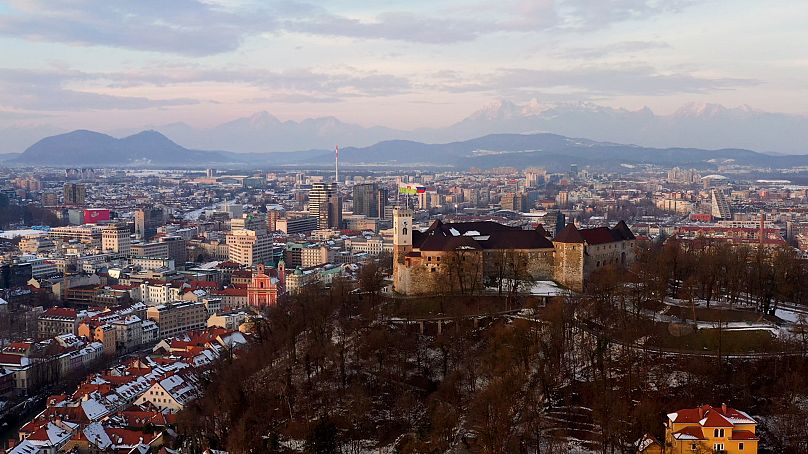
CEO’ Rok Zajc the Thick GroupEuronews’e, the digital marketing agency in Ljubljana’, said it had a hard time hiring certain profiles, especially high-skilled professionals.

It's Ljubjlana, Slovenia. There is a high demand for ICT employees in this dynamic and connected country.

Zajc, “From design, to performance marketing, we try to find different profiles from software developers and senior designers. But, for example, you actually need a lot of personal motivation and some different courses to get to the top for what we provide, ” said.

There is a great shortage of personnel in the information and communication technologies sector (ICT). AB’ needs another 11 million people to join this sector to achieve its goal of winning 20 million ICT professionals by 2030.

“What governments can and should do is reskill the existing workforce to ensure they get the skills they need, ” said. Dr Emilija Stojmenova DuhSlovenian Minister of Digital Transformation.

Euronews’e, the engineer who became a politician, announced last year that 30,000 people in ’, Slovenia, were taking advantage of free courses to help them adapt and acquire the skills needed to meet market demands.

Stojmenova Duh, “Only 17% of experts in the ICT field are women. So maybe my favorite project is a digital project that's all about giving young women skills and improving their skills. We were collaborating with the industry so that the industry could get the right workforce, ” said.

We are all aware that digital skills are not only needed for the ICT sector, we need digital skills in every sector.

Dr Emilija Stojmenova Duh
Minister of Digital Transformation

PortugalTraining engineers in ’

22% of employers in ’'s heavy industries say they can't find the staff they need. The highly lucrative metallurgical and metalworking industry also struggles to find professionals with the right qualifications in Portugal’.

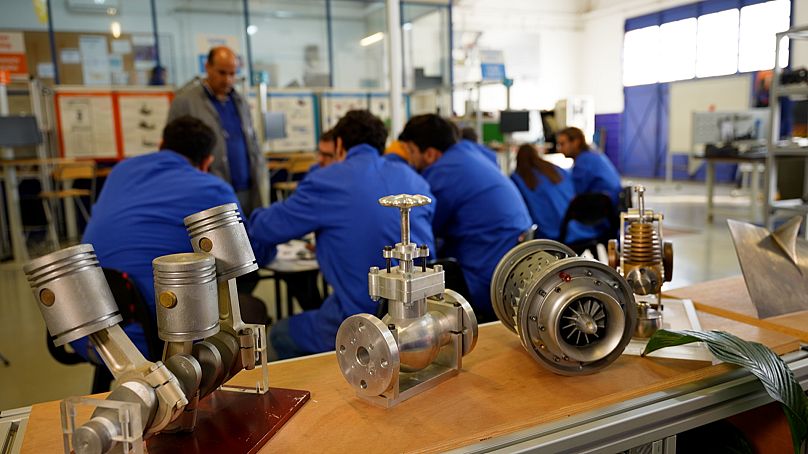
The industry has undergone a significant digital transformation. Robots currently do most of the heavy lifting, but the outdated idea that this is a physically demanding industry still exists.

Engineers and machine operators in this sector need technical skills. Nuno Teixeira CEO’ the Alsil GroupIt seeks to attract professionals from both domestic and Portuguese-speaking countries.

Teixeira, “, said that companies should provide opportunities for individuals to thrive, grow professionally, and balance this with their personal lives if they want to attract people.

Eduardo and Rui are CNC programming and operations technicians and have recently been employed by the Alsil Group. After enrolling in a professional training program, their career went in a new direction. CENFIMA public and private education centre supported by the European Social Fund Plus.

Rui, who used to work as a geological engineer at “, said that this is a very challenging area where new and challenging things come up every day, so it's something that really interests me and I see it as a promising future.

PortugalMetallurgy and Metalworking Industry Professional Training Center in ’People are studying at ’ (CENFIM).

Manuel Pinheiro Grilo, director of CENFIM, “, said that in terms of employment, it represents about 230,000 jobs that are evolving not only to adapt to new technologies, but above all to respond to the work required.

According to AIMMAP’a (Portuguese Association of Metallurgical, Metalworking and Related Industries), Portuguese ’ metallurgical companies generate approximately €23 billion a year in revenue from their exports.

Ensuring that professionals take responsibility for their careers

Improving the skills of professionals is of great benefit to companies looking to fill specialized positions, while Slovenia's ’da Minister Stojmenova Duh warned that responsibility does not belong only to public and private organizations competing against the clock to hire professionals with the right skills.

“We are aware that this is not enough after finishing high school, faculty, each individual is our responsibility. The world is changing. We need to learn new skills. That's why lifelong learning is something we really need to consider. - ”

Automation, algorithms and the need to adapt: How is AI reshaping the business world?

There is a lot of talk about Artificial Intelligence globally right now. On Friday, December 8, member states and the European Parliament reached a preliminary agreement on the Artificial Intelligence Act, the world's first attempt to regulate rapidly evolving technology in a comprehensive, ethically-based way.

AB’'s move to legalize artificial intelligence technology came at a time of rapid change in the workplace. According to a recent report, the companies surveyed ’i said they plan to adopt AI-powered systems by 2027.

How AI-powered technology is revolutionizing jobs in the Netherlands’

Dutch supermarket Picnic is trying to revolutionize the online grocery industry. Highly automated centers such as the Picnic’s in Utrecht’ are full of artificial intelligence technologies.

The firm says this allows it to offer food fresher, faster and cheaper, giving it a clear advantage in a highly competitive industry.

In addition, Picnic says, the adoption of artificial intelligence has created a large number of skilled new jobs, for example in areas such as data analytics, while also eliminating much of the hard work done by employees in distribution and order fulfillment centers.

Daniel Gebler, chief technical officer at Picnic’, said: "Artificial intelligence is creating an opportunity for many people to have new jobs that are not currently available and that they can do in the future. “This is about creative work, but at the same time technology replaces repetitive work and hard work.”

Daniel Gebler, technical officer, picnic

Picnic says the technology and business model make it more sustainable. The supermarket already offers free delivery on all-electric vehicles. However, data-driven analyses to reduce food and packaging waste are also central to their operations.

A service like “Picnic can work very sustainably, but this takes us one step further in making our service, operations and also suppliers sustainable, not only with good forecasts, added Daniel Gebler, ”.

‘ They follow everything.‘: The rise of artificial intelligence and job insecurity

Artificial intelligence, when used well, can potentially bring great benefits. So what happens when technology invades our every moment?

Joseph Skull is a bicycle courier at the leading on-demand delivery service in Amsterdam’. He says he's tired of being constantly followed by the company during shifts.

Real Economy’ye “They track everything we do while we're at work, ” said. “They can see if we're standing in a place for five minutes and ask questions about why you're taking so long when you have to do the things you need to do while you're at work.”

Joseph Skull, Delivery Courier on Demand

Dutch unions agree, saying more needs to be done to get delivery companies under control, especially with the use of artificial intelligence algorithms to increase productivity.

Frank Van Bennekom, FNV Young & United Union Official, said “, the workers' union, sees many problems.

“Fees are low. There's no security, and there's no security. For example, in some cases, bonuses are received if the driver does not deliver at a certain time. This leads to really unsafe situations. And I think it should be made illegal by law. - ”

FNV Young & United Union Official Frank Van Bennekom speaks with Euronews’ten Paul Hackett

One of the concerns is that artificial intelligence will lead to more precarious work, not less, in the so-called flexible economy, and reduce the quality of work by using artificial intelligence-powered algorithmic management tools.

Joseph Skull, “I want to feel like I can go to the toilet, eat some food, change my clothes when my clothes get wet because of the terrible weather we sometimes experience. And I want to feel like I won't be punished for it, ” said.

How will the EU protect workers' rights when it comes to artificial intelligence?

Experts and policymakers met this year at the EU Social Forum ’ in Brussels, ’, to discuss, among other pressing issues, how to reap the benefits of artificial intelligence while ensuring justice, participation and safety in the workplace.

European Commissioner for Labour and Social Rights Nicolas Schmit euronews’e said: The important thing is that we do not prevent this technological change, but we make sure that we determine the measures we need to protect workers.“

The first important directive we work on is the protection of platform employees as they are directly affected by algorithmic management. On the one hand, we are putting a lot of pressure on the adoption of this directive, which guarantees protection for workers in the context of algorithmic management, but also guarantees protection for social rights, social protection rights, health, etc. ”

Nicolas Schmit, European Commissioner for Labour and Social Rights

In addition to the platform directive, the EU is also completing the Artificial Intelligence Act, which aims to create the world's first rulebook for such technologies.

Those working on better global regulation say good governance of artificial intelligence is urgently needed.

Virginia Dignum, a member of the UN Artificial Intelligence Advisory Board in “, said that what we are seeing now is that artificial intelligence is very similar to a car used by someone without a driver's license, without brakes and without a seat belt.

“If we leave things as they are, I'm afraid these benefits will be for those who already benefit from artificial intelligence, namely big technology and the multimillionaires of this world.

Virginia Dignum, Member of the UN Advisory Board on Artificial Intelligence

Beate Andrees, Regional Director of the International Labour Organization (ILO) ’ (Europe and Central Asia), said: "We think it's important to put people in command. This means incorporating workers into business life, setting regulations, collective bargaining, and discussing the impact of artificial intelligence on the workplace.”

‘Lifelong learning mindset’: EuropeRe-skill and increase skills in ’'s workforce

Another important issue was the training and development of digital skills. In the future, 90 percent of jobs will need them. Currently, more than a third of AB’'s workforce lacks what is needed.

Christopher Pissarides, a Nobel Prize-winning economist at the London School of Economics ’, says workers should try to adapt.

Christopher Pissarides, Regius Professor of Economics, London School of Economics

Euronews’e said that they should try to find out what is going on at “Companies. They also need to learn how to train themselves according to the direction of the new technology, how to work with it, and they will feel much more satisfied, ” said.

Nicolas Schmit, “, said that we need to create a true lifelong learning mindset that knows that people need to be retrained, reskilled, their skills need to be increased, not only at the risk of losing their job, but also with the guarantee of finding another job.

Schmitt added that “Tekno is not pessimistic, and came to the following conclusion: Thanks to “ Technology, we can have a better world. We can have a better business organization by taking repetitive or boring jobs away from people. But that means we need to keep control. It's not about predicting the future or fearing the future. Ultimately shaping the future. That's what we have to do. - ”