

The US recently towed the aircraft carrier USS Dwight D. Eisenhower from the Red Sea and sent the USS Theodore Roosevelt and its escort ships in its place. The primary mission of the American fleet here is to protect maritime shipping routes from the Arabian Peninsula to the Suez Canal.
This news didn't make the headlines and didn't attract much public attention. But the sea route passing through the Red Sea is very important for world trade.
Houthi militias have been firing on ships coming from Yemen for more than six months that they associate with Israel because of their owners or operators.
Bloomberg news agency reported on June 20 that the Houthis, who are in favor of Palestine in the Gaza crisis, sank a cargo ship carrying coal using a UCAV.
In response to the Houthis' attacks, the United States and Britain have repeatedly hit militia positions in Yemen in recent months. In addition, other warships belonging to the international coalition are trying to secure shipping traffic off the Yemeni coast. The German navy also appears in the region with the ⁇ Hessen ⁇ frigate within the scope of AB ⁇ 's ⁇ Aspides ⁇ mission.
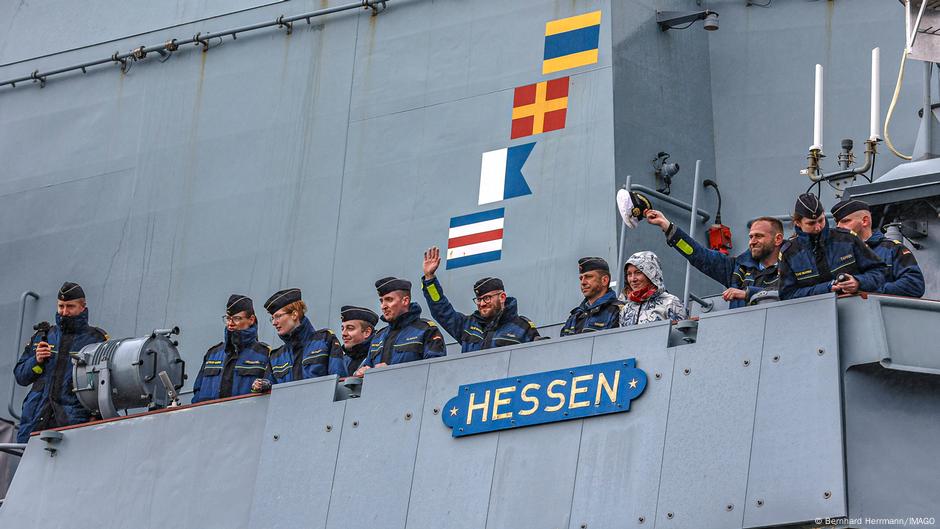
The frigate ⁇ Hessen ⁇ of the German Navy was also deployed in the Red SeaPhoto: Bernhard Herrmann and IMAGO
Costs are rising again
Since the beginning of the conflict in Gaza in October last year, global trade has been under great pressure. Traders around the world have to spend more money to account for higher shipping costs and insure their goods.
Shipowners also complain about high insurance costs as the risk of losing their ships increases significantly. Ships that avoid passing through the Suez Canal and instead travel around the Cape of Good Hope are forced to take into account longer journey times and higher fuel costs.
⁇ Drewry World Container Index ⁇ monitors the freight market and records exorbitant price increases. The price to be paid for transportation activities carried out by sea, land, air or railway is called ⁇ navlun ⁇ . According to the index, the average freight price for a large standard container of 40 feet ⁇ increased by seven percent in June, compared to the previous year, an enormous increase of 233 percent. On some routes, prices have risen even more sharply.
Indirect effects of what happened in the Red Sea
Simon MacAdam, an economist at London-based independent financial consulting firm Capitol Economics, comments on DW ⁇ ye:
It should not be forgotten that direct armed conflicts are not responsible for the current price increases. The real trigger for the cost seems to be that importers are pushing many orders forward to ensure they have enough goods in stock throughout the year. In addition, factors such as the fact that ships have to go around the Cape of Good Hope put great pressure on shipping and cause prices to increase even more.
The route around the Cape of Good Hope in South Africa means that ships must fully circumnavigate the African continent before reaching Europe.
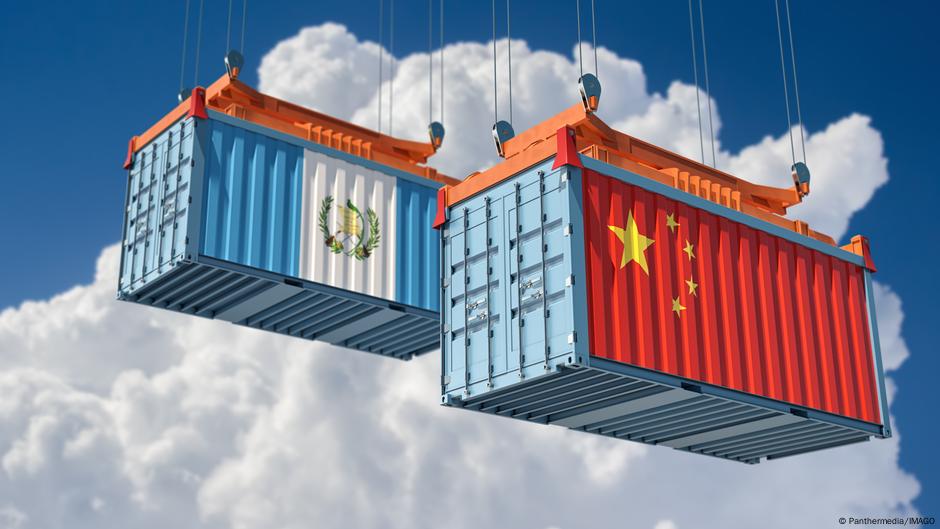
Container and shipping prices have increased significantlyPhoto: Panthermedia and IMAGO
We need more ships.
Jan Hoffmann, a trade expert at the World Conference on Trade and Development (UNCTAD), a Geneva-based UN agency, explains why DW ⁇ ye freight prices are generally rising:
The main reason for this is the extension of the distances that ships have to travel. Deviations around South Africa require more ships to maintain supply. The average distance for a container will be nine percent longer in 2024 compared to 2022.
Hoffmann continues his words as follows:
If ships are to travel longer, more transport capacity will have to be used. This means buying or renting more ships and employing more staff. Longer routes require more ships. If these ships are not yet available, freight prices will rise even higher. ⁇
The environment is also suffering from this situation, according to the UNCTAD expert:
Another effect is that ships increase their speed. Higher speeds to cover longer distances, for example, led to a 70 percent increase in emissions on the Singapore-Rotterdam route.
According to Hoffmann ⁇ , if the deviations continue for a longer time, this will lead to continued price increases and further restrictions on international trade.
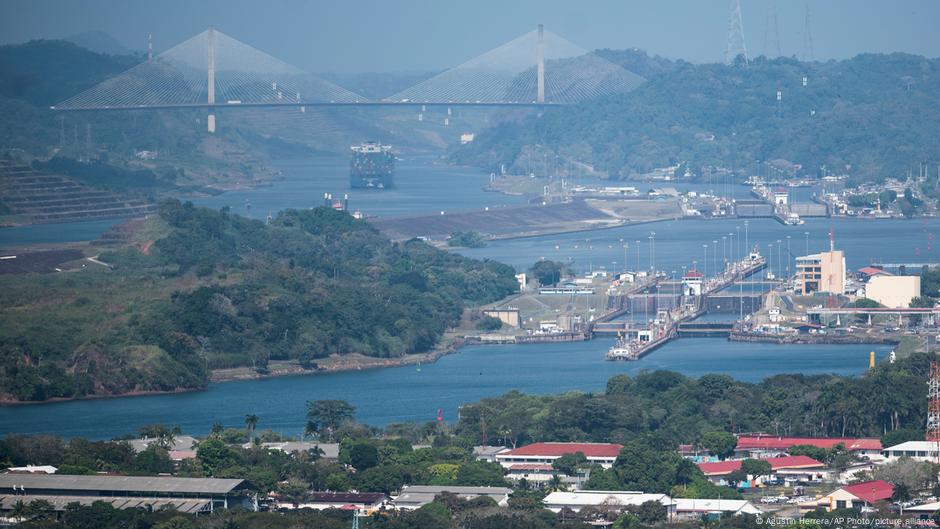
The water level in the Panama Canal is higher than in the previous yearPhoto: Agustin Herrera/AP Photo/picture alliance
There's a double bottleneck
The maritime bottleneck also prevents goods from being transported elsewhere, Hoffmann stresses:
Due to the inadequacy of the water level in the Panama Canal, navigation is not possible without restrictions. Since both the Suez and Panama canals cannot be used at full capacity, the USA needs to build a land bridge to maritime connections with East Asia. In other words, land transportation should be carried out by rail or road from the ports on the west coast to the centers on the east coast. ⁇
But it doesn't seem that easy. This method is also considered economically inefficient, especially when it comes to the shipment of wheat or liquid gas. For this reason, like the alternative route around Cape Horn, the southernmost tip of South America, a very long and dangerous deviation is preferred.
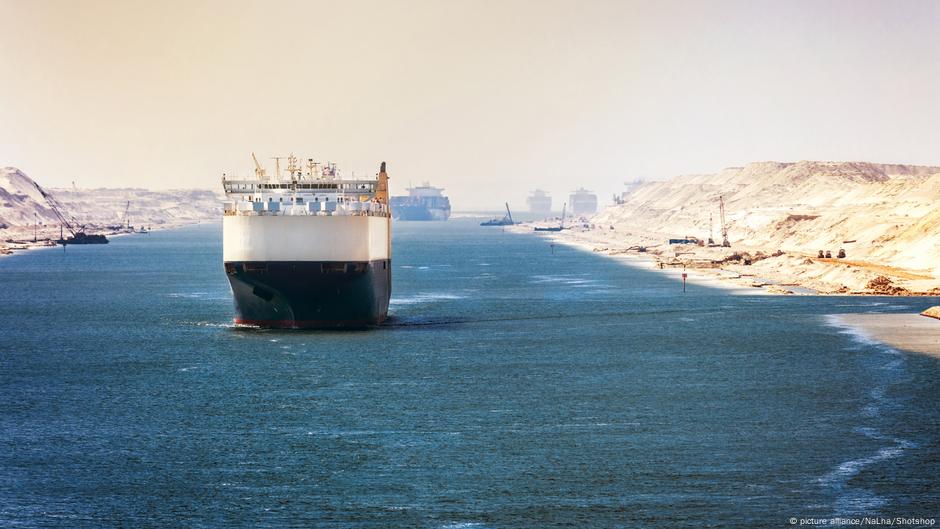
The Suez Canal is of great importance for world tradePhoto: picture alliance/NaLha/Shotshop
⁇ The situation can get worse ⁇
The situation in the Red Sea remains tense. According to Bloomberg, about 70 percent of international maritime transporters still avoid the area and instead choose to travel around the Cape of Good Hope in South Africa.
The deployment of the US Navy's new aircraft carrier fleet also shows how serious the situation in the region is in the long run by the military.
Economist Simon MacAdam believes that a prolonged crisis will push shipowners too far and cause freight prices to rise even higher:
It takes many years to build the ship and 90 percent of the new containers are built in China. Therefore, ships and containers cannot be built overnight for higher capacities. Therefore, the situation may get worse in the long run.


