President Emmanuel Macron has announced that he will invest 93 billion Euros in ‘ investments.

French President Emmanuel Macron said at an international conference on Monday that he expects foreign investment of €93 billion in “rekor”, including artificial intelligence and data centers.

Macron’'s annual “FranceChoose ’ event is expected to feature nearly 200 ” executives from around the world at the Versailles palace west of Paris’.

The projects announced at last year's conference set a record of 20 billion Euro’.

But according to a figure from Macron’'s office, the money pledged for this year is expected to exceed a total of 87 billion Euro’ collected over the past eight years.

Macron, “FranceChoose ’This edition of ’ alone will allow clarification of a record amount of approved investment of €93 billion for more than 15,000’ jobs. By far a record edition and a historic event, ” said.

Macron said the commitments included 45 billion Euro’s from Japanese technology investor SoftBank’.

Its founder, Masayoshi Son, said he would spend 75 billion euros on artificial intelligence infrastructure over the weekend, of which 45 billion euros will be spent on data centers in northern France, ’, by 2031.

Macron said other investments will be spent on “artificial intelligence, data centers”, as well as semiconductors, critical minerals, tractors and trucks, steel and healthcare.

French President Emmanuel Macron watches Schneider Electric CEO’ and SoftBank Group Corp. CEO’ sign agreements at Paris’te, June 1, 2026

‘EuropeanComputer capabilities in ’

Macron said that the projects will help “ to become the leading country hosting ’ France's data centers by far” and “ Europe’ to computing capacity in ”, as well as creating an advanced foundation for the production of “ya artificial intelligence robots and industrialization through artificial intelligence.

Compared to the US and China, “Europe is clearly bridging the gap we have in computing capacity at ’, ” added.

SoftBank’'s Son, France, said ’'s nuclear-powered electricity was an important factor in choosing France’.

Now we can convert electricity into higher-value intelligence as “hammad, including for export, ” added.

Canadian asset manager Brookfield will invest $10 billion (€8.5 billion) in a data center in the Escaudain region of northern France.

SoftBank Group Corp. CEO Masayoshi Son, Paris’te, June 1, 2026

Investment firm Ardian and Scandinavian data platform Verne will invest $5 billion (€4.2 billion) in a data center in the Paris region.

US firm Salesforce has announced that it will invest $2 billion (€1.7 billion) by 2030, including its artificial intelligence center in Paris’.

Taiwanese group Foxconn’ is expected to invest €120 million in the western city of Angers for a motherboard production line for artificial intelligence in partnership with French supercomputer expert Bull, sources told AFP news agency.

Earlier this month, France's retail giant Amazon said it would invest more than €15 billion in ’ over the next three years to create 7,000 jobs, adding that it would create an extra 1,000 jobs at three logistics centers.

‘Most foreign investments’

Announcements about rare earth elements were also presented at the conference.

According to the Élysée Palace’, a year after Macron’ came to power, 2018Select the first ’France“ in ’Since ”, more than 230’ projects representing several thousand jobs have been announced.

France has attracted the most foreign investment in Europe ’ for seven years in a row, according to consultancy EY’, but Macron said this did not come out of “.

EY, France’ pulled 852’ out of 5,026 projects recorded in 47 European countries last year, making this a challenge in the international environment. %He said it was a fall of 17’.

French President Emmanuel Macron watches Schneider Electric CEO’ and SoftBank Group Corp. CEO’ sign agreements at Paris’te, June 1, 2026

The country received more interest from AI-related projects than elsewhere in Europe’, but the industry, particularly the automobile, chemical and metallurgical sectors, suffered.

Economist Sylvain Bersinger said the announcements at Versailles’ should not overshadow the fact that overall institutional investment in “France’ is stagnant, that reindustrialization is more of a religious wish than a reality, and that France’ does not look more attractive to foreign investors than its neighbors.

Macron wants to make ’ a world leader in artificial intelligence and has announced a public investment of €1.55 billion to develop quantum technologies and semiconductors.

5,000 ultra-rich, Germany holds more than a quarter of ’'s financial wealth

Global private financial wealth increased by 7.4 percent in 2025’te; This significantly outperformed inflation, which fell below 3% ’ in each of the key economic areas. In ’, Germany, it was 2.2 percent. This is according to the ‘Global Asset Report 2026’, published today by management consulting Boston Consulting Group (BCG).

Growth is primarily driven by strong stock markets

The main factor in the increase in wealth was the performance in the stock markets last year. As of the reporting date of December 31, 2025, total wealth in ’, Germany, was around USD 23.3 trillion. More than half of this is held in real estate, especially real estate.

BCG refers to people with financial assets over $100 million as ‘super-rich ’ or ‘Ultra High Net Worth Individuals’ (UHNWI’s). In ’, Germany, this group currently consists of about 5,000 people; That's roughly 1,100 more than a year ago. There are just under 97,000 super-rich individuals worldwide, and more than a third of them live in the United States.

Much of the wealth is concentrated in this small group: Around 5,000 super-rich, Germany accounts for 27.3% of all financial wealth in ’. For the comparison: The total shares of approximately $769,000 millionaires (people with financial assets between one and $100 million) are 25.5 percent’ and therefore have a smaller share than the super-rich alone. Around 66 million people in ’, Germany, whose financial assets are under $250,000, oppose it.

Wealth gap continues to expand

According to Der Spiegel’in, BCG partner Michael Kahlich, ‘, the concentration of wealth at the top continues to increase, ’ says. Wealthy people are able to diversify their assets more broadly and invest more heavily in high-yield asset classes such as stocks or private equity. Kahlich, ‘This is structurally accelerating wealth accumulation, ’ says. According to BCG’, the share of the super-rich in Germany's financial wealth is expected to continue to grow until 2030’.

Despite the downward trend, Germany still accounts for about a third of ’'s financial wealth in cash and current, fixed-term and savings accounts, according to Stern magazine. Twenty-five percent are tied to life insurance policies and pensions.

Politically explosive figures

According to BCG’, the relatively weak culture of equity investment in Germany is one of the reasons why ’'s net wealth is expected to grow slower than Western European and global averages in the coming years. This adds structural burdens such as a largely stagnant economy, demographic change, and poor productivity growth.

The new data is also expected to fuel internal discussions on the coalition's tax policy. The federal government is currently scrambling over how to finance a major reform package. SPD’ initially advocated higher taxes on wealthy, conservative politicians such as Saxony’'s minister-president Michael. KretschmerThey have recently signaled that they are open to higher taxes on large fortunes.

While solar power is growing at a record pace, AB’'s green economy is also growing. Which is the most profitable sector?

Renewable energy remains one of the main engines of AB’'s green economy.

Block-wide usage It's almost like %Reached 50’According to Eurostat’, countries such as Austria and Sweden are already meeting their energy needs. %It covers 90’ from renewable energy sources.

The largest share of green energy is wind () and hydropower () is the fastest growing source, although produced by 2008’de only %1’ to 2024’te It is solar energy that rises above ’.

Experts claim that there are photovoltaic panels It can even pass the booster.In terms of energy produced “in the next few years.

A solar installer fixes a solar panel on the roof of a house in ’, Manila, Philippines on May 1, 2026

What is the most profitable green energy sector?

Recycling is also good for the environment and, apparently, for the economy.

According to new Eurostat data, waste management is the most profitable green economy sector in AB’.

In 2023, in just 10 years %An increase of 78’ generated revenues of more than 200 million Euro’.

This is twice the output of wastewater management and material recovery, the second and third most valuable activities.

Waste management is also the largest sector in terms of workforce, employing nearly one million people across the block.

Green jobs are on the rise: Where do most people work?

According to Eurostat’, jobs in AB’'s green economy grew by more than two million in less than a decade.

This number, which was only 3.6 million in 2014’te, increased to 5.8 million in 2023’te with an average annual increase of 5.5 percent.

Employment in the EU green economy ranges from environmental protection, such as wastewater and forest management, to renewable energy production and residential energy efficiency.

Is Environmental Leader – an important figure in future business strategies?

Energy saving ranks second after waste management with more than 800,000’ professionals, followed by renewable resources with 785,000 professionals. Wastewater management and the protection of soil and groundwater, where approximately 680,000 people are employed, in front of more than half a million employees, are also relevant.

Although Eurostat does not provide data on this, there is another role that plays an increasingly important role in green strategies and in a sense helps to connect the dots between different green areas: the environmental leadership.

They are responsible for overseeing the environmental impact of a company or project. Basically, they ensure that activities comply with environmental regulations by conducting audits and measuring emissions. They also recommend circular economy practices to increase sustainability and reduce carbon footprint.

Do green policies still have momentum?

AB’'s green economy has been growing steadily since 2014’ and average annual production growth is approx. %It is 8’.

Member states have almost doubled their production in less than 10 years, generating revenues of €1.33 billion in 2023’te.

The debate in the European ’ is now over whether this sector will continue to expand without momentum prior to the 2024 European elections, which, following a downturn for the Greens, points towards more conservative political parties with less environmentally friendly policies aimed at making AB’ more competitive.

Protesters burned trash near a statue and tractor during a demonstration by European ’ farmers near the European Parliament in ​​, Brussels, on Thursday (December 18, 2025).

The moment that summed this up was when the EU Commission, ’ in February 2025, implemented the Omnibus I package, which included a series of legislative amendment proposals for ’te, aimed at reducing and simplifying administrative and regulatory burdens for businesses, in particular environmental requirements. But it is a movement that some critics consider deregulation under the guise of simplification.

Last year, the EU Commission also suspended negotiations on a law called the Green Claims Directive, which was designed to stop green laundering.

Other moves in this direction included the shelving of a proposal to reduce pesticide use following mass farmer protests in Europe’ and the dilution of the Nature Restoration Act’, which sets binding targets for the repair of degraded ecosystems.

Tariffs, weak demand and climatic turmoil drive AB’'s trade investment rate to 11-year low

European ​​ enterprises are withdrawing their investments.

According to new Eurostat data, AB’'s trade investment rate fell to its lowest level in more than a decade in the fourth quarter of 2025’ .8’e has arrived.

The ratio basically measures how much companies invest in things like machinery and buildings based on the total value they create.

The index takes into account “ regular businesses such as hotels, factories, supermarkets, airlines, etc., not banks and financial companies.

Interestingly, according to Eurostat’, the rate of work in AB’ in Q4 2019, driven by increases in intellectual property imports and dynamics of globalization (.77) While COVID-19 peaked just before ’, the current rate is the deepest point recorded after the last major financial crisis. %It is only one point above 20.93’ (first quarter of 2010).

Where are businesses reinvesting in the economy at least?

Strikingly, some of the lowest investment rates came from the main business centers of Avrupa’: Luxembourg, Ireland and the Netherlands, all %Less than 17’.

Although the proportion of Luxembourg ’ has historically been low due to the country's small industrial sector, Ireland has suffered a loss of 27 percentage points in less than a decade.

Antonio Fatas, INSEAD Professor of Economics, Europe in Motion’a says: “Business investment is an important determinant of GDP growth. Investments in equipment, software and factories are clearly behind the growth engine of … productivity.”

This is even more important for ’, which Professor Fatas“ describes as the ”shocking“, because in recent years, when it comes to productivity growth, the USA lags behind ’. %With a difference of 2’.

At the same time, Greece is almost %With 10 2015While experiencing one of the fastest increases across the bloc since ’, Hungary and Croatia saw the highest rates across the bloc; Both in the last year. It reached the record of over ’ singular countries.

Why can companies back off and bring in new investments in defense?

The European Central Bank (ECB) has several answers following its survey of the 64 leading firms in the euro area on recent and expected investment decisions and the factors that drive or restrict them.

Approximate number of large businesses surveyed %The 90’'s hesitation about spending stems from the current weak demand.

At the same time, companies %They are also deeply concerned about the low profitability, regulatory burdens and labor costs cited by more than 80’.

EurozoneFactors restricting investment in ’

Geopolitical tensions have also negatively affected manufacturers, especially those affected by tariffs and the disruption of the war.

They also said unpredictable climate regulations weigh more on their long-term plans than the current energy crisis.

At the same time, the ECB noted that “ expects increased defense spending to be widely perceived as a potential catalyst for investment, and half of ”industrial firms and one-fifth of service companies expected increased defense spending to support their investments over the next three years.

The research is conducted on the majority of 39 enterprises operating in the industrial sector, while the other 25 businesses focus primarily on the service sector.

UAE’'s exit from OPEC’ signals strategic change as Gulf Union faces new test on oil policy

The United Arab Emirates’'s decision to leave OPEC’ comes after years of tension over production limits and will have implications for broader Gulf coordination and oil market alliances.

This decision, which will take effect on May 1, ’, comes after years of frustration over production quotas that limit production despite intense investments to increase Abu Dhabi ’de capacity.

Bill Farren-Price said “BAE made a strategic choice years ago to expand oil and gas production. “Now they see little value in limiting themselves when they invest in extra production.”

Tensions are mounting within OPEC and OPEC+, where the discipline of production is increasingly clashing with the ambitions of countries seeking to maximize their market shares.

Frédéric Schneider, pointing to the gap between the country's planned capacity and the OPEC quota of “, said that there are many factors, but the most obvious is that BAE’ wants to export more oil.

Beyond production, this movement reflects a more independent approach.

Farren-Price, “This shows that BAE’ is more prepared to chart an independent path and rely less on regional groups such as OPEC and the Gulf Cooperation Council.

Sultan Al Jaber, UAE Minister of Industry and CEO of ADNOC, speaks at ADIPEC’te in Abu Dhabi’.

Pressure on OPEC

Although the output does not signal the end of OPEC’, it increases the pressure on the system, which is already under pressure.

Energy analyst Andrei Covatariu said BAE’ repeatedly signaled frustration about production limitations and a desire for greater flexibility, noting that “Karar was not necessarily unexpected.” said.

He also stressed that the move raises broader questions about whether OPEC’'s traditional quota system is fit for purpose, especially for producers with spare capacity who want to increase production.

While demand and prices remain strong and producers are trying to monetize resources, the commercial logic of accepting production limits is becoming less convincing, “ added.

The immediate impact on the oil market may be limited, but the long-term effects may be more significant.

Farren-Price said it could become more important if it leads to a bigger crisis within “OPEC, but added that this remains unclear.

For now, it seems that Saudi Arabia and Russia will continue to be the dominant actors within OPEC+, even if the group's collective weight decreases.

Gulf coordination at the focal point

This move highlights key differences in the Gulf ’ prior to the current crisis.

Schneider said the decision strengthens existing divisions within the Gulf Cooperation Council, where coordination is often limited despite shared security concerns.

Covatariu said BAE’'s exit comes after Qatar’'s departure from OPEC’ in 2019, suggesting that Gulf countries are increasingly prioritizing national strategies over collective frameworks.

Instead of triggering a sudden breakout, analysts expect a cautious response from regional actors, emphasizing the preservation of stability within the bloc.

Farren-Price, “, said they'll probably circle the wagons and merge together, ” said.

How can working abroad start the careers of young NEET’s?

Advancing a person's education and navigating the job market can be a daunting task…

Especially if you are a young person who is already struggling to find a job in Avrupa’, has poor access to educational programs or drops out of school without any qualifications.

If you find yourself ticking these boxes and you are between the ages of 16 and 29, you may have entered the category of unemployed youth (a young person who is not in employment, education or training) officially known as NEET’s in Europe’.

This phenomenon is not only limited to Europe, it is a global phenomenon. The International Labour Organization reports that in 2023, one-fifth of people between the ages of 15 and 24 worldwide were classified as NEET.

According to EU data, factors such as having a low family income, having a disadvantaged family history, or disability can increase a person's risk of becoming NEET.

But can a work experience abroad help people get out of this precarious situation?

Both Hatice Fahel and Jasmin Nsimba Kanza think so; They both joined AB’. the ALMA initiativeIt is a program that offers disadvantaged NEET’s under the age of 30 professional and personal experience abroad.

An opportunity at Bel Paese’

Hatice, a 20-year-old German girl, spent two months after high school in Vercelli, Italy, focusing on her future prospects.

Euronews’e said: “I made a lot of new Italian friends and learned a new language. I loved working in a hotel there and learned a lot in my job. I feel freer and safer now. So it opened my eyes and my perspective on other things. - ”

Thanks to professional and culturally intensive experience, Hatice has now prepared a career plan with the support of her mentors.

Hatice Fahel, ALMA program participant

“, my dream career is to be a doctor someday. Go study medicine. Wherever you need, for example, exams, so yes, I still need to figure this out. And he said ” to start my career.

A total of almost €11 billion has been invested in this EU plan, and Germany is one of the 15 participating countries.

Andrea Moraru, project manager of NGO RE-INIT’in, which coordinates the program in Recklinghausen, Germany, explained how the program participants will manage their own money and learn how to become more independent.

Speaking to Euronews’e, Moraru said: "We are trying to strengthen them to motivate them to achieve things they didn't even know they could achieve. It's the first time they've been able to stand on their own two feet, ” said.

ALMA participants are mentored for four months when they return, and the results are clear, Moraru’ explains: More than 50 percent of “ in the last group found work or were admitted to an education or training program’ explained Moraru.

Advancing a person's education can reduce a teenager's likelihood of falling into the NEET category. For example, in 2022’de EuropeOnly eight percent of highly educated young people in ’ fall into this category, while the proportion of low-educated young people was 13.6 percent.

First experiences in the Land of the Gods

Jasmin, who went to ’, Greece two years ago, said she had been thinking about going abroad with such a program for a long time because familial conditions prevented her from receiving higher education.

Jasmin Nsimba Kanza, ALMA programme participant and Euronews correspondent Fanny Gauret

“I've learned a lot and it's been a lot of first experiences for me. For example, I went to the beach and the sea, met new people and experienced an entirely new culture, ” explained.

Jasmin found work in the restaurant of a hotel in ’, Greece, and came to the conclusion that she felt very supported throughout the venture.

“Now that I'm more open to change and have more courage, I'm ready to change. After this experience, I applied for a media and communication-oriented design course at a vocational school and was accepted. I'm starting in the fall. - ”

Germany has one of the lowest NEET levels in the European Union’, and it's clear that both Jasmin and Hatice’ benefited from the ALMA project, but they wouldn't be where they are today without their proactive and positive mindset.

Due to the various social and economic challenges that exist throughout the EU, it may be easier for some to find the motivation and opportunities needed to advance their careers than others.

NEETS: ‘More likely to live a life of social exclusion’

Mark Levels, a quantitative sociologist and professor at Maastricht University ’, explained in an interview with Real Economy why it is much easier for some NEET’s to find a way out of this apparent uniformity, and why social integration remains a major challenge.

Fanny Gauret, euronews:What are the consequences of being classified as NEET for the individual and society?

Professor Mark Levels, University of Maastricht:The state of NEET’in is related to a number of social problems. So NEET’s are much more likely to be poor, much more likely to live a life of social exclusion, and much less likely to move on to the labor market later. For society, the total cost in terms of missing labor productivity, the cost of social programs, as well as the cost of trying to regulate crime, etc., is huge. That's about 142 billion euros a year.

Euronews correspondent Fanny Gauret and Professor Mark Levels

Fanny Gauret, euronews:Can having the experience of living and working abroad lead to permanent change?

Professor Mark Levels, University of Maastricht:Such experiences can signal that you can accomplish a lot of things that can be in a lot of demand. I mean, they can work, but they don't work for the most vulnerable, the underqualified here. And that requires a completely different approach.

Fanny Gauret, euronews:Are there countries or policies that can model your research?

Professor Mark Levels, University of Maastricht:Germany’ has a very well-functioning vocational education system. Here we see that the transition from school to work actually works and works very well. The problem is that you can't take an education system from one country and apply it in another. You have completely different cultural environments, which makes exporting a bit difficult.

Fanny Gauret, euronews:What steps should governments and educational institutions take to help young people and NEET’s transition from education to work?

Professor Mark Levels, University of Maastricht:If there's one thing we know that can predict a situation as vulnerable as NEET, it's leaving school early. So invest in your education system. Invest in keeping people on board. Invest in programs that teach children skills that are in demand in the job market. You then reduce the likelihood that they are NEET, and secondly, you focus on the most vulnerable children and put them front and center.

Click on the video in the media player above to watch the full Fanny Gauret’in report.

Eurozone inflation falls to two-year low, but Europeans still feel frustrated

Europeans have been overwhelmed by the impact of inflation over the past 12 months. The European Commission published ’'s Autumn Forecast in November, which highlights the dispersion of clouds and the espite falling below ’, growth seems stubbornly low.

Real EconomyIn this part of the ’, we ask whether businesses and consumers really see a drop in prices, and we look forward to how Europe’'s economic growth will develop in the coming months.

Despite the decline in inflation, food prices are rising

Annual inflation in ’ is among the lowest in the eurozone. The prices of energy, transportation and some raw materials have stabilized in recent months. But many customers and businesses don't see a drop in food prices.

Yacin Malkoç, manager of a Belgian grocery store, said that “ is more or less used in fruits and vegetables, especially strong products such as bananas, mushrooms or tomatoes. %There was an increase of 30’, ” said.

“In the past, fruit and vegetables could reach any budget, but today there is a significant decrease in the number of customers due to increasing prices.”

Food prices in ’ continued to rise in 2023’te. For example, in two years, there was an increase of 37 percent in eggs, 53 percent in potatoes and 75 percent in olive oil.

Yacin Malkoç, Head of Grocery

In recent months, however, these prices have risen more slowly. But will companies and households feel the difference in their wallets as European countries' anti-inflation measures come to an end?

European Commissioner Paolo Gentiloni told Real Economy’ye: “According to our estimates, the rise in wages will catch up with inflation. And, of course, this will contribute to purchasing power, this will increase consumption, and the increase in consumption is the premise of restarting growth. So there is a bit of moderate optimism towards 2024’.

In terms of inflation, Commissioner Paolo Gentiloni says energy prices will play a major role.

The decline will continue at a lower pace for now, “ said. “I think there is a high probability that it will start again the growth that is absolutely necessary for our economy.”

Paolo Gentiloni, Member of the European Commission in charge of the economy

Why are European ​​ companies so concerned about energy?

The cost and supply of energy remains a major concern for large industrial companies. Etex, a Belgium-based multinational company, needs a significant amount of energy to produce construction products.

The company's CEO, Bernard Delvaux, says inflation in energy costs is fueling the search for a more efficient alternative.

Everything about reducing “ consumption is clearly important, ” said. We have plans to reduce internal consumption by investing in more efficient technologies in our “160 factory.”

Bernard Delvaux, CEO of Etex’

Annual energy inflation in the Eurozone ’ fell sharply, from 41.5 percent at the end of 2022 to -11.2 percent at the end of 2023.

However, due to the increase in interest rates, the costs of Etex’in increased and the demand for construction fell.

Bernard Delvaux, “Energy is two or three times more expensive than two years ago; This is also much more expensive than ’ in the United States, much more expensive than ’ in China, and much more expensive than ’ in the Maghreb. So why not produce in these countries? And then salaries are clearly higher because of inflation. What we're seeing is that production is becoming increasingly expensive in Europe’, he added.

But if the cost of energy is falling, can we expect more competitive prices in the near future? Energy geopolitics professor Adel El Gammal told Real Economy’ that this is all extremely uncertain“ due to a combination of many factors.

Adel El Gammal, “EuropeIn ’, we still source liquefied natural gas from pipelines and from ’, Russia. Therefore, a complete rupture can indeed put the markets under tension. And then, of course, the crisis in the Middle East’. It is easy to imagine that the prolongation of the conflict –, for example Iran or Saudi Arabia’'s greater integration could clearly disrupt the situation completely.– said.

Adel El Gammal, Professor of Energy Geopolitics

‘This is a balancing action’: Probability of stagflation in the European ’

Adel, meanwhile, points out that according to IMF’, nearly half of the inflation over the past two years has been due to an increase in the profit margins of large companies that have benefited from the price increase.

Although inflation has fallen, the situation remains fragile.

However, it is difficult to return to the 2% “ inflation target. Trying to keep inflation at acceptable rates without going into a recession is a balancing act. Here we clearly see the rather serious specter of possible stagflation, which means economic decline with low economic growth or high inflation. Unfortunately, it is a risk we will face in the coming quarters.”

European Commission’nda Paolo GentiloniWe asked ’ye whether the slowdown in economic growth will continue next year.

“We have achieved near-zero growth at the end of the year. Next year, we forecast a slight recovery in growth, mostly due to the resumption of private consumption and at the same time a slightly better state of international trade. If this turns out to be true, we will be able to prevent a recession and achieve what we call a soft landing despite tight monetary policy. That would be great on its own. - ”

If Europe manages to mitigate the impact of the price crisis in the coming months, consumers will need to be patient and hope that the current geopolitical conflicts are resolved as soon as possible.

How is Europe addressing the challenges of the long-term panacea?

Europe’'s aging population means the need for long-term care workers is increasing to support the elderly and those in need of assistance in day-to-day activities. About six million people currently work in the industry, but estimates suggest the bloc will need another 1.6 million maintenance workers by 2050.

Banska Stiavnica’da in ’ has launched a community-based pilot project to help older people live safely and independently at home for as long as possible.

Access to quality care and services for the elderly in this part of the country is not always possible due to lack of funding and staff.

Lucia Schneider, 38, has been caring for her grandmother Eva’ for nearly a year. He's one of the lucky ones who can provide care as part of his job.

Lucia Euronews’e “My job is to help my grandmother clean, shop and shower, ” said.

Longtime caregiver Lucia Schneider takes care of her grandmother Eva’ya

Increased demand for long-term caregivers

According to data released by the European Commission, public expenditure on professional long-term care is low in Europe’, and GDP in 2019’ only %It represents 1.7’sini. According to data released by the European Commission, the care of the elders mostly falls to families due to the costs.

Eva has been living alone since her husband passed away, and her small pension doesn't cover all her needs. That's why his family needs to support him financially.

Eva, “ said I couldn't go to the nursing home because my pension was too small to pay.

However, Eva prefers to stay home and be close to her family as long as she has the opportunity.

Projections, SlovakiaNumber of people in need of long-term care in ’ by 2070 %It shows that it will increase by more than 50’; That's twice the average increase in AB’.

Support and technology for the elderly

Mária Petrová lives alone and needs long-term care. A year ago, she enrolled in a community social work centre for one of the projects supported by the European Social Fund Plus (ESF+).

Mária Petrová has access to a control monitor thanks to a community plan supported by the European Social Fund Plus

The goal is to bring together social service providers, healthcare providers and municipalities to provide more services to the elderly.

The support and technology he receives allows him to live independently at home.

“I have to go to the doctor often. Mr. Zorván is taking me to the hospital, and he's waiting for me, and he's bringing me home.

“ [my control monitor] shows my fever, blood pressure, and other things. All of this helps a lot mentally and physically, ” added.

How does the EU support long-term care?

Pavel Červienka leads the project in the field. He consults with the municipality and the elderly in the region to meet their needs.

“We came up with the idea of connecting municipalities to micro-regions, ” said. “In this way, we can accumulate more funds, pay a sufficient number of caregivers, and possibly motivate more people to start social work.”

Pavel Červienka, Project Manager

Pavel Adamy’ye is accompanied by Alžbeta Zaušková, one of the social caregivers of the project. For him, this job is a profession that should be valued more.

Alžbeta, “This is a very important job nowadays, so it can be better in terms of working hours and be better paid, ” explained.

Pavel Adamy’ye is accompanied by social caregiver Alžbeta Zaušková

Due to staff shortages and increasing pressure on public finances, the European Union adopted the European Care Strategy to improve the working conditions of caregivers and ensure that the elderly age with dignity.

Euronews asked Ivailo Kalfin’den, Director of the European Foundation for the Improvement of Living and Working Conditions (Eurofound), to explain the biggest challenges facing long-term social care in Europe’.

“There are so many, so it's hard to summarize them. But perhaps the biggest challenge is access to long-term care services. Simply put, there are many people who do not have proper access to long-term care.

“But the elephant in the room is the staff and caregivers. With its aging population, care workers are increasingly needed in Europe’, and caregivers are becoming scarce. There are not enough young people in the care industry, and this gives a very bad perspective in the future if nothing is done.”

Ivailo Kalfin, Director of the European Foundation for the Improvement of Living and Working Conditions

Maintenance work is often characterized by difficult working conditions and low wages. This means that it is difficult to attract more people to that sector.

Ivailo Kalfin, “The Commission will therefore put forward a long-term care strategy, ” said. “Of course we need to talk about salaries because care workers are underpaid. But it's not just salaries, there are also a number of additional supports that can be provided to care workers, for example, a little more support for mental health, because they work in difficult conditions.

“Then education is also very important because [technological] change can help, but it can also be an obstacle. Therefore, it is very important to keep these people up-to-date with current information.

“Many of them have short-term interviews, so they always need to be available, but they also need to have time to rest, relax, regroup before returning.”

For Ivailo Kalfin, supporting unofficial caregivers, such as family members caring for their relatives, creates even more challenging challenges.

“, these unofficial caregivers are mostly women. Because women tend to work in less paid, more precarious jobs. And this is a stigma that has been going on for many years, ” said.

Most of these people who look after the elderly or disabled at home can't go to work. I mean, they have really low incomes, and in practice, that's their job. So if we want to ensure a minimum quality of life, they need support from the social system. - ”

Producer/Writer/Reporter: Fanny Gauret

Accelerated course author: Jeremy Wilks

The video editor: Silvia Lizardo

The producer is: Louise Lehec

Camera number one: Mathieu Rocher

The camera 2: Yves Pottiaux

Least income initiatives help AB’'s most vulnerable households

GermanyThe city of Offenbach, near Frankfurt’, the main economic center of ’, is home to a large number of migrants who occasionally face difficulties in integrating into the labor market and the local community.

One of these families is Milanov’s, who migrated from ’ to Germany 10 years ago.

It has been a decade of challenges marked by unstable jobs, homelessness, as well as language and cultural barriers. But new EU initiatives on minimum income could help improve the lives of people like Milanov’s.

EU minimum income plan

Over the past two years, a publicly funded social safety net has allowed the Milanov family to foresee a brighter future. AB’'s family-funded minimum income plan has become even more effective in helping to lift Europe’'s most vulnerable households out of poverty and into the labor market.

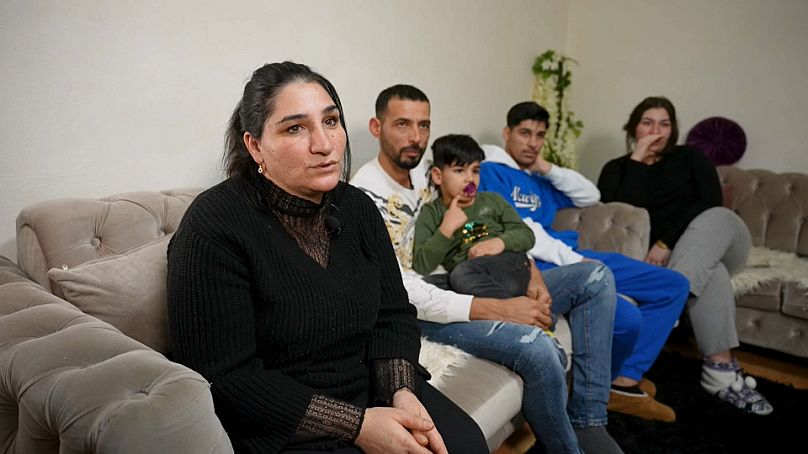
Benefiting from the German minimum income program Radostin Milanov, “After I lost my job, I went to see the state and they helped me, ” said. “, we didn't have a place to stay, we didn't have an apartment. They immediately found us a place to stay, an apartment. They took my kids to school and supported them. They also told us how to live in ’, Germany.

Milanov family Offenbach, Germany’da

The Milanov family is part of the European Union-funded pilot project CRIS (Cooperate, Reach out, Integrate Services). It aims to find new ways to solve the problems faced by the most vulnerable people.

Radostina Milanova euronews’e “I think the CRIS project is very good ” said. “They are very good to us, my wife and my children, they help. When I or my children receive letters from authorities and other agencies and don't understand, they help us. They're very respectful of us, too. - ”

Minimum income programmes across the EU: ‘Improvement area’

But these plans face significant challenges across the EU. According to Serdar Damar’, coordinator of this initiative at the Offenbach Municipality Business Center, minimum income programs need to be more personal and holistic.

Damar, “We are more successful when people trust us, when they see that they are not numbers, when they see that we care about the whole family, that we take their problems and concerns seriously, and that we also take their health problems seriously, ” said. “, it makes them feel important. They feel that they are integrated into ’, that they are accepted. And I think it's the best way to build a common life with these people and a common future here.”

Serdar Damar, Coordinator of MainArbeit Kommunales Jobcenter Offenbach

It is estimated that around 95 million people in AB’ are at risk of poverty or social exclusion. For the transnational coordinator of the CRIS project, Germany says that the minimum income at ’ is a good model, but there is room for improvement.

Matthias Schulze-Boeing, coordinator of CRIS Transnational, said: "We cover the entire cost of housing in “, and we cover the fee that is sufficient for a living but at a very low level. Therefore, there should always be an incentive to start working to earn more money, so this is also the basic principle in Germany’ said.

“There is a lot of room to develop to integrate these different services: Support for young people, youth, health care, housing services to become more effective and more efficient.”

Matthias Schulze-Boeing, CRIS Transnational Coordinator

Will the minimum income plan work in practice?

The European Union has advised member states on how to improve their minimum income plans. The scope and scope of reforms should focus on access to labor markets and services, individualized support and effective supervision.

Will this be enough to help fight poverty in the European Union?

Euronews asked Bea Cantillon ’a, professor of social policy at the University of Antwerp ’, her views on minimum income and the way they are implemented across the EU.

Bea Cantillon, University of AntwerpProfessor of Social Policy at ’

“AB’de would like to start by saying that it is extremely important for all member states to have minimum income protection as a last resort safety net for all citizens, ” said. “For example, this is not the case in the USA’, and in the last few years and decades, we have seen the growth of the remaining Member States.”

The EU is pushing for a proposal on minimum income, but it is not binding. Asked why AB’ did not press for a directive or regulation on this issue, Bea Cantillon replied: “There have been many initiatives, but I can say that the strongest initiative so far is the text in this proposal. First, you need to set the minimum wage. It is then possible to consider a directive on the protection of minimum income. It is also difficult to define what the basic needs are in AB’.”

The professor of social policy acknowledged that the structure of the European Union ’ is an important point to keep in mind when it comes to minimum income plans, as social policy and labor policy are still largely in the hands of member states.

“You can't think of a European minimum income plan that covers all citizens, all EU citizens in the same way. The differences between countries in terms of welfare levels, economic capacity and social security systems are huge; extremely different in different member countries.”

When asked about projects aimed at bringing a more holistic approach to minimum income, Bea Cantillon said she thinks this is the way forward.

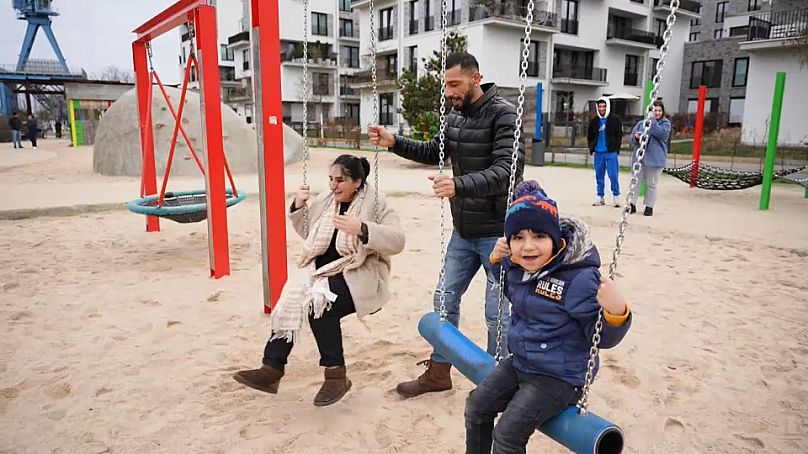
Milanov family playing on the swing in the park

“This is why the local level, the level of outreach organizations is so important, because you can not help a large number of minimum income recipients. The fact that minimum income programs should remain a last resort for a limited number of people is crucial. Because if the numbers increase, so did ​​ki, then such a holistic approach becomes more and more difficult to implement.

The minimum income plan for the Milanov family is a lifeline and a beacon of hope for the future.

Radostina Milanova, “I want my children to complete their education. I want them to be independent. "We care about them as parents," ” said.

Ferrari starts the year with race profit but warns of tax impact

Italian luxury car manufacturer Ferrari makes net profit in the first three months of 2025’ %It reported a slightly better-than-expected first quarter, up 17 percent to 412 million Euro’. The automaker also warned that U.S. trade tariffs could hit gains later this year.

2025Net revenues in the first quarter of ’ compared to the previous year %It increased by 13 to 1.8 billion euros.

Ferrari CEO ’ Benedetto Vigna said “ is making a great start to another year. “2025In the first quarter of ’, with a very small number of increased shipments year-over-year, all key metrics recorded double-digit growth, underlining the strong profitability driven by our product mix and ongoing demand for personalization.”

Revenues from the automobile manufacturing business, partly due to increased personalization %It's up 11.1.

General shipments in the first quarter, mainly driven by demand in the EMEA region and USA’ %It increased by 0.9, but shipments to Mainland China, Hong Kong and Taiwan ’ decreased.

Sponsorship, advertising and brand revenues %It's up 32.1.

Appearance for 2025

The Italian automaker expects net revenues for the whole of 2025 on an annual basis. %It expects to increase by 5 to generate more than 7 billion Euro’ revenues. According to the manual, the adjusted operating profit %It is expected to be around €2.03 billion or more, with an increase of 7 or more.

However, the automaker warned that this profit could decrease if U.S. tariffs hit the automaker harder than expected. "The guidance above is subject to the potential risk of a 50 basis point drop in profitability percentage margins (EBITDA and EBITDA margins) in connection with the update of trade policy following the introduction of import tariffs on EU vehicles in the USA," “ said in a statement.

At the end of March, Ferrari announced that Trump’ had applied to European car imports. Prices of certain models in response to ’ car tariffs %He had already announced that he would increase it to 10’.

Vigna, “In line with our plans, we continue to enrich our product offering with a unique and innovative introduction this year with six new models, including the newly released 296 Speciale, 296 Speciale A and the highly anticipated Ferrari elettrica’, ” said. “We're very excited about what's coming.”

Ferrari’'s share prices follow report published at 16.30’ (CEST) in Italy trade at Euronext Milan’ %Increased by more than 1.8’.