Iran war and Strait of Hormuz’ deterioration caused Wall Street’ to shift to tokenized markets 24/7

With Wall Street institutions increasingly adopting perpetual futures contracts and tokenized real-world assets to navigate the global economy 24/7, the financial world is undergoing a fundamental transformation.

According to industry experts, the elimination of contract expiration dates and the emergence of instant “atomic” settlement are redefining the market's interest, especially as crypto-native platforms continue to lead price discovery during the weekend's increasingly geopolitical crises.

The convergence of these technologies shows that the boundary between traditional finance and blockchain-based infrastructure is narrowing.

Wall Street desks, multi-strategy allocators, and macro funds are now actively exploring these digital-local structures because they solve deep-rooted operational problems inherent in standard overdue contracts.

This transition is not only a technological upgrade, but also a response to how global markets are now functioning in real time.

Theo’'s Chief Investment Officer, Iggy Ioppe, announced that the move to Euronews’e 24/7 operations is no longer optional.

To meet this new demand, Theo is developing financial products and partnering with major financial institutions such as the British multinational bank Standard Chartered.

Ioppe, “It's not a matter of preference, it's becoming a structural imperative. We saw this clearly during the closing of the Strait of Hormuz’. Traditional markets were dark during the weekend, and tokenized gold and oil were the only transparent, continuous trading venues that reflected the demand for real-time safe havens, ” said.

Speaking to Euronews’e, Andrei Grachev, Managing Partner of leading cryptocurrency market producer DWF Labs’, also emphasized the importance of these events for the wider market.

Grachev, “The clearest example was this year's February 28, ’. The United States and Israel announced Saturday morning that ’ would attack Iran, ’'s nuclear facilities, and all major exchanges (CME, NYMEX, ICE) were closed. Traders immediately moved to decentralized perpetual futures platforms for oil, gold and silver.”

When traditional venues eventually reopened, they had to capture price levels already set on the chain, highlighting a change where primary price formation took place.

An IMF report on tokenized finance released this month also highlighted that the transition to digital native assets represents a “ structural restructuring of the global financial infrastructure.

The study, written by Tobias Adrian, warns that atomic placement and programmability significantly improve capital efficiency, while also eliminating the temporal buffers that banks and regulators rely on during times when the market is stressed.

The report argues that in order for these markets to scale securely and prevent dangerous fragmentation, they must rely on ’, a public anchor of trust, especially through the implementation of Central Bank Digital Currencies (CBDC“s).

Without such sovereign payment assets, the IMF warns that the excessive speed of tokenized systems could cause liquidity crises to happen instantly, potentially leading to gradual liquidations that exceed the ability of human authorities to intervene.

Grachev, Euronews’e said: The market infrastructure that supports always-on tokenized trading still meets the demands it creates, and the difference between product capacity and operational readiness is currently one of the least appreciated risks in the field.“

What are tokenized real-world assets?

In the financial world, real-world assets, often abbreviated as RWA’s, are essentially any physical or traditional asset that exists outside the digital blockchain space.

This includes gold and other metals, real estate, oil and other commodities, as well as financial products such as government bonds and company shares.

In the context of modern markets, these assets are being “tokenized”; This means that their values and property rights are converted into a virtual token on a blockchain. It may be helpful to think of it as a digital receipt that lives in a secure and global ledger, representing a specific part or all of the asset.

BlackRock CEO Larry Fink has been one of the loudest advocates of this technological change, and in his 2026-year letter to investors, ’ stated that “tokenization can help accelerate the future by updating the installation of the financial system and making investments easier to make, trade, and access.

To support this vision, BlackRock aggressively turned to the field with the launch of the BUIDL fund, which tokenizes U.S. Treasury bonds on a public blockchain and has already reached nearly $3 billion (€2.44 billion) in assets under management.

BlackRock CEO Larry Fink, January 2026’da Davos, SwitzerlandU.S. President Donald Trump introduces ’ at the World Economic Forum in ’

What are continuous futures contracts?

A perpetual futures contract is a way to bet on the future price of an asset without actually owning it and, more importantly, without the need to compromise until a certain deadline.

In a standard futures contract, just like a lease expires, you're actually making an agreement that needs to be closed or renewed at a date set on the calendar. A “ perpetual contract completely eliminates this expiration date and allows you to keep your location forever.

When signing the contract, a “funding rate” is applied, which usually has to be paid on an hourly basis. This funding rate is positive or negative, depending on whether there are more open or short positions. If positive, long positions pay short positions, if negative, short positions pay long positions, making the ratio a balancing mechanism.

Basically, having a continuous futures contract is a way to synthetically hold the underlying asset.

The scale of this market is already quite large; The global conceptual volume for permanent futures exceeds $60 billion (€50.9 billion) per day. Especially as regulatory frameworks catch up in ABD’, the flow of corporate capital is expected to accelerate.

Fabian Dori, Chief Investment Officer of Sygnum’, a global digital asset banking group based in Switzerland, told Euronews’ that institutional adoption of “permanent assets will ultimately depend on the regulatory and custody infrastructure surrounding them, as well as liquidity and pricing conditions.

This new tool ensures that markets are always open as it allows for continuous trading even when spot markets are closed, but it also demands “atomic settlement, which means the need for transactions to be financed and concluded in real time.

In traditional finance, the T+1 or T+2 swap cycle provides a temporary buffer by dictating that the transfer of securities and related payment must be completed within the next 1-2 business days, giving market makers time to effectively source inventory and manage counterparty risk.

Atomic compromise reduces this window to zero and requires assets to be in position before or at the exact moment a trade takes place. This creates huge and sudden peak liquidity demands that must be managed through automation and advanced treasury models, while reducing the risk of counterparty stagnation.

Expert Patrick King and trader Robert Oswald, working at the New York Stock Exchange’, April 2026

Currently, the settlement of perpetual futures contracts on blockchains is done entirely with privately issued stablecoin ’s, and the IMF considers this a risk in ’'s latest report.

To solve this problem, the IMF suggested that a ’ public anchor, such as the CBDC“s, is needed to provide a secure and programmable payment asset issued by the central bank.

Beyond the agreement, the infrastructure of price data remains a critical concern. Providing liquidity 24 hours a day requires high-quality oracle’s and data streams that don't lag or stale when traditional markets close.

Ioppe, Euronews’e stated: “Price data infrastructure is probably the most critical challenge unresolved in 24/7 tokenized markets. When you consistently provide liquidity in decentralized and regulated spaces, the quality, latency, and reliability of your price flows directly determine your profit/loss and risk exposure.”

Regulated competition “ is always openAs ” enters the space, crypto-native platforms are forced to raise their standards. The implementation of the GENIUS Act ’ in the USA’ is already accelerating the trend of corporate capital moving towards areas that offer both innovation and governance.

Andrei Grachev believes that in the long run, the winners will be those who adopt these standards.

Grachev concluded his words as follows: The remaining platforms will be those that use this speed to really improve their standards, rather than going beyond regulations. As corporate allocations increase, compliance infrastructure will increasingly determine which venues attract meaningful capital and which don't.”

Automation, algorithms and the need to adapt: How is AI reshaping the business world?

There is a lot of talk about Artificial Intelligence globally right now. On Friday, December 8, member states and the European Parliament reached a preliminary agreement on the Artificial Intelligence Act, the world's first attempt to regulate rapidly evolving technology in a comprehensive, ethically-based way.

AB’'s move to legalize artificial intelligence technology came at a time of rapid change in the workplace. According to a recent report, the companies surveyed ’i said they plan to adopt AI-powered systems by 2027.

How AI-powered technology is revolutionizing jobs in the Netherlands’

Dutch supermarket Picnic is trying to revolutionize the online grocery industry. Highly automated centers such as the Picnic’s in Utrecht’ are full of artificial intelligence technologies.

The firm says this allows it to offer food fresher, faster and cheaper, giving it a clear advantage in a highly competitive industry.

In addition, Picnic says, the adoption of artificial intelligence has created a large number of skilled new jobs, for example in areas such as data analytics, while also eliminating much of the hard work done by employees in distribution and order fulfillment centers.

Daniel Gebler, chief technical officer at Picnic’, said: "Artificial intelligence is creating an opportunity for many people to have new jobs that are not currently available and that they can do in the future. “This is about creative work, but at the same time technology replaces repetitive work and hard work.”

Daniel Gebler, technical officer, picnic

Picnic says the technology and business model make it more sustainable. The supermarket already offers free delivery on all-electric vehicles. However, data-driven analyses to reduce food and packaging waste are also central to their operations.

A service like “Picnic can work very sustainably, but this takes us one step further in making our service, operations and also suppliers sustainable, not only with good forecasts, added Daniel Gebler, ”.

‘ They follow everything.‘: The rise of artificial intelligence and job insecurity

Artificial intelligence, when used well, can potentially bring great benefits. So what happens when technology invades our every moment?

Joseph Skull is a bicycle courier at the leading on-demand delivery service in Amsterdam’. He says he's tired of being constantly followed by the company during shifts.

Real Economy’ye “They track everything we do while we're at work, ” said. “They can see if we're standing in a place for five minutes and ask questions about why you're taking so long when you have to do the things you need to do while you're at work.”

Joseph Skull, Delivery Courier on Demand

Dutch unions agree, saying more needs to be done to get delivery companies under control, especially with the use of artificial intelligence algorithms to increase productivity.

Frank Van Bennekom, FNV Young & United Union Official, said “, the workers' union, sees many problems.

“Fees are low. There's no security, and there's no security. For example, in some cases, bonuses are received if the driver does not deliver at a certain time. This leads to really unsafe situations. And I think it should be made illegal by law. - ”

FNV Young & United Union Official Frank Van Bennekom speaks with Euronews’ten Paul Hackett

One of the concerns is that artificial intelligence will lead to more precarious work, not less, in the so-called flexible economy, and reduce the quality of work by using artificial intelligence-powered algorithmic management tools.

Joseph Skull, “I want to feel like I can go to the toilet, eat some food, change my clothes when my clothes get wet because of the terrible weather we sometimes experience. And I want to feel like I won't be punished for it, ” said.

How will the EU protect workers' rights when it comes to artificial intelligence?

Experts and policymakers met this year at the EU Social Forum ’ in Brussels, ’, to discuss, among other pressing issues, how to reap the benefits of artificial intelligence while ensuring justice, participation and safety in the workplace.

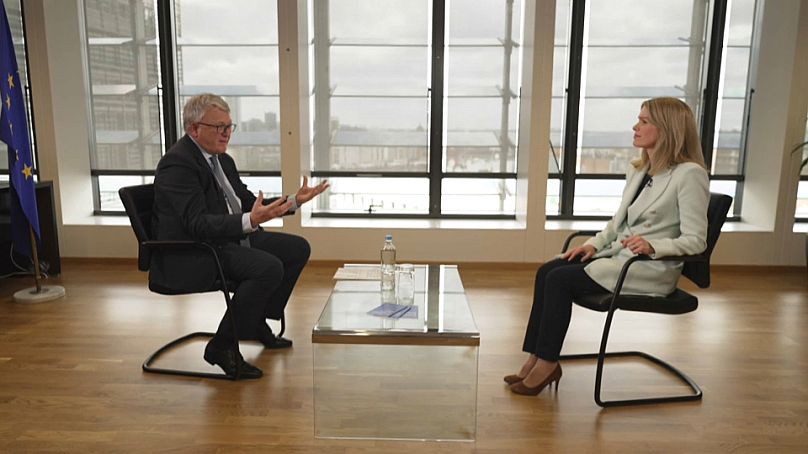
European Commissioner for Labour and Social Rights Nicolas Schmit euronews’e said: The important thing is that we do not prevent this technological change, but we make sure that we determine the measures we need to protect workers.“

The first important directive we work on is the protection of platform employees as they are directly affected by algorithmic management. On the one hand, we are putting a lot of pressure on the adoption of this directive, which guarantees protection for workers in the context of algorithmic management, but also guarantees protection for social rights, social protection rights, health, etc. ”

Nicolas Schmit, European Commissioner for Labour and Social Rights

In addition to the platform directive, the EU is also completing the Artificial Intelligence Act, which aims to create the world's first rulebook for such technologies.

Those working on better global regulation say good governance of artificial intelligence is urgently needed.

Virginia Dignum, a member of the UN Artificial Intelligence Advisory Board in “, said that what we are seeing now is that artificial intelligence is very similar to a car used by someone without a driver's license, without brakes and without a seat belt.

“If we leave things as they are, I'm afraid these benefits will be for those who already benefit from artificial intelligence, namely big technology and the multimillionaires of this world.

Virginia Dignum, Member of the UN Advisory Board on Artificial Intelligence

Beate Andrees, Regional Director of the International Labour Organization (ILO) ’ (Europe and Central Asia), said: "We think it's important to put people in command. This means incorporating workers into business life, setting regulations, collective bargaining, and discussing the impact of artificial intelligence on the workplace.”

‘Lifelong learning mindset’: EuropeRe-skill and increase skills in ’'s workforce

Another important issue was the training and development of digital skills. In the future, 90 percent of jobs will need them. Currently, more than a third of AB’'s workforce lacks what is needed.

Christopher Pissarides, a Nobel Prize-winning economist at the London School of Economics ’, says workers should try to adapt.

Christopher Pissarides, Regius Professor of Economics, London School of Economics

Euronews’e said that they should try to find out what is going on at “Companies. They also need to learn how to train themselves according to the direction of the new technology, how to work with it, and they will feel much more satisfied, ” said.

Nicolas Schmit, “, said that we need to create a true lifelong learning mindset that knows that people need to be retrained, reskilled, their skills need to be increased, not only at the risk of losing their job, but also with the guarantee of finding another job.

Schmitt added that “Tekno is not pessimistic, and came to the following conclusion: Thanks to “ Technology, we can have a better world. We can have a better business organization by taking repetitive or boring jobs away from people. But that means we need to keep control. It's not about predicting the future or fearing the future. Ultimately shaping the future. That's what we have to do. - ”

Eurozone inflation falls to two-year low, but Europeans still feel frustrated

Europeans have been overwhelmed by the impact of inflation over the past 12 months. The European Commission published ’'s Autumn Forecast in November, which highlights the dispersion of clouds and the espite falling below ’, growth seems stubbornly low.

Real EconomyIn this part of the ’, we ask whether businesses and consumers really see a drop in prices, and we look forward to how Europe’'s economic growth will develop in the coming months.

Despite the decline in inflation, food prices are rising

Annual inflation in ’ is among the lowest in the eurozone. The prices of energy, transportation and some raw materials have stabilized in recent months. But many customers and businesses don't see a drop in food prices.

Yacin Malkoç, manager of a Belgian grocery store, said that “ is more or less used in fruits and vegetables, especially strong products such as bananas, mushrooms or tomatoes. %There was an increase of 30’, ” said.

“In the past, fruit and vegetables could reach any budget, but today there is a significant decrease in the number of customers due to increasing prices.”

Food prices in ’ continued to rise in 2023’te. For example, in two years, there was an increase of 37 percent in eggs, 53 percent in potatoes and 75 percent in olive oil.

Yacin Malkoç, Head of Grocery

In recent months, however, these prices have risen more slowly. But will companies and households feel the difference in their wallets as European countries' anti-inflation measures come to an end?

European Commissioner Paolo Gentiloni told Real Economy’ye: “According to our estimates, the rise in wages will catch up with inflation. And, of course, this will contribute to purchasing power, this will increase consumption, and the increase in consumption is the premise of restarting growth. So there is a bit of moderate optimism towards 2024’.

In terms of inflation, Commissioner Paolo Gentiloni says energy prices will play a major role.

The decline will continue at a lower pace for now, “ said. “I think there is a high probability that it will start again the growth that is absolutely necessary for our economy.”

Paolo Gentiloni, Member of the European Commission in charge of the economy

Why are European ​​ companies so concerned about energy?

The cost and supply of energy remains a major concern for large industrial companies. Etex, a Belgium-based multinational company, needs a significant amount of energy to produce construction products.

The company's CEO, Bernard Delvaux, says inflation in energy costs is fueling the search for a more efficient alternative.

Everything about reducing “ consumption is clearly important, ” said. We have plans to reduce internal consumption by investing in more efficient technologies in our “160 factory.”

Bernard Delvaux, CEO of Etex’

Annual energy inflation in the Eurozone ’ fell sharply, from 41.5 percent at the end of 2022 to -11.2 percent at the end of 2023.

However, due to the increase in interest rates, the costs of Etex’in increased and the demand for construction fell.

Bernard Delvaux, “Energy is two or three times more expensive than two years ago; This is also much more expensive than ’ in the United States, much more expensive than ’ in China, and much more expensive than ’ in the Maghreb. So why not produce in these countries? And then salaries are clearly higher because of inflation. What we're seeing is that production is becoming increasingly expensive in Europe’, he added.

But if the cost of energy is falling, can we expect more competitive prices in the near future? Energy geopolitics professor Adel El Gammal told Real Economy’ that this is all extremely uncertain“ due to a combination of many factors.

Adel El Gammal, “EuropeIn ’, we still source liquefied natural gas from pipelines and from ’, Russia. Therefore, a complete rupture can indeed put the markets under tension. And then, of course, the crisis in the Middle East’. It is easy to imagine that the prolongation of the conflict –, for example Iran or Saudi Arabia’'s greater integration could clearly disrupt the situation completely.– said.

Adel El Gammal, Professor of Energy Geopolitics

‘This is a balancing action’: Probability of stagflation in the European ’

Adel, meanwhile, points out that according to IMF’, nearly half of the inflation over the past two years has been due to an increase in the profit margins of large companies that have benefited from the price increase.

Although inflation has fallen, the situation remains fragile.

However, it is difficult to return to the 2% “ inflation target. Trying to keep inflation at acceptable rates without going into a recession is a balancing act. Here we clearly see the rather serious specter of possible stagflation, which means economic decline with low economic growth or high inflation. Unfortunately, it is a risk we will face in the coming quarters.”

European Commission’nda Paolo GentiloniWe asked ’ye whether the slowdown in economic growth will continue next year.

“We have achieved near-zero growth at the end of the year. Next year, we forecast a slight recovery in growth, mostly due to the resumption of private consumption and at the same time a slightly better state of international trade. If this turns out to be true, we will be able to prevent a recession and achieve what we call a soft landing despite tight monetary policy. That would be great on its own. - ”

If Europe manages to mitigate the impact of the price crisis in the coming months, consumers will need to be patient and hope that the current geopolitical conflicts are resolved as soon as possible.

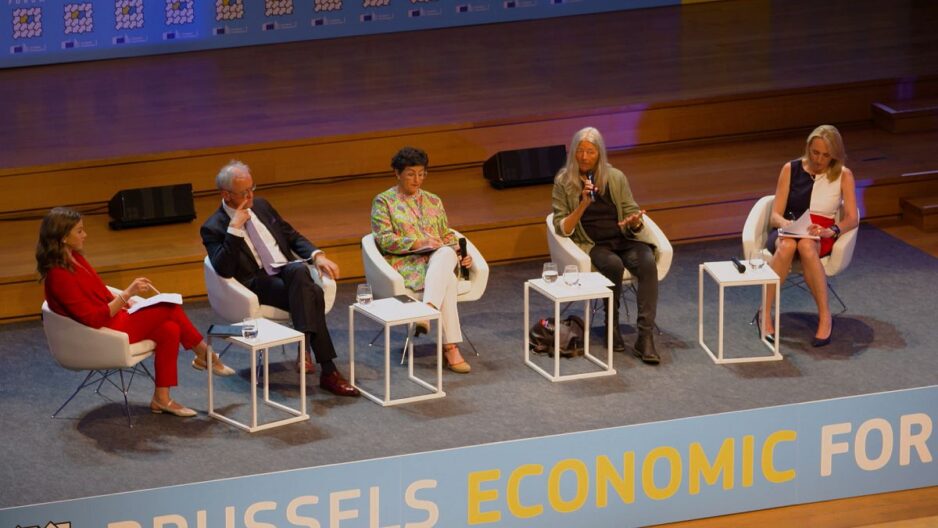
Brussels Economic Forum 2022: War, epidemic and climate at the top of the agenda

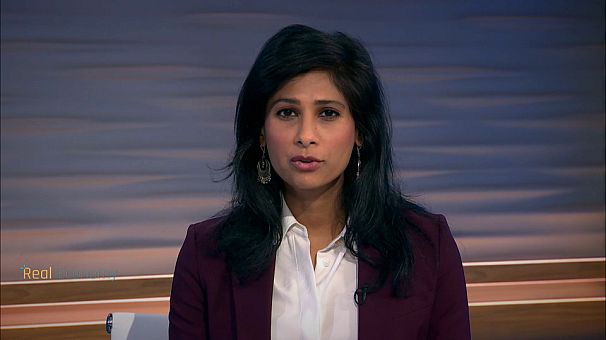
In this week's episode, Real Economy talks to IMF’'s Deputy Director General Gita Gopinath and EU’'s Trade Commissioner Valdis Dombrovskis about the economic consequences of ’'s war in Ukraine.

The team is also looking forward to the Brussels Economic Forum ’, AB’'s most important economic event, which focuses on some of the major challenges facing young people and future generations.

War brings economic uncertainty

Russia’'s war is above all a tragedy for the Ukrainian people. The immediate reaction of the European ’ was to show solidarity and to help refugees. Now, as food and energy prices rise rapidly and Europe urgently moves to end its dependence on Russian energy, what does this mean for the EU economy? By the end of this month, the Brussels Economic Forum will be ’'s biggest question.

Naomi Lloyd spoke to Gita Gopinath, number two of the International Monetary Fund ’ in Washington, ’, to give this all a global perspective.

The war in Ukraine’ is expected to significantly affect almost all of Europe’.

Naomi Lloyd, euronews:

How far-reaching will the economic impact of the war on Europe be and what will it mean for our daily lives?“

Gita Gopinath, IMF Executive Vice President:

“UkraineThe war in ’ will have a significant impact on almost all of Europe. By lowering our growth forecasts for major European economies by about one percent, we've reduced – for this year to what we currently predict is – to three percent. At the same time, we expect inflation to be significantly higher. So, of course, apart from Ukraine and the refugee crisis we see there, the most direct impact we see on people's lives is an increase in commodity prices, a significant increase in energy costs. And this affects the purchasing power of the People, and the impact of the war and sanctions is not fully revealed at this time.”

Naomi Lloyd, euronews:

“In view of all this, what steps does AB’ need to take to ensure a strong economic recovery, especially for young people?”

Gita Gopinath, IMF Executive Vice President:

“So the pandemic was particularly difficult for young people in the first place, and now there is high uncertainty that comes with war and war, creating an impact of trust. This affects the way businesses hire. And you can see that this also tends to affect young employees who are just joining the workforce. So in terms of what needs to be done, for example, we are currently seeing a debate to provide targeted support in terms of cash transfer to households hit hard by this increase in energy prices. Investing is also important. On the one hand, we need to pay attention to energy security while on the other hand, we need a green transition to happen. A climate investment fund would also be very useful.”

Gita Gopinath, First Deputy Managing Director, International Monetary Fund.

the Brussels Economic Forum

Gita Gopinath will be one of the many keynote speakers at the Brussels Economic Forum in ’ on 17 May. Here senior decision-makers, academics, civil society and business leaders discuss Europe’'s biggest economic challenges.

The most important economic event of AB’ has been going on for more than 20 years and 2022 will be the European Year of Youth.

What kind of future awaits the next generation right now? To answer this question, Real Economy spoke to some young economists and politicians who will be present at this year's Brussels Economic Forum’.

Amidst the climate crisis, robotic automation and threats to democracy, the world is changing rapidly.

Guillaume Desjardins
Euronews

Danish MP Kira Marie Peter-Hansen, who was elected three years ago, spoke of her growing concern about what awaits us in the next few years.

“I'm afraid we won't achieve our climate goals. I'm afraid we're going to see a bloc in Eastern Europe, ’, going backwards in democracy and human rights. Then we will face difficulties in our democracy and we will be in a new Cold War ’, so to speak. But I'm also very hopeful, and I think we can manage all these crises. And when we look at the younger generation, it really gives me hope. - ”

Each generation has its share of challenges, but the challenges facing the Z and Alpha generations seem enormous.

2008After the financial and economic crises caused by ’, the COVID-19 pandemic is now coming. To this mix is added the ongoing climate crisis and the war in Ukraine’.

The digital revolution

In addition, the digital and technological revolution is preparing to shake up the world as we know it. Professor Roxana Mihet of the University of Lausanne, ’, says governments face a tough balancing act when it comes to this transformation.

The future we have tomorrow will depend on the policies we implement today to offset the benefits and cost of digital transformation. And I think governments around the world need to be careful about how and when they regulate these technologies, because very little regulation will harm individuals. But too much regulation can hurt them, too, and it can hurt economic growth.”

For this generation, born with a smartphone in their hands, it will be vital to move forward with both green and digital transition. But how can we be sure that these great destructive tendencies do not increase social inequality?

Diego Känzig, a PhD candidate in Economics at London Business School, says he believes that everyone can do their part by changing their behavior, but governments should set the agenda.

I think it really depends on politicians to create a framework that basically allows us to reduce carbon emissions and encourage the behavioral changes we need to face this climate problem. And the European Union is doing a lot on this front.”

Real Economy meets with Valdis Dombrovskis, Vice-President of the European Commission and Commissioner for Trade

We need to move away from our dependence on …'s fossil fuels.

Real Economy met with Valdis Dombrovskis, Executive Vice President and Trade Commissioner of the European Commission ’, to find out more about what kind of economy we are leaving to the next generation and what needs to be done to make sure that this economy is in good shape.

Naomi Lloyd, euronews:

“EuropeWhat steps need to be taken to ensure a strong recovery of ’?”

Valdis Dombrovskis, Executive Vice President of the European Commission.

“Of course, first of all it is important to work to stop the war in Ukraine’. I think that's a goal we have to pursue on our own. But it is clear that the faster we stop the war, the better the economy will recover. It is important that we strengthen the resilience of the European economy and that member states make good use of the funding they receive from rescue and resilience opportunities. It's also clear that we need to move away from our dependence on ’'s fossil fuels.

Naomi Lloyd, euronews:

“EuropeHow worried are you that we won't reach ’'s climate targets?”

Valdis Dombrovskis, Executive Vice President of the European Commission:

“We are clear that we need to move forward in line with our climate goals: 55% reduction by 2030’ and climate neutrality by 2050’. I can say that the fact that we are accelerating right now, that we are moving away from Russian fossil fuels does not contradict this; Because that's exactly what the Green Deal ’ is for.”
Can Erasmus-style work placements help solve youth unemployment?

2022 European Year of YouthAnd in this chapter, the Real Economy asks: What is being done to help young people, especially those from disadvantaged backgrounds, find jobs and get an education?

In the European Union, young people aged 15-29 make up one-sixth of the population. They were among the most affected by the economic effects of the pandemic; They were often the first to lose their jobs or see a decline in their income.

Although youth unemployment is declining (in the first quarter of 2021, bruary 2022’de compared to 18.2’ ), young people are still twice as likely to be unemployed as the rest of the working-age population (average %6,2).

the European Youth Guarantee

One in eight young adults in AB’ is neither in education, employment nor education. They are known as NEET’s.

To help young people get started, AB’'s Youth Guarantee guarantees that all young people under the age of 30 enrolled will receive a job, apprenticeship, education or training offer within four months.

Since its adoption in 2013, more than 3 million young people have accepted the offer every year, and more than 36 million people have been helped so far.

Nicolas Schmit, EU’'s Commissioner for Labour and Social Rights, says that when countries implement the Youth Guarantee well, it can have long-lasting consequences.

When we look at the results two years after entering the “Youth guarantee, we see that about half of young people are still in a job or continuing their education or vocational training. So in general, I would say that the Youth Guarantee is a very, very powerful and useful tool if applied well.”

Gain work and life experience abroad

One of the ways to help implement the Youth Guarantee is to offer young people from disadvantaged backgrounds a chance to gain new skills and confidence by working abroad.

It's called a new venture. ALMAWith the goal, ,, which means Learn, Master, Achieve, will deliver exactly that across the EU towards the end of this year. It was inspired by a smaller, existing European initiative called TLN Mobility.

Real Economy, thanks to ’Expedition Ireland‘, part of TLN Mobility’ Ireland, went to meet young people in ’, Czech Republic, who spent time working in Dublin, ’.

Julie Baštová grew up in foster homes, often in difficult conditions. She trained as a social worker but recently went to Dublin’e to pursue a work placement in her passion for graphic design.

Julie explains: “I was able to work in this field without any previous experience. I couldn't do that here. I learned a lot through the program. I could see what it was really like at work. I also helped illustrate a children's book, so I have something to show for it.” explains Julie.

Julie is a social worker but recently went to Dublin’e to do an internship in graphic design.

Building motivation and self-confidence

The total budget is around €100 million. ’i comes from the budget. the European Social Fund– This program has already supported nearly 7,000 disadvantaged young people to find jobs.

Although Julie is now working as a social worker again, she plans to become a graphic designer.

“I continue on this path, I train, and I also do extra work. I've learned to trust myself a lot more, says ”.

Throughout the project, a mentor is available at every step of the way to help participants with topics such as English lessons, finding an internship and providing support.

According to Tomke Trávníček’e, national manager of TLN Mobility’ in the Czech Republic, something of vital importance.

Tomke explains: “Disadvantaged young people with no experience of going abroad often have unfinished education. They're not leaving the Erasmus program because they're too scared. In addition, when they go abroad, their motivation increases, their self-confidence is much higher, and they also gain work experience.”

“I was kind of lost.

Denisa Hönigová suffers from social anxiety, which greatly affects her life. Denisa was unable to complete her education, and due to her condition, she has difficulty maintaining a job.

Ireland has been working in a cafe since he returned from ’ and hopes to start his own business.

Denisa, “, I was a little lost, and maybe hoping to get something better, to improve myself. I think going to a different country, experiencing all the things I've done, constantly working and talking to strangers, actually living with strangers has also helped a lot, ” says.

Denisa says her internship at ’ in Ireland helped her better cope with her concerns and decide her future plans.

This experience allowed Denisa’ to develop relationships with others. The internship also helped him decide what he wanted to do in the future, that is, work in an alternative style.

“This definitely made me realize that eventually I wanted to have my own brand, so I'm working on it.”

In 2019, one in three young people spent at least two weeks abroad for work or education purposes. But this trend can put vulnerable young people with fewer opportunities at a disadvantage.

The new European project ALMA, inspired by TLN Mobility’, aims to offer the same opportunities to disadvantaged young adults.

Nicolas Schmit, Commissioner for Labour and Social Rights at AB’, “This provides what young people absolutely need: Trust yourself, says ”.

“ offers them a new opportunity, a chance to discover something, and at the same time, an opportunity to be autonomous. I think that's what can help these young people build their own lives later, build a career, get a stable job.”

Protection against unpaid internships

The European Youth Forum in Brussels’ warns that certain guarantees must be given to ALMA’ to ensure that placements do not become just unpaid internships.

Manon Deshayes, Policy Officer at the European Youth Forum, insists that “ALMA can be a truly great experience for young people, a real plus, but if there is no guarantee that it will not provide added value to young people, it should come with guarantees of access to salary and social protection.

Naomi Lloyd of Real Economy’ conveyed these concerns to EU Commissioner Nicolas Schmit’e and asked him how to ensure that unpaid internships do not take place.

Every young person who works as part of ALMA’ will actually receive a salary, Schmit said. “The company that employs this young person will have to pay a salary, which should be at least the minimum wage.”

He also added that “ will have – social security, the social protection undertaken by ESF by ”European funds.

“Billions of Euro” to help young Ukrainian refugees find jobs

Suddenly and unexpectedly, a new group of young people who are looking for a job or want to continue their education in Europe’, Russia, are young Ukrainians fleeing the ’'s war against their country.

The European Union gave them the right to work and study, and recently announced funding for aid.

Real Economy’'s Naomi Lloyd met with EU’'s Commissioner for Labour and Social Rights Nicolas Schmit.

“These are funds that are not yet used in compliance funds, but are also used in ESF’, explains Schmit, ”We are talking about billions of euros that can be used quickly.“

“ said that the member states have been invited to receive this money, and that you can use this money very flexibly to finance projects for Ukrainian refugees.

The EU Commissioner also explained how AB’ helped young Ukrainians access the labour market.

“We facilitate recognition through a system that is also translated into Ukrainian: recognition of their diplomas and skills.”

How will billions of dollars from ’'s bailout fund transform Spain's economy?

This week, Real Economy visited Spain’, the first country to receive billions of dollars from AB’'s pandemic recovery fund.

We talk to Nadia Calviño, Spain's Minister of Economy and Digitalization, and meet with students at Tenerife’, where rescue funds are spent on vocational training.

The foundations of the European ’ recovery are being laid

Europe’'s response to the pandemic crisis (at current prices) was a historic stimulus plan worth €806.9 billion.

At the heart of this is the €723.8 billion Improvement and Resilience Facility, which aims to help EU countries get back on their feet by investing, creating jobs and building a green and digital future (at current prices).

Spain will receive 69.5 billion Euro’ of this money; This is the largest public investment plan in the country's recent history. So far, it has received €9 billion in emergency pre-financing and received its first installment, €10 billion in ’ in December 2021.

Adrián is taking a professional course in image and sound.

You can get a lot of theory in college, but you can get very little practice.

Canaries like Tenerife’de Adrián learn professional skills to help them find work.

Adrián, “You can get a lot of theory in the university, but very little practice. The good thing about vocational training is that you have the option to do an internship, ” explains.

“If they like the way you work and need people, they'll take you. How do I see my future after this training? Well, I hope I start working on something about that. I would like to work in different countries of the world. The U.S., Germany, the U.K., everywhere, but I work in different places, ” adds.

Although training centres such as Adrián’'s already exist, partly thanks to the European Social Fund, the Recovery Fund’'s €2 billion will be allocated to the creation of 135,000 new vocational training centres in ’, Spain.

Jorge Rivero Antuña, director of the CIFP César Manrique vocational school, says the money is already being used to teach technology and business.

“We receive funding from the European ’, known as the European Social Fund. This includes teachers' salaries and training courses for the unemployed and workers. %Covers 80’ini. Regarding the resilience mechanism, we have already received the necessary money for technology lessons, entrepreneurship, etc. We hope that we will continue to receive funds throughout 2022 and 2023.”

Like many southern European member states, Spain is facing systemic unemployment, especially among young people. Matching student skills with what employers really want is seen as one of the main ways to combat unemployment.

Guillaume Desjardins
Euronews

Carlos says his firm is struggling to find the right candidates with the right skills.

Rise of technology

Tourism remains the main driver of economic activity in Tenerife’, but the archipelago's rapidly growing technology sector also provides business opportunities.

Carlos Rodríguez is the founder of Omnia Infosys’in, a company that helps SMEs and public institutions in the Canary Islands’ in their digital transformation needs. Despite high regional and national rates of youth unemployment, Carlos says the firm is struggling to find the right candidates.

“Currently, people in both the Canary Islands of ’nda and the rest of Spain’ do not have the right education to meet what we need. We don't have all the skills we need, but people don't have them, ” explains.

Despite this difficulty, Carlos concludes optimistically: “This sector will grow a lot. There will be a lot of demand. We need more and more people with different skills because the demand has been incredible since COVID-19’. Growth has tripled or quadrupled in the last two years. And that growth will continue to grow. In fact, there are millions of job openings in this sector in Europe’.

Nadia Calviño, Vice-President of the Government of Spain and Minister of Economy and Digitalization:

Transforming the Spanish economy

To receive its first payment of €10 billion, Spain had to implement dozens of structural reforms, including measures aimed at improving the vocational education ecosystem and reducing gender pay inequality in the workplace.

Other EU member states are also currently encouraging reforms to get their share of the bailout funds.

Real Economy, SpainTo learn more about ’'s national recovery plan and how it plans to use recovery funds to transform the country's economy, spoke with the country's Vice-President of Government and Minister of Economy and Digitalization, Nadia Calviño.

SpainThe present of ’ and the future of Spain’ are very important for future generations.

According to Euronews:“Spain’ya will be given almost 70 billion euros. What will this mean for Spain and the Spanish economy?”

Nadia Calviño, Vice-President of the Government of Spain and Minister of Economy and Digitalization:

“This is the present of ’ in Spain and SpainIt is very important for the future of ’ and for future generations. Our recovery plan focuses on four axes: green, digital, social and regional cohesion and gender equality that drive all our programs. Digital will represent about 30 percent of the total investment.’

According to Euronews:These funds come with a number of structural reforms. How hard was it to meet all these conditions?

Nadia Calvino:“The process was cumbersome and very busy. We were a little bit like guinea pigs, starting the process. Together with the Commission, we are learning how to implement this unprecedented recovery plan.

As for the reforms, we accelerated them throughout 2021, now the main challenge is to complete what is waiting in parliament and maintain the flow of funds that began last year.”

Spain is a big country, a complicated country.

According to Euronews:“Are you sure you have the administrative capacity to do this?”

Nadia Calvino:“This is a very, very important challenge for every administration. Spain is a great country; It's a complicated country. We have a multi-level management. For this reason, we have created a management structure and strengthened the mechanisms we have.

In the coming weeks, we will launch some of the most important strategic plans, such as leading the transition to electric and connected vehicles.

According to Euronews:“How much difference do you think vocational education projects will make in terms of unemployment?”

Nadia Calvino:“Vocational education is one of the keys to unlocking a better functioning labor market in the future. Our unemployment rate has fallen to 13.3%’e, which provides us with a good foundation along with structural reforms, particularly labour market reform, and, at the same time, with a crucial investment effort towards education, vocational training and lifelong learning, Spain, which could allow ’ to finally overcome some of the imbalances that have driven growth and prosperity for decades.

Europe’da Covid-19’da recovery: The economy is recovering, but the risks continue.

The European economy is on track for faster-than-predicted growth, but given the uncertainty surrounding the COVID-19 ’'s Omicron variant, rising inflation and supply chain bottlenecks, the path to recovery remains unclear. Real Economy takes a look at the latest forecasts for the European economy for 2022 and beyond.

The European economy: The current appearance

GDP, both across the EU and in the eurozone region, is expected to reach 5 percent ’ by the end of 2021. That's just over the previous estimate of 4.8 percent’.

As we enter ’ in 2022, the economy is expected to grow by 4.3 percent. Then a more moderate rate of 2.5 percent for the EU and 2.4 percent for the eurozone for 2023. But this growth is unequal across the EU. But it all depends on how the COVID-19 pandemic develops. The rise in cases and the Omicron variant have shaken markets, and new government restrictions may affect economic activity; Businesses, on the other hand, are at risk of being affected by further shortages and supply chain disruption.

from Italy: Overcoming the pandemic

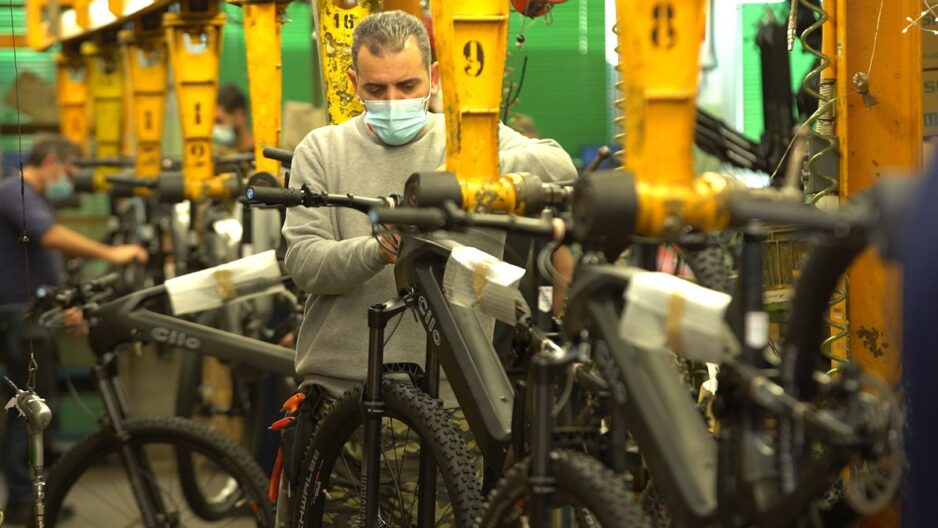
The Italian economy has a growth forecast of 6.2%, but it is feared that supply chain problems could jeopardize the economy's recovery. One of the companies facing such negativities is electric bicycle manufacturer Atala. The Lombardy-based company in the north of the country has seen a 60 percent increase in orders since the start of the COVID-19 crisis, but struggles to meet this demand as delivery times for components increase.

The lack of …components reduced the potential for expansion.

Massimo Panzeri
CEO of Atala

Massimo Panzeri, CEO of Atala’, said that “Production increased by an average of 36 percent in 2020’, and we need to see a growth of around 10 or 15 percent in 2021’. It could have been higher in 2021’, but the lack of components has reduced its expansion potential, ” says.

Massimo Panzeri, CEO of Atala’, says the lack of key components is keeping his company from growing further.

Investing in environmentally friendly transport is one of the top priorities of the European improvement plan. Atala hopes to take advantage of this by moving some of its activities from Turkey ’.

But as Massimo’ explains, this will not solve all supply chain problems.

“If we send the welding or dyeing processes back to our country, but aluminum rods or carbon fiber, materials for battery cells or steel not produced in the European ’ are missing, then we only take the problem elsewhere. So, in my opinion, we need to think at the political and European level; change cannot be limited to part of the supply chain; must start from the very beginning, i.e. from raw materials.”

Attracting the best talent

EuropeLike the rest of ’, a shortage of basic materials and goods has raised fears that inflation will accelerate in ’, Italy. The country invests more than any other EU country. A total of 235 billion euros over five years, including 191.5 billion from AB’'s bailout fund. Italy received its first 25 billion in August.

But it's not just a shortage of goods and supplies. Another problem that many businesses currently face is attracting and retaining skilled workers. Turin-based Argotec produces microsatellites for the space industry. One of its products, LICIACube, is currently in use on NASA’'s asteroid diversion project DART’.

David Avino, CEO of microsatellite manufacturer Argotec’in, says the Italian economy is experiencing a renaissance. The company aims to double its workforce.

David Avino, CEO of microsatellite manufacturer Argotec’in, says the Italian economy is experiencing a renaissance. The company aims to double its workforce.

To meet the growing demand, the company plans to double its workforce, but says more needs to be done to retain young talent.

…, thinking about the future means investing.

David Avino
Argotec’in CEO’

Argotec CEO David Avino, ’As we can see from the statistics, analysis and forecasts, the economy, especially the Italian economy, is experiencing a kind of renaissance. In this case, the important thing is to think about the future and to think about the future means to invest. What we want to do with the government is have the capacity to bring back young people who have left the country to do research and development abroad for certain reasons, ” says.

Creating a more attractive business environment is one of the priorities of the European rescue plan, as well as green mobility, clean energy and digitalisation.

The Ghost of Inflation

The rapid reopening of the economy has led to supply chain bottlenecks. This and increases in energy prices drove inflation up. It was at -0.3 percent in the euro area at the end of 2020. This rate increased to 2.8% in the third quarter of 2021’.

More increases are expected in 2022’. Naomi Lloyd of Real Economy’ spoke with Laurence Boone, OECD’'s Chief Economist, to gain a global perspective on the economic outlook of Europe’.

Naomi Lloyd, euronews:

“We have seen a huge increase in the number of coronavirus cases. What does this mean for Europe’'s recovery?”

Laurence Boone, OECD:

“EuropeThe recovery in ’ continues well, but this clearly adds uncertainty to this outlook.”

Naomi Lloyd, euronews:

“How does this compare to the table you see globally on OECD’?”

OECD Chief Economist Laurence Boone.

What we are now observing is that employment has almost recovered in the European Union and the United States is still lagging behind ’.

Laurence Boone
Chief Economist, OECD

“Europe's economies are doing quite well compared to all countries. It was very interesting to watch how different countries protect their own people in the European ’. What governments do is pay companies to keep people in their jobs. So when you reopen the economy, you immediately start working again. The situation in the US ’ is quite different. Governments send checks to households, so they cash the money, but they don't have a job anymore. So what we're observing right now is that employment has almost improved in the European ’, and the U.S. is still lagging behind in ’.

Naomi Lloyd, euronews:

“How worried are you about the new variant and its impact on the economy?”

Laurence Boone, OECD:

“, I think you can look at this in two ways. Either this delays the recovery a bit and increases the tension in the supply chain, or it is a more difficult variant, and this can indeed create a regression in the recovery and, if this happens, surprisingly, cause enough drops in prices.”

Naomi Lloyd, euronews:

“How worried are you about this current increase in inflation?”

Laurence Boone, OECD:

“If we resolve the state of health by summer and everything returns to normal, then we are quite sure that supply tensions will begin to decrease and inflation will gradually decrease. If we fail to control the state of health and tensions continue until 22, 23’e, then we will be more concerned that this inflationary pressure will last longer.”

There is, of course, a reason for the joy of Christmas… It usually takes 10 years for the vaccine to be found.

Laurence Boone.
Chief Economist, OECD

Naomi Lloyd, euronews:

“Do we have a reason for Christmas cheer?”

Laurence Boone, OECD:

“Of course we have reasons for Christmas cheer. First of all, when you think about it, a year ago we were told that the vaccine was available in as little as nine months. It usually takes 10 years to get the vaccine. This crisis has managed to protect people and businesses as much as possible, and there has never been so much awareness of the climate problem. That's why I think we're on a good path. - ”

The author/producer: Naomi Lloyd

The reporter: Cyril Fourneris

The video editor: Silvia Lizardo

The producer is: Camille Cadet

The camera crew: Giampiero Gandolfo and Stefano Sala

From the Brussels: Pierre Holland and Eric Wathieu

Paris: Vincent Kelner and Nicolas Personne

Design of Motion: NEWIC https://www.agence-newic.com/

Brussels Economic Forum 2021: What will the European economy look like after the pandemic?

The Brussels Economic Forum (BEF) is the most important economic event of the EU’, which is held annually at the European Commission’.

BEF is where senior decision-makers, academics, civil society and business leaders meet to discuss the most pressing economic problems of the European Union. The event, normally attended by over a thousand people, was broadcast live from the studio at the European Commission ’ this year.

The 2021 edition comes as the latest economic forecasts show that AB’'s recovery continues and European economies are expected to return to pre-pandemic levels by the end of 2022.

The main topic of discussion was how Europe’ would build its new economy as it emerged from the pandemic.

Small business owners, in particular, are concerned about this situation, and many are concerned about what to do when government support ends.

We interviewed some of these types of business owners to discuss the challenges they face, and talked to some of the names on BEF’ to find out what solutions they have.

Difficulties finding staff

Greg Yurkovich runs two pizza restaurants in Ljubljana’, the capital of Slovenia. He was getting government subsidies to keep his staff on the job. He says that the current problem for him is the shortage of employees all over the “otelcilik sector.

At the same time, “ worries about how to motivate people to take action again and maintain the motivation to grow economies.

European Commissioner for Economic Affairs Paolo Gentiloni confirmed ’ that small businesses have been severely affected by the crisis. But he says there are two important tools for small and medium-sized businesses to combat this. One is the European Investment Bank program, and the other is the “ program, which we call Invest EU.

European Commissioner for Economic Affairs Paolo Gentiloni

The same rules for everyone

Dovile Ambrazeviciute’nin VilniusThere are two flower shops in ’. Like Greg, he was getting government help to make things work. He tells us that his biggest concern is that his company, “, has huge debts and the economy is quite slow at the moment, and he will not survive for ”. The European Union wants ’ to use similar rules for all businesses in all countries and wherever they are located.

According to Paolo Gentiloni’, “kriz was not a stabilizer”. The Commission, “, knows that differences between different incomes in different countries have increased. But the Next Generation AB expects ’ to solve this problem and create “, a more inclusive and less unjust society.

Climate change and small businesses

After Laura Cardenas Corrales lost her job, she decided to move her graphic design work to the internet. He's fine, but he's worried about the environment. He wants to know if AB’ will give incentives to small businesses or help them make their systems more environmentally friendly.

European Commission Vice-President Valdis Dombrovskis says funding for research and innovation will be provided. He also adds that the carbon limit regulation mechanism will ensure that imports from countries that are less ambitious about “emission reduction are subject to this mechanism and do not affect the equal playing field.

Valdis Dombrovskis, Executive Vice President of the European Commission

I look closer to home

Bengt Westerholm, Finland’ is the CEO’ of Beweship’in, one of 's largest privately owned shipping companies. In December, the company left most of its cargo stranded in China’.

Bengt’'s concerns are slightly different from those of small business owners. He explains that most air transport is still closed even now. Also Far East’ to EuropeSome sea freight prices from ’ to are actually five times more expensive. “ tells us that many Finnish companies are now looking for opportunities to actually own their suppliers and source resources closer to Avrupa’ or Avrupa’, because now we all see the risk.

WTO Director-General Ngozi Okonjo-Iweala also spoke about BEF’te Europe’'s role in international trade. “ tells us that when the ” outbreak began, there were disruptions in international trade.

But he also adds: “What we see, for example, is a diversification towards other countries in Asia’, rather than a big move to bring things back home. He doesn't expect a huge change in sourcing and supply.

Economic inequalities around the world

Europe’'s economic forecast looks positive, but other emerging and developing economies are in a more difficult position.

Ngozi Okonjo-Iweala, Director-General of the World Trade Organization

According to Okonjo-Iweala’, “ is one of the main reasons we see that this difference is due to the inequality in access to vaccines. He explains that to fix this, we need to deliver vaccines to countries that don't have access to vaccines. “AB became one of the largest exporters of vaccines. However, there was an export restriction. EuropeI hope ’ will lift the restriction, ” adds.

Valdis Dombrovskis sees it differently. AB’ has an export control authorization and monitoring system. However, “ says there is no question of restricting vaccine exports in general terms. AB’ exports about 385 million vaccines to more than 100 ’ countries, which accounts for half of “AB’'s vaccine production.

The EU is the world's largest exporter of vaccines

Valdis Dombrovskis
Executive Vice President of the European Commission

The challenges ahead

Ngozi Okonjo-Iweala fears the emergence of inflationary pressures due to the size of the stimulus implemented by many developing countries. Dombrovskis agrees that this should be followed. The WTO Director-General also believes that the participation of women and unemployed in particular and the recovery of the Afrika’ are issues that AB’ should focus on.

Dombrovskis confirmed that women's participation in the workplace and women's long-standing priority within “AB is ”, and Africa is a priority region in ’'s new trade policy strategy.

COVID-19 has caused countless problems not only in the field of health, but throughout the world. Europe’'s expectations are starting to look more positive, but efforts still need to be made to build a new economy as it emerges from the pandemic.

InvestEU: Europe Plans to Mobilize Billions to Increase Decreased Investments

Avrupa’ needs to invest in its business, innovation and infrastructure to achieve its climate goals and initiate an economic recovery.

But almost half of EU companies say they plan to cut investments after the Covid pandemic.

Werner Hoyer, President of the European Investment Bank (EIB), explains that the pandemic has made investment decisions “ more complex: “Income and resources of companies are decreasing steadily”. “Europe’'s competitiveness and its role in the world” is a major concern for “, he says.

How does InvestEU help?

InvestEU, a new EU programme, is mobilizing billions of euros in capital, taking on some financial risks for investors. It guarantees 26 billion euros from the EU budget and 7 billion euros from partner banks. Around 370 billion euros in public and private financing are expected to be mobilized.

The money will be transferred to projects that contribute to innovation and digitalization, SME ’s, especially projects that have been hit hard by the COVID crisis, encourage social participation and strengthen sustainable infrastructure.

Minimum of all investments ’u should contribute to the construction of a greener Europe by supporting the green transition of the European Union.

The European Commission works in partnership with the European Investment Bank ’, as well as other national promotional banks and international financial institutions.

InvestEU is following the steps of the European Strategic Investment Fund ’ (EFSI), also known as the Juncker Plan, which has successfully secured more than €500 billion in extra investments.

What does this investment look like in the field?

The European Union is working to revive the former coal mining town of Wałbrzych’i in the heart of Poland's Silesia’. It's been dependent on coal for 500 years, and that's changing now.

Wałbrzych received a 14m-euro loan from EIB’ to help him overcome the coal age and renovate the city center. The loan was partially backed by the European Commission.

Roman Szelemej, mayor of Wałbrzych, says that this means the reconstruction of a quarter of the Old City of “. This is especially “, who can start a new life, who can provide a new life to the old city” witnessed the revival of “social lives for new families.

Mayor of Wałbrzych Roman Szelemej

EIB’den Werner Hoyer believes that investing in infrastructure and skills training is essential in places like Wałbrzych.

“, the coal miner who jumped out of the last coal mine in Southern Silesia’, will not be in charge of the digital Start-Up’ in two weeks, so we need to help these people move into the next generation of jobs, ” explains.

Werner Hoyer, President of the European Investment Bank, with reporter Naomi Lloyd

Social housing system

Wałbrzych is not the only town to benefit from the European investment plan. PolandPoznan’da, the fifth largest city in ’, focuses on social and affordable housing.

The mayor of Poznan, Jacek Jaskowiak, explains that “, we need to build some apartments for young people and the elderly”.

’ says that if these people take some money and help them settle in Poznan“a, they can find a good job and send their children to kindergarten. Affordable housing is a strategy to bring more life and work back to the city.

The program is expected to create homes for 3,000 to 4,000 people.

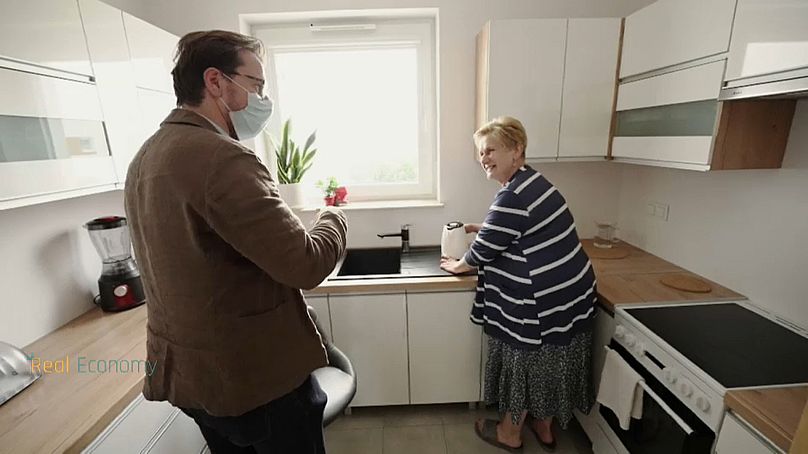
Aleksandra, 69, is already one of the beneficiaries of this project. He says he was thrilled when he was able to move into his new apartment with a balcony.

He says he will never be able to buy a place alone for financial reasons.

Aleksandra Wysocka reporter Guillaume Desjardins’e shows off her new home

EIB security label

To finance this housing project, developer PTBS applied to EIB’ for a loan of half the total cost. It helped make up for investors' reluctance.

PTBS CEO ’ Andrzej Konieczny explains that banks do not trust them at first because the project is different from the business they usually finance. However, “ added that they managed to reach an agreement with the EIB and that they trust ”biz.

Some people take the EIB Finance label as a security measure because the main or key decisions here are made by people with a technical background or science background.

Werner Hoyer
President of the European Investment Bank

The company expects this project to be successful and looks at future projects with the EIB’nin ‘onay seal’.

From July 2021’, InvestEU will replace the Juncker plan. This time, local banks, such as the BGK in ’, Poland, will also work with the EIB.

European initiative guaranteeing poverty relief for all children

According to pre-pandemic figures, almost one in four children in Europe’ lives in poverty.

In 2019, it was estimated that 18 million children in the European Union were at risk of poverty or social exclusion. When you compare these children with their better-off peers, they are more likely to perform poorly in school, have difficulty finding a decent job, and have health problems in adulthood.

The global health crisis is making this situation worse.

Eurochild Secretary General Jana Hainsworth reported that countries across Europe are experiencing significant difficulties in “ due to the pandemic. There has been an increase in the use of food banks and the homelessness of families has become a problem. He also adds that the effect on “children is quite dramatic”. Many of them lost their social networks and were greatly affected by not being able to access the school.

What is being done to change that?

The European Commission's European Child Guarantee policy initiative aims to end child poverty if governments sign off.

How will the European Child Guarantee work?

To break the cycle of poverty, the European Child Guarantee asks EU governments to ensure that every child at risk has:

  • Free education, child care, quality health care and decent housing. This also includes a healthy school meal per day and the possibility to participate in activities in the school, including sports, free of charge.

Garanti is implementing the European Pillar of Social Rights, ’, which aims to lift at least five million children out of poverty by 2030.

Member states are asked to register with Garanti’ and create action plans on how to implement it.

Jana Hainsworth says the initiative “ is very promising” and “ is really ambitious”. But he thinks the biggest challenge is ensuring that “ doesn't remain a commitment on paper.

We need to think about an inclusive recovery as we try to get out of this deep crisis, and if we prioritize children, then we create a more sustainable and inclusive future.

Jana Hainsworth
Secretary General of Eurochild

Ultimately, enabling children to access essential services necessary for their development and well-being is the goal of the European Child Guarantee.

Ana Mendes Godinho, EU Minister of Employment, Solidarity and Social Security

AB’'s Minister of Employment, Solidarity and Social Security, Ana Mendes Godinho, also describes this as a way to guarantee “ a globally integrated approach to ” to meet the diverse needs of children in terms of housing, education, care and health.

According to him, this would enable “ to have a national plan with a concrete goal for each member state. But by doing so, we will guarantee equality of opportunity to every child in Europe“ adds.

Financial difficulty cases in Cyprus’

Cyprus’'s growing economy has been hit hard by the health crisis, and the road to eradicating poverty there is still a long one. According to ’, one in three children is concerned about the situation in Cyprus.

In this context, it is hopeless to be a parent and not have the basic needs to give your baby. This is well known to Panayiota Christou’, a Social Worker on the Baby’s Dowry project.

He takes us to the small village of Temvria near Nicosia to meet Mario, a soldier, and Kula, a former part-time gas station employee. With the unexpected arrival of the triplets, their fragile financial situation has destabilized.

They were struggling to find money to buy their children's basic needs, and that's where the EU-funded Dowry of the Baby project came into play. They were provided with basic necessities such as strollers, cribs and baths for babies.

Kula describes it as making their lives easier now and in the future because “project allows us to save some money and use it when children grow up.”

A Cypriot family with triplets who received help from the Baby Dowry

The Dowry of the Baby programme is funded by both Cyprus and the European Fund for the Most Disadvantaged (FEAD). Panayiota says the program aims to help families with children under the age of two who are at risk of “maddi deprivation, poverty risk and social exclusion.

“Child poverty remains a secret, it remains a secret, it is not obvious, so we need to give more support to households to improve the living conditions of children, ” adds.

The Dowry of the Baby project is a step towards tackling a societal problem that is still difficult to assess.

The Dowry of the Baby project, which has a budget of 3.6 million Euros, has helped nearly 2000 families such as Kula and Mario’s.

However, this family is a very exceptional example among the beneficiaries of this project; Many are single mothers and refugees.

Heba and Adel

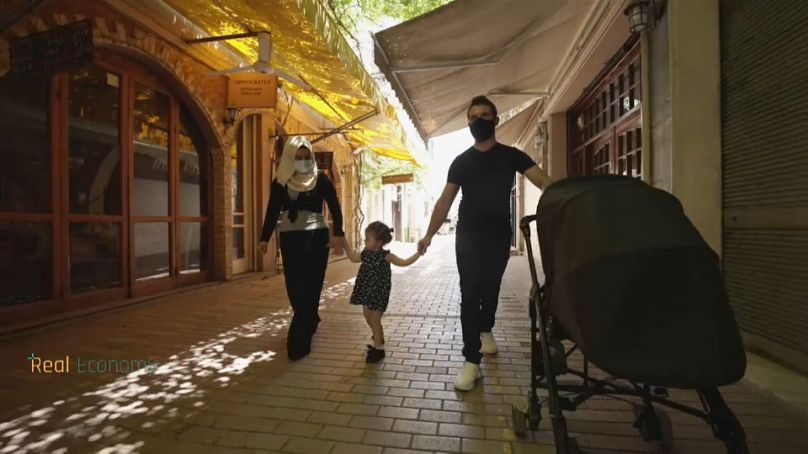
One of the refugee families experiencing great difficulties in Cyprus’ is the Heba and Adel’in family. Adel had difficulty finding work when they arrived in Cyprus ’ from Syria’. As a result, he and Heba lived in an unhealthy apartment with their first-born children.

Syrian refugee family receiving aid from Cyprus’ta Baby Dowry

Adel says the items they bought from Baby’s Dowry’ helped him a lot because he couldn't even afford to buy a diaper for his daughter at the time.

Adel managed to save money for the family and improve his professional status by meeting the basic needs of his children. In this way, Adel and Heba now live in an accommodation suitable for their growing family. Like Kula, Heba sees how important this help is for his family now and in the future.

Our film crew was allowed to film at the Parc de Sceaux’, courtesy of the Département des Hauts-de-Seine’.