Volkswagen’ profit plummets as automaker signals more cost cuts

On Thursday, weaker German car giant Volkswagen’ warned its future is at risk if more cost cuts are not made, after profits fell more than expected amid geopolitical tensions, trade tariffs and intense competition.

Net profit of the group from January to March %€1.56 billion in ’ya, down 28 percent, and revenues worse than analysts' estimates %2 declined to 75.7 billion Euro’.

VW chief financial officer Arno Antlitz, “, said that the cost reductions planned so far are not enough”. “We need to fundamentally change our business model and deliver structural, sustainable improvements in all areas and at all levels. If we fail to do so, we are jeopardizing our future. - ”

Antlitz said a multi-tiered cost reduction program could include reducing vehicle production costs without reducing quality, significantly reducing overhead and improving the efficiency of our “ factories and accelerating technology development and decision-making.

Car manufacturer already He plans to lay off 50,000 people.By 2030 Germanyat all its brands in ’.

With 10 brands ranging from Audi’ to SEAT and Škoda’, VW will have to adjust its capacity and “ will work to further optimize costs in our factories.

He warned that Chinese automakers not only competed on their own territory, but also gained market share in the European ’.

Automakers such as BYD have emerged as relentless competitors in the Volkswagen’in China’, traditionally a major source of profit for the German manufacturer, especially in the EV segment.

China's ’ sales are slowing

Antlitz also said that tariffs imposed by US President Donald Trump ’ a year ago cost the group an extra 4 billion euros per year.

Volkswagen in the first quarter compared to the previous year %It sold 2 million vehicles, down 7 percent. South America (+%3), Western Europe (+%1) and Central and Eastern Europe in ’ (+%7) growth, China (-) and North America in ’ (-%9) partially compensated for the declines.

General sales in 2026. %With a 0 %It will grow between 3 and the core profit margin will also %With a 4 %He estimates it'll be between 5.5.

Volkswagen said it was not included in the estimates because the possible effects of the war on the Middle East ’ could not be reliably assessed.

GermanyOne of ’'s most recognizable companies, Volkswagen’in's woes reflect a more general disturbance in Europe’'s largest economy, especially among traditional manufacturers.

The company's annual profit fell to its lowest level in almost a decade in 2025’te.

On Thursday, CEO Oliver Blume said VW’ should align its strategy with a new world of “, which is undergoing fundamental change.

Wars, geopolitical tensions, trade barriers, tighter regulations and intense competition are creating adverse winds, “ said.

Following the report, the share price of Avrupa’da rose slightly in the morning.

Logistics pressure increases in Caspian-Central Asia corridor as trade routes develop

Transport and energy officials meeting in the capital of Azerbaijan’ say the Caspian-Central Asia corridor is entering a more complex phase as increasing trade volumes are beginning to exceed the capacity and resilience of the existing infrastructure connecting Asia and Europe’.

At a regional forum on April 23-24, participants described a system that is still functioning but is increasingly struggling as pipelines, railways and ports face increasing operational and financial pressures.

Infrastructure is present, but boundaries are emerging

Despite concerns, some experts argue that the region did not start from scratch.

Global Gas Center Central Asia Consultant Askar Ismayilov, “All infrastructure in terms of transportation is available” said.

“Even if we want to increase capacity, it won't require significant capital expenditure.”

He suggested that this basic line offers some degree of cost stability.

Pointing out that existing networks are the basis for increased expansion, “ added that in this case transportation costs will not increase dramatically.

But the challenge is no longer just infrastructure, but security and supply.

Ismayilov, “We see that no route will be secured, the world has changed, ” said.

The more we expand and increase the number of routes, the more we will contribute to supply security, ” said.

Pipeline dependence remains a structural risk

Much of the region's export system still relies on a limited number of corridors.

Kazakhstan remains heavily dependent on the CPC pipeline to the Black Sea ’, while Azerbaijan distributes volumes via the Baku-Tbilisi-Ceyhan (BTC) and Baku-Supsa routes.

According to John Patterson ’, co-founder and board member of the British Chamber of Commerce in ’, the issue is not only capacity but also urgency.

“There is a huge demand for oil and natural gas, ” said. “Needs pipe lines, connection. That was the purpose of this forum.”

He pointed out that sharp increases in commodity prices are a warning signal. “LNG has increased dramatically since the beginning of the conflict, Brent is also significantly higher”

Patterson drew attention. All these problems will have big consequences for the global economy, ” said.

Connection becomes strategic leverage

As global supply chains adapt, the ability to move energy and goods efficiently becomes a strategic advantage.

Referring to weak points around important maritime routes, Patterson said, “If alternative supply routes can be used and transport links such as pipelines, highways or rail can be improved, then the global market becomes less dependent on narrow points.

Azerbaijan, in particular, is positioning itself as a transit hub.

The importance for “Baku lies in the existing pipeline connection to the European and Western markets, ” said. “Central AsiaHas the know-how and capacity to help ’ move its resources.”

This role extends beyond oil.

Patterson described the region as a bridge between the production and consumption markets, adding that commodities such as “, oil or cotton can be transferred from here to the European Union ’.

The Middle Corridor is gaining interest

In this framework, attention is shifting to the Central Corridor’a, the trans-Caspian route connecting China, Central Asia, the South Caucasus and Europe’.

Participants said the importance of this route increased as countries sought alternatives to northern and southern routes that were disrupted by geopolitical tensions.

Railway infrastructure is already under pressure. While improvements are being made to increase capacity on the Baku-Tbilisi-Kars railway, ports in the Caspian and Black Sea ’ are dealing with increased cargo volumes.

AzerbaijanFrom ’'s Alyat and Dubendi terminals to Kazakhstan’'s Aktau and Kuryk ports and Georgia’'s Black Sea transit points, production demand is often growing faster than expansion projects can keep up.

New pipeline targets reappear

As the pressure increases, long-discussed projects come back to the agenda.

Chairman of the Petro Council Kazakhstan Assylbek Jakiyev said that for “Kazakhstan and other Central Asian countries Azerbaijan is of vital importance”. “This should be a mutually beneficial project.”

He pointed to the possibility of a revival of discussions around the trans-Caspian pipeline.

We can restart negotiations to build a pipeline that will connect to the BTC pipeline over the “ Caspian Sea, ” said.

Such a project would require regional cohesion.

Despite admitting that official talks are limited, “Kazakhstan, Turkmenistan and Azerbaijan can agree to build this pipeline and connect it to existing systems, ” added.

Environmental and operational pressures intensify

Beyond infrastructure, natural factors also complicate logistics.

Falling levels in the Caspian Sea ’ are already affecting port operations, reducing draft capacity and requiring screening; Marine companies, on the other hand, have to adapt their fleets to shallower conditions.

At the same time, financial and regulatory constraints, from sanctions compliance to increased insurance and freight costs, are reshaping investment decisions.

A system in the process of transformation

According to Ismayilov’, the result is clear: The infrastructure alone won't be enough.

By linking the increase in supply with the diversification of transportation, “ said that what is now more important is to increase production.

Participants generally identified a logistics network that was strategically vital but under pressure to develop.

As trade flows intensify and geopolitical risks continue, the Caspian-Central Asia corridor is shifting from a stable transition route to a more dynamic, competitive and risk-sensitive system in which resilience, diversification and connectivity will define the long-term role in global energy and trade.

Caspian and Central Asian oil markets recalibrate amid trade changes

South Caucasus and Central AsiaOil producers in ’ are moving in a more fluid global market as their long-standing export models are being replaced by faster, demand-driven trade dynamics.

At the second Caspian and Central Asian Oil Trade and Logistics Forum in Baku’, industry experts talked about a clear orientation towards flexibility, moving away from predictable, long-term contracts.

Colin Nesbeth, founder and CEO of Central Asia Marketing’, said that ’ Markets are now very volatile and fluctuation is always creating special opportunities.

“From a commercial point of view, opportunities arise that weren't there before.”

But this volatility cuts both ways. Nesbeth added that companies that go off a single route are being pushed towards alternatives that are too costly to deal with normally.

“In this kind of situation, they become economical. This is an opportunity for traders but a great challenge for manufacturers.”

Asia drives pricing debate

The main theme that stood out in the discussions was the increasing dominance of the refinery centers in Asya’, especially China and India’, in determining their raw demand and pricing structures.

Suppliers are increasingly moving away from fixed pricing formulas, rather than reacting to short-term signals and arbitrage windows.

Nesbeth said “, "Nobody really knows how it's going to go." But adapting to unstable markets is becoming more important than ever.“

Despite this, he displayed a cautious tone of optimism. "My belief is that it will stabilize." - “

Infrastructure is stable but under pressure to adapt

While export routes remain largely unchanged, their strategic use is also improving.

While Kazakhstan continues to export most of its crude oil to the Black Sea ’e via the CPC pipeline, Azerbaijan relies on the BTC corridor. Turkmenistan’'s energy flow continues to be gas-focused and east-oriented.

But beyond pipelines, attention is focused on broader connections, especially those developed under the China’in Belt and Road Initiative.

Shehryar Omar, CEO of Pakistan Petroleum Institute, said that a huge investment has been made in the improvement of the ’Road corridors.

“China, Pakistan’a has invested nearly $70 billion not only in roads, but also in energy production and related infrastructure.”

“This network has evolved immeasurably over the past four or five years, ” added.

Omar pointed to a recent turning point. “More this week came the first dry cargo shipment from ’ to Pakistan’ from Kyrgyzstan. So that route is already active and a difficult route.”

Pipelines still dominate the flow of oil

Despite these developments, Omar emphasized that oil logistics continues to be limited due to geography and risk.

The situation for “Petroleum products can be even more difficult, ” said. “At this point pipelines through Iran or China are probably more viable.”

However, there are uncertainties as Afghanistan continues to limit ’'s role as a transition corridor.

“, we're not sure about the situation there, ” said. “So as a corridor, we don't know if this will make sense right now.”

Nevertheless, he underlined the long-term opportunity. “, there are so many opportunities. Pakistan ’'s population of 240 million is growing rapidly. Central Asian states cannot ignore this. - ”

Omar added that “ will pay for itself in the next 15-30 years if it requires an investment of $10-20 billion.

Quality becomes a competitive advantage

As market conditions tighten, not only volume but also raw quality become determining factors in competitiveness.

Anar Habib, senior mid-level distillation products trader at “, said Caspian crude oil is very competitive in the global market, adding that the region's production is well suited to what global refineries actually need.

Kazakhstan and the wider Caspian region are supplying increasingly in-demand qualities, and Azerbaijan said ’'s flagship mix stands out in particular.

Habib explained that Azeri Light’ is a high-quality crude oil that European ​​rafineri rely on to produce cleaner end products (especially diesel and jet fuel, which are critical for global economies).

“Cleaner fuels are in demand everywhere, ” added. “And these qualities are necessary to produce them.”

External shocks are spreading to the area

The Caspian region feels the impact of global maritime tensions, even if it is not directly exposed to the interrupted sea routes.

As tanker availability contracted, freight and insurance costs also increased, and margins were squeezed across the trading system.

Nesbeth, “In general, this is a great challenge” said. “The whole market is trying to adapt at the same time.”

A market that learns to adapt

The general table that appears in Baku’ relates to transition and recalibration. Producers are rethinking their export strategies, and traders are exploring arbitrage opportunities.

Infrastructure is being re-evaluated not only in terms of capacity, but also in terms of flexibility. And in general, the ability to respond becomes the defining ability.

Nesbeth said volatility creates opportunities, but it also forces everyone to rethink the way they operate.

For the Caspian and Central Asian oil sector, this rethinking process has already begun, with Asya’, infrastructure investments and crude oil quality at the heart of the rapidly evolving global equation.

Sort by: Which countries experienced the worst fuel price increases since the Iran war?

As the world awaited an unlikely new round of negotiations between Washington and Tehran, oil prices rose again on Thursday to over $100 a barrel.

This prevents almost all exports from the vital Strait of Hormuz, where ’ per cent of the world's oil trade passes in peacetime.

The year before the US-Israeli ’ attacked Iran’, pump prices were falling for most of AB’, but the shock from the blockade sent them back. From the roof .

Exactly how much fuel prices have increased in Europe’?

The answer is Eurostat from ’Publishes price differences between February and March 2026.

Following the start of the military operation in ’ on 28 February, fuel prices across the EU increased by about 13.5 percent.

Prices increased most in Latvia and Sweden’te; both at general fuel prices from February’ to March’ %It reported an increase of more than 20’.

Diesel drivers have been the most affected by this and this rate has been observed in gasoline vehicles. %Compared to 10.6’, the residual pump is almost %He spends $19.1 more.

Gasoline and diesel: The worst and best countries for refueling

Czech and Swedish diesel drivers, approx. %With increases of 27.6’, AB’ is experiencing the most difficult days. This is Estonian (+.8), Latvian (+,4), Belgian (+,2) and the owners of Dutch diesel vehicles are following. (+,1).

Slovenia, which did not receive such a hard blow (+%2,9), Slovakia and Hungary (both +%7.0) except for all other EU countries in diesel %It saw an increase of over 10’.

When it comes to gasoline, Belgian, Swedish, Austrian and Czech drivers are approx. %While spending 15 more, Slovenia, Slovakia and Hungary again, this time with the participation of Italy’ %5Under ’.

On an annual basis: Are British consumers being hit harder than in AB’?

In general, the bite felt even harder along the canal.

According to data from the British Ministry of Energy Security and the RAC’'s Fuel Monitoring Report, compared to March 2025, diesel prices in the United Kingdom ’ %The price of gasoline increased by 26, while the price of gasoline increased by about increased and about in fuel %There was an increase of 19’.

Eurostat, on an annual basis AB’de the worst affected country's costs %He says it's Germany, where it's up 19.8. Romania is also %It recorded a similar increase with 19.6.

There were only two exceptions in AB’: Jože Damijan, professor of international economics at the University of Ljubljana, told us, %-2.7 in Hungary (one of the bloc's largest importers of Russian oil) and Slovenia (%-5,9), the country said, bringing fuel costs outside highways to the upper limit.

Prices are displayed on the board at a gas station in ’, London, England, United Kingdom, on 30 March 2026’.

How long can government ceiling prices last?

Damijan, SloveniaWhether ’ can keep prices at a certain level depends on the Platts oil spot prices (Mediterranean exchange) used in the “motorin pricing model. Under the regulatory framework, the model is updated once a week, says ”.

“Of course, in the event of the long-term closure of Hornuz’, high Brent oil prices (the global pricing benchmark) will also raise Platts oil prices. In such a scenario, no model can sustain low prices”.

Next week, AB’ is expected to introduce rules that allow member states to loosen state aid in an effort to ease pressure on consumers as the war drags on.

‘The world is moving away from fossil fuels’: Gulf oil investors turn to Africa’'s renewable energies

Investors are enriched by the wealth of the Middle East’ Oil and GasAfrica is increasingly turning to ’'s clean energy sector. They are attracted by rising electricity demand, rapid urbanization and the continent's growing role in critical minerals and manufacturing-dependent global supply chains.

A report released last month by the Clean Air Task Force revealed that more than $101.9 billion (88.8 billion euros) has flowed into Africa’'s renewable energy sector by the end of 2024 from Gulf countries led by the United Arab Emirates, Saudi Arabia, Qatar, Kuwait and Bahrain.

Sovereign wealth funds and state-sponsored companies in the Middle East’ are unlikely to reduce these renewable energy investments despite disruptions in the global economy. the Iranian WarAnalysts say this is the case, given the strong long-term economic and strategic reasons driving this type of financing.

Most of the investment was concentrated in North Africa, South Africa and East Africa, while West Africa received relatively limited funding.

Matthew Tilleard, managing director of Nairobi-based CrossBoundary Energy, which develops and operates renewable energy projects, said “Africa remains one of the few regions where demand growth is clear.

Short-term shocks can delay individual transactions, but the biggest infrastructure opportunities require a long-term view of risk and value.“

Africa is facing one of the world's largest electricity deficits. Around 600 million people across the continent still lack access to electricity, and many more face unreliable sources.

FILE – CP solar technician Mark Munyua inspects solar panels on the roof of a company in Nairobi, Kenya, September 1, 2023.

Iran war strengthens Africa’'s renewable energy sources

Governments are increasingly turning to private investors to help finance The Sun (film)Wind and hybrid energy projects to expand production capacity without over-exerting public finances. This gap has created opportunities for Gulf investors looking for diversity beyond oil and gas.

Oxford Economics’ten political analyst Louw Nelson, “After all, Gulf investments in Africa’ are driven by pragmatic national interests and strategic returns, ” says.

“Across Africa, significant energy investment is currently underway, with many years of long-term projects under construction, so we don't expect major disruptions.”

Foreign investments the Renewable EnergyIt forms part of broader strategies among Middle Eastern countries to diversify their economies and adapt to global change towards cleaner energy.

Europe is also competing to gain influence Africa’'s energy sector. As part of AB’'s Global Gateway sustainable infrastructure initiative, €618 million was pledged at ’te in October 2025 for the dissemination of renewable energy sources, particularly in Africa’.

Energy and development analyst Joab Okanda says cuts in oil and gas shipments due to the war with Iran’ could strengthen the situation for renewable energy investments as it shows how sensitive such supply routes can be.

Many of these state-owned companies have significant capital, but they also understand that the world is slowly moving away from the state. Category: Fossil fuelsOkanda says: “ Investing in renewable energy allows them to diversify their portfolio and position themselves for the energy systems of the future.”

Renewable resources and minerals shape Africa’'s energy sector

Africa’'s energy sector is at the heart of many global economic changes, including energy transformation and growing energy demand. Category: Mineralsused in many high-tech products such as cobalt and gold.

Tilleard, “Renewable energy projects for investors can provide strategic access to sectors beyond electricity generation, ” says.

Power plants or large industrial operations built to supply “Madens can position Arab investors close to their supply chains. Category: MineralsUsed in batteries and other technologies.”

Okanda says perceived risks, including currency volatility and policy uncertainty, especially in West Africa, continue to shape where such investors invest.

In the Okan, “, generating power is only part of the equation, ” says. “You also need transmission systems and a functioning electricity market where electricity can actually be sold and paid for.”

Homes, education and jobs: Social EuropeWhat is the reality of ’?

BucharestNorth of ’, Berceni’de Valentin and Gabriela Alexe and their two daughters have been happily living at home for a year. Because of Valentin’'s low income, they had previously been living with their parents, where it was very difficult to live together.

Valentin, “, when they threw us out, I slept in the car for three days until I found an apartment to rent; It says me, my wife and my daughter ”.

“Then when I rented it, I didn't have much money left because it was too expensive. Let's say I had enough money for food, but for the rest of it, for clothes, for example, I didn't have any money at all.

Even now we can't believe he belongs to us, he changed our lives for the better.

Gabriela Alexe
Housing plan beneficiary

Gabriela says life is getting harder and harder: “, the situation was getting worse, mold was starting to form on the walls, and my child went to the hospital. I stayed in the hospital because the house was so dirty. - ”

Gabriela and Valentin Alexe, Habitat for Humanity beneficiaries

Thanks to the NGO Habitat for Humanity,Gabriela and Valentin, who help low-income families by building shared homes with the help of volunteers, will be able to host for the duration of their volunteering and the appropriate rent for 20 years. Once an unattainable dream.

Gabriela, “, even now we can't believe she belongs to us, she's changed our lives for the better, ” says.

A helping hand

Valentin says he feels deeply grateful: “I want to share and help other people who have moved here, and even when my volunteer work hours at Habitat’ are over, I will say this: ‘I'll help you, let's do it!”

The project is supported by the city of Berceni, which provides land and grid connections thanks to the private sector. and European funds.Today, three buildings were built that housed twelve families. Cosmina Pandele, Mayor of Bercini, says the project aims to create a normal community life for people:

“This is a chance not only for those who currently live in these dwellings, but for everyone who will be born in these families. What we're trying to do is enable these people to reach a normality that will allow them to grow, thrive and become adults we can trust, ” says.

Twenty million children in the European Union are at risk of poverty; The goal is to reduce this number by a quarter by 2030.. By the way, the European Child GuaranteeIt aims to ensure that all children have access to education, health care, healthy food and decent housing. It is among the many initiatives implemented to support social rights.

A socially just Europe

So what is it What is the European Union's plan to achieve ’'s social goals?Almost nine out of 10 Europeans say they want a strong social Europe with fair working conditions, participation and equal opportunities. (The Europeans are %the 88 ’i – The Eurobarometer Survey, 2024).

Priorities for a Social Europe

The 20 principles of the European Pillar of Social Rights serve as a compass to achieve this. To reach this point, the European Union has prepared an action planIt is built on the core goals that must be achieved by 2030. These targets include at least 20 to 64-year-olds. %The study of 78’in found that adults had at least ’ receive education every year and at least 15 million people, including at least five million children, reduce poverty.

The new EU legislation to protect platform employees and ensure adequate minimum wageTwo examples of concrete action. The rise of artificial intelligence, green and digital transitions, and demographic changes are redefining the business world, while policies for improving skills and improving social cohesion are likely to play an increasingly vital role.

Investing in people

Skills European Union is at the heart of ’'s prioritiesEncouraging investments to facilitate adult education. Rodica Ionas, 49, an English teacher at a school in ’, wanted to learn something completely new: the computer technology.

“This was a chance for me; Not only because I really want to learn this, but also because the course is funded by the Ministry of Education, ” explains.

Rodica Iona’'s classroom benefits from new ICT training

Rodica is undergoing a two-year training program in partnership with the Polytechnic University of Bucharest’nde World Bank. The aim is to combat dropout rates and Improving the skills of teachers.

Rodica, “We've learned a lot about the methodological approach of computer teaching, says ”. “We made a game for our students, they were very happy while playing.”

Improving teaching methods for Rodica is the biggest reward: “I'm generally better at teaching. My students will love the lessons more because we've learned a few ways to make the class more attractive. They should be motivated to come to school, ” says. Such partnerships are encouraged by the EU through initiatives such as: European Year of Skills,2023’te 200Supported near ’e program.

Zero Unemployment Target

On the other side of the ’, France struggled with another important problem. “Zero Long-Term Unemployment Zones”It's an experiment. Launched in 2016, the project aims to create jobs in rural areas such as Pipriac, where Tezea employs more than 60’ people.

The Tezea employee Marie-Fabienne Lavoisier explains how this benefits: I'm about to turn “58, and I've been working at Tezea’ for almost three years. Mostly I sort things out and put them in the store, and occasionally I work in the warehouse to pick up donated items when people bring something in.

“, I had cancer eight years ago, and I lost my husband to cancer three years ago. So it was far from a guarantee of getting a job at the age of 55, because this is an era when we are no longer profitable for many companies, ” adds.

Marie-Fabienne says The program did more than provide a profession: “ brought me back to social life. It also gave meaning to my life and daily routine. We need to return to solidarity and human values because that's what allows us to overcome challenges.

Zero-unemployment plan Marie-Fabienne Lavoisier’e proposes new life

To this day, Tezea offers close to thirty activitiessuch as recycling, grocery business and cutting firewood. This model, which is implemented in about sixty regions, is already inspiring four other European countries.

Serge Marhic, director of Tezea’, says “This is an idea that allows us to try what we call the transfer of the cost of unemployment. By financing part of the salary, we are able to create lasting jobs, create wealth, and stimulate production.

In “Pipriac %Unemployment rate of 13 %We dropped it under 5’. If we want to ultimately tackle long-term unemployment, this is one of the only models that shows it can be done.”

“Zero Long-Term Unemployment Zones”Powered by the project the European Social Fund Plusan important source of funding for its promotion EuropeSocial rights in ’The total budget is 142.7 billion euros. This fund allows each member state to implement initiatives based on its own socio-economic needs and investment priorities agreed with the EU.

In the future, adequate funding for these initiatives and a strong collective commitment to these goals will be vital to the construction of a social European ’.

How can working abroad start the careers of young NEET’s?

Advancing a person's education and navigating the job market can be a daunting task…

Especially if you are a young person who is already struggling to find a job in Avrupa’, has poor access to educational programs or drops out of school without any qualifications.

If you find yourself ticking these boxes and you are between the ages of 16 and 29, you may have entered the category of unemployed youth (a young person who is not in employment, education or training) officially known as NEET’s in Europe’.

This phenomenon is not only limited to Europe, it is a global phenomenon. The International Labour Organization reports that in 2023, one-fifth of people between the ages of 15 and 24 worldwide were classified as NEET.

According to EU data, factors such as having a low family income, having a disadvantaged family history, or disability can increase a person's risk of becoming NEET.

But can a work experience abroad help people get out of this precarious situation?

Both Hatice Fahel and Jasmin Nsimba Kanza think so; They both joined AB’. the ALMA initiativeIt is a program that offers disadvantaged NEET’s under the age of 30 professional and personal experience abroad.

An opportunity at Bel Paese’

Hatice, a 20-year-old German girl, spent two months after high school in Vercelli, Italy, focusing on her future prospects.

Euronews’e said: “I made a lot of new Italian friends and learned a new language. I loved working in a hotel there and learned a lot in my job. I feel freer and safer now. So it opened my eyes and my perspective on other things. - ”

Thanks to professional and culturally intensive experience, Hatice has now prepared a career plan with the support of her mentors.

Hatice Fahel, ALMA program participant

“, my dream career is to be a doctor someday. Go study medicine. Wherever you need, for example, exams, so yes, I still need to figure this out. And he said ” to start my career.

A total of almost €11 billion has been invested in this EU plan, and Germany is one of the 15 participating countries.

Andrea Moraru, project manager of NGO RE-INIT’in, which coordinates the program in Recklinghausen, Germany, explained how the program participants will manage their own money and learn how to become more independent.

Speaking to Euronews’e, Moraru said: "We are trying to strengthen them to motivate them to achieve things they didn't even know they could achieve. It's the first time they've been able to stand on their own two feet, ” said.

ALMA participants are mentored for four months when they return, and the results are clear, Moraru’ explains: More than 50 percent of “ in the last group found work or were admitted to an education or training program’ explained Moraru.

Advancing a person's education can reduce a teenager's likelihood of falling into the NEET category. For example, in 2022’de EuropeOnly eight percent of highly educated young people in ’ fall into this category, while the proportion of low-educated young people was 13.6 percent.

First experiences in the Land of the Gods

Jasmin, who went to ’, Greece two years ago, said she had been thinking about going abroad with such a program for a long time because familial conditions prevented her from receiving higher education.

Jasmin Nsimba Kanza, ALMA programme participant and Euronews correspondent Fanny Gauret

“I've learned a lot and it's been a lot of first experiences for me. For example, I went to the beach and the sea, met new people and experienced an entirely new culture, ” explained.

Jasmin found work in the restaurant of a hotel in ’, Greece, and came to the conclusion that she felt very supported throughout the venture.

“Now that I'm more open to change and have more courage, I'm ready to change. After this experience, I applied for a media and communication-oriented design course at a vocational school and was accepted. I'm starting in the fall. - ”

Germany has one of the lowest NEET levels in the European Union’, and it's clear that both Jasmin and Hatice’ benefited from the ALMA project, but they wouldn't be where they are today without their proactive and positive mindset.

Due to the various social and economic challenges that exist throughout the EU, it may be easier for some to find the motivation and opportunities needed to advance their careers than others.

NEETS: ‘More likely to live a life of social exclusion’

Mark Levels, a quantitative sociologist and professor at Maastricht University ’, explained in an interview with Real Economy why it is much easier for some NEET’s to find a way out of this apparent uniformity, and why social integration remains a major challenge.

Fanny Gauret, euronews:What are the consequences of being classified as NEET for the individual and society?

Professor Mark Levels, University of Maastricht:The state of NEET’in is related to a number of social problems. So NEET’s are much more likely to be poor, much more likely to live a life of social exclusion, and much less likely to move on to the labor market later. For society, the total cost in terms of missing labor productivity, the cost of social programs, as well as the cost of trying to regulate crime, etc., is huge. That's about 142 billion euros a year.

Euronews correspondent Fanny Gauret and Professor Mark Levels

Fanny Gauret, euronews:Can having the experience of living and working abroad lead to permanent change?

Professor Mark Levels, University of Maastricht:Such experiences can signal that you can accomplish a lot of things that can be in a lot of demand. I mean, they can work, but they don't work for the most vulnerable, the underqualified here. And that requires a completely different approach.

Fanny Gauret, euronews:Are there countries or policies that can model your research?

Professor Mark Levels, University of Maastricht:Germany’ has a very well-functioning vocational education system. Here we see that the transition from school to work actually works and works very well. The problem is that you can't take an education system from one country and apply it in another. You have completely different cultural environments, which makes exporting a bit difficult.

Fanny Gauret, euronews:What steps should governments and educational institutions take to help young people and NEET’s transition from education to work?

Professor Mark Levels, University of Maastricht:If there's one thing we know that can predict a situation as vulnerable as NEET, it's leaving school early. So invest in your education system. Invest in keeping people on board. Invest in programs that teach children skills that are in demand in the job market. You then reduce the likelihood that they are NEET, and secondly, you focus on the most vulnerable children and put them front and center.

Click on the video in the media player above to watch the full Fanny Gauret’in report.

From crisis to cooperation: How did the EU deal with the troubled 2019-2024 period?

A five-year cycle of turmoil; From COVID-19’ to the war in Ukraine’ and the resulting energy shock and rising inflation, the European economy has been rocked by an unprecedented series of crises over the past half-decade. As AB’'s Economic Commissioner Paulo Gentiloni’ put it: Referring to the highly improbable sequence of events such as the pandemic and Russia’'s invasion of Ukraine’, no one could have predicted that we would experience two Black Swans in a row.“

As Europeans prepare to go to the polls for parliamentary elections in June, the Real Economy is assessing AB’'s economic performance in this difficult period and its prospects for a recovery in the next period. How can the bloc boost growth and productivity, is the Green Deal still on track, and does trade relations with countries like China need to be reset? These are the big questions facing voters who are preparing to give EU institutions a new mandate.

Desperate times, desperate measures

At a time when desperate times demand desperate measures, AB’'s response to numerous crises has hitherto reached unimaginable proportions; The huge €800 billion New Generation EU fund was a historic economic gesture. This program, implemented to accelerate the bloc's post-pandemic recovery and green and digital transition, saw member states issue joint debt for the first time.

But COVID has also forced Brussels’i to temporarily leave its fiscal borders. Since then, many member states have reached record debt/GDP rates; This is a problem exacerbated by the energy shock and high inflation in the 2022’. The recently revised spending rules aim to gradually bring them back under control. Post-pandemic funds will also end in 2026’, and now the real question is: Will Europe have the money it needs to invest and compete for the future?

EU Commission President Ursula von der Leyen, “What started with a virus too small for your eyes to see has turned into a huge economic crisis that you can't miss.

A shared burden

The platform for combating this crisis was the debt-sharing program envisaged under the NextGenerationEU fund. So, four years after its inception, how do MEPs view such a financial instrument? Do they see this as a successful plan for the future, or should it turn into an economic taboo?

Renew Europe Group’tan Renew Europe Group’tan Stéphanie Yon-Courtin Real Economy’ye said: “For the first time in this war between conservative countries and Club Med countries, we never thought we could agree on a common debt, and this is a historic event.”

According to Philippe Lamberts’e, a member of the European Parliament and co-chair of the Green Group, the fund offers the possibility of intercommunal cooperation in the future: I see “NextGenEU’ as a prototype. And it's important that the prototype flies well so we can make it truly permanent.”

His vision is also shared by deputy Margarida Marques of the ’ Group of Socialists and Democrats, who sees the vehicle's potential to achieve Europe’'s long-term goals: “NextGenerationEUAfter ’, a new investment mechanism should be created to invest in climate transition, digital transition, European Pillar of Social Rights’na and defense.”

But the figures on the right have a slightly less utopian view: “Right now, if you have high-indebted countries, but they can benefit from this new box of Pandora’, which is a European common debt, if they can benefit from it, this creates a whole new game when it comes to finance, so we believe that this is a mistake and we shouldn't go down that road, said Michiel Hoogeveen, a deputy from the European Conservatives and Reformists Group of ”.

So what is the position of the EU Commission’? Will he be able to use these economic tools again? The fund is an expression of AB’'s fundamental concept of closer unity, European Commissioner for Economic Affairs Paolo Gentiloni believes: How can we participate in the global race for clean technologies, against the challenges of competitiveness, without even a single euro of co-financing? I think it's really impossible. - ”

Will you be struggling with debt or will you be borrowing money to invest?

However, whether it is jointly undertaken or undertaken, the debt must always be checked. The recently revised financial rules aim to reduce debt generated during the pandemic. This meant a return to old threshold values, such as deficit, which is 3% ’ of annual GDP and debt, which is 60 percent ’, respectively, while member states were given more flexibility on how to act on debt reduction.

But will there be enough money to pay for things like the green transition, especially with post-pandemic financing ending in 2026’? While investment is necessary, unlimited borrowing is not a solution to achieve it, writes Manfred Weber, President of the European People's Party: On the “ Debt side, you know, we struggle with that a lot. At the moment, nobody knows how to pay interest rates, says ”.

That's why debt means fewer opportunities for the next generation to invest. We need economic growth, this is the power base of Europe’, we are economically strong and we need to restart the engine.”

For Gentiloni’, Europe's debt burden should not distract from the critical need for investment: In general, we cannot say that the problem of the EU and the Eurozone is our very high debt, it is a problem for the single member states, we have to address it, we have common rules, but at the same time we have to compete at the global level.

For ’den Philippe Lamberts’, keeping up with AB’'s global competitors is even more important: If you want the green transition, digital, defense and all other investments to happen, yes, we will have to borrow because not all of them will be financed by cuts or new taxes elsewhere, and in fact some of them should be national borrowing, and some of them should be co-indebted by the European Union.

Analyst Jeromin Zettelmeyer, director of the economic think tank Bruegel, believes that Brussels’ will continue to share debt as a tool to achieve its primary goals. “I think the idea of you supporting public investments at the EU level will continue reasonably, because otherwise we could probably give up on the Green Deal’.

Dealing with China

While EU policymakers face an uncertain future, trade tensions with China are another hot topic. Brussels has accused Beijing ’i of subsidizing key sectors while restricting access to its own markets. For now, the European Commission’'s policy was to buy ’risk from China‘, but will it have to go further? Peking’in must be convinced of the benefits of working with Europe, reformed MEP Stéphanie Yon-Courtin believes: “It should be a win-win-win situation, says ”.

“First of all, the European Union must stop being naive. The relationship should be between commercial partners and, of course, should continue to work with partners as long as they agree to our rules.”

Michiel Hoogeveen, Member of the European Parliament from the European Conservatives and Reformists Group ’, believes that cooperation with China should be explored: Let's go and try to talk to the Chinese, let's really talk about how we can create [an equal playing field], how we can make deals, and also recognize that a country can be more competitive in building maybe electric vehicles, maybe solar panels or wind turbines. Well, if the Chinese are willing to pay for our energy transition, then we are also willing to pay for our own energy transition.” sources in other areas, says ” Hoogeveen.

But the view on the left is more cautious. Margarida Marques, a member of ’'s European Parliament, believes that before China can open the door to ’, Europe must establish its own order: “ In order to compete with other economic areas, we must be a bloc, an economic bloc, and for this we must ensure that the domestic market can work in this direction.

Greens’den Philippe Lamberts “First stop being naive” says. I mean, China is protectionist, the U.S. is protectionist, and we, “pekala, shouldn't restrict access to our market because they're going to restrict access to theirs. They're restricting access to their markets!

Manfred Weber, chairman of the European People's Party, agrees that future trade relations with China will likely be complicated: “We need to maintain economic ties, so no one wants to stop them, but we need to rebalance this and be ready to defend our markets in such a strategic battle with the Chinese.

Stability and growth prospects

Finally, given the great challenges faced by the European ’ in recent times, what is the current economic picture?

Jeromin Zettelmeyer, director of the Bruegel think tank, says “Inflation is falling. “ECB expects to return to the target earlier, and they expect to unwind in the next quarter. Therefore, there is a feeling that there will be a recovery in the summer months, and the main factor here is the recovery of real incomes and the growth of wages with the fall of inflation.”

The future may be challenging, but European Commissioner for Economic Affairs Paolo Gentiloni believes the European Union is on the right track.

The response to the “ Outbreak was unprecedented in the – SURE mechanism, NextGenerationEU. The response to the war was unprecedented. Unity on sanctions, political reaction and separation from Russian gas. But if we see the acceleration of activities in 2024’te, I think we will come to the conclusion that we can properly address these two black swans, says ”.

In fact, we can all be forgiven for hoping that the next election period will be less turbulent than that.

What is the impact of ’'s RRF fund on the Greek economy?

Managing the climate crisis is one of the most important issues European rescue planIt's for Greece.

An extended spell drought and heat wavesIn 2023, it fueled one of the worst wildfire seasons the country has ever experienced; In the Alexandroupolis and Meriç fires of August 19, ’, only more than 81,000 hectares of land were burned, a total of 170,000 hectares of land was burned across Greece.

The Megara Forest, about 60 kilometers northwest of Athens’, was also severely hit.

Jasmine Georgiou euronews’e, a forester specialising in Waste Management, said: “In the last five years, large fires have occurred in the Megara Forest, ’, destroying woodlands, forests, homes, businesses and animals.”

The Greek AntiNero Program‘mega was created to combat fires by clearing and maintaining forests, planting slow-burning trees, and creating different fire prevention zones.

Georgiou explained that highly flammable bushes and forest debris need to be cleaned to prevent fires from spiraling out of control, especially in the summer.

Creating fire breaks helps control the spread of forest fires

But public initiatives like this require a significant amount of investment to cover the costs of contractors, staff, and basic equipment.

Project manager Giouli Vourna, “The budget of the project is over 400 million Euro’; This is the largest intervention to combat this problem in our country, thanks to the resources provided by the Recovery and Resilience Fund, ” said. Wealth Development Fund of the Republic of Greece.

The measures financed by the RRF are determined according to the priorities of each country. Greece’ has access to 35.9 billion Euro’ distributed in grants and loans, including the modernization of public infrastructure, including health centres.

The Road to Better Health Care

the Metaxa Cancer HospitalAthens’da Balkans’ has the largest oncology hospital. Director Sarandos Efstathopoulos toured the Euronews’e complex, which has not been renovated since its construction in the 1960s.

Efstathopoulos, “We have renovated all patient rooms, all facilities and toilets, adding a very important call accessory for consoles and nurses for oxygen supply. It will also be followed by the complete reconstruction of the sixth floor and the E.R. ” said.

Director Sarandos Efstathopoulos Metaxa Cancer HospitalIntroduces new facilities in ’

Evangelos Manolis, another project manager at the Development Wealth Fund of the Republic of Greece, ’This project cost about 1 million Euro“. The RRF has certainly helped a lot by quickly completing these studies carried out in more than 80 ’ hospitals under the program, ensuring that Greek people have access to quality medical services, ” said.

GreeceAccording to ’'s recovery plan, 38 percent of the funds will be allocated to ’i climate targets, 22 percent to ’i digitalization and 18 percent to ’i social projects.

by Professor Phoebe Koundouri Athens University of Economics and Businessand the chair UN SDSN Global Climate Center, Euronews’e said that in order for Greece RRF’ to achieve its goals, the creation of a suitable financial space, more time and significant reforms are needed.

“We managed to get almost 50 percent ’ of the prepayments and ensured that a third of the money was spent on the investment. This is an unprecedented rate of absorption for Greece. But of course, we definitely need more time for this financial space to transfer itself to truly viable projects. So you really need the public sector to be productive, ” warned.

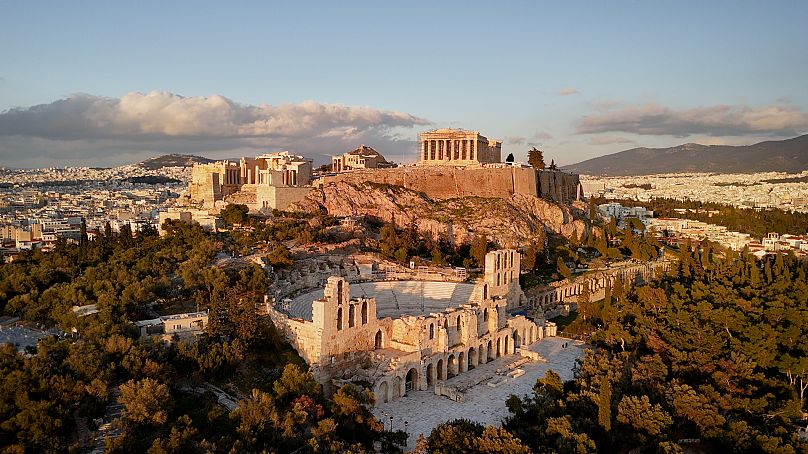
Aerial view of Athens’

Bright appearance for the coming years

After a hard decade, Papathana of NikosThe Deputy Minister at the Greek Ministry of Economy and Finance predicts that the Greek economy will grow by 2.9 percent in 2024’te; This is slightly above the European Commission's estimate of 2.3% ’ for 2024 and 2025.

According to Papathanasis’, which is also responsible for Greece’'s RRF funds, the average growth rate in Europe’ in 2024 will be 0.8 percent.

Together with other European funds, we expect “ to contribute more than 60 percent of the growth we expect for 2024. ’ reforms make our economy more interesting for investments and, of course, investments help create new jobs. And in the last four years, we've reduced unemployment from 17.5 percent ’ to less than 10 percent ’.

Papathanasis stressed that going forward, improving health facilities will remain a top priority and controls are in place to ensure the money is well spent.

Euronews correspondent Fanny Gauret and Deputy Minister of Economy and Finance of Greece Nikos Papathanasis

“There is a national and European audit, we are constantly being audited. That's how we make sure the money goes to the right place. - ”

Finally, Papathanasis added: “RRF is based on performance; It's not about how much money you spend, it's about achieving reforms and reaching those milestones. So it's hard, but it's more effective. And I think reforms, along with investments, are more beneficial to society than projects alone, ”.

For Greece, strategic investments and smart governance are opportunities to move forward on a positive path and turn a decade of challenges into prosperity.

The chemical limits: Are AB’'s new rules on toxic substances in the workplace going far enough?

The dangers that lead brings to human health have been known for decades. Although metal is no longer used in our pipes and oil, it is still common and key to our modern world.

Europe uses millions of tons of lead each year to insulate car batteries, high-voltage cables and energy-saving buildings. So what happens when lead-containing products end their useful life?

the Kampin CampEurope is one of ’'s largest leading recycling companies. Every year, the company re-evaluates large quantities of metal at its facilities in ’, Belgium and France.

Campine CEO Willem De Vos said in a statement to Euronews’e at the company's headquarters in ’, northern Belgium, that ’ is recycling scrap containing about 90,000-95,000 tons of lead.

De Vos explained that most of the recycled lead products are car batteries, with around 10,000 units recycled per day at the plant.

The camp plays a vital role in reducing lead waste. Exposure to lead-contaminated soil and water near industrial landfills can lead to lead poisoning, which can be harmful, especially if exposed to young children.

De Vos, “If we hadn't recycled these batteries, they would have gone somewhere in the dumpster, which is definitely not a good thing. Meanwhile, the industry needs lead, so we'll have to get it from mines in or outside Europe’, which again isn't good for the environment, ” added.

Recycling lead: The Catch-22

Almost all parts of the lead-acid battery can be recycled, but lead can be released at any stage of the recycling process. While recycling lead is important to meet the global demand for refined lead metal, recycling metal can be a dangerous business and poses open environmental and health risks.

As a result, Campine adheres to strict safety protocols to ensure the safety of its staff. Employees are required to wear protective equipment as well as comply with clear guidelines. They also need to do regular blood tests to monitor the concentration of lead in the blood.

Campine’'s lead exposure limits are well below AB’'s current standards, but the new rules mean it should go even further.

The new legislation will require employers in the sector to limit their lead concentration to only 15 micrograms per 100 milliliters of blood from 2026’, bringing the occupational exposure limit to one-fifth of the current level.

“The effects of lead on health have long been known. But we now have more data to show that these health effects also occur and occur at lower levels of exposure. So we need to lower these levels to prevent chronic disorders, such as cancer, for example.” Lode GodderisKU Leuven-IDEWE Professor of Occupational Medicine and Toxicology Euronews’e said:

Current preventive measures

Employers in AB’ are required to take the necessary measures as specified in the European Union Regulation ’ to prevent or reduce exposure to harmful chemicals. Regulation, Evaluation, Authorization and Restriction of the Chemicals Authority (REACH).

This regulation replaced many European directives and regulations with a single system in 2007. REACH aims to increase the competitiveness of the EU chemical industry and allow free movement of substances in the EU market. It also provides strict guidelines for environments where hazardous chemicals can be used.

Better ventilation, alternating work tasks, personal protective equipment and adequate safety procedures are encouraged. To minimize health risks, pregnant employees who are at risk of exposure should be allowed to change roles during pregnancy.

For example, in ’, Finland, a statute of the Health Insurance Act of ’ guarantees that pregnant persons have the right to special maternity leave and the right to receive allowances by the Social Insurance Institution in the event that safe work cannot be achieved.

If a role requires exposure to a list of agents thought to be harmful or requires a level of exposure that could pose a danger to reproductive health, then the role is not considered safe.

What do the new rules mean for employees?

Workers' representatives welcome the new rules, but insist they must be implemented throughout the bloc.

Claes-Mikael Ståhl, Deputy Secretary General the European Trade Union ConfederationEuronews’e said functional union representatives, labour inspectors and guidelines are needed to ensure that rules are enforced in workplaces. Ensuring these rules are applied equally across Europe is a challenge, “ said.

In addition to lead, Europe has also taken action for the first time to limit exposure to a class of chemical compounds called diisocyanates, which are known to cause respiratory ailments such as asthma.

Exposure to other carcinogenic chemicals also remains a health risk. For example, benzene is widely used in the petrochemical industry, but European Agency for Safety and Health at Workreported bad effects after prolonged exposure; Women exposed to benzene reported fetal loss, decreased fertility, and low birth weight.

In the iron and steel industry, welding is known to release fumes containing harmful chemicals such as nickel, chromium, cadmium and carbon monoxide. Under the new EU guidelines, exposure limits to nickel, chromium and cadmium have all been reduced.

Nikolaj Villumsen, a member of the European Parliament, told Euronews’e that the changes are important: “, we're talking about saving people's lives. Fewer workers will get sick on the way to work. Fewer workers will die. - ”

Metal workers, industrial workers, those who build wind turbines, those who build batteries, those who are actually at the forefront of the green transition will be better protected thanks to this legislation.

Nikolaj Villumsen
Member of Parliament

But Villumsen also stressed that he didn't think the new values went far enough. “If you ask me, or if you ask the majority in parliament, no. But these are still important developments for workers, ” said.

The European Parliament member added that thanks to the review clause in the legislation, the new limits will be re-evaluated within five years, thus allowing time for the assessment of additional harmful effects on new technologies and subsequent changes.

Villumsen briefly said: “Because of the green transition, more workers will be exposed to these dangerous substances. For this reason, it is very important to ensure that workers are better protected, that those who are part of the green transition, that workers who do this in the field, do not lose their lives or get sick due to their jobs.”

After its entry into force, the 27 Member States must apply the new European ’ chemistry rules to national laws within two years.