European Year of Skills: Europe’'s workforce is ready for the future

Europe is facing a labor crisis. In the wake of the COVID-19 pandemic, a significant number of open job positions across all sectors are further intensified by the digital and green transition.

Without a highly skilled workforce, European ​​ companies are feared to lag behind others in the coming years.

Where are the workers?

The COVID-19 pandemic has had a huge impact on society and the way we work. This disruption became even more pronounced after the outbreak of the war in Ukraine’, and the labor market has not yet recovered. 2022European Union in ’Available vacancy rate in ’ %It was 2.8; the Romanian ’ %0.8’ to Austria’ %changed up to 4.6’; Many member countries saw an increase compared to pre-pandemic levels.

SpainIn the transportation sector of vacancies in ’ 0, in public administration 1 and in professional and technical activities was found to have increased. The biggest shortcomings are concentrated in the manufacturing and construction sectors. Businesses across the continent are beginning to feel the burden of this famine. A quarter of the 25 million SMEs in ’ say hiring high-quality managers and staff is their biggest problem.

Skill Development and Training

NextGen Robotics is a Danish consortium developing next-generation robots and autonomous solutions. It brings together local companies such as Inrotech, which designs welding robots, with universities. Training and attracting talent is vital to their business.

The company is already taking advantage of EU financing. Philip Toft Halskov is a marketing executive who chooses to develop and learn 3D modeling skills to attract more customers.

“Sometimes it can be very difficult to show customers what the robot looks like and how it works. So our plan was to learn how to visualize this portal; For example, the following: show how it works and how the customer can use it in their own production.

Inrotech

Christian Ryrberg Schmidt took a new step in his career by studying technical data management system design.

“DenmarkThere are not many people with this course in ’. It is very important that we have this system and it is very important for me to have skills in this regard.

Inrotech relies on a positive working environment to attract and retain talent to keep up with the competition. NextGen Robotics’ needs to hire individuals from artisans to PhD holders to achieve its goal, explains Kasper, coordinator of the consortium:

“Our strategic forum identifies skilled workforce as the number one challenge”

NextGen Robotics invests in the development of training and skills with the support of European funds. They also aim to attract students and talents from abroad, such as Reza. The Iranian robotics engineer chose to do his thesis at Odense’de.

“ University has a department known in the world as S2 Robotics. Here we will establish a very large center and try to bring automation and robotics technologies to the marine, construction and energy sectors.” explains

Year of Skills

September 2022The ’de European Commission launched the Year of Skills initiative, a bold new strategy to boost skills development, training and innovation initiatives across member states.

Nicolas Schmit, European Commissioner for Business and Social Rights, “, says this is actually a strong message to overcome a major challenge. “We are talking about millions of people who need to change their qualifications or just improve them. Therefore, this is an important meeting about the economic future of Europe’ with the great transformations that are taking place, whether digital or green.”

While the EU is focused on equipping itself for the digital transition, Schmit hopes the strategy can help boost growth across all sectors.

“Of course, we talk a lot about digital skills, and there are hundreds of thousands of vacancies in this field. But there's also the construction industry, desperately looking for skilled individuals. There are many professions that need to be requalified as technologies evolve and change due to climate change. These are highly demanding professions, and we attach great importance to apprenticeship as the transition from education to employment is much smoother.”

The EU Commission relies on a targeted approach to address the growing problem of labor shortages. Without a workforce, Europe will have difficulty achieving its key climate and digital transformation goals in the coming decades. The Year of Skills is a strategy to encourage innovation, encourage education, and empower people to develop skills.

Why should asbestos regulations change to better protect EU workers?

With ’'s climate change targets, 35 million buildings are expected to be renovated by 2030, with the potential to expose many workers to asbestos. So how do we strengthen protection against this toxic substance that persists in many buildings?

To improve workers' safety, the European Commission is proposing a 10-fold reduction in occupational exposure to asbestos fibers. Fanny Gaurent of Real Economy’ traveled to ’, France, to discover what this means for those at the forefront of asbestos removal.

The French Experience

The tighter tolerance level for asbestos that ’ is aiming for has long been practiced in France. Emmanuel Pezet, decontamination manager at an asbestos cleaning plant north of Toulouse’, explains the many safety measures implemented.

Asbestos removal near Toulouse

“There are personal protective equipment and respiratory protection devices for workers, says ”. “This depends on the level of dust and the risk analysis of the construction site. Then a mobile decontamination unit, fences, an exhibition, some signs and waste area.”

“There are environmental pumps, and there are also measuring pumps for operators to monitor compliance with the occupational exposure limit.”

France’ has a very strict regulatory framework for the means to be used for the protection of workers and the environment in such sites. Dust measurements are carried out systematically.

Inhalation of asbestos fibers can cause serious diseases such as lung cancer, which occurs on average 30 years after exposure. Despite the uncertainties, asbestos removal operator Florian feels protected.

“From my point of view, I have no fear about my work because we are very, very well supervised, ” says. “Compared to other trades in traditional construction sites, we are the first to know where asbestos is.”

Education is essential

South of Toulouse’, we join Olivier Heaulme’, manager of professional risk management company Aléa Contrôles’. The asbestos training center teaches how to use various protective and decontamination equipment. The company also analyses samples taken from construction sites to check the number of asbestos fibers in the air.

There are techniques, automatisms that must be possessed in order to protect oneself, and these automatisms are gained through repeated training.

Olivier Heaulme
CEO Aléa Controlles

“Requires a lot of technical know-how, very specific, high-performance equipment, says ”. “FranceAt ’, the European UnionWe have ten years of experience at this level, which will be adopted in ’. It took a long time to reach this level. It will take more time, new technologies, more training, etc. to get down.”

Asbestos Training Center

FranceIn ’, asbestos is responsible for between 3 and 4,000 work-related disease cases each year. Training is mandatory for all construction work, but some professionals are not aware of it.

Olivier “Education is essential” says. “You can't protect yourself from asbestos without education. It makes workers aware of the risks. There are self-preserving techniques, reflexes that must be possessed, and these reflexes are gained through repeated training.”

Katia Rozières has been working as an asbestos technical officer for a year and is updating her education. He's implementing gestures that will allow him to manage site risk.

“We have a real responsibility to keep people safe and it's important to be able to use all the tools available – and there are a lot of things available – but it's also important to make sure they're respected on the site ” says.

Strong legislative call

But are these measures enough to solve this major public health problem?

William Cockburn, interim director of the European Agency for Safety and Health at Work, says strong measures are needed.

“Today we see deaths from exposures that occurred in the eighties and nineties, says ”. When we renovate or carry out construction work, we run the risk of exposing workers to asbestos again. So what we need is good procedures in place. We need strong legislation proposed along with good technical measures proposed here.”

William Cockburn, Interim Director of the European Agency for Safety and Health at Work

The European Commission said ’'s proposal to reduce exposure levels should be placed in a broader context.

“Asbestos fibers are carcinogenic and therefore do not have a completely safe level of exposure, ” says. “The more fiber is inhaled, the greater the risk of contracting the disease. The legislation actually obliges employers to reduce exposure to the lowest technical level possible. So the exposure limit is not an acceptable limit. Actually, it's an upper threshold. By setting a limit ten times stricter, we should envisage a fairly high level of protection for European ​​workers, but this needs to go along with awareness-raising, guidance and tools, and appropriate procedures and strategies.”

Many unions think the exposure limit should be a hundred times lower to effectively protect workers, but Cockburn says there are practical considerations against keeping the bar too low.

“This is a difficult issue and one that the commission has tackled with quite extensive work, ” says. “At some point, you're approaching the background limit. Here at Bilbao’, we breathe very low concentrations of asbestos fibers. So you really have to find a practical limit.”

And he says the costs of the current proposals are affordable.

The “ Study estimates that these costs are not very large and can often be reflected to customers. Of course, there will also be some costs for governments, as they will have to train inspection services and set up new laboratory facilities to detect these low levels. But all these costs, loss of productivity for society, treatment and hospital costs are really insignificant compared to savings from the reduction in compensation payments. And perhaps most of all, the cost of human suffering. - ”

For this new border to be mandatory across Europe, parliament and the Council of the European Union will need to reach an agreement to help better protect workers against cancer.

Least income initiatives help AB’'s most vulnerable households

GermanyThe city of Offenbach, near Frankfurt’, the main economic center of ’, is home to a large number of migrants who occasionally face difficulties in integrating into the labor market and the local community.

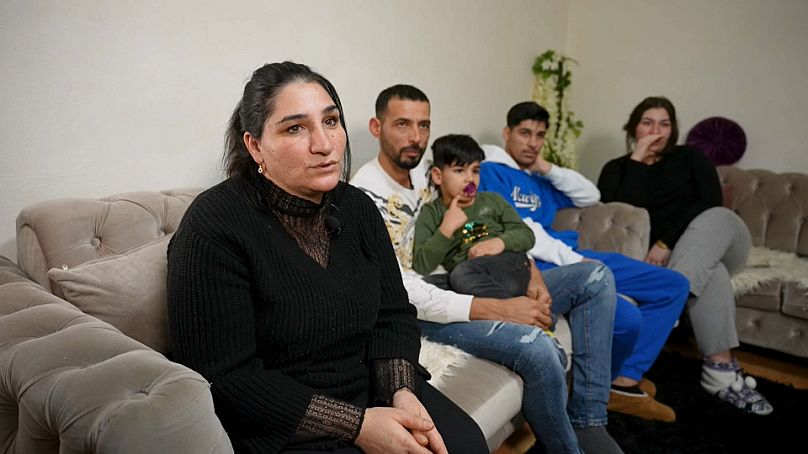
One of these families is Milanov’s, who migrated from ’ to Germany 10 years ago.

It has been a decade of challenges marked by unstable jobs, homelessness, as well as language and cultural barriers. But new EU initiatives on minimum income could help improve the lives of people like Milanov’s.

EU minimum income plan

Over the past two years, a publicly funded social safety net has allowed the Milanov family to foresee a brighter future. AB’'s family-funded minimum income plan has become even more effective in helping to lift Europe’'s most vulnerable households out of poverty and into the labor market.

Benefiting from the German minimum income program Radostin Milanov, “After I lost my job, I went to see the state and they helped me, ” said. “, we didn't have a place to stay, we didn't have an apartment. They immediately found us a place to stay, an apartment. They took my kids to school and supported them. They also told us how to live in ’, Germany.

Milanov family Offenbach, Germany’da

The Milanov family is part of the European Union-funded pilot project CRIS (Cooperate, Reach out, Integrate Services). It aims to find new ways to solve the problems faced by the most vulnerable people.

Radostina Milanova euronews’e “I think the CRIS project is very good ” said. “They are very good to us, my wife and my children, they help. When I or my children receive letters from authorities and other agencies and don't understand, they help us. They're very respectful of us, too. - ”

Minimum income programmes across the EU: ‘Improvement area’

But these plans face significant challenges across the EU. According to Serdar Damar’, coordinator of this initiative at the Offenbach Municipality Business Center, minimum income programs need to be more personal and holistic.

Damar, “We are more successful when people trust us, when they see that they are not numbers, when they see that we care about the whole family, that we take their problems and concerns seriously, and that we also take their health problems seriously, ” said. “, it makes them feel important. They feel that they are integrated into ’, that they are accepted. And I think it's the best way to build a common life with these people and a common future here.”

Serdar Damar, Coordinator of MainArbeit Kommunales Jobcenter Offenbach

It is estimated that around 95 million people in AB’ are at risk of poverty or social exclusion. For the transnational coordinator of the CRIS project, Germany says that the minimum income at ’ is a good model, but there is room for improvement.

Matthias Schulze-Boeing, coordinator of CRIS Transnational, said: "We cover the entire cost of housing in “, and we cover the fee that is sufficient for a living but at a very low level. Therefore, there should always be an incentive to start working to earn more money, so this is also the basic principle in Germany’ said.

“There is a lot of room to develop to integrate these different services: Support for young people, youth, health care, housing services to become more effective and more efficient.”

Matthias Schulze-Boeing, CRIS Transnational Coordinator

Will the minimum income plan work in practice?

The European Union has advised member states on how to improve their minimum income plans. The scope and scope of reforms should focus on access to labor markets and services, individualized support and effective supervision.

Will this be enough to help fight poverty in the European Union?

Euronews asked Bea Cantillon ’a, professor of social policy at the University of Antwerp ’, her views on minimum income and the way they are implemented across the EU.

Bea Cantillon, University of AntwerpProfessor of Social Policy at ’

“AB’de would like to start by saying that it is extremely important for all member states to have minimum income protection as a last resort safety net for all citizens, ” said. “For example, this is not the case in the USA’, and in the last few years and decades, we have seen the growth of the remaining Member States.”

The EU is pushing for a proposal on minimum income, but it is not binding. Asked why AB’ did not press for a directive or regulation on this issue, Bea Cantillon replied: “There have been many initiatives, but I can say that the strongest initiative so far is the text in this proposal. First, you need to set the minimum wage. It is then possible to consider a directive on the protection of minimum income. It is also difficult to define what the basic needs are in AB’.”

The professor of social policy acknowledged that the structure of the European Union ’ is an important point to keep in mind when it comes to minimum income plans, as social policy and labor policy are still largely in the hands of member states.

“You can't think of a European minimum income plan that covers all citizens, all EU citizens in the same way. The differences between countries in terms of welfare levels, economic capacity and social security systems are huge; extremely different in different member countries.”

When asked about projects aimed at bringing a more holistic approach to minimum income, Bea Cantillon said she thinks this is the way forward.

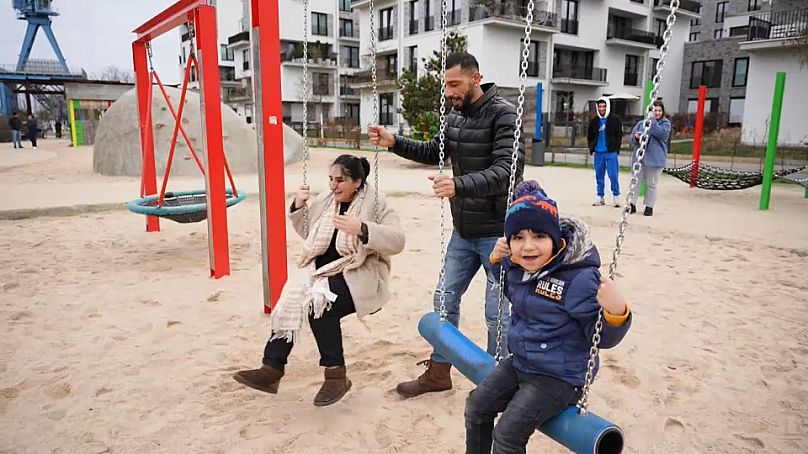
Milanov family playing on the swing in the park

“This is why the local level, the level of outreach organizations is so important, because you can not help a large number of minimum income recipients. The fact that minimum income programs should remain a last resort for a limited number of people is crucial. Because if the numbers increase, so did ​​ki, then such a holistic approach becomes more and more difficult to implement.

The minimum income plan for the Milanov family is a lifeline and a beacon of hope for the future.

Radostina Milanova, “I want my children to complete their education. I want them to be independent. "We care about them as parents," ” said.

Novo Nordisk cuts off guidance as competition in the weight loss drug market increases

Europe’'s largest pharmaceutical company reported earnings in the first quarter that exceeded analysts' expectations, but lowered its all-year forecast. Novo Nordisk at constant exchange rates (CER) of 2025 sales growth, down 3 and 5 points respectively from previous estimates %from 13 to tween 21 and operating profit growth is %From 16 to %He expects it to be between 24.

Lars Fruergaard Jørgensen, Chief Executive Officer of “ABDWe have lowered our forecast for the whole year due to the planned low-brand GLP-1 penetration, which is affected by the rapid expansion of compositions in ’. We are actively focused on efforts to prevent illegal and unsafe compounds and expand patients' access to our GLP-1 treatments, ” said.

Novo Nordisk’in shares open European market despite downgrade %It's up 4.4. However, the stock has been around since the beginning of the year, compared to the steady performance of Eli Lilly’, its main competitor in the USA’. %He's down 26 percent.

Category: Compound pressures

Demand for GLP-1 weight loss drugs increased throughout 2024, significantly outpacing supply. Under the U.S. Food and Drug Administration's (FDA) policy, compound pharmacies are allowed to produce copies of drugs that fall short of supply. This allowed smaller telehealth competitors to sell cheaper, compound versions of weight loss treatments such as Wegovy and Eli Lilly’nin Zepbound’u.

Although the FDA announced in February that deficiencies had ended, it allowed a transition period for compound versions until May 22, ’. In response to rising price pressure, Novo Nordisk cut its cost at Wegovy’'s online pharmacy NovoCare’ by more than half following a similar move by Eli Lilly’.

With nearly 1 billion people living with obesity worldwide and only a few million receiving treatment, Novo Nordisk continues to make Wegovy“ available globally, ’ said. CFO Karsten Munk Knudsen said he expects Wegovy sales to accelerate in the third quarter.

Profit exceeded expectations

Net profit per year %Net sales increased by 20 to 38.8 billion Danish kroner (EUR 5.2 billion) %increased by 18 to 78.1 billion krona (EUR 10.5 billion); They both exceeded consensus estimates. Sales of the company's core diabetes and obesity care division ’ increase and GLP-1 diabetes drug sales With the effect of the ’ increase increased to 73.5 billion krona (9.9 billion euros). All figures are on CER’.

Novo Nordisk also emphasized the completion of the REDEFINE 2 trial of the new generation obesity drug ÇağrıSema’. The treatment is %It reduced weight by 15.7 percent. Novo Nordisk expects to apply for the first regulatory approval of ÇağrıSema’ in the first quarter of next year. However, the result, which was first announced in March, was foreseen. %It disappointed investors who fell below the 25’ weight reduction. Eli Lilly last year for his latest weight-loss drug, retatrutide %He announced the results of the trial, which showed 24 weight loss.

Jørgensen said, "As part of “ R&D, we are pleased to have completed the last significant trial for our next-generation obesity treatment CagriSema and applied for U.S. approval for oral semaglutide 25 mg, which has the potential to be the first oral GLP-1 treatment for obesity."

Why are more private equity companies entering the travel industry?

Last year saw a recovery in private equity deals in the travel industry in line with rising demand for travel. This was mainly driven by the ongoing recovery in destinations in the Pacific and Asia’, as well as strong performance from major sourcing markets.

2024Fourteen private equity deals worth a total of $822.9 million (€724.4 million) were signed in the European tourism and entertainment sector in the second quarter of ’.

Visa wants to give your ’ credit card to AI ‘ agents

Visa announced on Wednesday that it has partnered with a group of leading AI chatbot developers to connect their systems to Visa’'s payment network.

The goal is to get AI bots to do personal budgeting work. Users will be able to set preferences ​​ and spending limits, after which AI representatives will search for products and complete their purchases.

Partner companies include US firms Anthropic, Microsoft, OpenAI and Perplexity, and French Mistral. Visa is also working on the initiative with IBM, online payment company Stripe and phone maker Samsung.

Pilot projects began on Wednesday ahead of the more widespread use expected next year.

The San Francisco payment processing company believes what now appears to be a futuristic concept could soon become a viable alternative to our most mundane shopping tasks.

He spent the last six months working with AI developers to overcome technical barriers, an important step before introducing the product to consumers.

For emerging AI companies, Visa’'s support can also increase their chances of competing with tech giants Amazon and Google, which dominate digital commerce and develop their own AI intermediaries.

Jack Forestell, chief product and strategy officer at Visa’, said in an interview with “ that we think this could be really important. “ has transformed as much as the advent of e-commerce.”

Limitations of agency AI

The tech industry is already showing what the so-called “ajan” can do with artificial intelligence, but many uses are still available in an experimental form and are not yet publicly available.

Many of these are still redesigned versions of large language models - the prolific artificial intelligence technology behind chatbots that can write emails, summarize documents, or help people code. Because they're trained with huge amounts of data, they can browse the internet and come up with recommendations for things to buy, but they have a harder time going beyond that.

Forestell, “, the first examples of agency-based trading, are starting to do a really good job in the shopping and discovery dimension of the problem, but they are having huge problems with payments, ” said. “You get to a point where agents literally reverse the subject and say ‘OK, go buy’.”

Visa sees itself as having a key role in providing AI representatives with easier and more reliable access to the cash they need for their purchases.

The payment problem is not something that artificial intelligence platforms can solve on their own, Forestell said in “. “That's why we started working with them.”

Category: Digital payments

The new artificial intelligence initiative comes nearly a year after Visa’ announced major changes to how credit and debit cards will function in the U.S. ’; which makes physical cards and 16-digit numbers increasingly insignificant.

Many consumers are already getting used to digital payment systems such as Apple Pay, which turns their phones into credit cards. A similar process for examining someone's digital credentials will empower AI representatives to work on behalf of the customer; Forestell says it needs to reassure buyers, banks and sellers that transactions are legitimate and that Visa’ will resolve disputes.

Forestell said this doesn't mean AI representatives will take over the entire shopping experience, but it could be useful for errands that bore some people (such as groceries, home decor products, and even Christmas lists) or are too complex, such as travel reservations.

Forestell said that in such cases, some people may want a representative of “, who simply provides power and automatically goes and does the work for us.

Forestell said other shopping experiences, such as luxury items, are a form of entertainment, and many customers still want to immerse themselves in choices and comparisons. In this case, he predicts that artificial intelligence agents will still offer help but remain in the background.

Limits of spending

What about credit card debt? According to the New York Federal Reserve, credit card balances of American consumers reached $1.21 trillion (€1.1 trillion) at the end of last year.

Forestell says consumers will offer AI representatives clear spending limits and conditions to reassure them that control is still in human hands. At first, AI representatives are likely to come back to buyers to make sure they don't have problems with a specific air ticket. Over time, these agencies may have more autonomy when it comes to “ spending up to $1,500 on any airline to get me from point A to point B, ” said.

One of the things that attracted some AI developers to the Visa partnership is that, with the customer's permission, an AI representative can leverage a lot of data on past credit card purchases.

Dmitry Shevelenko, chief operating officer of Perplexity’, said “Visa has the ability to allow a user to share their transaction history flows with us.

“When we create a suggestion, let's say ‘Which are the best laptops? — We can ​​ what other transactions you make and therefore the preferences that arise.”

Shevelenko explained that the Perplexity’nin chatbot can already book hotels and make other purchases, but it is still in the early stages of artificial intelligence trading.

The San Francisco-based startup, along with ChatGPT producer OpenAI, told the federal court that it would consider buying Google’'s web browser Chrome’ if the U.S. ’ forced the tech giant to break up in an ongoing antitrust lawsuit.

How does Apple transport tons of iPhone’ by air to avoid Trump’'s tariffs?

At the end of March, Apple secretly chartered six cargo flights to transport the 600-ton iPhone’ from ’ in India to ABD’, Reuters’ reported, citing unnamed sources.

Each of the cargo planes reportedly has a capacity of 100 tons. The report said the move was aimed at US President Donald Trump ’'s intention to pass future tariffs on “.

According to the calculation of the news source, a total of 1.5 million iPhones were carried on airplanes.

Apple also launched a negotiation at Chennai airport called ‘green corridor’ to speed up customs clearance and reduce the 30-hour process to six hours. This is an application that Apple’ regularly follows in China’, where it produces a large number of its products.

Apple is increasing its stockpiles in the U.S. ’ to reduce the impact of tariffs on imports from India and China’.

Apple plans to ship more iPhones from India ’ to the US ’ to offset the high cost of Chinese tariffs, the Wall Street Journal’ reported on Monday. Last year, the company exported more than $17 billion (€15 billion) of iPhones from the South Asian country. IndiaProduction in ’ could potentially cover half of the U.S. iPhone market.

Meanwhile, China, the company's traditional manufacturing hub, is caught in the middle of a trade war with the United States. The world's second-largest economy announced on Friday that the Trump administration has imposed on imports from China ’. %Customs duties on U.S. goods in response to 145 customs duties as of April 12 %the 84 ’ 5’e announced the arrangement.

India, meanwhile, has announced a 90-day halt to the so-called ‘ reciprocal tariffs on U.S. ’ye exports before the so-called ’ reciprocal tariffs go into effect this week. %He was faced with a customs duty of 26’. Currently IndiaGoods imported from ’ are at U.S. customs are subject to customs duty.

A $3,000 iPhone?

As Apple’'s supply chain is largely based in China, fears are growing that prices for iPhone’s manufactured in most Asian countries, as well as other everyday tech products such as laptops and headphones, will rise significantly.

Apple has been producing most of its iPhone’s since the first model was released in China ’ 18 years ago; both parties to each other's imports %Since it imposes more than 125’ taxes, the United States is a country where ’ is about to freeze trade.

According to experts, it could take several years and billions of dollars for the tech giant to change decades of practices and move its supply chain outside of China’.

Dan Ives, an analyst at Wedbush Securities, told “ that the idea of producing iPhones in ’ is not the starting ​​ spot; This is a widely accepted view in the investment community. If production were to shift to the U.S. ’, China or India estimated that the current $1,000 price tag for an iPhone manufactured in ’ would rise above $3,000 (€2,647). And he believes that moving production domestically probably won't be done until 2028 at the earliest. As trade policies develop rapidly, it is unclear whether the tech giant will be willing to make this investment.

Apple has yet to publicly discuss Trump’'s response to tariffs on China’, but the issue could be raised on May 1, when Apple CEO Tim Cook’ will answer analysts' questions during a quarterly conference call to discuss the company's financial results and strategy.

Apple’'s stock price since Trump’ raised tariffs on April 2 ’ %It dropped 15 percent and reduced the company's market value by $500 billion (€442 billion).

Euronews contacted Apple’'s press team to receive further comments on the shipment of cargo from ’, India to USA’.

BMW’'s Chinese sales fall to five-year low at the start of 2025’

BMW sells in the first three months of the year %It declined 1.4 times and delivered a total of 586,149 vehicles.

Automobile company Europe sells more models in ’ on an annual basis %With an increase of 6.2’, global sales %It was pulled down by China, which recorded a decline of 17.2’.

This is the carmaker's worst first-quarter figure since 2020’ in China.

Meanwhile Germany’da BMW sales %While it fell by 1.3, consumers in the U.S. and U.S. ’ bought more vehicles. Sales in these regions %5.4 and %It's up 4.1.

While BMW has struggled to compete with local competitors in China’, such as automaker BYD, demand in the country has also been hit by the real estate crisis and the economic negativity that followed.

Other European ​​ automakers, such as Porsche, Mercedes-Benz and Volkswagen, suffer the same fate; Chinese sales are taking a hit.

Bright spot for BMW, Europe’ on an annual basis %There was demand for electric vehicles, which recorded an increase of 64.2.

Automobile manufacturer to customers worldwide in the first three months of the year %A total of 109,516 fully electric BMW, MINI and Rolls-Royce vehicles were delivered, up 32.4 percent.

Jochen Goller, member of BMW’'s Board of Directors in charge of customers, brands and sales, said in a statement that “EuropeOne of the three MINI’ sold in ’ and one of every two MINI’ sold in China’ were all-electric.

Goller, “Especially in our domestic market, Germany, ’, we feel safe thanks to the significant increase in new orders in all drive technologies, ” added.

The success of BMW’'s EV models came at a time when other automakers were trying to move away from gasoline and diesel vehicles. Companies in Europe’ complain about changing emissions targets, inadequate stimulus plans, competition from cheaper Chinese competitors, and slower-than-expected rollout of charging infrastructure.

European ​​ companies that dilute EV targets include Sweden's ’in Volvo and Germany's ’'s Porsche’si.

Thursday's announcement nonetheless gives a snapshot of the fate of BMW’ before President Trump’'s car tariff goes into effect.

The US president introduced a 25 percent tax on imported cars last week, while tariffs on auto parts will begin on May 3rd, ’.

BMW told the Wall Street Journal in March that trade tensions between the US, China and the European Union expected its earnings to be $1.1 billion (€987 million) this year.

Car manufacturers will face a choice: USATo cover the cost of sending cars to ’ consumers, to pause shipments to the country or to move production to ABD’.

The second scenario may sound like music to the Trump administration, but experts doubt its feasibility.

Trump’'s trade policies are now so volatile that firms are worried about eliminating tariff-based operations that could change. Another deterrent is a potential economic downturn that would destroy business profits if investment and consumer spending slowed.

Where in Europe are women most willing to start their own business?

According to new research commissioned by Mastercard’ Ukraine, women in ’ are the most willing to start their own business compared to the rest of Europe’.

Two-thirds of Ukrainian women living in war zones and facing very difficult conditions () says he plans to start his own business. Among those who think the same, this rate is even higher in the younger generation; More than four-fifths of Gen Z () wants to make this leap of faith.

Mastercard stated that women entrepreneurs play a critical role in economic development, resilience and recovery, adding that they also act by supporting a positive change in the world.

Payal Dalal, Vice President of Global Programs at Mastercard, told Euronews Business’a: “Entrepreneur and mother, for example, Inna Bozhko, owner of Barbershop Inclusive’in Kharkiv, Ukraine’. Using our support through the Mastercard Inclusive Growth Center, he opened his own barbershop with a special soundproof space for children with voice-affected disabilities (his eight-year-old daughter suffers from cerebral palsy).”

Ukrainians, both men and women, cite a lack of funds as the main reason why they have not yet started a business (the men's ’i and women %It is 76 ’. Women also suffer from a lack of experience (), lack of knowledge () and lack of self-confidence () stated that there were key factors that prevented them from starting a business.

Ukrainian women sell the most online (), including private tuition (), agriculture () and food and drink () They are interested in opening businesses in their fields.

Where else in AB’ are women most interested in entrepreneurship?

Driven by the highly entrepreneurial spirit of GenZ’, more and more women in AB’ are turning to starting their own business to gain financial independence, improve work-life flexibility and make a difference in the world.

According to the report, carried out in 41 countries around the world, four out of ten European ​​her women are considering starting their own business, compared to Generation Z () and millennial women () at the highest level.

Within the EU, Portuguese women are the most willing to start their own business, and also the average European ​​woman in basic financial skills, such as dealing with savings and budgets () They are twice as comfortable.

Dalal, Euronews Business’a said: “Our data, Portuguese (), Polish () and Greek () the average European ​​ of women () found that they were more likely to consider starting their own business.”

According to the report, the number of people who are planning to start their own businesses in these countries, as well as those who are planning to start them, is quite high: Portugal in ’ ; Poland in ’ ; Greece in ’ .

Doing a little good in the world is the main driving force for Gen Z

The report shows that behind the growing appetite for entrepreneurship, Generation Z women in Europe’ most likely tend to start businesses with the goal of making ‘ a good thing for the world ( against ’. millennials, th Generation and baby boomers.

As a reflection of this, education and child care are among the top three sectors in which European ​​Z generation women would like to start a business. But the cosmetics sector, by far the most popular sector of this generation, takes the top place (the European average among women against ’. ).

What obstacles do women face when starting their own business in Europe’?

According to the report, the risk of failure (), lack of financial resources () and lack of experience (%Concerns about 28) stand out as the biggest barriers for women who have not yet started their own business.

Confidence is also a significant challenge for women who say they have disproportionate difficulty in their care commitments (both for children and older family members).

How can technology increase women's entrepreneurship?

Mastercard and Amazon Web Services leaders agree that digital technologies have great potential to transform the setup and operation of small businesses, and that female entrepreneurs can particularly benefit from them.

In the next few years, I hope to see the barriers to female entrepreneurs overcome with the increasing use of digital technologies that small businesses still need to adapt to meet their diverse needs and capabilities.“

Payal, “From increasing operational efficiency to expanding market access, digital tools offer unprecedented opportunities for increased scalability, resilience and growth, ” said.

Over the next few years, I hope to see barriers to female entrepreneurs overcome with the increasing use of digital technologies that smaller businesses still need to adapt to meet their diverse needs and capabilities.

Payal Dalal
Vice President of Global Programs at Mastercard

Tanuja Randery, EMEA Vice President and General Manager of Amazon Web Services’ and founder of PowerWomen Network’, said: “The latest advances in technology open up huge opportunities for female entrepreneurs by reducing entry barriers with Gen AI, automating tasks to increase productivity, and providing smarter insights to scale businesses.”

He also emphasized that: To accelerate women's entrepreneurship and make the next unicorns possible in Europe“, we need to give women access to the right sponsors, networks and venture/government funding to help them confidently navigate these opportunities.’

Randery told Euronews Business’a India about his experience growing up in ’, where he was inspired by his father to work in the technology industry. Today, it represents one of the world's five largest technology companies, Amazon’u, through its Web Services branch. She shared her thoughts on what could inspire the next generation of female entrepreneurs with Euronews Business.

“Three pieces of advice I can give to women pursuing their careers: a) Make a plan “AliceRemember what ’ said, if you don't know where you're going, every path leads you there; b) Find your sponsors, “women are over-mentored and under-sponsored, and c) Play to win to fit in, take risks, be mobile (change countries, industries, functions) and get feedback, but in the end you must remember who you are, what makes you happy and what you do best.”

Weakening Crown Attracts Tourists Norway Revives

In the last few months, Scandinavian tourism has increased significantly; This is attributed to the fact that the Norwegian krone continues to weaken against most major global currencies.

The Norwegian krone/US dollar pair has been around since the beginning of the year. %It fell 6.50 to trade at $0.091 at the time of writing. Similarly, the Norwegian krone/Euro pair has also been around since early January. %It is currently trading at 0,084 Euro ⁇ , down 5.45.

This has led to an increase in the number of tourists, especially from countries such as China, where Norway is often seen as an expensive country. These visitors are now spending more than ever in luxury clothing and accessories stores like Norway's Moncler and Høyer.

This development has led Norway, as well as other Scandinavian countries such as Finland, Denmark and Sweden, to focus on offering joint tourism initiatives, better flight connections and more payment options to better serve Chinese tourists.

On the other hand, for Norwegians traveling abroad, the weaker crown means prices are going up. The falling exchange rate has also created problems for local Norwegian retailers selling international brands because these brands have become much more expensive to buy.

The reasons for the increase in tourism in Norway

According to Statista ⁇ , in 2024, the travel and tourism market in Norway ⁇ te is expected to generate revenues of $4,682.0 million (€4,291 million), and every year from 2024 ⁇ to 2029 ⁇ %Annual growth is projected at 3.03 percent. In this case, the market value could reach $5,436.0 million by 2029.

In addition to China, Norway is also seeing an increase in the number of visitors from Germany, the USA, Sweden, the Netherlands and Denmark; The summer season, especially between June and August, is very busy. During this period, activities such as canoeing, hiking and camping in the fjords are very popular.

The winter season is the scene of an influx of tourists who want to see the Northern Lights despite much harsher weather conditions. Activities such as skiing are also increasing during this period, and Norway is also attracting attention in terms of unusual experiences such as adventure tourism and glacier exploration.

Currently, package holidays are one of the most popular options, and online sales are also growing rapidly. Norway's investment in sustainable tourism also pays off; Nature lovers and environmentally conscious tourists are increasingly opting for activities such as whale watching, polar bear exploration and bird watching.

With the weakening crown, these often expensive tourism and adventure activities are now accessible even to travelers from lower-income countries.

This is supported by the Norwegian government's focus on environmental and cultural heritage conservation.

Why is the Norwegian krone falling?

The Norwegian krone is sensitive to oil and gas prices because of how dependent the country's economy is on this sector. In this context, the decline of shares in the Norwegian oil industry and the general shrinkage of the oil sector greatly affected the crown.

In addition, Norway has recently begun to impose stricter taxes; Increasing the wealth tax and raising the exit tax if billionaires consider leaving the country are examples. The country may also reimburse the inheritance tax.

This discourages investors from investing in the country; Several wealthy Norwegians have already moved to countries like Switzerland, which has more advantageous tax regulations. This contributed to the fall of the crown.

Kyle Chapman, foreign exchange market analyst at Ballinger Group ⁇ tan, said the recent weakness of the ⁇ Kro is due to two main factors. The first is a rapid decline in investors' risk appetite, while the second is a faster-than-expected decline in Norwegian inflation, ⁇ says.

The Norwegian economy is small and open, and the crown is often the most illiquid and volatile of the G10 currencies. This closely links the krone to risk appetite levels, and global developments have the greatest impact on the exchange rate.

Several factors are influential here, including U.S. electoral uncertainty, China's growth concerns, carry trade ⁇ in resolution, and weak second-quarter earnings reports. All relevant risk indicators for krone are currently in the wrong direction. ⁇

Chapman also noted that investors who think it is a mistake that the US Federal Reserve has not yet lowered interest rates have made large-scale sales in the last few days. This prompted investors to quickly move capital out of Norway and into more stable assets.

Also, unexpected drops in inflation contributed to the sale of the Norwegian krone, although Norges Bank ⁇ still claims that inflation risks are upwards and signals that it will not lower interest rates this year.

Speaking about the future of the crown, Chapman said concerns about a non-linear disruption of the labor market in the U.S. are in place, but the market's response is extreme. In my opinion, the talk about interest rate cuts and Fed ⁇ 's emergency landing based on a single data point is a clear sign that the markets are too scared. When the dust smoke dissipates and the markets stabilize, the crown should return to about 11.80 in August, ⁇ he says.

In a speech at BI Norwegian Business School in November last year, Norges Bank President Ida Wolden Bache said that ⁇ Norges Bank ⁇ does not have a policy goal for the crown. However, we are concerned because the exchange rate is important in terms of inflation and activities in the Norwegian economy. A tighter monetary policy stance would normally lead to a stronger krona, ⁇ he said.

Speaking about how the Norwegian krone will look in the coming months, Bache said, ⁇ Looking ahead, climate change and the energy transition are important trends. Activities in the oil sector will be reduced sooner or later, which can be accelerated by a more stringent climate policy. On its own, the downsizing of the oil sector and the possible loss of oil and gas revenues may indicate a weakening of the real krone exchange rate.

However, much of our oil wealth has already been converted into financial reserves. The dependence of the external balance on oil revenues is less than it would otherwise be. This causes the effect on the real exchange rate to be smaller, ⁇ he said.