
Senior European Parliament Member Fears Airbus-Boeing Dispute Could Rekindle EU-US Tensions

German lawmaker Bernd Lange, chairman of the European Parliament's ’ trade committee, warned in the coming weeks that the longstanding Airbus-Boeing dispute could jeopardize the EU-US trade deal signed last summer if transatlantic tensions flare up again.

July 2025’te The Turnberry Agreement finalized in ’, Scotland by US President Donald Trump and European Commission President Ursula von der LeyenThe implementation of ’ is entering its final phase, which EU lawmakers are expected to ratify in a vote next Tuesday.

However, the five-year truce between US aviation giant Boeing and European ​​ Competitor Airbus over mutual subsidy claims ends on July 11, ’; The Trump administration and the European Commission have not yet reached an agreement on an extension.

Lange, parliament's chief negotiator on the EU-US deal, told reporters at a meeting with Socialist lawmakers on Thursday, “Will this lead to another tension? Nobody knows, ” said.

A member of the European Parliament worries that a renewed aviation and space dispute could further strain transatlantic trade ties after a year of intense tensions.

Lange euronews’e “I hope this doesn't blow up, ” said.

Turnberry deal remains fragile

The war between Boeing and Airbus goes back more than two decades. The United States first sued the World Trade Organization (WTO) for allegedly providing AB’ with illegal financial support to Airbus’. Brussels responded with its own complaint, accusing Washington’ of illegally supporting Boeing’.

The dispute eventually turned into a tariff war; Both sides imposed punitive taxes on products ranging from wine and spirits to cheese and tobacco, affecting $11.5 billion in trade.

In 2021, a ceasefire was reached under the Biden administration in ’, which came into force on July 11 of that year, and retaliatory measures were suspended for five years. However, no extension has been announced since then.

Olof Gill, vice-president of the commission, told euronews’e: “ Negotiations with the United States are underway to ensure stability and certainty and to continue the suspension of countermeasures on both sides.”

The Trump administration said on Trade Policy Agenda 2026 that the U.S. Trade Representative in ’ will decide in July whether to take action in the Section 301 investigation involving the enforcement of U.S. rights in World Trade Organization disputes over large civilian aircraft in “.

Under Article 301 of the 1974 Commercial Code, the U.S. may impose customs duties on its trading partners.

Last week at Washington ’ was threatenedImplementing a 10% customs duty on EU goods instead of forced labour following the Section 301 investigation. If implemented, these taxes will be added to the most privileged country tariffs available, and average U.S. tariffs on EU goods will rise above the 15 percent ceiling agreed under the Turnberry agreement.

Under the agreement, which EU lawmakers are expected to adopt next week, the EU has pledged to eliminate tariffs on U.S. goods. But lawmakers have fought hard to protect the deal from future U.S. tariff threats and take security measures to ensure compliance with the 15 percent ’ limit.

The deal always seemed fragile. Trump has repeatedly used tariffs as leverage in non-commercial disputes, from his attempts to buy Greenland ’ earlier this year to his more recent initiative. The threat isGerman Chancellor Friedrich Merz’in will impose a 25% tariff on EU cars after Iran criticized the war with ’.

If the Airbus-Boeing dispute flares up again, this could give the US president another excuse to terminate the 2025 agreement.
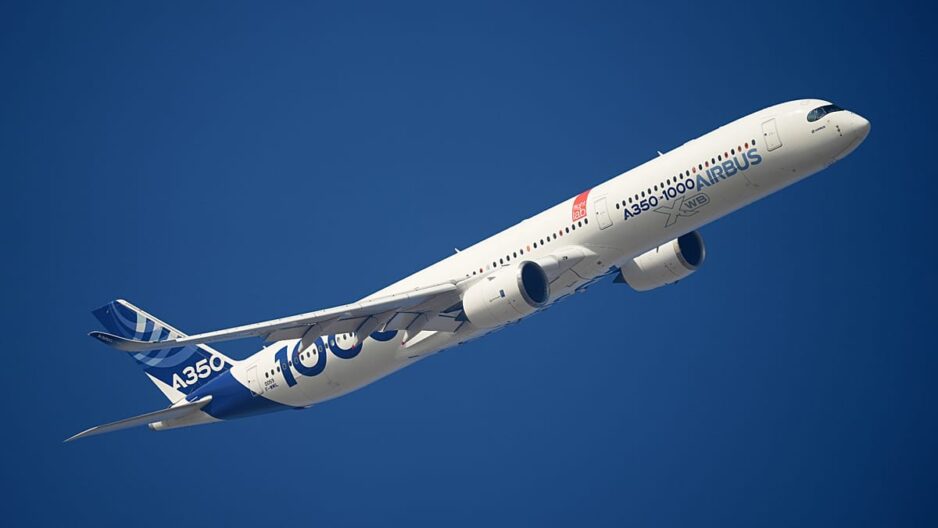
Airbus and BMW sign agreement with French Mistral to bring artificial intelligence to defense and security systems

Airbus has signed a partnership with French artificial intelligence startup Mistral AI to expand the use of artificial intelligence in aerospace, defense and aerospace businesses.

According to a joint press release released Thursday, the European aviation giant aims to deploy artificial intelligence in commercial aircraft, helicopter, defense and space operations.

Under the agreement, Airbus will gain access to Mistral AI’'s full range of products and researchers, allowing the company to develop specialized AI tools for complex aerospace projects.

Airbus said the partnership will focus on “-trusted ” and “-trusted ” artificial intelligence, especially for sensitive defense and aerospace applications.

Catherine Jestin, Airbus vice president of digital, said in a statement, “This partnership paves the way for the deployment of high-impact, high-value use cases of reliable and responsible artificial intelligence in aviation, ” said.

Timothée Lacroix, Mistral AI co-founder and Chief Technology Officer, “Together, we will deploy Mistral’'s fully integrated AI stack to accelerate innovation, contribute to improving flight safety, and deliver more value to customers, ” said.

The partnership also gives Airbus’a Mistral’in access to its research teams and a certain level of influence over the company's product roadmap.

The two companies have identified several priority areas for cooperation. These include the discovery of AI systems that can be used in aircraft and spacecraft and the automation of technical document production, the acceleration of engineering design cycles through AI-driven simulations, and the development of edge AI capabilities (i.e. models that run directly on hardware) for applications such as automated object recognition to support flight safety.

They are also working on defense applications such as cyber investigations and coding support in high-security environments.

The two companies said they will work together in several key areas, including the development of artificial intelligence systems that can be used in aircraft and spacecraft.

They also plan to use AI-powered simulations to accelerate engineering and aircraft design processes.

The partnership will also explore the defense-related uses of artificial intelligence, including cyber research and coding support in highly secure environments.

Timothée Lacroix, co-founder and chief technology officer of Mistral AI, said the two companies will work together to accelerate “ innovation, contribute to improving flight safety and deliver more value to customers.

The deal came amid concerns about data sovereignty, security exposure, and American legislation's legal access to data stored in U.S. ’-owned infrastructure, as European ​​ became increasingly concerned about the dependence of companies and institutions on U.S.-based artificial intelligence providers.

CEO Arthur Mensch told CNBC’ that Mistral’ is also exploring designing its own chips and could eventually develop them, with the company turning to ’ to control more of its “ infrastructure while competing with ABD”'s heavyweights such as OpenAI and Anthropic.

Established in Paris’te in 2023, Mistral AI has positioned itself as a European ​​one alternative to U.S.-based AI providers, focusing on open-weight models and data sovereignty, which are likely to be predominantly factors in defense and aerospace purchasing decisions.

BMW also signs Mistral AI partnership

On the same day, BMW announced a separate partnership with Mistral AI focused on using artificial intelligence to improve collision simulations and vehicle development.

The German automaker said the collaboration will help accelerate complex engineering work and improve the accuracy of safety testing by training AI systems on BMW’'s vast archive of collision simulation data.

Every week, BMW conducts thousands of virtual crash tests and accumulates more than a petabyte of historical simulation data, which the company says can be used to develop industry-specific AI models for automotive engineering.

The agreement is part of a wider effort by European ​​manufacturers to use artificial intelligence in industrial design, manufacturing and research.