

This section of the Real Economy’ discusses what AB’'s recovery plans mean for jobs and businesses in Europe’ and how they are financed by the issuance of billions of euros in bonds.
EuropeProtection of employment in ’
Thanks to the European Commission's SURE initiative, which supports ’'s government's permission plans, an estimated 1.5 to 2.5 million businesses in Europe’ were able to employ their employees during the pandemic.
In 18 countries receiving SURE funding, it helped 25 to 30 million workers not lose their jobs during the pandemic.
SURE’'s goal was to protect jobs during the crisis. The next step is AB’'s recovery plan, known as the Next Generation EU, which is scheduled to be implemented in the coming weeks.
How are AB’'s rescue packages funded?
AB’'s SURE and NextGenerationEU rescue packages help countries build more resilient economies after the COVID-19 pandemic.
To finance them, the European Union will issue bonds of up to 850 billion euros (900 billion euros at current prices) over the next 5 years. Debt at the European level means that the economies of all EU countries benefit.
This is the first time the EU has borrowed on such a large scale, making it the new major player in the government bond market.
This also helps to support the euro's international position.
AB’'s high credit rating and ability to guarantee debt mean investors are safer when buying EU bonds. These include social and green bonds; This means that the funds really serve a social or green goal and will be repaid by 2058.
How do recovery packages help businesses?
Slovenia is one of 18 countries that have benefited from the SURE fund and receives 1.1 billion euros as an emergency loan.
In 2010, after living in ’, Greg Yurkovich returned to his hometown of ’, Slovenia, to open two pizza restaurants in the capital Ljubljana’.
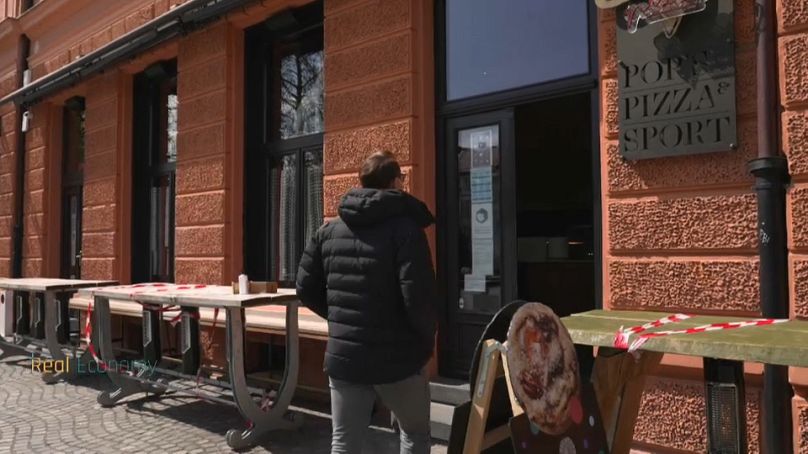
A year after the opening of his second restaurant, Greg’in had thirty staff; Then the epidemic broke out, and the first lockdown forced its employees to stay home for six weeks.
Greg wanted to retain his team and skills for as long as possible.
Greg Yurkovich, general manager and executive chief of Pop’s Place’, “The thing is, we had to employ these people for a variety of reasons. Again, it's our obligation, but also in the event that we open up. What happens if these people are released? How do we ensure the continuity of the work? said ”.
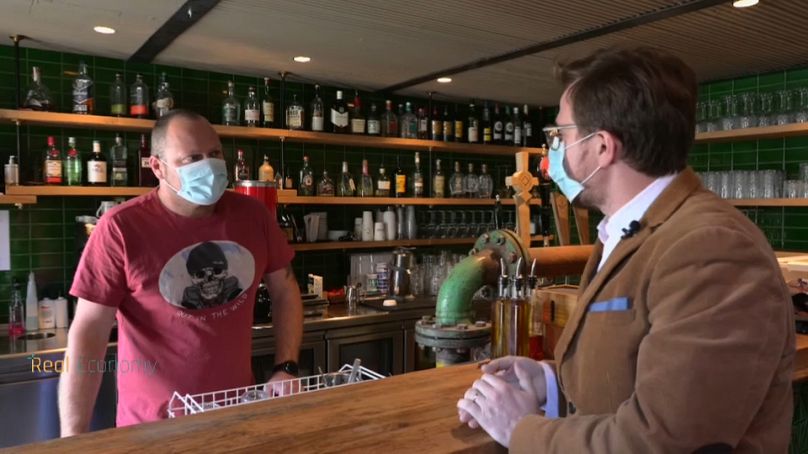
The Slovenian government, in part thanks to AB’'s SURE program, has provided subsidies to employers like Greg to keep their employees on payroll until they are reopened.
**
Investors' interest in EU bonds**
Guillaume Menuet, a leading eurozone economist at Citigroup’, explained how this could work.
“ For every euro we spend, we hope we can get two, three, four euros back in five or ten years, depending on investment preferences.
“ This loan will naturally be paid out through increased economic growth, but also through the new forms of taxation that AB’ is currently bringing up.
We will wait and see what the next EU budget will bring, “ added, before worrying about it.
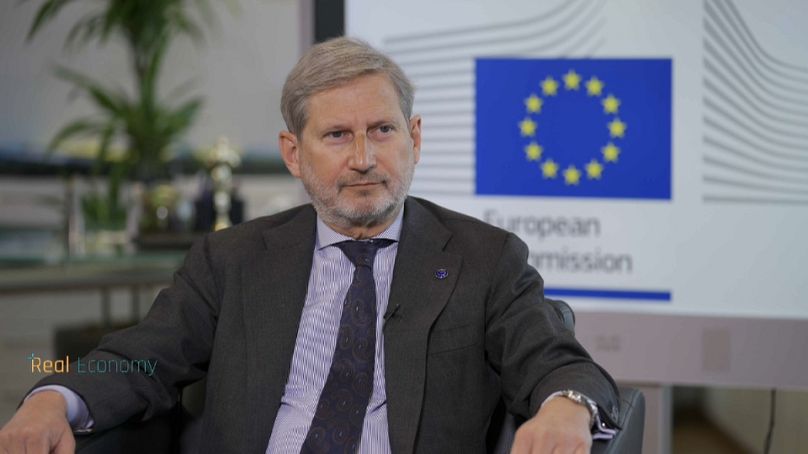
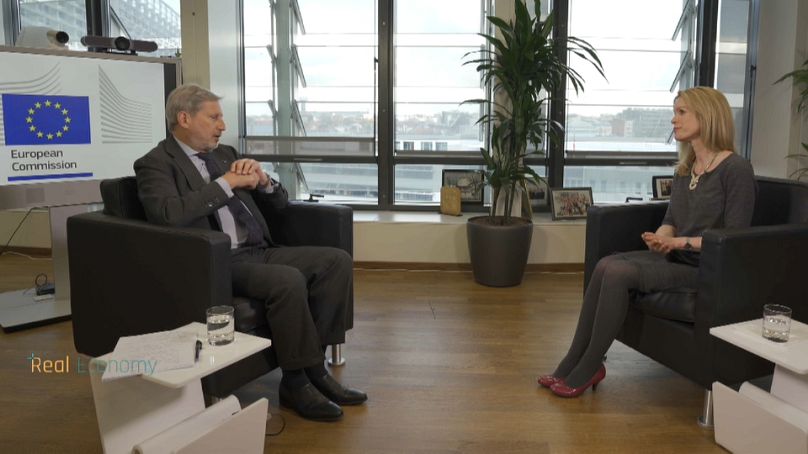
Interview with Johannes Hahn, European Commissioner for Budget and Management.
Naomi Lloyd of Real Economy’ spoke to Commissioner Hahn’ about his recovery plans and started by asking him when he thought the commission would start borrowing for the fund.
“Biz is ready at the beginning of June from our own perspective. And hopefully, so far there's nothing pushing this as a goal, we can start opening up to capital markets at the beginning of the second term, ” said.
About the challenges ahead
When asked about possible difficulties with the timeline, the German court ruled that it was unconstitutional, and Poland threatened not to ratify it.
Hahn, “, I'm pretty sure this will be approved by Karlsruhe, too, –, but first of all, it's important that they lift their reservations. I'm also sure this will be done on time. If you're in politics, you have to be optimistic, and I'm usually right about that, ” said.
About Next Generation AB’ye investor interest
Hahn, “As a result, there was a great deal of interest and there is a great deal of interest because they also see euro’yu and the European Union’ni as a safe asset, a safe haven. And at times like this, it's very important. There is also a strong interest in creating an alternative to the dollar, apparently not in a competitive way, but in a way that really has alternatives, ” added.
On the impact of Euro’ on the international world
I think the “ effect will be huge. That is, we will issue at least 800 billion in euro-denominated bonds, and this is a size we have never done in the past, and this will certainly have a huge impact on the role of the euro. It will also strengthen the euro as a real alternative currency in the worldwide capital market. That's why it also has a very strong economic but also political influence. - ”


