Germany is: Growth halved as government encourages investments

Germany’'s economic recovery looks weaker than expected in the spring. This is the conclusion reached by experts at the German Institute for Economic Research (DIW). They lowered their growth forecasts for this year by 0.5’e.

DIW chief economist Geraldine Dany-Knedlik says the ‘Energy price shock is clearly slowing the recovery. However, he stresses that the situation is not a repeat of 2022/23’. This was the year when Russia launched the ’'s large-scale invasion of Ukraine. Dany-Knedlik explains: ‘Shock is smaller, energy resources are still safe, and Germany is now less dependent on fossil fuel imports than it was after the start of the war in Ukraine.’

The chief economist, ‘, says public spending is the only reason the economy is growing this year. Household demand is weakening, and companies have become more cautious recently. Higher defense spending and increased government spending through private funding, for example, support economic growth.

The government had already revised its growth forecast downwards in its spring forecasts. Initially, growth of 1.0 percent was assumed, but only 0.5 percent was expected by the end of April. This is in line with the prediction of the Kiel Institute for World Economics (IfW). But the federal government makes it clear that private consumption continues to be the pillar of the economy. Public investments, on the other hand, give a significant impetus to growth.

Stability through defense spending

In a recent press release, the DIW suggests that funds from the special budget for infrastructure and climate neutrality, combined with increased defense spending and a delay, support the German economy and ensure moderate growth in both forecast years.

Dany-Knedlik, ‘However, these fiscal policy impulses do not completely compensate for the cyclical setback, ’ adds. What is important is that resources from private funds are distributed quickly and in a real way in addition to existing budgets, rather than just financing investments that are already planned.‘

The DIW describes other problems facing the German economy as ‘structural’. The industry is no longer as competitive as it used to be, especially the automotive sector is under pressure. High production costs and demographic change also put pressure on competitiveness. These factors limit growth potential, regardless of the current geopolitical situation, and make a rapid cyclical recovery even more difficult, according to the institute.

As an energy producer, the U.S. is the winner, while the eurozone is the loser.

Internationally, DIW estimates that as a major energy producer, ABD’ will continue to record relatively robust growth rates of just over 2%’, while the outlook for the Eurozone will be significantly weaker.

Meanwhile, the U.S. has become one of the world's largest exporters of liquefied natural gas (LNG) and is forced to import European energy while partially taking advantage of high gas prices. RussiaWhen ’'s natural gas supply was cut off, its first port of call for new deliveries was overseas.

Europe is dependent on imports because it cannot produce enough energy on its own. Any related price shock is a burden on the economy and erodes purchasing power. DIW does not expect a supply shock, arguing that oil and gas supply security is not at risk, especially thanks to a diversified structuring.

But energy-intensive sectors such as chemistry, steel and paper are suffering from rising electricity and gas prices. According to DIW assumptions, this means that Germany’ is more affected than other European countries.

Expanding fiscal policy buffers inflation but fails to fully absorb it

While the shock slows growth and also pushes prices up, Dany-Knedlik describes it as ‘, a disturbing situation. So far, expansionary fiscal policy has been able to buffer particularly high inflation. However, it cannot achieve the desired growth.

Consumers are also feeling the impact of rising energy costs for heating, electricity and transportation in their daily lives. As the Ifo Institute noted in ’'s Joint Economic Forecast for the spring of 2026, this leaves less money for private consumption. The European Central Bank remains unclear whether ’ will respond to the rate hike on Thursday.

This is a problem, as the government currently sees consumption as one of the main drivers of growth in the German economy. DIW has a more critical view, arguing that growth stems only from the public sector.

Structural changes in the labor market also play a role. Employment in manufacturing and retail is declining, while employment in the public sector is steadily increasing. The structural change towards services is evident, but the overall number of people working is decreasing.

Employers, trade unions and leaders of the ruling coalition are gathering in the bloodlines today to discuss reforms. Social partners were asked, among other things, to prepare their views in advance on the key factors behind the German ’'s persistent structural growth weakness.

Eurozone economy in the first quarter of 2026 %It's down 0.2.

The eurozone economy in the first three months of 2026’, according to the final forecast published Friday by AB’'s statistical office Eurostat %It's narrowed to 0.2.

The number is indicated in previous flash readings. %From 0.1’ expansion to a sharp deterioration and recorded in the last quarter of 2025’ %0.2’ indicates a reversal of growth.

Compared to the same period last year, the eurozone economy grew by only 0.3 percent, up from 1.2 ’ percent last year; This is a slowdown reflecting the growing pressure of the Iran war, which continues to cause significant damage to Europe’'s energy supply, business and consumer confidence.

Ireland distorts the picture but doesn't explain everything

The most notable figure in the Eurostat statement is Ireland, compared to ’'s previous quarter. .1 contraction and compared to the same period of the previous year .8’ declining.

These figures could be disastrous for most economies, but Ireland's ’'s GDP is well known to be greatly skewed by the activities of large multinational companies, especially in the pharmaceutical sector.

The Central Statistical Office of Ireland has previously noted that such fluctuations are driven by the multinational-dominated industrial sector rather than local economic conditions, and economists routinely warn against reading Ireland’'s headline GDP figures as they appear.

The fall in the first quarter largely reflects the extraordinary increase in previous quarters, when pharmaceutical exporters appeared to be making front-load shipments to the U.S. ’ ahead of tariff deadlines, inflating Irish production and thus figures across the euro zone.

The eurozone's performance, with the exception of Ireland, seems less worrying.

Germany, the bloc's largest economy, in the first quarter after two years of chronic low performance %It grew by 0.3. Italy grew by 0.3 per cent, while Spain remained the leader of major economies, growing by 0.6 per cent.

Only in France %It contracted by 0.1 percent, contributing to the weakness that preceded the current energy crisis.

According to Eurostat’'s analysis, the biggest obstacle to growth came from net trade, which reduced economic output by 0.3 percentage points, while weak investments reduced growth by another 0.1 percentage points.

Impact of the Iran war on European energy markets

The Iran war, which broke out in ’ in February 2026 following the US-Israeli joint attacks in the region, plays a central role in the weakening trajectory of the eurozone.

According to the European Central Bank, ’'s own Economic Bulletin, oil prices rose to about $104 per barrel immediately after the strikes. IranPrices after ’'s retaliation suggest global oil supply is about The Strait of Hormuz, which provided ’sini, remained close to these levels due to the blockade of ’.

Attacks on production infrastructure in the Gulf ’, including facilities in Qatar’, have also disrupted the flow of liquefied natural gas, to which European ​​ importers are heavily dependent.

Many economists have repeatedly warned that the combination of disruption in Hormuz’, US tariff pressure and China’'s export competition is hurting European economies, and that the risk of stagflation, a combination of stagnant growth and rising prices, has become the bloc's core risk scenario.

ECB faces decisive election at June meeting

Eurozone consumer prices inflation February’ %1,9’ to Mart’ta %2.5’e rose and was largely influenced by energy costs in April’ %3’e has arrived.

At its April meeting, the ECB signaled that it was closely monitoring inflationary pressures while keeping interest rates stable.

According to the probability trackers implied by the market, with the next policy decision scheduled for June 11, ’, the markets are now seeing an interest rate increase of about 25 basis points. %Priced at 2.25’e.

The Bloomberg economists survey, published in May, pointed to two increases in June and September this year. The new GDP contraction data complicates this outlook.

On the employment front, the number of workers in the Eurozone’ in the first quarter %Increased by 0.1, but working hours %It's down 0.2.

Unemployment in March %From 6.2 in April %6.3’e increased; This small but meaningful move is consistent with a market that is beginning to come under pressure despite the softening and resilience of labor demand.

Celebrating the 25th anniversary of Euro’: A retrospective and forward-looking look

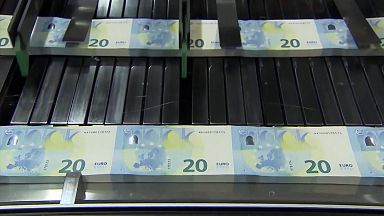
Twenty countries, one currency: The euro is celebrating its 25th anniversary after weathering the storm of various crises and global pandemics and becoming one of the world's most important currencies.

This anniversary provides an opportunity to assess how the Eurozone’ has dealt with these challenges and implemented reforms to ensure the stability of the currency, while also taking into account the achievements and perspectives ahead.

‘Declaration of the existence of a united Europe’

So, why was the euro created in the first place, and how was the currency able to withstand the numerous challenges it faced?

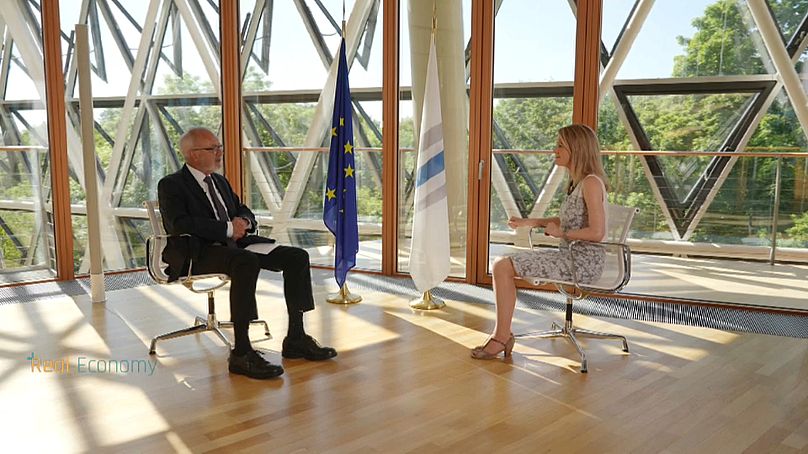
The Real Economy spoke with former President of the European Central Bank (ECB), Jean-Claude Trichet, about some of the milestones that marked the history of the single currency.

The creation of “Euro’ is the need to have a real single market, a real single market, ” explained.

“This was a really big decision, but it was also a kind of claim, a declaration of the existence of a unified European ’. And what we proved was that Europeans really had the capacity to create a serious, powerful currency. Europeans in the Eurozone ’u approves the euro. To me, this is the best of the awards. - ”

Former ECB President Jean-Claude Trichet speaks with Euronews’ten Fanny Gauret.

Jean-Claude Trichet, who evaluated his time as the President of the European Central Bank, stated that “ was the most important influence on him during two very intense periods.

After “'s bankruptcy, the financial world was collapsing, and many extremely important decisions had to be made very quickly. It took a lot of effort.

“Then came the period of May 2010, which marked the real beginning of the state debt crisis in Europe’. In my time, a total of five European countries were in a very difficult situation. And I believe that this required the extraordinarily courageous decisions of the participating countries, their governments and, of course, the European Central Bank, which is at the forefront of all these issues, ’.

Jean-Claude Trichet, who is looking forward to what the single currency will bring in the future, said “ is convinced that the road to a European confederation, a true European confederation with more unity on the budget and economic fronts, as well as real unity in defence, security and diplomacy, is a long-term imperative.

Following these crises, the Eurogroup created the European Stability Mechanism to help member countries facing economic challenges.

In countries that have adopted Euro’, the euro has changed people's daily lives, making travel, shopping or studying abroad more accessible.

How do young Europeans perceive the euro?

We met with a group of economics students at the University of Nanterre, west of Paris ’, to find out how those born in the euro age perceive their currency.

Thomas, “As I was growing along with this, I realized that having a stable and strong currency was essentially an advantage, ” said.

"I think if there are two challenges that the euro has to solve, it is the implementation of harmonised monetary policies for investing in the digital euro and especially in green projects," “ added.

My student friend Benjamin, from “, the European Central Bank, also has a question mark about the future of ’ and the policies it will implement. They could be more egalitarian, ” said.

According to the Eurobarometer’, 79 percent of Europeans living in the Eurozone’ approve the single currency for the whole of Europe’, while 69 percent’ support the single currency for their own country.

Among the most satisfied are Finland, Ireland and Germany; The least satisfied are Croatia, Cyprus and Italy’.

ItalyMixed opinions on the single currency in ’

Our final journey will be the Italian capital of ’, Roma’ya, where opinions on the European currency are mixed.

Speaking to Real Economy’, a woman, “, said that this led to a huge increase in the prices of all the products I sold ”.

Another man, “, explained that the situation with the lira was better because it was monetary sovereignty”.

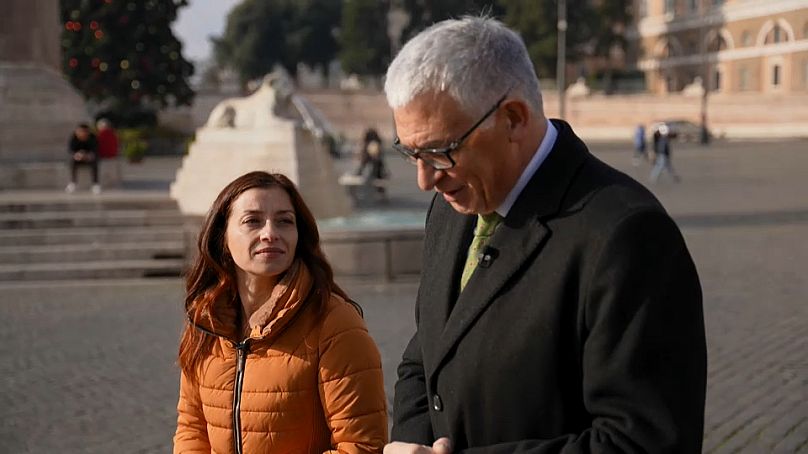
We met Giovanni Farese, Associate Professor of Economic History at the European University of Rome, to find out if there were indeed winners and losers among the members of the eurozone.

Real Economy’ye “Money policy is never neutral, ” said.

For example, economic growth in “ has been disappointing for many of us for the last 25-30 years. Of course, monetary policy is part of economic policy. What is needed is to strengthen other aspects and dimensions of economic policy. But of course, if you have a single monetary policy without a single fiscal policy, you're missing a leg. So the process is lacking.”

Giovanni Farese, Associate Professor of Economic History, European University of Rome

How can the eurozone better prepare for future economic challenges?

Reforms such as a unified fiscal policy could enable the eurozone to better absorb economic shocks.

UkraineAnnual inflation rate in the Eurozone’ since the beginning of the war in ’ October 2022’de %It peaked at 10.6. Later November 2023’te %2.4’e down.

Average annual inflation since the creation of the euro %It is 1.95’.

ECB Board Member Piero Cipollone assured that ECB’, whose mission is to keep financial stability and annual inflation below 2%, will continue its commitment in this direction.

Piero Cipollone, Executive Board Member, ECB

The “Eurocystem has been able to respond to changing conditions over the years. If you need Mario Draghi’'s ‘ne, which changes and stabilizes the market, let's remember the ’ quote. So the important thing is to be ready to understand the truth, to understand how to adapt, to adapt.

“Economy is changing, society is changing, technology is changing, people's habits are changing, and electronic payments are increasingly becoming a daily reality. Therefore, Eurosystem ’ needs to prepare for this. And he's doing it thinking about the banknote of the future, the digital banknote. Digital euro.”

The digital euro will open a new chapter in the history of the European currency.

Did the euro cash currency succeed after 20 years?

In this section of the Real Economy ’, we ask: What has the single currency meant for European economies and businesses for two decades?

Euro banknotes and coins were first introduced on January 1, 2002 in ’, replacing national currencies in 12 European countries.

The euro existed three years ago, although only in electronic form. Twenty years later, 19 countries and more than 340 million Europeans use ​​euro.

The aim of the euro was to make life easier by using the same currency for business and trade across the eurozone and for travel and living abroad. The euro's strong international role also aims to protect the EU economy and financial system from currency shocks, reduce dependence on other currencies and provide lower costs for EU businesses.

The Euro is currently the second most important currency in the world after the US dollar, and 60 countries and territories outside the EU also use Euro’ or link their currencies to Euro’.

Over the next few years, Croatia, Romania and Bulgaria are set to use the euro. Looking to the future, the idea of the digital euro is being discussed.

The Irish experience

Ireland was one of the first 12 countries to adopt the euro in 2002 and was replaced by the Irish pound, euro coins and banknotes.

The country's growth rate has since become one of the strongest in Europe’. University College Dublin’den economist Oana Peia says that the single currency plays an important role in this success story.

Transition to Euro’, IrelandImportant in consolidating ’'s place in the single market

Oana Peia
Economist, University College Dublin

Peia, the adoption of “Euro’, IrelandIt has been important in consolidating ’'s place in the single market, currently %It attracted a large number of foreign direct investments, which make up the 20’, and is currently exporting to Ireland. Intra-EU trade, which makes up ’, has increased, says ”.

Peia explains that the Irish example is also a cautionary story about eurozone membership, as access to cheaper credit and a poorly regulated market eventually led to the 2008 financial crisis.

The exit from this crisis has been painful, “ says. “Since then IrelandThe recovery of ’ is equally impressive; economy 2012’den average until just before the pandemic %It grew at a rate of 5.”

A built-in trading environment

Ireland's economy, Ireland's exports It has grown in technological sectors such as pharmaceuticals and medical products that make up ’ini.

Our currency, the pound, would have been a small currency in the European ’, and obviously the variability and exchange rates would have had a huge impact on Irish businesses, so the Euro balanced all of this.

The Power of John
CEO of Aerogen

Founded 20 years ago near Galway, Aerogen is a leader in the distribution of high-performance aerosol drugs. For CEO John Power, the move to Euro’ has been a positive benefit.

“Our currency is pounds, EuropeIt would be a small currency in ’, and obviously the variability and exchange rate would have a big impact on Irish businesses, ” says. So the Euro took care of all of this, “.

Today, the company employs 400 people and its products used in intensive care units are exported to more than 75’ countries.

Power, “Our domestic market is quite small, ” explains. Therefore, the European market is as attractive to us as it is to the United States. About five years ago our business ’u euro and %It was trading in $70’i, now in the last two years this rate has risen to 50-50’.

Brexit’e adapt

Aerogen, whose markets are international, was not affected in the same way by the effects of Brexit’.

For other sectors, such as agriculture, which depended heavily on the UK market, the story was different. Peia says she is optimistic that Irish businesses will need to adapt to the new situation.

Although “ has caused a major disruption to the Irish economy, ’ says. “This has created a lot of opportunities and I think there is still a lot of room to increase trade with the European Union.”

According to Eurobarometer’, Ireland has the second highest level of confidence in Europe’; This is a sign that the Irish continue to believe in the Union and its single currency.

Tests for durability

Eurogroup President and Irish Finance Minister Paschal Donohoe believes the euro has proven its resilience when tested first by the financial crisis and then by the economic consequences of the pandemic. The Eurogroup is the forum where the finance ministers of the eurozone countries meet.

Now if you look at the speed at which the Eurozone’ recovered from the COVID 19 crisis, you'll see that the recovery rate is about four times faster than the global financial crisis.

Easter in Donohoe
President of the Eurogroup

“You can't always claim that we did everything right immediately when responding to them, ” admits, but these are tests that show that the euro has passed, and now if you look at the speed at which the eurozone is recovering from the COVID 19 crisis, the pace of recovery is about four times faster than the global financial crisis.“

He adds that Euro’ has eliminated a layer of complications for both consumers and governments.

Donohoe, “, says ”, perhaps I think the most tangible are the daily practical benefits. “Disturbance, even difficulties during currency exchange. And it's easy to forget that now, but for a significant part of the history of the pre-euro part of the European Union, serious volatility in the exchange rate was a test faced by previous governments and previous businesses.’

What's going to happen now?

The next step could be the digital euro.

Donohoe, “, says the European Central Bank is currently moving forward with what I would describe as exploratory design work. “ My prediction is that if you and I were sitting here again in 20 years, we'd probably be thinking about the digital euro at that point.

Donohoe says the goal should now be to ensure that the euro's economic benefits have a positive social impact.

One thing that is challenging for the “ Eurozone, and therefore really important for the Euro, is how we can achieve a recovery that benefits young people, for example, that does more to ensure that this is an inclusive and fairer recovery as women return to the workforce and new working models begin to settle.”

The head of the Eurogroup sets out his vision for the future of the euro.

I want the “Euro’ to be a long-term signal and symbol of a European ’ that is important, resilient, always better than its recent past, and always drawing a better future.”

Europe’da Covid-19’da recovery: The economy is recovering, but the risks continue.

The European economy is on track for faster-than-predicted growth, but given the uncertainty surrounding the COVID-19 ’'s Omicron variant, rising inflation and supply chain bottlenecks, the path to recovery remains unclear. Real Economy takes a look at the latest forecasts for the European economy for 2022 and beyond.

The European economy: The current appearance

GDP, both across the EU and in the eurozone region, is expected to reach 5 percent ’ by the end of 2021. That's just over the previous estimate of 4.8 percent’.

As we enter ’ in 2022, the economy is expected to grow by 4.3 percent. Then a more moderate rate of 2.5 percent for the EU and 2.4 percent for the eurozone for 2023. But this growth is unequal across the EU. But it all depends on how the COVID-19 pandemic develops. The rise in cases and the Omicron variant have shaken markets, and new government restrictions may affect economic activity; Businesses, on the other hand, are at risk of being affected by further shortages and supply chain disruption.

from Italy: Overcoming the pandemic

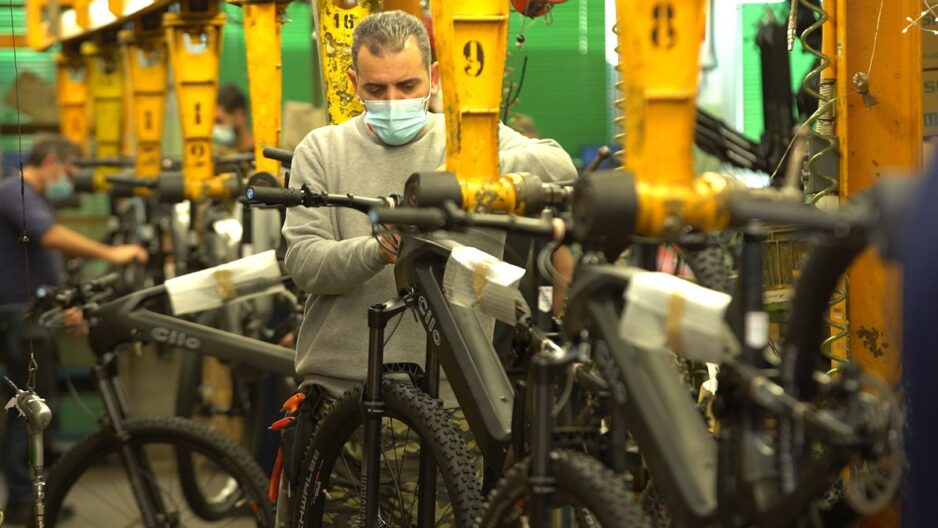
The Italian economy has a growth forecast of 6.2%, but it is feared that supply chain problems could jeopardize the economy's recovery. One of the companies facing such negativities is electric bicycle manufacturer Atala. The Lombardy-based company in the north of the country has seen a 60 percent increase in orders since the start of the COVID-19 crisis, but struggles to meet this demand as delivery times for components increase.

The lack of …components reduced the potential for expansion.

Massimo Panzeri
CEO of Atala

Massimo Panzeri, CEO of Atala’, said that “Production increased by an average of 36 percent in 2020’, and we need to see a growth of around 10 or 15 percent in 2021’. It could have been higher in 2021’, but the lack of components has reduced its expansion potential, ” says.

Massimo Panzeri, CEO of Atala’, says the lack of key components is keeping his company from growing further.

Investing in environmentally friendly transport is one of the top priorities of the European improvement plan. Atala hopes to take advantage of this by moving some of its activities from Turkey ’.

But as Massimo’ explains, this will not solve all supply chain problems.

“If we send the welding or dyeing processes back to our country, but aluminum rods or carbon fiber, materials for battery cells or steel not produced in the European ’ are missing, then we only take the problem elsewhere. So, in my opinion, we need to think at the political and European level; change cannot be limited to part of the supply chain; must start from the very beginning, i.e. from raw materials.”

Attracting the best talent

EuropeLike the rest of ’, a shortage of basic materials and goods has raised fears that inflation will accelerate in ’, Italy. The country invests more than any other EU country. A total of 235 billion euros over five years, including 191.5 billion from AB’'s bailout fund. Italy received its first 25 billion in August.

But it's not just a shortage of goods and supplies. Another problem that many businesses currently face is attracting and retaining skilled workers. Turin-based Argotec produces microsatellites for the space industry. One of its products, LICIACube, is currently in use on NASA’'s asteroid diversion project DART’.

David Avino, CEO of microsatellite manufacturer Argotec’in, says the Italian economy is experiencing a renaissance. The company aims to double its workforce.

David Avino, CEO of microsatellite manufacturer Argotec’in, says the Italian economy is experiencing a renaissance. The company aims to double its workforce.

To meet the growing demand, the company plans to double its workforce, but says more needs to be done to retain young talent.

…, thinking about the future means investing.

David Avino
Argotec’in CEO’

Argotec CEO David Avino, ’As we can see from the statistics, analysis and forecasts, the economy, especially the Italian economy, is experiencing a kind of renaissance. In this case, the important thing is to think about the future and to think about the future means to invest. What we want to do with the government is have the capacity to bring back young people who have left the country to do research and development abroad for certain reasons, ” says.

Creating a more attractive business environment is one of the priorities of the European rescue plan, as well as green mobility, clean energy and digitalisation.

The Ghost of Inflation

The rapid reopening of the economy has led to supply chain bottlenecks. This and increases in energy prices drove inflation up. It was at -0.3 percent in the euro area at the end of 2020. This rate increased to 2.8% in the third quarter of 2021’.

More increases are expected in 2022’. Naomi Lloyd of Real Economy’ spoke with Laurence Boone, OECD’'s Chief Economist, to gain a global perspective on the economic outlook of Europe’.

Naomi Lloyd, euronews:

“We have seen a huge increase in the number of coronavirus cases. What does this mean for Europe’'s recovery?”

Laurence Boone, OECD:

“EuropeThe recovery in ’ continues well, but this clearly adds uncertainty to this outlook.”

Naomi Lloyd, euronews:

“How does this compare to the table you see globally on OECD’?”

OECD Chief Economist Laurence Boone.

What we are now observing is that employment has almost recovered in the European Union and the United States is still lagging behind ’.

Laurence Boone
Chief Economist, OECD

“Europe's economies are doing quite well compared to all countries. It was very interesting to watch how different countries protect their own people in the European ’. What governments do is pay companies to keep people in their jobs. So when you reopen the economy, you immediately start working again. The situation in the US ’ is quite different. Governments send checks to households, so they cash the money, but they don't have a job anymore. So what we're observing right now is that employment has almost improved in the European ’, and the U.S. is still lagging behind in ’.

Naomi Lloyd, euronews:

“How worried are you about the new variant and its impact on the economy?”

Laurence Boone, OECD:

“, I think you can look at this in two ways. Either this delays the recovery a bit and increases the tension in the supply chain, or it is a more difficult variant, and this can indeed create a regression in the recovery and, if this happens, surprisingly, cause enough drops in prices.”

Naomi Lloyd, euronews:

“How worried are you about this current increase in inflation?”

Laurence Boone, OECD:

“If we resolve the state of health by summer and everything returns to normal, then we are quite sure that supply tensions will begin to decrease and inflation will gradually decrease. If we fail to control the state of health and tensions continue until 22, 23’e, then we will be more concerned that this inflationary pressure will last longer.”

There is, of course, a reason for the joy of Christmas… It usually takes 10 years for the vaccine to be found.

Laurence Boone.
Chief Economist, OECD

Naomi Lloyd, euronews:

“Do we have a reason for Christmas cheer?”

Laurence Boone, OECD:

“Of course we have reasons for Christmas cheer. First of all, when you think about it, a year ago we were told that the vaccine was available in as little as nine months. It usually takes 10 years to get the vaccine. This crisis has managed to protect people and businesses as much as possible, and there has never been so much awareness of the climate problem. That's why I think we're on a good path. - ”

The author/producer: Naomi Lloyd

The reporter: Cyril Fourneris

The video editor: Silvia Lizardo

The producer is: Camille Cadet

The camera crew: Giampiero Gandolfo and Stefano Sala

From the Brussels: Pierre Holland and Eric Wathieu

Paris: Vincent Kelner and Nicolas Personne

Design of Motion: NEWIC https://www.agence-newic.com/

InvestEU: Europe Plans to Mobilize Billions to Increase Decreased Investments

Avrupa’ needs to invest in its business, innovation and infrastructure to achieve its climate goals and initiate an economic recovery.

But almost half of EU companies say they plan to cut investments after the Covid pandemic.

Werner Hoyer, President of the European Investment Bank (EIB), explains that the pandemic has made investment decisions “ more complex: “Income and resources of companies are decreasing steadily”. “Europe’'s competitiveness and its role in the world” is a major concern for “, he says.

How does InvestEU help?

InvestEU, a new EU programme, is mobilizing billions of euros in capital, taking on some financial risks for investors. It guarantees 26 billion euros from the EU budget and 7 billion euros from partner banks. Around 370 billion euros in public and private financing are expected to be mobilized.

The money will be transferred to projects that contribute to innovation and digitalization, SME ’s, especially projects that have been hit hard by the COVID crisis, encourage social participation and strengthen sustainable infrastructure.

Minimum of all investments ’u should contribute to the construction of a greener Europe by supporting the green transition of the European Union.

The European Commission works in partnership with the European Investment Bank ’, as well as other national promotional banks and international financial institutions.

InvestEU is following the steps of the European Strategic Investment Fund ’ (EFSI), also known as the Juncker Plan, which has successfully secured more than €500 billion in extra investments.

What does this investment look like in the field?

The European Union is working to revive the former coal mining town of Wałbrzych’i in the heart of Poland's Silesia’. It's been dependent on coal for 500 years, and that's changing now.

Wałbrzych received a 14m-euro loan from EIB’ to help him overcome the coal age and renovate the city center. The loan was partially backed by the European Commission.

Roman Szelemej, mayor of Wałbrzych, says that this means the reconstruction of a quarter of the Old City of “. This is especially “, who can start a new life, who can provide a new life to the old city” witnessed the revival of “social lives for new families.

Mayor of Wałbrzych Roman Szelemej

EIB’den Werner Hoyer believes that investing in infrastructure and skills training is essential in places like Wałbrzych.

“, the coal miner who jumped out of the last coal mine in Southern Silesia’, will not be in charge of the digital Start-Up’ in two weeks, so we need to help these people move into the next generation of jobs, ” explains.

Werner Hoyer, President of the European Investment Bank, with reporter Naomi Lloyd

Social housing system

Wałbrzych is not the only town to benefit from the European investment plan. PolandPoznan’da, the fifth largest city in ’, focuses on social and affordable housing.

The mayor of Poznan, Jacek Jaskowiak, explains that “, we need to build some apartments for young people and the elderly”.

’ says that if these people take some money and help them settle in Poznan“a, they can find a good job and send their children to kindergarten. Affordable housing is a strategy to bring more life and work back to the city.

The program is expected to create homes for 3,000 to 4,000 people.

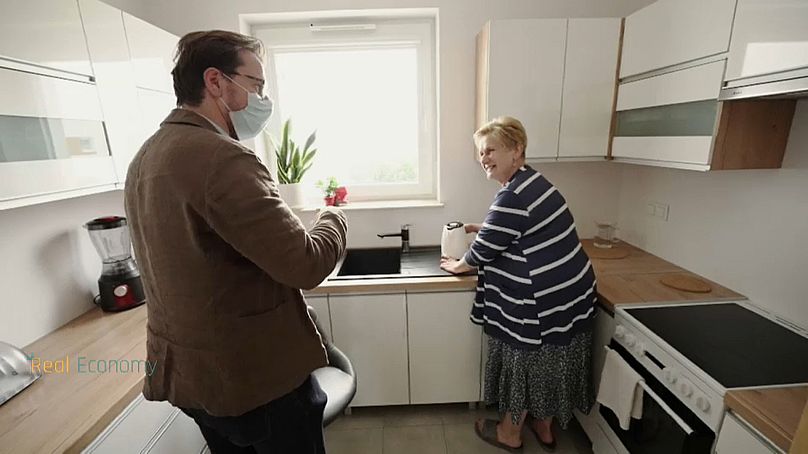
Aleksandra, 69, is already one of the beneficiaries of this project. He says he was thrilled when he was able to move into his new apartment with a balcony.

He says he will never be able to buy a place alone for financial reasons.

Aleksandra Wysocka reporter Guillaume Desjardins’e shows off her new home

EIB security label

To finance this housing project, developer PTBS applied to EIB’ for a loan of half the total cost. It helped make up for investors' reluctance.

PTBS CEO ’ Andrzej Konieczny explains that banks do not trust them at first because the project is different from the business they usually finance. However, “ added that they managed to reach an agreement with the EIB and that they trust ”biz.

Some people take the EIB Finance label as a security measure because the main or key decisions here are made by people with a technical background or science background.

Werner Hoyer
President of the European Investment Bank

The company expects this project to be successful and looks at future projects with the EIB’nin ‘onay seal’.

From July 2021’, InvestEU will replace the Juncker plan. This time, local banks, such as the BGK in ’, Poland, will also work with the EIB.

How is Europe financing the pandemic recovery with the sale of billions of dollars in bonds?

This section of the Real Economy’ discusses what AB’'s recovery plans mean for jobs and businesses in Europe’ and how they are financed by the issuance of billions of euros in bonds.

EuropeProtection of employment in ’

Thanks to the European Commission's SURE initiative, which supports ’'s government's permission plans, an estimated 1.5 to 2.5 million businesses in Europe’ were able to employ their employees during the pandemic.

In 18 countries receiving SURE funding, it helped 25 to 30 million workers not lose their jobs during the pandemic.

SURE’'s goal was to protect jobs during the crisis. The next step is AB’'s recovery plan, known as the Next Generation EU, which is scheduled to be implemented in the coming weeks.

How are AB’'s rescue packages funded?

AB’'s SURE and NextGenerationEU rescue packages help countries build more resilient economies after the COVID-19 pandemic.

To finance them, the European Union will issue bonds of up to 850 billion euros (900 billion euros at current prices) over the next 5 years. Debt at the European level means that the economies of all EU countries benefit.

This is the first time the EU has borrowed on such a large scale, making it the new major player in the government bond market.

This also helps to support the euro's international position.

AB’'s high credit rating and ability to guarantee debt mean investors are safer when buying EU bonds. These include social and green bonds; This means that the funds really serve a social or green goal and will be repaid by 2058.

How do recovery packages help businesses?

Slovenia is one of 18 countries that have benefited from the SURE fund and receives 1.1 billion euros as an emergency loan.

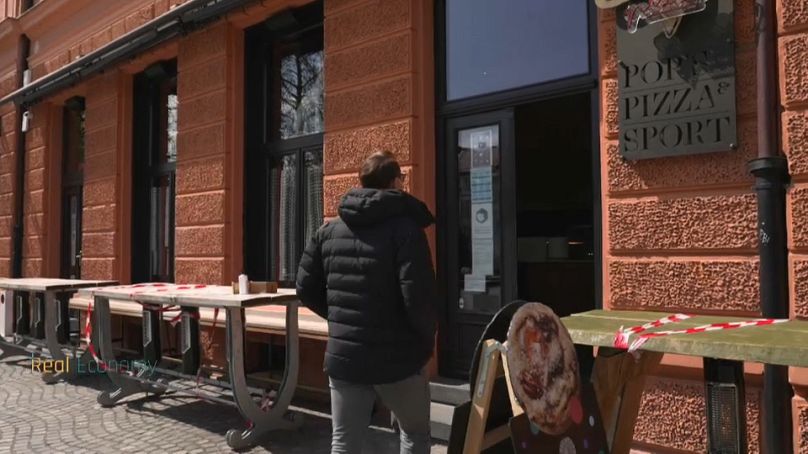
In 2010, after living in ’, Greg Yurkovich returned to his hometown of ’, Slovenia, to open two pizza restaurants in the capital Ljubljana’.

Greg YurkovichOne of ’'s pizza restaurants

A year after the opening of his second restaurant, Greg’in had thirty staff; Then the epidemic broke out, and the first lockdown forced its employees to stay home for six weeks.

Greg wanted to retain his team and skills for as long as possible.

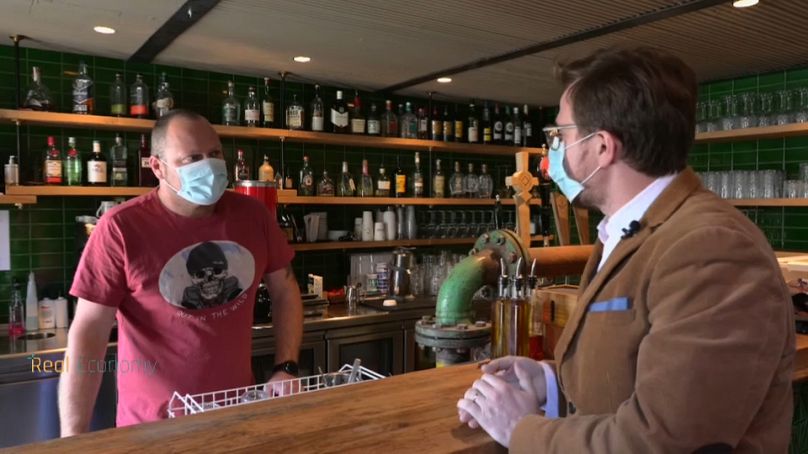
Greg Yurkovich, general manager and executive chief of Pop’s Place’, “The thing is, we had to employ these people for a variety of reasons. Again, it's our obligation, but also in the event that we open up. What happens if these people are released? How do we ensure the continuity of the work? said ”.

Greg Yurkovich, one of ’'s employees, speaks to euronews’e

The Slovenian government, in part thanks to AB’'s SURE program, has provided subsidies to employers like Greg to keep their employees on payroll until they are reopened.

**
Investors' interest in EU bonds**

Guillaume Menuet, a leading eurozone economist at Citigroup’, explained how this could work.

“ For every euro we spend, we hope we can get two, three, four euros back in five or ten years, depending on investment preferences.

“ This loan will naturally be paid out through increased economic growth, but also through the new forms of taxation that AB’ is currently bringing up.

We will wait and see what the next EU budget will bring, “ added, before worrying about it.

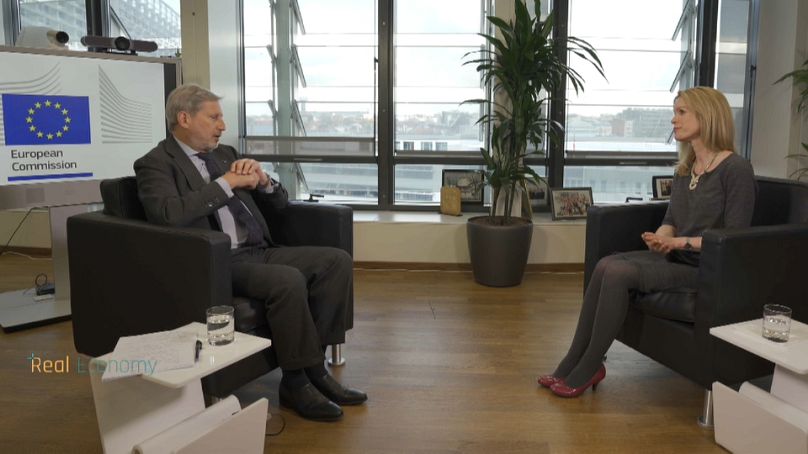
Interview with Johannes Hahn, European Commissioner for Budget and Management.

Naomi Lloyd of Real Economy’ spoke to Commissioner Hahn’ about his recovery plans and started by asking him when he thought the commission would start borrowing for the fund.

“Biz is ready at the beginning of June from our own perspective. And hopefully, so far there's nothing pushing this as a goal, we can start opening up to capital markets at the beginning of the second term, ” said.

European Commissioner for Budget and Management Johannes Hahn

About the challenges ahead

When asked about possible difficulties with the timeline, the German court ruled that it was unconstitutional, and Poland threatened not to ratify it.

Hahn, “, I'm pretty sure this will be approved by Karlsruhe, too, –, but first of all, it's important that they lift their reservations. I'm also sure this will be done on time. If you're in politics, you have to be optimistic, and I'm usually right about that, ” said.

About Next Generation AB’ye investor interest

Hahn, “As a result, there was a great deal of interest and there is a great deal of interest because they also see euro’yu and the European Union’ni as a safe asset, a safe haven. And at times like this, it's very important. There is also a strong interest in creating an alternative to the dollar, apparently not in a competitive way, but in a way that really has alternatives, ” added.

Naomi Lloyd speaks with Johannes Hahn, Commissioner for Budget and Management at the European Commission’

On the impact of Euro’ on the international world

I think the “ effect will be huge. That is, we will issue at least 800 billion in euro-denominated bonds, and this is a size we have never done in the past, and this will certainly have a huge impact on the role of the euro. It will also strengthen the euro as a real alternative currency in the worldwide capital market. That's why it also has a very strong economic but also political influence. - ”

How are households and businesses in AB’ coping with the energy crisis?

The energy crisis caused by ’'s war in Ukraine continues to have an impact on European economies, business and consumers. Europe’'s high energy prices per year in the eurozone %It caused an inflation rate of 8.5’. ItalyCost of living in ’ %It's up 10.9.

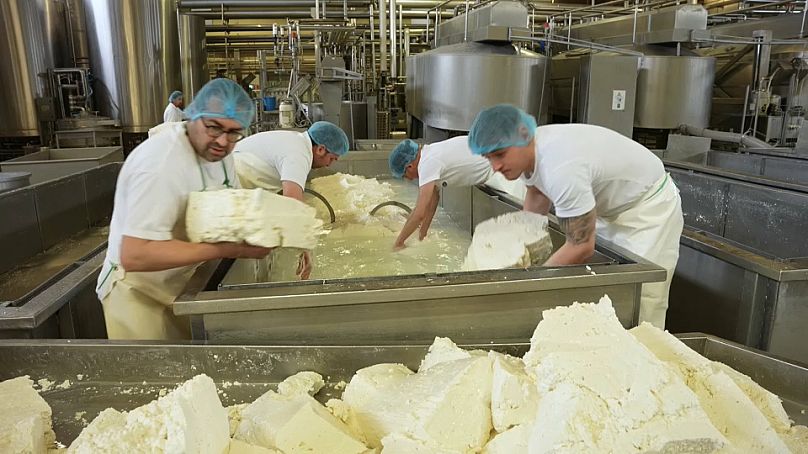
These punitive price increases don't just hurt consumers. They also affect energy-hungry companies like the Gruppo Francia factory, which produces mozzarella on the outskirts of Roma’.

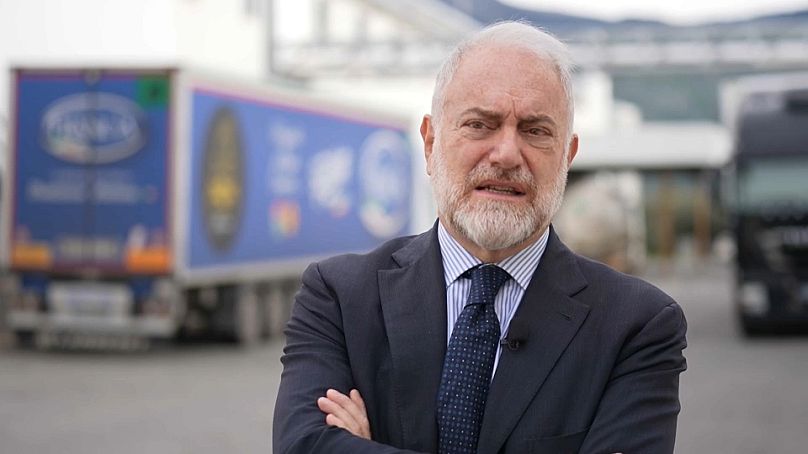
Speaking to Euronews’e Massimo Panagia, CEO of Gruppo Francia Latticini, we have 250 employees in two of our factories. “We produce 20 million kilos of cheese in different formats and specifications.”

In 2022, the CEO announced that energy bills were three times higher than in the previous year. Although investments in biogas and solar panels have managed to partially reduce these costs, they remain a heavy burden on companies like him.

Massimo Panagia, CEO of Gruppo Francia Latticini

Panagia, “In real numbers, this means an extra cost of €1.3-1.4 million, which is unpredictable. As a result, the cost of our products was significantly affected, ” added.

Are AB’'s measures to combat the energy crisis effective?

The volatility and rising prices in the global energy market have prompted the European Commission to introduce measures aimed at alleviating the burden on living-strapped EU households and companies.

The European Commission adopted the State Aid Temporary Crisis Framework in March 2022’ in order to support the EU economy following the Russian ’'s invasion of Ukraine’.

It allows Member States to provide limited assistance to companies affected by war or sanctions, provide liquidity support to businesses, and compensate for the high energy prices in which companies live.

Gruppo Francia Latticini mozzarella factory, Rome, Italy

ItalyIn ’, more than 50 billion Euro’ of state aid, including tax credits, has been approved by Brussels.

Massimo Panagia, “Given the energy bill, each company will Can calculate ’, and this ’ could use it as a loan to make up for the tax to be paid to the government in the coming months, ” said. “This mechanism unfortunately did not work well in short-term cash flow.”

This sentiment is also shared by Mauro Savoia, director of the automotive repair shop in Roma’, a family-owned business. He also took advantage of the tax credit after seeing his energy bills double within a year, but said more needs to be done to help small businesses.

Mauro Savoia, Rome, ItalyManager of a family-run automotive repair shop in ’da

Autopozzi Savoia’'s owner and managing director, Mauro Savoia, told “ that there was no financial relief at all. “We expected at least some economic assistance or grants to help companies at the end of the year.”

EuropeAssessing and rethinking ’'s energy system

UkraineThe war in ’ has revealed the need to rethink energy supply, energy consumption and energy production.

Energy expert Simone Tagliapietra, a senior member at the Bruegel think tank in Brussels, ’, said that in recent months, energy prices have been falling sharply across Europe. Families will see lower energy bills in the coming weeks and months. But those energy bills will still be twice, three times higher than what we've seen in the past, ” said.

AB’'s Temporary Crisis FrameworkDespite the benefits that ’ can bring to companies trying to survive among its exorbitant energy bills, some experts have expressed concern that this could lead to market disruption.

Tagliapietra, “In times of crisis, one of the typical reactions of the European’ is to loosen these rules of state aid a little. The problem is that when you loosen and dilute competition policies in Europe’, for example, Germany and France are usually the two largest countries that benefit the most from state aid rules; These would be Germany and France, who would have the financial space, that is, the money to spend on subsidizing their companies more than others.”

Simone Tagliapietra, senior member of the Bruegel think tank in Brussels’

“In 2022, we are faced with a situation where 80 percent of state aid is allocated only by Germany and France.’

When asked if these measures were sufficient to help businesses weather the storm Tagliapietra, “There were many interventions, that is, the tax credit was one, but then there was also a reduction in VAT’. Companies have seen their energy bills triple or even quadruple at a given time. But we need to take into account that without government intervention, energy bills would have gone up much more than that.”

The energy crisis has exposed the vulnerabilities in the European electricity market. In January, the EU launched a consultation meeting to reform the market and better protect consumers from price shocks. But Tagliapietra Euronews’e said that alone would not be enough.

We shouldn't think that this will be the solution to our energy crisis problems, ” said. What was our problem with the “Energy crisis? The mismatch between supply and demand for natural gas, namely Russia, after the arming of ’.”

The only way for “ to emerge from this crisis sustainably in the coming months is to correct this imbalance; You can do this with alternatives by reducing your demand and maximizing supply. This means building floating storage and gasification units, as Germany’ does. This means signing new gas agreements with LNG suppliers. To promote solar energy to get rid of gas in electricity generation, to promote the spread of heat pumps in our homes to get rid of gas boiler. They are the only structural solution to the energy crisis in Europe’.

How does Croatia fit into the euro?

January 1, 2023’te Croatia becomes the 20th country to join the eurozone. The local currency kuna has been replaced by the euro.

The country hopes to make its economy stronger and more stable with a single currency and improve the living standards of its residents.

Some people regret the passing of the kuna

Reactions at the fruit and vegetable market in Zagreb’ are mixed.

One customer says “I'm happy with the change. “This is something new.”

Another, “It's not true that prices are increasing rapidly, says ”. "Perhaps it's gone up a few cents, but that's nothing." - “

Coffee, bread… Prices are now higher than before the new year and people do not have much money to spend.

Ana Knežević
President of the Croatian Consumer Protection Association

Others are less convinced.

An old man, “, the prices are a little high, that's all ” says. I have no problem converting “. You only have to have money!”

Another, “, says we're not happy, we prefer our little kuna”. “In my opinion, a country that does not have its own currency is not a country.”

Majority in favor of transition

45% of Croatians already had a euro account for large expenditures, but now they all need to get used to the single currency for daily purchases.

Ana Knežević is president of the Association for the Protection of Consumers of Croatia’.

“Prices are in euros, so it is difficult for the elderly to calculate how much they are now. We have double prices, so it's easy to compare, says ”.

According to Eurobarometer’, while the elderly are attached to the kuna, the ’i is in favour of adopting the euro. But more than 80 percent are afraid that prices will go up.

“Coffee, bread… prices are now higher than before the new year” continues. “People do not have much money to spend, food is very expensive, heating, electricity is expensive, so it is very difficult to live. Croatia is a small country, pensions are not high, you can guess how they live.”

Support for tourism and production

Transition to the euro and entry into the Schengen area, Croatia %In addition to tourism, which constitutes 24’, GDP %It is expected to increase sectors such as manufacturing, an important export sector that makes up more than 12’.

Končar Group works in the fields of energy, infrastructure and electric railway vehicles. The company's production %It exports more than 60’ and ’i goes to countries in the eurozone.

CEO Gordan Kolak says that if we look at the last 21 years when we have linked our currency kuna“ to the euro, we cannot say that the change will be tremendous ’. “But since our customers will easily understand our offers, we think that the operation of the business will be much easier.

“When we talk about productivity, when we talk about modernization of production, when we talk about digitalization, all these areas are much more important to us than the euro as a currency.”

2020Croatian exports of goods in ’ %More than 70’ in euros, only ’ was traded in US dollars.

For a country where the single currency is already well integrated, it seems natural to adopt the euro.

Croatia’'s GDP’si 2022’de %6 increased, but the 2023 forecast is only due in part to high inflation %1.

The interview is: Governor of the Central Bank of Croatia Boris Vujcic

We met with Croatian Central Bank President Boris Vujcic to get his views on the arrival of Euro’.

Governor of the Central Bank of Croatia Boris Vujcic:I'm happy that we've basically completed the project that we started five years ago. This is something that will bring more resilience to the economy. This will make the Croatian economy more attractive in terms of foreign direct investment. Transaction costs will be lower. This is also important because we are a tourist country, and as a tourist country, 70 percent of our tourists come from eurozone countries. So in many ways this is a good thing for Croatia.

Fanny Gauret, euronews:Given the current inflation in the euro area, do you think it's a good time to switch to the euro?

Boris Vujcic:I think it would be better if we could change it sooner. For a small and open economy like Croatia, being in the eurozone in times of crisis is particularly important. If you look at some of our neighbors, who are not currently members of the Eurozone, members of the European Union, Ukraine, they have experienced quite a lot of pressure in the foreign exchange market this year following the attack on ’. So when you look at the cost of borrowing, these costs are now for companies. %With an 8 for the household. %With a 6 %You can see it's between 9. When Croatia was in ’, we didn't see any pressure on the foreign exchange market, and we didn't have to react to the rate hike like we did in those countries. We are seeing the benefits of this right now because markets have priced us into the eurozone earlier this year.

Now we need to focus on making structural reforms that we still need to make, with the help of a better economic environment created by entry into the euro and entry into the Schengen area.

Boris Vujcic
President, Central Bank of Croatia

Fanny Gauret:How about giving up the ability to set your own interest rates?

Boris Vujcic:Basically, the anchor of our monetary policy was the fixation of the exchange rate to the euro, and this has been the case for the last 30 years. First the German Mark ’na, then the Euro’ya. When you peg your exchange rate to the euro and your capital flow is free, you can't really have an independent interest rate policy. So it's about losing something we didn't have to do in the beginning.

Fanny Gauret:What are the challenges of introducing large amounts of money into the Croatian economy, for example, into the real estate market?

Boris Vujcic:We see nothing in the direction of overheating of the economy. What we've seen is that, as you said, the real estate market is hot, and prices are rising. I think we will see cooling in the real estate sector next year with the increase in interest rates. What won't change is actually the external demand that is expected to increase. Now that we see that about 20 percent of real estate purchases come from abroad, we will become even more attractive.

Fanny Gauret:And finally, what are the challenges ahead?

Boris Vujcic:I don't think that's the magic thing that's going to solve the structural economic problems that we have. Now we need to focus on making structural reforms that we still need to make, with the help of a better economic environment created by entry into the euro and entry into the Schengen area.

The list of the highest earning professions in Germany has been announced

The online job platform Stepstone analyzed the salaries of about 921,973 people in Germany and published a salary report based on these data.

The study took into account age, gender, and university graduation, as well as differences between the relevant economic sector and states.

THERE ARE DOCTORS AT THE HEAD OF THE LIST

Which profession is at the top of the salary list?

According to professional groups, doctors, bankers and engineers are the top earners.

Category: Occupations Average salary (gross)
The Doctors are 107,250 euros
Banking, finance and insurance 63,000 euros
Department of Engineering 60,250 euros
the Consultancy Center 59,750 euros
The IT industry 59,000 euros
Marketing and Public Relations 57,000 euros
the Human Resources from 55,000 euros
Distribution of goods 50,750 euros
Category: Handicrafts 43,500 euros
Health and social care 42,500 euros
Category: Logistics 43,750 euros
Wholesale and retail 40,250 euros
Gastronomy and hotel industry 39,750 euros

the patronsdunyasi.com