Red Sea Crisis Increases Sea Route Prices

The US recently towed the aircraft carrier USS Dwight D. Eisenhower from the Red Sea and sent the USS Theodore Roosevelt and its escort ships in its place. The primary mission of the American fleet here is to protect maritime shipping routes from the Arabian Peninsula to the Suez Canal.

This news didn't make the headlines and didn't attract much public attention. But the sea route passing through the Red Sea is very important for world trade.

Houthi militias have been firing on ships coming from Yemen for more than six months that they associate with Israel because of their owners or operators.

Bloomberg news agency reported on June 20 that the Houthis, who are in favor of Palestine in the Gaza crisis, sank a cargo ship carrying coal using a UCAV.

In response to the Houthis' attacks, the United States and Britain have repeatedly hit militia positions in Yemen in recent months. In addition, other warships belonging to the international coalition are trying to secure shipping traffic off the Yemeni coast. The German navy also appears in the region with the ⁇ Hessen ⁇ frigate within the scope of AB ⁇ 's ⁇ Aspides ⁇ mission.
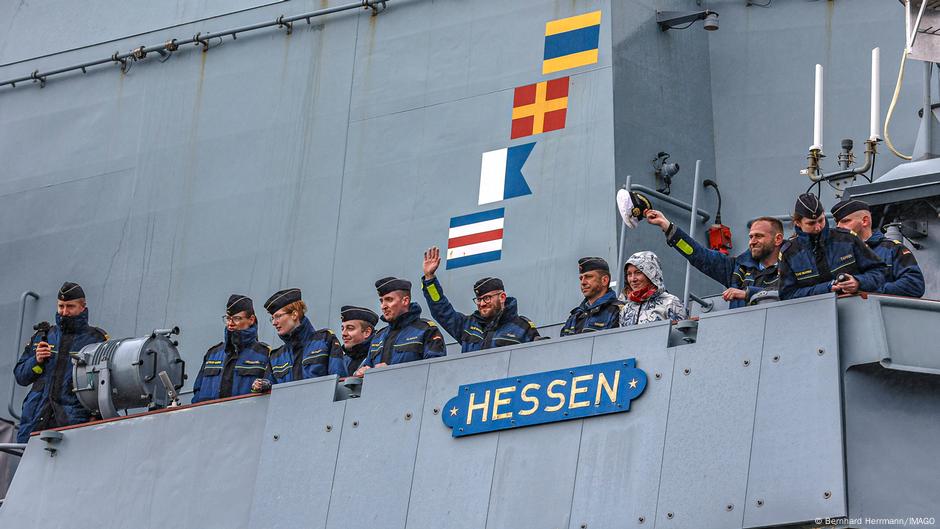

The frigate ⁇ Hessen ⁇ of the German Navy was also deployed in the Red SeaPhoto: Bernhard Herrmann and IMAGO

Costs are rising again

Since the beginning of the conflict in Gaza in October last year, global trade has been under great pressure. Traders around the world have to spend more money to account for higher shipping costs and insure their goods.

Shipowners also complain about high insurance costs as the risk of losing their ships increases significantly. Ships that avoid passing through the Suez Canal and instead travel around the Cape of Good Hope are forced to take into account longer journey times and higher fuel costs.

⁇ Drewry World Container Index ⁇ monitors the freight market and records exorbitant price increases. The price to be paid for transportation activities carried out by sea, land, air or railway is called ⁇ navlun ⁇ . According to the index, the average freight price for a large standard container of 40 feet ⁇ increased by seven percent in June, compared to the previous year, an enormous increase of 233 percent. On some routes, prices have risen even more sharply.

Indirect effects of what happened in the Red Sea

Simon MacAdam, an economist at London-based independent financial consulting firm Capitol Economics, comments on DW ⁇ ye:

It should not be forgotten that direct armed conflicts are not responsible for the current price increases. The real trigger for the cost seems to be that importers are pushing many orders forward to ensure they have enough goods in stock throughout the year. In addition, factors such as the fact that ships have to go around the Cape of Good Hope put great pressure on shipping and cause prices to increase even more.

The route around the Cape of Good Hope in South Africa means that ships must fully circumnavigate the African continent before reaching Europe.
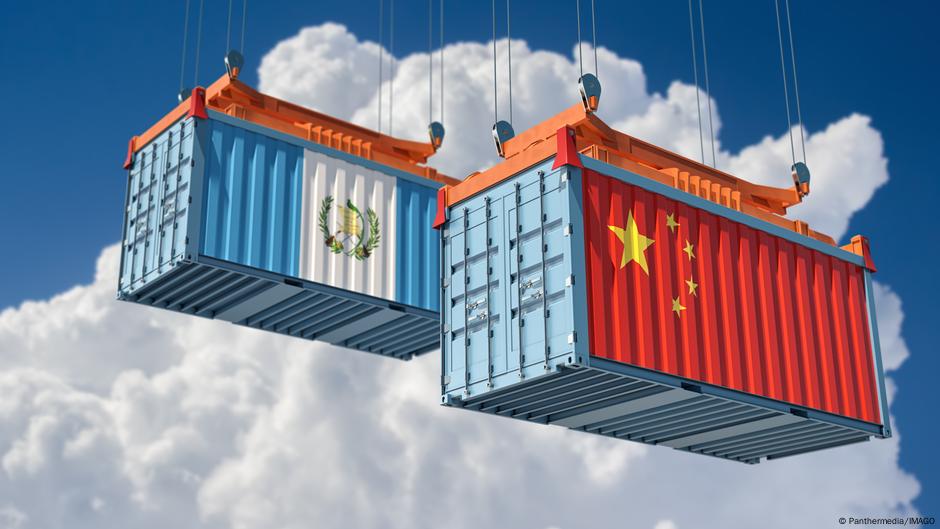

Container and shipping prices have increased significantlyPhoto: Panthermedia and IMAGO

We need more ships.

Jan Hoffmann, a trade expert at the World Conference on Trade and Development (UNCTAD), a Geneva-based UN agency, explains why DW ⁇ ye freight prices are generally rising:

The main reason for this is the extension of the distances that ships have to travel. Deviations around South Africa require more ships to maintain supply. The average distance for a container will be nine percent longer in 2024 compared to 2022.

Hoffmann continues his words as follows:

If ships are to travel longer, more transport capacity will have to be used. This means buying or renting more ships and employing more staff. Longer routes require more ships. If these ships are not yet available, freight prices will rise even higher. ⁇

The environment is also suffering from this situation, according to the UNCTAD expert:

Another effect is that ships increase their speed. Higher speeds to cover longer distances, for example, led to a 70 percent increase in emissions on the Singapore-Rotterdam route.

According to Hoffmann ⁇ , if the deviations continue for a longer time, this will lead to continued price increases and further restrictions on international trade.
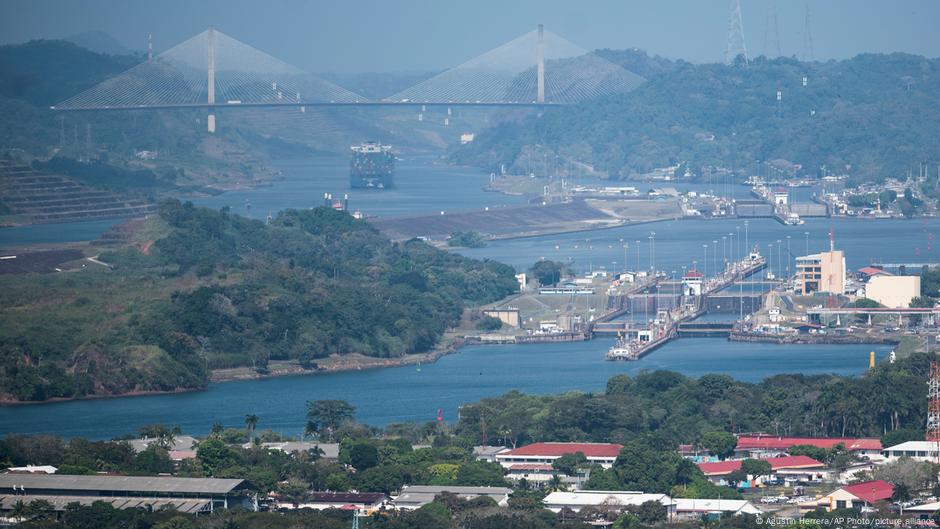

The water level in the Panama Canal is higher than in the previous yearPhoto: Agustin Herrera/AP Photo/picture alliance

There's a double bottleneck

The maritime bottleneck also prevents goods from being transported elsewhere, Hoffmann stresses:

Due to the inadequacy of the water level in the Panama Canal, navigation is not possible without restrictions. Since both the Suez and Panama canals cannot be used at full capacity, the USA needs to build a land bridge to maritime connections with East Asia. In other words, land transportation should be carried out by rail or road from the ports on the west coast to the centers on the east coast. ⁇

But it doesn't seem that easy. This method is also considered economically inefficient, especially when it comes to the shipment of wheat or liquid gas. For this reason, like the alternative route around Cape Horn, the southernmost tip of South America, a very long and dangerous deviation is preferred.
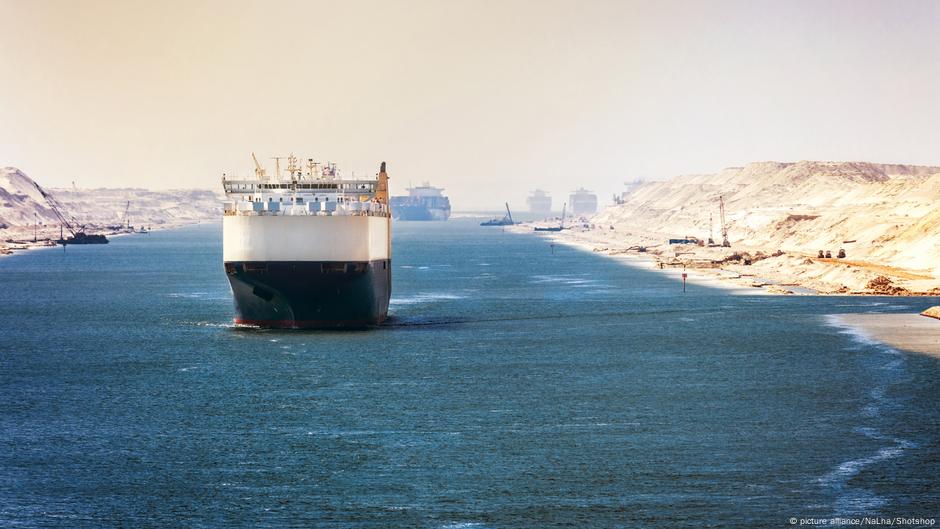

The Suez Canal is of great importance for world tradePhoto: picture alliance/NaLha/Shotshop

⁇ The situation can get worse ⁇

The situation in the Red Sea remains tense. According to Bloomberg, about 70 percent of international maritime transporters still avoid the area and instead choose to travel around the Cape of Good Hope in South Africa.

The deployment of the US Navy's new aircraft carrier fleet also shows how serious the situation in the region is in the long run by the military.

Economist Simon MacAdam believes that a prolonged crisis will push shipowners too far and cause freight prices to rise even higher:

It takes many years to build the ship and 90 percent of the new containers are built in China. Therefore, ships and containers cannot be built overnight for higher capacities. Therefore, the situation may get worse in the long run.
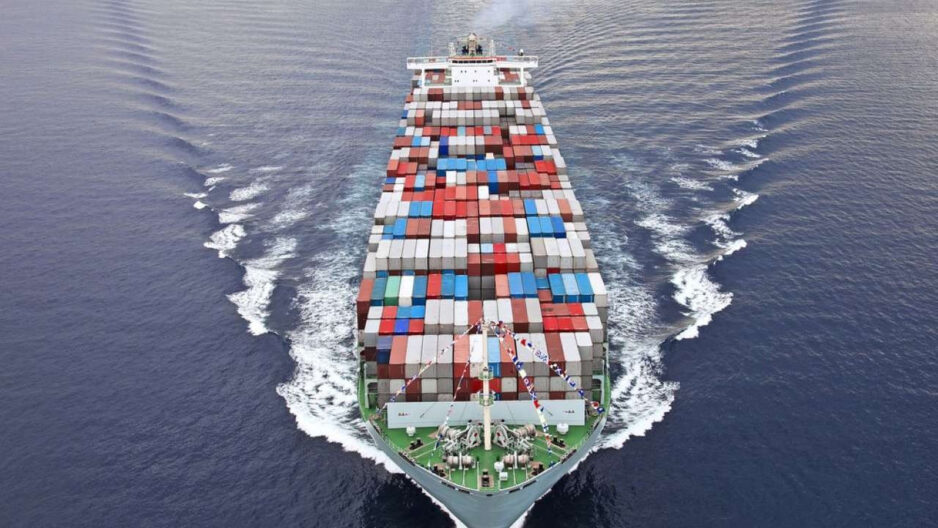
Capacity Increase Required Due to Increased Density in Ports

Hamdi Erçelik, Chairman of the Board of Directors of the Turkish Port Operators Association TÜRKLİM, talked about the performance of the ports in 2024, the problems observed and the investments to be made in the ports. According to the World Newspaper, Erçelik;

I find the 2024 performance of our ports positive, and the numbers show this. The amount of cargo handled in ports in the first half of 2024 compared to the same period of the previous year %3,2 increased to 269 million 182 thousand tons, the amount of containers handled compared to the same period of the previous year %It increased by 11.2 to 6 million 781 thousand TEU ⁇ . The amount of cargo going from our ports to foreign ports in June compared to the same month of the previous year %With a decrease of 2.9, it was 11 million 266 thousand 49 tons.

The increase in the total cargo in our ports since February stopped in May, and continued in June. %There was a 3.5% decline. But still in the six-month total data %There was an increase of 3.2. When we look at the main reason for the slowdown in the increase, it is seen that it is due to the decrease in the amount of cargo coming to our ports from abroad in May and June. When we look at the types of loads, it is observed that the decrease in liquid loads continues. In the first half, Aliağa led the field with a trading volume of 44.2 million tons in total load, while the region has experienced an uninterrupted upward trend since the beginning of the year. In Kocaeli, which is in the second place, a total of 42.7 million tons was reached. On the basis of the port presidency in the container, Kocaeli, Tekirdağ and Aliağa port presidencies continue to increase uninterruptedly. Especially in the first half of Aliağa ⁇ da average %A significant uptrend of 35 was recorded.

How's the painting on the container front?

The slowdown in the increase in containers in Turkey, which started in May, continued in June and monthly development %3,2 increased to 1 million 137 thousand TEU. 6 months of the year compared to the same period of the year %We see a very high increase of 6 million 781 thousand TEU ⁇ ya with an increase of 11.2. Especially when we look at the global developments in containers; In addition to the Russia-Ukraine conflict, it was expected that the impact of geopolitical factors throughout 2024 would be even more negative with the impact of the Red Sea crisis. However, it is understood that the dynamics of the container market will change with the reorganization of trade routes as a result of Europe and the USA's efforts to reduce import dependence on China.

How do you evaluate the general situation of the world's ports along the line from Asya ⁇ to Avrupa ⁇ ?

The Red Sea Crisis, which broke out in November 2023, also directly and indirectly affected the Turkish maritime transport and port sector in different ways. While restrictions on access to the Suez Canal have led to delays in supply chains and increased costs, this crisis has also created significant opportunities for Turkish ports. Due to security concerns, ships' preference for the Cape of Good Hope over the Suez Canal led to a marked increase in transit freight volume at Turkish ports. Average transit container handling in Turkish ports in the first 5 months of 2024 compared to 2023 %It increased by 54.26. This further strengthened Turkey's strategic position and increased the importance of our ports in the global logistics chain.

How is your assessment of the increase in transit loads?

Energy transport has been affected by this crisis. However, despite the contraction of the trade volume of Turkish ports before the crisis, it has tended to recover thanks to the increase in transit loads with the crisis. The rise of insurance costs, along with security concerns, has led to ships being diverted to alternative routes, resulting in increased operational burdens as well as additional costs at Turkish ports. However, these costs were offset by increased demand and an increase in transit loads. In addition, the global shortage of containers has caused serious bottlenecks in ports. The difficulty of waiting for ships for a long time and finding empty containers caused disruptions in supply chains, negatively affecting production processes. Turkish shipping was also naturally affected by this global problem.

How are the major ports in Turkey affected by the current conjuncture?

Despite efforts to recover after the pandemic, vulnerabilities in the global supply chain remain. Delays occur in large ports, especially in handling, loading and unloading. Waiting times of ships in Turkish ports in 2024 compared to pre-pandemic %It showed increases of up to 20. Increased workload and container traffic at major ports create operational congestion at these ports from time to time, especially in transit containers. %An increase of 54.26% has revealed a picture of reaching capacity utilization limits in some ports. In major ports, rising demand and fluctuations in global trade have also affected handling processes.

What is your long-term perspective as a Turk?

During the crisis on a global scale, Turkish ports have become an important center of global trade, resulting in a significant increase in transit freight flows. In order to turn these opportunities into a sustainable advantage, it is critical for Turkey to strengthen its port infrastructure and invest in digitalization and automation projects and green transformation.

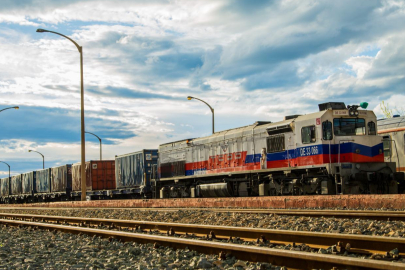
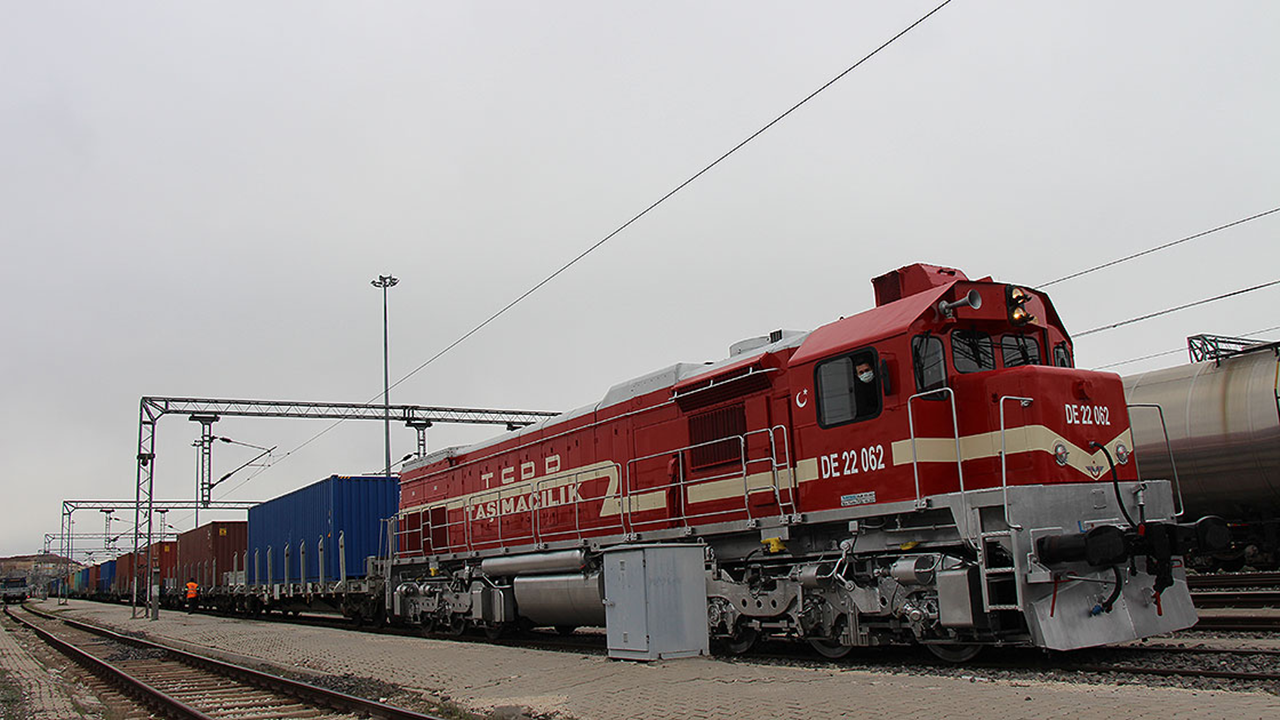
45 percent of the loads from the railway from the connection lines

ANKARA (İGFA) ⁇ Abdulkadir Uraloğlu, Minister of Transport and Infrastructure, stated that the contact lines of the production centers that provide direct connections to the factories to transport raw materials, semi-finished products and final products; Emphasizing that industrialists, producers and exporters increased their competitiveness, he stated that there are 286 connection lines with a length of 439 kilometers on Turkey's national railway network.

Minister Uraloğlu emphasized that the transportations carried out with these lines account for approximately 45 percent of all rail freight transportations.

In the first 8 months of 2024, a total of 17 million 449 thousand 75 tons of cargo was transported by railways. In this 8-month period, 7 million 842 thousand 981 tons of cargo were transported with contact lines. We estimate that this figure will exceed 11.5 million by the end of the year. Minister Uraloğlu underlined that they plan to reduce the 72 percent share of freight transportation on roads to 57 percent and to increase the share of transportation of railways from 5 percent to 22 percent in line with their targets for 2053.

Minister Uraloğlu also noted that as the Ministry of Transport and Infrastructure, the General Directorate of Infrastructure Investments (AYGM), TCDD and TCDD Transportation, as well as the number of lines of contact with sector stakeholders, are carrying out joint studies to increase.

Stating that the construction works of the connection lines in Gelemen-Tekkeköy and Yenikent-Kazan Soda, which have a total length of 13.3 kilometers, are continuing, Minister Uraloğlu emphasized that increasing the railway share in freight transportation is critical. Minister Uraloğlu, ⁇ “The total length of the connection lines with 439 kilometers 12. In line with the Development Plan targets, we aim to increase our total contact line length to 654 kilometers in order to ensure the connections of logistics centers, factories, industries, OIZs and ports by adding a total of 215 kilometers, 74.5 kilometers of which are 141 kilometers by TCDD and AYGM.

Referring to the importance of freight transportation by railway in Turkey, Minister Uraloğlu stated that railways always stand out as an environmentally friendly, low-cost and reliable transportation alternative. Emphasizing the critical role of railway transportation in Turkey's industrialization process, Uraloğlu underlined that the connection lines in railway transportations serve as an important task to deliver the products to the national railway network.

7.8 million tons of cargo was transported in 8 months with the link lines on the railways

Minister of Transport and Infrastructure Abdulkadir Uraloglu (disambiguation), in its written statement, pointed out that the contact lines of the production centers, which provide direct connections to the factories to transport raw materials, semi-finished products and final products, increase the competitiveness of industrialists, producers and exporters.

Uraloğlu pointed out that there are 286 connection lines with a length of 439 kilometers on Turkey's national railway network, and the transportations carried out with ⁇ İltisak lines account for approximately 45% of all railway freight transportations. In the first 8 months of 2024, a total of 17 million 449 thousand 75 tons of cargo was transported by railways. In this 8-month period, 7 million 842 thousand 981 tons of cargo were transported with contact lines. We estimate that this figure will exceed 11.5 million by the end of the year.

Uraloğlu underlined that they plan to reduce the share of 72 percent freight transportation on road roads to 57 percent and increase the share of transportation belonging to railways from 5 percent to 22 percent in line with their targets for 2053.

Construction of 13.3-kilometer linkage line continues

Stating that they are carrying out joint works to increase the number of contact lines with the sector stakeholders as well as the General Directorate of Infrastructure Investments (AYGM), TCDD and TCDD Tasimacilik, Uraloğlu said that the construction works of the connection lines in Gelemen-Tekkeköy and Yenikent-Kazan Soda ⁇ , which have a total length of 13.3 kilometers, are continuing.

Uraloğlu underlined that it is critical to increase the share of the railway in freight transportation, ⁇ 12. In line with the Development Plan targets, we aim to increase our total contact line length to 654 kilometers in order to ensure the connections of logistics centers to factories, industries, OIZs and ports by adding a total of 215.5 kilometers, 74.5 kilometers of which is 141 kilometers by TCDD and AYGM.

⁇ Iron roads are environmentally friendly, cost-effective and reliable ⁇

Referring to the importance of freight transportation by rail in Turkey, Minister Uraloğlu emphasized that railways always stand out as an environmentally friendly, low-cost and reliable transportation alternative.

Uraloğlu pointed out the critical role of railway transportation in Turkey's industrialization process and underlined that the interconnected lines play an important role in transporting the products to the national railway network.