Energy experts warn recovery in oil and gas supplies will be slow after Iran deal

According to energy experts, it will likely take months for energy companies to continue operating and meet global demand. The slow progress in transporting and refining crude oil, as well as uncertainty about safe passage through the strait, means there will be no immediate relief, they said.

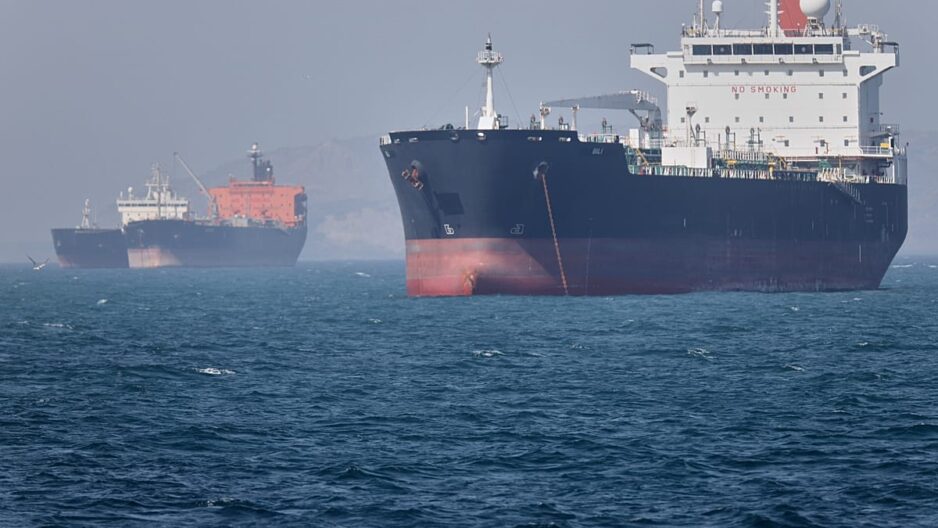
Ships laden with crude oil were stranded in the Persian Gulf of ’ for more than three months and were unable to travel safely along the waterway, where about a fifth of the world's oil and gasoline supplies traveled before the war began.

Daniel Evans, global head of fuel and refinery research at S&P Global Energy’, said: "It's going to take time for people to feel comfortable and for insurance to kick in, especially for people to take to the field to restart some of these assets, “ said.

Still, oil prices fell early Monday after the deal was announced.

Brent crude oil, the international standard, fell by $3.45 to $83.89 per barrel. US indicative crude oil 4.03 per barrel $ Decreased by 80.85 $’a is down.

These prices are still well above $70 a barrel, where oil was traded before the war began.

Evans said that with high prices falling, the stranded ships would have to get out of the strait and then new tankers would have to arrive for loading.

“To let a ship in, you need to make sure you have a security window large enough to let it in, load it, and take it out, ” added.

He explained that oil tankers were also moving slowly. It takes months to travel to countries far from the strait, delivering crude oil to a refinery for processing, and then reaching its final destination.

In addition, some producers in the Middle East’ have stopped extracting oil from what is known as a shutdown due to running out of storage space. Restarting these processes can be a slow process.

Alan Gelder, senior vice president of refining, chemicals and oil markets at analysis firm Wood Mackenzie’, said that countries such as the Strait of Hormuz ’, as well as Saudi Arabia and the United Arab Emirates, where there are alternative pipelines or routes for oil distribution, may be among the fastest restarts in production.

But places like Iraq can be much more challenging because they've experienced a much bigger shutdown, areas that are more difficult to get back to, “ said.

Gelder said investments in the energy system, which could take years to see results, came to a halt after the strait was closed. Therefore, the revival of this capital will take time.

Daniel Sternoff, a senior researcher at the Center for Global Energy Policy at Columbia University, said that countries that have stopped oil production will not want to start again until they learn that there is a stable and permanent situation in the strait and that the ceasefire will last for more than 30 or 60 days.

“We don't know what the opening means or what the evacuation speed of the trapped material will be, ” added.

ChinaRecession in ’ factory operations in May sparked doubts about the economy

China’'s major factory sector lost momentum last month, renewing questions about how long the world's second-largest economy can withstand the deepening global energy crisis and stubborn problems with domestic demand, according to official figures released on Sunday.

The official manufacturing purchasing managers index (PMI), published jointly by China's National Bureau of Statistics (NBS) and China's Logistics and Purchasing Federation, fell 0.3 percentage points from April to a full 50 percentage points in May, the lowest reading of the index since February.

On a scale from 0’ to 100’, the shape is precisely at the threshold that separates the expansion from the contraction; This is a mathematically neutral result and is far from reassuring in context.

The detail behind the headline number raises concern.

New orders fell from 50.6’ to 49.9’ in April, while production fell to 51.2’ and raw material stocks fell to 48.6’.

However, according to the chief statistician of NBS’, Huo Lihui’, a relative power has emerged; high-tech manufacturing PMI’ increased from the previous month to 52.9’a and 52.1’e for equipment manufacturing.

An energy shock that could inevitably affect China’i

2026Most of the global economic debates in ’ have been dominated by the Iranian war and the closure of the Strait of Hormuz, where about one-fifth of the world's oil flows in peacetime, since March.

This cut caused oil prices to rise, which the International Energy Agency (IEA) described as one of the biggest supply shocks in the history of global oil markets. For most Asian countries, the main importers of oil flows at the crossing point, the consequences were severe.

But China has been relatively sheltered so far.

Beijing’in is estimated to have accumulated about 1.4 billion barrels of strategic and commercial oil reserves before the conflict began; This represents approximately 220 days of import coverage.

Increasing combustion of other fossil fuels, such as coal, rapid investments in renewables and diversified supply lines further mitigated the impact.

In a research note last week, HSBC’'s chief economist for Asia, Frederic Neumann, wrote that although the “Energy crisis remains the dominant wind for Asia, China is relatively more sheltered given its robust energy security structure, ”.

However, as the Iran war prolongs, the risks to the Chinese economy increase.

It's a FILE. Coal piles stand near a chemical factory in ’in Datong city, 14 March 2026

Exports stand but the domestic front struggles

Where Beijing's economy continues to show its deepest fissures, the decades-long slump in the real estate sector erodes consumer confidence, while HSBC notes that April figures are only the softest reading since the pandemic period. ter reaching 0.2, China has sharply revised ’'s 2026 forecast for retail sales growth. %from 5.2’den %He dropped 2.8’e.

Morgan Stanley ’'s chief economist in China, Robin Xing, wrote last week: “ Domestic demand is declining, but high-end manufacturing and exports remain at the border.”

Beijing, the lowest rate for 2026 since 1991’ %With a 4.5 %It set a one-year growth target of between 5 and “ of the previous three years. %5” went one step down from its target.

Morgan Stanley thinks ’'s annual economic growth target is achievable, but marks global oil market conditions as the defining joker.

U.S. exports to ’ have fallen year-on-year for most of the past twelve months, but global sales remain strong, particularly in Europe and Southeast Asia.

US President Donald Trump's meeting with Chinese leader Xi Jinping in Beijing in mid-May has brought back some optimism about bilateral trade.

Oil giant Saudi Aramco’ profits up 25% as Iran war raises prices

Saudi Aramco, the world's largest oil exporter, made its first-quarter profit on Sunday. %It reported 25 increases and posted net revenues of $32.5 billion (27.6 billion euros), surpassing market forecasts for the three months leading up to March 31, ’.

The company said the increase was mainly due to high revenue and sales-related revenue, as well as low operating costs. The board also approved a quarterly dividend of $21.9 billion (euro 18.6 billion).

Revenue increased partly due to high crude oil and fuel prices, but this was partially offset by a decline in sales volumes of crude oil, refined and chemical products.

The international indicator Brent crude oil traded above $103 per barrel on Monday morning. Despite being below the peak of more than $126 reached during the conflict, prices are significantly higher than roughly $70 per barrel seen at the end of February before the start of the war.

Iran's war has disrupted global oil supplies through the Strait of Hormuz, one of the world's most important shipping routes for energy exports.

Prior to the war, large quantities of natural gas, fertilizers and other petroleum products, as well as oil traded around the world, ’si was running down the throat every day.

Iran, the U.S. and Israel effectively took control of the waterway after ’ launched the attack on February 28, while the U.S. naval blockade imposed last month further complicated shipping in the region.

This cut caused sharp fluctuations in oil prices throughout the quarter. In response, Aramco rerouted some of its exports through the East-West Pipeline, allowing shipments to continue through the west coast of ’, Saudi Arabia, while also relying on its local and international storage network to maintain supply.

The pipeline currently operates at a maximum capacity of 7 million barrels per day. By comparison, Aramco produced 11.1 million barrels of oil per day in the fourth quarter of 2025’.

Amin Nasser, President and CEO of Aramco, said that the pipeline helped alleviate the impact of the ’global energy shock and provided relief to customers.

The company said the disruption from the Iran war did not significantly affect its financial situation or operations.

"The recent events have made clear the vital contribution of oil and gas to energy security and the global economy, and remind us that reliable energy supply is critical," Nasser said.

Nasser, “Despite these setbacks, Aramco continues to focus on its strategic priorities and uses both its local infrastructure and global network to overcome disruptions.

Shell’in profits rise as Iran war raises oil prices

Shell plc announced stronger-than-expected first-quarter profits as the Iran war increased oil and gas prices, boosting trade profits and offsetting declines from conflicts in production.

CEO Wael Sawan, “Shell, has achieved strong results from our unremitting focus on operational performance in the quarter, which saw unprecedented disruption in global energy markets, ” said.

Adjusted revenue rose from $3.3 billion (€2.8 billion) to $6.9 billion (€5.86 billion) in the previous quarter. Shell also has a $3 billion share repurchase program over the next three months, as well as dividends. %5’ announced an increase.

Dan Coatsworth, market manager at AJ Bell, said that one of the most important factors of “ Profit was the Middle East conflict, which led to an increase in oil prices, which means Shell’in can sell its products at much higher prices, ” said. He added: The price of oil has been volatile since the conflict began on stop-and-go prospects for a solution, and this volatility has created opportunities for the Shell“in trading arm.

Before the war began, international oil prices were trading at around $70 a barrel. The supply shock from the clashes then peaked Brent crude at around $126 per barrel, its highest in more than four years. On Thursday morning, Brent futures fall below $100 next monthWhile there is hope for a diplomatic breakthrough between the U.S. and Iran.

Overall outlook and effects on production in the Middle East’

High crude oil prices and strong refining margins have increased profits across the industry. But Coatsworth said Shell’ was also facing operational disruptions during the conflict, including damage to one of its facilities at Katar’ and hurricane-related disruptions at one of its liquefied natural gas fields in ’, Australia.

Shell’in oil and gas production approx. ’si comes from the Middle East’, which causes the company to suffer long-term outages in the region.

Shell, QatarGas production in ’ in the second quarter of 2026Minimum compared to the first three months of ’ %He signaled that he was expected to drop by 30 percent. However, Oman said its assets in ’ remain operational and production remains unaffected.

Commenting on the challenges facing the company, Maurizio Carulli, global energy analyst at Quilter Cheviot, said “Strategically, the long-term problem remains reserve renewal and production growth. The acquisition of “Last ARC Resources is a meaningful step in this direction and elevates Shell’'s production outlook from stagnation to modest but noticeable growth.”

The company recently announced the acquisition of ARC Resources Ltd.’, a manufacturer focused on the Montney shale oil basin in ’, Canada. Analysts say the agreement strengthens shale gas and liquid production in Shell’in Canada’.

An extended unexpected tax on earnings?

The sharp increase in ’ta Shell’in profits has rekindled the debate over the extension of the unexpected tax on energy gains.

Danny Gross, Friends of the Earth’'s climate campaigner, told BBC’: “As drivers get stuck in the gas pump and households prepare to pay higher energy bills, fossil fuel giants are once again pocketing huge profits.” proposed strengthening the unexpected tax on the profits of fossil fuel companies.

UKEnergy firms operating in ’ are already subject to an unexpected tax, but the tax applies only to profits from oil and gas extraction in ’, United Kingdom. Shell’in's global oil and gas production onstitutes less than ’.

With both Shell and BP plc“ reporting high earnings as a direct result of the Middle East war, calls for an unexpected tax on oil profits will increase further, Coatsworth said. The longer oil prices remain high, the harder it will be for them to oppose unexpected tax proposals, “ added.

Following the results, Shell shares approx. %It declined by 2 percent, but analysts said the decline reflected broader market expectations that shipping through the Strait of Hormuz could continue soon, rather than company-specific concerns.

“Shell’'s first quarter figures were clearly better than expected, Carulli said. “The initial weakness in service prices seems to be purely macro-induced rather than company-specific; Oil stocks are under pressure in general due to the prospects of a quick solution to the disruption in the Strait of Hormuz.’

How did the Iran war boost BP and Barclays’in profits?

The first quarter results of British multinational oil and gas company BP’ found support due to sharp fluctuations in oil prices during the Iran war that began on 28 February 2026’.

The company said its base refurbishment cost profit more than doubled in the first three months of 2026’, reaching $3.2 billion (€2.7 billion).

The company said in a statement that the base RC profit for the “ Quadrant was $3.2 billion, compared to $1.5 billion in the previous quarter. “2025Compared to the fourth quarter of ’, the underlying result reflects an outstanding oil trade contribution and stronger midstream performance.”

BP’'s oil trading operation made strong profits due to the intensification of turbulence in the energy market during the Iran war.

Brent crude oil prices rose from just over $70 a barrel in early February to over $120 a barrel in late March and settled at around $110 a barrel in April.

Oil production and operations remained stable compared to the previous quarter, while crude oil production remained resilient at about 2.3 million barrels of oil equivalent per day.

The company also highlighted its presence in the Middle East’, with daily production of approximately 411,000 barrels of oil equivalent in the region. This includes operations in Abu Dhabi, Oman and Iraq’.

BP’'s share price in Europe’ in the afternoon trades %Increased by more than 2’.

Barclays’ gains rise as trade compensates for credit losses

At the same time, British bank Barclays reported steady growth in the first quarter as trade fluctuations linked to the Iran war increased revenue, but concerns over its credit portfolio stifled sentiment.

Shares EuropeIn afternoon transactions at ’ %It fell around 2.

The Total Income %Increased by 6 to £8.2 billion ’a (€9.5 billion), while pre-tax profit rose from £2.7 billion ’ (€3.1 billion) the previous year to £2.8 billion ’ (€3.2 billion).

However, the main measure of profitability, the return on tangible equity (RoTE), was last year's %the 14.0 level .5’e down.

Increased credit losses offset some of the strong performance. Barclays, UK, charged a fee of £228 million (€264 million) in connection with the collapse of mortgage lender Market Financial Solutions’ (MFS) in ’.

CEO CS Venkatakrishnan said the bank would reduce complex loans and reduce the risk to high-leverage companies following the impact from MFS’.

In a statement, he emphasized the power of the investment bank, saying that growth is due to broad-based performance across the business. Revenue here exceeded £4 billion ’ (€4.6 billion) for the first time in the quarter, backed by strong trade and advisory activities.

Quilter Cheviot financial analyst Will Howlett said the performance was due to stock trading amid rising volatility since the start of the Iran war. This includes investment banking fees. In addition to an increase of ’, the annual %On a 16 or US dollar basis %He stated that it led to a growth of 23’.

Barclays also announced a £500 million (€580 million) share buyback, with total buybacks reaching £1.5 billion (€1.74 billion) this year. The bank reiterated its financial goals, citing its strong and supportive capital position.

Russ Mould, investment director at AJ Bell’in, described this quarter as another spectacular performance ’ for Barclays“in investment bank, potentially pointing to the strongest quarterly profit of this decade.

But investors are currently assessing whether recent credit losses are isolated or point to weaker credit standards, he added.

Caspian and Central Asian oil markets recalibrate amid trade changes

South Caucasus and Central AsiaOil producers in ’ are moving in a more fluid global market as their long-standing export models are being replaced by faster, demand-driven trade dynamics.

At the second Caspian and Central Asian Oil Trade and Logistics Forum in Baku’, industry experts talked about a clear orientation towards flexibility, moving away from predictable, long-term contracts.

Colin Nesbeth, founder and CEO of Central Asia Marketing’, said that ’ Markets are now very volatile and fluctuation is always creating special opportunities.

“From a commercial point of view, opportunities arise that weren't there before.”

But this volatility cuts both ways. Nesbeth added that companies that go off a single route are being pushed towards alternatives that are too costly to deal with normally.

“In this kind of situation, they become economical. This is an opportunity for traders but a great challenge for manufacturers.”

Asia drives pricing debate

The main theme that stood out in the discussions was the increasing dominance of the refinery centers in Asya’, especially China and India’, in determining their raw demand and pricing structures.

Suppliers are increasingly moving away from fixed pricing formulas, rather than reacting to short-term signals and arbitrage windows.

Nesbeth said “, "Nobody really knows how it's going to go." But adapting to unstable markets is becoming more important than ever.“

Despite this, he displayed a cautious tone of optimism. "My belief is that it will stabilize." - “

Infrastructure is stable but under pressure to adapt

While export routes remain largely unchanged, their strategic use is also improving.

While Kazakhstan continues to export most of its crude oil to the Black Sea ’e via the CPC pipeline, Azerbaijan relies on the BTC corridor. Turkmenistan’'s energy flow continues to be gas-focused and east-oriented.

But beyond pipelines, attention is focused on broader connections, especially those developed under the China’in Belt and Road Initiative.

Shehryar Omar, CEO of Pakistan Petroleum Institute, said that a huge investment has been made in the improvement of the ’Road corridors.

“China, Pakistan’a has invested nearly $70 billion not only in roads, but also in energy production and related infrastructure.”

“This network has evolved immeasurably over the past four or five years, ” added.

Omar pointed to a recent turning point. “More this week came the first dry cargo shipment from ’ to Pakistan’ from Kyrgyzstan. So that route is already active and a difficult route.”

Pipelines still dominate the flow of oil

Despite these developments, Omar emphasized that oil logistics continues to be limited due to geography and risk.

The situation for “Petroleum products can be even more difficult, ” said. “At this point pipelines through Iran or China are probably more viable.”

However, there are uncertainties as Afghanistan continues to limit ’'s role as a transition corridor.

“, we're not sure about the situation there, ” said. “So as a corridor, we don't know if this will make sense right now.”

Nevertheless, he underlined the long-term opportunity. “, there are so many opportunities. Pakistan ’'s population of 240 million is growing rapidly. Central Asian states cannot ignore this. - ”

Omar added that “ will pay for itself in the next 15-30 years if it requires an investment of $10-20 billion.

Quality becomes a competitive advantage

As market conditions tighten, not only volume but also raw quality become determining factors in competitiveness.

Anar Habib, senior mid-level distillation products trader at “, said Caspian crude oil is very competitive in the global market, adding that the region's production is well suited to what global refineries actually need.

Kazakhstan and the wider Caspian region are supplying increasingly in-demand qualities, and Azerbaijan said ’'s flagship mix stands out in particular.

Habib explained that Azeri Light’ is a high-quality crude oil that European ​​rafineri rely on to produce cleaner end products (especially diesel and jet fuel, which are critical for global economies).

“Cleaner fuels are in demand everywhere, ” added. “And these qualities are necessary to produce them.”

External shocks are spreading to the area

The Caspian region feels the impact of global maritime tensions, even if it is not directly exposed to the interrupted sea routes.

As tanker availability contracted, freight and insurance costs also increased, and margins were squeezed across the trading system.

Nesbeth, “In general, this is a great challenge” said. “The whole market is trying to adapt at the same time.”

A market that learns to adapt

The general table that appears in Baku’ relates to transition and recalibration. Producers are rethinking their export strategies, and traders are exploring arbitrage opportunities.

Infrastructure is being re-evaluated not only in terms of capacity, but also in terms of flexibility. And in general, the ability to respond becomes the defining ability.

Nesbeth said volatility creates opportunities, but it also forces everyone to rethink the way they operate.

For the Caspian and Central Asian oil sector, this rethinking process has already begun, with Asya’, infrastructure investments and crude oil quality at the heart of the rapidly evolving global equation.

Sort by: Which countries experienced the worst fuel price increases since the Iran war?

As the world awaited an unlikely new round of negotiations between Washington and Tehran, oil prices rose again on Thursday to over $100 a barrel.

This prevents almost all exports from the vital Strait of Hormuz, where ’ per cent of the world's oil trade passes in peacetime.

The year before the US-Israeli ’ attacked Iran’, pump prices were falling for most of AB’, but the shock from the blockade sent them back. From the roof .

Exactly how much fuel prices have increased in Europe’?

The answer is Eurostat from ’Publishes price differences between February and March 2026.

Following the start of the military operation in ’ on 28 February, fuel prices across the EU increased by about 13.5 percent.

Prices increased most in Latvia and Sweden’te; both at general fuel prices from February’ to March’ %It reported an increase of more than 20’.

Diesel drivers have been the most affected by this and this rate has been observed in gasoline vehicles. %Compared to 10.6’, the residual pump is almost %He spends $19.1 more.

Gasoline and diesel: The worst and best countries for refueling

Czech and Swedish diesel drivers, approx. %With increases of 27.6’, AB’ is experiencing the most difficult days. This is Estonian (+.8), Latvian (+,4), Belgian (+,2) and the owners of Dutch diesel vehicles are following. (+,1).

Slovenia, which did not receive such a hard blow (+%2,9), Slovakia and Hungary (both +%7.0) except for all other EU countries in diesel %It saw an increase of over 10’.

When it comes to gasoline, Belgian, Swedish, Austrian and Czech drivers are approx. %While spending 15 more, Slovenia, Slovakia and Hungary again, this time with the participation of Italy’ %5Under ’.

On an annual basis: Are British consumers being hit harder than in AB’?

In general, the bite felt even harder along the canal.

According to data from the British Ministry of Energy Security and the RAC’'s Fuel Monitoring Report, compared to March 2025, diesel prices in the United Kingdom ’ %The price of gasoline increased by 26, while the price of gasoline increased by about increased and about in fuel %There was an increase of 19’.

Eurostat, on an annual basis AB’de the worst affected country's costs %He says it's Germany, where it's up 19.8. Romania is also %It recorded a similar increase with 19.6.

There were only two exceptions in AB’: Jože Damijan, professor of international economics at the University of Ljubljana, told us, %-2.7 in Hungary (one of the bloc's largest importers of Russian oil) and Slovenia (%-5,9), the country said, bringing fuel costs outside highways to the upper limit.

Prices are displayed on the board at a gas station in ’, London, England, United Kingdom, on 30 March 2026’.

How long can government ceiling prices last?

Damijan, SloveniaWhether ’ can keep prices at a certain level depends on the Platts oil spot prices (Mediterranean exchange) used in the “motorin pricing model. Under the regulatory framework, the model is updated once a week, says ”.

“Of course, in the event of the long-term closure of Hornuz’, high Brent oil prices (the global pricing benchmark) will also raise Platts oil prices. In such a scenario, no model can sustain low prices”.

Next week, AB’ is expected to introduce rules that allow member states to loosen state aid in an effort to ease pressure on consumers as the war drags on.

Saudi Arabian oil giant Aramco hit by fall in oil prices

Saudi Arabia’'s state-owned oil giant Aramco compared to the previous year in the first quarter on Sunday as falling global oil prices undermined the kingdom's multi-trillion dollar development plans. %It posted a profit of $26 billion (€23.4 billion), down 4.6 percent.

Aramco’, officially known as Saudi Arabian Oil Co., reported in a file on Riyad’'s Tadawul exchange that the company generated revenues of $108.1 billion (97.4 billion euros) in the quarter. The company generated revenues of $107.2 billion (96.5 billion euros) and profits of $27.2 billion (24.5 billion euros) in the same quarter last year.

Saudi Arabia has pledged to invest $600 billion (540.2 billion euros) in the U.S. ’ during President Donald Trump’'s tenure.

Trump, who will make his first official overseas trip to Riyad’ on Tuesday since taking back the Oval Office, said in January that he wants that figure to be even higher, about $1 trillion (0.9 trillion euros).

Meanwhile, Saudi de facto ruler Crown Prince Mohammed bin Salman has set his sights on a $500 billion (€450.1 billion) project to build Neom’, a vast, futuristic city in the desert off the Red Sea coast. The kingdom will need new stadiums and infrastructure that will cost tens of billions of dollars by 2034, when Saudi Arabia will host ’'s World Cup.

OPEC+ increases oil production

The announcement of Aramco’'s first quarter results came as the OPEC+ alliance increased oil production. The oil cartel agreed to increase production by 411,000 barrels per day next month as uncertainty caused by U.S. tariffs spreads to Middle Eastern markets. This means that Saudi Arabia's ’ will likely have to borrow money or spend reserve funds to finance the crown prince's expensive goals.

Aramco’'s shares traded above $6 per share (5.4 euros) on Sunday; from last year's high of around $8 (7.2 euros). Last year, with oil prices falling, and in recent months.

"Global trade dynamics have affected energy markets in the first quarter of 2025’, while economic uncertainty has affected oil prices," Aramco President and CEO Amin H. Nasser said in a statement.

Benchmark Brent crude oil traded above $63 per barrel (56.7 euros) on Friday; There has been a decline since their peak above $80 (72 euros) last year.

Aramco’ has a market capitalization of over $1.6 trillion (€1.4 trillion), making it the sixth richest company behind Alphabet’, which owns Microsoft, Apple, NVIDIA, Amazon and Google’. Analysts see the company as a trend leader in global oil markets.

Part of Aramco’ is traded on Tadawul’, and the lion's share of the company is owned by the Saudi Arabian government, helping cover expenses and contributing to the wealth of the country's Al Saud royal family.

⁇ Cost ⁇ dispute in Iraq-Turkey oil pipeline ⁇

Iraqi Prime Minister Mohammad al-Shia al-Sudani said that the operation of the Iraq-Turkey oil pipeline was postponed due to disagreements over the cost.

Speaking to Bloomberg International in Baghdad, Prime Minister Baghdad could not agree on how much he would pay for the production of international oil companies operating in the north of the country. While the federal government's budget allows it to pay $8 per barrel, the Iraqi Kurdish Regional Government pays $26 to companies. The dispute has hit oil production in the region and delayed the pipeline's re-operation.

The suspension of operations in the Iraq-Turkey oil pipeline, where nearly half a million barrels of oil are put on the market per day, causes billions of dollars in lost revenues. However, the opening of the pipeline could lead to a dilemma for Iraq, which has repeatedly said it will compensate for overproduction and does not adhere to the OPEC+ production limit due to urgent financial needs. Failure to comply with the production limit has become a matter of debate with Saudi Arabia, the de facto leader of OPEC+. We are committed to complying with OPEC decisions and maintaining prices to balance the interests of users and producers.

Oil shipments from the Kirkuk-Ceyhan pipeline were halted in March last year after International Arbitration fined Ankara-Erbil for violating Baghdad's rights under the 2014 oil export agreement.

In October, the Turkish government said it was ready to restart the pipeline.
However, financial and legal problems arose regarding the payment of fees to companies for costs:
International firms also demanded past debts of $1 billion for production between September 2022 and March 2023.

With the suspension of exports, companies are producing crude oil on a local basis. Iraqi officials have reported that this production has caused problems in complying with the OPEC quota. According to data compiled by Bloomberg, Iraq produced 4.32 million barrels last month, exceeding the daily production limit of 4 million barrels. It is stated that the country will gradually increase its production limits from December.

Sudani aims to increase production in the long term due to the damage caused by the years-long war in the country. In August, energy giant BP signed an agreement to support production growth in Kirkuk. Iraq is also repairing and developing damaged refineries to help reduce fuel imports.

Because of the wars that have been going on for the last 40 years, we have been late in using the wealth we have in terms of Iraq's natural gas and oil in the right way. Now we are looking at how we can effectively use the wealth we have. ⁇ He spoke in the form.

Sudani said his administration is considering using about 40 percent of Iraq's oil revenues as investments to revive the non-oil sector. Sudani added that a planned trade corridor extending from the city of Basra in the south of Irak ⁇ to Turkey ⁇ and from there to Europe ⁇ is a dream ⁇ for his country.

Demand drops will bring oil prices down

Brent oil, which was last recorded as $80.4 on Thursday last week, has not reached the same level for the last six sessions in line with weak economic data from the world's largest oil importer China and the largest oil consumer USA.

According to data released last week in China, new home prices continued their 14-month decline series, while in July the year-on-year decline was 4.9 percent.

In addition, the country's industrial production increased by 5.1 percent year-on-year, falling below projected levels, while the unemployment rate remained above expectations at 5.2 percent.

In addition, weak labor data from the U.S. reinforced forecasts of low demand from China, supporting concerns about economic growth.

The U.S. Department of Labor revised non-agricultural employment data for the 12-month period up to March 2024. According to the revision, employment in the U.S. increased by 818,000 less than previously announced during the period in question.

The number of people who applied for unemployment benefits for the first time in the country increased to 232 thousand in the week ending August 17, while the number of ongoing unemployment benefits applications increased by 4 thousand people in the week ending August 10 to 1 million 863 thousand.

DATA FEEDS REQUEST WORRIED

The data supported concerns about countries' economic growth and suppressed prices, fueling market players' demand concerns.

On the other hand, the possibility of a ceasefire in the Middle East, where most of the global oil reserves are located, eased the supply concerns in the markets.

In line with all these developments, Brent oil, which rose to $81.92 last week, could not hold at these levels and closed the week at $79.1.

The price of Brent oil, which fell to $75.7 on Wednesday, lost 1.3 percent on the same day.

After Fed Chairman Powell said in his speech at the Jackson Hole Economic Policy Symposium that it was time to adjust monetary policy, prices rose 2.1 percent to $78.3 a week, although they tended to recover below $80.

China's lower-than-expected oil demand is an important focus for the market
Julien Mathonniere, Petroleum Markets Economist at U.S.-based energy information company Energy Intelligence Group, told the AA correspondent that there was more than one reason for the fall in oil prices.

Mathonniere stated that the weak demand forecast from Çin ⁇ is the most important factor among these reasons, adding that ⁇ China ⁇ 's below-expected oil demand is an important focus for the market, especially considering that the Organization of Petroleum Exporting Countries (OPEC) has revised down the 2024 global demand growth forecast in line with the weak demand forecasts in the country. ⁇ said.

On the other hand, Mathonniere pointed out that the reduction of gasoline and diesel production by refineries operating in China in July compared to the same period last year also had an impact on prices.

⁇ The fact that this decrease in production took place in China, the world's largest oil importer, in July, which is expected to increase the demand for these products worldwide, caused the prices to fluctuate by reinforcing the expectations that the demand for transportation fuels in the country will increase from now on. ⁇

NO INCREASE OF REQUEST EXPECTED IN CHINA

Contrary to forecasts, there was no significant increase in demand in China this year, Mathonniere said, adding that the country's oil demand fell by 284,000 barrels per day year-on-year in the second quarter, reflecting weak industrial activity in China and the unstable private sector. While Brent oil is currently trading in October barrels, the likelihood that the country will meet expectations is becoming increasingly questionable.

Mathonniere pointed out that another reason for the decline was concerns about the difference between the calculated amount and the actual amount in oil storage facilities, transportation or sales transactions, ⁇ Missing barrels returned this year. Market players suggest that supply is under-measured or demand is overcounted. This disturbs the market players and the market reacts to this disturbance at low prices.

Mathonniere stressed that the impact of the resurgent ceasefire negotiations in the Middle East on oil prices was limited, adding that prospects for reconciliation in the region were insufficient to reduce the risk premium on prices.

Emphasizing that the risk premium on prices has long since melted, Mathonniere said that while the Middle East will continue to affect prices in the background, it is no longer the main focus for market players.

PRICES MUST RISE WITHOUT INCREASE OF REQUEST IN CHINA

Mathonniere pointed out that unless there is an increase in China's oil demand in the future, it is unlikely that prices will rise.

It is difficult to predict how much further prices will fall, but there is an interesting theory that the market may try to force OPEC to take action by bringing prices down. This could cause the group to stop reversing cuts in the fourth quarter. While it's a bit far-fetched to assume that the market can make such a concerted effort to bring prices down, the fall in prices will certainly cause the group to reconsider reversing cuts as the year draws to a close.

The market focused on the decision to come out of the US Central Bank to find direction
Independent oil market analyst Gaurav Sharma also stated that oil prices could rise if the US Central Bank cut interest rates in September, and I think the market is focused on the decisions of the US Central Bank to find direction. If a rate cut is announced in September, it may be possible for prices to show a positive reaction in crude oil futures, but the weakness in the market is likely to continue until this date.

Stating that uncertainties regarding oil demand in China put pressure on crude oil prices, Sharma said, "In recent days, we have observed that industrial production in China has slowed, unemployment has increased and housing prices have fallen. In particular, many market forecasters, such as the International Energy Agency (IEA) and OPEC, predict that Chinese demand will be lower in 2024 and 2025.

Sharma pointed out that the impact of geopolitical developments in the Middle East on the oil market is limited, while geopolitical developments in the Middle East are important, but the impact of geopolitical factors on crude oil prices is limited when oil demand remains weak. This is currently the case, especially due to the increased supply of non-OPEC crude oil.

​​​​​​​

From the source: AA