Volkswagen’ profit plummets as automaker signals more cost cuts

On Thursday, weaker German car giant Volkswagen’ warned its future is at risk if more cost cuts are not made, after profits fell more than expected amid geopolitical tensions, trade tariffs and intense competition.

Net profit of the group from January to March %€1.56 billion in ’ya, down 28 percent, and revenues worse than analysts' estimates %2 declined to 75.7 billion Euro’.

VW chief financial officer Arno Antlitz, “, said that the cost reductions planned so far are not enough”. “We need to fundamentally change our business model and deliver structural, sustainable improvements in all areas and at all levels. If we fail to do so, we are jeopardizing our future. - ”

Antlitz said a multi-tiered cost reduction program could include reducing vehicle production costs without reducing quality, significantly reducing overhead and improving the efficiency of our “ factories and accelerating technology development and decision-making.

Car manufacturer already He plans to lay off 50,000 people.By 2030 Germanyat all its brands in ’.

With 10 brands ranging from Audi’ to SEAT and Škoda’, VW will have to adjust its capacity and “ will work to further optimize costs in our factories.

He warned that Chinese automakers not only competed on their own territory, but also gained market share in the European ’.

Automakers such as BYD have emerged as relentless competitors in the Volkswagen’in China’, traditionally a major source of profit for the German manufacturer, especially in the EV segment.

China's ’ sales are slowing

Antlitz also said that tariffs imposed by US President Donald Trump ’ a year ago cost the group an extra 4 billion euros per year.

Volkswagen in the first quarter compared to the previous year %It sold 2 million vehicles, down 7 percent. South America (+%3), Western Europe (+%1) and Central and Eastern Europe in ’ (+%7) growth, China (-) and North America in ’ (-%9) partially compensated for the declines.

General sales in 2026. %With a 0 %It will grow between 3 and the core profit margin will also %With a 4 %He estimates it'll be between 5.5.

Volkswagen said it was not included in the estimates because the possible effects of the war on the Middle East ’ could not be reliably assessed.

GermanyOne of ’'s most recognizable companies, Volkswagen’in's woes reflect a more general disturbance in Europe’'s largest economy, especially among traditional manufacturers.

The company's annual profit fell to its lowest level in almost a decade in 2025’te.

On Thursday, CEO Oliver Blume said VW’ should align its strategy with a new world of “, which is undergoing fundamental change.

Wars, geopolitical tensions, trade barriers, tighter regulations and intense competition are creating adverse winds, “ said.

Following the report, the share price of Avrupa’da rose slightly in the morning.

ADER Deputy Leader Kadooğlu Çifçi: ⁇ Fuel sector problems should be solved with common sense ⁇

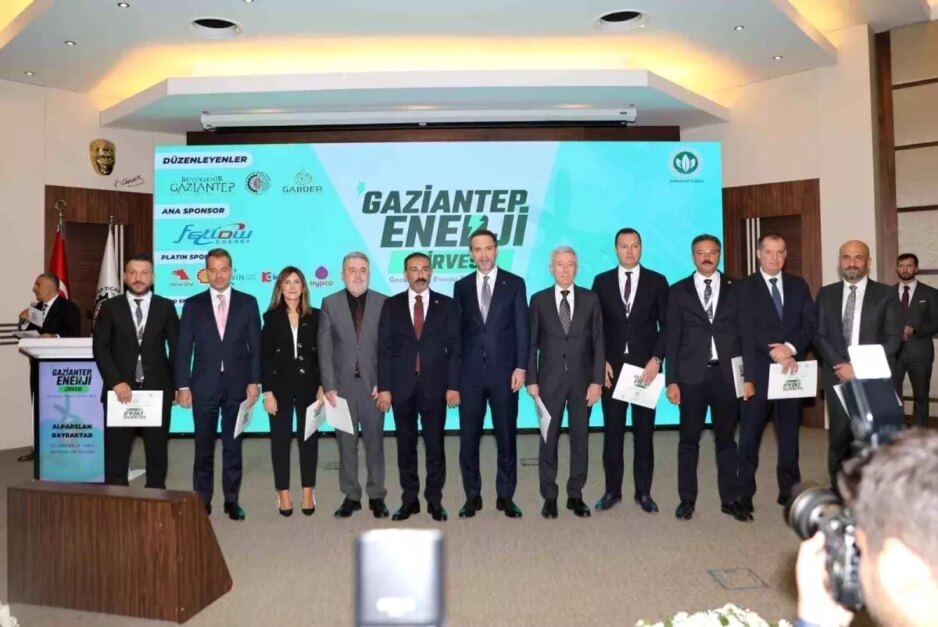
Nergiz Kadooğlu Çifçi, Deputy Leader of the Association of Fuel Main Distribution Companies (ADER), brought the department's problems and analysis proposals to the language at the Power Hill held in Gaziantep.

Gaziantep Chamber of Commerce, Metropolitan Municipality and Gaziantep Fuel Dealers Association (GABDER) held within the scope of the Power Peak, ⁇ Overview of the Fuel Department ⁇ Speaking at the panel with bets ADER Deputy Leader Nergiz Kadooğlu Çifçi, stating that they are doing a troublesome job, ⁇ Fuel business is a difficult segment. We are trying to supply uninterrupted fuel to our country from all over the world. In addition, we are a very valuable department that tries to provide the best service and the most beautiful retailing 24/7 at our stations. But unfortunately, we are doing this job with very low profitability and in an environment where the competition is so heated.

Drawing attention to the problems of the fuel sector, ADER Deputy Leader Nergiz Kadooğlu Çifçi said that public and private branch cooperation is very valuable in the analysis of issues. Emphasizing that they are always on the side of common sense, Kadooğlu Çifçi said, ⁇ We always think that public, non-governmental organizations and private sector should support each other by meeting on the common ground. The decision of our regulators is invaluable. We always argue that the decisions taken should be analyzed. In each decision, the effect should be analyzed so that when this work is reflected to the players of the department, the mishaps are minimized.

⁇ Delay in ship supply ⁇

Reminding that they had some problems that negatively affected the department at the beginning of 2023, Kadooğlu Çifçi said that the problem was solved with the synergy created with the common mind. Kadooğlu Çifçi, who said that there have been delays related to ship supply in fuel shipment in recent periods, ⁇ We are facing some problems even though we try not to make our dealers feel this problem we are experiencing and to provide the most adequate service. While we are experiencing these problems, we also ask for the following basis, as if, in such a violent period, a reinforcement can be provided for national stock keeping in the past? Because today we are going through a thoughtful period as a department. Another issue we have as a branch is our expenses, which are our bleeding wounds. The costs of both distribution companies and our dealers are increasing every day. We're experiencing a brain drain in the department. Unfortunately, we are not able to attract well-educated young people to the department and we lose the experienced managers in the sector to the other departments. When this is the case, we can neither rejoice in the 21 percent growth in fuel oil nor can we develop work related to the stable going motorine. We have become a branch that has been overwhelmed and worn out with all the operation works.

⁇ National vehicle recognition system starts a new process for us ⁇

Kadooğlu Nergiz, who introduced what he sees as an application that will affect the branch of the National Vehicle Recognition System, stated that the public, NGOs and private sector do not meet at a common point in this bet, and our knowledge about the ⁇ National Vehicle Recognition System is still very incomplete and our belief in the possibility of this work is very low. We see a high probability that the cost increases will be reflected in the price of the latest consumer. In the last 15 years, fuel sales have increased by 50 percent and diesel and LPG by 125 percent. Moreover, despite the support of alternative fuels, this increase was achieved. These demand increases were achieved as a result of the studies carried out with the applied programs and branch resources. On top of all this effort, the National Vehicle Recognition System is starting a new process for us. We say it is starting, but now we have not witnessed its installation at a station, we do not know if there is any test for LPG. I mean, we don't exactly have an opinion. With this application, an additional cost of $20,000 per station is mentioned. We are talking about an investment of 2 thousand, 2 thousand 300 liras per vehicle. We are talking about the cost of approximately 10 billion TL for 12,500 stations and 16 billion TL for 8 million commercial vehicles. In addition, in the new year, these costs will increase at the rate of inflation. We think that it is not fair that this will increase at the annual inflation rate within three months after the announced prices. We're not so sure our department can handle this. To be honest, whoever does this job, whenever it is done, it is a huge investment. Meat does not leave the nail. We are a distribution company and dealers as a whole. If there is a cost added to which side, the other side will be affected. For this reason, we attach great importance to the fact that all stakeholders in the department act with a common mind for this kind of application, and we make the necessary effort to be positive for the benefit of our segment.

Kadooğlu Çifçi, who stated that they always support the effort with the unregistered, drew attention to the problems caused by the increase in the credit card usage rates in the sector and the burdens experienced with transportation costs, and gave information about ADER ⁇ 's analysis proposals.

In the panel moderated by GABDER President Mehmet Ergün Demir ⁇ in, Energy Market Regulatory Authority Deputy Leader Yılmaz Tamer, TOBB Turkey Petroleum and Petroleum Products Industry Assembly President Ahmet Erdem, Petroleum Works Employer Union President İmran Okumuş and Turkish Fuel Dealers Oil and Gas Companies Employer Union President Murat Bilgin also brought their opinions and proposals about the issues related to the sector to the language. ⁇ GAZİANTEP

The search for multiple solutions in logistics cost clamp continues

Since production costs in the global economy do not show great differences today, price competition is also moving away from being an element that strengthens the exporter's hand. It is a well-known fact that logistics services, strategies and cost elements have become more important in terms of competing in global trade. Logistics bases are seen as an important leverage in terms of being close to export markets and providing competitive advantage. As a matter of fact, logistics companies have accelerated their warehouse investments, especially in Europe. The Ministry of Transport and Infrastructure's project to open 6 logistics bases abroad also seems to have gained momentum.

4 ⁇ of the bases called Turkey, Foreign Logistics Distribution Networks (YDL) are planned to be established in Europe and 2 ⁇ in the USA.

In the geography where Turkey is located, transportation routes and trade routes are changing with the effects of political crises, wars and sanctions. In such a conjuncture, the main goal is to increase the competitiveness of exporters and logistics companies together.

The data we received from the sector representatives indicate that logistical capabilities in external transportation increased by 15 percent to 25 percent according to the regions, with the effect of changing routes. At a time when delivery times have increased by 25-30 days due to the Red Sea crisis, Turkey is trying to turn the logistics advantage in trade between the Far East and Europe in favor of trade corridors.

New Ro-Ro lines and port investments needed

On the other hand, the more effective use of multiple transport models in foreign trade transportation offers exporters the advantage of delivering products to the targeted points quickly as well as the cost.

The expansion of Ro-Ro and Ro-La combined transportation in multi-transport, called combined or intermo ⁇ dal, is among the most important expectations of the logistics sector. Increasing the number of Ro-Ro lines and the number of countries that can be reached with Ro-Ro will be a development in line with these expectations.

In this way, exporting organizations and logistics companies will benefit from Ro-Ro services at more competitive prices. In achieving this goal, the development of port infrastructure and superstructures suitable for Ro-Ro transportation, the speeding up of the railway connections of the ports by public hands are expressed as the priority expectations of the logistics and foreign trade sectors.

The International Transporters Association (UND), the most important professional organization in road transport, argues the following view by underlining that exports should be increased by an average of 10 percent every year in order to reach the export targets of 575 billion dollars of goods and services targeted for 2028; ⁇ Effective logistics services, which have increased our country by 9 places in the Global Logistics Performance Index in the last few years, need to be regulated and bureaucracy at border crossings should be reduced.

Activation of logistics infrastructures and maximum digitization of processes are also very important. In addition, by feeding the tax facilities that will increase the competitiveness of our logistics companies with investment support and incentives, we can ultimately pave the way for our exporters to reach the close and distant target markets faster and more affordable than their competitors. We still have the opportunity to achieve our targets for 2028. ⁇

Boltas Sales & Marketing & Customer Experience Director Güney Gedik: We choose the most convenient modes of transport

Increasing logistics costs create a challenging situation for many companies in the industry. At Boltas, we are able to adapt quickly to changing cost conditions and continue to offer competitive costs to our customers. With our strong structure in Europe, we provide our importers and exporters with the most up-to-date information on trade regulations, customs processes and local regulations. We can provide support within our own structure at every point from loading to unloading, from storage to domestic distribution. We develop cost-effective solutions by offering our customers flexible choices between various modes of transport.

Ares Logistics Strategy and Business Development Director Yiğit Şenbağ: Increasing costs create pressure

In addition to the current challenges of the logistics sector, it is a known fact that in recent years it has also faced problems such as driver procurement, equipment ⁇ fuel costs, and Schengen Visa, which are in a constant trend of increase. As Ares Logistics, we continue our investments including abroad in order to provide sustainable service to exporters. We produce solutions that provide cost advantages with different route preferences and combined transportation types. The extra costs caused by current conditions also reduce the profitability rates of logistics companies. Investments in extra vehicles, drivers, equipment and technological infrastructure have become plans to overcome the contraction in the market and increase competition.

Talay Logistics General Manager and Board Member Mehmet Yiğit Altıparmak: Long-term planning and collaborations are important

We provide as low cost as possible with the long-term plans and collaborations we have made. We make agreements such as block train, ship commitment in advance. So in a sense, we can say that we win when we buy. This allows us to offer our customers ambitious low costs. One of the most important factors for our producers to hold on to foreign markets is that such advantages can be offered to them. In order to be assertive in our competitive environment, we assume the risk with previous agreements. We try to minimize costs by combining factors such as the right agreements, strong connections and industry experience in the best way.

General Manager of Almark Logistics Onur Güvenler: It's not easy to optimize costs

Currently, I can say that logistics companies have difficulty in optimizing costs. At such times, it is seen that some companies stop their activities and some go on the way of merger with company marriages. Strategies such as consolidation and load optimization, alternative modes of transportation, technological investments, supply chain optimization, risk management and collaboration with global networks help logistics companies to offer their customers an advantage despite increasing costs. As Almark Logistics, we provide our exporters with advantages such as speed and efficiency, storage and inventory management, cost efficiency, security and traceability, technological infrastructure and innovation, 24/7 support.