Controversial EU-Mercosur trade deal enters into force temporarily

After more than 25 years of negotiations, the trade agreement between the European Union and Mercosur countries (Argentina, Brazil, Paraguay and Uruguay) came into effect temporarily on Friday.

European Commission President Ursula von der Leyen has effectively avoided a parliamentary vote on the full ratification of the agreement, continuing the provisional application despite the legal objection before the Court of Justice of the European Union.

Von der Leyen, X’e wrote: “The temporary application will show the tangible benefits of the agreement.”

“And how legitimate sensitivities are handled.”

The EU president is expected to hold a video conference on Friday to celebrate the agreement with the leaders of the Mercosur nations.

The agreement eliminates customs duties on a large part of trade between the two sides, creating a free trade zone between the EU and Mercosur countries with more than 700 million people.

On Thursday, the EU President called the agreement “ good news for EU businesses of all sizes, good news for our consumers and good news for our farmers, who will get valuable new export opportunities with full protection for sensitive sectors.

Opposition to the agreement

However, the agreement was not welcomed by everyone in the same way. While supporters believe this unlocks new markets vital to the economy, critics warn that this could undermine environmental standards and regulations and harm AB’'s agricultural sector.

The European Commission signed the agreement on January 17, ’, after receiving the support of the majority of member states. However, some member states opposed the agreement, and France was at the forefront of the opposition.

Many EU farmers also expressed their dissatisfaction. Before the signing of the agreement, they took to the streets with their tractors to protest unfair competition from Mercosur imports.

Belgian farmers blocked roads in Brussels' ’ to protest the EU-Mercosur free trade agreement. December 18th, 2026. It's Brussels, Belgium.

In the European Parliament, however, opponents won a majority in the ’ to be referred to the Court of Justice of the European Union, ’na, to assess the legality of the agreement. If the European body decides against it, the agreement will be halted.

Under pressure from supporters of the agreement, such as Germany and Spain, who are eager to access new markets amid mounting geoeconomic tensions, von der Leyen opted for the provisional application.

However, the Commission was only able to do so after at least one Mercosur country ratified and declared the agreement.

Brazil, Argentina and Uruguay have already done so, and Paraguay’ is expected to follow suit.

A meeting was held in Asuncion, ’, Paraguay on Saturday, January 17, 2026, to sign a free trade agreement between the European Union and Mercosur.

President Luiz Inácio Lula da Silva, at a ceremony to celebrate the development in Brasilia’, said that there is nothing better than to believe in the implementation of “Democracy, multilateralism and sincere relations between nations”.

Bolivia, the newest member of the Mercosur’, did not take part in the negotiations but could join the agreement in the coming years.

Deutsche Bank, Santander and UBS’'s profits rise due to market impact of Iran war

Europe’'s biggest banks and an oil giant reported generally optimistic first-quarter results on Wednesday, despite executives pointing to the growing uncertainty stemming from the Middle East conflict and its ripple effects on energy prices, consumer confidence and European interest rates.

Leading European ​​banks saw a short-term increase in their performance as commercial revenues benefited from fluctuations linked to the Iranian conflict, despite increased long-term macroeconomic risks.

GermanyDeutsche Bank, ’'s largest lender %A record post-tax profit of €2.2 billion every three months with an increase of 8, while pre-tax profit %7 increase to 3 billion Euro’. Pre-tax profit of the private bank division %It increased by 39 to 681 million Euro’.

The Net Income %2 increases to 8.7 billion Euro’.

The assets under management rose to 1.8 trillion Euro’, supported by a net entry of 22 billion Euro’ in private banks and asset management units.

Chief Executive Officer Christian Sewing said: “The record profit of this quarter gives us a great start to the next phase of our strategy.​​

“We have the balance sheet strength, capabilities and strategic location to serve our customers worldwide in a dynamic environment, ” added.

CFO Raja Akram pointed out that artificial intelligence and process restructuring are key drivers of cost resilience, adding that the investment bank serves as a valuable advisor to customers in a “zorian macroeconomic environment.

At the same time, credit losses equivalents, with the bank pointing to a macroeconomic indicator reflecting a broader uncertainty %It increased by 10 to 519 million Euro’.

The results came at a time of heightened economic and geopolitical uncertainty. The Middle East conflict, which erupted at the end of February, triggered eurozone inflation in March. %raised 2,5’e and for the first time in years, the European Central Bank strengthened expectations for ’'s interest rate hike; This shift supports net interest margins in the near term, but increases long-term credit risk due to the reflection of energy costs on households and companies.

Deutsche Bank has maintained its all-year revenue target of around €33 billion and said a €1 billion repurchase is on the way. Following the update, the shares of Avrupa’da are approx. %3 is down.

Banco Santander: Spanish banking giant announces impressive results

Banco Santander, the largest lender by market capitalization of ’, also reported record results; attributable profit, influenced by earnings of €1.9 billion from the sale of Santander Bank Polska’ %€5.5 billion increased to €’, up 60 percent.

When this one-time subtracted, the base profit is approx. increased to 3.6 billion Euro’. Income, net interest income and wages %6With the effect of ’ increase %4 increase to 15.1 billion Euro’.

The costs are %The efficiency increased by 3 drops. Santander, medium single-digit income growth and ,8-%He said he is on track to achieve his goals all year, including a CET1 rate of 13’.

Rate of capital .4’e rose and provided enough buffer to absorb potential stress.

The bank also continued its shareholder returns with a repurchase target of 5 billion Euro’ and a repurchase target of at least 10 billion Euro’ in 2025-26’.

According to the results of 2025, the total wage paid to shareholders is around 7.1 billion euros, which is roughly equivalent to the attributable profit. %It is equivalent to 50’.

A warning came from the Openbank section of Santander’; Fundamental profit here fell to 290 million Euro’; This was hit by a €207 million response to potential engine financing complaints at ’ in the United Kingdom and the end of tax incentives for electric vehicles at ’ in the United States.

If the bank excludes this provision, the pre-tax profit %He said it would go up by 15.

UBS Increases Profit by 80%

Influenced by UBS, asset management and commercial power, %It reported an increase of 80 to $3.04 billion.

Revenue increased to CHF 13.6 billion’ye (EUR 14.7 billion), while profit before basic tax %It's up 54.

The bank confirmed its $3 billion buyback program, which is expected to be completed by the end of the second quarter, and said that the CET1 rate %He reported 13.8.

The economic impact of the conflict in ’, Iran, will continue to be manageable if it is short-lived, but the duration is a significant risk, the executives said.

The European Central Bank warned that the war triggered a downward revision in its outlook for short-term growth, as energy price shocks and rising uncertainty would likely negatively affect purchasing power and business confidence, while also increasing financing costs for banks and firms through bond spreads and stock prices.

For now, bank earnings seem resilient, but as the macro chart evolves, analysts are closely monitoring credit quality.

TotalEnergies’ net income %Increased by 51

TotalEnergies, a French multinational oil company, has announced that its net income will be supported by strong oil and gas prices and tightening global markets. %It reported an increase of 51 to $5.8 billion (4.95 billion euros).

Quilter Cheviot’tan Maurizio Carulli, “TotalEnergies, published a strong first quarter results above expectations” said and added: “Strong organic production growth is helping to offset losses due to ongoing conflict in the Middle East’.”

Production on an annual basis approx. %4 is increased; A similar growth is expected in the second quarter, excluding disruptions.

The company is at the peak of expectations for the second quarter of 2026’ %It announced a 5.9-dividend increase and a $1.5 billion share buyback.

Gas markets remain tight as oil prices expect to remain high in the second quarter due to a delay in production restarts; European prices stand at $14-15 per MMBtu due to low storage and LNG competition between Europe and Asia.

German automotive outlier value

At the same time, the German car manufacturer Mercedes-Benz also announced its first quarter profit. Automobile manufacturer in operating profit in the first quarter ’ in a sharp decline of 1.9 billion Euro’ya, while in revenue %It reported a decline of 4.9 to 31.6 billion Euro’.

Adjusted operating margin in the automobile division from the previous year %from 7.3’ten %4.1’e has declined and net profit is also declined to 1.43 billion Euro’.

German automaker in sales in China’, where lower-cost local competitors such as BYD and Nio are moving towards the premium segment %In addition to a collapse of 27’, the US is being squeezed in many ways, including ’'s tariff pressure and the costly transition to electric vehicles.

Despite the decline, the figures exceeded analysts' expectations of operating profit of €1.6 billion, with shares trading in pre-market transactions %It increased by 2.2 percent.

CFO Harald Wilhelm said that the company's all-year group EBIT ’ is on track to become ’, significantly above last year's result of €5.8 billion “, pointing to healthy order books and 40 new models planned between 2025 and 2027; These include the all-electric CLA sedan and the revamped S-Class series.

Mercedes also marked the conflict in the Middle East’ as a risk to consumer confidence; This is a widely shared concern in the European industry.

Inside ’'s Supply Chains: Why are companies sourcing from ’ in the UK?

European ​​manufacturers are increasingly moving their supply chains across borders, leveraging suppliers, skills and production in multiple countries. For companies like Bosch, the UK plays a special role in this network and contributes to a unique set of skills and expertise.

Steffen Hoffmann, managing director of Bosch UK and Ireland, says “Europe is a largely integrated economy, and ”It won't be enough to search for talent in just one country.“

Like many major manufacturers, Bosch operates across Europe through a network of production facilities, research centers and national businesses, supplying components from different countries and supplying multiple markets.

Hoffmann explains how this works in practice: “Birmingham and ScotlandUnited KingdomWe have numerous plants for industrial products in ’, including hydraulic drives in ’, and a plant for heating boilers in Worcester’. They all work with suppliers, some are based in the UK, but they all supply multiple countries.”

Suppliers provide components such as mechanical parts, materials and electronic systems and are selected not only for their ability to serve a local plant, but also for their competitiveness across Europe.

Jo Shepherd, CEO of Worcester Bosch’, Bosch’'s UK-based heating business, says ’ that frictionless trade is vital to “ supply chain efficiency and speed to market, helping to ensure consistent quality and reliability across markets.

Durability and innovation

Sourcing decisions are increasingly being shaped by broader economic and geopolitical factors. For European ​​ companies, resilience and independence are becoming increasingly important, and this cross-border model also helps manage risk in an increasingly uncertain global environment.

Durability and reliability are absolutely essential for every manufacturer, and this approach, “ adds, gives us more flexibility and less short-term exposure to global geopolitical fluctuations.

Access to talent and innovation is another important factor in resource-finding decisions. ’'s research base supports the development of new technologies that directly feed supply chains.

Hoffmann says: “We have a great university environment; Not only in Oxford and Cambridge’, but also in London’ and elsewhere in the country, we provide a good alumni and talent pool and a very lively start-up ​​ stage.”

This combination of academic strength and entrepreneurial activity fosters the broader competitiveness of Avrupa’, creating opportunities for cooperation and investment.

Local expertise, on a European scale

Operating in more than one country also presents challenges. Products and services need to be adapted to local regulations and customer expectations in each market.

For Worcester Bosch, this means combining insights from business across Europe with local knowledge from ’ in the UK. Shepherd, UKReferring to how products and services are specifically designed for customers in ’, “ says it's important to take what you've learned and apply it with true local care.

This combination of shared knowledge and the ability to respond to local needs is central to maintaining performance in different markets.

Strategic value in a changing world

As companies build more integrated supply chains across Europe, this approach is also strengthened at the policy level. As Her Majesty's European Trade Commissioner Ceri Morgan’ explains, the focus of the UK’ is now on strengthening cooperation and creating a more stable environment for businesses operating across borders.

The relationship with his words “starts from a very strong foundation”; Europe, the United Kingdom, continues to be ’'s largest export market.

Hoffmann, “We need to try to maintain a certain [regional] independence, ” says. “If we want to be taken seriously, we need to have a footprint, which requires independence from some other parts of the world.”

In this context, with its strong research capacity, established supply chains and stable business environment, the role of ’ as a partner in Europe’ is becoming part of a wider business decision.

UK Government policy reinforces this position. ’'s Industrial Strategy aims to support fast-growing industries, strengthen supply chains and attract global talent while providing long-term stability for business and investors.

A practical partnership

Both Hoffmann and Shepherd, UK, are clear that ’'s value lies not in a single advantage, but in how it adapts to a wider European system of cooperation.

For Bosch, sourcing from ’ is part of an integrated approach that combines talent, innovation and reliable supply chains. This is a practical partnership shaped by day-to-day cooperation rather than abstract policies.

As European ​​ companies continue to adapt to a more complex global environment, this model, based on common standards, local expertise and cross-border cooperation, will continue to be at the heart of sourcing and growth methods.

Germany forecasts GDP due to impacts of Iran war %1’den %Dropped 0.5’e

On Wednesday, German Minister of Economic Affairs and Energy Katherina Reiche said there was a sharp decline in the projected GDP ’ and that the 2026 growth target was %0.5’e announces withdrawal.

This was first predicted in January. %1’ represents a sharp decline from the growth rate and marks a long period of stagnation for the Eurozone's economic engine.

According to the latest figures released by the German government, the outlook for 2027’ has also been negative; Growth forecasts before %Estimated at 1.3 %Reduced to 0.9’.

This official approval comes after days of speculation about the resilience of the German industrial model in the face of rising global tensions.

Officials at Berlin’ noted that a downward revision was inevitable and that the main catalyst for this economic contraction was the ongoing Iranian war, which triggered a major energy shock across the continent.

Germany, as a major industrial center, is particularly susceptible to fluctuations in oil and gas prices; In both cases, there has been an increase in prices since the beginning of hostilities.

Government reports state that the effects of the “Iran war have disrupted ” supply chains and increased raw material costs, making it difficult for German exporters to remain competitive at the global stage.

The uncertainty surrounding the war also led to a noticeable “wait and see ” approach among private investors. Many firms have opted to suspend major expansion projects for fear that a wider regional tension could lead to more volatility in the market.

This lack of investment, coupled with high household energy bills that reduce domestic consumption, has created a pincer movement over the German economy.

Italy follows the same path as fiscal adjustments

Germany is not the only major European ​​ power that has had to adjust its expectations; The Italian government also moved to lower its economic outlook on Wednesday.

Italy forecasts GDP growth in 2026 %Estimated at 0.7 %It dropped to 0.6’.

Italian officials have noted that the “Iran war has placed a heavy burden on their financial planning, especially because the country is highly susceptible to fluctuations in energy prices.

Italian Economy Minister Giancarlo Giorgetti, referring to the Iran war, said “We are facing completely exceptional conditions, not normal.

While Giorgetti highlighted the current uncertainty surrounding the forecasts, “ added that unfortunately the figures will likely need to be reviewed, adjusted and updated in the coming weeks.

Giorgetti also said that the budget deficit was seen at 2.9 percent ’ of GDP this year, above the previous target of 2.8 percent ’, and would fall to only 2.8 percent ’e in 2027’ compared to the previous target of 2.6 percent.

Earlier on Wednesday, the Italian national statistical bureau confirmed that Italy’ had announced a budget deficit of 3.1’i of 2025’te GDP, which frustrated Roma’'s hopes of exiting the EU disciplinary procedure this year due to the ’ over“ deficit.

Simultaneous grade drops in Berlin and Roma’ point to a wider systemic weakness across the Eurozone.

As energy-intensive industries struggle to cope with the new geopolitical reality, the prospect of a rapid economic recovery across the continent seems increasingly remote.

From crisis to cooperation: How did the EU deal with the troubled 2019-2024 period?

A five-year cycle of turmoil; From COVID-19’ to the war in Ukraine’ and the resulting energy shock and rising inflation, the European economy has been rocked by an unprecedented series of crises over the past half-decade. As AB’'s Economic Commissioner Paulo Gentiloni’ put it: Referring to the highly improbable sequence of events such as the pandemic and Russia’'s invasion of Ukraine’, no one could have predicted that we would experience two Black Swans in a row.“

As Europeans prepare to go to the polls for parliamentary elections in June, the Real Economy is assessing AB’'s economic performance in this difficult period and its prospects for a recovery in the next period. How can the bloc boost growth and productivity, is the Green Deal still on track, and does trade relations with countries like China need to be reset? These are the big questions facing voters who are preparing to give EU institutions a new mandate.

Desperate times, desperate measures

At a time when desperate times demand desperate measures, AB’'s response to numerous crises has hitherto reached unimaginable proportions; The huge €800 billion New Generation EU fund was a historic economic gesture. This program, implemented to accelerate the bloc's post-pandemic recovery and green and digital transition, saw member states issue joint debt for the first time.

But COVID has also forced Brussels’i to temporarily leave its fiscal borders. Since then, many member states have reached record debt/GDP rates; This is a problem exacerbated by the energy shock and high inflation in the 2022’. The recently revised spending rules aim to gradually bring them back under control. Post-pandemic funds will also end in 2026’, and now the real question is: Will Europe have the money it needs to invest and compete for the future?

EU Commission President Ursula von der Leyen, “What started with a virus too small for your eyes to see has turned into a huge economic crisis that you can't miss.

A shared burden

The platform for combating this crisis was the debt-sharing program envisaged under the NextGenerationEU fund. So, four years after its inception, how do MEPs view such a financial instrument? Do they see this as a successful plan for the future, or should it turn into an economic taboo?

Renew Europe Group’tan Renew Europe Group’tan Stéphanie Yon-Courtin Real Economy’ye said: “For the first time in this war between conservative countries and Club Med countries, we never thought we could agree on a common debt, and this is a historic event.”

According to Philippe Lamberts’e, a member of the European Parliament and co-chair of the Green Group, the fund offers the possibility of intercommunal cooperation in the future: I see “NextGenEU’ as a prototype. And it's important that the prototype flies well so we can make it truly permanent.”

His vision is also shared by deputy Margarida Marques of the ’ Group of Socialists and Democrats, who sees the vehicle's potential to achieve Europe’'s long-term goals: “NextGenerationEUAfter ’, a new investment mechanism should be created to invest in climate transition, digital transition, European Pillar of Social Rights’na and defense.”

But the figures on the right have a slightly less utopian view: “Right now, if you have high-indebted countries, but they can benefit from this new box of Pandora’, which is a European common debt, if they can benefit from it, this creates a whole new game when it comes to finance, so we believe that this is a mistake and we shouldn't go down that road, said Michiel Hoogeveen, a deputy from the European Conservatives and Reformists Group of ”.

So what is the position of the EU Commission’? Will he be able to use these economic tools again? The fund is an expression of AB’'s fundamental concept of closer unity, European Commissioner for Economic Affairs Paolo Gentiloni believes: How can we participate in the global race for clean technologies, against the challenges of competitiveness, without even a single euro of co-financing? I think it's really impossible. - ”

Will you be struggling with debt or will you be borrowing money to invest?

However, whether it is jointly undertaken or undertaken, the debt must always be checked. The recently revised financial rules aim to reduce debt generated during the pandemic. This meant a return to old threshold values, such as deficit, which is 3% ’ of annual GDP and debt, which is 60 percent ’, respectively, while member states were given more flexibility on how to act on debt reduction.

But will there be enough money to pay for things like the green transition, especially with post-pandemic financing ending in 2026’? While investment is necessary, unlimited borrowing is not a solution to achieve it, writes Manfred Weber, President of the European People's Party: On the “ Debt side, you know, we struggle with that a lot. At the moment, nobody knows how to pay interest rates, says ”.

That's why debt means fewer opportunities for the next generation to invest. We need economic growth, this is the power base of Europe’, we are economically strong and we need to restart the engine.”

For Gentiloni’, Europe's debt burden should not distract from the critical need for investment: In general, we cannot say that the problem of the EU and the Eurozone is our very high debt, it is a problem for the single member states, we have to address it, we have common rules, but at the same time we have to compete at the global level.

For ’den Philippe Lamberts’, keeping up with AB’'s global competitors is even more important: If you want the green transition, digital, defense and all other investments to happen, yes, we will have to borrow because not all of them will be financed by cuts or new taxes elsewhere, and in fact some of them should be national borrowing, and some of them should be co-indebted by the European Union.

Analyst Jeromin Zettelmeyer, director of the economic think tank Bruegel, believes that Brussels’ will continue to share debt as a tool to achieve its primary goals. “I think the idea of you supporting public investments at the EU level will continue reasonably, because otherwise we could probably give up on the Green Deal’.

Dealing with China

While EU policymakers face an uncertain future, trade tensions with China are another hot topic. Brussels has accused Beijing ’i of subsidizing key sectors while restricting access to its own markets. For now, the European Commission’'s policy was to buy ’risk from China‘, but will it have to go further? Peking’in must be convinced of the benefits of working with Europe, reformed MEP Stéphanie Yon-Courtin believes: “It should be a win-win-win situation, says ”.

“First of all, the European Union must stop being naive. The relationship should be between commercial partners and, of course, should continue to work with partners as long as they agree to our rules.”

Michiel Hoogeveen, Member of the European Parliament from the European Conservatives and Reformists Group ’, believes that cooperation with China should be explored: Let's go and try to talk to the Chinese, let's really talk about how we can create [an equal playing field], how we can make deals, and also recognize that a country can be more competitive in building maybe electric vehicles, maybe solar panels or wind turbines. Well, if the Chinese are willing to pay for our energy transition, then we are also willing to pay for our own energy transition.” sources in other areas, says ” Hoogeveen.

But the view on the left is more cautious. Margarida Marques, a member of ’'s European Parliament, believes that before China can open the door to ’, Europe must establish its own order: “ In order to compete with other economic areas, we must be a bloc, an economic bloc, and for this we must ensure that the domestic market can work in this direction.

Greens’den Philippe Lamberts “First stop being naive” says. I mean, China is protectionist, the U.S. is protectionist, and we, “pekala, shouldn't restrict access to our market because they're going to restrict access to theirs. They're restricting access to their markets!

Manfred Weber, chairman of the European People's Party, agrees that future trade relations with China will likely be complicated: “We need to maintain economic ties, so no one wants to stop them, but we need to rebalance this and be ready to defend our markets in such a strategic battle with the Chinese.

Stability and growth prospects

Finally, given the great challenges faced by the European ’ in recent times, what is the current economic picture?

Jeromin Zettelmeyer, director of the Bruegel think tank, says “Inflation is falling. “ECB expects to return to the target earlier, and they expect to unwind in the next quarter. Therefore, there is a feeling that there will be a recovery in the summer months, and the main factor here is the recovery of real incomes and the growth of wages with the fall of inflation.”

The future may be challenging, but European Commissioner for Economic Affairs Paolo Gentiloni believes the European Union is on the right track.

The response to the “ Outbreak was unprecedented in the – SURE mechanism, NextGenerationEU. The response to the war was unprecedented. Unity on sanctions, political reaction and separation from Russian gas. But if we see the acceleration of activities in 2024’te, I think we will come to the conclusion that we can properly address these two black swans, says ”.

In fact, we can all be forgiven for hoping that the next election period will be less turbulent than that.

How AB’'s new disabled cards make cross-border travel easier

The right to move and reside freely within the EU is the cornerstone of European citizenship. But while this is possible in theory for many people with disabilities, the reality is very different.

The new EU-wide European Disability Card and the updated EU parking card for people with disabilities aim to solve this issue by allowing users to prove their disability anywhere in the bloc.

According to the European statistical agency Eurostat’, about 101 million people, or 27 percent of EU citizens over the age of 16, are disabled.

Eight EU countries (Belgium, Italy, Finland, Malta, Cyprus, Estonia, Slovenia and Romania) have been piloting the European Disability Card since 2016’. The success of the trial prompted Brussels ’ to press for full implementation throughout the bloc, and on 8 February this year the European Parliament and Council reached a provisional agreement.

MEPs also agreed to update the European Parking Card for Persons with Disabilities with a standard EU design to end the confusion and fraud caused by the current fragmented nature of national cards.

The agreed text is expected to be formally adopted by both the Parliament and the Council and to be put to a vote at the last plenary meeting of the European Parliament, ​​, from 22 to 25 April.

the European Disability Forum“ described recent policy developments as a significant victory, but stressed that they were a first step. For example, the new rules will only apply to short stays of up to three months, except for holders of disability cards who have moved to another member country for a mobility program such as Erasmus+.

In addition, member states will have 30 months to adapt the new rules and 12 months to formally implement them; This means that it will take another three and a half years for the card to become accessible throughout the EU.

Yannis Vardakastanis, President of the European Forum for Persons with Disabilities (EDF), euronews’e said: “Cards is the first step. They remove some obstacles while traveling. They make it easier, but they don't allow us to take advantage of the right to move, study, and study. Disability assessment needs to be re-evaluated. Our disability does not travel with us.”

More than just making travel easier

Both cards will replace national cards already issued by local authorities. Once the application is submitted, it will be issued in physical or digital format within ninety days, except where longer medical check-ups are required. Receiving and renewing the European Disability Card will be free of charge, except if it is lost or damaged.

Cardholders travelling to other EU countries will be able to benefit from discounts on local transport, assistance on trains and other public transport, reduced or zero entry fees, priority access and reserved parking spaces.

The new rules will also include care support staff or care support animals. Those who don't have additional support and need more help can add the letter ‘A’ to their card, earning extra help when shown.

When a provider, such as a gallery or museum, participates in the program, cardholders in other participating countries have the same rights.

Živa Rogelj, Director of Education National Gallery of Slovenia, explained that they are trying to make the gallery as accessible as possible, “not just free entrance for the people with disabilities but also personalised guided tours or personalised creative workshops free of charge, ” she said.

Former Paralympic athlete Primož Jeralič used disability and parking cards in many EU countries thanks to the pilot program.

Former Paralympic athlete Primož Jeralič was almost completely paralyzed from the waist down after a skiing accident at the age of 24. He's using both cards today.

I have been a disabled person for about 16 years and it has been difficult to travel to introduce myself, especially in the European ’. Now that I have an EU Disability Card, I can easily be recognized as a disabled person, ” said.

“I must say that at first I was afraid to show my handicapped card. But I was really surprised because this card is recognized all over Europe’. I travel a lot and have used this card in Belgium’da, Italy’da, Austria’da, Croatia’da, Germany’da and all over Europe’.

Possible next steps

National Council of Disabled Organizations of Slovenia(NSIOS) calls for two cards to be made into a single card to avoid any confusion with local authorities and to make it less stressful for people with disabilities to travel.

Gašper Oblak, NSIOS representative, “We want to raise awareness among people with disabilities. And we want to attract more providers to the card. And finally, we hope that one day the EU card and the parking card will be combined into a single card, ” said.

Pieter is a member of Paul Moen. EDC Fan TeamBelgium’da is a pan-European volunteer organization that strives for better participation of people with disabilities. Pieter’ has autism, and Euronews’e said police sometimes confuse his disability with drunkenness.

“We also want this card to be used in emergency services. You can also use this card when you are in a panic or stressful situation and contact the police, ambulance or hospital. You can prove your disability to doctors or nurses with this condition.”

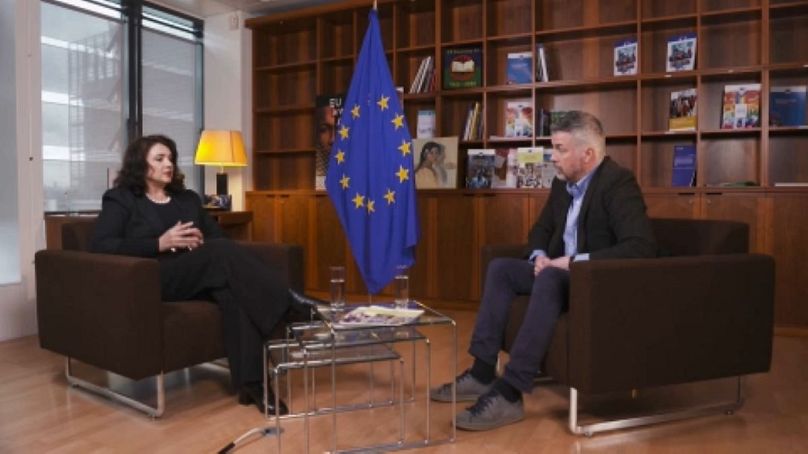
EU Equality Commissioner, Helena Dalli, He explained that the card was a step towards better integration, but also acknowledged that it had some limitations.

“With this card, all the rights that a disabled person has in a country will also apply to all disabled people who visit that country, so this recognition is very, very important.

Euronews’e said: “Of course, we have to abide by the agreements and we cannot go any further than we have done because it is in the jurisdiction of the member states. But this is definitely an improvement over what's happening right now. - ”

EU’ Commissioner for Equality Helena Dalli and Euronews correspondent Paul Hackett Brussels’de

The EDF has been petitioning for the EU Disability Card for over a decade. While the organization acknowledges that the new rules will create greater awareness and acceptance, it argues that cards will not make things easier for people with disabilities who want to move permanently to another member country.

The disability card does not include social security, social assistance and other residence-based benefits. In the long term, people with disabilities who want to move to another state will lose their right to benefit from social security-related benefits in their own country. They may have to wait months or even years for assistance to be processed in their new country of residence.

Despite this, Commissioner Dalli explained that the legislative process was rapid: “I am happy to say that this directive is one of the fastest; I mean, I've never passed legislation this fast before. This shows that member states are keen on this card, which is very important and will greatly improve the lives of people with disabilities.”

The EDF also recommended that cards should not be issued automatically unless a disabled person requests them or explicitly agrees to the issuance or renewal of the card. This will eliminate the need for people with disabilities to show cards as proof of disability for better access to services.

If you want to learn more about the European Disability Card or how to get it, click on the link here. Click on the video in the media player above to watch the episode.

Celebrating the 25th anniversary of Euro’: A retrospective and forward-looking look

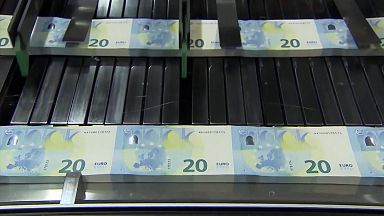
Twenty countries, one currency: The euro is celebrating its 25th anniversary after weathering the storm of various crises and global pandemics and becoming one of the world's most important currencies.

This anniversary provides an opportunity to assess how the Eurozone’ has dealt with these challenges and implemented reforms to ensure the stability of the currency, while also taking into account the achievements and perspectives ahead.

‘Declaration of the existence of a united Europe’

So, why was the euro created in the first place, and how was the currency able to withstand the numerous challenges it faced?

The Real Economy spoke with former President of the European Central Bank (ECB), Jean-Claude Trichet, about some of the milestones that marked the history of the single currency.

The creation of “Euro’ is the need to have a real single market, a real single market, ” explained.

“This was a really big decision, but it was also a kind of claim, a declaration of the existence of a unified European ’. And what we proved was that Europeans really had the capacity to create a serious, powerful currency. Europeans in the Eurozone ’u approves the euro. To me, this is the best of the awards. - ”

Former ECB President Jean-Claude Trichet speaks with Euronews’ten Fanny Gauret.

Jean-Claude Trichet, who evaluated his time as the President of the European Central Bank, stated that “ was the most important influence on him during two very intense periods.

After “'s bankruptcy, the financial world was collapsing, and many extremely important decisions had to be made very quickly. It took a lot of effort.

“Then came the period of May 2010, which marked the real beginning of the state debt crisis in Europe’. In my time, a total of five European countries were in a very difficult situation. And I believe that this required the extraordinarily courageous decisions of the participating countries, their governments and, of course, the European Central Bank, which is at the forefront of all these issues, ’.

Jean-Claude Trichet, who is looking forward to what the single currency will bring in the future, said “ is convinced that the road to a European confederation, a true European confederation with more unity on the budget and economic fronts, as well as real unity in defence, security and diplomacy, is a long-term imperative.

Following these crises, the Eurogroup created the European Stability Mechanism to help member countries facing economic challenges.

In countries that have adopted Euro’, the euro has changed people's daily lives, making travel, shopping or studying abroad more accessible.

How do young Europeans perceive the euro?

We met with a group of economics students at the University of Nanterre, west of Paris ’, to find out how those born in the euro age perceive their currency.

Thomas, “As I was growing along with this, I realized that having a stable and strong currency was essentially an advantage, ” said.

"I think if there are two challenges that the euro has to solve, it is the implementation of harmonised monetary policies for investing in the digital euro and especially in green projects," “ added.

My student friend Benjamin, from “, the European Central Bank, also has a question mark about the future of ’ and the policies it will implement. They could be more egalitarian, ” said.

According to the Eurobarometer’, 79 percent of Europeans living in the Eurozone’ approve the single currency for the whole of Europe’, while 69 percent’ support the single currency for their own country.

Among the most satisfied are Finland, Ireland and Germany; The least satisfied are Croatia, Cyprus and Italy’.

ItalyMixed opinions on the single currency in ’

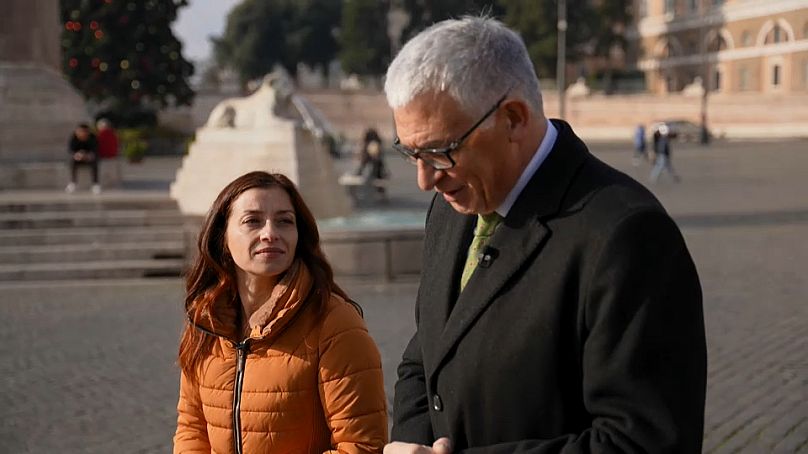
Our final journey will be the Italian capital of ’, Roma’ya, where opinions on the European currency are mixed.

Speaking to Real Economy’, a woman, “, said that this led to a huge increase in the prices of all the products I sold ”.

Another man, “, explained that the situation with the lira was better because it was monetary sovereignty”.

We met Giovanni Farese, Associate Professor of Economic History at the European University of Rome, to find out if there were indeed winners and losers among the members of the eurozone.

Real Economy’ye “Money policy is never neutral, ” said.

For example, economic growth in “ has been disappointing for many of us for the last 25-30 years. Of course, monetary policy is part of economic policy. What is needed is to strengthen other aspects and dimensions of economic policy. But of course, if you have a single monetary policy without a single fiscal policy, you're missing a leg. So the process is lacking.”

Giovanni Farese, Associate Professor of Economic History, European University of Rome

How can the eurozone better prepare for future economic challenges?

Reforms such as a unified fiscal policy could enable the eurozone to better absorb economic shocks.

UkraineAnnual inflation rate in the Eurozone’ since the beginning of the war in ’ October 2022’de %It peaked at 10.6. Later November 2023’te %2.4’e down.

Average annual inflation since the creation of the euro %It is 1.95’.

ECB Board Member Piero Cipollone assured that ECB’, whose mission is to keep financial stability and annual inflation below 2%, will continue its commitment in this direction.

Piero Cipollone, Executive Board Member, ECB

The “Eurocystem has been able to respond to changing conditions over the years. If you need Mario Draghi’'s ‘ne, which changes and stabilizes the market, let's remember the ’ quote. So the important thing is to be ready to understand the truth, to understand how to adapt, to adapt.

“Economy is changing, society is changing, technology is changing, people's habits are changing, and electronic payments are increasingly becoming a daily reality. Therefore, Eurosystem ’ needs to prepare for this. And he's doing it thinking about the banknote of the future, the digital banknote. Digital euro.”

The digital euro will open a new chapter in the history of the European currency.

Can Erasmus-style work placements help solve youth unemployment?

2022 European Year of YouthAnd in this chapter, the Real Economy asks: What is being done to help young people, especially those from disadvantaged backgrounds, find jobs and get an education?

In the European Union, young people aged 15-29 make up one-sixth of the population. They were among the most affected by the economic effects of the pandemic; They were often the first to lose their jobs or see a decline in their income.

Although youth unemployment is declining (in the first quarter of 2021, bruary 2022’de compared to 18.2’ ), young people are still twice as likely to be unemployed as the rest of the working-age population (average %6,2).

the European Youth Guarantee

One in eight young adults in AB’ is neither in education, employment nor education. They are known as NEET’s.

To help young people get started, AB’'s Youth Guarantee guarantees that all young people under the age of 30 enrolled will receive a job, apprenticeship, education or training offer within four months.

Since its adoption in 2013, more than 3 million young people have accepted the offer every year, and more than 36 million people have been helped so far.

Nicolas Schmit, EU’'s Commissioner for Labour and Social Rights, says that when countries implement the Youth Guarantee well, it can have long-lasting consequences.

When we look at the results two years after entering the “Youth guarantee, we see that about half of young people are still in a job or continuing their education or vocational training. So in general, I would say that the Youth Guarantee is a very, very powerful and useful tool if applied well.”

Gain work and life experience abroad

One of the ways to help implement the Youth Guarantee is to offer young people from disadvantaged backgrounds a chance to gain new skills and confidence by working abroad.

It's called a new venture. ALMAWith the goal, ,, which means Learn, Master, Achieve, will deliver exactly that across the EU towards the end of this year. It was inspired by a smaller, existing European initiative called TLN Mobility.

Real Economy, thanks to ’Expedition Ireland‘, part of TLN Mobility’ Ireland, went to meet young people in ’, Czech Republic, who spent time working in Dublin, ’.

Julie Baštová grew up in foster homes, often in difficult conditions. She trained as a social worker but recently went to Dublin’e to pursue a work placement in her passion for graphic design.

Julie explains: “I was able to work in this field without any previous experience. I couldn't do that here. I learned a lot through the program. I could see what it was really like at work. I also helped illustrate a children's book, so I have something to show for it.” explains Julie.

Julie is a social worker but recently went to Dublin’e to do an internship in graphic design.

Building motivation and self-confidence

The total budget is around €100 million. ’i comes from the budget. the European Social Fund– This program has already supported nearly 7,000 disadvantaged young people to find jobs.

Although Julie is now working as a social worker again, she plans to become a graphic designer.

“I continue on this path, I train, and I also do extra work. I've learned to trust myself a lot more, says ”.

Throughout the project, a mentor is available at every step of the way to help participants with topics such as English lessons, finding an internship and providing support.

According to Tomke Trávníček’e, national manager of TLN Mobility’ in the Czech Republic, something of vital importance.

Tomke explains: “Disadvantaged young people with no experience of going abroad often have unfinished education. They're not leaving the Erasmus program because they're too scared. In addition, when they go abroad, their motivation increases, their self-confidence is much higher, and they also gain work experience.”

“I was kind of lost.

Denisa Hönigová suffers from social anxiety, which greatly affects her life. Denisa was unable to complete her education, and due to her condition, she has difficulty maintaining a job.

Ireland has been working in a cafe since he returned from ’ and hopes to start his own business.

Denisa, “, I was a little lost, and maybe hoping to get something better, to improve myself. I think going to a different country, experiencing all the things I've done, constantly working and talking to strangers, actually living with strangers has also helped a lot, ” says.

Denisa says her internship at ’ in Ireland helped her better cope with her concerns and decide her future plans.

This experience allowed Denisa’ to develop relationships with others. The internship also helped him decide what he wanted to do in the future, that is, work in an alternative style.

“This definitely made me realize that eventually I wanted to have my own brand, so I'm working on it.”

In 2019, one in three young people spent at least two weeks abroad for work or education purposes. But this trend can put vulnerable young people with fewer opportunities at a disadvantage.

The new European project ALMA, inspired by TLN Mobility’, aims to offer the same opportunities to disadvantaged young adults.

Nicolas Schmit, Commissioner for Labour and Social Rights at AB’, “This provides what young people absolutely need: Trust yourself, says ”.

“ offers them a new opportunity, a chance to discover something, and at the same time, an opportunity to be autonomous. I think that's what can help these young people build their own lives later, build a career, get a stable job.”

Protection against unpaid internships

The European Youth Forum in Brussels’ warns that certain guarantees must be given to ALMA’ to ensure that placements do not become just unpaid internships.

Manon Deshayes, Policy Officer at the European Youth Forum, insists that “ALMA can be a truly great experience for young people, a real plus, but if there is no guarantee that it will not provide added value to young people, it should come with guarantees of access to salary and social protection.

Naomi Lloyd of Real Economy’ conveyed these concerns to EU Commissioner Nicolas Schmit’e and asked him how to ensure that unpaid internships do not take place.

Every young person who works as part of ALMA’ will actually receive a salary, Schmit said. “The company that employs this young person will have to pay a salary, which should be at least the minimum wage.”

He also added that “ will have – social security, the social protection undertaken by ESF by ”European funds.

“Billions of Euro” to help young Ukrainian refugees find jobs

Suddenly and unexpectedly, a new group of young people who are looking for a job or want to continue their education in Europe’, Russia, are young Ukrainians fleeing the ’'s war against their country.

The European Union gave them the right to work and study, and recently announced funding for aid.

Real Economy’'s Naomi Lloyd met with EU’'s Commissioner for Labour and Social Rights Nicolas Schmit.

“These are funds that are not yet used in compliance funds, but are also used in ESF’, explains Schmit, ”We are talking about billions of euros that can be used quickly.“

“ said that the member states have been invited to receive this money, and that you can use this money very flexibly to finance projects for Ukrainian refugees.

The EU Commissioner also explained how AB’ helped young Ukrainians access the labour market.

“We facilitate recognition through a system that is also translated into Ukrainian: recognition of their diplomas and skills.”

European initiative guaranteeing poverty relief for all children

According to pre-pandemic figures, almost one in four children in Europe’ lives in poverty.

In 2019, it was estimated that 18 million children in the European Union were at risk of poverty or social exclusion. When you compare these children with their better-off peers, they are more likely to perform poorly in school, have difficulty finding a decent job, and have health problems in adulthood.

The global health crisis is making this situation worse.

Eurochild Secretary General Jana Hainsworth reported that countries across Europe are experiencing significant difficulties in “ due to the pandemic. There has been an increase in the use of food banks and the homelessness of families has become a problem. He also adds that the effect on “children is quite dramatic”. Many of them lost their social networks and were greatly affected by not being able to access the school.

What is being done to change that?

The European Commission's European Child Guarantee policy initiative aims to end child poverty if governments sign off.

How will the European Child Guarantee work?

To break the cycle of poverty, the European Child Guarantee asks EU governments to ensure that every child at risk has:

  • Free education, child care, quality health care and decent housing. This also includes a healthy school meal per day and the possibility to participate in activities in the school, including sports, free of charge.

Garanti is implementing the European Pillar of Social Rights, ’, which aims to lift at least five million children out of poverty by 2030.

Member states are asked to register with Garanti’ and create action plans on how to implement it.

Jana Hainsworth says the initiative “ is very promising” and “ is really ambitious”. But he thinks the biggest challenge is ensuring that “ doesn't remain a commitment on paper.

We need to think about an inclusive recovery as we try to get out of this deep crisis, and if we prioritize children, then we create a more sustainable and inclusive future.

Jana Hainsworth
Secretary General of Eurochild

Ultimately, enabling children to access essential services necessary for their development and well-being is the goal of the European Child Guarantee.

Ana Mendes Godinho, EU Minister of Employment, Solidarity and Social Security

AB’'s Minister of Employment, Solidarity and Social Security, Ana Mendes Godinho, also describes this as a way to guarantee “ a globally integrated approach to ” to meet the diverse needs of children in terms of housing, education, care and health.

According to him, this would enable “ to have a national plan with a concrete goal for each member state. But by doing so, we will guarantee equality of opportunity to every child in Europe“ adds.

Financial difficulty cases in Cyprus’

Cyprus’'s growing economy has been hit hard by the health crisis, and the road to eradicating poverty there is still a long one. According to ’, one in three children is concerned about the situation in Cyprus.

In this context, it is hopeless to be a parent and not have the basic needs to give your baby. This is well known to Panayiota Christou’, a Social Worker on the Baby’s Dowry project.

He takes us to the small village of Temvria near Nicosia to meet Mario, a soldier, and Kula, a former part-time gas station employee. With the unexpected arrival of the triplets, their fragile financial situation has destabilized.

They were struggling to find money to buy their children's basic needs, and that's where the EU-funded Dowry of the Baby project came into play. They were provided with basic necessities such as strollers, cribs and baths for babies.

Kula describes it as making their lives easier now and in the future because “project allows us to save some money and use it when children grow up.”

A Cypriot family with triplets who received help from the Baby Dowry

The Dowry of the Baby programme is funded by both Cyprus and the European Fund for the Most Disadvantaged (FEAD). Panayiota says the program aims to help families with children under the age of two who are at risk of “maddi deprivation, poverty risk and social exclusion.

“Child poverty remains a secret, it remains a secret, it is not obvious, so we need to give more support to households to improve the living conditions of children, ” adds.

The Dowry of the Baby project is a step towards tackling a societal problem that is still difficult to assess.

The Dowry of the Baby project, which has a budget of 3.6 million Euros, has helped nearly 2000 families such as Kula and Mario’s.

However, this family is a very exceptional example among the beneficiaries of this project; Many are single mothers and refugees.

Heba and Adel

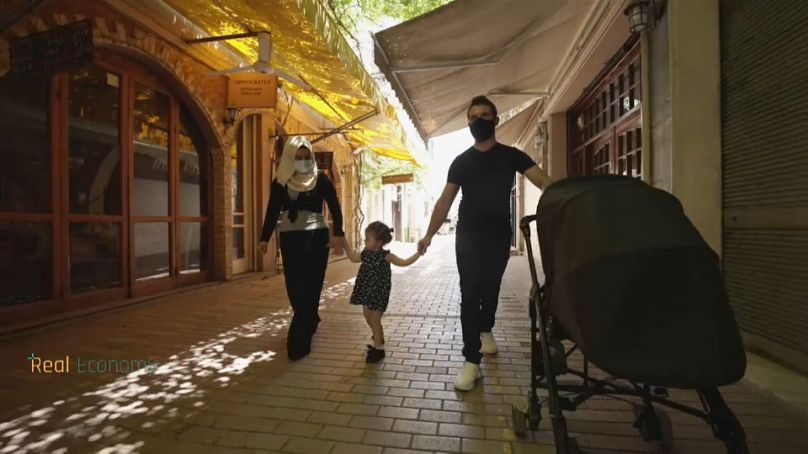
One of the refugee families experiencing great difficulties in Cyprus’ is the Heba and Adel’in family. Adel had difficulty finding work when they arrived in Cyprus ’ from Syria’. As a result, he and Heba lived in an unhealthy apartment with their first-born children.

Syrian refugee family receiving aid from Cyprus’ta Baby Dowry

Adel says the items they bought from Baby’s Dowry’ helped him a lot because he couldn't even afford to buy a diaper for his daughter at the time.

Adel managed to save money for the family and improve his professional status by meeting the basic needs of his children. In this way, Adel and Heba now live in an accommodation suitable for their growing family. Like Kula, Heba sees how important this help is for his family now and in the future.

Our film crew was allowed to film at the Parc de Sceaux’, courtesy of the Département des Hauts-de-Seine’.

Plans to protect the business keep millions on the job, what if it ends beforehand?

Real EconomyIn this part of the ’, we ask you what will happen when the job protection programs in Europe’ come to an end. Plans to quit kept millions of people at work during the pandemic and quarantines. With these emergency measures phased out, how will Europe ensure there are enough jobs and people have the right skills for the jobs of the future?

The European Union ’'s goal of exiting the pandemic is a strong social Europe ‘. The Pillar of Social Rights Action Plan sets out three goals to be achieved by 2030.

Adults at Least ’i must be running and other ’ must attend the training every year. The number of people at risk of poverty and social exclusion should also be reduced by at least 15 million.

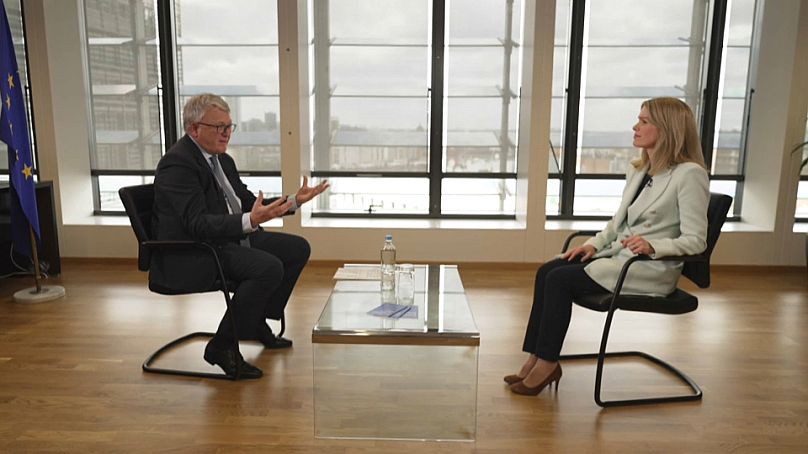
Nicolas Schmit, European Commissioner for Business and Social Rights, says companies play an important role in education. “It is in the hands of companies to retrain most of their staff, to re-skill, to increase their skills.

Companies need to reskill those with the lowest “en skill level because their jobs are changing too. Now all your work %There's the idea that the 90’ has some kind of digital component. If you're working in construction, for example, you'll need to have some digital competencies on how to manage it while you're on the construction site.”

Euronews correspondent Naomi Lloyd speaks with European Commissioner for Labour and Social Rights Nicolas Schmit

Schmit emphasized that the “ Commission wants to support these strategies at the corporate level, along with public employment services at the regional level.

Financial aid behind education and transition

The European Commission recommends that ’'s EASE (Providing Active Support for Employment) countries create new jobs by supporting entrepreneurs and educating people on new skills to find jobs in growing sectors such as green and digital.

Money can be obtained from the Recovery Fund and the European Social Fund Plus’ to help finance this.

Schmit, “This is part of the withdrawal of permit programs” says and adds: “We need a new type or very active labour market policy, and that is the sense of EASE. And we need that for these new transitions, which are also green transitions and digital ones.”

the Pin Project

ItalyTwo young entrepreneurs with innovative ideas were given the chance to start a business in the Puglia region of ’ with the PIN project co-financed by the European Social Fund.

State-of-the-art prosthetic hand

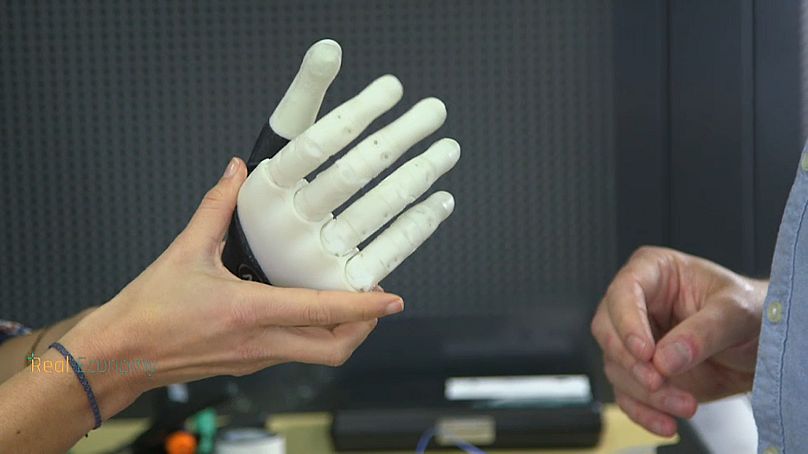
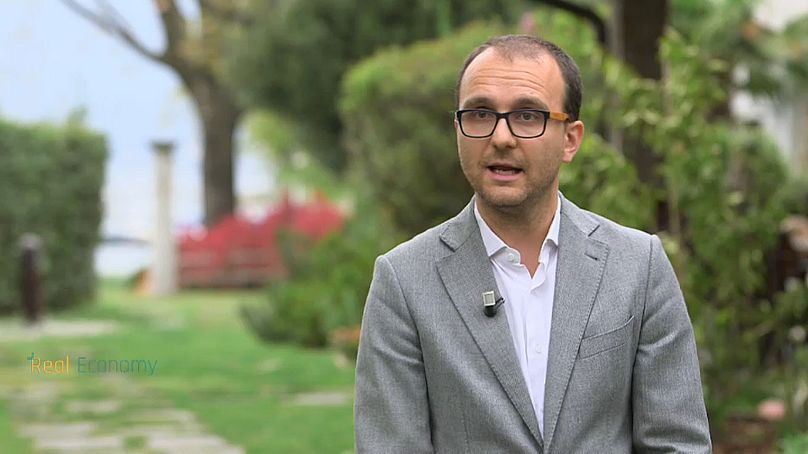
Giovanni is a mechanical engineer. Adam’s Hand’i, a mobile bionic hand with integrated artificial intelligence system, is about to launch. This high-tech start-up received €30,000 and business support to create ’. “ tells us that the ”PIN project is fundamental to its business, as it allows it to obtain the initial funding needed to purchase its first machines. That's what helped him create the first Adam ’'s Hand prototypes.

Adem’in Hand from BionIT Laboratories

In addition to financial and infrastructural support, the PIN project also helped bring some skilled workers back south. “ says this is a great source of satisfaction for him and his team.

Nicolas Schmit believes that giving companies the opportunity to hire new employees, as Giovanni’ did, is part of EASE’'s role when their leave program ends. According to Schmit’, this will help people benefit from “transitions, support them through skills, but also encourage new companies or other companies to only hire people, giving them recruitment subsidies if necessary in a way.

For now, Giovanni’de employs 20 people and has to move forward in a highly competitive environment. At the same time, it has its eye on the international market, which means that this market can grow in the near future and create more jobs.

The eco-packaging

A fairer and more accessible labour market is one of the objectives of the European Pillar of Social Rights, which also supports the green transition. This transition and green sector is full of opportunities for Laura and her business partners in general. Three freelance architects returned to Italy to bring agriculture and design together.

The PIN project helped them establish a company that designs ecological and reusable packaging. They were given help with management skills and the latest ways of working. Laura tells us that this is thanks to the PIN project and that they are able to talk to customers instantly thanks to new tools that allow them to develop. This helped them achieve many goals.

Laura and partner working on eco-packaging

Today Italy has customers all over ’.

With a total budget of approximately €17 million, the PIN project has funded more than 500’ innovative projects such as Giovanni’s and Laura’s.

Training for the New Era

The European Social Fund supports 10 million people each year, such as Giovanni and Laura.

According to economist Andrea Garnero’, developing skills is key to this support. “ says that the skills that will be demanded of workers and companies will change. As work from home becomes more widespread, they will need to rely more on technologies. “Member states have played an important role in accompanying companies and workers through these transitions, and they need training and reskilling opportunities, ” adds.

Andrea Garnero

EU Social Summit

With the Social Summit to be held in Porto, ’, Portugal on May 7, the European ’'s commitment to Social Rights comes to the fore. The two-day event will bring together EU leaders, institutions and social partners to discuss some of Europe’'s biggest challenges, such as climate change and digital transition. These two challenges also affect job opportunities, job creations and education.

Nicolas Schmit says the summit comes at a time when “ people are nervous, afraid of cuts, of a major restructuring. According to him, the summit is a message from “ that the crisis in itself will not be a crisis of cuts in social services and social infrastructures. We need economic development, but we also need social dimensions and integrity in our societies, “.

With plans to keep the job coming to an end, it is hoped that Avrupa’, with its social initiatives and support, will overcome this challenge and keep people at work.