Major U.S. retailers, including Amazon and Walmart, are quietly exploring moving from Chinese factories to a business model that will send more goods directly to consumers and require fewer U.S. workers in retail stores and logistics centers.
The plans stem from the growing popularity of Chinese e-commerce platforms such as Shein and Temu, which have gained consumer appreciation for their low prices. These platforms send cheap products directly to consumers' doorsteps, allowing them to bypass American tariffs on Chinese goods and the hefty costs associated with physical stores, storage and distribution networks.
According to many familiar with the plans, the growing competition from Shein, Temu and other Chinese companies has prompted many major U.S. retailers to consider switching to a similar model to qualify for an incomprehensible, centuries-old U.S. trade law. The law, known as de minimis, allows importers to bypass U.S. taxes and tariffs on goods unless the value of shipments exceeds $800.
But this trend towards changing business models may have been disrupted on Friday when the Biden administration took action to abruptly close de minimis eligibility for many Chinese imports, including most apparel. In an announcement on Friday morning, the Biden administration said it would restrict the number of packages arriving duty-free to the country, especially through de minimis shipping from China.
The Biden administration's changes will not take effect immediately. The proposal will be subject to comments from sectors before it is finalized in the coming months, and some imports from China will still qualify for the minimis exemption.
But Friday's action could pave the way for a shift in global retail. According to sources familiar with the plans, Amazon is preparing a new discount service that will ship products directly to consumers, allowing those products to bypass tariffs. Even companies that preferred to keep their business models as they were, such as Walmart, had to consider using more de minimis to compete.
The US recently towed the aircraft carrier USS Dwight D. Eisenhower from the Red Sea and sent the USS Theodore Roosevelt and its escort ships in its place. The primary mission of the American fleet here is to protect maritime shipping routes from the Arabian Peninsula to the Suez Canal.
This news didn't make the headlines and didn't attract much public attention. But the sea route passing through the Red Sea is very important for world trade.
Houthi militias have been firing on ships coming from Yemen for more than six months that they associate with Israel because of their owners or operators.
Bloomberg news agency reported on June 20 that the Houthis, who are in favor of Palestine in the Gaza crisis, sank a cargo ship carrying coal using a UCAV.
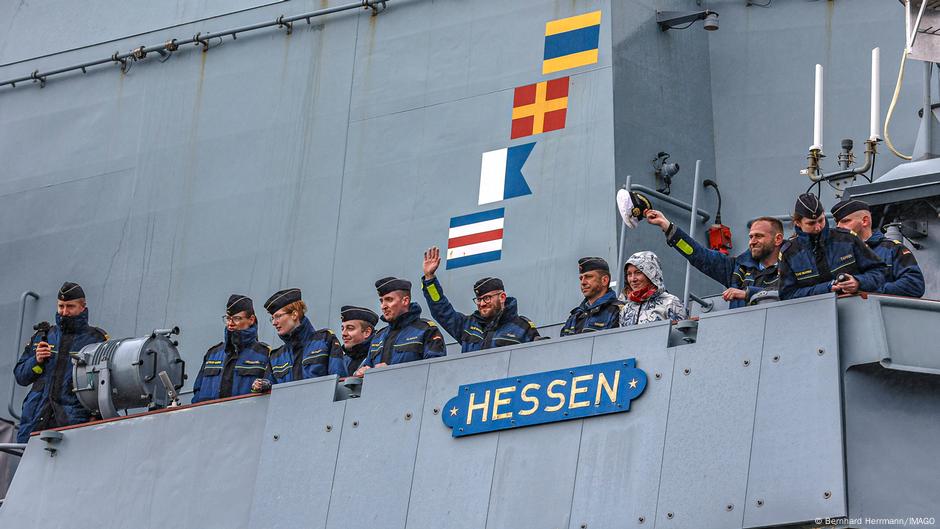
In response to the Houthis' attacks, the United States and Britain have repeatedly hit militia positions in Yemen in recent months. In addition, other warships belonging to the international coalition are trying to secure shipping traffic off the Yemeni coast. The German navy also appears in the region with the ⁇ Hessen ⁇ frigate within the scope of AB ⁇ 's ⁇ Aspides ⁇ mission.
The frigate ⁇ Hessen ⁇ of the German Navy was also deployed in the Red SeaPhoto: Bernhard Herrmann and IMAGO
Costs are rising again
Since the beginning of the conflict in Gaza in October last year, global trade has been under great pressure. Traders around the world have to spend more money to account for higher shipping costs and insure their goods.
Shipowners also complain about high insurance costs as the risk of losing their ships increases significantly. Ships that avoid passing through the Suez Canal and instead travel around the Cape of Good Hope are forced to take into account longer journey times and higher fuel costs.
⁇ Drewry World Container Index ⁇ monitors the freight market and records exorbitant price increases. The price to be paid for transportation activities carried out by sea, land, air or railway is called ⁇ navlun ⁇ . According to the index, the average freight price for a large standard container of 40 feet ⁇ increased by seven percent in June, compared to the previous year, an enormous increase of 233 percent. On some routes, prices have risen even more sharply.
Indirect effects of what happened in the Red Sea
Simon MacAdam, an economist at London-based independent financial consulting firm Capitol Economics, comments on DW ⁇ ye:
It should not be forgotten that direct armed conflicts are not responsible for the current price increases. The real trigger for the cost seems to be that importers are pushing many orders forward to ensure they have enough goods in stock throughout the year. In addition, factors such as the fact that ships have to go around the Cape of Good Hope put great pressure on shipping and cause prices to increase even more.
The route around the Cape of Good Hope in South Africa means that ships must fully circumnavigate the African continent before reaching Europe.
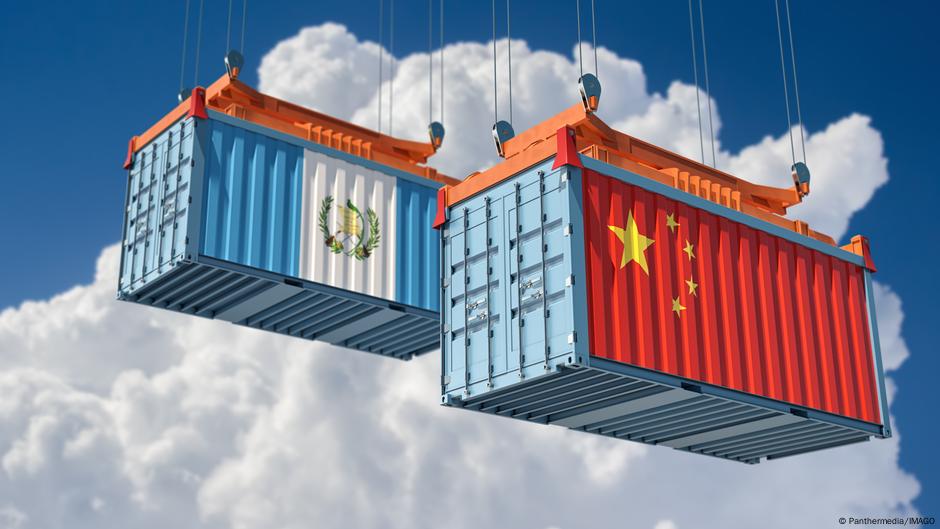
Container and shipping prices have increased significantlyPhoto: Panthermedia and IMAGO
We need more ships.
Jan Hoffmann, a trade expert at the World Conference on Trade and Development (UNCTAD), a Geneva-based UN agency, explains why DW ⁇ ye freight prices are generally rising:
The main reason for this is the extension of the distances that ships have to travel. Deviations around South Africa require more ships to maintain supply. The average distance for a container will be nine percent longer in 2024 compared to 2022.
Hoffmann continues his words as follows:
If ships are to travel longer, more transport capacity will have to be used. This means buying or renting more ships and employing more staff. Longer routes require more ships. If these ships are not yet available, freight prices will rise even higher. ⁇
The environment is also suffering from this situation, according to the UNCTAD expert:
Another effect is that ships increase their speed. Higher speeds to cover longer distances, for example, led to a 70 percent increase in emissions on the Singapore-Rotterdam route.
According to Hoffmann ⁇ , if the deviations continue for a longer time, this will lead to continued price increases and further restrictions on international trade.
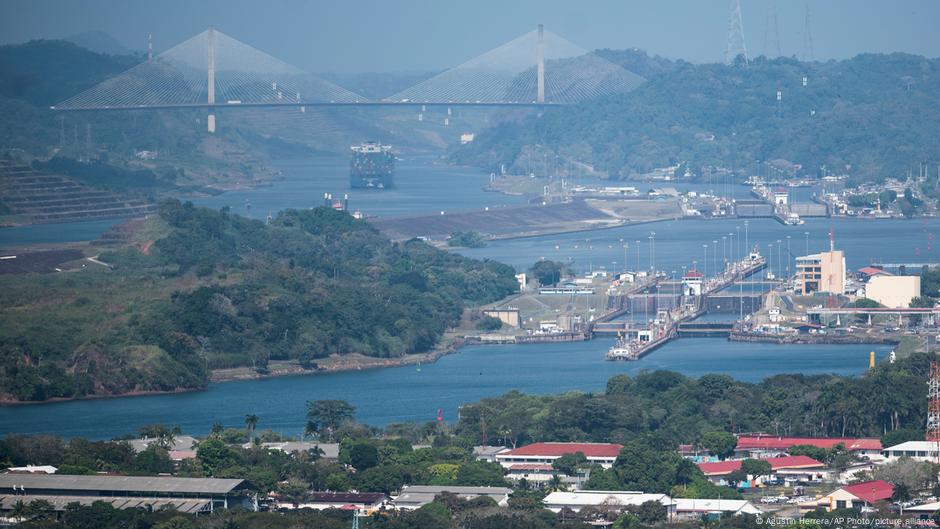
The water level in the Panama Canal is higher than in the previous yearPhoto: Agustin Herrera/AP Photo/picture alliance
There's a double bottleneck
The maritime bottleneck also prevents goods from being transported elsewhere, Hoffmann stresses:
Due to the inadequacy of the water level in the Panama Canal, navigation is not possible without restrictions. Since both the Suez and Panama canals cannot be used at full capacity, the USA needs to build a land bridge to maritime connections with East Asia. In other words, land transportation should be carried out by rail or road from the ports on the west coast to the centers on the east coast. ⁇
But it doesn't seem that easy. This method is also considered economically inefficient, especially when it comes to the shipment of wheat or liquid gas. For this reason, like the alternative route around Cape Horn, the southernmost tip of South America, a very long and dangerous deviation is preferred.
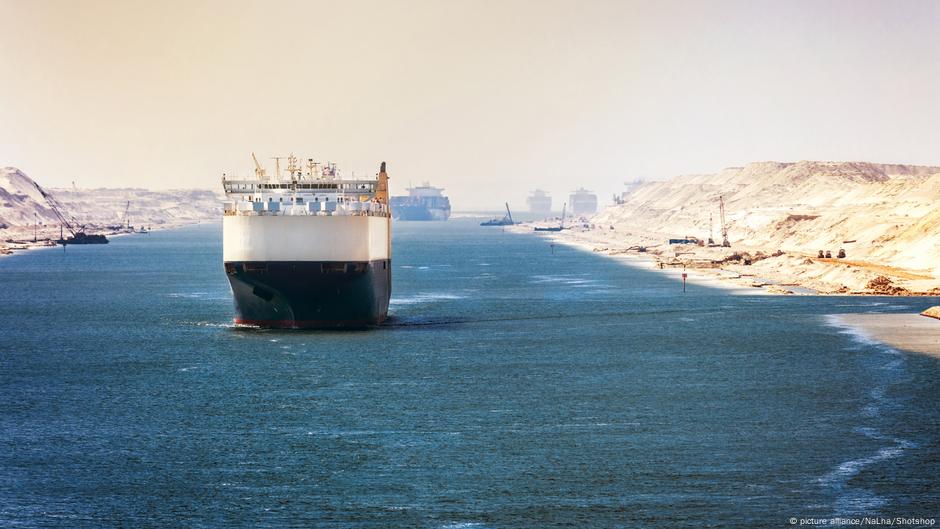
The Suez Canal is of great importance for world tradePhoto: picture alliance/NaLha/Shotshop
⁇ The situation can get worse ⁇
The situation in the Red Sea remains tense. According to Bloomberg, about 70 percent of international maritime transporters still avoid the area and instead choose to travel around the Cape of Good Hope in South Africa.
The deployment of the US Navy's new aircraft carrier fleet also shows how serious the situation in the region is in the long run by the military.
Economist Simon MacAdam believes that a prolonged crisis will push shipowners too far and cause freight prices to rise even higher:
It takes many years to build the ship and 90 percent of the new containers are built in China. Therefore, ships and containers cannot be built overnight for higher capacities. Therefore, the situation may get worse in the long run.
Japanese shipping company Mitsui O.S.K. Lines (MOL) and US-based Chevron Shipping Company will integrate the state-of-the-art wind-powered propulsion system into the LNG (liquefied natural gas) vessel. According to the companies, It will be the world's first LNG ship with wind-powered technology.
The 174,000 cubic meter vessel, chartered by Chevron Asia Pacific Shipping, is being built in South Korea. 2026 It is planned to be delivered in the year.
Developed by MOL Wind Challenger Telescopic sails in the named technology, the ship's reducing fuel consumption It will also reduce greenhouse gas emissions. According to the company, the technology combines automatic sail control with a real-time wind monitoring system to improve fuel efficiency.
Weight saving with composite material
Sails, light weight to maintain the cargo capacity of the ship fibre glass reinforced plastic (GFRP) is manufactured. There is not a lot of weight on the ship. Sails also to maintain balance in choppy weather It can shrink down. In this way, the center of gravity is pulled down, providing the same security as traditional ships.
Wind Challenger combines three key components to optimize ship routes and further improve fuel efficiency: sails, control system and weather route.
In fuel consumption %Up to 17 ⁇ reduction achieved
In October 2022, MOL launched Shofu Maru ⁇ yu, a 100,000-metric-tonne coal carrier equipped with Wind Challenger. The ship has completed 7 round trips for 18 months and is in daily fuel consumption. %A reduction of up to 17 ⁇ He got and Average per voyage %From 5 to %A reduction of 8 was achieved.
The company says the Wind Challenger system can be fitted to both newly built and existing vessels, from dry cargo ships to tankers and LNG carriers. can be mounted on various ships more than once He says it. MOL plans to launch 25 ships equipped with Wind Challenger technology by 2030 and another 25 by 2035. of 80 ships. He plans to deploy.
In the face of Russia's intensified military aggression, Ukraine has managed to significantly increase grain exports this summer, taking advantage of military advances in the Black Sea region.
As an important global producer of wheat and corn, the country has historically relied on Karadeniz ⁇ for its monthly grain exports of approximately 6 million tons. Despite ongoing conflicts, Ukraine's grain sales continue to be vital to its economy, especially as global prices continue to remain weak.
Ukraine's UGA merchant association reported that food exports more than doubled in July compared to July 2023, exceeding 4.2 million metric tons, although Russian forces targeted important export points such as the port of Odessa in the Black Sea and Izmail on the Danube River.
These ports are vital for the transportation of grain to Europe. The destinations of exports made in July were not announced, but historically Ukrainian wheat was mainly sold to Spain, Egypt and Indonesia, while corn exports were mainly made to Spain and China.
The latest export increase includes new season wheat and corn from last year's significant harvest. In July, Ukraine exported 3.7 million tons of agricultural products via Odessa and 569,000 tons via the Danube. These figures mean a significant increase compared to 291,000 tons and 2.07 million tons exported from these routes in July 2023.
According to LSEG shipping data, six corn shipments were also made from Chornomorsk and Pivdennyi ⁇ , Ukraine ⁇ 's other operational Black Sea ports, to Rotterdam and Spain ⁇ 's Cartegna port in June and July. Additional shipments to China, Egypt and Turkey were also recorded by Kpler.
Despite the increase in sales last month, total exports in the 2024/25 season are expected to fall due to adverse weather conditions and the ongoing war, according to the estimates of the ASAP agricultural consulting company. It is estimated that grain exports from Ukraine will fall by 14.5 million tons per year to 35 million tons, the lowest level in almost a decade.
Ukraine created a shipping corridor after the collapse of the UN-backed Black Sea grain export initiative last year. This was possible because Russia's Black Sea Fleet moved most of its combat-ready warships away from the occupied Crimea.
The improved security situation has led to lower insurance and freight prices, increasing the competitiveness of Ukrainian exports. The challenge for Kiev ⁇ is to maintain the functionality of its accessible ports for maritime transport.
Despite avoiding major ship damage, Ukrainian ports have suffered numerous missile and drone attacks. According to Dmytro Barinov ⁇ , Vice-President of the Port Authority of Ukraine, the sensitivity of these attacks shows that Russia ⁇ made a deliberate attempt to hinder Ukraine ⁇ 's export capabilities.
As the country's navy chief, Vice Admiral Oleksiy Neizhpapa ⁇ , points out, the Ukrainian military, including the air defense force and missile systems, provides protection to ships entering and leaving ports. But challenges such as power cuts continue to disrupt port operations and exports.
The cost of war risk premiums for ships entering Ukrainian ports is of concern; Recently the value of the ship %Although there are offers up to 1.2 ⁇ , discounts are available.
These premiums have increased since a missile strike in Pivdennyi ⁇ in November damaged a ship, but costs could rise if security conditions worsen. Insurers are keeping a close eye on the situation, and war risks can adjust their insurance rates accordingly.
Neil Roberts ⁇ , head of maritime and aviation at Lloyd ⁇ s Market Association ⁇ , reported that during the year in which it operated, Ukraine ⁇ 's maritime corridor facilitated the delivery of 57.7 million tons of cargo to 46 countries with 2,059 ships, 39 million tons of which were agricultural products. Individual insurers continue to assess the situation to determine appropriate rates based on evolving risks.
Reuters contributed to this article.
This article was created, translated and reviewed by an editor with the support of artificial intelligence. See our Terms and Conditions for more information.
Hapag-Lloyd, one of the leading global shipping companies, reported strong financial performance with EBITDA of approximately $0.9 billion despite the setbacks it faced in the first half of 2024. Faced with strong demand in May and June, the company took several measures to meet customer needs, including speeding up ships, adjusting its network, and ordering additional containers.
Hapag-Lloyd is preparing for the new Gemini network, which is expected to begin bookings in December. CEO Rolf Habben Jansen, addressing the effects of the explosion at Ningbo Port, stated that this will not greatly affect the operations. The company has a strong balance sheet with $20 billion in equity and $7 billion in liquidity reserves, and expects moderate transport volume growth, slightly lower freight rates, and higher EBITDA than previously expected.
Significant inferences
Hapag-Lloyd generated approximately $0.9 billion in EBITDA in the first half of 2024.
Unexpected strong demand was met by accelerated ship operations and network adjustments.
The company is moving forward with the Gemini network, which will start selling and bookings later in the year.
The balance sheet maintains its robustness with significant equity and liquidity reserves.
The CEO predicts moderate growth in shipping volumes and a higher EBITDA.
Concerns about potential port disruptions on the East Coast of the U.S. and the effects of the Ningbo explosion were addressed.
Appearance of Company
Hapag-Lloyd reiterated the appearance of moderate transport volume growth.
Freight rates are expected to be slightly lower.
EBITDA is expected to be higher than previously predicted.
The company continues to focus on network reliability and implementing its 2030 strategy.
Switching to the Gemini network is an important focus for the rest of the year.
Highlights from the Bear's Point of View
The market faces uncertainties, including possible disruptions to US East Coast ports.
There is a possibility of softening demand in the fourth quarter.
Although an explosion at Ningbo Port has raised concerns, its impact on operations is expected to be minimal.
Highlights on Ascension
In May and June, a strong demand was observed with the effect of stock smelting, preloading and consumption.
The global order book is declining but is expected to increase due to aging fleets and new environmental regulations.
The company's terminal business is growing and investments in fleet and new service offerings continue.
The shortcomings are
No specific financial issues were addressed during the interview.
Highlights in Questions and Answers
The CEO mentioned the increase in rental liabilities due to the need for more capacity and higher rental prices.
A significant portion of the order book is likely to be renewed to comply with environmental regulations and scrap old ships.
The CEO acknowledged growing concerns about potential strikes at US East Coast ports and proactive measures taken by customers.
In summary, Hapag-Lloyd (ticker not provided) spent the first half of 2024 with strong financial results and a proactive approach to market demands and disruptions. The company continues to focus on its strategic goals and is preparing for the upcoming launch of the Gemini network. Despite facing potential challenges such as port disruptions and market uncertainties, Hapag-Lloyd ⁇ 's leadership expresses confidence in the direction of the company and its financial health.
This article was created, translated and reviewed by an editor with the support of artificial intelligence. See our Terms and Conditions for more information.