Bad news for the German economy

Germany's economic outlook has worsened, with recent Purchasing Executive Index (PMI) data showing continued weakness in both the manufacturing and service sectors. According to experts, the German economy, which has been dragged into an even deeper contraction, does not expect a recovery until the end of the year.

S&A P Global's HCOB (Hamburg Commercial Bank) Purchasing Executive Index (PMI) data for September has been released.

According to the data, the composite PMI in Germany, which was 48.4 points in August, fell to 47.2 points in September. Thus, Germany compound PMI data, which was below 50 points, fell to the lowest level in the last 7 months.

The service sector PMI, which was 51.2 points in August, fell to 50.6 ⁇ in September to the lowest level in the last 6 months. Manufacturing PMI fell from 42.4 in August to 40.3 in September.

PMI data shows growth above 50 points and contraction below.

The manufacturing and service sectors account for more than 3 ⁇ 2 ⁇ of the German economy.

In the statement, ⁇ The German economy is being dragged into an even deeper contraction led by the manufacturing sector. ⁇

HCOB Chief Economist Cyrus de la Rubia, in his assessment of the data, ⁇ The decline in the manufacturing sector has deepened again, evaporating the hope of an early recovery in the German economy. While production experienced the fastest decline in the last year, new orders also decreased. ⁇

De la Rubia, who stated that companies in Germany have produced staff at an unprecedented rate since the Covid-19 pandemic in 2020, noted that this corresponds to a period when many major automotive suppliers announced significant employment reductions, and that these disturbing figures ⁇ will increase the risk of deindustrialization in Germany and the ongoing debate about what the government should do about it.

De la Rubia, optimism is a thing of the past. Producers are downright depressed about their future activities and their expectations for the coming year are declining. Moderate optimism in August changed dramatically to the harshest pessimism in a year in September. This rapid decline in sentiment is likely linked to a wave of negative news headlines surrounding Volkswagen ⁇ and casting a shadow over the industry as a whole. ⁇

Stating that these alarming trends in manufacturing are also starting to affect Germany's traditionally strong service sector, De la Rubia warned that the growth in the activities of the service sector has slowed for 4 consecutive months and is heading towards a recession.

German economy at risk of recession

The German economy is struggling to grow amid rising interest rates and cyclical winds and structural changes. The economy shrank 0.1 percent in the second quarter due to declining investments.

The Central Bank of Germany expects lower growth in the 3rd quarter, while the Institute for Economic Research (Ifo), one of Germany's leading economic think-tanks, considers a further decline in GDP possible in the 3rd quarter.

The German economy will be in a technical recession if it shrinks in the third quarter. The technical recession is expressed as a reduction in GDP for 2 consecutive quarters. Germany experienced a recession in 2020, the first year of the pandemic after 10 years of good economic growth, for the first time since 2009.

The German government expects the economy to grow by 0.3% this year.

On September 5, Ifo cut the country's growth forecast for 2024 and next year from 0.4 percent to zero due to poor investment and order status.

On the other hand, while the rising interest rates against the rising inflation in the Eurozone after the Russia-Ukraine War curbs the desire of German companies to invest, the fact that many countries, especially China and Turkey, are increasingly producing the goods imported from Germany, makes it difficult for Europe's largest economy to move away from the recession.

In Germany, where structural problems also curb the economy, it is stated that the business model titled ⁇ Import cheap energy and intermediate goods, process them and export them expensively with the perception of ⁇ Made in Germany ⁇ as high quality goods, which was once quite successful, no longer works.

In addition, the availability of cheap subcontractors in Eastern Europe, China's ever-increasing exports and the USA's construction of the country's defense do not help the country.

While many recent crises such as the Covid-19 pandemic, supply chain disruptions and the Russia-Ukraine War have exposed the weaknesses of the German economy, it is also noteworthy that the country faces some problems in overcoming geopolitical problems, climate change, stagnant economy and demographic difficulties. Germany is still crushed under its own bureaucracy, rules and procedures.

Meanwhile, German industry is increasingly weakening, Chinese companies are technologically catching up, and even Far Eastern companies are outpacing Germans in renewable energy and automotive.

Source of: bigpara.hurriyet.com.tr

Loss of momentum in Japan's exports in August

Shipments to ABD ⁇ in Japan fell for the first time in three years, while machine orders fell unexpectedly in July, a worrying sign for an economy struggling to achieve a solid recovery.

Analysts say weak foreign demand undermines Japan's quest to achieve sustainable economic growth, especially given the increased risk of slowing down in the U.S. and greater weakness in its two major trading partners, China's economy.

Takeshi Minami, chief economist at the Norinchukin Research Institute, said Japan's exports will be strained as the global economy fails to gain momentum. Growth in both the U.S. and Chinese economies is expected to slow next year. Minami said the weak yen's support for exports declined as the Japanese currency recovered sharply in August.

Total exports rose 5.6 percent year-on-year in August for the ninth consecutive month, according to data released on Wednesday. This is much of the median market forecast for a 10.6 percent increase after the 10.3 percent increase in July. Under the He stayed on.

Germany is not hopeful about 2024. The economy is not expected to recover until the end of the year.

According to the report prepared by the German Ministry of Economy and Climate Protection, At the beginning of the third quarter of this year, the German economy continued to stagnate, declining order books and generally weak order situation weakened the export-oriented industry. It's been transferred.

The championship did not cause enough increase in consumption

The report noted that the European Football Championship held in Germany on 14 June-14 July did not give a significant impetus to consumption.While the championship did not seem to give significant impetus to consumption, it appears that even significant increases in real wages did not increase consumer sentiment in the face of growing concerns about employment.⁇ statement is used.

Risk of recession on the agenda

German economy, due to declining investments in the second quarter of the year It's down 0.1 percent. The Central Bank of Germany expects lower growth in the 3rd quarter, while Germany's leading economic think tanks The Institute for Economic Research (Ifo) also said that a further decrease in GDP in the 3rd quarter was possible. He is appraising.

The country's economy will be in a technical recession if it shrinks in the third quarter. Technical recession, ⁇2 consecutive quarters of GDP reductionIt is expressed as ⁇ . Germany experienced a recession in 2020, the first year of the pandemic after 10 years of good economic growth, for the first time since 2009. The German government expects the economy to grow by 0.3% this year. On September 5, Ifo announced the country's growth forecast for 2024 and next year, from 0.4 percent to zero due to poor investment and order status. He dropped it.

Germany is not expected to recover until the end of the year.

In its monthly report on the country's economy published by the German Ministry of Economy and Climate Protection, it was stated that the German economy continued to stagnate at the beginning of the third quarter of this year, declining order books and generally weak order status weakened the export-oriented industry.

Despite falling inflation and a significant increase in real wages and a significant increase in purchasing power, consumer sentiment has deteriorated, the report said, ⁇ Economic recovery is not expected until the end of the year ⁇ .

In the report, it is noted that the European Football Championship held in Germany on 14 June-14 July did not give a significant acceleration to consumption, and while it is seen that the championship did not give a significant acceleration to consumption, it is understood that even the significant increases in real wages did not increase consumer sensitivity in the face of increasing concerns about employment.

There is a risk of recession.

The German economy is struggling to grow amid rising interest rates and cyclical winds and structural changes. The economy shrank 0.1 percent in the second quarter due to declining investments.

The Central Bank of Germany expects lower growth in the 3rd quarter, while the Institute for Economic Research (Ifo), one of Germany's leading economic think-tanks, considers a further decline in GDP possible in the 3rd quarter.

The German economy will be in a technical recession if it shrinks in the third quarter. The technical recession is expressed as a reduction in GDP for 2 consecutive quarters. Germany experienced a recession in 2020, the first year of the pandemic after 10 years of good economic growth, for the first time since 2009.

The German government expects the economy to grow by 0.3% this year.

On September 5, Ifo cut the country's growth forecast for 2024 and next year from 0.4 percent to zero due to poor investment and order status.

China's deflationary spiral enters a dangerous new phase

China's ongoing deflation since last year is now showing signs of spiraling, threatening to worsen the outlook for the world's second-largest economy and increasing calls for urgent policy action.

Data released on Monday confirmed that, at a time when revenues were falling, the increase in consumer prices, with the exception of food costs, was hardly recorded in large parts of the economy.

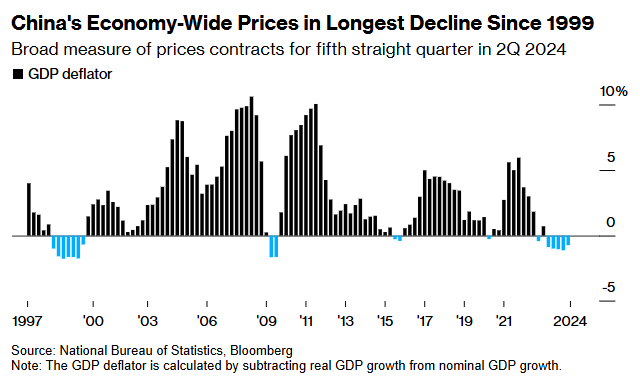
According to analysts at banks including Bloomberg Economics and BNP Paribas SA, a broader measure of prices across the economy, known as a gross domestic product deflator, will likely continue its current five-quarter decline in 2025.

Robin Xing, Morgan Stanley's chief Chinese economist, said: "We are definitely in deflation and probably going through the second phase of deflation, referring to evidence from wage declines. Experience from Japan shows that the longer deflation lasts, the more incentives China will need to overcome the debt-deflation problem.

The danger for China is that deflation will grow like an avalanche, encouraging households shaken by falling paychecks to cut spending or postpone purchases because they expect prices to fall further. Company revenues suffer, investments stall, and lead to further pay cuts and layoffs, driving families and companies into bankruptcy.

Special surveys show that this is already happening. According to findings by Caixin Insight Group and Business Big Data Co., in government-preferred economic sectors such as electric vehicle production and renewable energy, entry-level salaries are almost as high as in the peak of 2022 in August. is down. A survey of 300 company executives by the Cheung Kong Graduate School of Business showed that growth in labor costs last month was the weakest since China's first Covid lockdowns began to ease in April 2020.

This is a cycle that the world has seen ⁇ during the recession that followed a bubble that exploded in the real estate and financial markets ⁇ during a period previously known as ⁇ lost decades ⁇ in Japan ⁇ beginning in the 1990 ⁇ . While Chinese officials are trying to suppress discussions about deflation, warning analysts to refrain from using the term, the term is beginning to enter into public dialogue.

Former Central Bank Governor Yi Gang said last week that eradicating deflation should be a priority for policymakers, and he made a rare confession by a leading figure in China that falling prices threaten the outlook.

Yi called for proactive fiscal policy and supportive monetary policy at a panel at the Bund Summit in Shanghai on Friday, saying authorities should focus on combating deflationary pressure. He added that China's immediate goal should be to turn the GDP deflator positive in the coming quarters.

So far, officials have not signaled any significant deviation from the panacea methods of encouraging production rather than addressing weak demand through steps such as greater government spending on public services and consumer subsidies.

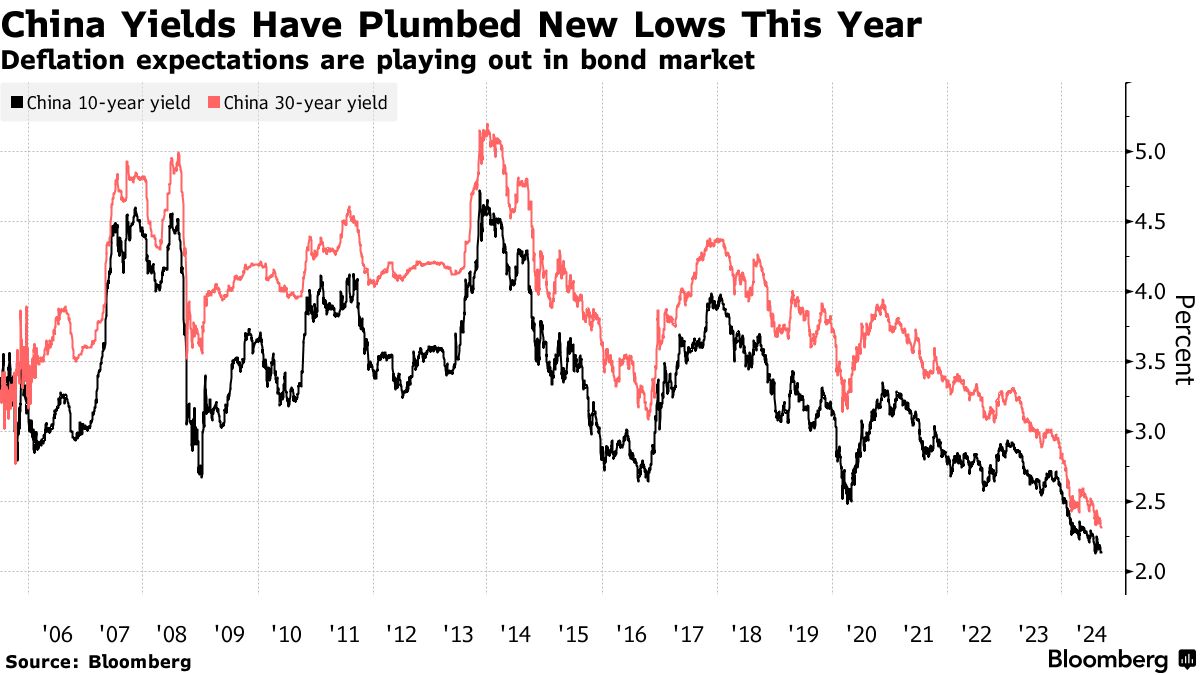
China's core inflation, which excludes volatile items such as food and energy, fell to a three-year low in August as a sign that price pressures have weakened further. Deflation expectations are reflected in the markets, triggering a bond rally that pushes bond yields to record lows and raises official concerns that banks are too exposed to interest rate risks.

Weak price pressures, China's second quarter only %4 is clearly seen in the growth rate of the growing nominal GDP ⁇ of the country this year %It is well below the real economic growth target of around 5. Luo Zhiheng, chief economist at Yuekai Securities Co., wrote in a note earlier this month that nominal expansion is a more beneficial indicator when price increases are weak because it better reflects changes in wages, profits and government revenues.

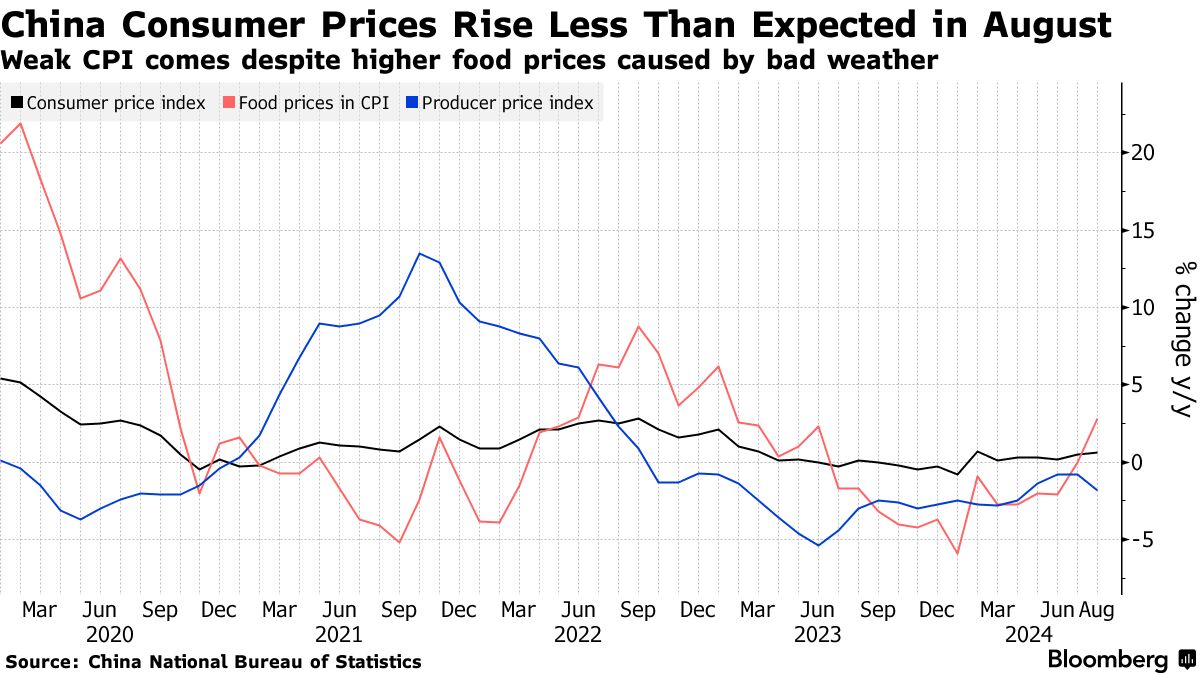
Inflation was weaker than forecast in three of the last four months, only in August. %0.6 has increased ⁇ this increase is largely due to the increase in food prices %This is due to an increase of 2.8.  Core inflation last month only %Increasing by 0.3 in the 18th month %It's down to 1. The fall in producer prices since late 2022 underscores the pressure on inflation. According to official data, raw material and sales prices of manufacturers contracted in the second month in August, while the wages of service and construction companies decreased the fastest since April 2020.

The dilemma that even monetary easing in China can be deflationary due to the supply side of the economy is controversial. Meanwhile, the deflationary mindset is beginning to settle. Consumer confidence is at a record low, with households reporting an increased desire to save rather than spend or buy a home. According to Liu ⁇ , an aluminum industry employee, the solution lies with policymakers in Beijing as the pain deepens. The government needs to take at least some concrete measures to increase consumption and improve people's expectations.

Artificial intelligence rises to the top in startup investments

According to the data of ⁇ Turkiye Startup Ecosystem Investment Report ⁇ , the artificial intelligence and machine learning sector has become the most active sector with 31 investments in the first half of 2024 and has become the most invested sector of all time. According to the map of artificial intelligence initiatives prepared by the Turkish Artificial Intelligence Initiative (TRAI), the number of artificial intelligence initiatives in Turkey reached 350 ⁇ with 12 initiatives added in the second quarter of this year.

According to the data of ⁇ Turkiye Startup Ecosystem Investment Report ⁇ prepared by Statrtup Centrum, the artificial intelligence and machine learning sector has become the most active sector with 31 investments in the first half of 2024 and has become the most invested sector of all time. Artificial intelligence and machine learning were followed by games with 14 investments, sustainability with 11 investments & environment and fintech sectors with 10 investments.

During this period, the number of artificial intelligence initiatives has also increased. According to the map of artificial intelligence initiatives prepared by the Turkish Artificial Intelligence Initiative (TRAI), the number of artificial intelligence initiatives in Turkey reached 350 ⁇ with 12 initiatives added in the second quarter of this year. Artificial intelligence-based startups, especially used in areas such as health, education, finance and automation, have a great growth potential.

In 2024, the startup ecosystem, led by artificial intelligence, started to move and started to rise again after its poor performance in 2023. A total of $586.8 million was invested in startups in the first half of the year, when a total of 245 startups received investments.

Turkey's startup ecosystem remains attractive

This figure surpasses the investment amount made in the whole of 2023. According to the ⁇ Türkiye Startup Investments ⁇ report prepared by KPMG Turkey M&A and 212 teams, the total transaction volume, which was $1.84 billion in 2022, decreased to $497 million in 2023. The total number of investments was 297.

According to experts, although macroeconomic difficulties and geopolitical tensions in the global economy in 2023 led to a decrease in venture capital investments and transaction volume, the jump in the first half of 2024 shows that the Turkish startup ecosystem remains attractive.

In recent years, R&D and innovation projects, innovative collaborations and initiatives with government incentives have started to attract more attention in Turkey. In this way, investments that will grow startups such as technoparks, technoparks, R&D centers, incubation centers have become more audible.

This mobility is also of great importance in terms of Turkey's development. More flexible, innovative and fast-moving than traditional business models, startups are not only the driving force of the economy, but also play a key role in the transformation of businesses and industries.

⁇ Plays an important role in development ⁇

Dr. R. Erdem Erkul, founder and chairman of the board of directors of Cerebrum Tech, a domestic technology company that is one of the leading technology manufacturers of the sector, says that startups fed by the idea of entrepreneurship have become important for the socio-economic development of countries where innovative ideas and investments are important. According to Erkul ⁇ a, the flexible, solution-oriented and adaptive structure of startup ⁇ s, fast growth and big impacts lead the world to startup ⁇ s.

Startups, whose role in the business world is becoming more and more prominent, are also among the decisive wheels in the economic cycle. Rapidly growing startups increase employment by hiring more. These structures, which stimulate market competition with innovative ideas and technologies, force traditional companies to act in line with technological developments and transformations and expand the share by directing the business cycles of classical structures to more dynamic areas.

The growth of start-ups also creates an ecosystem that supports them. In this ecosystem, there are service providers, investors, consultants and other companies that want to do business with startups. Such ecosystems add vitality to economies and stimulate economic growth.

Funded through venture capital and other investments, these investments strengthen the entrepreneurial ecosystem and pave the way for more entrepreneurs to succeed in the future. This supports economic growth and innovation.

Successful startups often compete not only in local markets, but also in national and international markets. This increases Turkey's economic competitiveness and export potential.

⁇ Contribute to the country's economy ⁇

According to Erkul ⁇ , when we look at startups and the overall outlook of the startup ecosystem in our country, it can be said that the Turkish economy is competitive, that the private sector holds the potential to lead different initiatives, and that the public sector has a regulatory role that can cooperate with the private sector. With these features, Erkul states that successful startups emerging from Turkey's startup ecosystem will pave the way for new startups and contribute to the economy of our developing country: In this way, we can rise to the level of contemporary civilizations and produce our high value-added products ourselves and take our place in the international market. Increased support and interest in the startup ecosystem; It is in the best interest of all of us to take steps to transform knowledge into practice, labor, technology and capital.

$55 billion stock crash warns of Chinese economy

One of the last bright spots left for consumption in China is rapidly disappearing, as the country's economic shortage has negatively affected demand for even the most accessible goods. In a recent warning to global markets about the health of the Chinese economy, Temu ⁇ 's owner PDD Holdings Inc. surprised investors with an unusually bleak outlook on Monday. The e-commerce firm, which became a favorite of the market with low-priced products that helped revive jobs during China's economic downturn, reported an income that fell short of forecasts. CEO Chen Lei said at least eight times in his post-earnings briefing that incomes and profits should inevitably fall as economic growth slows. Chen, who was also one of the first employees of PDD ⁇ , told analysts that ⁇ We are seeing many new challenges arising from weakening consumer demand, intensifying competition and uncertainties in the global environment ⁇ .

The CEO and his aides took care to emphasize that their long-term confidence in Chinese consumption continues. This balancing is a major priority for Beijing in rebalancing the world's No. 2 economy. But what's done is done. Shares of PDD ⁇ ⁇ wiped out its market value of $55 billion in a record decline. Its closest competitors Alibaba Group Holding Ltd. and JD.com Inc. followed suit. %4 lost its value.

Founded in 2014 by former Google engineer Colin Huang, the company has combined low prices with aggressive rural expansion and game-like elements on its platform to grab market share from Alibaba and JD ⁇ in recent years. He turned this formula into the global e-commerce bargaining app Temu ⁇ , which he launched during the Super Bowl in 2023. Temu, which has become a Shein-like shopping phenomenon, has been one of ABD ⁇ 's most downloaded apps for some time.

This increased the market value of PDD ⁇ by six times from the bottom level in post-Covid 2022, making Huang ⁇ the richest person in Çin ⁇ this month. Huang, however, held the title for just 18 days until Monday's sales. China's less affluent consumers outside its flashy megacities provided the bulk of PDD ⁇ 's success. They are now a source of great uncertainty.

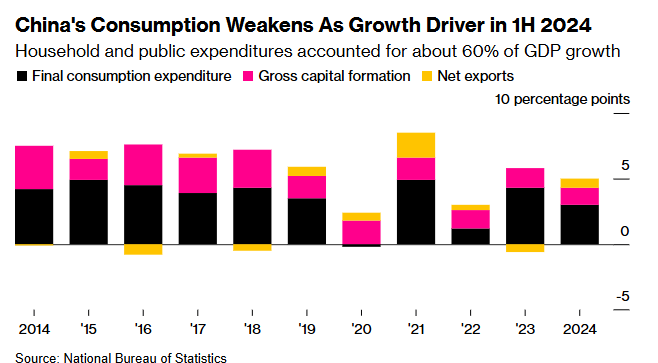
Consumption, the main driver of the economy, weakened this year after a recovery in post-Covid reopening spending last year. In the face of widespread job and salary cuts, as well as falling property prices, Chinese consumers have become more cautious in their spending, leading to price wars in sectors such as cars. Chang Shu and Eric Zhu of Bloomberg Economics, China's e-commerce companies now face a problem that even hard price cuts can't solve: He was a weak consumer, he wrote. From a macroeconomic point of view, the decline in PDD shares points to an important point: Slowing revenue increases and damaged confidence are suppressing consumption. ⁇

Retail sales in the first seven months of 2024 %a little over 3 ⁇ , which was recorded in the pre-pandemic period. %It's much worse than growing above 8 ⁇ . According to a central bank survey in the second quarter, residents' confidence in their future income fell to its worst level since the end of 2022, one of the peak periods of Covid lockdowns. Almost half of the residents surveyed said employment was gloomy and difficult, the highest rate since the end of 2022. Almost two-thirds of those surveyed said they were willing to save more, hovering close to an all-time high recorded last year.

Lei signaled a fundamental shift in consumer behavior, moving away from cheap products that have increased revenue since its inception. In the earnings call, consumers make more careful decisions to balance quality and value. ⁇ In response, we have cooperated with high-quality brands and manufacturers to create customized products that meet these different demands. ⁇

For some investors, PDD executives were just trying to keep expectations from spiraling out of control. After all, as the company does in all quarters except for one. %It may be unreasonable to expect it to continue to grow above 50 ⁇ . Wall Street thought PDD would nearly double its revenue in the June quarter. Comes instead is up. On Monday, executives said they would make large investments to capitalize on future opportunities.

Brock Silvers, general manager of private equity firm Kaiyuan Capital ⁇ , said ⁇ PDD shows that reality will always show itself again ⁇ . In the current environment, the most prudent course of action is not to be exposed to surprises. It is better to announce bad news in advance than to risk being blamed for a later, greater collapse.

In the long run, a lot depends on the job market and how Beijing will drive the economy.

Officials urged public economic enterprises to increase recruitment and vocational training by trying to provide adequate numbers of jobs, even if the economy slows down. But authorities have refrained from providing more direct assistance to consumers, but many economists have called for cash subsidies or consumption checks, at least for low-income groups. They also refrained from taking measures to support the wage increase needed to encourage further spending. Regulatory pressures in a number of industries, from private tutoring to finance, have also made the job market worse over the past few years.

For now, many investors are confident that PDD ⁇ will at least surpass its peers in a turbulent economy. The results of PDD ⁇ mean ⁇ weak consumption and intense competition. According to Morgan Stanley analysts Eddy Wang and Kathy Zhu ⁇ , the management's comments that long-term profitability will decrease are too conservative for us. ⁇ We believe that ⁇ PDD ⁇ is the only Chinese e-commerce player that will outperform growth in the industry. ⁇

Germany's economy shrinks in second quarter

The German Federal Statistical Office (Destatis) has announced the final growth data for the German economy for the second quarter of the year.

Accordingly, seasonally and calendar adjusted gross domestic product (GDP) in Germany decreased by 0.1 percent in the 2nd quarter of the year compared to the previous quarter. Thus, Destatis confirmed the 0.1 percent reduction, which it announced with leading data on July 30.

Germany's economy, the largest in Europe and the third largest in the world, shrank 0.4 percent in the last quarter of last year, while expanding 0.2 percent in the first quarter of the year.

Destatis President Ruth Brand said that after a slight increase in the previous quarter, the German economy slowed again in the spring months.

Equipment investments fell by 4.1 percent

The GDP of the country, free of seasonal and calendar effects, did not grow compared to the 2nd quarter of last year.

Considered on a quarterly basis, GDP was negatively affected by equipment investments, especially in machinery, devices and vehicles. In the second quarter, equipment investments decreased by 4.1 percent compared to the previous quarter, while public spending increased by 1 percent.

Construction investments decreased by 2 percent and exports of goods and services decreased by 0.2 percent.

In the same period, household consumption expenditures increased by 0.1 percent.

German economy at risk of recession

The German economy, which was struggling to grow, showed weaker development in the second quarter compared to other European countries such as Spain and France.

While economic growth in France, the second largest economy in the Eurozone, exceeded expectations by 0.3 percent in the second quarter of the year, the Spanish economy also grew by 0.8 percent in this period.

Meanwhile, the Central Bank of Germany expects the German economy to grow very little in the current third quarter.

The Economic Research Institute, one of Germany's leading economic think-tanks, considers that even a further decrease in GDP is possible in the third quarter.

If the German economy shrinks in the third quarter, it will be in a technical recession.

While the technical recession was expressed as a reduction in GDP for two consecutive quarters, Germany experienced a recession for the first time since 2009 in 2020, the first year of the pandemic after 10 years of good economic growth.

The German government expects the economy to grow by 0.3% this year.

The economy is stuck in recession

Carsten Brzeski, Head of Global Macro Research at ING and Chief Economist of Germany, said: "Weak household consumption and the decline in the construction sector led the German economy to contract again in the second quarter. Although the outlook in the economy is not very bright, it is still too early to lose hope.

Stating that German GDP growth in the first quarter was a positive surprise and the improvement of confidence indicators in the economy gave rise to the hope that the pessimism of the last few years has been left behind and that debates about whether Germany ⁇ ⁇ Europe ⁇ is a sick man ⁇ can be put aside, Brzeski said, ⁇ But the truth is that GDP growth in the first quarter was due to mild winter weather and a downward revision of the fourth quarter GDP ⁇ . Therefore, there was no situation that could be described as a sustainable and healthy growth story.

Brzeski pointed out that the prospects for a consumer-focused recovery in the German economy in the second half of the year have been hit yet again by the decline in consumer confidence today, ⁇ The fact is that the German economy is currently learning the hard way what it means to be in the midst of cyclical winds and structural changes. The economy is stuck in recession. ⁇ commented.