
The OECD warned: Global steel crisis deepens as supply surplus reaches alarming levels

Global steel production capacity continues to increase despite weak demand, which threatens to cause prices to fall and competition to deteriorate.

Steel is a critical material for a wide range of industries, from construction and manufacturing to electric vehicles and data centers.

The OECD says government subsidies are a major driver of global surplus capacity, with most of the increase in steel production capacity over the past two decades occurring outside OECD countries, often with government support.

According to OECD’, in 2024, the average Chinese steel firm received subsidies equivalent to 15 times the subsidies received by producers elsewhere based on total assets.

At the same time, Chinese steel producers exported a record 131 million tons of steel in 2025’te; This is according to 2020’ %With an increase of 153, the European Union was more than ’'s total steel production that year.

The warning comes at a time when OECD’ expects global steel surplus capacity to increase from 640 million tons in 2025’ to 745 million tons in 2028’, as steel production capacity continues to increase much faster than demand.

Global steel demand is expected to increase by only 34 million tons between 2026 and 2028, while producers plan to add up to 139 million tons of new capacity in the same period.

China’in is expected to play an important role in this expansion, with plans to increase its steel production capacity to 38.6 million tons by 2028; This is the largest increase planned by any country.

If these projects continue, the OECD says the global overcapacity will exceed the current annual steel production of all OECD countries by almost 320 million tons, underlining the extent of the imbalance the sector faces.

Policymakers fear that permanent surplus capacity could undermine the profitability and long-term viability of local steel industries, increasing dependence on imports of a material deemed strategically important for construction, defense, energy infrastructure and manufacturing.

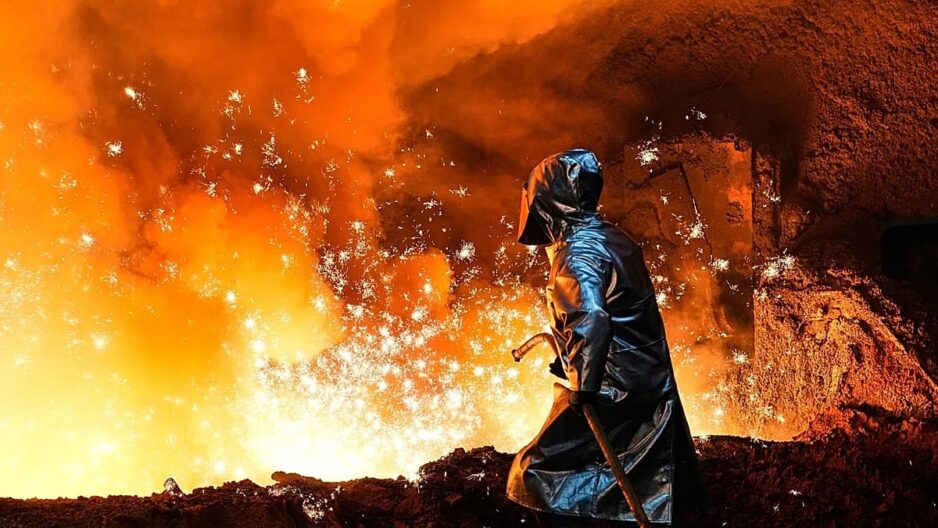
5 November 2025’te DuisburgSteel production at the ThyssenKrupp steel mill in ’

Speaking at the OECD Council of Ministers Meeting, OECD Secretary General Mathias Cormann said: “We need to address the root causes, including harmful subsidies and other non-market applications. This means stronger international cooperation and an equal playing field for steel producers everywhere.”

The OECD also found evidence that some exporters have overcome trade barriers by sending semi-finished steel to Southeast Asia ’ for processing before re-exporting it to OECD markets. China’in exports semi-finished products to the region %The 300’ increase points to a possible route to avoid customs duties and anti-dumping measures.

Energy costs and trade tensions increase pressures

At the same time, the sector is grappling with rising energy costs in connection with the Iran war. Energy, steel production costs %It can make up 40’, making the industry especially vulnerable to high prices.

The report also highlights the increasing pressure on the supply of raw materials. No country producing steel is completely self-sufficient in the inputs required for steel production; Export restrictions on basic materials are increasing worldwide. Forty-two countries are now restricting the export of steel scrap, an important raw material for the production of electric arc furnaces.

Europe is particularly vulnerable to these pressures. The region's steel producers often face higher labor and energy costs, as well as stricter environmental standards, compared to many international competitors.

As a result, European ​​ producers are generally less able to withstand long-term low prices compared to their competitors, who enjoy lower costs or stronger government support.

If current trends continue, the long-term viability of the sector and the economic security of many countries will weaken.

China warns UK government to treat British Steel owners fairly

China warned the UK government on Monday that two days after British officials took control of the company, British Steel’ would treat Chinese owners fairly or risk damaging investors' trust in the country.

The Chinese Foreign Ministry made this comment as government-appointed executives raced to prevent British Steel’ from shutting down its last two blast furnaces in Britain, which produce unprocessed steel from raw materials in ’.

Parliament on Saturday passed legislation authorizing the government to take control of the company and its Scunthorpe steel plants from Jingye Group’, which has owned British Steel’ since 2020. Jingye still owns the company, but British authorities have taken control of day-to-day operations.

"We hope that the British government will treat Chinese companies that invest and operate in ’ in a fair and equitable manner, protect their legitimate rights and interests, and refrain from politicizing and over-security of economic and commercial cooperation so as not to affect the confidence of Chinese businesses in investing and cooperating in “ in the United Kingdom," Foreign Ministry spokesman Lin Jian said at a weekly press conference in ’, Beijing.

Prime Minister Keir Starmer’'s spokesman Dave Pares said on Monday that although Jingye’ is still the owner of Scunthorpe facilities in Northeast England, expropriation of ’ is a likely option in the short term. He added that the government hopes to find a private investor in the long run.

British Steel announced on Monday that Scunthorpe’ has appointed a new executive team focused on providing “ with consistent and professional leadership.

Allan Bell and Lisa Coulson, two longtime executives of British Steel’, have been appointed interim CEO’ and chief commercial officer of the company. The appointments were approved by Trade Minister Jonathan Reynolds.

Bell, who has worked at the Scunthorpe steel plant for 14 years, said his main goal was to ensure the continuation of steel production at the plant.

"Our immediate priorities are to secure the raw materials we need to continue blast furnace operations, ensure we have dedicated personnel to operate these furnaces, and maintain the highest levels of health and safety for our workforce," Bell said in a statement.

Starmer took a dramatic step on Saturday by recalling Parliament from the spring break to pass the emergency law authorizing the government to take control of British Steel’. Officials were worried about the plant's future after Jingye’ stopped ordering the iron ore and coking coal needed to keep the furnaces running.

The fact that it is difficult and expensive to restart after the blast furnaces are closed raises concerns that ’ may lose its ability to produce the high-quality unprocessed steel needed by builders and railways, as the government seeks to stimulate economic growth. Other British steelmakers are already in the process of switching to electric arc furnaces that produce steel from scrap metal.

Pares said the government is now confident that the plant will get the raw materials it needs to continue working for now. Shipments of iron ore pellets and coking coal have reached Immingham port and will reach Scunthorpe’, about 20 miles (32 kilometers) away in the coming days, London’da told reporters.

Why doesn't the UK government reject the nationalization of important British steel mills?

As the global trade war escalated pressure to maintain the country's ability to provide the steel it needs for domestic industry, the British government refused to rule out the possibility of nationalization of the last plant in ’, United Kingdom, which produces steel from raw materials.

According to local politicians and unions, unless the government intervenes, iron pellets used to produce steel in two large blast furnaces at Scunthorpe steel mills operated by British Steel may soon run out. This was because the plant's owner, China's Jingye Group’, canceled orders for these essential raw materials amid negotiations to increase government support.

The news comes two weeks after British Steel’in “ said it was considering shutting down blast furnaces because they are no longer financially sustainable due to tough market conditions, tariffs and rising environmental costs.

After Jingye’nin rejected a £500m (€577.6m) bid to help modernise the facility, the government is continuing negotiations with the company. Asked on Tuesday what the government is prepared to do to keep the plant open, Prime Minister Keir Starmer said ’ is firmly committed to steel production in the UK.

In a statement to the parliamentary committee, all options regarding “Scunthorpe are on the table, ” said.

British Steel and its ancestors have been producing steel at Scunthorpe’ for over 130 years, and the United Kingdom has benefited from ’'s development of advanced steelmaking technology during the Industrial Revolution. The factory currently employs about 2,700 people.

Jingye acquired British Steel’i at 2020’ and said the plant has invested more than £1.2 billion (€1.4 billion) to remain operational against “, the ongoing production instability.

UK's steel production falls

United KingdomDue to ’'s steel production, high production costs and the rapid growth of Chinese production since the late 1960s, %It's down 80, and that's brought prices down around the world.

Britain, the world's fifth-largest steel producer in 1970, produced only 5.6 million tons of steel in 2023; This is global production. %It makes up 0.3’. By comparison, China accounts for 1.02 billion tons of production worldwide. He produced his ’.

The remaining steel producers of ’ are now under pressure to reduce carbon emissions due to the threat of global warming. Most have switched to electric arc furnaces that produce steel from recycled material.

This left Scunthorpe’ as the only factory with blast furnaces capable of converting iron ore into untreated steel.

Union officials said British Steel’ must order more iron pellets in the next few days to guarantee delivery before the plant runs out of raw materials in late May.

Thomas Smith, a steelworker and representative of the union community, told Sky News’e “ this week that we are in danger of losing these furnaces. “ added that if we miss the deadlines, we will reach a point where we will have to decide whether to close them both.

During a debate in the House of Commons on Monday, lawmakers said U.S. President Donald Trump, fueled by ’'s new import taxes, needed his own steel-making industry to maintain ’'s economic independence amid a flourishing trade war.

Martin Vickers, a member of Parliament representing the region adjacent to the Scunthorpe’, said he believed that Jingye’ was not involved in the meaningful negotiations with “.

In a speech to the House of Commons on Monday in ’, “ said that in this case I have come to the view that temporary expropriation is the only way. “This will secure jobs at Scunthorpe’ and secure the future of steelmaking.”

Industry Minister Sarah Jones said Jingye’ continued to meet with the government.

Our belief was clear that the best way forward for “Scunthorpe and British Steel was to continue as a commercially managed business with private investment and government backing, ” said. But I can tell the honourable gentleman that no option is on the table. - “