

China's ongoing deflation since last year is now showing signs of spiraling, threatening to worsen the outlook for the world's second-largest economy and increasing calls for urgent policy action.
Data released on Monday confirmed that, at a time when revenues were falling, the increase in consumer prices, with the exception of food costs, was hardly recorded in large parts of the economy.
According to analysts at banks including Bloomberg Economics and BNP Paribas SA, a broader measure of prices across the economy, known as a gross domestic product deflator, will likely continue its current five-quarter decline in 2025.
Robin Xing, Morgan Stanley's chief Chinese economist, said: "We are definitely in deflation and probably going through the second phase of deflation, referring to evidence from wage declines. Experience from Japan shows that the longer deflation lasts, the more incentives China will need to overcome the debt-deflation problem.
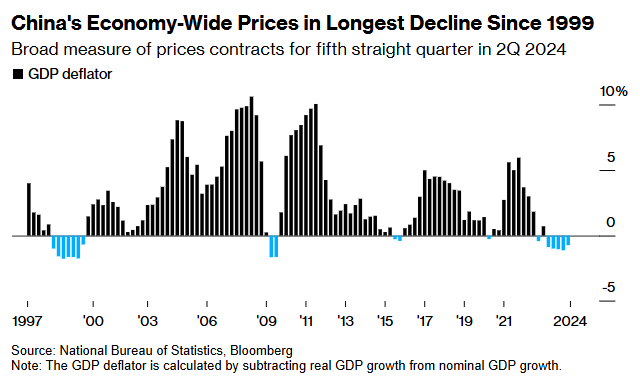
The danger for China is that deflation will grow like an avalanche, encouraging households shaken by falling paychecks to cut spending or postpone purchases because they expect prices to fall further. Company revenues suffer, investments stall, and lead to further pay cuts and layoffs, driving families and companies into bankruptcy.
Special surveys show that this is already happening. According to findings by Caixin Insight Group and Business Big Data Co., in government-preferred economic sectors such as electric vehicle production and renewable energy, entry-level salaries are almost as high as in the peak of 2022 in August. is down. A survey of 300 company executives by the Cheung Kong Graduate School of Business showed that growth in labor costs last month was the weakest since China's first Covid lockdowns began to ease in April 2020.
This is a cycle that the world has seen ⁇ during the recession that followed a bubble that exploded in the real estate and financial markets ⁇ during a period previously known as ⁇ lost decades ⁇ in Japan ⁇ beginning in the 1990 ⁇ . While Chinese officials are trying to suppress discussions about deflation, warning analysts to refrain from using the term, the term is beginning to enter into public dialogue.
Former Central Bank Governor Yi Gang said last week that eradicating deflation should be a priority for policymakers, and he made a rare confession by a leading figure in China that falling prices threaten the outlook.
Yi called for proactive fiscal policy and supportive monetary policy at a panel at the Bund Summit in Shanghai on Friday, saying authorities should focus on combating deflationary pressure. He added that China's immediate goal should be to turn the GDP deflator positive in the coming quarters.
So far, officials have not signaled any significant deviation from the panacea methods of encouraging production rather than addressing weak demand through steps such as greater government spending on public services and consumer subsidies.
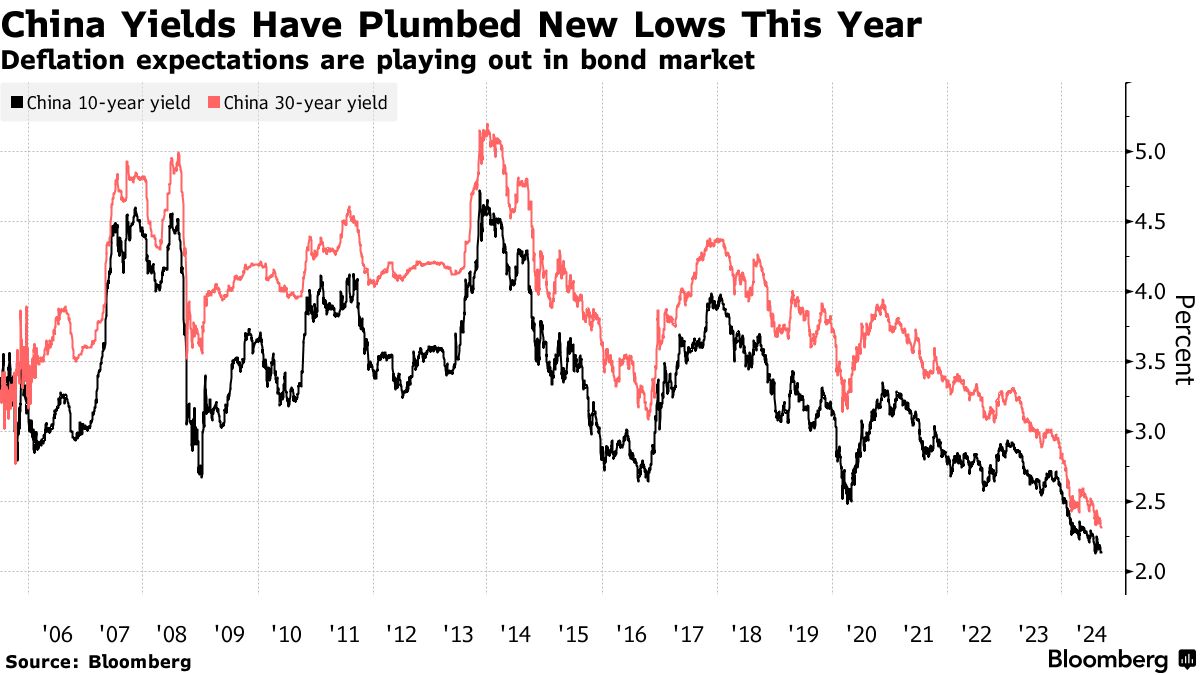
China's core inflation, which excludes volatile items such as food and energy, fell to a three-year low in August as a sign that price pressures have weakened further. Deflation expectations are reflected in the markets, triggering a bond rally that pushes bond yields to record lows and raises official concerns that banks are too exposed to interest rate risks.
Weak price pressures, China's second quarter only %4 is clearly seen in the growth rate of the growing nominal GDP ⁇ of the country this year %It is well below the real economic growth target of around 5. Luo Zhiheng, chief economist at Yuekai Securities Co., wrote in a note earlier this month that nominal expansion is a more beneficial indicator when price increases are weak because it better reflects changes in wages, profits and government revenues.
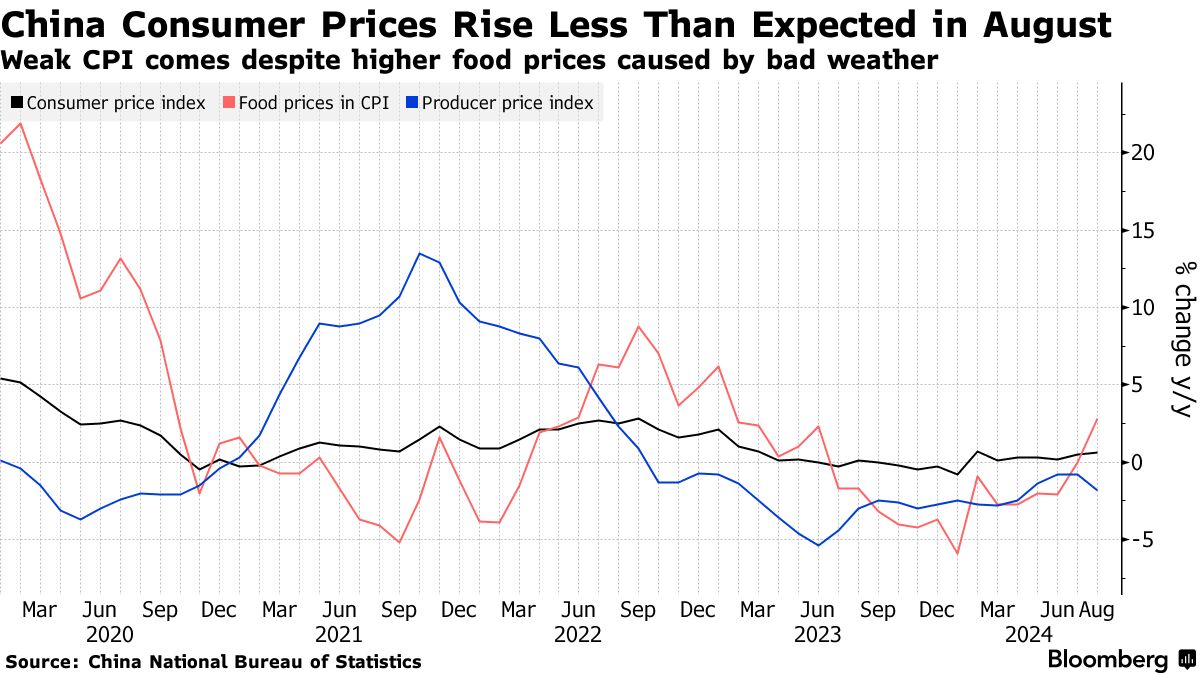
Inflation was weaker than forecast in three of the last four months, only in August. %0.6 has increased ⁇ this increase is largely due to the increase in food prices %This is due to an increase of 2.8. Core inflation last month only %Increasing by 0.3 in the 18th month %It's down to 1. The fall in producer prices since late 2022 underscores the pressure on inflation. According to official data, raw material and sales prices of manufacturers contracted in the second month in August, while the wages of service and construction companies decreased the fastest since April 2020.
The dilemma that even monetary easing in China can be deflationary due to the supply side of the economy is controversial. Meanwhile, the deflationary mindset is beginning to settle. Consumer confidence is at a record low, with households reporting an increased desire to save rather than spend or buy a home. According to Liu ⁇ , an aluminum industry employee, the solution lies with policymakers in Beijing as the pain deepens. The government needs to take at least some concrete measures to increase consumption and improve people's expectations.


