Airbus-led consortium to launch German-backed fighter jet project following FCAS’ collapse

Following the collapse of the European ’'s Future Combat Air System (FCAS) program, a new German-led fighter jet initiative is taking shape.

A consortium of eight Airbus-led companies, dubbed ’Team Gen 6‘, will be operational in Berlin’ on Thursday, aviation giant AFP’ye said.

The alliance aims to develop a new generation of fighter jets, and more details are expected to be revealed at the signing ceremony to be held during the ILA air show in the German capital of ’.

The initiative comes after months of tension between Airbus and French manufacturer Dassault, with Berlin and Paris’ abandoning the FCAS project on Monday.

Airbus said the companies had submitted a position document summarizing the visions of German Defence Minister Boris Pistorius’a sixth-generation fighter jets.

The consortium is urging the German government to ensure that contracts are made in “tam and on time by the second half of 2026, the news agency reported, citing access to the newspaper.

A source involved in the project said the agreement could be signed privately by participating companies as early as Wednesday.

Germany will largely lead the “Team Gen 6” project.

In addition to Airbus’, the alliance includes European ​​missile manufacturer MBDA and six German companies: Hensoldt, Diehl Defence, MTU Aero Engines, Liebherr, Autoflug and Rohde & Schwarz.

German Defence Minister Boris Pistorius told reporters on Tuesday that the project was “ak-prone and a possibility”, but Berlin’in said it was considering alternatives, including buying additional US-made F-35 fighter jets or participating in other aircraft development programs.

Pistorius said “ talks with various ” stakeholders on the issue had been going on for months.

Problems within FCAS culminated in the summer of 2025 when Dassault’ pushed for more control of the program, angering politicians and Airbus executives at Berlin’.

Launched in 2017 and joined by Spain’ in 2019, FCAS was seen as the flagship project of European defence cooperation. Its collapse is seen as a failure to strengthen European ’'s military capabilities in the face of growing security threats from Russia’.

Germany is: Growth halved as government encourages investments

Germany’'s economic recovery looks weaker than expected in the spring. This is the conclusion reached by experts at the German Institute for Economic Research (DIW). They lowered their growth forecasts for this year by 0.5’e.

DIW chief economist Geraldine Dany-Knedlik says the ‘Energy price shock is clearly slowing the recovery. However, he stresses that the situation is not a repeat of 2022/23’. This was the year when Russia launched the ’'s large-scale invasion of Ukraine. Dany-Knedlik explains: ‘Shock is smaller, energy resources are still safe, and Germany is now less dependent on fossil fuel imports than it was after the start of the war in Ukraine.’

The chief economist, ‘, says public spending is the only reason the economy is growing this year. Household demand is weakening, and companies have become more cautious recently. Higher defense spending and increased government spending through private funding, for example, support economic growth.

The government had already revised its growth forecast downwards in its spring forecasts. Initially, growth of 1.0 percent was assumed, but only 0.5 percent was expected by the end of April. This is in line with the prediction of the Kiel Institute for World Economics (IfW). But the federal government makes it clear that private consumption continues to be the pillar of the economy. Public investments, on the other hand, give a significant impetus to growth.

Stability through defense spending

In a recent press release, the DIW suggests that funds from the special budget for infrastructure and climate neutrality, combined with increased defense spending and a delay, support the German economy and ensure moderate growth in both forecast years.

Dany-Knedlik, ‘However, these fiscal policy impulses do not completely compensate for the cyclical setback, ’ adds. What is important is that resources from private funds are distributed quickly and in a real way in addition to existing budgets, rather than just financing investments that are already planned.‘

The DIW describes other problems facing the German economy as ‘structural’. The industry is no longer as competitive as it used to be, especially the automotive sector is under pressure. High production costs and demographic change also put pressure on competitiveness. These factors limit growth potential, regardless of the current geopolitical situation, and make a rapid cyclical recovery even more difficult, according to the institute.

As an energy producer, the U.S. is the winner, while the eurozone is the loser.

Internationally, DIW estimates that as a major energy producer, ABD’ will continue to record relatively robust growth rates of just over 2%’, while the outlook for the Eurozone will be significantly weaker.

Meanwhile, the U.S. has become one of the world's largest exporters of liquefied natural gas (LNG) and is forced to import European energy while partially taking advantage of high gas prices. RussiaWhen ’'s natural gas supply was cut off, its first port of call for new deliveries was overseas.

Europe is dependent on imports because it cannot produce enough energy on its own. Any related price shock is a burden on the economy and erodes purchasing power. DIW does not expect a supply shock, arguing that oil and gas supply security is not at risk, especially thanks to a diversified structuring.

But energy-intensive sectors such as chemistry, steel and paper are suffering from rising electricity and gas prices. According to DIW assumptions, this means that Germany’ is more affected than other European countries.

Expanding fiscal policy buffers inflation but fails to fully absorb it

While the shock slows growth and also pushes prices up, Dany-Knedlik describes it as ‘, a disturbing situation. So far, expansionary fiscal policy has been able to buffer particularly high inflation. However, it cannot achieve the desired growth.

Consumers are also feeling the impact of rising energy costs for heating, electricity and transportation in their daily lives. As the Ifo Institute noted in ’'s Joint Economic Forecast for the spring of 2026, this leaves less money for private consumption. The European Central Bank remains unclear whether ’ will respond to the rate hike on Thursday.

This is a problem, as the government currently sees consumption as one of the main drivers of growth in the German economy. DIW has a more critical view, arguing that growth stems only from the public sector.

Structural changes in the labor market also play a role. Employment in manufacturing and retail is declining, while employment in the public sector is steadily increasing. The structural change towards services is evident, but the overall number of people working is decreasing.

Employers, trade unions and leaders of the ruling coalition are gathering in the bloodlines today to discuss reforms. Social partners were asked, among other things, to prepare their views in advance on the key factors behind the German ’'s persistent structural growth weakness.

Airbus-led group proposes fighter aircraft alternative after Franco-German project fails

A consortium led by Airbus has proposed to develop a next-generation fighter following the collapse of its high-profile Franco-German fighter program, one of the companies involved told AFP news agency on Tuesday.

The move comes a day after German Chancellor Friedrich Merz and French President Emmanuel Macron’. After years of disagreements, he ended the original project.between industrial partners.

Munich-based defence electronics company Hensoldt said it has joined forces with Airbus Defence and Space, Autoflug, Diehl Defence, Rohde & Schwarz, Liebherr, MBDA and MTU Aero Engines to prepare an alternative plan.

A company spokesperson said the proposal was submitted to German Defence Minister Boris Pistorius’. The Financial Times, which first reported the initiative, said the initiative was also sent to Merz’in's office.

The companies are preparing a joint position document on the “ Future Combat Air System (FCAS) and the relevant Next Generation Weapon System (NGWS), ” said.

More details are expected during the announcement to be made at the Berlin ILA Air Show’ on Thursday.

EuropeA setback for ’'s defence integration

The German defence ministry confirmed the existence of the proposal. Pistorius, Berlin’in “, said ” was evaluating which direction we were going.

“We have also been discussing this issue with various stakeholders for months, ” added.

Pistorius said “ suffered from the collapse of the original Franco-German project.

I know how important French-German cooperation is in the European “, but ultimately you have to draw a line between the mind and the heart, ’ said.

The FCAS programme was seen as a flagship European defence project aimed at strengthening military co-operation at a time when the European ’ was facing increasingly tense relations with a more assertive Russia and the United States.

However, the initiative was hampered by long-standing disagreements between French Dassault Aviation and Airbus, Germany’'s leading industrial partner and a key partner in Spain’'s FCAS programme.

German partners opposed Dassault’'s efforts to gain greater control over the construction of the aircraft.

Merz also argued that Germany ’, unlike France ’, does not need warplanes capable of carrying nuclear weapons or working with aircraft carriers.

France and Germany abandon joint fighter jet project due to companies' inability to reach an agreement

France and Germany announced on Monday that they had agreed to abandon the joint fighter program due to disagreements between the companies involved and that they had dealt a blow to European ’'s efforts to boost defence co-operation.

The Future Combat Air System (FCAS) program was launched in 2017 to replace the French ’'s Rafale jets and the Eurofighter aircraft used by Germany and Spain’.

It would be complemented by drones, sensors and digital communication systems designed to work together on a networked battlefield.

The project was seen as an important test of European ’'s efforts to work more closely on defense, trying to form a united front against hostile Russia ’ at a time when ties with the United States were breaking down.

But the multi-billion-dollar program was beset by disputes between the companies involved: France’'s Dassault Aviation’ and Airbus representing Germany and Spain’.

The project has long been regarded as one of Europe's most important industrial and security policy initiatives. But over the years this process has slowed down due to disagreements between the companies involved, and the dispute over leadership, job sharing, and intellectual property rights has turned out to be ultimately unresolved. Dassault insisted on taking the lead in the fighter jet, while Airbus refused to accept its role as junior partner.

Other difficulties also arose due to different military requirements. France insisted on a nuclear-armed aircraft with carrier capacity for its armed forces; Germany didn't need it. Proposals for the development of two different aircraft variants within the scope of the program did not receive joint approval.

The announcement came despite calls for the European Union to more closely integrate its fragmented armies as geopolitical upheavals worsened.

RussiaAs ’'s war against Ukraine enters its fifth year, European countries are increasingly concerned about ’'s security commitments to the continent under President Donald Trump's administration.

Work on Combat Cloud will continue

Although the joint jet is scrapped, the FCAS project is not completely terminated. According to government sources, the so-called War Cloud will continue to be developed.

This is a digital network that aims to connect aircraft, drones, and other weapon systems.

At the next meeting, the French and German defence ministries, “, focused on several realistic and relevant projects, are preparing a defence cooperation plan, he added.

The decision opens the door to the search for new partners for Airbus. People in the industry cite, among others, the Swedish defense group Saab and its Anglo-Japanese-Italian fighter program as potential cooperation options.

Dassault will probably continue to develop the next generation of Rafale’ alone.

With the failure of the joint warplanes, one of Europe ’'s most ambitious armaments attempts in recent years is coming to an end.

The decision also points to a change of direction: Berlin and Paris now seem ready to pursue separate national designs under a common technological umbrella rather than a single common aircraft.

Earlier this year, “ said he would do everything in his power to bring the joint European projects, and above all the German-French projects, to life, and that he would fight until the very end.

Speaking after talks with Merz in April, Macron denied the project was dead.

“, we're moving forward. "Europe has never needed unity, more independence and more sovereignty than it does now," ” said.

Business morale in ’ improves despite disruptions in energy markets of Iran war

Germany’'s closely monitored ifo Business Environment Index rose to 84.9 points in May from 84.5 in April, according to data released on Friday.

The ifo Business Environment Index, published monthly by the Munich-based ifo Economic Research Institute, is a highly accepted early indicator of economic developments in ’, Germany.

Economists expected a slight weakening of confidence as high energy prices and geopolitical uncertainty continued to exert pressure on the European Union's industrial sector.

The May survey, based on responses from nearly 9,000 companies, showed that companies are more optimistic about both their current situation and future prospects in manufacturing, services and commerce. Confidence in construction companies has declined.

Ifo president Clemens Fuest said in a statement accompanying the poll that the “German economy is stabilizing for now, but the situation remains fragile.” said.

Increasing government spending plans on defense and infrastructure could help offset some of the economic pressure. Germany is looking for ways to revive growth after long-standing industrial weakness and stagnant domestic demand.

Despite modest improvement, overall trade confidence remains weak by historic standards and close to levels seen at the end of 2024.

Concerns over shipping from the Strait of Hormuz, an important route for global oil and gas supplies, have increased energy costs and increased pressure on ’'s manufacturing sector, which is heavily dependent on industrial energy consumption.

German LBBW bank analyst Jens-Oliver Niklasch described the figures as “, a small positive surprise. Niklasch said many firms still have solid order books and that this could support the activity if external pressures start to subside.

Export helps Germany’ avoid new contraction

Germany's Federal Statistical Office also forecasts the economy in the first quarter in line with preliminary forecasts compared to the previous three months. %Confirms it's growing by 0.3. The expansion was mainly supported by strong exports.

The figures reinforced signs that the German economy could stabilize after narrowly recovering from the recession in recent quarters.

But economists continue to warn that geopolitical tensions, unstable energy markets and weak global demand could also hurt growth later in the year.

A recent job survey showed increased resilience among German firms, while analysts said the outlook remains highly sensitive to developments in the Middle East and energy markets.

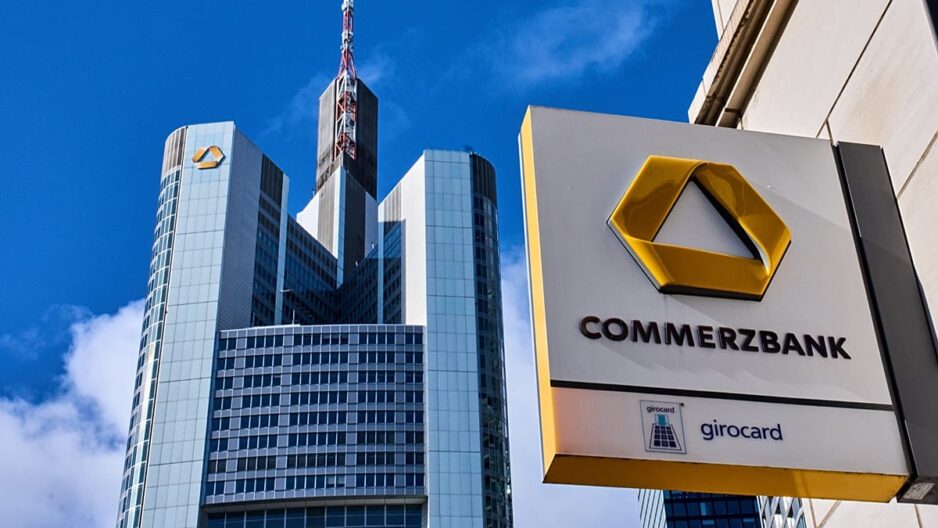
Commerzbank lays off 3,000 people to block UniCredit’'s takeover bid

Commerzbank has announced plans to lay off 3,000 more people while sharply increasing its profit targets in direct response to UniCredit’'s takeover targets.

The Frankfurt-based lender announced on Friday that revenues are expected to rise to 16.8 billion Euro’ by 2030, while net profit is expected to reach 5.9 billion Euro’.

Bettina Orlopp, chief executive, said the new targets reflect “iddiali and at the same time reliable” growth, and “ added that any alternatives should be evaluated accordingly; This was a reference to the Italian bank's proposal.

Additional layoffs present approx. 38,000 jobs %8It will affect ’ini. The bank estimates that the cost of the restructuring will be around 450 million euros. According to Commerzbank’, the increase in the use of artificial intelligence will also help to make processes more efficient.

Why is this important?

UniCredit formally submitted its takeover offer this week, a voluntary share exchange offer for all outstanding shares of Commerzbank’, which has valued the German bank at just under 35 billion Euro’.

Since the Italian bank bought a large share from the German government in 2024 and then increased that share through market purchases to the point where it was legally necessary to make a formal offer under German takeover law, the Commerzbank revolves around ’.

UniCredit is currently in Commerzbank’ta %It has a direct stake of 26 percent and is approximated through total return swaps. %It has an additional stake of 4’. The proposal caused alarm bells to ring in Frankfurt and Berlin’, and Commerzbank fears the takeover will disrupt its business model.

The proposal caused alarm bells to ring in Frankfurt and Berlin’, and Commerzbank fears the takeover will disrupt its business model.

The Bank is the second largest private credit institution in ’, Germany, and an important source of financing for the country's famous Mittelstand’ (small and medium-sized enterprises that form the backbone of the German economy).

According to UniCredit’'s plans, a total of around 7,000 jobs could be terminated. Commerzbank does not consider a takeover necessary at the moment.

In the bank's opinion, the plans offered by UniCredit include “, which is unclear, and ”, which has significant implementation risks.

However, the bank said it would remain open to discussions in principle, provided that an attractive premium is offered to shareholders and the key elements of the strategy are retained.

German Chancellor Friedrich Merz (CDU) recently backed Commerzbank’ and Germany announced that ’ needed strong banks, but any takeover of “ would not be welcome.

’ strongly rejects hostile and aggressive behavior, Chancellor Berlin “de said.

Media reports are also examining whether the federal government can increase its stake in Commerzbank’.

The state currently holds about 12 percent of the shares. Commerzbank posted a net profit of €913 million in the first quarter.

According to the bank, this was the best quarterly result since 2011’.

Deutsche Telekom aims for T-Mobile merger, which could be the biggest deal in history

Germany’'s telecommunications giant is exploring a full merger with the US arm in a move that will reshape the global telecommunications sector and potentially overshadow all merger and acquisition deals ever made.

Deutsche Telekom is considering a full merger with T-Mobile US, widely reported by German local media outlets and first published by Bloomberg, in an agreement that could create the world's most valuable wireless operator and redefine the future of the European technology champion.

German group already T-Mobile US’in %He holds little more than 53’, making him the dominant shareholder of the American carrier.

Now, according to people familiar with the matter, the establishment of a new holding company that will offer all-share offers for both firms is being investigated; The two publicly traded giants are brought together into a single transatlantic entity listed on both the US ’ and the European ’.

The combined group could be worth up to $400 billion (360 billion euros), surpassing the $202.7 billion Vodafone-Mannesmann merger announced in 1999’; This is currently the largest public merger and acquisition agreement in history, according to data from the London Stock Exchange Group.

This will make it not only a telecommunications story, but also a turning point in corporate history.

GermanyA jewel in the industrial crown of ’

Deutsche Telekom Germany is no ordinary company in ’.

This company, which split from the state-owned Deutsche Bundespost’ in the mid-1990s, remains one of the largest and most strategically important telecommunications groups in Europe. German government and state-owned credit institution KfW’nin total approx. %He has a stake of 28’, which makes Berlin’i not only a passive observer but also a major player in all kinds of deals.

Their approval is needed for any transaction and this is far from a guarantee.

A full merger, Berlin’in shares estimated %Until 17-18’e, and potentially roughly what German officials historically saw as the backdrop for strategic business. It will cause it to fall below the ’ threshold. This can turn into a political problem as well as a financial one.

The irony is that the T-Mobile US’ has become the locomotive that drives all the valuation of Deutsche Telekom’. The German company's market capitalization of approximately 135 billion Euro’ %More than 70’ can be attributed to the T-Mobile conglomerate.

In reality, Deutsche Telekom’'s listed shares in Frankfurt’ are increasingly becoming just a complement to the wireless communications business in ABD’. A complete merger formalizes this fact.

T-Mobile’'s comeback story

The German-owned journey of the T-Mobile’ has not been easy.

Deutsche Telekom made an agreement to acquire VoiceStream Wireless’ in 2000, initially with a transaction valued at $50.7 billion (46 billion euros), and after the deal was completed the following year, the company changed its name to T-Mobile USA.

Ten years later, the business was shedding the blood of its customers and reducing group earnings. Attempt to sell AT&T’ye has been blocked by regulators. Instead, Deutsche Telekom listed T-Mobile’ through a reverse merger with MetroPCS in 2013 and then rebuilt its shares over time.

T-Mobile has since grown to become the second largest wireless operator in ABD’, which has a larger market capitalization than Deutsche Telekom’ itself and accounts for the majority of the group's profits.

In short, it is the success story that saved the parent company.

A holding company with an Irish plan

According to a scenario that is currently at the level of speculation due to Deutsche Telekom’'s refusal to formally approve or provide details of the deal, a new holding company will offer all shares for both firms, which will belong to existing shareholders in both the U.S. and Europe’, and will be listed in both the U.S. and Europe’, reflecting the structure used in the 2018 merger of industrial gas companies Linde and Praxair’in, where an Irish holding company serves as an impartial vehicle for transatlantic merger.

The holding company will likely be established outside Germany and Ireland will be seen as a possible model. Whether or not Berlin’ will accept this is another question.

The next regulatory mountain

Obstacles are tough. The shareholders of Deutsche Telekom’ shall not be liable for any capital increase. %It will require the approval of 75’.

U.S. Congressman Jim Jordan, chairman of the House Justice Committee, said the U.S. government would review any agreement. Bloomberg’e “The acquisition of T-Mobile’ by a foreign company will attract the attention of our staff” said.

Antitrust applications, FCC approval and a possible national security review via CFIUS are on the horizon. Negotiations are at an early stage and no agreement can be reached.

But the fact that this is happening signals something important: After 25 years of buying, listing, almost selling and rebuilding, Deutsche Telekom may finally be ready to bring the T-Mobile’ home.

Germany has the second largest gold reserve in the world. Is it time to cash out?

Germany is sitting on a gold fortune, and some economists and politicians think it may be time to open the piggy bank.

The German Bundesbank ’ holds 3,350 tons of gold, making it the second largest reserve in the world after the US ’. With the precious metal recently exceeding $4,700 (4.140 euros) per ounce, the value of these reserves is currently close to 440 billion euros.

Marcel Fratzscher, president of the German Institute for Economic Research (DIW), says that this amount amounts to a large piggy bank” against the “crises, and Germany argues that ’ should be willing to use at least some of this amount.

Speaking to T-online’a, he suggested that revenues could be diverted to ease the burden on citizens and businesses or invest in education and infrastructure.

The call came at a time when consumer prices continued to rise. The Driver Index, which tracks driving-related products and services, according to the Federal Statistical Office’, March 2026, compared to a year ago in ’ %6.7 is higher.

GermanyWhere is ’'s gold?

GermanyAll of ’'s gold is not available at Frankfurt’. About 1,236 tons (roughly a third of the total) are stored in the Federal Reserve ’ in New York’, and 404 tons are held in London’.

All remain under the management of the Bundesbank’.

The arrangement has deep roots. After World War II, Germany accumulated large trade surpluses that were converted into gold under the Bretton Woods system, a post-war monetary order that pegged participating currencies to the U.S. dollar at constant exchange rates.

In the early 1970s, when this system collapsed, gold remained where it was.

In 2017, the Bundesbank repatriated 374 tonnes of the Banque de France’ in Paris, citing the shared euro as the reason for the transfer. However, most of its foreign reserves remain in the New York ’.

Bring him home?

This sparked a growing political debate.

Michael Jäger, vice-president of the German Taxpayers' Association (BdSt) and president of the European Taxpayers' Association, Euronews’e ABD’, whose trust in “ has suffered greatly due to ’Trump”'s policies, said it was “tam time to restore ” and its reserves.

March 2026In ’, the far-right Alternative for Germany (AfD), the Bundestag, presented a motion in ’ calling for the repatriation of all German state gold.

The parliamentary group went even further, suggesting that the reserves could support a possible national currency in the future; This was an implicit reference to the renunciation of the euro.

The proposal was ridiculed by other parties. CSU MP Mechthilde Wittmann called it a “comic movement, warning against the handling of reserves by ”alarmism, fashionable words, ideological ostentations.

SPD’den Philipp Rottwilm argued for gold to be kept in the New York’, arguing that the arrangement offered flexibility.

Greens’den Sebastian Schäfer called AfD’'s move “fake controversy” and insisted that the gold was safe in the vaults of the Federal Reserve Bank in “New York City’.

Doris Achelwilm of the Left Party’ took a different path, questioning whether a portion of the reserve could be sold directly, as Fratzscher’in did. The proposal was referred to the Finance Commission’na.

Will the Bundesbank give up?

The Bundesbank has consistently resisted calls to sell gold, seeing reserves as a long-term anchor for confidence in the currency. At the same time, he has repeatedly reaffirmed his trust in the Federal Reserve ’e as a custodian.

According to Fratzscher ’e, breaking this taboo does not mean recklessness.

Even the German chancellor of “ can't simply say: He agreed that you should sell the gold now, ”, but argued that at a time of increasing economic pressure, it makes little sense to exclude it altogether.

Germany forecasts GDP due to impacts of Iran war %1’den %Dropped 0.5’e

On Wednesday, German Minister of Economic Affairs and Energy Katherina Reiche said there was a sharp decline in the projected GDP ’ and that the 2026 growth target was %0.5’e announces withdrawal.

This was first predicted in January. %1’ represents a sharp decline from the growth rate and marks a long period of stagnation for the Eurozone's economic engine.

According to the latest figures released by the German government, the outlook for 2027’ has also been negative; Growth forecasts before %Estimated at 1.3 %Reduced to 0.9’.

This official approval comes after days of speculation about the resilience of the German industrial model in the face of rising global tensions.

Officials at Berlin’ noted that a downward revision was inevitable and that the main catalyst for this economic contraction was the ongoing Iranian war, which triggered a major energy shock across the continent.

Germany, as a major industrial center, is particularly susceptible to fluctuations in oil and gas prices; In both cases, there has been an increase in prices since the beginning of hostilities.

Government reports state that the effects of the “Iran war have disrupted ” supply chains and increased raw material costs, making it difficult for German exporters to remain competitive at the global stage.

The uncertainty surrounding the war also led to a noticeable “wait and see ” approach among private investors. Many firms have opted to suspend major expansion projects for fear that a wider regional tension could lead to more volatility in the market.

This lack of investment, coupled with high household energy bills that reduce domestic consumption, has created a pincer movement over the German economy.

Italy follows the same path as fiscal adjustments

Germany is not the only major European ​​ power that has had to adjust its expectations; The Italian government also moved to lower its economic outlook on Wednesday.

Italy forecasts GDP growth in 2026 %Estimated at 0.7 %It dropped to 0.6’.

Italian officials have noted that the “Iran war has placed a heavy burden on their financial planning, especially because the country is highly susceptible to fluctuations in energy prices.

Italian Economy Minister Giancarlo Giorgetti, referring to the Iran war, said “We are facing completely exceptional conditions, not normal.

While Giorgetti highlighted the current uncertainty surrounding the forecasts, “ added that unfortunately the figures will likely need to be reviewed, adjusted and updated in the coming weeks.

Giorgetti also said that the budget deficit was seen at 2.9 percent ’ of GDP this year, above the previous target of 2.8 percent ’, and would fall to only 2.8 percent ’e in 2027’ compared to the previous target of 2.6 percent.

Earlier on Wednesday, the Italian national statistical bureau confirmed that Italy’ had announced a budget deficit of 3.1’i of 2025’te GDP, which frustrated Roma’'s hopes of exiting the EU disciplinary procedure this year due to the ’ over“ deficit.

Simultaneous grade drops in Berlin and Roma’ point to a wider systemic weakness across the Eurozone.

As energy-intensive industries struggle to cope with the new geopolitical reality, the prospect of a rapid economic recovery across the continent seems increasingly remote.

Rheinmetall’in sales increase as defense demand continues to rise

GermanyRheinmetall, ’'s largest arms manufacturer, is in the defense business. %With the effect of the increase of 73’, sales in the first three months of the year %It reported an increase of 46 to 2.3 billion Euro’. The company also sells %He stated that 70’in were obtained from abroad and defense revenues increased to 1.8 billion Euro’.

The results revealed that after the suspension of US military aid in the Ukraine war, the demand for defense systems and weapons in Europe’ increased. Shares of the German arms manufacturer rose 1.5 percent at market opening, bringing earnings so far this year to 170’e. Germany’'s historic debt reform, which aims to increase defense and infrastructure spending, has contributed to better performance of European defense stocks in particular.

Improved market potential

Sales growth as Rheinmetall expects the pace of business development to continue throughout the year %From 25 to %He confirmed his forecast for fiscal year 2025, predicting that it will be between 30 and 2025. As noted in the special announcement on April 28, ’, the group said it could revise its annual guideline based on improving market conditions. ​​2024’ in the Group's operating result margin, including acquisitions ,2approximately in fiscal year 2025 compared to ’ %He expects a 15.5’ recovery.

“This outlook does not yet take into account the expected improvement in market potential in markets in Europe, Germany and Ukraine ’, which are particularly relevant to Rheinmetall’i as a result of geopolitical developments in recent weeks. Therefore, Rheinmetall will make the necessary guidance adjustments as the relevant requirements of defense customers become more specific throughout the year.”

Armin Papperger, chairman of the board of Rheinmetall AG’, commented: “Rheinmetall’e is needed; Customers are buying from us today. Europe must prepare itself for a new era in which we must confront with all our might the threat to our liberal values. Rheinmetall stands behind its responsibility in this groundbreaking period.”

“We must and we will. We are experiencing never-before-seen growth in the group, and we are getting closer to our goal of becoming global champions of defense. Collaborations for the future prove it. We also have promising projects in the US, UK, Italy and Ukraine, and we have a large number of large orders that will allow sales to increase further in the coming years. We are also greatly expanding our capacities through the construction of new facilities and strategic acquisitions.”

Increased profit from

Rheinmetall’in profit %It increased by 70 percent to earn €1.92 per share. Result of activity %The revenue from defence activities almost doubled to 206 million Euro’, up 49 percent to 199 million Euro’.

In particular, the Rheinmetall Candidate, an important metric for the company's defense business line, was awarded annually in the first quarter, referring to incoming orders and framework agreements with customers. 1 increased to 11 billion Euro’. The group attributed the increase primarily to orders from ’, Germany, and “ stated that it was primarily due to ”, a special fund for the German Armed Forces.

The accumulated order amount of Rheinmetall’ reached a new record of 63 billion Euro’ at the end of the first quarter, driven by many large contracts. This includes accumulated business resulting from ongoing agreements and framework agreements, as well as potential sales to civilian customers.

Sales of vehicle systems in other segments million euros increased to ’, while arms and ammunition revenues reached a new record of 599 million euros. Rheinmetall’'s candidacy for electronic solutions more than five times higher than last year, reaching €10 billion. However, due to sales of power systems, cyclical weakness in the automotive industry and consequent delays in project execution, %It declined 6.7 to 505 million Euro’.