Google to lease SpaceX/AI supercomputers for $920 million a month before IPO

Google has entered into an agreement with SpaceX to lease the company's computing capacity. Google will pay €920 million per month for 32 months.

With this development, the roles were reversed; Just five years ago, Google agreed to provide SpaceX ’e computing resources to provide internet services via Starlink satellites.

However, since SpaceX acquired artificial intelligence firm xAI’ in February 2026’, both owned by Elon Musk’, it currently operates a large number of large data centers called ’Colossus’, with a total computing capacity of over 2 GW‘ in the U.S. ’, and the estimated combined value of ‘SpaceX/AI’ is now $1.25 trillion.

The deal came days before SpaceX’'s planned public offering. The company also announced a similar deal with Anthropic in May.

Alphabet, the parent company of Google’, invested in SpaceX’ in 2015, when the company was worth only $12 billion. Today, SpaceX plans to go public with a valuation of over $1.75 trillion. The Google deal is expected to further increase the IPO value.

In SpaceX's IPO file, “, which deals in computing services with third parties, wrote in the ” section, “, that we believe our computer infrastructure and related strategy provide us with significant flexibility in how we allocate capacity and monetize it.

Over a hundred thousand special processors

According to a regulatory filing on Friday, Google will use 110,000 Nvidia GPUs, processors and memory components deployed in SpaceX’in data centers.

The range of use will be from October 2026 to June 2029.

SpaceX’'s regulatory application

According to the agreement, SpaceX ’ “ will not be able to access the promised amount of GPU’ until September 30, 2026’, Google will be able to terminate the agreement immediately or accept GPU”s provided at a discounted fee after a one-month grace period.

The Google deal represents the second major infrastructure deal announced after SpaceX ’ merged with xAI.

According to NBC’, Google aims to scale capacity to meet the growing customer demand for AI platforms and intermediaries, especially among large businesses.

While Musk’'s Grok AI model is not yet profitable, it showcases these deals with the world's richest entrepreneur, Google and Anthropic, as a valuable return on investment in large-scale data centers.

Meanwhile, deep fake pornography created through Grok triggered a global regulatory response against xAI’; The tech firm is now facing numerous lawsuits and government investigations that could result in hefty fines for non-consensual obscene content. Only in the United Kingdom’ta, United Kingdom GDPRData protection violations under ’si will result in %It can lead to fines up to 4’.

Transparency of shares: Which EU countries are ready for the new rules?

How do you know if you're getting a fair wage? For most of Europe's ’, workers still have limited knowledge of how much work is paid and how their salaries compare to other workers doing similar work.

AB’'s Wage Transparency Directive aims to change this by requiring employers to be more transparent about salaries and by helping to strengthen the principle of equal pay for equal work.

The aim of the directive is to help reduce the gender pay gap in AB’, which is 11 percent; This means that according to Eurostat’, women's gross hourly earnings are on average 11 percent lower than men's.

For many women, failure to follow the directive can directly affect their income each year.

European Trade Union Confederation (ETUC) The predictions areFailure to implement wage transparency will cost women at AB’ at least 4.8 billion euros per year, potentially rising to 7.2 billion euros; That's between 465 and 700 euros per woman per year.

EU countries must enforce the rules by 7 June 2026, but most will miss the deadline after a three-year implementation period.

So which EU countries have implemented the Wage Transparency Directive ’ni? What's the latest for those left behind? So which countries have the highest rates of salary transparency in job postings across Europe?

Six EU countries have not yet taken any action

According to the implementation follower of international law firm Addleshaw Goddard’, as of May 2026, six of the 27 EU countries have not yet taken any action towards the implementation of the directive. These are Austria, Bulgaria, Croatia, Hungary, Luxembourg and Portugal’.

In September 2025, ’ was present in 10 countries.

While Sweden issued a proposal, the government suspended it indefinitely in March 2026 ’, citing the directive's heavy administrative burden on employers.

Germany’ is expected to update its legislation in 2026. The draft legislation is expected in Czechia, Finland, Greece, Slovenia and Spain’.

Ten countries publish draft legislation

Ten EU countries have published draft legislation, although it is at different stages of the process. These are Cyprus, Denmark, Estonia, France, Ireland, Italy, Latvia, Lithuania, Netherlands and Romania’.

The three countries (Belgium, Malta and Poland) partially implemented the directive.

Slovakia Parliament in ’ ratified the Equal Pay Act on April 15, 2026, which will come into force on June 7, 2026 in ’.

Real uncertainty in France’

France’'s Addleshaw Goddard’'s Employment Partner, Jérémie Paubel, told Euronews Business’: “FranceIn ’, it is very likely that the period until 7 June’ will not be followed. This creates real uncertainty, and even after the law is passed, the key elements will have to be defined by separate enforcement decrees without a clear timeline.”

He pointed out that the expectation is decisive, that companies should already take steps such as mapping business categories, auditing wage systems and structures, and identifying existing gaps, but most importantly, closely monitor the legislative process.

What will happen in ’, Germany?

Marijke Van der Most, Addleshaw Goddard’'s Employment Partner in ’, Germany, told Euronews Business’: “Acquired application dates do not create a clear legal pause. They create an interim period in which companies do not yet have clear internal rules, but courts, employees and business councils are already looking in the direction set by the Directive.”

He stressed that the difficult point for employers is not only that German law is overdue. At a time when the future standard is visible but the local rulebook is not yet complete, they may need to make salary decisions, answer employee questions, and prepare for litigation.

Salary transparency in job postings

According to global recruitment platform Indeed’, salary transparency in job postings is steadily increasing in many European countries.

England as of March 2026 %It had the highest rate at 56, while in May 2025’te had the highest rate at 56. %It was 65’.

the Netherlands (Dutch) and France () %It's over 40’. the Irish (Ireland) and Italy (), followed by Italy in May 2025. ’ten recovered significantly.

However, Spain and Germany are not only responsible for the and %It's on the lower end of the 12’, with salary information.

Indeed, the data also shows that most EU countries are ready to miss the deadline for wage transparency. Data from Indeed Hiring Lab’ outlines real outcomes for workers and economies, including continued gender pay gaps.

Employees are blind

Indeed, due to delays, European ​​ stresses that the majority of workers still apply for jobs without knowing what they are paying.

Indeed Hiring Lab EU Labour Market Economist Lisa Feist said: “The most important factor in people's search for a new job is pay. But that's what most job postings across Europe skip. Workers are applying blindly, and our research has revealed that the results of this are deeper and more diverse than we thought.

“There is an opportunity for employers who choose to be transparent despite these negative consequences. Those who take action now can strengthen trust in candidates, improve application quality, and prepare their recruitment strategies for the future.”

Trade commissioner promises ‘new vehicle’ to diversify suppliers and reduce dependence on China’e

EU Trade Commissioner Maroš Šefčovič promised on Friday a new tool designed to help European ​​ enterprises diversify suppliers and prevent the shortage of critical materials from China’.

Šefčovič at the Brussels Economic Security Forum’, organised by the European Policy Centre and in partnership with Euronews’, said “Diversification now requires a special tool. “Recent industrial cases, particularly the supply of chips and rare earths, have strengthened my belief that a step change is necessary.”

His announcement followed disruptions in European strategic industries last year when China’ blocked exports of green technologies and rare-earth elements needed for the defense sector, as well as chips used by the automotive industry.

But such a move could exacerbate tensions with Beijing, which threatens retaliation if AB’ closes its market to Chinese companies.

“Industry must do its part”

Šefčovič later told Euronews’e that the approach would require companies to source from three different suppliers, but that “ still had to decide what to actually do with the ” legal proposal.

The proposal will ensure that companies do not fully trust a single supplier, such as China. However, businesses in AB’ may be reluctant to support such a measure if it increases production costs.

The commissioner said economic security is a common “ responsibility, and European ” companies should address geopolitical risks as part of their ​​ core business.

“Industry is on the front line. We have to look out for them, but the industry has to do its part. - ”

In 2025, Dutch authorities took over chip maker Nexperia’ due to concerns that Chinese owner Wingtech Technology’ could move important operations and intellectual property rights to China’e. Beijing responded by temporarily blocking the export of Nexperia’'s products and the chips required for the European automotive industry.

The threat facing Europe’ is not solely due to the supply of chips. This is also the block ’i is also due to its dependence on the rare lands of China, refined and processed by the Asian giant.

During trade tensions with the U.S. last year, China also halted rare-earth exports. The shipments resumed after several weeks of negotiations, but the truce was agreed to only for one year until October 2026, when the Sword of Damocles ’ hung over the European ’.

Relations between China and the EU are increasingly tense as Brussels prepares new tools to protect itself from China’'s increased capacity surplus. The bloc faces a record trade deficit of 359.9 billion Euro’, and despite continuous dialogue efforts, Beijing continues to struggle to achieve equal terms with ’.

At the same time, European ​​ enterprises complained about China’'s unfair trade practices, while several member states, including France, Italy, Spain, the Netherlands and Lithuania’, urged the Commission to take a tougher stance through new trade defense tools.

But two proposed EU legislations (the so-called Industrial Accelerator Act and the Cyber Security Act), aimed at tightening Chinese companies' access to the EU market, have already received threats of retaliation from Beijing’, raising the possibility of a trade war if AB’ advances further.

Eurozone economy in the first quarter of 2026 %It's down 0.2.

The eurozone economy in the first three months of 2026’, according to the final forecast published Friday by AB’'s statistical office Eurostat %It's narrowed to 0.2.

The number is indicated in previous flash readings. %From 0.1’ expansion to a sharp deterioration and recorded in the last quarter of 2025’ %0.2’ indicates a reversal of growth.

Compared to the same period last year, the eurozone economy grew by only 0.3 percent, up from 1.2 ’ percent last year; This is a slowdown reflecting the growing pressure of the Iran war, which continues to cause significant damage to Europe’'s energy supply, business and consumer confidence.

Ireland distorts the picture but doesn't explain everything

The most notable figure in the Eurostat statement is Ireland, compared to ’'s previous quarter. .1 contraction and compared to the same period of the previous year .8’ declining.

These figures could be disastrous for most economies, but Ireland's ’'s GDP is well known to be greatly skewed by the activities of large multinational companies, especially in the pharmaceutical sector.

The Central Statistical Office of Ireland has previously noted that such fluctuations are driven by the multinational-dominated industrial sector rather than local economic conditions, and economists routinely warn against reading Ireland’'s headline GDP figures as they appear.

The fall in the first quarter largely reflects the extraordinary increase in previous quarters, when pharmaceutical exporters appeared to be making front-load shipments to the U.S. ’ ahead of tariff deadlines, inflating Irish production and thus figures across the euro zone.

The eurozone's performance, with the exception of Ireland, seems less worrying.

Germany, the bloc's largest economy, in the first quarter after two years of chronic low performance %It grew by 0.3. Italy grew by 0.3 per cent, while Spain remained the leader of major economies, growing by 0.6 per cent.

Only in France %It contracted by 0.1 percent, contributing to the weakness that preceded the current energy crisis.

According to Eurostat’'s analysis, the biggest obstacle to growth came from net trade, which reduced economic output by 0.3 percentage points, while weak investments reduced growth by another 0.1 percentage points.

Impact of the Iran war on European energy markets

The Iran war, which broke out in ’ in February 2026 following the US-Israeli joint attacks in the region, plays a central role in the weakening trajectory of the eurozone.

According to the European Central Bank, ’'s own Economic Bulletin, oil prices rose to about $104 per barrel immediately after the strikes. IranPrices after ’'s retaliation suggest global oil supply is about The Strait of Hormuz, which provided ’sini, remained close to these levels due to the blockade of ’.

Attacks on production infrastructure in the Gulf ’, including facilities in Qatar’, have also disrupted the flow of liquefied natural gas, to which European ​​ importers are heavily dependent.

Many economists have repeatedly warned that the combination of disruption in Hormuz’, US tariff pressure and China’'s export competition is hurting European economies, and that the risk of stagflation, a combination of stagnant growth and rising prices, has become the bloc's core risk scenario.

ECB faces decisive election at June meeting

Eurozone consumer prices inflation February’ %1,9’ to Mart’ta %2.5’e rose and was largely influenced by energy costs in April’ %3’e has arrived.

At its April meeting, the ECB signaled that it was closely monitoring inflationary pressures while keeping interest rates stable.

According to the probability trackers implied by the market, with the next policy decision scheduled for June 11, ’, the markets are now seeing an interest rate increase of about 25 basis points. %Priced at 2.25’e.

The Bloomberg economists survey, published in May, pointed to two increases in June and September this year. The new GDP contraction data complicates this outlook.

On the employment front, the number of workers in the Eurozone’ in the first quarter %Increased by 0.1, but working hours %It's down 0.2.

Unemployment in March %From 6.2 in April %6.3’e increased; This small but meaningful move is consistent with a market that is beginning to come under pressure despite the softening and resilience of labor demand.

GreeceGreeceGreen light on early payment of ’a 6.95 billion-euro bailout loan

The European Stability Mechanism (ESM) has approved ’'s request for early repayment of €6.95 billion in loans under the first bailout programme through the Greek Credit Facility (GLF). The loans were part of international bailout packages agreed upon during ’'s 2010 debt crisis in Greece. Paying debt ahead of schedule can help reduce future borrowing costs and signal financial strength to investors.

As part of the agreement, European bailout funds agreed not to demand that Greece repay ’'s debts to them early. Normally, Greece would have to repay some of its bailout loans, while the European Stability Mechanism and the European Financial Stability Facility would have to make parallel repayments to ’ne. The decision allows Athens’ to continue repaying 6.95 billion euros without triggering these additional obligations.

The ESM board also approved the use of funds from a special cash buffer account created to help finance the transaction after Greece's exit from the ’ bailout program.

Under the terms of ’'s agreements with the ESM and the European Financial Stability Fund (EFSF), early repayment of certain creditors, including GLF lenders, will require early repayment, which normally corresponds to both European bailout mechanisms. The waivers approved on Thursday eliminate this requirement.

Pierre Gramegna, Managing Director of the ESM and Chief Executive Officer of the EFSF, said that Greece’ continues to make steady economic progress. He said the recent repayment to GLF lenders (the second-largest repayment to date) would strengthen market confidence, reduce risk from fluctuations in interest rates, and help improve the structure of public debt. A stronger debt position could make it easier and cheaper for governments to raise money for public spending and investments.

The decisions came at the official request of the Greek government. The plan includes early repayment of GLF loans, due in 2029’ and expected to expire between 2033 and 2035, with a total value of €6.95 billion. Once completed, the cash buffer account will be completely depleted.

Greece Credit Facility, adopted in ’ in May 2010, was an important part of ’'s first international bailout program. This loan consisted of a total of €52.9 billion in bilateral loans from 14 eurozone countries; Of this, 26.3 billion Euro’s remain unpaid.

Greece completed the repayment of its loans to the International Monetary Fund (IMF) in 2022’, two years ahead of schedule. The previous early repayment of GLF loans occurred in 2025.

Anthropic ‘fren pedal calls for ’ before AI develops itself without human oversight

Anthropic co-founder Jack Clark wants the AI industry to hit the brakes before technology can begin to further develop itself without human input.

Speaking to BBC’, Clark said that 80 percent of Anthropic’'s coding work has already been done by AI Claude, and that this rate could rise to 100 percent ’ in a few years. But “ said it was a choice whether or not AI companies would let him go this far without stopping him.

Clark, “ said that we think this is a topic that the world needs to talk about more. “The artificial intelligence industry currently has an accelerator pedal, but the car does not have a brake pedal, and we want to do some work to create this pedal.”

According to Anthropic’ in a blog post on Thursday night, this process is called “ recursive self-improvement”, and in the process, artificial intelligence can improve itself without human contribution.

Anthropic said that in a recursive model, AI agents, which are autonomous workers created by a chatbot “, could become capable enough to build and train their own models”, so Claude’ could be continuously improved by “Claude.

Anthropic warns that recursive AI may bring some benefits to the fields of science and health, but this may mean that “ increases the risk of people losing control over artificial intelligence systems.

In his blog post, he writes: If “Systems are fully capable of creating their own successors, the way we secure them, monitor them, and shape their behavior becomes much more important.”

There is evidence that iteration will come sooner or later in the Anthropic’'s own model. This suggests that their staff's code correction rates have fallen steadily over the past year, which means there are fewer errors in what Claude’ produces.

Claude can also run his own research experiments when asked an open-ended question like “ and produce his own solutions without human intervention.

It says on the blog: “Evidence shows that the role of humans is shrinking at every step of the AI development process.”

Anthropic said the institute will conduct research to create a system that will control whether developers actually stop or slow progress toward recursive artificial intelligence.

But a real slowdown, “, will require that a large number of well-resourced laboratories in multiple countries, on or near the border, agree to stand under the same conditions.

The OECD warned: Global steel crisis deepens as supply surplus reaches alarming levels

Global steel production capacity continues to increase despite weak demand, which threatens to cause prices to fall and competition to deteriorate.

Steel is a critical material for a wide range of industries, from construction and manufacturing to electric vehicles and data centers.

The OECD says government subsidies are a major driver of global surplus capacity, with most of the increase in steel production capacity over the past two decades occurring outside OECD countries, often with government support.

According to OECD’, in 2024, the average Chinese steel firm received subsidies equivalent to 15 times the subsidies received by producers elsewhere based on total assets.

At the same time, Chinese steel producers exported a record 131 million tons of steel in 2025’te; This is according to 2020’ %With an increase of 153, the European Union was more than ’'s total steel production that year.

The warning comes at a time when OECD’ expects global steel surplus capacity to increase from 640 million tons in 2025’ to 745 million tons in 2028’, as steel production capacity continues to increase much faster than demand.

Global steel demand is expected to increase by only 34 million tons between 2026 and 2028, while producers plan to add up to 139 million tons of new capacity in the same period.

China’in is expected to play an important role in this expansion, with plans to increase its steel production capacity to 38.6 million tons by 2028; This is the largest increase planned by any country.

If these projects continue, the OECD says the global overcapacity will exceed the current annual steel production of all OECD countries by almost 320 million tons, underlining the extent of the imbalance the sector faces.

Policymakers fear that permanent surplus capacity could undermine the profitability and long-term viability of local steel industries, increasing dependence on imports of a material deemed strategically important for construction, defense, energy infrastructure and manufacturing.

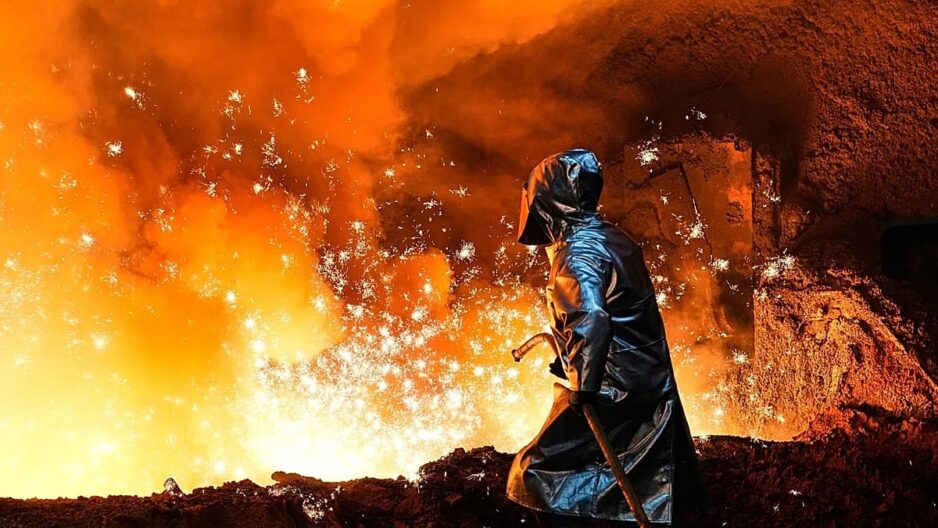
5 November 2025’te DuisburgSteel production at the ThyssenKrupp steel mill in ’

Speaking at the OECD Council of Ministers Meeting, OECD Secretary General Mathias Cormann said: “We need to address the root causes, including harmful subsidies and other non-market applications. This means stronger international cooperation and an equal playing field for steel producers everywhere.”

The OECD also found evidence that some exporters have overcome trade barriers by sending semi-finished steel to Southeast Asia ’ for processing before re-exporting it to OECD markets. China’in exports semi-finished products to the region %The 300’ increase points to a possible route to avoid customs duties and anti-dumping measures.

Energy costs and trade tensions increase pressures

At the same time, the sector is grappling with rising energy costs in connection with the Iran war. Energy, steel production costs %It can make up 40’, making the industry especially vulnerable to high prices.

The report also highlights the increasing pressure on the supply of raw materials. No country producing steel is completely self-sufficient in the inputs required for steel production; Export restrictions on basic materials are increasing worldwide. Forty-two countries are now restricting the export of steel scrap, an important raw material for the production of electric arc furnaces.

Europe is particularly vulnerable to these pressures. The region's steel producers often face higher labor and energy costs, as well as stricter environmental standards, compared to many international competitors.

As a result, European ​​ producers are generally less able to withstand long-term low prices compared to their competitors, who enjoy lower costs or stronger government support.

If current trends continue, the long-term viability of the sector and the economic security of many countries will weaken.

Hong Kong wants to be a bridge between Central Asia and Chinese business

John Lee, Chief Executive Officer of Hong Kong, China, said that ’ traded with Central Asia on an annual basis. %With an increase of 12, he visited Kazakhstan’ with the largest delegation of 75 officials and entrepreneurs representing logistics, green energy, mining, technology and education, where he led any foreign trip.

Speaking with Lee, Kazakh President Kassym-Jomart Tokayev expressed confidence that the visit will open up new opportunities to strengthen mutually beneficial cooperation, expand business contacts and launch promising joint projects, including in the fields of investment, finance, digitalization and artificial intelligence, as well as transportation and logistics.

Tokayev, “This event will undoubtedly give further impetus to the development of cooperation between Kazakhstan and Hong Kong and, more broadly, between Kazakhstan and China, with which we have a long-standing comprehensive strategic partnership.

Our countries maintain a high level of political dialogue and actively develop trade, economic and investment cooperation. The same can be said about our relations with Hong Kong.”

Kazakhstan's President Kassym-Zhomart Tokayev and Hong Kong's Chief Executive Officer John Lee

Hong Kong Deputy Minister of Justice Dr. Cheung Kwok-kwan told Euronews’e that the delegation was designed to position Hong Kong’ as a bridge between Chinese mainland companies looking to expand internationally and the Central Asian markets.

“Certainly Central Asia is a promising, emerging new market for businesses on mainland China, ” said.

As you can see, there are companies from Hong Kong“ in this delegation and they are particularly good in the innovation and technology sector as well as in the financial sector. We also have companies in mainland China, and on the list you can see that these are some of the big companies of mainland China.”

The online platform he manages is the best example of the type of collaboration that Hong Kong’ is looking for. Its purpose is to provide a database of professional service providers for companies in Hong Kong and mainland China who wish to enter foreign markets.

In the past, Chinese companies that wanted to enter international markets without the professional services of Hong Kong“ faced many challenges and many cases of failure, as they were not familiar with the commercial culture or regulatory regime of the overseas market, ’ said.

For professional service providers in “Hong Kong, Central Asia is not a new market and with this delegation I bring many success stories. For example, Central Asian airlines rent flights from Chinese airlines, and we can help with this process.”

Shared legal basis

The delegation's visit included the Astana International Financial Centre ’ni, which operates under British common law, which is the same legal framework that governs Hong Kong’.

Cheung said the common legal basis creates direct opportunities for Hong Kong lawyers and financial professionals to act as intermediaries for businesses on the Chinese mainland operating in Kazakhstan’ and Central Asia’.

Companies in mainland China can come here under the guidance of Hong Kong lawyers, “ said. “And businessmen not only from mainland China, but also from Middle East’ and all over the world.”

The visit coincides with a wider increase in China’'s economic interaction in Central Asia’.

According to China's Ministry of Commerce, trade between China and five Central Asian countries reached $106.3 billion (91.3 billion euros) in the first 10 months of 2025’; This surpassed the previous year's growth rate by six percentage points.

As economic relations enter a new phase following the agreement brokered by Trump’, the eyes of ABD’ have been turned to Azerbaijan’'s share in the pipelines

Washington signalled ’'s desire to deepen its presence in a region that has long been dominated by Russia and China, a senior US ’ official said on Thursday, saying the US ’ wants a direct share of Azerbaijan’'s pipeline and energy infrastructure.

Speaking at the first Azerbaijan-U.S. Economic Dialogue in Baku’, Caleb Orr, Deputy Secretary of State for Economy, Energy and Commercial Affairs, said that ABD’ sees opportunities that extend far beyond traditional hydrocarbons.

“ABD wants a bigger role in pipeline infrastructure and other energy infrastructure that Azerbaijan’ is building, ” said.

Orr also pointed out Washington’'s support for the growing role of Azerbaijan’ as a transit hub, highlighting the Central Corridor’, the trade and transportation route connecting Asia and Europe’ through the Caspian region.

“AzerbaijanWe expect to help ’ grow its role as the central node of the Central Corridor’ for the energy transition to Europe’ya and the rest of the world, ” said.

The US has already settled in the energy sector of Azerbaijan ’ through ExxonMobil and Chevron.

Orr noted that ExxonMobil’ signed a memorandum of understanding for new exploration activities at last year's Baku Energy Week’, while US ’ oil giant Chevron’ also signed a new working agreement at this year's event.

Orr went on to say that “Azerbaijan’ is now a critical energy producer for the world. “And the United States is really benefiting from this relationship, and we expect this relationship to grow significantly over the next few years.”

From Peace Accords to Investments

The event, held in Baku’, capital of Azerbaijan’, brought together government officials and business representatives to discuss cooperation in four strategic areas: regional connectivity and transit, energy security and critical mines, investment, artificial intelligence and digital infrastructure.

EuronewsWhen asked about the importance of the relationship between Azerbaijan and the United States, Azerbaijani Economy Minister Mikhail Jabbarov said strong political ties create favorable conditions for deeper economic cooperation.

“, you're right. Thanks to the leadership of President Aliyev and President Trump’, we have a really strong and developing political relationship, ” said.

Economic dialogue follows a landmark moment in U.S.-Azerbaijan relations.

August 8, 2025’te Trump hosted Azerbaijani President Ilham Aliyev and Armenian Prime Minister Nikol Pashinyan at the White House’; where the two leaders signed a joint declaration committing to a peaceful relationship after more than three decades of conflict; This was a breakthrough mediated in Washington ’ instead of Moscow or Brussels, which were previously key political capitals where the Armenia-Azerbaijan relationship was managed.

As part of the agreement, the United States said it would help build a major transit corridor connecting the Azerbaijani ’ to Nakhchivan ’ through the territory of Armenia, to be called the Trump Route or TRIPP for International Peace and Prosperity.

Forward-looking priorities

According to Jabbarov’, cooperation between the two countries is increasingly focused on four strategic priorities.

The first of these is the regional link covering trade, transit and the Central Corridor. He described it as a natural space for cooperation. He also said the cooperation includes energy infrastructure, logistics networks and the Alat Free Economic Zone ’ni.

The special economic zone is located in the Port of Alat’ on the Caspian coast, south of Baku’, and Azerbaijanis one of the most ambitious economic projects of ’; is essentially a purpose-built business center designed to attract foreign investment and position Baku’ as a regional commercial center.

In addition to the long-standing presence of U.S. energy giants in the Azerbaijani sector, Jabbarov also marked critical minerals as a growing boundary in the relationship.

“Critical mines are a new addition to our bilateral cooperation, ” said, adding that both countries see significant potential in developing their supply chains and exploring new discoveries.

Artificial intelligence and digital infrastructure also came to the fore, reflecting Baku’'s effort to go beyond hydrocarbons and create new areas of technological expertise.

Jabbarov, “We believe that artificial intelligence is an area and space that has an impact on all areas of economic development.

Azerbaijan said ’ wants not only data centers and digital infrastructure, but also a wider ecosystem built around innovation, productivity and human capital.

Remy Cointreau %Reports 35 snowfalls, shares soar in hopes of recovery

Remy Cointreau SA reported a sharp decline in annual profit, but the result exceeded analysts' expectations; Increasing performance in the Americas helped offset the impact of tariffs on key markets, including the US and China.

Euro’'s strong performance against major currencies has made cognac and other liquors more expensive in global markets, while high production costs have also negatively impacted profit margins.

The group has struggled in recent years against U.S. President Donald Trump ’'s tariffs and retaliatory taxes imposed on Chinese ’'s imports of cognac.

In a statement, CEO Franck Marilly said “ had won several major battles in the ever-complicating macroeconomic and geopolitical environment.

Net profit, sales %From €121.2 million in the previous year to €78.7 million in the fiscal year to the end of March, €935.3 million dropped to ’, down 5 percent to €935.3 million.

Remy Cointreau, the current operating profit margin from ’ .7 He saw ’ fall; However, although the company expects U.S. and Chinese tariffs and the strong euro to ultimately put pressure on the margins for the current year, “ is predicting a slight improvement in ”.

However, the company's shares were on the rise with the opening of trades on the Paris stock exchange. Shares around 9:45 a.m. %It was trading at €42.12, up around 12.

This happened at a time when the French spirits group was trying to regain its market share in a challenging economic environment, with the company launching a three-year return plan designed to boost growth and strengthen its business model.

Under the RC Forward program, the company plans to expand in emerging markets and global travel retail, drive growth from its premium cognac portfolio, and increase operational efficiency.

The group said the plan is expected to deliver an additional operating profit of around €100 million and productivity gains by 2028-29’ compared to 2025-26’.

Referring to duty-free sales at airports, Marilly said in a statement that “Our brands are regaining ground in ’, Remy Martin China is strengthening its leadership and market share in ’, and our Travel Retail business is slowly recovering with the goal of doubling its size in three years.” said.

Analysts say rising tensions in the Middle East ’ could create more uncertainty for consumer goods companies if high energy prices continue to weaken spending.

For the next fiscal year, the company aims for a ​​moderate improvement in its current operating margin, as well as a return to organic sales growth.

The company, “Remy Cointreau, expects a return to sustainable organic sales growth in 2026-27’, and the momentum is expected to grow steadily over the year.” said.