

When Western countries announced that they would impose sanctions on Russia, which occupied Ukraine, the Kremlin responded by banning all European and North American airlines from flying over Russia.
Virgin Atlantic has cancelled flights from London to Shanghai, while British Airways has suspended flights from London to Beijing.
According to sources working in the field of air transport, one of the reasons behind this was the Russian airspace ban and the extra cost it brought to the airlines.
However, the ban imposed by Moscow did not apply to Chinese-based airlines. As a result, Chinese companies, which aim to expand globally, have managed to take away a significant portion of their Western competitors' market share.
However, considering that China's economic growth slowed after the pandemic, the expected improvement in air transportation could not be achieved at the desired level. On the other hand, geopolitical tensions between China and the United States have caused some airlines to have to restrain their targets.
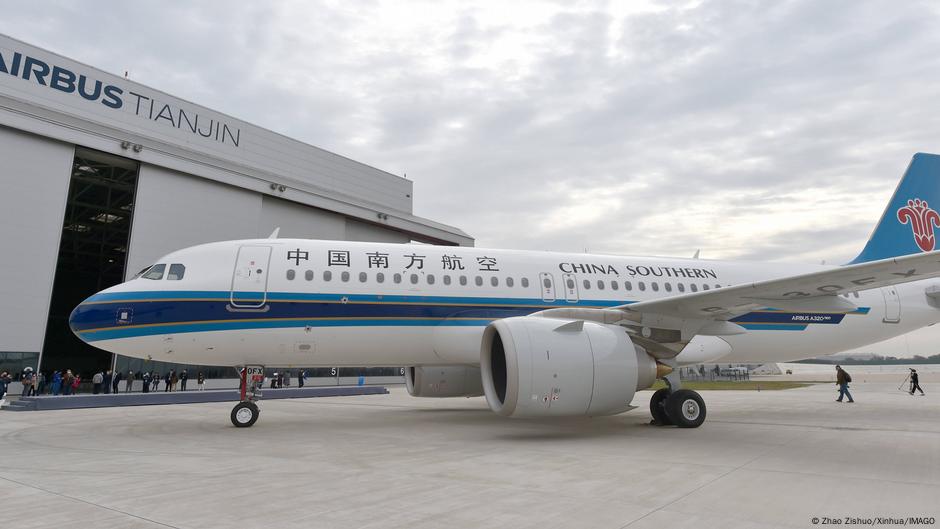
The right to use Russian airspace, which Western companies do not have, and cheap costs give China-based airlines a huge advantagePhoto: Zhao Zishuo/Xinhua/IMAGO
The price of passing Russia ⁇ tangent
John Grant, chief analyst at OAG ⁇ , the company that collects data in the aviation field, says the Russian airspace ban is a big problem for airlines. Grant stated that under normal conditions, Beijing could be reached and returned from England within 24 hours, and flights to Beijing and Shanghai allowed an aircraft to be evaluated effectively. However, the airspace ban required five and a half hours to be added to that period. That's a big problem for us, he says.
Grant said that this extra time spent in the air means extra fuel and salary costs for airlines, and he emphasized that more should be paid for airports with heavy traffic.
The Qantas riddle
Australia-based airline Qantas ⁇ 's announcement in July that they had ended flights on the Sydney-Shanghai line, although the Russian airspace ban did not affect them, raised questions for many.
Yi Gao, who works in the field of aviation and transportation technologies at Purdue University in Indiana, USA, points out that Qantas ⁇ 's flights to mainland China have always been ⁇ limited ⁇ . Gao is of the opinion that it would be a wrong approach to conclude that the recent interruptions in the flights of Western airlines to China are widespread.
In the face of this, Gao points out that Chinese companies are becoming increasingly competitive with Western companies, and this has an impact on the decisions of Western companies. In his assessment of DW ⁇ ye, Gao said that the competition brought by ⁇ Chinese airlines plays a vital role. Taking advantage of the cost advantage, Chinese airlines are able to offer attractive prices on flights from Chinese cities and to Chinese cities, he says.
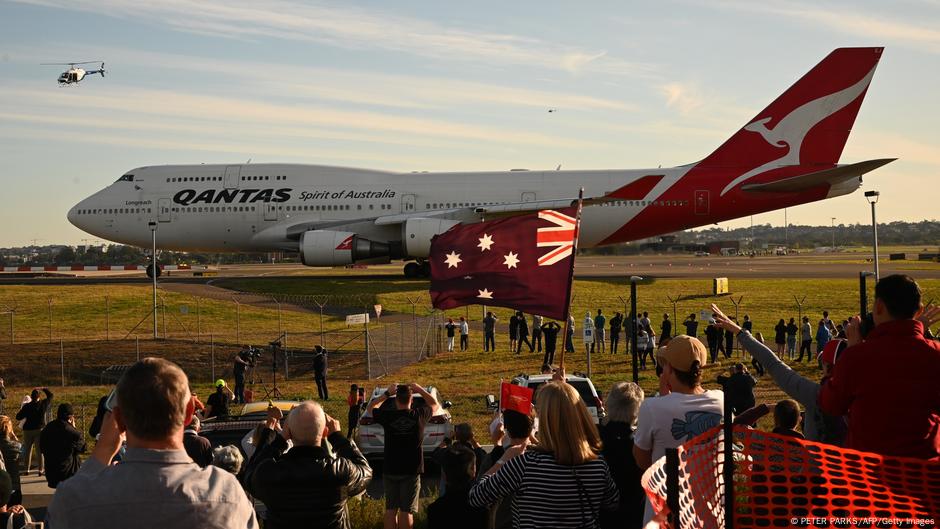
The fact that the Australian-based airline Qantas ⁇ has stopped flights to Çin ⁇ e despite being able to fly in Russian airspace says a lot about the growth of Chinese companiesPhoto: PETER PARKS/AFP/Getty Images
Singapore-based aviation analyst Brendan Sobie likewise says that growing competition is behind Qantas ⁇ 's decision. Speaking to DW ⁇ ye, Sobie says ⁇ Qantas has a hard time competing with Chinese airlines ⁇ . Pointing out that the demand for travel has also increased during this period, which has returned to the conditions before the pandemic, Sobie says that Chinese companies have turned this into an advantage:
In the few years before the pandemic, Chinese airlines were aiming for a strategic expansion into international markets. After the pandemic, we see the same thing coming back. Many people want to put the responsibility on the issue of Russian airspace, and this is definitely a decisive factor for foreign airlines. However, I think that the rise of Chinese companies will happen without a Russian air ban.
Pandemic hits Chinese aviation
Chinese airlines have increased the volume of flights to European cities such as Istanbul, London, Budapest, Madrid and Milan since 2019. Apart from the North American and Indian markets, Sobie points out that the international capacity of Chinese companies is returning to the pre-pandemic era.
The pandemic had dealt a major blow to China's aerospace ambitions. Months before the virus took over the world, Beijing Daxing International Airport opened with great enthusiasm. On the other hand, Chinese people who travel abroad have been at the top of the list of those who spend money on international tourism and airlines in the world for years. However, severe pandemic restrictions imposed by the government severely hampered the Chinese's chances of traveling by 2023.
John Grant, ⁇ China ⁇ 's goal was to create a ⁇ hub ⁇ in Beijing Daxing ⁇ , followed by a ⁇ hub ⁇ in Shanghai. There, domestic flights were planned to be connected with international flights, and even international flights were planned to be connected with other international flights. However, the pandemic has destroyed these targets, he says.
Nevertheless, the attractiveness of the international flight capacity and prices of China-based airlines to Chinese consumers, coupled with the pressure on Western-based airlines, has enabled China to increase its market share in the field of air transportation.
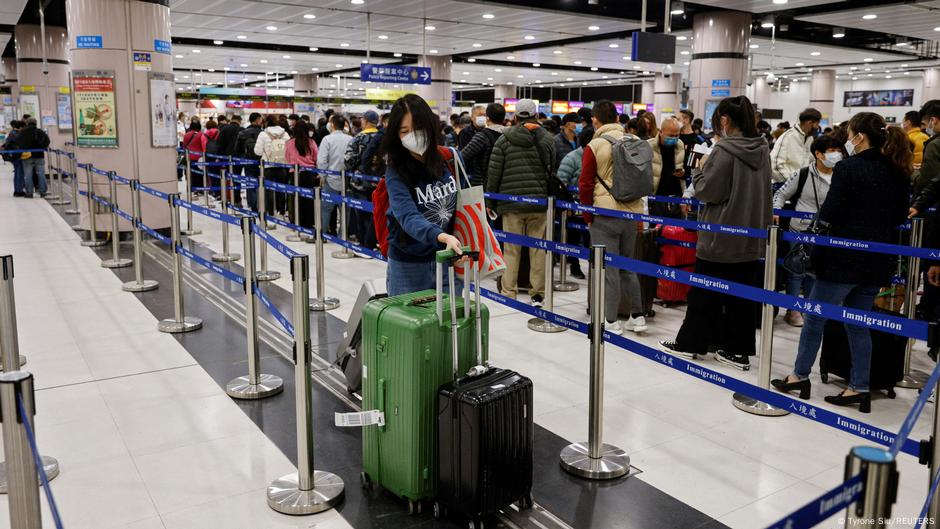
Although Chinese travel abroad has increased in 2024, pre-pandemic conditions have still not been achieved. Tyrone Siu and Reuters
The U.S. and China: The planes are still in the hangar.
While it is observed that Chinese companies are increasingly opening up to Europe, the same cannot be said for the North American market. The two main reasons for this are the weakness of the competitiveness of Chinese companies in this market and the geopolitical tension between the US and China.
As Beijing tightened border controls with the pandemic, travel opportunities between the U.S. and China disappeared. Although China is keen to resume flights between the two countries, the number of flights available between the two countries today is 15% of the number in 2019.
Washington, on the other hand, is not warm enough to increase flights. In an environment where geopolitical competition is intensified, the US is afraid that this step will give Chinese airlines more advantages than American companies. U.S.-based airlines such as Grant, United, Delta and American have no interest in flying China more than they currently do. Just as European companies have no interest, they evaluate ⁇ .
While aviation experts agree that post-pandemic travel habits and geopolitical issues will continue to determine the relationship between Western-based airlines and China, the Chinese market remains important to major players. Grant believes that Lufthansa, Air France and British Airways will want to resume flights to Beijing in the long run:
In time, they will all want to return to the Chinese market. Although China has not grown as much as everyone expects, it is still a big market.


