Small but strong: EuropeSmall technology hubs that boost ’'s global technology rankings

Europe may not have as many tech giants as the US, but its power doesn't lie here.

New Global Technology Ecosystem Index_._ says density is the area where the old continent is performing really well

According to the research of Dealroom.co’, a global intelligence platform for Startup’s and technology ecosystems, Europe is home to more of the world's highest-performing technology ecosystems than any other region by population size.

Belgium’'s city of Ghent ranks second in the European ’ after Cambridge’ among the cities with a population of less than half a million.

World's busiest tech ecosystems based on venture capital investment, venture value unicorns, and university connections

According to dealroom.co’, this is because of the notable enterprise value per capita led by Argenx’in, a biotech company valued at €41 billion, as well as the deep technology and life sciences production line that continues to increase the overall value of the “ ecosystem, which matches the high percentage of founders from ” and most from Ghent University, ’.

At the same time, the city of Belgium, home to less than 300,000 ’ people, is building a new software sector; Aikido Security is an up-to-date example of this.

‘Rekor AI investment’ LondonRaises ’ to 4th place worldwide

There are less surprises in the overall ranking, which ranks the most successful ecosystems through venture capital investments, corporate value, momentum, unicorns (private venture companies worth $1 billion or more), and the university network.

The U.S. still dominates East Coast ’na from West ’; The Bay Area is in first place, New York is in second place, and Boston is in the top three.

But Europe is not far behind.

London, ranked fourth worldwide, surpassed Paris’i in 2026’ and regained its position as ’'s leading technology ecosystem ahead of Los Angeles, Austin and Tel Aviv’ in the global rankings.

The city remains one of the world's leading centers for artificial intelligence, fintech and deep technology innovation, and is currently driven by a record-breaking investment in artificial intelligence – 2024, from $3.9 billion in ’ to €6 billion in 2025’; provides consistent unicorn creation.

The world's largest and most successful tech ecosystems, defined by VC investment, venture value, momentum, unicorns, and university connections

Dealroom.co researchers Europe in Motion’a said: “Last year, London technology companies 2024According to ’e %Collected €15.3 billion with an increase of 45; The city is currently home to 138 unicorns, including Wayve, Granola, OLIX and ElevenLabs.”

At the same time, Paris continues to show its strength, especially in the field of artificial intelligence.

It has raised €4.3 billion from venture capital (VC) financing and continues to host leading companies such as Mistral, AMI Labs and Mirakl. Dealroom.co reports that artificial intelligence is currently investing approximately %’ says it has made up its 30“, underlining that the ”region is focused on next-generation technologies.

Stockholm (19th) is the only other European city to enter the world's first 20’.

The rapid rise: A look at the Rising Stars of the Index

Istanbul, IndiaAfter ’'s Mumbai’si (1’th) and China’in Hefei’si (2’th), it is the third rising star on the global technology scene.

At the same time, Kiev is in eighth place, losing several places compared to 2025’ due to moderate growth (4.3 times) in the electric vehicle market since 2019’, while other cities such as Athens (6.7 times) or Zagreb (14 times) show higher rates.

As Europe approaches ’, Zagreb is the city to watch right now. It is currently AB’'s fastest-growing technology center and ranked 11th worldwide.

EuropeMap of unicorn centers in ’ and a list of the continent's highest rising stars at the bottom left

More generally, Eastern Europe seems to be gaining momentum; Athens (2nd), Sofia (3rd), Prague (4th) and Vilnius (5th) are at the top of the EU bloc.

But Dealroom.co says that the Rising Stars ranking is designed for emerging ecosystems from a less established base, so seeing the rise of “central European cities here rather than a shift in where global innovation is concentrated reflects ecosystem acceleration.

Finnish smart ring manufacturer Oura plans to raise IPO to over 9 billion Euro’ as wearables market warms

According to various reports, Finnish company Oura, which created the ring-shaped health tracker used by millions of people around the world, secretly submitted draft documents for a proposed public offering to the U.S. Securities and Exchange Commission, ’.

While the number of shares and the expected price range are not disclosed, the company recently held a funding round in the fall of 2025, valuing the business at around $11 billion (9.5 billion euros); This was more than double the $5 billion (€4.3 billion) valuation that ’te achieved in the previous round in 2024.

According to CEO Tom Hale’, more than 5.5 million Oura rings were sold by the end of the third quarter of last year.

At the time, Hale estimated that the company would reach $2 billion (1.7 billion euros) in 2026 compared to its annual revenue of $500 million (430 million euros) just two years ago.

The move to the public offering puts the European ​​bir wearable brand on the Wall Street’in radar at a time when investors' appetite for consumer health technology is returning.

Oura has become a prominent name in the rapidly growing category of smart rings; While Apple is competing with smartwatch giants like Garmin and Samsung, it is building a niche of its own with a different piece of hardware that some consumers find less disruptive.

Over the past two years, the company has aggressively expanded in the areas of software, subscriptions, and AI-powered health analytics. The wearable platform now focuses on long-term health signals such as sleep, preparation, heart rate, stress, and recovery.

Recently, Oura has made further progress in the field of women's health and artificial intelligence-based personal coaching, including tools designed to interpret physiological data and offer personalized wellness advice.

Analysts think that the transition from the device manufacturer to the subscription-based health platform is at the center of the IPO phase, as the company is currently on its way to surpassing 5 million paid members.

European technology champion goes to U.S. markets

The IPO application marks an important moment for one of Europe’'s most prominent health technology success stories.

Founded in ’, Finland and developed around sleep, rest and biometric monitoring research, Oura has grown from a Scandinavian hardware start-up ’ to a global player in the wearable market.

However, for Europe’'s start-up ecosystem, the planned listing of Oura’ is of greater importance.

Although its roots and design philosophy are deeply rooted in Finland’, the company recently transitioned to a U.S.-based parent company called Oura Inc., headquartered in San Francisco’, to access American venture capital while continuing its European operations.

The decision to prepare to be listed on ABD’ instead of Avrupa’ reflects a broader model among fast-growing European ​​ technology firms seeking deeper capital markets and greater visibility among global investors.

It's a FILE. ŌURA launches Oura Ring 4 Ceramic’i in new colors, October 2025

The planned IPO came amid renewed debate over whether or not Europe’ will lose some of its most successful tech companies to U.S. stock markets.

Oura joins the growing list of European-based businesses that have chosen Wall Street’i as their route to public markets due to scale, liquidity and investors' stronger familiarity with consumer technology.

The company's IPO will also be seen as a test of investors' sensitivity to wearable technology after several years of turbulence in the industry.

Unlike smart watches, smart rings continue to be a relatively young category, although interest is growing rapidly.

Oura is widely seen as the segment's category leader, and its rollout to the public can provide a clearer reference to how markets value next-generation healthcare hardware, along with software subscriptions and AI services.

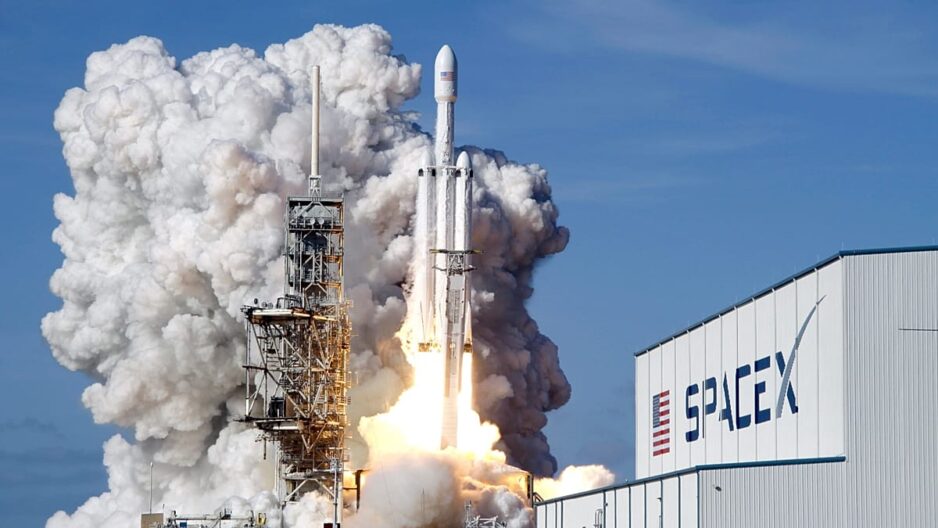
Ahead of SpaceX’'s IPO, a look at the biggest stock market openings ever

Elon Musk’'s SpaceX’i is preparing for the most important stock market start in history. The rocket and satellite company is set to be listed on Wall Street’te as early as next month, with reports that the company could raise up to $75 billion (68 billion euros); This figure will eclipse all public offerings recorded so far.

To put this into perspective, here every record holder will be one step ahead.

The current champion: the Saudi Aramco

The world's most profitable oil company, December 2019’da Riyadh Stock ExchangeThe world's most profitable oil company, December 2019’da Riyadh Stock Exchange, ranks first with a listing of $ 25.6 billion (€ 23.2 billion).

This was a turning point for ’'s Vision 2030 move to separate the kingdom from oil revenues and open its economy to foreign investors; This plan was launched in 2016 by Crown Prince Mohammed bin Salman at the center of Aramco’, the most important jewel of the Saudi economy.

But that would still be less than a third of the goal reported by SpaceX’.

FILE – AramcoThe first public offering (IPO) of ’ on the Riyadh stock exchange was held for the first time in Riyadh, Saudi Arabia, on 11 December 2019 in ’.

Category: Technology giants

Alibaba is in second place. Jack Ma’'s e-commerce empire, September 2014’te New York Stock Exchange’nda was the most exciting technology launch ever at the time, raising $21.8 billion (EUR 19.8 billion) and holding that record for years.

Another big list on the technology front was Facebook (now called Meta), which raised $16 billion (14.5 billion euros).

May 2012The Nasdaq launch in ’ became famous for technical glitches that plunged the stock into chaos and marked the start of a painful few weeks for early investors. Zuckerberg ’in has since become one of the most valuable companies in the world.

the Japanese Union

SoftBank Corp. raised $21.3 billion (EUR 19.3 billion) at ’ in Tokyo’ in December 2018. Founder Masayoshi Son, one of the most famous gamblers of technology; The man whose first bet on Alibaba’ was worth tens of billions of dollars at the end.

The list also includes NTT DoCoMo, the mobile arm of ’'s state-backed telecommunications giant Nippon Telegraph and Telephone’. October 1998The $18.1 billion (€16.4 billion) Tokyo listing in ’ comes at the height of a global mobile boom that investors are crying out to open up to the industry.

China’in banking giants

The inclusion of two state-owned Chinese credit institutions on the list is a reminder of how dominant Beijing ’'s financial institutions became in the years following the 2008 crisis.

Agricultural Bank of China, July 2010’da Shanghai and Hong Kong’da raised $19.2 billion (€17.4 billion); This is one of the largest lists emerging from the state-driven economic expansion of ’ in China.

Industrial and Commercial Bank of China, the world's largest bank in terms of assets and with a balance sheet larger than the GDP ’ of most countries, generated $19.1 billion (€17.3 billion) in revenue from the same two exchanges in 2006.

The rest of the field

Visa raised $17.9 billion (€16.2 billion) at the NYSE opening in ’ in March 2008, at the height of the global financial crisis; This was a significant indicator of investors' confidence at a time when the Wall Street ’ was unraveling.

Asian insurance giant AIA Group, which emerged from the wreckage of AIG’, which almost collapsed in the same crisis, generated revenues of $17.8 billion (EUR 16.1 billion) in October 2010’da Hong Kong’da.

Italy's Enel, currently one of ’'s largest energy companies and a major player in the global renewable energy move, made its debut in Milan and New York’ in November 1999, with an increase of $16.5 billion (€15 billion).

SpaceX will not only be at the top of the list if it achieves its reported goal, but it will also be almost three times larger than the current record.

For the first time in the world, an LNG ship will be equipped with sails

Japanese shipping company Mitsui O.S.K. Lines (MOL) and US-based Chevron Shipping Company will integrate the state-of-the-art wind-powered propulsion system into the LNG (liquefied natural gas) vessel. According to the companies, It will be the world's first LNG ship with wind-powered technology.

The 174,000 cubic meter vessel, chartered by Chevron Asia Pacific Shipping, is being built in South Korea. 2026 It is planned to be delivered in the year.

Developed by MOL Wind Challenger Telescopic sails in the named technology, the ship's reducing fuel consumption It will also reduce greenhouse gas emissions. According to the company, the technology combines automatic sail control with a real-time wind monitoring system to improve fuel efficiency.

Weight saving with composite material

Sails, light weight to maintain the cargo capacity of the ship fibre glass reinforced plastic (GFRP) is manufactured. There is not a lot of weight on the ship. Sails also to maintain balance in choppy weather It can shrink down. In this way, the center of gravity is pulled down, providing the same security as traditional ships.

Wind Challenger combines three key components to optimize ship routes and further improve fuel efficiency: sails, control system and weather route.

In fuel consumption %Up to 17 ⁇ reduction achieved

In October 2022, MOL launched Shofu Maru ⁇ yu, a 100,000-metric-tonne coal carrier equipped with Wind Challenger. The ship has completed 7 round trips for 18 months and is in daily fuel consumption. %A reduction of up to 17 ⁇ He got and Average per voyage %From 5 to %A reduction of 8 was achieved.

The company says the Wind Challenger system can be fitted to both newly built and existing vessels, from dry cargo ships to tankers and LNG carriers. can be mounted on various ships more than once He says it. MOL plans to launch 25 ships equipped with Wind Challenger technology by 2030 and another 25 by 2035. of 80 ships. He plans to deploy.

What does the U.S. and Japan's chip restriction plan for China aim for?

United States of America and the History of Japan, It is chinesee the Chip Chip technology has reached the final stage in an important agreement to restrict its exports. But Japanese companies are concerned about possible threats of retaliation from China following these export restrictions. Well, China's chip production share of market What is it? What are the main objectives of the agreement? China USA and Japan The chip industry What are the possible retaliation strategies against export controls on it? China chip productionWhat are their strategic goals and what policies are they implementing to achieve them? What can be said about China's long-term chip production strategy? the Turkish Asian Center for Strategic Studies⁇ nden (TASAM) Prof. Dr. Sedat Aybar Thoughts on the subject Sputnik ⁇ e (disambiguation) He told me privately.

China is considering reducing its dependence on the outside in manufacturing in chip-using industries

Prof. Dr. Sedat AybaIndicating China's role in the global chip industry, he said that the country is considering reducing its dependence on outside production in chip-using industries.; “People of China⁇ in (disambiguation) the Chip IndustryIts global share has risen considerably, especially recently. China, which dominated 3 percent of the global chip market in 2010, increased its share to 5 percent as of 2022. Industries and products that use chips Considering the prevalence of the basis of China's production, this rate is not very much.. What this reality reveals is that the import dependence of the chips used in Çin ⁇ in products is high. Therefore, China will increase its chip production capacity from $10 billion in 2020. It aims to increase to 100 billion dollars by 2025. Thus, it considers reducing its dependence on imports and external dependence in the industries and production of products using chips. While China is reducing its import dependence, it wants to be a major player in the global chip supply chain by making such a serious breakthrough, especially to compete with Taiwan and South Korea in its region..”

China is implementing a series of policies to take over the scientific field in which the West is unquestionably superior.

Aybar, Talking about the Chinese government's incentives to the chip industry, “China is implementing a series of policies to take over the scientific field in which the West is unquestionably superior. He completes his thoughts on the subject with these words:

In order to achieve the goals of the Chinese government, In 2021, it invested $150 billion in the chip industry. Chinese companies producing chips were provided with tax reductions and Since 2020, large amounts of incentives have been provided for R&D studies through the Semiconductor Industry Development Fund. Chip production covers capital-intensive, high-tech production and labor processes. The sustainability of the technological infrastructure to carry out such production requires academic/scientific/intellectual advanced processes. This imposes a capacity building. The formation of such capacities, which are very expensive, and the scientific infrastructure did not exist in China until recently. The Chinese government is working to make breakthroughs in digital breakthroughs, technological applications that can land on the dark side of the moon, the use of Big Data, robotics, artificial intelligence, etc. In addition, he has recently made serious attempts to create a scientific/academic infrastructure. The resources allocated to R&D studies and efforts to transfer scientific publications to China should always be seen as part of these incentives. China is implementing a series of policies to take over the scientific field in which the West is unquestionably superior. China predicts that their output will produce a series of results for chip production.

The main issue of China is to be able to manage a very large economy without overthrowing it.

Prof. Dr. Sedat Aybar, China's long-term strategies “It aims to meet 70 percent of semiconductors with domestic production by 2025“ He stated in his sentence and “China's most important strategic goal, which feeds its appetite for such an increase in chip production, is to reduce external dependence on its production and thus to maintain its cost advantage in international competition. In particular, due to the increasing wages in the country, there is an effort to make its own economic internal and external balances sustainable behind its orientation to products with high technological added value. It is part of the desire to prevent the surplus economy from evolving into the deficit economy due to the increasing reality of total consumption at home. The main reason for the drive to promote chip production should be seen as a smaller part of the economic policy package to harmonize internal and external balances. This is different from the explanations that are emphasized too much in the West and emphasize the efforts to achieve a global leverage of power. The main problem of China is to be able to manage a very large economy with a very large population without overthrowing it. In addition, global power projections can possibly be explained in scenarios involving international relations. While all these scenarios are being set up It should be noted that Çin ⁇ in pursues policies such as supporting domestic companies in chip production, encouraging technology transfer and especially establishing international collaborations.“ He said it.

⁇ US and Japan's agreement to restrict Chinese exports causes a contraction in China's chip industry ⁇

Aybar, The U.S. and Japan said the agreement to restrict China's chip technology exports would cause a significant contraction in the Chinese chip industry if it came into force.

The fact that ABD ⁇ limits the export of high-tech semiconductors inevitably causes a significant contraction in China's chip industry. The main objective of this type of U.S. trade strategy towards China is to limit its military and strategic capabilities by blocking the access of high-tech semiconductors to China. In this way, Çin ⁇ in considers to control the situations where it can strengthen the semiconductor industry and reduce the impact of trade sanctions that can be imposed on it. ⁇

The U.S. predicts that if the deal is completed, China could lead to a contraction of up to 30 percent in the chip industry.

Prof. Dr. Sedat Aybar stated that the main goal of the new export controls planned by ABD ⁇ is to cause a contraction in the Çin ⁇ in chip industry and stated the following on the subject:

“The United States foresees that sanctions and trade controls could lead to a contraction of up to 30 percent in China's chip industry and does not want to lose this advantage. Therefore, the It also wants countries such as its allies South Korea, Taiwan and Japan to cooperate with it and restrict the export of high-tech semiconductors.. The U.S. provides financial and R&D support to help maintain the competitiveness of companies in this country, which is likely to be adversely affected by this situation. As a result of such supports, global chip supply times are projected to increase by 20-30 percent. Thus, further regional decomposition of the chip industry and the creation of independent semiconductor markets should be expected. ⁇

New Chinese step from Tesla ⁇

Tesla plans to launch an advanced driver assistance system called Fully Autonomous Driving (FSD) technology in China and Europe in the first quarter of next year, if approved by authorities.

Tesla AI ⁇ 's official X account released a roadmap on Thursday, outlining upcoming technology launches.

The company, which is working on new technologies to increase sales and stay ahead of Chinese competitors working on similar driver assistance systems, is currently in the process of obtaining permission from regional authorities.

Tesla has made great progress in getting approval for the Chinese market after passing data security assessments and reaching a mapping and navigation agreement with technology giant Baidu. The company also received permission to test FSD technology on the streets of Shanghai.

CEO Elon Musk attributes Tesla's future to solving autonomy.

Despite the name of the technology, Tesla and industry experts emphasize that drivers should keep their hands on the wheel and pay attention to the road when using the software.

Musk said at a revenue meeting in July that he expects the FSD drive system to be approved in Europe, China and other countries by the end of the year. He also stated in April that it would soon be possible to roll out FSD technology via platform X in China.

In China, Tesla's largest overseas market, there are many competing brands that have narrowed their market share and developed their own driver assistance technologies. In this competitive environment, the approval of FSD ⁇ may contribute to Tesla ⁇ 's maintenance of its leadership in Çin ⁇ . According to data from the China Passenger Car Association, Tesla ⁇ 's shipments to China in the first eight months of this year decreased by about 6 percent compared to last year.