Egypt is having a great year for gas exploration but is struggling to meet domestic energy demands

As the Iranian war prepares to push energy demands to record highs and Cairo prepares ’ to return to its role as a major gas export hub, Egypt has made a series of major gas discoveries over the past two months in the – Western Desert-limited to its largest discovery in 15 years.

Bill Farren-Price, head of gas research at the Oxford Institute for Energy Studies ’, said: "I think the new discoveries will help solve “'s challenging energy balances, but they are unlikely to transform.

While “Reforms are likely to attract more international companies and reinvigorate those already in the country, increased energy demand is still likely to outpace production gains.

Within two months, Egypt announced three key gas findings linked to Eni, the Italian oil and gas major leader, who is an operator or founding member of all the founding organizations and has been operating in Egypt’ since 1954.

Record the discoveries

In April, Eni and BP announced the discovery of Denise West, an estimated 2 trillion cubic feet of gas off the Mediterranean coast.

Wood Mackenzie’de North Africa upstream chief analyst Martijn Murphy said “, with 2 trillion cubic feet of gas available, is the largest gas discovery in Egypt’ since Chevron’'s 2023 discovery of Nargis.

Proximity to the existing infrastructure operated by “Eni offers the possibility of rapid development.”

In early May, Nidoco N-2, operated by Eni and BP through the Petrobel joint venture, arrived in the Nile Delta, ’'s West Abu Madi region, expected to add about 50 million cubic feet per day.

Towards the end of May, Agiba Petroleum, a joint venture between Eni and the state-owned EGPC, announced the ’nde South Bostan-1X’i in the Western Desert; Initial estimates included 330 billion cubic feet of gas, 10 million barrels of condensate and crude oil, and about 70 million barrels of oil-equivalent total reserves.

Murphy said South Bostan’ is smaller than Denise West’, but is still notable for its land-based Western Desert exploration, where mature land may offer lower-cost opportunities close to existing infrastructure.

Both discoveries will increase declining domestic gas production and the need for more costly imported LNG cargoes, “ said.

All three are close to existing infrastructure, and analysts say this is the key to bringing them to life quickly and at a lower cost.

Together, they point to renewed drilling momentum following years of falling domestic production and increasing pressure from energy imports on Egypt ’'s foreign exchange reserves.

Fast-tracked finds, slow-burning effect

Timing is important for Egypt. The country was once viewed as a regional gas export hub supported by large sites such as the LNG plants in Zohr and Idku and Damietta’.

But falling production and increased domestic consumption forced Cairo’yi to return to LNG imports as it continued to promote itself as a future route for Eastern Mediterranean gas.

Abdelaziz Khlaifat, professor and head of petroleum and energy engineering at the American University of ’ in Cairo, said the findings reflect a deliberate shift in strategy, moving towards faster, cheaper development closer to existing infrastructure rather than pursuing another Zohr’.

“While neither fits Zohr’'s scale, they all together reflect a more practical Egyptian strategy focused on infrastructure-driven exploration, faster project development, and reducing import dependency, ” said.

Murphy was more forthcoming. The balance of supply/demand has changed from a vacuum to a chasm, “ said. “EgyptIt takes a transformational success of exploration to materially facilitate ’'s gas imports.”

Closing debts to revive drilling

The discoveries didn't happen in a vacuum. Egypt spent the past year clearing its debts to foreign energy companies; payment delays have quietly clogged production activities for years.

Murphy said the repayment effort was as important as any finding. “Decrease in debts is a major driver of renewed search momentum in Egypt’. Debts have decreased significantly as the government prioritizes a clean slate by mid-year.”

Khlaifat said the impact on operator confidence was tangible. “Better payment discipline and more flexible business conditions have helped restore trust among operators such as Eni, BP and Shell.”

The export question

Still, analysts say Egypt ’'s LNG export targets will depend on more than domestic discoveries. Cairo continued to position itself as a regional gas hub, with potential flows from Israel and Cyprus ’ feeding into Egyptian infrastructure and LNG facilities.

The recently approved $35 billion (30 billion euros) deal will expand Israeli ’ gas exports from the ’in Leviathan field to Egypt’a from 2026’ to 2040.

Additional pipeline gas can help Egypt ’ reduce its dependence on more costly LNG imports; But domestic scarcity means that the return to stable exports depends primarily on meeting local demand.

Photo of file: Egypt’in Leviathan gas field in Israel, which is expected to provide more gas to ’.

Cyprus is also moving towards Mısır’a as a way out to the market. In April, partners at the Aphrodite site signed a 15-year agreement to sell gas to the Egyptian ’'s state gas buyer.

Last week, ExxonMobil and QatarEnergy signed a separate agreement to examine bringing gas from Cyprus’'s Glaucus and Pegasus discoveries to Egypt’ through existing LNG infrastructure.

Farren-Price, “The most interesting thing will be to see if Cypriot and Israeli gas will help rebuild confidence in Egyptian LNG exports in the medium term.

But third-party gas doesn't solve the immediate problem. Murphy, “These are modest-sized discoveries that will be destroyed by ’'s massive domestic market in Egypt, ” said.

“EgyptIn order for ’ to achieve these goals, domestic demand must first be met.”

Qatar continues to expand its Northern Area despite LNG cuts

Qatar continues to greatly expand its Northern Field gas project, despite the fact that cuts in LNG production and exports highlight the growing impact of regional tensions on global energy supply.

US-based Baker Hughes has signed a contract with QatarEnergy’den “grand” for the North Field West (NFW) project, according to the results of the first quarter of 2026.

The award covers the ” critical equipment of two LNG “mega trains, including six gas turbines, 12 centrifugal compressors and integrated power systems at the heart of gas liquefaction.

The agreement underscores continued investment in large-scale LNG infrastructure despite short-term cuts.

Plans for expansion

The North Field West project is part of Qatar ’'s broader strategy to increase LNG production capacity from 77 million tons per year to 142 million tons per year after all expansion phases have been completed.

The NFW phase alone is expected to add about 16 million tons per year through two new production lines.

QatarEnergy has awarded engineering, procurement and construction (EPC) contracts for the project to an international consortium, with the first output previously expected to come out towards the end of the decade.

Baker Hughes centrifugal compressor used in liquefied natural gas processing.

The Baker Hughes contract also includes a carbon capture and transport plant equipment capable of handling up to 4.1 million tons of carbon dioxide per year, reflecting efforts to integrate emission reduction technologies into the new energy infrastructure.

Confusions and tensions

The expansion move comes as Qatar’'s gas production and exports face disruptions due to rising tensions in the Strait of Hormuz.

Data and industry forecasts indicate a decline in production and a sharp decline in LNG exports in recent months, with some of the country's export capacity also being affected.

Due to the complexity of repairs and long lead times for special equipment, the recovery process is likely to take time.

The cuts have raised concerns about supply flows from the Gulf ’, a major source of global LNG’.

Long-term strategy

Despite these challenges, Qatar continues its long-term LNG expansion strategy as global gas demand remains strong and energy security concerns intensify.

Baker Hughes, partly driven by strong demand for LNG and gas infrastructure, added that total orders in the first quarter amounted to 8.2 billion orders, a reflection of continued investment momentum in the sector. $ It is reported to be €7 billion.

The Northern Field, the world's largest independent gas field, continues to be central to Qatar ’'s goal of consolidating its position as a leading global LNG exporter.

QatarEnergy launches first LNG export from $10 billion Golden Pass project in ’, Texas

QatarEnergy, Texas, launched the first liquefied natural gas (LNG) export from the Golden Pass project in ’, USA, a milestone in its largest investment in ’.

As the project progressed towards full commercial operations, the cargo was loaded into the Sabine Pass facility, a joint venture with ExxonMobil.

The shipment was carried out with the Al-Qaiyyah LNG vessel with a capacity of 174,000 cubic meters.

Saad Sherida Al-Kaabi, Qatar's Minister of State for Energy Affairs and CEO of QatarEnergy, said ’This is an important industry milestone that opens a new chapter in QatarEnergy“'s global efforts to meet growing LNG demand and provide reliable supplies to international markets.

LNG carrier Texas Sabine Passloading at Golden Pass facility in ’.

Golden Pass LNG, QatarEnergy’nin , while ExxonMobil’in %It is a project with 30 shares and a value of more than 10 billion dollars (EUR 8.5 billion). When fully operational, it is expected to produce about 18 million tons per year.

The Golden Pass export plant successfully produced the first LNG’sini from Train 1’, the first of three independent processing units, reaching an important milestone in late March 2026’. This marks the beginning of the phased commissioning of the project; The remaining two liquefaction units are scheduled to be operational in 2026 and 2027.

This is one of the largest LNG export developments in the United States ’, and is part of QatarEnergy’'s efforts to expand its LNG portfolio beyond Qatar’, as well as its Northern Field expansion, which aims to increase local production capacity to 142 million tons per year by 2030.

The United States is currently the world's largest exporter of LNG, and the Golden Pass project provides QatarEnergy’ with direct access to export capacity from the U.S. Gulf Coast ’, where shipments can reach both European and Asian markets.

The project also emerges because global LNG demand remains strong, especially in Europe and Asia’, and continues the pressure on new supply.

QatarEnergy Trading’in, the company's LNG marketing arm, %It is expected to receive 70’ini.

10-year LNG agreement from BOTAŞ and Total ⁇

Minister of Energy and Natural Resources Bayraktar ⁇ We are creating a Turkish blend with the mixing of different sources. We are in a position to present this mixture to Avrupa ⁇ .

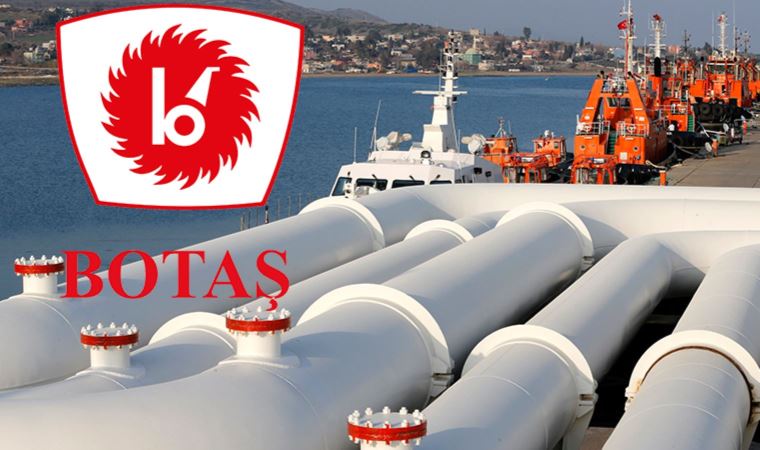
Turkey continues to take steps to expand its natural gas supply range. A new one has been added to the agreements previously signed with 3 global companies. BOTAŞ and TotalEnergies signed a 10-year LNG agreement during the US contacts of Alparslan Bayraktar ⁇ , Minister of Energy and Natural Resources. With the agreement, Total will supply 16 LNG cargoes of approximately 1.6 billion cubic meters each year from 2027. BOTAŞ will be able to receive some of the LNG ⁇ from the filling ports in the USA and some of the LNG ⁇ from the Turkish and European terminals.

Making a statement after the signing ceremony, Energy and Natural Resources Minister Alparslan Bayraktar stated that Turkey ⁇ is the 4 ⁇ largest natural gas market in Europe with a consumption of 50-55 billion cubic meters and ⁇ We are creating a Turkish Blend by mixing gases from different sources in Turkey ⁇ . We are able to offer this mixture to customers in Europe, especially to countries in need of gas in South East Europe.

THE GOAL IS TO BE A NATURAL GAS CENTER

Turkey, which can store natural gas from different sources with its strong infrastructure, is making strategic moves in line with its goal of becoming a natural gas center. On the margins of Gastech 2024 Fair and Conference held in Houston, USA, an agreement was signed between TotalEnergies, a global energy company, and BOTAŞ. While Minister Bayraktar accompanied the agreement, BOTAŞ General Manager Abdulvahit Fidan and TotalEnergies LNG Senior Vice President Gregory Joffroy signed the agreement.

THE SUPPLY PORTFOLIO IS DIFFERENT

According to the agreement; TotalEnergies will supply 16 LNG cargoes of approximately 1.6 billion cubic meters each year from 2027. BOTAŞ will be able to receive some of the LNG ⁇ from the filling ports in the USA and some of the LNG ⁇ from the Turkish and European terminals. With the agreement, Turkey's natural gas supply portfolio will be diversified. With these and similar agreements, BOTAŞ will gain additional operational and commercial capabilities and become stronger in the global market.

LONG-TERM AGREEMENTS

CLOSE TO 10 YEARS

Bayraktar noted that the agreement with Total covers 10 years and includes the delivery of 16 cargoes of approximately 1.6 billion cubic meters of LNG to Türkiye ⁇ every year for 10 years starting from ⁇ 2027. So when you look at the sum of 16 billion cubic meters of a deal. ⁇ he said.

80 BILLION METERS CAPACITY

Stating that Turkey has become able to receive the gas above its needs with its existing infrastructure, Bayraktar said that Turkey's entry capacity is able to easily meet approximately 80 billion cubic meters with the production at Sakarya Gas Field, international pipeline projects and LNG infrastructure.

WE WILL EXPORT THE ROOM TO EUROPE

Bayraktar, Turkey ⁇ Considering that it is the 4th largest natural gas market in Europe with its consumption of 50-55 billion cubic meters, emphasizing that it can export the remaining amount to Europe ⁇ We are creating a Turkish Blend by mixing gases from different sources in ⁇ Turkey ⁇ . We are able to offer this mixture to customers in Europe, especially to countries in need of gas in South East Europe. We currently export this gas to Bulgaria ⁇ a, Romania ⁇ a, Hungary ⁇ a. I hope that we will do this in larger quantities as BOTAS as Turkey. ⁇ said.

THERE MAY BE NEW AGREEMENTS

Bayraktar, who explained that they have created a gas portfolio by evaluating whoever proposes more competitive, cheaper and more flexible contract terms under any favorable conditions, ⁇ Of course, there may be such agreements that may be new. We will continue to work to supply gas to our country from the cheapest source under the most competitive conditions. ⁇

bigpara.hurriyet.com.tr

BOTAŞ signs LNG agreement with Total

According to sources close to the issue, Turkey has signed a new 10-year procurement agreement with TotalEnergies SE, 1.6 billion cubic meters per year, following Exxon Mobil Corp. and Shell Plc ⁇ . While this agreement increases Turkey's capacity to trade gas to Europe and the countries in the region including Egypt, it also increases its bargaining power in new period natural gas agreements with Russia and Iran.

Energy and Natural Resources Minister Alparslan Bayraktar attended the LNG supply agreement ceremony between French TotalEnergies and BOTAŞ yesterday evening in Houston, USA. Under the agreement, Turkey will supply 1.6 billion cubic meters of LNG annually for 10 years from 2027. BOTAŞ's agreement with Shell Plc envisaged an annual supply of 4 billion cubic meters, and its agreement with Exxon Mobil Corp. envisioned an annual supply of 2.5 million tons.

It is important for Turkey that the start dates of all three agreements are 2027. The new LNG agreements strengthen Turkey's hand in negotiations with Iran and Russia for the renewal of long-term supply contracts, which will expire in 2025 and 2026.

161 million cubic meters capacity

Turkey's 3 FSRU vessels are capable of gasification of 84 million cubic meters per day. In addition, Egegaz LNG terminal in Izmir Aliağa ⁇ has a capacity of 40 million cubic meters per day and Marmara Ereğlisi LNG terminal in Tekirdağ ⁇ has a capacity of 37 million cubic meters. The total gasification capacity of the 5 plants is 161 million cubic meters.

In the last year, Turkey has signed natural gas export agreements with 4 European countries: Bulgaria, Hungary, Romania and Moldova. The fact that the transit agreement of the Russia-Ukraine-Europe pipeline will end this year strengthens Turkey's role in this regard for Europe. In the event of the end of the annual transit of 40 billion cubic meters of natural gas between 2021-2024, it is imperative that Avrupa ⁇ turn to alternative solutions.

In an interview with Bloomberg in July, Minister Bayraktar said that if the technical infrastructure is prepared to address Avrupa ⁇ 's concerns about energy supply security, Turkey can increase the gas transfer to Bulgaria from 3.5 billion cubic meters to 7 billion cubic meters and benefit European countries from 25-30 billion cubic meters of LNG processing capacity.

The new country could be Egypt.

In addition to European countries, Turkey is also conducting LNG negotiations with Egypt, where relations have started to normalize after many years. In this context, negotiations have been going on for some time regarding the project regarding the role of Turkey's FSRU ships in Egypt's gas supply. Minister Alparslan Bayraktar also met with his Egyptian counterpart during his visit to the United States.