
Millions of Europeans have to choose between eating and warming up in this winter, while Real Economy Bulgaria is increasingly seeing how EU funding is diverting their savings to other vital needs by providing warm food support to families.
The food or warm-up dilemma
More than 35 million Europeans are unable to keep their homes warm this winter. This is equivalent to Greece, Portugal, Hungary and Ireland, where the entire population in ’ decides between heating and putting food on the table.
Two main causes of fuel or energy poverty are living in buildings with low income and low energy efficiency.
In Europe, rising fuel prices and the ongoing pandemic in ’ in recent months have exacerbated the problem, making it more difficult for people to pay their bills.
The right to access basic services such as energy is included in the European Pillar of Social Rights, a guide to stronger social rights in the European Union.
The EU outlined measures it proposed countries should implement to keep fuel prices low, including emergency income support and tax cuts.
FranceIn ’, the number of people using food banks, such as Banques Alimentaires, partly funded by the European Fund for the Poorest, FEAD, has increased since the beginning of the pandemic. %Increased by more than 30’.
A similar picture is emerging across Europe at a time when people are struggling to pay food and rising energy bills.
BulgariaIn ’, more than a quarter of the population cannot afford to heat their homes; This is the highest level in Europe’, followed by Lithuania and Cyprus.
“, these are lentils and potatoes. I can't complain. I'll survive. - ”
In Bulgaria, temperatures regularly drop below zero during the winter months in ’. For the most vulnerable, especially those who can't afford to heat up, finding money to heat someone's home can be a major concern.
Insufficiently insulated buildings, low incomes and rising energy prices are the main causes of energy poverty.
Kocherinovo is a small mountain village in the west of the country. Nikola, 71, lives there alone. receives a small pension of around 150 euros per month; That's about half the minimum wage. Nikola receives a government-paid energy allowance, with which he can buy wood for his stove.

“I bought 520 leva for the firewood in October, this is for the whole winter. Five cubic meters for 500 leva. I bought eight and paid for the rest out of my own pocket. One cubic meter was 75 leva, now 90 lev, 15 lev more.”
Rising energy prices have had a significant impact on Nikola’'s budget. Even if he gets medical help and receives a Covid bonus for retirees, he has a hard time paying his bills, medicines, and food.
European FEAD fund
“A hot lunch for the soulThanks to the program called ”, Nikola eats hot food every day; which means he won't have to make an impossible choice between choosing to eat or warming up at home. The initiative is funded by FEAD, the European ’'s Poorest Relief Fund.
In 2020, more than 15 million Europeans such as Nikola benefited from food aid thanks to the European FEAD fund.
Sixty-two-year-old Evelina also lives in the same village and has a hot lunch for “ruh, a hot meal from ” every day.
Although he is disabled, he takes care of his parents alone. Their pensions are not enough to cover the family's expenses, so they benefit from various government benefits that allow them to make a living.

“I'm getting help with food and warm-ups, and there's also an assistant who's coming to help me. Much better, at least I don't have to cook anymore. - ”
Evelina was able to save some money by buying a more energy-efficient stove. It burns pellets instead of wood.
The energy price is a significant part of the cost of living in ’, Bulgaria, especially for the poorest households. In 2018 ’ represented about 16% of expenditures, while in Sweden ’ average energy costs were around 4%.
Working with and completing national measures to help the most vulnerable and energy-poor is a strategy of FEAD’. The hot food and bread offered relaxes family budgets, allowing people to channel their savings into other vital needs.
Andriana Sukova, Deputy Director-General for Employment, Social Affairs and Accession at the European Commission, says such unified support is vital.
The food and basic material assistance provided through the “FEAD program, but also accompanied by national policies and national measures, has proven crucial for poor people to reduce the burden of personal income, keep their homes warm or buy the medicines the elderly need, maintain a balanced and reasonable life.
In the coming period, FEAD’'s work will continue with the support of the European Social Fund Plus’ and its budget will almost double.
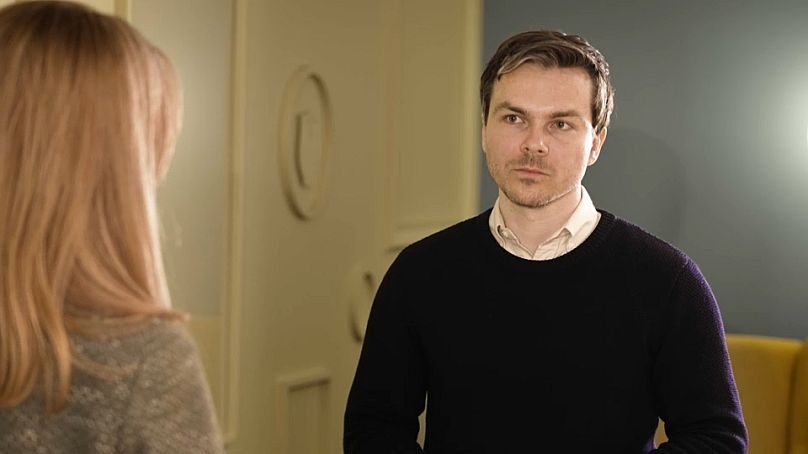
The focal point is: Europe’'s energy crisis
To learn more about the current energy crisis, Real Economy met with Thomas Pellerin-Carlin, Director of the Jacques Delors Energy Center.
According to Euronews: How can we be in a situation where millions of people in “ can't afford to heat their homes?’
Thomas Pellerin-Carlin: “This is the result of the choices we have made in the past to build an inefficient system based on fossil fuel use.
For this reason, we are in a situation where tens of millions of Europeans cannot heat their homes as they should.
And when we face the fossil fuel crisis and the shock from fossil fuel prices, it only gets worse.
According to Euronews: “Many European countries are taking relief measures. How much difference do they make?”
Thomas Pellerin-Carlin: “We know that the countries that do the best are in fact the countries where policies are implemented that explicitly encourage the transition to renewable energy and the transition to efficiency.
Energy poverty in Europe is at its worst south of ’, and that's a bit counterintuitive. The colder the country, the worse you might think energy poverty is, but in reality, the opposite is the case.
Because energy poverty is not the result of geography or nature, it is the result of political choices.
If Sweden is doing well now, it is not because of the current Swedish government, but because Sweden’ has been investing for 30 years in the renovation of homes and the development of renewable heating systems.”
According to Euronews: “What do you think should be done at the European level?”
Thomas Pellerin-Carlin: “There are three things for me: In our view at the Jacques Delors Institute ’, the European Green Deal, part of the ’, should be to ensure that every family can properly heat their home in the winter. First of all, it should be a political goal.
How do we apply this? The first is through regulation. This means that we require poorly insulated buildings to be refurbished when rented or sold.
The third is to provide funds to support such renovations, especially for the poorest countries, such as Bulgaria.
For this, the European Commission has received a nice proposal from ’ to create a social climate fund, and this will be an important step in the right direction.”


