Stickers, jerseys and beer: 2026 World Cup Portugal’e could win up to 945 million Euro’

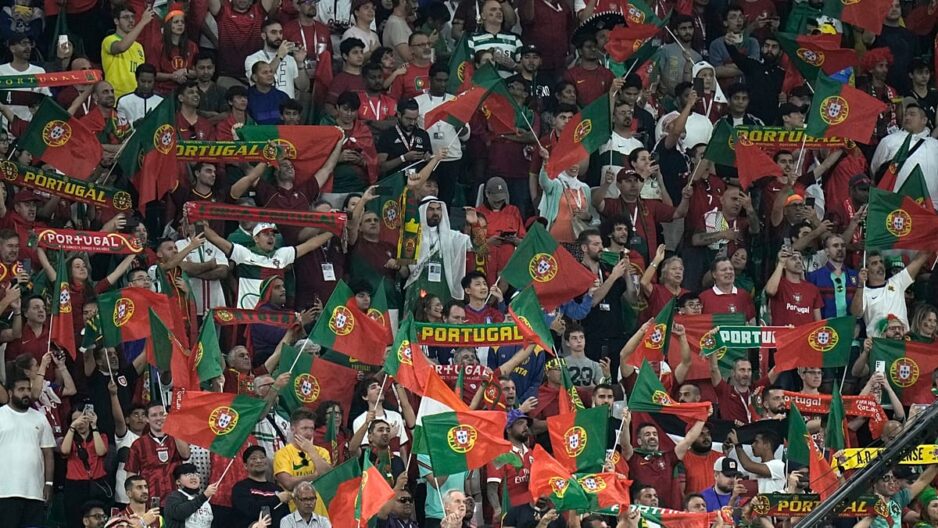
Although not the host country, Portugal can earn up to 945 million Euro’ from this income. 2026 FIFA World CupAccording to a study by the Portuguese Institute of Marketing Administration IPAM, which analyzes the potential impact of the tournament on the Portuguese economy.

The study points to a structural change in the economic model of football, arguing that its impact no longer depends on geography, but on the ability of fans, brands and media to amplify the event before, during and after the match.

The analysis, conducted by IPAM’'s Sports Marketing Research Unit, estimates an economic impact of between €378 million and €945 million, directly dependent on the performance of the Portuguese national team.

PortugalThe lowest estimate, which corresponds to the elimination of ’ in the group stage, is 378 million euros. With the team remaining in the last 16’, the impact in the mid-scenario could reach 561 million Euro’. If Portugal wins the tournament, it could reach 945 million Euro’.

According to the study, the projected growth is due to four main factors: higher purchasing power; the tournament is held in economically strong markets (United States, Canada and Mexico); World CupExpansion of ’ to 48 teams and 104 matches; and the consolidation of the digital economy as a new source of value.

IPAM’'s Sports Marketing Research Unit says the tournament could have the biggest impact ever on “Portugal’ in connection with a sporting event held outside the country.

Daniel Sá, managing director of IPAM, said in a statement that “Portugal does not need to host the World Cup’ to make a significant economic impact. What this study shows is that the value of football is no longer concentrated in the stadium or host country. Today, impact is being created through consumption, attention, digital interaction, and the ability of fans to grow effectiveness, ” said.

By comparison, the Euro 2016 won by Portugal’ generated an economic impact of €609 million. The research's maximum estimate for the 2026 World Cup’ exceeds this figure by more than 300 million Euro’.

World Cup spending can range from 40 to 3,500 euros per fan

The research also highlights “'s role as a new economic asset. An ordinary fan identified as “, the consumer of ”Ans, can earn between 40 and 70 euros during the tournament.

In contrast, fans with a high level of engagement, prioritizing digital, can spend up to 3,500 Euro’ through a combination of recurring consumption, multi-platform activity, social interaction and influence over other consumers.

Traditional consumption still accounts for the majority of the impact (approximately ), the digital component already has an estimated value thanks to publishing platforms, social media interaction, and user-generated content. Represents ’.

Household consumption, total impact By creating its ’, it is defined as the largest category, while with restaurants and food and beverage services and followed by advertising and media.

Broadcast and OTT platforms in the digital segment ’u, social media engagement %7’sini and “content economyPlatforms called ” also %He's making up his 6’.

According to the researchers, commercial cards and stickers (%5) and merchandising (%4) World Cup’ shows how “ mobilizes emotional and collectible economies” creates strong demand in certain segments and encourages instant purchases. the Bet (%6) is also identified as an important component, but is increasingly being integrated into wider entertainment and convenience consumption patterns.

Travel, on the other hand, is a measure of the total effect only. onstitutes ’; This reflects both the tournament's position outside Europe and the main conclusion that the economic benefits of the work no longer depend on physical participation.

Sá, “Football continues to create consumption, but growth increasingly depends on how that consumption is shared, interpreted, transformed into content, and amplified. Almost one in four euros generated by the World Cup’ now comes from digital, ” said.

In terms of IPAM, the 2026 World Cup also highlights strategic challenges for brands, media outlets and public authorities; These are the courses that will be valid when Portugal’ hosts the 2030 World Cup’.

The institute said that “Brands will need to move away from rigid planning models and invest in real-time activations. The media will need to combine television, broadcast and digital content. The wider economy can benefit not only through accommodation, retail and tourism, but also from new revenue streams linked to platforms, content creators and the attention economy, ” said.

The study also offers a broader course for the 2030 tournament: Hosting an event of this scale alone does not guarantee economic impact. The actual value will depend on how effectively it is activated before, during and after the competition.

Sá concluded his words as follows: “2026 World CupThose who know how to interpret the ’ will earn more than those who simply publish it. Perhaps this is the main result of the study: The value of the World Cup’ now lies not only in the event itself, but also in the way it is activated.”

It is explained: What is the UK digital services tax and why did Trump anger ’?

U.S. President Donald Trump has threatened to impose tariffs on ’ if he does not remove the digital service tax imposed on American technology companies.

Speaking at the Oval Office ’, Trump said, "We've been investigating this issue and the United Kingdom can easily afford it by imposing a huge tariff on “, so they'd better be careful," ’ said.

If they don't lower the tax, it's likely that Britain will impose a huge customs duty on “, ’ went on.

Here's what you need to know about tax seems to have shaken up Washington’.

What is Digital Service Tax?

The United Kingdom introduced the ’ Digital Services Tax (DST) on April 1, 2020, and it's increasing revenue from social media platforms, search engines, and online marketplaces that derive value from UK users. %He was taxed at two percent.

This applies to companies worldwide whose revenues from digital activities exceed £500 million (€576 million) and whose revenues exceed £25 million (€28.75 million) from users in the UK’.

According to UK revenue and customs figures, the tax has raised £944 million (€1.1 billion) from ’da technology companies in 2025-26; This is according to the amount collected a year ago. increased.

The DST was initially implemented as a temporary measure until an international agreement was reached to reform the global tax framework; However, this agreement was never implemented.

The UK government describes it as a temporary measure and has committed to lifting it when an appropriate global solution to the reallocation of taxation rights is provided.

Treasury’'s view is that the tax applies to businesses, not countries, and does not depend on where the company's headquarters are located.

This application, which was introduced in 2020, is valid for companies such as Alphabet’in Google, Meta and Amazon.

Apple’'s App Store’ may also be covered by an online marketplace, but UK tax authorities have never publicly verified which companies pay the tax.

Why is Trump targeting us?

This is not the first time Trump’ has pursued the UK’'s digital services tax, and his predecessor, Joe Biden, has also objected to the tax.

Speaking on Thursday, Trump said the tax exploited “, the world's best companies.

"They think they're going to make easy money, so they're taking advantage of our country," “ told reporters.

I don't like that they're targeting “ American companies, because you're basically talking about our big American companies; Whether we like these companies or not, they are American companies and the best companies in the world. The United Kingdom did it, a few others did it. - ”

When asked how high a retaliatory tariff would be, Trump said it would be more “ than they received from the tax.

"What we're going to do is we're going to respond to what they're doing by putting something equal to or greater than what they're doing," “ explained.

Where else have similar taxes been levied?

Some European countries also have a digital services tax (DST). France, Spain, Italy, Austria, Denmark, Hungary, Poland and Portugal introduced them.

Apart from the European Union, Switzerland and Turkey have also implemented such taxes.

While most digital services taxes apply mainly to online advertising, DST in the UK, ’ targets social media platforms, internet search engines, and online marketplaces.

The European Union also has the Digital Markets Act, which regulates the largest companies in order to ensure fair competition in the digital market and to prevent anti-competitive practices.

In August, Trump wrote on his social media platform “ that he would stand up to countries attacking our incredible American Tech Companies.

“ Digital Taxes, Digital Services Legislation, and Digital Market Regulations are all designed to harm or discriminate against American Technology. This must end, he added, adding that important tariffs will be imposed unless they are removed.

A task force for the future: Europe’'s plan to equip workers with skills to reverse labor shortages

About 63 percent of small and medium-sized businesses in ’ say a lack of workforce and skills has left them behind in their overall business operations. The EurobarometerThe survey was found.

In an announcement to support European ​​ businesses, increase staff retention and equip professionals with the skills they will need in the future, the European Commission and its partners said: The Duchess of ValAt the end of January, ‘ announced that it had signed the Tripartite Declaration for a Developing European Social Dialogue.

The EU has pledged to bring more professionals to the European labour market, facilitate recognition of foreign qualifications, improve working conditions and provide professionals with the tools they need to work in specialized roles.

Brussels provides around €65 billion in EU funds for education. thanks the European Skills Agendaand the Agreement of SkillsAround two million workers across Europe have already received advanced training.

Creating a digital workforce in ’, Slovenia

CEO’ Rok Zajc the Thick GroupEuronews’e, the digital marketing agency in Ljubljana’, said it had a hard time hiring certain profiles, especially high-skilled professionals.

It's Ljubjlana, Slovenia. There is a high demand for ICT employees in this dynamic and connected country.

Zajc, “From design, to performance marketing, we try to find different profiles from software developers and senior designers. But, for example, you actually need a lot of personal motivation and some different courses to get to the top for what we provide, ” said.

There is a great shortage of personnel in the information and communication technologies sector (ICT). AB’ needs another 11 million people to join this sector to achieve its goal of winning 20 million ICT professionals by 2030.

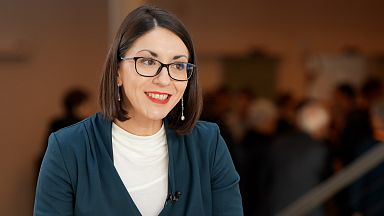
“What governments can and should do is reskill the existing workforce to ensure they get the skills they need, ” said. Dr Emilija Stojmenova DuhSlovenian Minister of Digital Transformation.

Euronews’e, the engineer who became a politician, announced last year that 30,000 people in ’, Slovenia, were taking advantage of free courses to help them adapt and acquire the skills needed to meet market demands.

Stojmenova Duh, “Only 17% of experts in the ICT field are women. So maybe my favorite project is a digital project that's all about giving young women skills and improving their skills. We were collaborating with the industry so that the industry could get the right workforce, ” said.

We are all aware that digital skills are not only needed for the ICT sector, we need digital skills in every sector.

Dr Emilija Stojmenova Duh
Minister of Digital Transformation

PortugalTraining engineers in ’

22% of employers in ’'s heavy industries say they can't find the staff they need. The highly lucrative metallurgical and metalworking industry also struggles to find professionals with the right qualifications in Portugal’.

The industry has undergone a significant digital transformation. Robots currently do most of the heavy lifting, but the outdated idea that this is a physically demanding industry still exists.

Engineers and machine operators in this sector need technical skills. Nuno Teixeira CEO’ the Alsil GroupIt seeks to attract professionals from both domestic and Portuguese-speaking countries.

Teixeira, “, said that companies should provide opportunities for individuals to thrive, grow professionally, and balance this with their personal lives if they want to attract people.

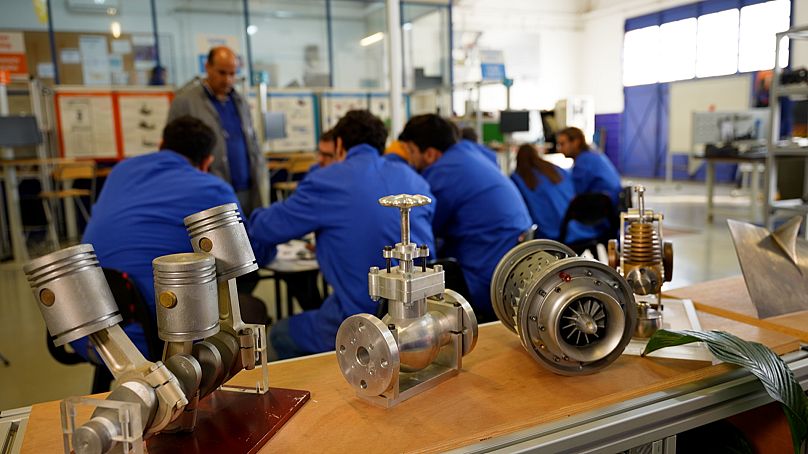
Eduardo and Rui are CNC programming and operations technicians and have recently been employed by the Alsil Group. After enrolling in a professional training program, their career went in a new direction. CENFIMA public and private education centre supported by the European Social Fund Plus.

Rui, who used to work as a geological engineer at “, said that this is a very challenging area where new and challenging things come up every day, so it's something that really interests me and I see it as a promising future.

PortugalMetallurgy and Metalworking Industry Professional Training Center in ’People are studying at ’ (CENFIM).

Manuel Pinheiro Grilo, director of CENFIM, “, said that in terms of employment, it represents about 230,000 jobs that are evolving not only to adapt to new technologies, but above all to respond to the work required.

According to AIMMAP’a (Portuguese Association of Metallurgical, Metalworking and Related Industries), Portuguese ’ metallurgical companies generate approximately €23 billion a year in revenue from their exports.

Ensuring that professionals take responsibility for their careers

Improving the skills of professionals is of great benefit to companies looking to fill specialized positions, while Slovenia's ’da Minister Stojmenova Duh warned that responsibility does not belong only to public and private organizations competing against the clock to hire professionals with the right skills.

“We are aware that this is not enough after finishing high school, faculty, each individual is our responsibility. The world is changing. We need to learn new skills. That's why lifelong learning is something we really need to consider. - ”

Digital technology kept us connected during the pandemic; How can Europe help ’ recover?

Digital technology is changing the way we live and work. Pandemics and quarantines have shown how dependent we are on it, from remote work to online medical consultations to video calls with family and friends.

But the pandemic also revealed the gap between those who own digital ‘ and those who don't own ’. the Europeans %More than 40’ don't have basic digital skills, and nearly a quarter of homes don't have broadband.

SME’s (small and medium-sized enterprises) wer than 20’ use internet cloud services or use the internet to sell their products or services.

How EU rescue funds are helping Europe’'s digital transformation

The transition to the digital world is an important element of AB’'s plan to survive the pandemic. At the heart of the plan is the €672.5 billion Recovery and Resilience Facility, which will be spent on public investments and reforms.

Member States to access the money, the money They presented national rescue plans that divided ’sini's economies into attempts to digitize them.

To ensure everyone benefits, the EU wants to invest in ultrafast broadband, educate people on digital skills, help start-ups and small businesses innovate and grow, and use technology to make it climate-neutral.

Why is it so important to invest in the digital transition?

Paolo Gentiloni is the Economic Commissioner of the European Commission. As in the USA’, in Europe’, “ says that the goal is to rebuild ” in a better way after the pandemic, and that “ is interested in all sectors of our ”economy.

“You can digitally improve how public administration works, how the healthcare system works, how companies are competitive, and how they work. This is the power of investing in digital that can impact our entire economy.”

European Commissioner for Economic Affairs Paolo Gentiloni speaks with Euronews’ten Naomi Lloyd

The pandemic showed how connectivity issues increased social differences, such as children and young people receiving education from home.

Gentiloni, “This is of course unacceptable” says and adds: “We must seize the opportunity to reduce and eliminate the digital divide. It's now or never. - ”

We must seize the opportunity to reduce and eliminate the digital divide. It's now or never

Paolo Gentiloni
the European Economic Commissioner

Europe in digitalizationLeaders of ’

Northern countries and the Netherlands are leading the way in digitalization. But even there, the projects hope to help with the digital transition of the Recovery Fund money.

’ ranked Denmark ‘ as world champion when it comes to e-government. You don't need to leave the house with your driver's license in your pocket, for example, you can download it directly to your smartphone.

Other sectors of the economy are now also participating in the digital transition.

The company transformations

HMK Bilcon’ is headquartered in Jutland’. Founded in 1895 by a blacksmith, the company transitioned from car manufacturing to truck trailers during the 20th century.

Four years ago, CEO Peter Jensby launched a complete overhaul of the company to make the company fully digital, and spent two million euros to change the company.

Jensby, “This transformation meant a worldwide shift for this workplace, and we now have a company that is profitable and has lost a lot of money in the old days, ” explains.

Newly digitized company HMK Bilcon

More companies, such as HMK Bilcon, are expected to go fully digital in the coming months.

Denmark has requested 1.6 billion euros in subsidies from the European bailout plan, and will have to allocate one-fifth of that amount to the digital transition.

This fund is also of interest to those already in the digital sector but hoping to expand.

Sahra-Josephine Hjorth created artificial intelligence-based software to help teachers and HR managers create online learning programs. The company quadrupled its roster in 2021 but had difficulty finding private investors.

Hjorth, “In terms of investment, it can be difficult to attract regular investors for very high-risk features that are at the forefront of innovation, ” says.

Sahara-Josephine Hjorth, CEO ’ of CanopyLAB

Gentiloni supports countries that invest their Recovery Fund money in companies like Hjorth’s, and says these countries should look not only at the world of “devs, but also at the world of start-up ’s and medium-sized companies that take on their own roles in this new digital world.

Category: European competition

€134.5 billion will be allocated to digitalisation in AB’'s bailout fund, but will that be enough to make Europe’ a global leader capable of competing with the US and China?

Katrine Forsberg is a member of the Danish Business Development Board. With sufficient infrastructure and skills, AB’ believes it can compete at a global level. What matters is investments in small and medium-sized companies to create jobs and grow businesses, “ says.

Our film crew, courtesy of the Département des Hauts-de-Seine’, had the opportunity to shoot at the Parc de Sceaux’.

Do we need a digital euro?

Are Europeans ready to launch a new initiative? The digital versionThe euro? - Mm-hmm. After coins and banknotes, now the European Commission to offerthe The Digital EuroA virtual version of the currency issued by the European Central Bank, which can be used for free alongside cash in the eurozone.

Why do we need a digital euro?

How European ​​ citizens can benefit from digital currency and what approach should be followed to develop it? Commissioner in charge of Financial Services, Financial Stability and Capital Markets Association, Mairead McGuinness, explained the challenges of creating this new currency and why we need a currency. The Digital Euro:

“, this is a very new concept. People are curious. So this is the euro, cash. And you know, you see, you understand, but maybe I won't have any cash in my pocket. So I want an alternative, the option to have a digital version of cash. People don't use cash as much as they used to, and COVID-19 has really accelerated this trend. So it's really about the election. Am I going to use this money that I don't have in my wallet today, but is it normal? Or will I use the digital version of cash?”

Overview of the digital euro

The digital euro will be the digital version of euro banknotes and coins. It will have exactly the same value and can be used in exactly the same ways: Even beyond – national borders to buy ice cream or clothes or send money to a birthday party.

For example, you can use the QR code to pay from a secure app on your phone, or even pay when you don't have an internet connection.

Once fully implemented, sellers will need to accept the digital euro in the same way they accept cash today.

The digital euro differs from cryptocurrencies in that it is supported by the European Central Bank and thus guaranteed stability.

In a digitalized world, the digital euro aims to enable everyone to make secure payments anywhere in the eurozone.

When asked what advantages the digital euro would bring to EU citizens, the EU Commissioner replied:

“When we're trying to get our heads around the digital euro, so it's a wallet, and I actually have euro cash in this wallet. But I don't want to break 50 euros because I think I have it for something else. So I can decide to use the digital wallet to pay the euro for these drinks. So people are paying today in cash, but they're using more and more cards or phones. And we want to have the option of cash equivalent in digital format. And now it is. We proposed legislation, but it's just the beginning of a process, ” said.

European Commissioner for Financial Services Mairead McGuinness speaks at a media conference on access to financial data and payments at the EU headquarters in Brussels’

The difference from cashless, contactless payment is: “Different because it's central bank money, other payments are private money. You know what it's worth. That's why we want to bring that same feeling into the digital age, because we're increasingly using digital payments.”

Will the cash go?

Central banks worry that digitizing payments could eliminate the anchor that cash brings to their financial systems. The digital equivalent of cash will help support the sovereignty and stability of this system. Euronews spoke with economist Maria Demertzis, a senior expert at the European ​​ think tank Bruegel’, at the National Bank of Belgium museum.

Demertzis, “Interesting how cash has evolved” said. After the “ Pandemic, we thought that most of the payments were made digitally. But in fact, if you look at the figures, these are the ECB figures, 2022, of the value of all transactions in the ’de euro area. ’si was made in cash. ’si isn't exactly half, but it's very, very close to half. In fact, I think the direction of travel is to reduce cash to more digital payments, but I don't think it will completely disappear.”

Maria Demertzis, Senior Member of Bruegel

How to design a digital euro?

Maria Demertzis said: “When it comes to our daily payments, which won't be much different, it will probably be an app. It will likely be mediated by financial intermediaries, such as banks, and paid in stores, just as we pay digitally through other methods. And at least initially, given that ECB’ will only start with small amounts, we won't have more than €3000 or €4000’ in the bank, in fact, it won't make a lot of difference for the consumer.

“If you want the digital euro to emulate cash as much as possible, you should make an effort to make it as anonymous as possible. And here the ECB tells us that there will be anonymity at small payment levels. But once you start paying larger amounts of money, it will no longer be anonymous.

The European Central Bank conducted a study. Participation of the peoplein the digital euro. Confidentiality among the concerns arising from this () While taking place, it is necessary to ensure that the security (), availability across the Eurozone (), the absence of additional fees (%9) and offline availability (%8) was followed.

Data protection associations are also raising concerns about privacy, anonymity and payment tracking.

Commissioner Mairead McGuinness is right to ask who monitors spending when using the digital euro, but said: “ECB isn't interested in how you spend your money, but it wants to give you the option of having a digital version of cash. So you can actually use digital euro payment offline. If you use your digital wallet offline, this is a special process. Of course, if you are making an e-commerce transaction, your bank will know that you are using your digital euro to do so. But I want us to do this: Thanks to these conversations, if people are worried, we can answer these questions and put them at ease.”

Opportunity for the economy

Despite privacy concerns, the digital euro represents a commercial opportunity, especially for FinTech companies, Jan Boehm’in explains: “Fintech’s are young companies, technology companies that provide financial services. We are very innovative. We are technology-driven and offer our customers solutions, such as this payment solution that you use when you pay for your coffee.

Jan Boehm, President of the European FinTech Association

Future users can benefit from these innovative services, especially private individuals and companies in the Eurozone.

Boehm, “Today, the European payment environment is actually very fragmented. So we have a lot of US companies that provide card payment plans, and people use Paypal’ for peer-to-peer payments, for example. We don't have much of a European system. Fintech’'s role is clearly to innovate but also to provide cuts for better products for customers and greater transparency that will result in lower fees, ” said.

Around 120 central banks around the world are currently working on digital versions of national currencies. The European Commission's proposal for a digital euro, outlined by ’ on 28 June, aims to create a legal framework for this; It's a joint proposal to protect cash.

When is the digital euro coming?

The Commissioner explained the next steps as follows: “Eh, it won't be my decision. The legislation is to implement democracy around the digital euro if you wish, and this process depends on the European Parliament and the Council. In other words, the ECB will decide whether and when the digital euro will be launched, and there is no date for that.”

Special thanks to ‘PIM Coffee on the Go’ and ‘Brasserie Byblos 1898’e for filming this episode.

Brussels Economic Forum 2023: Where is Europe and where is it going?

With the escalation of the violence of war in ’, the tightening of control of the effects of climate change, scarcity of resources and global competition to achieve them, Europe faces numerous challenges.

However, the European Commission, in its latest economic forecast of the inflation rate of AB’ in 2022 %9.2’den this year %6.4’e and next year %2.8’e predicts a steady slowdown.

GDP growth in AB’ is expected to accelerate again and reach 1.6’ per cent in 2024, after falling from 3.5’ per cent in 2022’ to 0.8’e this year.

Speaking to Euronews’e at the Brussels Economic Forum’ (BEF), the European Commission's most important annual economic event, EU’'s Commissioner for Economy, Euronews’e said that these figures create a cautious feeling of optimism.

Speaking to Euronews’e Paolo Gentiloni, “Status is better than expected. Looking back a few months ago, we predicted a much worse situation where we had some concerns about energy supply, even considering possible power outages.” And there are many concerns about the possibility of stagnation and bankruptcy.”

Paolo Gentiloni, Commissioner for the Economy, European Commission

The BEF coincided with the European Central Bank's decision to raise basic interest rates again in an effort to reduce inflation. Commissioner Gentiloni said he was not concerned about the potential impact this would have on growth.

We should start by collecting income from population groups that pay much less taxes than the rest of us. That means today, 2023’te, the very rich.

Gabriel Zucman
Professor of Economics, University of California, Berkeley

But a recent development could also worry employment at AB’ and even trigger new legislation: It's an artificial intelligence.

Gentiloni, “, we need a set of rules. And we, as the European Union, are the masters of the rules. So I'm pretty sure we'll have good rules about artificial intelligence too, ” added.

EuropeGreen and digital transition of ’

Digitalisation, combined with the dire consequences of the climate crisis, are two of the main drivers forcing the economic transition of the European Union. For member states, this means more investment in education and training.

Spain’'s Minister of Economy and Digital Transformation Nadia Calviño, “This is probably one of the most important challenges we face going forward: How are we going to make sure that we are leading these transitions, that is, the digital and green twin transformation, that we are leading them technologically, ” explained.

Spain's Minister of Economy and Digital Transformation Nadia Calviño

“And sectors that have proven to be the most dynamic in creating jobs are linked to new technologies, information technology, science, research and health… This shows that structural transformation in the Spanish economy continues.”

Calviño, “, added that we are investing approximately €4 billion in the Next Generation EU fund to support a very ambitious digital skills program to ensure that our schools, universities and also the elderly have access to the necessary skills.

Addressing social inequalities in Europe’: Taxation and public expenditure

In the European Union, the unemployment rate in ’ is only spite being 6, a fifth of the EU's population still faces the risk of poverty or social exclusion.

The cost-of-living crisis and rising inequalities fuel social unrest and distrust of politics.

Gabriel Zucman, professor of economics at the University of California at Berkeley’, told Euronews’e that the European Union should rethink public sources of income and start taxing the rich.

Almost all social groups in “ and in each Member State pay a lot of taxes. Because we have a social model based on a significant level of taxation. This is true for almost all social groups, with one big exception that is truly rich.”

“In the context of high public debt and rising interest rates, government revenues are needed today. We should start by collecting income from population groups that pay much less taxes than the rest of us. This means that today, in 2023’te is very rich.”

This is a call shared by European ​​ unions, who argue that new sources of public income are a way to boost social justice. Another way is public spending.

Liina Carr, Confederate Secretary of the European Trade Union Confederation, told “ that the rules need to be changed. We think maintaining this 3% “ level of rigid deficit is in fact in no way conducive to public spending and investments because it still limits what governments can do.’

Liina Carr, Confederal Secretary, European Trade Union Confederation

“There is also a debate that some investments in greening, such as investment in digitalization, investment in health, investment in education, should be excluded from the rules of debt and openness. Investments of the kind that really support the economy and keep economies strong.”

This discussion gained momentum on AB’, especially after the 2022 American Inflation Reduction Act’.

With a massive allocation of $369 billion (€334 billion) to promote clean technology in the U.S. ’, there is concern that Europe will be sidelined in the green transition in ’.

However, according to Jim Hagemann Snabe’, Chairman of the Board of Directors of Siemens AG, the American ’'s Inflation Reduction Act may be an opportunity for European ’'s industrial goals.

The “ Inflation Reduction Act is a catalyst for sustainable solutions for me. So it's good in that sense. Europe was the first to come up with this idea with the Green Deal, and now they are taking steps, ” explained.

I think the world is at a crossroads where we kind of have technologies, we know how to rebuild energy systems to be renewable, we know how to reinvent transportation systems, we know how to make buildings carbon neutral.

Jim Hagemann Snabe, Chairman of the Board, Siemens AG

“And this is a catalyst for companies to invest more, invest faster and create the scale we need to create and deliver a more sustainable future.”

Global race for resources

But Europe’'s green and digital transformation is based on critical raw materials such as lithium, cobalt and rare earth elements that AB’ produces very little of. China's rare earth supply %He's paying for his 86’.

According to European Commission Vice-President Valdis Dombrovskis’e, at a time of increasing geopolitical tensions, this reality is shaping European ’'s trade relations.

Dombrovskis, “Therefore, at AB’, we put forward the raw material strategy to increase domestic production and at the same time to provide external supplies.

“, the 2030 target for extraction and mining Getting ’ domestically within the EU. This is, uh, %It means that the 90’ still has to come from outside the EU.”

Valdis Dombrovskis, Vice-President, European Commission

That's why partnerships with other countries will be so important. We do this through the raw material sections of our trade agreements. We develop bilateral raw material partnerships with different countries.”

UkraineThe Russian occupation of ’ is a clear reminder of the importance of reducing dependence on energy sources.

But as the climate crisis intensifies, aligning this goal with sustainable management of scarce resources will continue to be a major challenge in the coming years.

Transformation is NOW! Events in 2024

Transformation NOW, which attracts a lot of attention from technology and business heads! 2024 will hold its 5th meeting on October 10 in Istanbul. This activity, organized by NTT Data Business Solutions Turkey and attended by 1,700 people last year, met with great demand following its first announcement at the end of July.

Transformation NOW, organized by NTT DATA Business Solutions Turkey, attracts the attention of heads of technology and business world! 2024 will be held on October 10 at Volkswagen Arena. Positioned as the biggest technology and innovation activity of the year, this meeting will address the requirements of digital transformation in the business world.

Speaking about the activity implemented with the theme of ⁇ Ignite tomorrow, today ⁇ , Dr. Bahri Danış, Deputy Leader of NTT VERİ Business Solutions META Region ⁇ , said the following about the ideology of the event: As ⁇ NTT DATA, there is forever tomorrow in our vision. Together with our customers, we design digital assays to meet the needs of the future. With the steps we take today, we are lighting the fire of tomorrow today. ⁇ Ignite tomorrow, concepts such as people, trust, sustainability, innovation, transformation and society, which form the basis of our today ⁇ approach, are the building blocks of our future at the same time. I believe that these valuable titles that we will cover in this activity will inspire all participants. ⁇

⁇ We grow the business of our customers with our technology competencies ⁇

Stating that they will share the success stories and the latest trends in the sector with the names leading the transformation, Dr. Bahri Danış shared the following information about NTT VERİ Business Solutions Turkey:

⁇ We are the segment of a large cluster that invests more than $3.6 billion in R&D every year. As a strategic analysis partner of the business world in digital transformation, we help our customers grow their business with our innovation and expert team. We produce the most innovative and customized assays for the digitalization requirements of different industries. ⁇

Transformation is NOW! 2024 will offer in-depth sessions on artificial intelligence, productive artificial intelligence, innovation and restructuring of processes in many branches of finance, retail, automotive and manufacturing. The sessions, which will be held with the heads of these branches, aim to provide participants with both inspiring and innovative analyses.

Organized under the theme ⁇ Ignite tomorrow, today ⁇ , the event will provide valuable insights that will shape the business world of the future. Transformation NOW, which focuses on the concepts of people, faith, sustainability, innovation, transformation and society! 2024 aims to support today's business decisions with a digital transformation perspective, while providing participants with digital analysis of tomorrow's needs.

————————

About NTT DATA Business Solutions
NTT DATA Business Solutions, a global IT service provider that offers technology analysis to its customers in cooperation with many different organizations, especially SAP and Microsoft, leading their segments, with a strong partner ecosystem, enables companies worldwide to turn into smart businesses with more than 35 years of experience. It offers end-to-end analyses that accelerate sustainable growth and success across a wide range of services, from strategic consulting and implementation to managed services. NTT DATA Business Solutions, a global strategic SAP partner with more than 15,300 experienced employees in more than 30 countries, promotes innovation in all branches and benefits from the latest technologies.