UK economy shrinks in April due to negative effects of Iran war energy shock

According to data released by the Office for National Statistics (ONS) on Friday, the UK economy was up in April. %It shrunk by 0.1 percent, ending a monthly growth streak that stretched back to last summer and suggesting that the Iran war was beginning to put pressure on British production.

Services, the dominant sector of the British economy %As 0.2 declined, production remained stable and construction %It's up 0.1. During the three months leading up to April, GDP is still %It grew by 0.7 percent to achieve its fifth consecutive quarterly growth.

The biggest drop in production %It came from sports, entertainment and recreational activities with a decline of 9.1’. The ONS attributed part of the decline to the cancellation of numerous sporting events in the Middle East, which affected the revenues of UK-based businesses in ’.

Consumer services %Retail trading as 0.5 drops %It's down 1.3.

Quilter portfolio manager Stuart Clark said that while “'s three-month growth continues, the first quarter of the year looks like a fake dawn, and conditions will remain tougher for longer as repeated decisions between the U.S. and Iran fail to pass.

Sanjay Raja, Deutsche Bank’'s chief economist in the United Kingdom, also said fuel consumption was approximated by consumer withdrawals. %He said he was down 10.

As the “Iran conflict unfolds, it is clear that the energy shock is beginning to affect households and businesses, Raja said.

Manufacturing was a rare bright spot, increasing by 0.4 percent thanks to pharmaceuticals and base metals; Raja suggested that this could reflect “ firms stockpiling in an environment of high geopolitical uncertainty.

A growing headache for the Bank of England

ONS also provides services for commercial enterprises. Reported that ’ saw the prices of goods they purchased increase in April; This was the highest share since December 2022’, noting the inflationary pressures facing policymakers.

As policymakers weigh in on rising price pressures in the face of slowing signs of economic growth, the figures are likely to complicate the task of the Bank of England, ’.

About the Bank of England, which will announce its next rate decision next Thursday on “, which evokes a sense of stagflation in the economy, the last thing it wants to do is raise interest rates, but that's what's priced while inflation remains the biggest concern for now, ” said.

Expecting further slowdowns in growth, Raja warned “ that activities will continue to slow as real incomes contract due to high energy prices and high market rates begin to consume household budgets more.

Deutsche Bank says the UK economy will continue to grow this year %One expects it to grow, outpacing most of the G7 economies.

Kazakhstan targets €45 billion in non-commodity exports as global export insurers turn to Central Asia’

This pressure comes as geopolitical instability, including the war in the Middle East’, diverts parts of the global export credit and investment insurance industry to regions where traditional war risk appears to be lower, including Central Asia.

More than 70’ of the world's largest export credit and investment insurance companies gathered at Astana’ for the first regional meeting of the Bernese Union’.

Investment move and ‘Golden Visa’

Kazakhstan owes the increasing attractiveness of the investment environment to what Prime Minister Olzhas Bektenov’ describes as the “structural transformation of the region's largest economy.

The members of the Berne Association were invited by ’ to take full advantage of the investment opportunities in Kazakhstan“.

Bektenov, foreign direct investment %Increased by 14.4 to almost 18 billion Euro’, while fixed capital investment %He said that with 13 increases, the record reached 37 billion Euro’.

The country has also launched a “Golden Visa” regime for investors and highly skilled professionals aiming to attract foreign talent and capital.

Interest in export financing is increasing

The meeting opens up new opportunities for the Development Bank of Kazakhstan, which finances large-scale infrastructure and industrial projects.

Marat Yelibayev, chairman of the bank's board of directors, said “ECA’s are helping to reduce risks and attract investors.

Export credit institutions provide insurance and guarantees that protect investors against political and economic risks related to international projects.

Kazakhstan’'s export credit institution, while providing targeted support to domestic exporters, has opened offices in important foreign markets by responding to the needs of international investors.

The state-owned Baiterek National Management Holding, which oversees the country's development institutions, says diversification beyond raw materials remains a priority.

Chairman of the Board Rustam Karagoishin, “Our focus is on creating the necessary conditions for sustainable business development and long-term growth, ” said.

the Ukimet Press Service

OECD compliance improves reliability

According to Silvia Gavornikova’, head of ’'s export credits and competition division, Kazakhstan’'s increased integration into global trade finance networks is also due to closer compliance with OECD export finance standards.

The OECD framework supports international trade by approximately €51 billion annually through officially supported export credit regulations.

Drawing attention to transparency, risk assessment, environmental standards and responsible government support for exports, Gavornikova said “Kazakhstan’'s ECA’ shows a very strong initiative to comply with international norms.

Further compliance with OECD standards could make Kazakhstan a more reliable partner for international banks, insurers and export credit institutions seeking cross-border cooperation.

Critical minerals attract attention

Beyond non-source exports, the Berne Association expects investments in ’'s commodity sectors, particularly critical minerals, to increase in the coming years.

Yuichiro Akita, President of the Berne Association, said that the growing appetite to insure critical mining investments has made ’ a good time to attract investors to Kazakhstan“.

This came as companies linked to Donald Trump’'s sons sought US-backed funding for tungsten mining projects in Kazakhstan’ as part of Washington’'s efforts to reduce its dependence on China’e for strategic mines.

Akita said “, the geopolitical situation is really tough”.

But Kazakhstan now has the resources the world needs. From an investment point of view, we want to work with Kazakh partners because the world needs partners.”

Trade ambitions and the Middle Corridor

Bektenov said the country's new Trade Policy Concept will help increase non-resource exports to around €45 billion by 2030.

Kazakhstan’'s foreign trade turnover is currently around €124 billion, with exports covering nearly 4,000 product categories shipped to 127 countries.

The country is also expanding its network of free trade agreements. New agreements with the United Arab Emirates, Mongolia and Indonesia were added last year to existing agreements with Vietnam, Serbia and Iran.

An important part of the strategy is the Trans-Caspian International Transport Route, a multimodal trade corridor connecting ’ to Europe’ via Kazakhstan, the Caspian Sea, Azerbaijan, Georgia and Turkey.

Many major infrastructure projects on the route are expected to increase trade volumes and strengthen intercontinental logistics links.

Timur Onzhanov, Baiterek Deputy Chairman of the Board of Directors of “Now the business is to share this pipeline with ECA’s and commercial banks so that they can also step in and decide whether they want to provide tools for these projects” said.

The Astana meeting ended with strategic agreements between ’'s export credit institution and leading international export-import banks.

The agreements focus on mutual reassurance of export risks, joint financing of investment projects and support for non-resource exports of ’ in the Middle East and European markets.

Greece moves to protect debtors with consumer loans of up to 100,000 Euro’

The Greek government is taking action to pass a law that would strengthen consumer protection in the retail banking market by limiting the total amount of repayment of consumer loans to 100,000 Euro’.

Greek Prime Minister Kyriakos Mitsotakis presented the plan as part of a weekly review of the government's work, stressing the need to halt malicious practices and pressure “ince on credit contracts.

Under the offer, the total amount that the borrower has to repay, including interest and fees, is equal to the amount of capital borrowed by the “ lender, as is the case on average in other European countries. %From 30 to %It will be limited to over 50 levels. In a Facebook post on Sunday, the prime minister said: “These are regulations that I believe create a clearer and fairer framework for everyone, ”.

The upper limit will mainly apply to unsecured consumer loans, as well as credit card debt, where high interest rates and complex fee structures are recorded over time.

A waiting period of 14 days is also foreseen from the signing of the contract, thus strengthening the rights of borrowers and increasing transparency.

A market that is improving, but at a high cost

The intervention came at a time of gradual recovery of consumer loans in ’, Greece, after years of contraction caused by the debt crisis.

GreeceDemand for consumer loans in ’ has strengthened since 2022’, while borrowing costs remain high compared to other loan categories.

Interest rates on consumer loans often While exceeding ’, interest rates on rotary credit products such as credit cards %It can exceed 14’.

The combination of rising demand and high interest rates raises concerns about excessive borrowing, especially for the most vulnerable households.

Banking applications are being examined

The new initiative is part of the government's broader effort to combat banking practices that burden consumers.

Topics under scrutiny in recent years included fees and terms not easily understood by customers, the high cost of basic banking services such as transfers and account maintenance, and limited competition in retail banking.

At the same time, the government is pressuring banks to raise deposit rates at a time when interest rates are rising, accusing banks of being slow to pass these benefits on to savings holders.

Greek banks have returned to stable profitability in recent years after extensive consolidation and a decrease in follow-up loans.

European banks show mixed results due to HSBC’nin base profits and UniCredit’in rise

The health of the European banking sector is currently under intense scrutiny as the 2026 earnings season reveals how the continent's largest credit institutions are coping with macroeconomic fluctuations.

Europe’'s largest bank and the UKHSBC, which ranks among the top two companies by market capitalization in ’'s FTSE 100 index, reported a slight shrink in profits, citing significant credit disruptions linked to the Iran war, although asset management and Hong Kong operations showed resilient growth.

HSBC also saw a decline in its net profit, missing out on some investor expectations despite an increase in overall revenue.

In contrast, Italy made a strong start to the year, surpassing ’'s UniCredit’i market forecasts, leading the bank to upgrade its financial guidance for the rest of 2026​​.

Last week, Deutsche Bank, Santander and UBS reported increasing profits showing that despite HSBC’'s poor performance, the European banking sector overall remained strong.

This earnings season comes at a time when investors are weighing the impact of the Iran war and the impact of high interest rates on corporate profits in the Eurozone and the United Kingdom’.

HSBC faces geopolitical downsides despite wealth growth

HSBC’'s latest quarterly figures point to a period of strategic recalibration for the global lender.

Profit before tax according to the bank's financial statement clined by 1.1 to $9.38 billion (€8 billion); This result was below the $9.59 billion (8.2 billion euros) forecast by analysts. The main weight on the balance sheet was the increase in credit depreciation expenses, which reached $1.3 billion (€1.1 billion) compared to $876 million (€750 million) in the same period of 2025’.

According to Richard Hunter’, market president of Interactive Investor’, these accusations are a direct reflection of the current global climate.

Hunter, “Credit depreciations have largely wiped out ledgers for this quarter; The lack of a return to the stock buyback program can also be somewhat disappointing, although the return is not far off, ” said.

Hunter said that with HSBC’'s exposure to regional instability becoming visible in the report, the impact of the conflict in the Middle East“, as with many other global banks in this reporting season, also appeared in figures’ said.

Despite these challenges, HSBC’'s orientation towards the Asian asset market continues to attract interest.

Asset management department, in wage income %It reported 18 increases to $2.7 billion (€2.3 billion), while net new money inflows reached $39 billion (€33.3 billion). United Kingdom’ %5’lik and Hong Kong’ %Revenue growth was recorded across all core units, including a 3’ increase.

While concerns about the commercial real estate sector on mainland China continue, the group has marginally raised its all-year target of banking net interest income to $46 billion (EUR 39.2 billion).

UniCredit raises forecast for 2026 after profit growth

Italian UniCredit, in contrast to the more cautious figures of some of its peers, started 2026 with a performance significantly above market forecasts.

Net profit significantly exceeds analyst expectations compared to the same period of 2025’, according to the bank's quarterly update Increased over ’ to EUR 3.2 billion; EPS is almost %It increased by 20 to 2.15 Euro’.

UniCredit Tower on the rightVertical Forest with ’The skyscrapers in the background of ’, Milan, Italy, April 16, 2026

According to the bank's press release, quarterly revenues %Increased by 5 to 6.9 billion Euro’, net revenues increased by %An increase of 3.3 to 6.7 billion Euro​​, absorbing ’ interest rates, credit loss provisions and Russia-related negative impacts, underlining the flexibility and diversity of a model structured to perform throughout the entire macroeconomic cycle.

The management reacted to this acceleration by raising its financial forecast for the entire year 2026, raising its net profit outlook to “equal or more from the previous estimate of ”approximately €11 billion to “equal or more.

This development strengthens UniCredit’in Europe's position as one of ’'s most influential major lenders.

EU Inbev continues its momentum amid global market changes

In other consumer-related news, the world's largest beer producer AB Inbev, which includes brands such as Budweiser and Stella Artois, has maintained stable revenue momentum, driven global market changes through strategic pricing and beer volume. %It's up 1.2.

The company's revenue is outside its own market. growth in total revenues of mega brands led by Corona’ %With an increase of 8.2’, almost %Six is up.

Income from non-alcoholic beer increased and revenue from Beyond Beer’, the fast-growing category of non-traditional beer alcoholic beverages is up.

While volume growth is under pressure due to inflationary trends in some markets, the company's EBITDA ’ %It remains stable with an increase of 5.3.

According to EU Inbev’e, the group's diversified geographical footprint has allowed it to offset weak demand in some regions with strong growth in emerging markets.

The brewer continues to focus on digital transformation initiatives and direct-to-consumer platforms, which are expected to be key drivers of volume and margin expansion in the rest of 2026’.

Deutsche Bank, Santander and UBS’'s profits rise due to market impact of Iran war

Europe’'s biggest banks and an oil giant reported generally optimistic first-quarter results on Wednesday, despite executives pointing to the growing uncertainty stemming from the Middle East conflict and its ripple effects on energy prices, consumer confidence and European interest rates.

Leading European ​​banks saw a short-term increase in their performance as commercial revenues benefited from fluctuations linked to the Iranian conflict, despite increased long-term macroeconomic risks.

GermanyDeutsche Bank, ’'s largest lender %A record post-tax profit of €2.2 billion every three months with an increase of 8, while pre-tax profit %7 increase to 3 billion Euro’. Pre-tax profit of the private bank division %It increased by 39 to 681 million Euro’.

The Net Income %2 increases to 8.7 billion Euro’.

The assets under management rose to 1.8 trillion Euro’, supported by a net entry of 22 billion Euro’ in private banks and asset management units.

Chief Executive Officer Christian Sewing said: “The record profit of this quarter gives us a great start to the next phase of our strategy.​​

“We have the balance sheet strength, capabilities and strategic location to serve our customers worldwide in a dynamic environment, ” added.

CFO Raja Akram pointed out that artificial intelligence and process restructuring are key drivers of cost resilience, adding that the investment bank serves as a valuable advisor to customers in a “zorian macroeconomic environment.

At the same time, credit losses equivalents, with the bank pointing to a macroeconomic indicator reflecting a broader uncertainty %It increased by 10 to 519 million Euro’.

The results came at a time of heightened economic and geopolitical uncertainty. The Middle East conflict, which erupted at the end of February, triggered eurozone inflation in March. %raised 2,5’e and for the first time in years, the European Central Bank strengthened expectations for ’'s interest rate hike; This shift supports net interest margins in the near term, but increases long-term credit risk due to the reflection of energy costs on households and companies.

Deutsche Bank has maintained its all-year revenue target of around €33 billion and said a €1 billion repurchase is on the way. Following the update, the shares of Avrupa’da are approx. %3 is down.

Banco Santander: Spanish banking giant announces impressive results

Banco Santander, the largest lender by market capitalization of ’, also reported record results; attributable profit, influenced by earnings of €1.9 billion from the sale of Santander Bank Polska’ %€5.5 billion increased to €’, up 60 percent.

When this one-time subtracted, the base profit is approx. increased to 3.6 billion Euro’. Income, net interest income and wages %6With the effect of ’ increase %4 increase to 15.1 billion Euro’.

The costs are %The efficiency increased by 3 drops. Santander, medium single-digit income growth and ,8-%He said he is on track to achieve his goals all year, including a CET1 rate of 13’.

Rate of capital .4’e rose and provided enough buffer to absorb potential stress.

The bank also continued its shareholder returns with a repurchase target of 5 billion Euro’ and a repurchase target of at least 10 billion Euro’ in 2025-26’.

According to the results of 2025, the total wage paid to shareholders is around 7.1 billion euros, which is roughly equivalent to the attributable profit. %It is equivalent to 50’.

A warning came from the Openbank section of Santander’; Fundamental profit here fell to 290 million Euro’; This was hit by a €207 million response to potential engine financing complaints at ’ in the United Kingdom and the end of tax incentives for electric vehicles at ’ in the United States.

If the bank excludes this provision, the pre-tax profit %He said it would go up by 15.

UBS Increases Profit by 80%

Influenced by UBS, asset management and commercial power, %It reported an increase of 80 to $3.04 billion.

Revenue increased to CHF 13.6 billion’ye (EUR 14.7 billion), while profit before basic tax %It's up 54.

The bank confirmed its $3 billion buyback program, which is expected to be completed by the end of the second quarter, and said that the CET1 rate %He reported 13.8.

The economic impact of the conflict in ’, Iran, will continue to be manageable if it is short-lived, but the duration is a significant risk, the executives said.

The European Central Bank warned that the war triggered a downward revision in its outlook for short-term growth, as energy price shocks and rising uncertainty would likely negatively affect purchasing power and business confidence, while also increasing financing costs for banks and firms through bond spreads and stock prices.

For now, bank earnings seem resilient, but as the macro chart evolves, analysts are closely monitoring credit quality.

TotalEnergies’ net income %Increased by 51

TotalEnergies, a French multinational oil company, has announced that its net income will be supported by strong oil and gas prices and tightening global markets. %It reported an increase of 51 to $5.8 billion (4.95 billion euros).

Quilter Cheviot’tan Maurizio Carulli, “TotalEnergies, published a strong first quarter results above expectations” said and added: “Strong organic production growth is helping to offset losses due to ongoing conflict in the Middle East’.”

Production on an annual basis approx. %4 is increased; A similar growth is expected in the second quarter, excluding disruptions.

The company is at the peak of expectations for the second quarter of 2026’ %It announced a 5.9-dividend increase and a $1.5 billion share buyback.

Gas markets remain tight as oil prices expect to remain high in the second quarter due to a delay in production restarts; European prices stand at $14-15 per MMBtu due to low storage and LNG competition between Europe and Asia.

German automotive outlier value

At the same time, the German car manufacturer Mercedes-Benz also announced its first quarter profit. Automobile manufacturer in operating profit in the first quarter ’ in a sharp decline of 1.9 billion Euro’ya, while in revenue %It reported a decline of 4.9 to 31.6 billion Euro’.

Adjusted operating margin in the automobile division from the previous year %from 7.3’ten %4.1’e has declined and net profit is also declined to 1.43 billion Euro’.

German automaker in sales in China’, where lower-cost local competitors such as BYD and Nio are moving towards the premium segment %In addition to a collapse of 27’, the US is being squeezed in many ways, including ’'s tariff pressure and the costly transition to electric vehicles.

Despite the decline, the figures exceeded analysts' expectations of operating profit of €1.6 billion, with shares trading in pre-market transactions %It increased by 2.2 percent.

CFO Harald Wilhelm said that the company's all-year group EBIT ’ is on track to become ’, significantly above last year's result of €5.8 billion “, pointing to healthy order books and 40 new models planned between 2025 and 2027; These include the all-electric CLA sedan and the revamped S-Class series.

Mercedes also marked the conflict in the Middle East’ as a risk to consumer confidence; This is a widely shared concern in the European industry.

How did the Iran war boost BP and Barclays’in profits?

The first quarter results of British multinational oil and gas company BP’ found support due to sharp fluctuations in oil prices during the Iran war that began on 28 February 2026’.

The company said its base refurbishment cost profit more than doubled in the first three months of 2026’, reaching $3.2 billion (€2.7 billion).

The company said in a statement that the base RC profit for the “ Quadrant was $3.2 billion, compared to $1.5 billion in the previous quarter. “2025Compared to the fourth quarter of ’, the underlying result reflects an outstanding oil trade contribution and stronger midstream performance.”

BP’'s oil trading operation made strong profits due to the intensification of turbulence in the energy market during the Iran war.

Brent crude oil prices rose from just over $70 a barrel in early February to over $120 a barrel in late March and settled at around $110 a barrel in April.

Oil production and operations remained stable compared to the previous quarter, while crude oil production remained resilient at about 2.3 million barrels of oil equivalent per day.

The company also highlighted its presence in the Middle East’, with daily production of approximately 411,000 barrels of oil equivalent in the region. This includes operations in Abu Dhabi, Oman and Iraq’.

BP’'s share price in Europe’ in the afternoon trades %Increased by more than 2’.

Barclays’ gains rise as trade compensates for credit losses

At the same time, British bank Barclays reported steady growth in the first quarter as trade fluctuations linked to the Iran war increased revenue, but concerns over its credit portfolio stifled sentiment.

Shares EuropeIn afternoon transactions at ’ %It fell around 2.

The Total Income %Increased by 6 to £8.2 billion ’a (€9.5 billion), while pre-tax profit rose from £2.7 billion ’ (€3.1 billion) the previous year to £2.8 billion ’ (€3.2 billion).

However, the main measure of profitability, the return on tangible equity (RoTE), was last year's %the 14.0 level .5’e down.

Increased credit losses offset some of the strong performance. Barclays, UK, charged a fee of £228 million (€264 million) in connection with the collapse of mortgage lender Market Financial Solutions’ (MFS) in ’.

CEO CS Venkatakrishnan said the bank would reduce complex loans and reduce the risk to high-leverage companies following the impact from MFS’.

In a statement, he emphasized the power of the investment bank, saying that growth is due to broad-based performance across the business. Revenue here exceeded £4 billion ’ (€4.6 billion) for the first time in the quarter, backed by strong trade and advisory activities.

Quilter Cheviot financial analyst Will Howlett said the performance was due to stock trading amid rising volatility since the start of the Iran war. This includes investment banking fees. In addition to an increase of ’, the annual %On a 16 or US dollar basis %He stated that it led to a growth of 23’.

Barclays also announced a £500 million (€580 million) share buyback, with total buybacks reaching £1.5 billion (€1.74 billion) this year. The bank reiterated its financial goals, citing its strong and supportive capital position.

Russ Mould, investment director at AJ Bell’in, described this quarter as another spectacular performance ’ for Barclays“in investment bank, potentially pointing to the strongest quarterly profit of this decade.

But investors are currently assessing whether recent credit losses are isolated or point to weaker credit standards, he added.

Celebrating the 25th anniversary of Euro’: A retrospective and forward-looking look

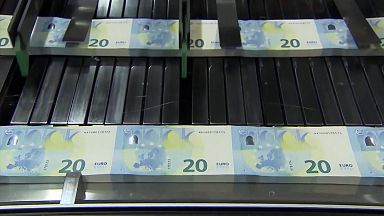
Twenty countries, one currency: The euro is celebrating its 25th anniversary after weathering the storm of various crises and global pandemics and becoming one of the world's most important currencies.

This anniversary provides an opportunity to assess how the Eurozone’ has dealt with these challenges and implemented reforms to ensure the stability of the currency, while also taking into account the achievements and perspectives ahead.

‘Declaration of the existence of a united Europe’

So, why was the euro created in the first place, and how was the currency able to withstand the numerous challenges it faced?

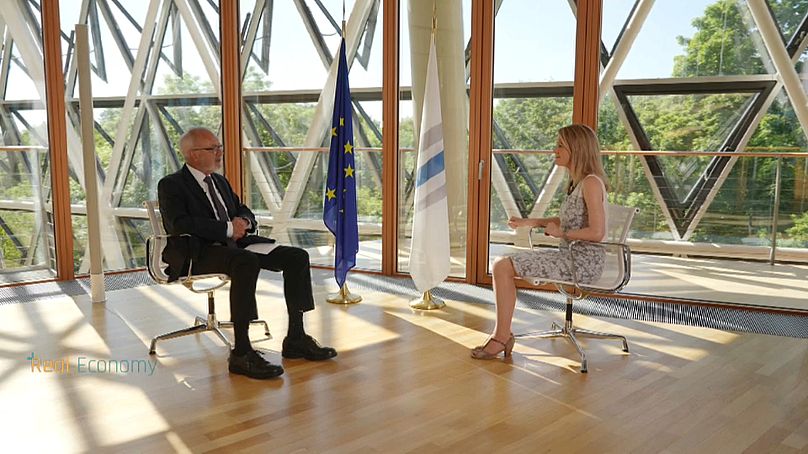
The Real Economy spoke with former President of the European Central Bank (ECB), Jean-Claude Trichet, about some of the milestones that marked the history of the single currency.

The creation of “Euro’ is the need to have a real single market, a real single market, ” explained.

“This was a really big decision, but it was also a kind of claim, a declaration of the existence of a unified European ’. And what we proved was that Europeans really had the capacity to create a serious, powerful currency. Europeans in the Eurozone ’u approves the euro. To me, this is the best of the awards. - ”

Former ECB President Jean-Claude Trichet speaks with Euronews’ten Fanny Gauret.

Jean-Claude Trichet, who evaluated his time as the President of the European Central Bank, stated that “ was the most important influence on him during two very intense periods.

After “'s bankruptcy, the financial world was collapsing, and many extremely important decisions had to be made very quickly. It took a lot of effort.

“Then came the period of May 2010, which marked the real beginning of the state debt crisis in Europe’. In my time, a total of five European countries were in a very difficult situation. And I believe that this required the extraordinarily courageous decisions of the participating countries, their governments and, of course, the European Central Bank, which is at the forefront of all these issues, ’.

Jean-Claude Trichet, who is looking forward to what the single currency will bring in the future, said “ is convinced that the road to a European confederation, a true European confederation with more unity on the budget and economic fronts, as well as real unity in defence, security and diplomacy, is a long-term imperative.

Following these crises, the Eurogroup created the European Stability Mechanism to help member countries facing economic challenges.

In countries that have adopted Euro’, the euro has changed people's daily lives, making travel, shopping or studying abroad more accessible.

How do young Europeans perceive the euro?

We met with a group of economics students at the University of Nanterre, west of Paris ’, to find out how those born in the euro age perceive their currency.

Thomas, “As I was growing along with this, I realized that having a stable and strong currency was essentially an advantage, ” said.

"I think if there are two challenges that the euro has to solve, it is the implementation of harmonised monetary policies for investing in the digital euro and especially in green projects," “ added.

My student friend Benjamin, from “, the European Central Bank, also has a question mark about the future of ’ and the policies it will implement. They could be more egalitarian, ” said.

According to the Eurobarometer’, 79 percent of Europeans living in the Eurozone’ approve the single currency for the whole of Europe’, while 69 percent’ support the single currency for their own country.

Among the most satisfied are Finland, Ireland and Germany; The least satisfied are Croatia, Cyprus and Italy’.

ItalyMixed opinions on the single currency in ’

Our final journey will be the Italian capital of ’, Roma’ya, where opinions on the European currency are mixed.

Speaking to Real Economy’, a woman, “, said that this led to a huge increase in the prices of all the products I sold ”.

Another man, “, explained that the situation with the lira was better because it was monetary sovereignty”.

We met Giovanni Farese, Associate Professor of Economic History at the European University of Rome, to find out if there were indeed winners and losers among the members of the eurozone.

Real Economy’ye “Money policy is never neutral, ” said.

For example, economic growth in “ has been disappointing for many of us for the last 25-30 years. Of course, monetary policy is part of economic policy. What is needed is to strengthen other aspects and dimensions of economic policy. But of course, if you have a single monetary policy without a single fiscal policy, you're missing a leg. So the process is lacking.”

Giovanni Farese, Associate Professor of Economic History, European University of Rome

How can the eurozone better prepare for future economic challenges?

Reforms such as a unified fiscal policy could enable the eurozone to better absorb economic shocks.

UkraineAnnual inflation rate in the Eurozone’ since the beginning of the war in ’ October 2022’de %It peaked at 10.6. Later November 2023’te %2.4’e down.

Average annual inflation since the creation of the euro %It is 1.95’.

ECB Board Member Piero Cipollone assured that ECB’, whose mission is to keep financial stability and annual inflation below 2%, will continue its commitment in this direction.

Piero Cipollone, Executive Board Member, ECB

The “Eurocystem has been able to respond to changing conditions over the years. If you need Mario Draghi’'s ‘ne, which changes and stabilizes the market, let's remember the ’ quote. So the important thing is to be ready to understand the truth, to understand how to adapt, to adapt.

“Economy is changing, society is changing, technology is changing, people's habits are changing, and electronic payments are increasingly becoming a daily reality. Therefore, Eurosystem ’ needs to prepare for this. And he's doing it thinking about the banknote of the future, the digital banknote. Digital euro.”

The digital euro will open a new chapter in the history of the European currency.

InvestEU: Europe Plans to Mobilize Billions to Increase Decreased Investments

Avrupa’ needs to invest in its business, innovation and infrastructure to achieve its climate goals and initiate an economic recovery.

But almost half of EU companies say they plan to cut investments after the Covid pandemic.

Werner Hoyer, President of the European Investment Bank (EIB), explains that the pandemic has made investment decisions “ more complex: “Income and resources of companies are decreasing steadily”. “Europe’'s competitiveness and its role in the world” is a major concern for “, he says.

How does InvestEU help?

InvestEU, a new EU programme, is mobilizing billions of euros in capital, taking on some financial risks for investors. It guarantees 26 billion euros from the EU budget and 7 billion euros from partner banks. Around 370 billion euros in public and private financing are expected to be mobilized.

The money will be transferred to projects that contribute to innovation and digitalization, SME ’s, especially projects that have been hit hard by the COVID crisis, encourage social participation and strengthen sustainable infrastructure.

Minimum of all investments ’u should contribute to the construction of a greener Europe by supporting the green transition of the European Union.

The European Commission works in partnership with the European Investment Bank ’, as well as other national promotional banks and international financial institutions.

InvestEU is following the steps of the European Strategic Investment Fund ’ (EFSI), also known as the Juncker Plan, which has successfully secured more than €500 billion in extra investments.

What does this investment look like in the field?

The European Union is working to revive the former coal mining town of Wałbrzych’i in the heart of Poland's Silesia’. It's been dependent on coal for 500 years, and that's changing now.

Wałbrzych received a 14m-euro loan from EIB’ to help him overcome the coal age and renovate the city center. The loan was partially backed by the European Commission.

Roman Szelemej, mayor of Wałbrzych, says that this means the reconstruction of a quarter of the Old City of “. This is especially “, who can start a new life, who can provide a new life to the old city” witnessed the revival of “social lives for new families.

Mayor of Wałbrzych Roman Szelemej

EIB’den Werner Hoyer believes that investing in infrastructure and skills training is essential in places like Wałbrzych.

“, the coal miner who jumped out of the last coal mine in Southern Silesia’, will not be in charge of the digital Start-Up’ in two weeks, so we need to help these people move into the next generation of jobs, ” explains.

Werner Hoyer, President of the European Investment Bank, with reporter Naomi Lloyd

Social housing system

Wałbrzych is not the only town to benefit from the European investment plan. PolandPoznan’da, the fifth largest city in ’, focuses on social and affordable housing.

The mayor of Poznan, Jacek Jaskowiak, explains that “, we need to build some apartments for young people and the elderly”.

’ says that if these people take some money and help them settle in Poznan“a, they can find a good job and send their children to kindergarten. Affordable housing is a strategy to bring more life and work back to the city.

The program is expected to create homes for 3,000 to 4,000 people.

Aleksandra, 69, is already one of the beneficiaries of this project. He says he was thrilled when he was able to move into his new apartment with a balcony.

He says he will never be able to buy a place alone for financial reasons.

Aleksandra Wysocka reporter Guillaume Desjardins’e shows off her new home

EIB security label

To finance this housing project, developer PTBS applied to EIB’ for a loan of half the total cost. It helped make up for investors' reluctance.

PTBS CEO ’ Andrzej Konieczny explains that banks do not trust them at first because the project is different from the business they usually finance. However, “ added that they managed to reach an agreement with the EIB and that they trust ”biz.

Some people take the EIB Finance label as a security measure because the main or key decisions here are made by people with a technical background or science background.

Werner Hoyer
President of the European Investment Bank

The company expects this project to be successful and looks at future projects with the EIB’nin ‘onay seal’.

From July 2021’, InvestEU will replace the Juncker plan. This time, local banks, such as the BGK in ’, Poland, will also work with the EIB.

Commerzbank reports increased profit as it fends off UniCredit offer

Germany's Commerzbank reported better-than-expected results in the first three months of 2025. The bank's net profit replaces the expected declining net income %It increased by 12 to 834 million Euro’.

Revenues of the lender %Net interest income was slightly lower than a year ago, with a 12-year increase to €3.1 billion, compared to €2.07 billion at the end of the first quarter of 2025’. Meanwhile, net commission income in the same period due to the influence of the strong securities business %6 increased to 1 billion Euro’.

Bettina Orlopp, CEO of Commerzbank, said: "By demonstrating that we can grow even in times of economic hardship, we have achieved the highest quarterly profit since 2011’. We are on our way to implementing our “‘Momentum’ strategy. We plan to bring more capital to our shareholders in the coming years.”

Commerzbank has completed the €1 billion ’ share buyback program from November 2024’, and also offers to pay a dividend of €0.65 per share to be agreed at the Annual General Assembly ’ on May 15, 2025’.

Better-than-expected results come at a time when the German bank is striving to fend off takeover moves by Italian banking group Unicredit’.

Unicredit recently acquired a large stake in Commerzbank’ta ,9’a was taken out; this is what Unicredit’in needs to IPO for the entire bank %It's just below the 30 threshold.

In February, Commerzbank announced that the bank's workforce would be about %He announced that he had taken cost-cutting measures, including the dismissal of 10’.

Employee representatives of the German bank are also holding a protest against a possible takeover, just hours before Commerzbank’'s annual plenary meeting in ’ on May 15.

Commerzbank confirms this year's targets

The German bank said it expects a higher net result of around €2.4 billion for the entire year following restructuring expenses this year.

The bank allocated €40 million for restructuring expenses in the first quarter for its early partial retirement program, which it will offer later this year. That's part of the layoffs; The lender is currently negotiating with employee representative committees.

In addition, to maintain profitability, Commerzbank is also reducing its dependence on net interest income (the difference between what it earns from loans and what it pays on deposits) as interest rates fall.

Financial equity profitability in the first quarter of last year %From the 10.5 level %increased to 11.1’e; That's a strong seasonal figure. Commerzbank CFO’su Carsten Schmitt, “%"We are on track to achieve our goal all year round around 9.6," ” said. “We are also reducing our dependence on net interest income. We confirm our 2025 forecast.”

Finance giants JPMorgan Chase and Morgan Stanley see gains rise

Many major financial firms announced their earnings results on Friday, and many gave investors good news after a week of market turmoil.

JPMorgan Chase, ’'s largest lender, reported annual net income in the first three months of the year. %It said it rose 9 percent to $14.6 billion (€12.8 billion).

CEO Jamie Dimon said that despite President Donald Trump's warning of uncertainty ahead due to the ongoing trade war and other geopolitical tensions, this was above market expectations.

Dimon said the strong performance of the bank's market division helped the bank move to another strong quarter despite the challenges ahead.

JPMorgan’'s earnings per share rose from $4.44 (3.90 euros) to $5.07 (4.46 euros) a year ago. According to data firm FactSet’, the result surpassed Wall Street’'s profit estimates of $4.63 per share. Total managed revenue, 41.9 billion in the previous year $Increased from ’ (€36.8 billion) to 46 billion $’a (€40.4 billion) reached. Wall Street was expecting $44 billion in revenue.

Trump’'s tariff rates, which are now 10 percent for most U.S. trading partners and 145 percent for China, have plunged financial markets into dizzying fluctuations for weeks, creating a tremendous amount of economic uncertainty. This is bad for banks that rely on stability, which allows healthy consumers and businesses to borrow.

JPMorgan’'s trading desk grew in the first three months of 2025’, with the help of market volatility, even before Trump’ introduced massive “ Liberation Day ” tariffs on April 2nd.

The bank's revenue at this time. %While 21 increases, stock revenues also increase annually. is up.

Morgan Stanley, Wells Fargo and BlackRock

Morgan Stanley also surpassed Wall Street’'s first quarter forecasts, which the New York-based investment bank attributed to the strong performance of its stock trading division.

Net revenue reached $4.3 billion (€3.8 billion), while the firm generated record revenues of $17.7 billion (€15.6 billion).

Wells Fargo also reported on Friday that the San Francisco bank's first-quarter net income was $4.89 billion (€4.3 billion) or $1.39 (€1.22) per share. This exceeded analysts' forecast of earnings of $1.23 per share.

Investment firm BlackRock, meanwhile, announced on Friday that its first-quarter net income was $1.51 billion (€1.3 billion).

The New York-based company reported net income of $9.64 (€8.47) per share.

Earnings adjusted to mergers and acquisitions costs and depreciation costs, 11.30 per share $ (€9.93) exceeded Wall Street expectations.

The average estimate of seven analysts surveyed by Zacks Investment Research was $10.25 per share.

The investment firm posted revenues of $5.28 billion (4.6 billion euros), which missed Wall Street’'s estimates during this period. Five analysts surveyed by Zacks’ expected $5.33 billion.