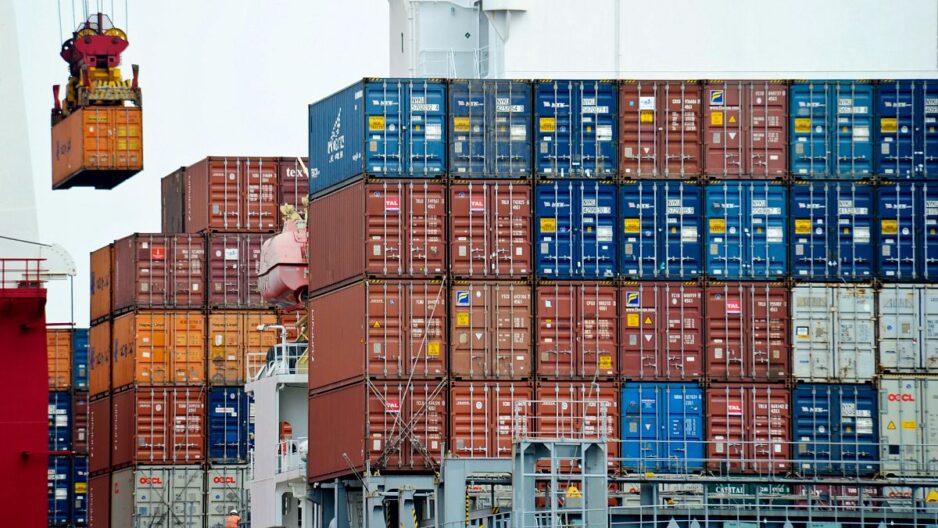
EU Trade Commissioner Maroš Šefčovič promised on Friday a new tool designed to help European enterprises diversify suppliers and prevent the shortage of critical materials from China’.
Šefčovič at the Brussels Economic Security Forum’, organised by the European Policy Centre and in partnership with Euronews’, said “Diversification now requires a special tool. “Recent industrial cases, particularly the supply of chips and rare earths, have strengthened my belief that a step change is necessary.”
His announcement followed disruptions in European strategic industries last year when China’ blocked exports of green technologies and rare-earth elements needed for the defense sector, as well as chips used by the automotive industry.
But such a move could exacerbate tensions with Beijing, which threatens retaliation if AB’ closes its market to Chinese companies.
“Industry must do its part”
Šefčovič later told Euronews’e that the approach would require companies to source from three different suppliers, but that “ still had to decide what to actually do with the ” legal proposal.
The proposal will ensure that companies do not fully trust a single supplier, such as China. However, businesses in AB’ may be reluctant to support such a measure if it increases production costs.
The commissioner said economic security is a common “ responsibility, and European ” companies should address geopolitical risks as part of their core business.
“Industry is on the front line. We have to look out for them, but the industry has to do its part. - ”
In 2025, Dutch authorities took over chip maker Nexperia’ due to concerns that Chinese owner Wingtech Technology’ could move important operations and intellectual property rights to China’e. Beijing responded by temporarily blocking the export of Nexperia’'s products and the chips required for the European automotive industry.
The threat facing Europe’ is not solely due to the supply of chips. This is also the block ’i is also due to its dependence on the rare lands of China, refined and processed by the Asian giant.
During trade tensions with the U.S. last year, China also halted rare-earth exports. The shipments resumed after several weeks of negotiations, but the truce was agreed to only for one year until October 2026, when the Sword of Damocles ’ hung over the European ’.
Relations between China and the EU are increasingly tense as Brussels prepares new tools to protect itself from China’'s increased capacity surplus. The bloc faces a record trade deficit of 359.9 billion Euro’, and despite continuous dialogue efforts, Beijing continues to struggle to achieve equal terms with ’.
At the same time, European enterprises complained about China’'s unfair trade practices, while several member states, including France, Italy, Spain, the Netherlands and Lithuania’, urged the Commission to take a tougher stance through new trade defense tools.
But two proposed EU legislations (the so-called Industrial Accelerator Act and the Cyber Security Act), aimed at tightening Chinese companies' access to the EU market, have already received threats of retaliation from Beijing’, raising the possibility of a trade war if AB’ advances further.
Amazon is launching a major investment spurt in Europe’, allocating more than €10 billion for the expansion and modernization of its continent-wide warehouse and delivery network in the coming years.
The announcement at Amazon’'s Delivering the Future event in London’ on Thursday follows the company's announcement that it has invested more than 60 billion Euro’ across Europe in 2025; This is the largest annual investment on the continent and underlines the extent of its breakthrough on the continent.
Part of the new investment will go towards robot technology and automation in order fulfillment centers.
Amazon said the systems are designed to handle physically demanding tasks, such as carrying heavy loads or repetitive lifting, so employees can focus on other jobs at their own facilities.
Technologies included in the investment include a new version of Amazon’'s autonomous warehouse robot, Proteus’, and the company says it can understand employees' instructions in human language.
The investment move will also be aimed at expanding and improving Amazon’'s fulfillment centers, which have large warehouses where orders are processed, packaged and shipped, adding new technology to European operations and increasing capacity.
Amazon did not specify all its supply centers in Europe’, which will receive funding under the new €10 billion plan. The order fulfillment network already covers many European countries, including the UK, Germany, France, Italy, Spain, Poland, the Czech Republic and Slovakia.
The company said the investments will also support the creation of 25,000 additional jobs across Europe in the coming years.
Amazon also announced a $1 billion (€860 million) fund for targeted worker training by 2030, as part of a broader global skills development program of $2.5 billion.
The fund will help employees train for roles in areas such as cybersecurity, software development, logistics, renewable energy and mechatronics, and the program is available in some European countries, including the United Kingdom, the company said.
The figures underscore the extent of Amazon’'s expanding presence in Europe’. The company says it already supports more than 1.5 million jobs across the continent, including 230,000 direct Amazon employees, more than 400,000 ’ people in its expanded workforce, including contractors and seasonal workers, and more than 600,000 jobs linked to 200,000 European ’ small businesses and entrepreneurs selling through Amazon.
The announcement comes at a time when Avrupa’ is grappling with the loss of some of its most promising companies to ABD’, and its place in the global AI and robotics race between China and ABD’ at warp speed.
According to a report by former European Central Bank president Mario Draghi’, nearly 30 percent of start-up ’s established in Avrupa’ between 2008 and 2021, which later became unicorns, moved their headquarters abroad, mostly in ABD’ye.
European policymakers are putting pressure on measures to make it easier for companies to set up, scale and stay in Europe’, including EU Inc., an initiative that will allow start-up ’s to register once and operate more easily across the bloc.
Foreign investment is widely seen as the main driver of economic growth, innovation and job creation. When companies open new fields, build factories or establish research centers, they not only bring capital to the country, but also create jobs and strengthen local supply chains.
As a result, competition to attract international investors intensified. Governments use investment incentives, tax cuts and international investment forums to persuade companies to choose their own markets.
France has also made attracting foreign investment an important priority in recent years. The government has been promoting the country through the ’ initiative since 2018“FranceSelect ’.
At this year's summit, President Emmanuel Macron said foreign companies had pledged investments worth €93 billion, which ’ described as a record figure.
How successful are European countries in attracting international investors? Which countries attract the most investment projects?
France EuropeContinues to be ’'s largest investment destination
The EY European Attractiveness Survey provides a useful benchmark for international investors to measure competition. Unlike traditional foreign direct investment (FDI) statistics, which can deteriorate due to large transactions or in-house financial flows, the survey tracks the number of individual investment projects.
These include new projects announced or registered by foreign companies in a given year, such as the opening of new facilities, the construction of production facilities or the expansion of existing operations.
According to the last number of the survey, 5,026 new investment projects were announced across Europe in 2025. EY defined the European ’ as a geographical region rather than the European Union. This figure is according to 2024’ %It declined by seven to its lowest level in 11 years.
Despite a sharp decline, France has maintained its position as Europe’'s leading destination in terms of foreign investment. Number of projects 2025’te declined to 852’ye; This represents the largest drop among Europe’'s major investment destinations.
United Kingdom, compared to the previous year %It ranked second with 730 projects, down 14.
Germany remained ’'s third largest foreign investment destination with 548 projects. However, the total %It fell 10 times to its lowest level since 2009 ’.
The long-term trend is even more striking. Compared to 2019, GermanyNumber of investment projects in ’ is down; this, France’ya (%-28) or United Kingdom ’a (%-34) is a much steeper drop compared to.
2025Spain and Turkey were among ’'s strongest performers. Number of investment projects in Spain %He placed fourth, increasing by 20 to 383’e. Turkey is %It ranked fifth with 376 projects, up 7 percent.
Poland, compared to the previous year %With an increase of 10, 2025’te continued its upward trend, registering 285 investment projects. This made it the sixth largest destination for foreign investment in Europe’. The Netherlands also %It was among the few countries that recorded growth with the number of projects increased by 8 to 159’.
Italy, Belgium and Portugal also saw a decline in investment activity in ’. Number of projects Italy’da %8 down to 206’ya, Belgium’da declined to 187’ compared to the previous year in Portugal’ 6 projects were registered with 5 decreases.
Who invests in Europe’?
In 2025, the United States continued to be ’'s largest source of foreign investment projects. American companies have announced 943 projects across the continent, maintaining the position of Europe’'s leading foreign investor.
German firms took second place despite the sharp decline in investment activities abroad. Compared to the previous year in other European countries in 2025 %They announced 484 investment projects, down 24. In recent years, the decline has been unusually high, as the number of projects has generally exceeded 600’.
Despite the decline, Germany remained ’'s largest intra-European investor. France has once again become the leading destination for German investments, attracting 101 projects. For the first time, Turkey ranked second after England ’.
Europe is losing ground globally.
To put ’'s performance in a global perspective, it would be useful to look at foreign direct investment (FDI) flows. UNCTAD’'s 2025 World Investment ReportAccording to ’, global foreign direct investment 2024’te compared to the previous year %It dropped by 11 to about $1.49 trillion.
Europe has been hit particularly hard. According to UNCTAD’, the region attracted nearly $182 billion in foreign direct investment in 2024. That's up from $439 billion last year. %It went down 58.
North America, annually %It ranked second with a foreign direct investment inflow of $343 billion with an increase of 23. and asian, spite a modest decline of 3’, it has attracted $605 billion, continuing to be the world's largest destination for international capital.
However, these figures also bring with them an important methodological warning. UNCTAD excludes so-called “channel economies, such as Luxembourg, the Netherlands and Ireland, from ” to avoid distortions caused by holding company structures and in-group financial transactions.
Why are investors being more cautious?
According to EY’, weak economic growth in much of Europe’ was the main factor behind the decline in investment activities. High energy prices, geopolitical uncertainty and a more cautious corporate investment environment have also put pressure on business decisions.
Concerns over trade tensions and potential new tariffs are increasing pressure on investment plans.
Many investors are increasingly concerned about the combination of Europe’'s relatively high costs and weak growth prospects. EY also points out that frustration stemming from regulatory complexity has increased across the continent.
After decades of seeing military budgets as a pen to be quietly cut or ignored, Europe has decided it wants to defend itself on its own terms.
The turning point was Russia’'s full-scale invasion of Ukraine’ in 2022’, but the showdown had been going on for years. According to the European Defence Agency ’, AB’'s defense spending increased from 218 billion Euro’ in 2021 to an estimated 381 billion Euro’ in 2025’te; And that's only in four years. %That's an increase of 75’.
According to the Stockholm International Peace Research Institute ’ne (SIPRI), global military spending reached a record $2.9 trillion that year; The main driving force was the European ’; %It increased by 14 to $864 billion (742 billion euros). For the first time since 1990, Germany has exceeded the target of 2% ’ of NATO’'s GDP, reaching 2.3% ’.
Then came the political mechanism to make it permanent. AB’'s ReArm European Plan, officially Preparatory 2030, the European Commission aims to unlock €800 billion in defence investment, with ’ raising up to €150 billion in funding from capital markets through a new tool called SAFE (European Security Action).
The escapist clause in the Stability and Growth Pact now allows member states to increase defense spending outside of normal financial rules. The Committee on Defense Budgets %It estimates that a 1.5’ GDP increase could create nearly 650 billion euros in fiscal space in four years.
A handful of sectors are reaping the fruits of this, as leading members of AB’ take action to revive previously delayed military production.
FILE – German Defence Minister Boris Pistorius and Australian Defence Industry Minister Pat Conroy during a visit to Rheinmetall Defence in ’, Australia, 27 March 2026
1. Manufacture adjacent to defense
’'s traditional defense contractors, – Rheinmetall, Leonardo, Saab, and the like, are living a seemingly unreasonable moment a decade ago, at a time when defense stocks were seen as politically awkward investments.
EU ammunition production capacity alone increased from about 300,000 rounds per year in 2022’ to an estimated 2 million by the end of 2025’; This is a rate of industrial expansion that, according to the Financial Times and the European Parliament Think Tank ’, exceeds peacetime growth rates by three times.
Domestic orders linked to the defense industry in ’ compared to already high levels after the occupation in late 2025’ %Increased by more than 50’.
The European Commission is now directing the funds specifically to expand the production lines of large contractors and shorten delivery times for some air defense systems, which currently span several years.
The structural problem is that the European ’'s defense market was never originally properly integrated; According to the Munich Security Conference, only contracts that have been awarded in the past %9’u is given to suppliers from other EU member states; Domestic companies earned more than three-quarters of the total.
This is the inefficiency that the new wave of spending has so far sought to rectify with limited success.
Ukrainian soldiers of the – Khartia brigade launched a drone on Wednesday, May 20, 2026, towards Russian positions on the frontline in the Kharkiv region of Ukraine’.
2. Category: Drones
If there is one technology that the Ukrainian ’ has incorporated into the military thinking of the European ’, it is the drone ’. It's cheap, disposable, deadly, and produced by Russia at a pace that ’'s own industry has yet to reach.
The response was quick and expensive. France stocks explosive drones before 2030’ %Under the updated military planning law, including an increase of 400’, it pledged €8.5 billion to expand its stockpiles of ammunition and drones.
April 2026In ’, Germany and Ukraine signed a defence package of €4 billion, which includes agreements on joint drone production as part of a broader initiative to increase European autonomous system production.
The EU launched the European Drone Defense Initiative ’ni (EDDI) in early 2026, and aims to create a multi-layered, 360-degree counter-drone shield between member states by 2027.
Vector drone’u UkraineThe German company Quantum Systems, which was tested in the ’ war, emerged as one of the leading ISR manufacturers in Europe’ with combined revenue streams in both military and commercial segments.
FILE – This May 18, 2021 photo shows a woman writing on a laptop on a train in ’, New Jersey.
3. the Cyber Security
Cyberspace is now a recognized area of warfare and European governments are spending accordingly; but the focus is on “BT security, which has shifted from ” to the protection of critical infrastructure.
In 2025, the EU allocated €145.5 million to strengthen cybersecurity across SME ’s, public administrations and healthcare providers.
20 January 2026In ’, the European Commission proposes a new cybersecurity package that includes amendments to the NIS2 directive, which aims to simplify compliance and strengthen AB’'s ICT supply chain against third-country risks.
The European Investment Bank explicitly lists cybersecurity among its defence and security financing priorities. Although the methodologies differ according to the research firms, the market figures are large.
According to the figures of CONTEXT’in Panel Europe, Europe’'s cybersecurity revenues April 2026’'s annual %increased by 10; Identity and Access Management is most directly linked to the protection of sensitive government and military systems. is increased.
The dual-use nature of cybersecurity investments means that defense spending drives commercial security spending up with it.
FILE – A visitor walks behind tools at the Intec and Z engineering trade fairs in Leipzig, central Germany, Wednesday, March 8, 2017.
4. Category: Industrial metals
The logic is simple: Military equipment is heavy and made of metal. Ships, armored vehicles, artillery systems, missile launchers; all of these are metal-intensive, unlike software contracts and consulting fees.
Goldman, EuropeAbout ’'s increase in defense spending ’'s, NATO’'s typical %He estimates that it will flow into the purchase of metal-heavy equipment, which is roughly twice the norm of 20.
Total impact is important. Goldman believes that the re-armament of ’ will increase the region's overall demand for industrial metals by 2027. %He estimates that it will increase by 6 percent; the European Union's use of metals in 2023 %This is a dramatic increase, given that it represents 2’sini.
Bank calls for global defense-induced increase in copper demand %0.9, with nickel %1,3 and steel %He estimates it could increase by 0.4. Copper, which passes through almost every military system (vehicles, weapons, cables, energy infrastructure, communications), stands out as the most obvious beneficiary.
ING’nin's 2026 EU sector outlook marks artificial intelligence and electrification infrastructure, as well as metal-heavy defense manufacturing, as one of the main drivers of manufacturing sector growth.
FILE An example of a – Toshiba semiconductor.
5. Category: Semiconductors
This may be the most disturbing item on the list, in part because the explosion is a result of the realization of how vulnerable Europe’ is to disruptions in semiconductor supply chains.
Modern defense platforms, from missile routing units to ISR architectures and encrypted communications, are working on advanced, secure processors that Avrupa’ largely does not produce.
For decades, the continent has relied on U.S. ’ suppliers for defense-grade chips while having foundries in Asya’ manufacture them. A supply chain that is efficient in times of peace but fragile in times of crisis.
According to CEPA’, the European Defence Industry Programme (EDIP), a 1.5 billion Euro’ cross-border procurement vehicle launched in 2026’, is directly addressing this issue with funding specifically earmarked for gallium nitride semiconductors used in radar and electronic warfare systems.
The European Defence Agency chief warned that the European defence base remains fragmented and reliant on microelectronics outside Europe.
As Global Policy Journal’ points out, Europe’'s structural position in the wider semiconductor ecosystem gives it an advantage, but turning it into dominant defense-class chip production is a longer-term project.
Europe may not have as many tech giants as the US, but its power doesn't lie here.
New Global Technology Ecosystem Index_._ says density is the area where the old continent is performing really well
According to the research of Dealroom.co’, a global intelligence platform for Startup’s and technology ecosystems, Europe is home to more of the world's highest-performing technology ecosystems than any other region by population size.
Belgium’'s city of Ghent ranks second in the European ’ after Cambridge’ among the cities with a population of less than half a million.
World's busiest tech ecosystems based on venture capital investment, venture value unicorns, and university connections
According to dealroom.co’, this is because of the notable enterprise value per capita led by Argenx’in, a biotech company valued at €41 billion, as well as the deep technology and life sciences production line that continues to increase the overall value of the “ ecosystem, which matches the high percentage of founders from ” and most from Ghent University, ’.
At the same time, the city of Belgium, home to less than 300,000 ’ people, is building a new software sector; Aikido Security is an up-to-date example of this.
‘Rekor AI investment’ LondonRaises ’ to 4th place worldwide
There are less surprises in the overall ranking, which ranks the most successful ecosystems through venture capital investments, corporate value, momentum, unicorns (private venture companies worth $1 billion or more), and the university network.
The U.S. still dominates East Coast ’na from West ’; The Bay Area is in first place, New York is in second place, and Boston is in the top three.
But Europe is not far behind.
London, ranked fourth worldwide, surpassed Paris’i in 2026’ and regained its position as ’'s leading technology ecosystem ahead of Los Angeles, Austin and Tel Aviv’ in the global rankings.
The city remains one of the world's leading centers for artificial intelligence, fintech and deep technology innovation, and is currently driven by a record-breaking investment in artificial intelligence – 2024, from $3.9 billion in ’ to €6 billion in 2025’; provides consistent unicorn creation.
The world's largest and most successful tech ecosystems, defined by VC investment, venture value, momentum, unicorns, and university connections
Dealroom.co researchers Europe in Motion’a said: “Last year, London technology companies 2024According to ’e %Collected €15.3 billion with an increase of 45; The city is currently home to 138 unicorns, including Wayve, Granola, OLIX and ElevenLabs.”
At the same time, Paris continues to show its strength, especially in the field of artificial intelligence.
It has raised €4.3 billion from venture capital (VC) financing and continues to host leading companies such as Mistral, AMI Labs and Mirakl. Dealroom.co reports that artificial intelligence is currently investing approximately %’ says it has made up its 30“, underlining that the ”region is focused on next-generation technologies.
Stockholm (19th) is the only other European city to enter the world's first 20’.
The rapid rise: A look at the Rising Stars of the Index
Istanbul, IndiaAfter ’'s Mumbai’si (1’th) and China’in Hefei’si (2’th), it is the third rising star on the global technology scene.
At the same time, Kiev is in eighth place, losing several places compared to 2025’ due to moderate growth (4.3 times) in the electric vehicle market since 2019’, while other cities such as Athens (6.7 times) or Zagreb (14 times) show higher rates.
As Europe approaches ’, Zagreb is the city to watch right now. It is currently AB’'s fastest-growing technology center and ranked 11th worldwide.
EuropeMap of unicorn centers in ’ and a list of the continent's highest rising stars at the bottom left
More generally, Eastern Europe seems to be gaining momentum; Athens (2nd), Sofia (3rd), Prague (4th) and Vilnius (5th) are at the top of the EU bloc.
But Dealroom.co says that the Rising Stars ranking is designed for emerging ecosystems from a less established base, so seeing the rise of “central European cities here rather than a shift in where global innovation is concentrated reflects ecosystem acceleration.
As Europe grapples with a protracted energy crisis in connection with the war in Ukraine’, and now escalating conflicts in the Middle East’, Canada is preparing to deepen its energy ties with Germany.
According to AP’, Canada will sign an agreement with ’'s SEFE group (Safety of Energy for Europe) for procurement from the proposed Ksi Lisims export plant on the coast of British Columbia.
Sources spoke on condition that their names are not revealed as they do not have the authority to speak ahead of Wednesday's announcement.
Under the agreement, up to 1 million tons of liquefied natural gas will be exported annually.
CanadaScheduled exports from ’, Germany in terms of energy, will account for about one-eighth of ’'s LNG imports last year. According to the country's federal energy regulatory agency, Bundesnetzagentur’, Germany imported 106 terawatt hours of gas through LNG terminals in 2025.
SEFE is a major German energy company. Europe’ is struggling with an energy crisis linked to the war in Ukraine’de 2022Before Berlin expropriated it, it was a subsidiary of Gazprom’ in ’, Germany.
After European countries backed Ukraine’, Russia triggered an energy crisis fueling inflation by sharply reducing its natural gas supply, forcing some factories to shrink or close due to rising energy prices.
Before the war, Germany was one of Europe's largest importers of Russian gas.
Germany continues to rely on LNG imports as part of its efforts to change Russian pipeline gas supplies.
Overall, with the development of the Iran war, there is growing concern that Europe’'s largest economy could face renewed energy shocks.
Germany’'s economic outlook has weakened sharply due to conflicts and instability in the energy market. In April, the German government released its 2026 growth forecast, citing the impact of energy shocks linked to the war in Iran. %0.5’ine lowered.
Recent indicators indicate that the German economy remained weak in May, both the manufacturing and service sectors are under pressure, and the private sector continues to contract. However, Germany’'s ifo Business Environment Index rose unexpectedly in the same month.
Canada looks beyond the U.S. market
Canadian Prime Minister Mark Carney has set a goal of doubling non-US trade within a decade. Energy-rich Canada currently exports almost all of its oil and gas to the U.S. ’.
British Columbia Prime Minister David Eby said early Tuesday that the Germany-’ya Canada LNG’si procurement agreement would be an important step towards the partners behind the Ksi Lisims project to take the final investment decision for the 10 billion Canadian dollars (6.6 billion euros) plant and export terminal.
Ksi Lisims, located on the island of Pearse, near the border with Alaska, has received the necessary permits, but the consortium has not yet made a final investment decision that will allow construction to begin.
Eby said making long-term purchase agreements with buyers is a crucial step ahead of the project's progress.
The partnership is already a subsidiary of Shell’ and has signed procurement agreements with French TotalEnergies.
Europe’'s dependence on Chinese goods has grown so structurally in certain sectors that reliable alternatives have virtually disappeared.
The pressure intensified in 2025’te, where Washington’ imposed extensive customs duties on Chinese goods; This raised fears that Beijing ’ would divert excess production to European markets at discounted prices.
Commission President Ursula von der Leyen, at last year's G7 summit in ’, Canada, described it as “, a new Chinese shock, and Beijing warned that ” is flooding global markets with subsidized surplus capacity that its own consumers cannot afford.
Last week, Stéphane Séjourné, AB’'s Commissioner for Industry, called on EU businesses to diversify their suppliers as trade tensions with China escalate as Beijing’in constantly threatens AB’ and Brussels’in seeks to strengthen legislation to protect its markets from dependence on China’.
According to Eurostat’, EU’'s imports from China’ reached a total of 559.4 billion euros in 2025’te; this figure since 2015’ increased, creating a trade deficit of 359.8 billion euros. Only in 2025 AB’'s China’e exports %6.5 Decrease in imports %Increased by 6.4.
China is by far AB’'s largest source of imports and main supplier of dependent products. ’sini exports to the bloc and represents roughly half of the total import value, and 404 billion Euro’ represents about 206 billion Euro’.
Dependent products refer to the parts and raw materials needed to create the final product. For example, the demand for a smartphone battery depends on the number of finished smartphones a company plans to manufacture.
Although the U.S. is the second-largest supplier of AB’-dependent products, according to a recent analysis by the Center for Economic Policy Research (CEPR), published this month, %Less than 10’ and the total import value is only is ’ini.
Combined with other data showing broader strategic dependence, five sectors in which AB’'s exposure to Beijing’ is structural are revealed: solar energy, critical raw materials, industrial robot technology, chemicals, textile and wood products.
In each of these sectors, Euronews compiled an overview of some of the causes of AB’'s extraordinary dependence on China’e.
Green transition made in China’
Of all AB’'s dependencies on Pekin’e, the one buried deep within its green agenda is arguably the most important.
According to Eurostat’, China plans to import all solar panels to AB’ in 2024. ’ini was formed. The total value of these imports decreased from Euro’te 19.7 billion in 2023 to Euro’te 10.9 billion in 2024; This was not because volumes were declining, but because Chinese prices were collapsing.
The exact figures for last year's solar panel imports have not yet been released.
In a report published this year by the think tank Loom also found that China’in, AB’in's imports of lithium-ion batteries for electric vehicles in 2019’in ’inden 2025’te ’ini was provided.
The vulnerability extends far beyond finished products.
Research department of the European Parliament’, AB’'s rare earth magnets, including materials required for electric vehicle motors, wind turbines and defense systems %He found that he supplied 98’ini from China’.
Data from the European Commission’ also show that AB’ has been linked to Beijing ’e dependence on magnesium. %It says it's 97. In addition to being essential for next-generation batteries, which are an alternative to lithium-ion technologies, the mineral is also used for hydrogen storage and light renewable infrastructure.
Due to this overwhelming single-country dependence, the European Commission has placed it on the bloc's Critical Raw Materials list to accelerate domestic extraction, processing and recycling initiatives.
Finally, according to a report from the Geopolitical Intelligence Services, Chinese firms believe that the global solar photovoltaic production capacity from polysilicon production to finished modules %It controls more than 80’.
In short, the European ’'s transition to green is based on foundations that it does not control.
It's a FILE. Workers transport lithium-ion batteries at a factory in Taizhou’ in eastern China’in Jiangsu province, July 2018
The robot surge
Industrial robot technology tells the story not only of addiction, but also of increased displacement.
According to data published by the European Commission’'s import surveillance task force, from the beginning of 2025’ to the beginning of 2026’'s import of industrial robots from AB’'s China’ %Increased by 315, while average prices is down.
China’'s dominance in this sector is not accidental.
Backed by government subsidies, cheap credit and tax incentives, the “ Made in China 2025” industrial strategy helped the country's advanced robotics sector triple the number of companies registered since 2020’.
Domestic overproduction has pushed Chinese manufacturers to aggressively export at prices that European competitors cannot afford.
According to the International Federation of Robotics, ’, China now produces more industrial robots than Germany, South Korea, Japan and the United States combined.
Chemicals, textiles and wood: old addictions, new depths
In the chemical sector, the European Commission said ’'s surveillance data showed that some chemical compounds were imported at rates 36 times higher than in the year before China’, and that prices %It turned out to be as low as 95’e.
March 2025’te The Commission launched special monitoring for certain ethylene and ammonia-based chemicals, citing production capacity surpluses in China’ and a sharp increase in EU market shares.
Textiles and wood products tell a similar story.
While some of the production has shifted to lower-cost Southeast Asian competitors such as Vietnam, clothing and footwear from China’ still represent a significant portion of AB’'s overseas supply.
According to Eurostat’, China, on the basis of value of the European Union, ’'s total out-of-home clothing and footwear imports are approx. %From 30 to ’ini is provided.
Wood products, China’den assembled parquet flooring imports more than ten times in a single year, prices creased by 77% and commissioned by ’ in July 2025 to protect an industry valued at €1.3 billion, which employs more than 10,000’ people. %with 21.3 %Wood products have become a newer flashpoint as it has led to the imposition of taxes between 36.1 and
Do this to secure more than 2,000’ jobs in Europe’ %with 26.4 %The ’te decor paper followed in August 2025, when taxes were imposed between 26.9 and 2025.
In all five sectors, the Commission's response was largely reactive and tariffs were imposed after the damage occurred.
The deeper question is whether Europe can maintain industrial capacity and political will to build real alternatives before ’'s dependence becomes irreversible and thus Beijing becomes a lever ’ can use freely.
The war in ’ caused energy and fuel prices to skyrocket, but another interesting trend that could actually benefit travelers has also developed.
According to an analysis by flight comparison site FlightsFinder.com, some affordable airlines, such as Ryanair, WizzAir and EasyJet, charge their fares. %From 10 to %It appears to have dropped by 30 percent.
Founder Shahab Siddiqui Europe in Motion’a “Our fee history shows a steady decline in prices over the past few months, ” said. For example, “UKRoutes from ’ to European destinations such as Nice, Palma and Barcelona %From 10 to %It's down by 30. ”
According to experts, lowering prices is part of some airlines' strategy to make travel as attractive as possible to potential customers. weaker demand and broader economic lossesThis is what the industry is currently facing.
Such discount prices can be reached through fuel risk hedging, which allows airlines to fix or cap fuel prices for a certain period of time. But Siddiqui warned that these competitive prices would not be sustainable in the long run.
“These agreements will expire in the second half of this year, which is expected to trigger a universal price increase on all intra-European routes.”
How much does Iran increase the prices of warplanes in ’?
Although some holidaymakers travelling within Europe can still find cheap tickets, those traveling further afield probably won't have the same chance, given that non-European destinations are more affected by disruptions due to the conflict in the Middle East’ and increases in fuel prices.
As FlightFinder’'s research shows, prices have been approximating in recent weeks. %With an increase of 300%, important corridors between Asia and Europe were particularly affected.
The London-Singapore route saw one of the sharpest increases; The average ticket fares increased from about 600 Euro’ to almost 1,800 Euro’. London’ to Bangkok’ %A similar increase of 273’ was recorded.
Currently, however, some of the most expensive tickets are for the Frankfurt-Singapore and Paris-Bangkok routes, with round-trip tickets currently selling for around 2,800 Euro’.
According to FlightFinder’, some airlines have increased fares, while others have canceled flights altogether; KLM withdrew 50 flights due to operational costs.
Other airlines are trying to offset high costs with price increases: According to FlightFinder’, Air France and Lufthansa have introduced an additional fee of 10 Euro’ on all medium and long-haul routes.
Snapshot of airspace between Europe, Africa and Asia seen on Monday, May 25, 2026
Which airlines are rerouting flights and where?
While flying through Abu Dhabi, Dubai and Doha’'s usual super-connector hubs has become riskier, some carriers are heading to Istanbul and Cairo’ye, or even Ethiopia’ye, for destinations such as the Seychelles in the Indian Ocean’.
In the report of FlightsFinder’, “Passengers are actively rebooking Turkish Airlines ’ as a result of joint alliances to stay in Istanbul’ and dodge the Gulf countries.
Other airlines, such as British Airways and Cathay Pacific, have increased the number of direct routes to Asia’, completely bypassing stopovers in the Gulf’, and adding direct flights to Bangkok and Singapore’a once a week.
What should travelers do to minimize time and money losses?
FlightFinder warns that long-haul flyers should expect their journey to take an estimated one to four hours longer than usual, given that routes that are usually direct now also include pauses due to refueling or rerouting needs.
In light of this, travel experts recommend leaving a waiting period of at least three hours, as “rota congestion can disrupt the synchronization of schedules.
Experts also recommend booking flexible tickets to minimize disruption, as well as requesting a refund if the route is severely disrupted.
Do you automatically receive a refund on non-European flights?
No, no, no, no. Unlike AB’den or countries like the US and UK, worldwide refunds are not always guaranteed.
Passengers should check the country-specific laws and the airline's policies in case of any disruption before traveling.
Another suggestion is to fly as lightly as possible.
Baggage handling systems are under increasing pressure as flights are unexpectedly redirected and routed through alternative hubs.
FlightsFinder recommends that if you have “, insert a smart GPS tracker like Apple AirTag into it so you can locate it if it's lost due to a chaotic connection, ” advises.
While artificial intelligence (AI) is reshaping global trade and economic power, Europe is at risk of falling into the trap of technology “addiction, according to a new report.
Insurance company Allianz’'s report suggests that the world economy is being reorganized around technology industries such as cloud computing, data centers and semiconductors, where Europe’ is weaker than the US and Asia’.
Asia, this part of the world economy %With 65’i and seven of the world's top 10 AI exporters, it dominates the export of AI-related goods. This sector grew from $1 trillion in 2014’te (880 billion euros) to $3.8 trillion in 2025’te (3.3 trillion euros).
The U.S. has tripled its AI-related imports since 2023’, largely due to the country's investments in data centers and cloud computing. It is also home to almost half of the world's data centers.
Meanwhile, Europe’'s imports related to artificial intelligence were only in the same period. %It increased by 40, which highlighted what Allianz’ describes as an expanding “ infrastructure vulnerability, ”.
“ has a modest role in the bloc's AI supply chain, which leaves the region facing ” with limited strategic leverage and meaningful exposure to supply chain disruptions, the report said.
American ‘ connected to termination key’
The American technology giants, Avrupa’'s operational computing capacity %It controls 40’ and nearly half of its upcoming data center projects.
These firms benefit from a weak market for private investment in companies and low competition from local firms, the report said.
USA also Europe’'s cloud computing market ’'s market share, Avrupa’'s corporate software revenue ’una and customer management software %It has a market share of 73’. This causes players outside the U.S. to compete for “ remaining margins. In the report, “ said that structural constraints, fragmented regulation, complex permission processes, network connectivity delays, the absence of a native hyperscaler, and limited VC or state-sponsored funding reinforce this dependency.
Europe is also dependent on hardware outputs from Asya’, such as graphics processing units (GPU’s) required for training AI models. Block, all IT equipment ’sini imports more than half of the hardware materials needed for its data centers from five Asian countries: Taiwan, China, South Korea, Malaysia and Vietnam.
The report found that this dependence on Asian hardware complemented ’'s dependence on “, which would increase the ” of the USA if no independent investment was made in that area.
According to the report, “Europe, within this framework, is constantly using the US’ termination key for ‘'s cloud data, under the threat of ’; This means that the country can shut down these services at any time. “If AI-related markets are created abroad, this will widen the EU-US service imbalance.”
Europe’'s double gap‘
Unlike the U.S. ’, where private companies pour hundreds of billions of dollars into artificial intelligence infrastructure, or China ’, where the government facilitates investments, “ is suffering from insufficient private capital and fragmented public policy, which the report calls open ”.
To avoid falling into the trap of ’ technology addiction, the European Union must eliminate regulatory and capital constraints for “, the report said.
For example, the report notes that the combination of limited land options in cities, complex permitting processes and environmental regulations makes it difficult to build data centers. Some projects may take up to four years to come to life.
Data center projects in parts of Avrupa’ could take up to five years, the report said, as providers could not connect to some aging power grids with limited capacity and a new center could not meet peak power demands.
Despite these concerns, the report suggests that Avrupa’ still has some competitive advantages in the areas of industrial engineering, automated and regulatory artificial intelligence.
France and Sweden applauded initiatives such as independent computing projects aimed at taking public services in ’ out of the hands of US technology companies such as Google or Amazon Web Services (AWS) and instead investing in European solutions.
These initiatives promised “ counterweights, but their scale was still modest, the report said.
QatarEnergy has signed an agreement with ExxonMobil and the Egyptian Ministry of Petroleum and Mineral Resources to investigate how the gas discovered off the coast of Cyprus can be developed and exported through Egypt’'s existing infrastructure.
The memorandum of understanding signed by oil minister Karim Badawi puts the Qatari state-owned energy company at the center of a broader effort to link Cyprus offshore gas fields with Egyptian export facilities and European buyers.
QatarEnergy said the deal will explore future growth opportunities and trade arrangements using Egypt’'s gas infrastructure that serves both domestic consumers and international markets.
Cyprus’ does not have its own liquefaction facility; This means that the gas extracted from offshore sites must be transferred by pipes underwater to Mısır’a, where it will be processed and liquefied before being sent to European markets.
Cyprus has spent more than a decade converting its offshore exploration into commercial exports, and President Nikos Christodoulides said the recent approvals were a turning point that moved the country from exploration to the exploitation of natural gas resources.
Egypt, Cyprus’ to Europe’ya is becoming a gateway to natural gas
Egypt has already played a central role in this plan. In April, partners in the Aphrodite field of Cyprus ’ signed a 15-year agreement to sell all natural gas available from the reserve to the Egyptian Natural Gas Holding Company, with the option of extending the agreement for another five years.
With the agreement signed on Thursday, this agreement shows how the Egyptian ’ has become the main point of departure for Cypriot natural gas. The agreement is also based on QatarEnergy’'s existing partnership with Cyprus’ta ExxonMobil.
The two companies are partners in Block 10’, where the 2019 discovery of Glaucus, estimated to contain about 3.7 trillion cubic feet of gas, is one of Cyprus’'s most important offshore finds.
A second discovery, Pegasus 2025’te, was detected in the same block, and in March, the consortium officially announced that both sites, with a total reserve of about 7 trillion cubic feet, were commercially viable.
Saad Sherida Al Kaabi, managing director of QatarEnergy, said the agreement is an important step in advancing regional energy cooperation in the Eastern Mediterranean ’.
The route could also be important for Europe, which has been looking for more diverse gas sources since Russia’'s invasion of Ukraine’ disrupted the long-standing flow of energy. It is unlikely that Cypriot gas will change the European ’'s energy balance on its own, but the Eastern Mediterranean may add another supply option from ’.
The plan is still in the early stages. The final investment decision has not been made, and details such as infrastructure links and commercial terms have not yet been agreed on.
If the 2028 target is met, this will signal Cyprus’'s first gas exports and a new supply route to Europe’.