
Anthropic ‘fren pedal calls for ’ before AI develops itself without human oversight

Anthropic co-founder Jack Clark wants the AI industry to hit the brakes before technology can begin to further develop itself without human input.

Speaking to BBC’, Clark said that 80 percent of Anthropic’'s coding work has already been done by AI Claude, and that this rate could rise to 100 percent ’ in a few years. But “ said it was a choice whether or not AI companies would let him go this far without stopping him.

Clark, “ said that we think this is a topic that the world needs to talk about more. “The artificial intelligence industry currently has an accelerator pedal, but the car does not have a brake pedal, and we want to do some work to create this pedal.”

According to Anthropic’ in a blog post on Thursday night, this process is called “ recursive self-improvement”, and in the process, artificial intelligence can improve itself without human contribution.

Anthropic said that in a recursive model, AI agents, which are autonomous workers created by a chatbot “, could become capable enough to build and train their own models”, so Claude’ could be continuously improved by “Claude.

Anthropic warns that recursive AI may bring some benefits to the fields of science and health, but this may mean that “ increases the risk of people losing control over artificial intelligence systems.

In his blog post, he writes: If “Systems are fully capable of creating their own successors, the way we secure them, monitor them, and shape their behavior becomes much more important.”

There is evidence that iteration will come sooner or later in the Anthropic’'s own model. This suggests that their staff's code correction rates have fallen steadily over the past year, which means there are fewer errors in what Claude’ produces.

Claude can also run his own research experiments when asked an open-ended question like “ and produce his own solutions without human intervention.

It says on the blog: “Evidence shows that the role of humans is shrinking at every step of the AI development process.”

Anthropic said the institute will conduct research to create a system that will control whether developers actually stop or slow progress toward recursive artificial intelligence.

But a real slowdown, “, will require that a large number of well-resourced laboratories in multiple countries, on or near the border, agree to stand under the same conditions.
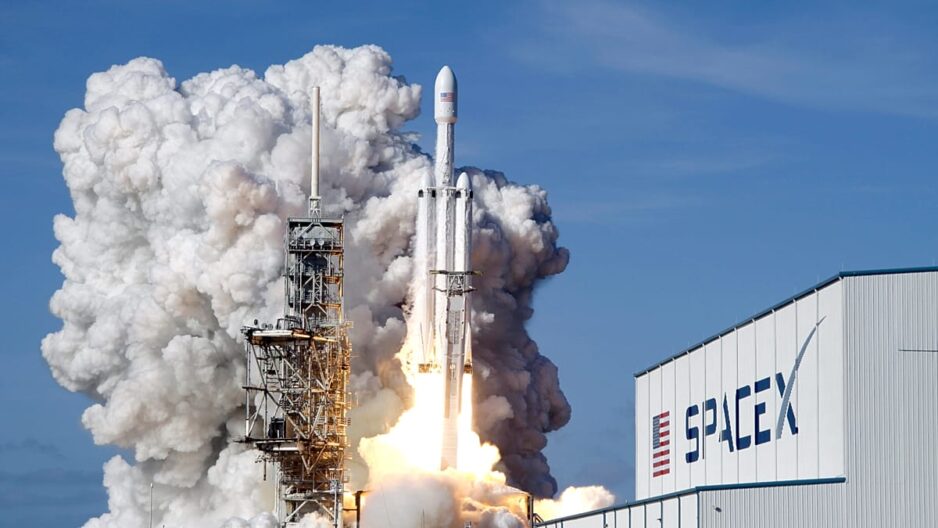
SpaceX set the IPO price and set the company's value at $1.75 trillion before setting the record

SpaceX has announced plans to raise up to $75 billion (€66 billion) in funding at its long-awaited stock market launch; This will make it the largest IPO in history, and its founder Elon Musk will significantly increase ’'s wealth, potentially making him the world's first trillionaire.

The company, officially known as Space Exploration Technologies Corp., said on Wednesday it plans to sell 555.6 million shares at $135 each. The offer will exceed the $26 billion (23 billion euros) Saudi Aramco’ raised in 2019’, and SpaceX’e will value approximately $1.77 trillion (1.56 trillion euros).

Such a valuation would place SpaceX’i among the world's most valuable stock exchange companies. Only a handful of firms are currently worth more, including Nvidia, which has a market cap of around $5.2 trillion (€4.6 trillion).

Musk’'s control continues

According to Forbes calculations, the public offering will also increase the value of Musk’'s stake in the company by an estimated $223 billion (EUR 196 billion). This could increase its net worth on paper to over $1 trillion (880 billion euros), although much of its wealth is tied to company shares.

The updated file also underscores Musk’'s control over the company. Thanks to Class B shares, each of which carries 10 votes, SpaceX CEO ’ will have roughly the same voting power after being listed. %He'll keep his 82.4’.

Despite rising valuation, losses continue

While SpaceX has offered to enter a blockbuster market, it is currently losing billions of dollars a year. Legal records show that the company reported operating losses of $2.6 billion (€2.3 billion) on revenue of $18.7 billion (€16.5 billion) last year, and losses continued during the first months of 2026’.

The public offering outlines ambitious plans for future growth, including financing missions to the Moon and Mars’a, and expansion of the Starlink satellite network. The document also reiterates Musk’'s long-standing goal of establishing a permanent human settlement on “ Mars”, a population of at least one million, which appears as existential threats that could condemn “ to the same fate as the ”dinosaurs.

Artificial intelligence targets are at the heart of growth plans

Artificial intelligence stands out in SpaceX’'s growth strategy. SpaceX said in its IPO application that the value of the global artificial intelligence market could reach $26.5 trillion (23.4 trillion euros). Although some of his plans, including space-based data centers, have not been technologically proven.

Analysts say artificial intelligence will be vital not only for SpaceX, but also for Musk’'s wider business empire, including electric vehicle maker Tesla. Wedbush Securities analyst Dan Ives even suggested a future merger between the two companies.

SpaceX’in, however, is facing scrutiny of artificial intelligence credentials. According to industry analysts, Musk’'s AI startup is struggling to keep up with competitors like xAI, OpenAI, and Anthropic.

IDC analyst Arnal Dayaratna said the main AI product, chatbot Grok’un “ister OpenAI, is less impressive than anything we've seen from other major players in the field, whether it's Anthropic or (Google’'s) Gemini.

Dayaratna said this does not mean that SpaceX’ has no potential as a major AI player; This is in part a move that could help Anthropic and Musk compete for enterprise customers using OpenAI and Anthropic products, thanks in part to a recent computer agreement with SpaceX’e that entitles them to buy the artificial intelligence coding tool Cursor’u for $60 billion (€53 billion) later this year.

SpaceX plans to use the net revenue from the IPO to fund the expansion of infrastructure for artificial intelligence and rocket business, among other investments, and to strengthen the satellite team that powers Starlink Mobile’a.

The company plans to be listed under the Nasdaq’ta “SPCX” symbol and may begin trading by the end of next week.

And SpaceX isn't the only gigantic market start that investors are currently preparing for. Earlier this week, Anthropic filed a confidential applicationTo officially launch its own IPO clock with the U.S. Securities and Exchange Commission.

OpenAI has not yet submitted an applicationThe initial SEC paperwork is ready, but the ChatGPT maker is widely expected to go public.

Ives, “This list represents the first major test for public markets after years of IPO silence, paving the way for SpaceX, AI giants Anthropic and OpenAI’ to follow shortly thereafter.

The world's most valuable artificial intelligence initiative: Anthropic moves closer to $1 trillion ahead of OpenAI’

Artificial intelligence company Anthropic said on Thursday it raised $65 billion (€55.8 billion) in private finance and raised its valuation to $965 billion (829 billion euros). This has made Claude chatbot’'s five-year-old maker, Wall Street’, possibly one of the world's most valuable start-up’s moving towards launch.

The announcement puts Anthropic’i ahead of its chief competitor, ChatGPT producer OpenAI’, in terms of both market capitalization and reported revenue. Anthropic said it now generates an annual revenue of $47 billion (€40.4 billion) by selling its technology to people and organizations that use Claude to code and perform other business and personal tasks on their behalf.

Anthropic was founded in 2021 by former OpenAI executives, and now both AI firms, Elon Musk’'s rocket and AI company SpaceX’, are also expected to become public. All three are still losing more money than they earn, which raises AI bubble concerns.

San Francisco-based Anthropic said the new funding round was led by investment firms Altimeter Capital, Dragoneer Investment Group, Greenoaks Capital and Sequoia Capital.

Krishna Rao, chief financial officer of Anthropic, said in a statement that “This fund will help us meet the historic demand we live in, stay on the research frontier, and bring Claude’ to more places where work takes place.

Anthropic also released its latest AI model on Thursday, called Claude Opus 4.8, which it says is better than previous models in coding and other professional work.

The rapid growth of Anthropic’ and the growing popularity of Claude’ caused OpenAI’ to catch up, despite its initial leadership in making ChatGPT’ a known name that ignited a commercial AI explosion.

OpenAI last reported in March that it was moving towards a valuation of $852 billion (€732 billion) after a $122 billion (€104.8 billion) fundraising round. The value of SpaceX’ was $800 billion (€680 billion) last year, but its value rose to $1.25 trillion (€1.06 trillion) after the space research company merged with Musk’'s xAI’si in February.

Musk recently announced plans for one of the largest stock sales ever, and will be able to make the offer available to investors next week.

OpenAI also removed a major hurdle toward its initial public offering goals after a federal court last week dismissed Musk’, OpenAI co-founder and first donor, after weeks of jury hearings over whether the company betrayed its original nonprofit mission. Musk said he plans to appeal.

Despite its newly discovered success, Anthropic has also faced obstacles this year; An annoying legal battle, especially with the administration of President Donald Trump over how AI tools like Claude can be used in war.

In February, Trump ordered all U.S. agencies to stop using Claude, and Defense Secretary Pete Hegseth declared the company's supply chain risk following an unusually public conflict between the Pentagon and CEO Dario Amodei. Anthropics has filed a lawsuit in two federal courts over an ongoing dispute.

At the same time, Anthropic is in talks with the White House about the cybersecurity capabilities and risks of its most powerful model, Mythos’, which has not yet been made available to the public.

Anthropic also had an influential role in Vatican’ ahead of Pope Leo XIV’'s call on Monday for a sound regulation of artificial intelligence and for its developers to work for the common good rather than profit.

The comprehensive manifesto ’Magnifica Humanitas“, Leo”'s first encyclopedia, has repeatedly stated that the collection of power and data in the hands of very few people in the private sector is a danger.

The world's most valuable artificial intelligence initiative: Anthropic moves closer to $1 trillion ahead of OpenAI’

Artificial intelligence company Anthropic said on Thursday it raised $65 billion (€55.8 billion) in private finance and raised its valuation to $965 billion (829 billion euros). This has made Claude chatbot’'s five-year-old maker, Wall Street’, possibly one of the world's most valuable start-up’s moving towards launch.

The announcement puts Anthropic’i ahead of its chief competitor, ChatGPT producer OpenAI’, in terms of both market capitalization and reported revenue. Anthropic said it now generates an annual revenue of $47 billion (€40.4 billion) by selling its technology to people and organizations that use Claude to code and perform other business and personal tasks on their behalf.

Anthropic was founded in 2021 by former OpenAI executives, and now both AI firms, Elon Musk’'s rocket and AI company SpaceX’, are also expected to become public. All three are still losing more money than they earn, which raises AI bubble concerns.

San Francisco-based Anthropic said the new funding round was led by investment firms Altimeter Capital, Dragoneer Investment Group, Greenoaks Capital and Sequoia Capital.

Krishna Rao, chief financial officer of Anthropic, said in a statement that “This fund will help us meet the historic demand we live in, stay on the research frontier, and bring Claude’ to more places where work takes place.

Anthropic also released its latest AI model on Thursday, called Claude Opus 4.8, which it says is better than previous models in coding and other professional work.

The rapid growth of Anthropic’ and the growing popularity of Claude’ caused OpenAI’ to catch up, despite its initial leadership in making ChatGPT’ a known name that ignited a commercial AI explosion.

OpenAI last reported in March that it was moving towards a valuation of $852 billion (€732 billion) after a $122 billion (€104.8 billion) fundraising round. The value of SpaceX’ was $800 billion (€680 billion) last year, but its value rose to $1.25 trillion (€1.06 trillion) after the space research company merged with Musk’'s xAI’si in February.

Musk recently announced plans for one of the largest stock sales ever, and will be able to make the offer available to investors next week.

OpenAI also removed a major hurdle to its initial IPO goals after a federal court last week dismissed Musk’, OpenAI co-founder and first donor, after weeks of jury hearings over whether the company betrayed its original nonprofit mission. Musk said he plans to appeal.

Despite its newly discovered success, Anthropic has also faced obstacles this year; Especially President Donald Trump, an annoying legal battle between ’'s administration and how artificial intelligence tools like Claude can be used in war.

In February, Trump ordered all U.S. agencies to stop using Claude, and Defense Secretary Pete Hegseth declared the company's supply chain risk following an unusually public conflict between the Pentagon and CEO Dario Amodei. Anthropics has filed a lawsuit in two federal courts over an ongoing dispute.

At the same time, Anthropic is in talks with the White House about the cybersecurity capabilities and risks of its most powerful model, Mythos’, which is not yet available to the public.

Anthropic also had an influential role in Vatican’ ahead of Pope Leo XIV’'s call on Monday for a sound regulation of artificial intelligence and for its developers to work for the common good rather than profit.

The comprehensive manifesto ’Magnifica Humanitas“, Leo”'s first encyclopedia, has repeatedly stated that the concentration of power and data in the hands of a very small number of people in the private sector is a danger.

Anthropics in talks to secure UK-based Fractile AI chips and diversify supply

Large artificial intelligence company Anthropic is exploring a potential partnership with British semiconductor firm Fractile to ensure a stable supply of chips for custom inferences and reduce significant overhead related to existing semiconductor solutions.

According to reports, these talks represent a strategic effort to improve the speed and efficiency of existing and next-generation models while reducing the San Francisco-based firm's dependence on Nvidia’.

As global demand for productive AI capacity continues to grow, the financial burden of hardware needed to run these systems has become a fundamental hurdle for developers.

Anthropic, which has received billions of dollars of investment from both Amazon and Google’, currently relies heavily on Nvidia’'s H100 units as well as dedicated processors provided by its cloud partners.

But the high market price and limited availability of these industry-standard chips have narrowed profit margins and pushed firms to look elsewhere.

According to industry analysts, an agreement with a specialist firm like Fractile could allow Anthropic’ to gain more control over its technical infrastructure.

This strategy reflects a broader trend among tech giants including Microsoft and Meta, which are increasingly moving away from general-purpose chips in favor of internal or boutique designs.

A shift in memory architecture and support for British technology

Founded in 2022 by Oxford PhD Walter Goodwin, Fractile has attracted a lot of attention for its unusual approach to processor design.

Unlike standard chips, which need to constantly exchange data between the processor and separate memory modules, Fractile’'s “ memory-computing fusion” architecture keeps data directly on the chip using static random access memory or SRAM, which does not need to be refreshed.

According to the British start-up ’, this method can run large language models up to a hundred times faster than current hardware, while also reducing operational costs. %It can be reduced by 90 percent.

While these performance claims are impressive, the technology is still in development.

Fractile has yet to launch a commercial product, and its proprietary chips are not expected to be ready for full-scale data center deployment by 2027.

Despite the long timeline, the start-up’ is reportedly in talks to secure $200 million (euro 170.5 million) in financing, with a valuation exceeding $1 billion (euro 853 million).

The potential partnership highlights the growing importance of ’'s semiconductor sector on the world stage. If an official agreement is reached, Fractile could join Nvidia, Google and Amazon’ to become the fourth-largest supplier of Anthropic’ chips.

According to market reports, the talks are at an early stage and no binding contract has been signed.

But the interest of a big player like Anthropic shows that the ability to deliver faster and cheaper computing power in the AI race is the determining factor.