ChatGPT will now be able to buy something for you after you sign with payment giant Visa

Payment giant Visa has embedded its network within ChatGPT’, allowing the chatbot to shop independently and complete transactions on behalf of users, in a move that marks a significant expansion in AI-powered commerce.

This link means that AI agents can not only recommend products, but also complete purchases at any merchant that accepts Visa’. Previous attempts at this type of technology were limited to a single retailer or a small group of registered merchants.

OpenAI will provide technology that allows agents to interact, make decisions, and initiate purchases through ChatGPT. Visa, the world's largest payment network outside of China, will handle payment authorization and fraud monitoring.

Jack Forestell, the company's chief product and strategy officer at “, said that as AI representatives become active participants in the economy, Visa’'s focus is to ensure transactions are reliable, secure, and flawless.

How did it work?

Speaking at a company event in San Francisco’ on Wednesday, Forestell gave an example of a customer asking ChatGPT’ to find wireless headphones for under $150 (€136). The chatbot would find a suitable pair and buy it on behalf of the client.

Users will connect their Visa card to ChatGPT’ to make shopping possible; take security measures to protect consumers and minimize fraud, including spending limits, necessary approval steps, and a list of approved vendors.

Forestell said Visa’ will handle disputes using the same rules that it enforces in other transactions, such as making sure the consumer intends to buy and whether the seller processes it correctly.

This is not OpenAI’'s first attempt at e-commerce. The company launched Instant Payment ’ late last year, allowing ChatGPT’ to scan the internet for specific items. However, this feature was open to errors and %It was not widely adopted by sellers who opposed the 4’ transaction fee and was deprecated in March.

Visa and OpenAI have not disclosed the financial terms of the new regulation or detailed any fees for merchants or customers.

Will people trust that?

Forestell acknowledged that it would take time for consumers to fully trust AI representatives to make their purchases. Because agents send notifications before completing a purchase, most early transactions still require human approval.

“I think we're at a point where most people are pretty comfortable with shopping in general, ” said, and “ added that switching to autonomous buying requires a completely different level of trust.

Visa’'s biggest competitor, Mastercard, is also developing its own AI shopping features, albeit on a smaller scale.

Its offer targets businesses rather than consumers and allows AI representatives to purchase services such as advertising on behalf of a company.

Anthropic pledges more than €170 million to study AI's impact on employment

Anthropic, the creator of the Claude AI model, became the last heavyweight to acknowledge that his own technology could disrupt the labor market, committing the first $200 million (€173 million) on Wednesday to investigate the effects of artificial intelligence on employment and the wider economy.

The money will go to what the company calls the “Economic Futures Research Fund, ”, which will support research trials and assessments of public policies that the firm considers promising.

Anthropic is also creating a $150 million (€130 million) scholarship program that professionals at the beginning of their careers say will help spread the benefits of artificial intelligence to communities in the U.S. ’.

In an article published on his personal website, CEO Dario Amodei argued that artificial intelligence could cause far greater and longer-lasting disruptions to the labor market than past technological changes, suggesting that taxes imposed on artificial intelligence companies could one day help finance a universal basic income.

Amodei, “, wrote that the main challenge in such a world would not be to promote growth, but to find a way for everyone to share the benefits”, and “ added that he was not trying to become the prophet of the Apocalypse.

A gradual plan to increase unemployment and share the gains of artificial intelligence

The Anthropic’in framework reveals how the U.S. government can react to the AI-driven disruption at three levels: %5, %Unemployment or unspecified “ is an unprecedented ” level.

The latest U.S. unemployment rate announced last week %It was at 4.3.

In the heaviest scenario, the company argues that permanent support will be needed, citing universal basic income, dominant wealth models and equity sharing as ways to spread the wealth generated by artificial intelligence.

Amodei wrote that a universal basic income could be financed through taxes imposed on “-related companies or a higher capital gains tax.

This move follows OpenAI’'s commitment on Monday to ensure that the achievements of AI’ are shared across “.

CEO Sam Altman recently met with U.S. Senator Bernie Sanders to discuss the issuance of public ownership shares in AI companies through a public wealth fund. Both companies are moving towards stock market listings.

US President Donald Trump said on Wednesday that he would soon meet with AI executives to discuss giving “ back to the public, and told reporters that if we do ”, the public will be very rich, “ said.

Anthropic also recommends that governments “ be able to block or deter ”-forming AI models that pose a significant risk of disruptive damage.

Amodei argued that because artificial intelligence (such as aircraft, cars and drugs) is “, capable of killing large numbers of people if poorly designed or operated, surveillance must adhere to the strictness of U.S. aviation rules and models must be tested and inspected before they can be released.

Dubai trains private sector in agency AI – here's why

“Artificial intelligence will be our government's managing partner to support decisions, improve services, improve the efficiency of operations, and even evaluate results and deliver real-time improvements.”

These were the words of His Highness Sheikh Mohammed bin Rashid Al Maktoum’, Vice President and Prime Minister of the UAE and Ruler of Dubai, announcing one of the most ambitious AI transformation programs of any government in the world. While most countries are still discussing how artificial intelligence should be used in public life, the UAE is already transforming systems.

In April, the Gulf nation announced that within two years, public sectors, services and operations would be ’sini has announced a framework that will transform the agent through artificial intelligence. Days later, His Highness Sheikh Hamdan bin Mohammed bin Rashid Al Maktoum, Crown Prince, Deputy Prime Minister and Minister of Defence of the UAE, went even further and led the Dubai Chamber of Commerce to launch an equally comprehensive transformation centered on technology in the private sector.

The goal is not to use AI’ as a tool for people to ask questions, like a chatbot. Building a country where artificial intelligence works with each person as part of the daily routine, both in businesses and in public services.

Agentic AI refers to systems that go beyond just creating text and images or answering queries like ChatGPT, Claude, or Gemini. These are AI models that can independently plan, make decisions, and proactively complete tasks. Consider renewing your passport before it expires, processing and paying contracts without asking or interfering in advance with customer complaints, and resolving customer complaints before they arise. And it's all without a human in the loop. The difference between a chatbot and a mediated artificial intelligence is roughly the difference between a calculator and an accountant.

Dubai’'s private sector initiative includes specific training pathways for Business Groups and Councils operating within the Dubai Chamber of Commerce to be implemented over the next two years. The chamber will also set up special incubation centers for agent AI companies, create opportunities for young people to enter the space, and raise funds to support the transition. The goal, in the words of Sheikh Hamdan’, is for Dubai’ to become “, the world's leading city in adopting these technologies economically and commercially.

There are two reasons to consider for founders and business owners outside the UAE. The first is competitive. According to Precedence Research’, the global market for agency AI is expected to grow from $5.25 billion at 2024’te to $199 billion by 2034’. McKinsey’in 2025The State of Artificial Intelligence study, published in late ’, found that 23 percent of respondents were already scaling intermediary AI systems, while 39 percent were conducting experiments; That means almost two-thirds of them are somewhere on this journey. Companies that take the earliest action tend to gain leads that are hard to catch. Dubai is trying to move the entire city's private sector at once.

The second reason has to do with where it happened. BAE’'s move, almost by design, creates a market where the agency will seek investment from outside its artificial intelligence products, partnerships and borders. Businesses that can offer solutions in the field of logistics automation, finance, healthcare or retail will find a market that actively welcomes them. Incubation centers, special support funds and direct access to corporate decision-makers are already being put together. This is an unusual combination that can be found in one place.

Mr. Eng. - Mm-hmm. Sultan bin Saeed Al Mansoori, President of Dubai Chambers and Chairman of the recently created Executive Committee on Agentic Artificial Intelligence, said the initiative reflects Dubai’'s determination to prepare the business world for the next wave of technological change.

Agentic AI’ya said the move was designed to strengthen the private sector's competitiveness, increase productivity and help companies leverage advanced technologies across their operations.

HE Al Mansoori, “DubaiWe are committed to strengthening ’'s global leadership, increasing the competitiveness of the private sector and ensuring that businesses are ready for rapid technological change, ” added.

The public sector is moving along a similar timeline. BAE’'s national framework is based on the speed and effectiveness of adoption, which forms part of how ministers, general managers and government agencies are assessed, as well as how government sectors, services and operations ’sinin aims to be transformed into Agentic Artificial Intelligence’ within two years. The result is a parallel public and private sector exchange, each aimed at supporting and strengthening the other.

The practical question for businesses already operating in Dubai’ is how quickly they can be integrated. While the room's training paths are designed to accelerate companies regardless of their size or starting ​​points, the planned incubation network will provide structural support to those who build artificial intelligence products from scratch.

One of the most pressing questions for those watching from Singapore’ to Sao Paulo’ is whether a city that is so conscious and moving so fast with a technology that most businesses are still in the trial stage is a market they should enter right now without the ground slipping beneath them.

ChatGPT maker OpenAI joins Anthropic and SpaceX’ in public offering race to apply for IPO

OpenAI, the company behind ChatGPT’, has taken an important step towards listing a potential exchange by offering confidential preliminary paperwork to the U.S. Securities and Exchange Commission ’ (SEC).

The San Francisco-based artificial intelligence company announced the application on Monday, becoming the latest major artificial intelligence company to approach the initial public offering (IPO).

In a statement from OpenAI, “We are waiting for the leak, so we are just announcing ” said. “We have not yet decided on the timing; It may take some time because there are easier things we want to do as a private company. But it's a complex set of concessions, and that gives us the option to go public sooner, if that's what's best.”

The move comes after rival Anthropic’ announced on June 1 that it was also looking for an IPO. Both companies join Elon Musk’'s SpaceX’, which has embarked on an IPO publicity trip while positioning itself as an artificial intelligence-focused space company.

OpenAI CEO Sam Altman first raised the possibility of an IPO last year, describing it as ’en possible way given the company's scale and the need for a significant amount of capital to develop advanced artificial intelligence systems.

Founded in 2015 as a non-profit organization focused on developing artificial intelligence for the public good, OpenAI has since grown into a company worth $852 billion (€730 billion).

The application came at a time when eMarketer analyst Nate Elliott ’ described “ as a precarious moment” for the company, with OpenAI’ facing increasing competition from Google and Anthropic’.

Elliott, “But OpenAI’ doesn't have much room to look for the enormous capital needed to support its costs, ” said.

An important step was taken on the way to the public offering last year when OpenAI’ restructured its business and became a company working in the public interest, remaining under the control of its non-profit parent.

The company also removed a significant legal hurdle after defeating Musk’ at a federal jury hearing last month. Musk, one of the co-founders and one of the first donors, had sought to remove Altman’ from leadership and reverse OpenAI’'s transition to a for-profit model. The judge dismissed the case after the jurors found that Musk’ had filed the case too late.

Why does OpenAI’ need new capital?

OpenAI did not publicly disclose its revenues or provide a timeline for profitability. Similar to Anthropic and SpaceX’e, the company is losing more than it earns as it continues to spend heavily on infrastructure and development while competing in the increasingly crowded artificial intelligence market. Major competitors include Anthropic’in Claude chatbot’u and Google’'s Gemini assistant.

Speaking to The Associated Press’e in April, OpenAI chief financial officer Sarah Friar said the company was already working with the discipline expected from an exchange-traded company, including measuring revenue against the standards required for SEC reporting.

Friar, “ said, "I want us to be ready, ”." “I think it's a good thing to be able to take advantage of public markets. These are much larger than specialty markets.”

OpenAI added that ’'s current valuation would place it among the 15 largest companies in the S&P 500 index.

Friar said “ has a moment of authentication of being a publicly traded company. “ At this point, people are checking your balance sheet, the SEC is managing you, etc. ”

In a separate statement released on Monday, Altman outlined OpenAI’nin's long-term goals, including developing an automated AI researcher, accelerating economic growth, and providing a personal AGI“ (artificial general intelligence that can outperform humans in many tasks) to everyone around the world.

Altman said OpenAI’ is moving from pure research to commercial products and is now entering a third phase, focusing on the broad distribution of AI-driven benefits.

“We are working to ensure that earnings are widely shared, ” said. “Everyone should have the opportunity to get a meaningful share of the prosperity created by artificial intelligence.”

The comments came days after Altman’ met with U.S. Senator Bernie Sanders, who proposed giving a 50 percent stake in artificial intelligence companies like OpenAI to the public. They also follow U.S. President Donald Trump ’'s statements in support of the idea of giving the public a share in the growth of the artificial intelligence sector.

Anthropic ‘fren pedal calls for ’ before AI develops itself without human oversight

Anthropic co-founder Jack Clark wants the AI industry to hit the brakes before technology can begin to further develop itself without human input.

Speaking to BBC’, Clark said that 80 percent of Anthropic’'s coding work has already been done by AI Claude, and that this rate could rise to 100 percent ’ in a few years. But “ said it was a choice whether or not AI companies would let him go this far without stopping him.

Clark, “ said that we think this is a topic that the world needs to talk about more. “The artificial intelligence industry currently has an accelerator pedal, but the car does not have a brake pedal, and we want to do some work to create this pedal.”

According to Anthropic’ in a blog post on Thursday night, this process is called “ recursive self-improvement”, and in the process, artificial intelligence can improve itself without human contribution.

Anthropic said that in a recursive model, AI agents, which are autonomous workers created by a chatbot “, could become capable enough to build and train their own models”, so Claude’ could be continuously improved by “Claude.

Anthropic warns that recursive AI may bring some benefits to the fields of science and health, but this may mean that “ increases the risk of people losing control over artificial intelligence systems.

In his blog post, he writes: If “Systems are fully capable of creating their own successors, the way we secure them, monitor them, and shape their behavior becomes much more important.”

There is evidence that iteration will come sooner or later in the Anthropic’'s own model. This suggests that their staff's code correction rates have fallen steadily over the past year, which means there are fewer errors in what Claude’ produces.

Claude can also run his own research experiments when asked an open-ended question like “ and produce his own solutions without human intervention.

It says on the blog: “Evidence shows that the role of humans is shrinking at every step of the AI development process.”

Anthropic said the institute will conduct research to create a system that will control whether developers actually stop or slow progress toward recursive artificial intelligence.

But a real slowdown, “, will require that a large number of well-resourced laboratories in multiple countries, on or near the border, agree to stand under the same conditions.

SpaceX set the IPO price and set the company's value at $1.75 trillion before setting the record

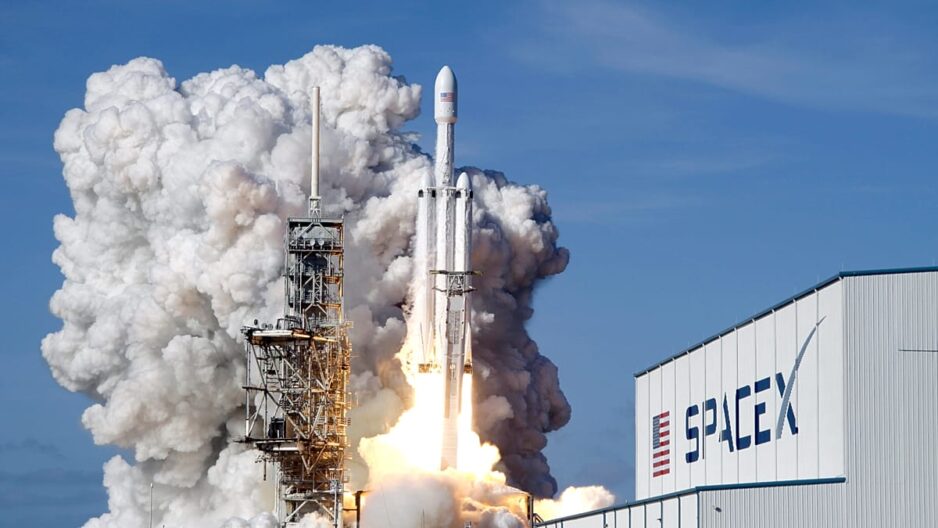
SpaceX has announced plans to raise up to $75 billion (€66 billion) in funding at its long-awaited stock market launch; This will make it the largest IPO in history, and its founder Elon Musk will significantly increase ’'s wealth, potentially making him the world's first trillionaire.

The company, officially known as Space Exploration Technologies Corp., said on Wednesday it plans to sell 555.6 million shares at $135 each. The offer will exceed the $26 billion (23 billion euros) Saudi Aramco’ raised in 2019’, and SpaceX’e will value approximately $1.77 trillion (1.56 trillion euros).

Such a valuation would place SpaceX’i among the world's most valuable stock exchange companies. Only a handful of firms are currently worth more, including Nvidia, which has a market cap of around $5.2 trillion (€4.6 trillion).

Musk’'s control continues

According to Forbes calculations, the public offering will also increase the value of Musk’'s stake in the company by an estimated $223 billion (EUR 196 billion). This could increase its net worth on paper to over $1 trillion (880 billion euros), although much of its wealth is tied to company shares.

The updated file also underscores Musk’'s control over the company. Thanks to Class B shares, each of which carries 10 votes, SpaceX CEO ’ will have roughly the same voting power after being listed. %He'll keep his 82.4’.

Despite rising valuation, losses continue

While SpaceX has offered to enter a blockbuster market, it is currently losing billions of dollars a year. Legal records show that the company reported operating losses of $2.6 billion (€2.3 billion) on revenue of $18.7 billion (€16.5 billion) last year, and losses continued during the first months of 2026’.

The public offering outlines ambitious plans for future growth, including financing missions to the Moon and Mars’a, and expansion of the Starlink satellite network. The document also reiterates Musk’'s long-standing goal of establishing a permanent human settlement on “ Mars”, a population of at least one million, which appears as existential threats that could condemn “ to the same fate as the ”dinosaurs.

Artificial intelligence targets are at the heart of growth plans

Artificial intelligence stands out in SpaceX’'s growth strategy. SpaceX said in its IPO application that the value of the global artificial intelligence market could reach $26.5 trillion (23.4 trillion euros). Although some of his plans, including space-based data centers, have not been technologically proven.

Analysts say artificial intelligence will be vital not only for SpaceX, but also for Musk’'s wider business empire, including electric vehicle maker Tesla. Wedbush Securities analyst Dan Ives even suggested a future merger between the two companies.

SpaceX’in, however, is facing scrutiny of artificial intelligence credentials. According to industry analysts, Musk’'s AI startup is struggling to keep up with competitors like xAI, OpenAI, and Anthropic.

IDC analyst Arnal Dayaratna said the main AI product, chatbot Grok’un “ister OpenAI, is less impressive than anything we've seen from other major players in the field, whether it's Anthropic or (Google’'s) Gemini.

Dayaratna said this does not mean that SpaceX’ has no potential as a major AI player; This is in part a move that could help Anthropic and Musk compete for enterprise customers using OpenAI and Anthropic products, thanks in part to a recent computer agreement with SpaceX’e that entitles them to buy the artificial intelligence coding tool Cursor’u for $60 billion (€53 billion) later this year.

SpaceX plans to use the net revenue from the IPO to fund the expansion of infrastructure for artificial intelligence and rocket business, among other investments, and to strengthen the satellite team that powers Starlink Mobile’a.

The company plans to be listed under the Nasdaq’ta “SPCX” symbol and may begin trading by the end of next week.

And SpaceX isn't the only gigantic market start that investors are currently preparing for. Earlier this week, Anthropic filed a confidential applicationTo officially launch its own IPO clock with the U.S. Securities and Exchange Commission.

OpenAI has not yet submitted an applicationThe initial SEC paperwork is ready, but the ChatGPT maker is widely expected to go public.

Ives, “This list represents the first major test for public markets after years of IPO silence, paving the way for SpaceX, AI giants Anthropic and OpenAI’ to follow shortly thereafter.

‘We create thousands of highly skilled jobs’: SoftBank to invest €75 billion in French AI data centers

Japanese technology investment group SoftBank announced plans to develop and operate 5 GW of artificial intelligence data center capacity in ’, France, with an investment of €75 billion.

The project is part of a broader wave of investment in technology coming to ’, France. President Emmanuel Macron said on Monday that the country expects a foreign investment commitment of €93 billion at this year's FranceSelect ’ summit, including projects in artificial intelligence, data centers, semiconductors, critical minerals, transportation, steel and health.

This will include 45 billion Euro’ from Softbank’ for the first phase of its project in ​​, Northern France, starting with ’ by 2031. This will offer 3.1 GW capacity in the Hauts-de-France region with planned sites in Dunkirk (Loon-Plage), Bosquel and Bouchain’.

Masayoshi Son, Chairman and CEO of SoftBank Group, said: “Artificial intelligence is entering a new era, and the countries that underpin this transformation will shape the future of technology, industry, and society.”

FranceThanks to ’'s industrial capabilities, talent base and national ambition, “European added that ’ is uniquely positioned to be the leading AI infrastructure hub.

The facilities are intended to support the growing demand for artificial intelligence by expanding access to high-performance computing capacity in ’, France.

According to SoftBank’, data centers will serve artificial intelligence companies, cloud providers, businesses, government agencies and research organizations. The company said the project builds on ’'s existing advantages, including power grid, existing industrial land, engineering expertise and support for artificial intelligence development.

French Industry and Energy Minister Roland Lescure said SoftBank’'s decision to invest in France’ was the group's first major AI infrastructure project in Europe’, reflecting the country's ambition to become a leading destination in the AI value chain.

“This reflects the important assets of our country: EuropeA strong digital and industrial ecosystem with quick access to ’'s most reliable electricity grid, a skilled workforce, and a government that works in concert with local authorities and stakeholders to accelerate procedures for strategic projects.

Lescure added that the investment creates “ employment, strengthens our digital infrastructure and contributes to our goal of digital sovereignty.

According to SoftBank’, the investment is expected to create thousands of highly skilled jobs in data center development, engineering, energy systems, robotics, operations, maintenance and advanced manufacturing.

The company also said it plans to support research and development through partnerships with local universities, engineering schools and educational institutions that focus on the skills needed for future AI infrastructure.

SoftBank is partnering with French energy company EDF on the Bouchain data center project for the project and Schneider Electric to develop an industrial center at the Dunkirk Port ’. The facility will include a SoftBank facility that produces data center enclosures and a Schneider Electric facility that assembles power modules used in data centers.

The companies said the project will help strengthen local supply chains for artificial intelligence infrastructure and support Dunkirk’'s goal of becoming a hub for advanced manufacturing and robotics.

Eurasian Economic Union’'s trade turnover exceeded 80 billion euros last year

The countries of the Eurasian Economic Union (EAEU) are moving towards deeper economic integration through digitalization and artificial intelligence as the bloc's leaders meet in Astana’ for a two-day summit.

During high-level talks, member states discussed creating a unified digital environment to create an uninterrupted market in more than 20 million square kilometers of common economic space.

The delegations focused on trade, joint projects and the development of common digital tools and artificial intelligence systems designed to strengthen collaboration and reduce fragmentation across the block.

Last year, trade within the union more than doubled, while turnover with third countries %While increasing by 72 percent, EAEU countries are also contemplating a single transition system, they are now ’ is made in national currencies.

Kazakhstan's President Kassym-Jomart Tokayev said that with digitalization driving developments across the union, the trade turnover among EAEU members was about €80 billion this year compared to last year's €80 billion. %He said it could increase by 6 to over 85 billion euros.

GDP growth across EAEU countries for 2026-2027 %He added that it was projected to be around 2.5.

Currently in its 12th year, EAEU functions as a single integrated market and free trade zone for its five members (Russia, Belarus, Kazakhstan, Kyrgyzstan and Armenia).

The bloc already has agreements with several countries, including Serbia, Vietnam, the UAE, Mongolia and Indonesia. China continues to be the bloc's key partner, accounting for about a third of foreign trade.

Integration through artificial intelligence

Kazakhstan's Tokayev said that during the EAEU presidency, the country proposed the practical use of artificial intelligence to help implement the bloc's so-called four freedoms in order to strengthen the competitiveness of its member states.

Member states also proposed developing common principles for responsible use of artificial intelligence, as well as joint computing capacity and joint model development.

Meanwhile, according to Russian President Vladimir Putin, ’e, Russia proposed a high-level AI meeting next year to advance cooperation on domestic AI models and connect IT and energy infrastructure.

Pilot projects are currently being tested at the EAEU level.

KazakhstanA variety of AI-powered digital assistants have been developed in ’ by both government agencies and start-ups to help citizens navigate legal and regulatory systems more easily.

According to Dmitry Mun’, Deputy Minister for Artificial Intelligence and Digital Development, these AI legal assistants are designed to simplify legislation, reduce bureaucracy, and make regulatory systems more accessible to citizens and businesses.

Some of these tools are currently being tested to streamline processes in member states.

Trade corridors and logistics modernization

According to the authorities, China’ to Europeapproximately ’i is being routed through the Middle Corridor.

Artificial intelligence is increasingly being used along the TDN and Digital Transportation Corridor along the Trans-Caspian International Transportation Route. Together with these measures, non-commodity exports in the next two years will be approximately %It is expected to increase by 30 percent.

Kazakhstan's Minister of Trade and Integration Arman Shakkaliyev said that the country also aims to take advantage of major transport routes, including the Middle Corridor and the North-South Corridor, to create a fully integrated logistics ecosystem.

The goal, he said, is to position Kazakhstan’ as an important regional hub, where transport routes converge and large export flows are consolidated.

The goal is to develop a fully functioning system where cargo volumes will reach nearly 10 million tons by 2030. Work is already underway, including railway modernization and the development of new infrastructure.

Putin visit and bilateral agreements

Following Putin's official visit to ’, the two countries signed a broader package of agreements covering seven pillars of bilateral cooperation, as well as energy, transport, finance, education and industrial development.

Russia, with an investment of approximately 25 billion Euros, continues to be the largest investor in Kazakhstan, and plans to increase this figure even further. Kazakhstan is also building ’'s first nuclear power plant worth around €14 billion.

Putin, the plant Kazakhstanapproximately the electricity consumption of ’ %He said he would meet 20’sini and that the financing conditions for such projects were in line with international practices.

He said the project supports ’'s industrial capacity through equipment orders and long-term maintenance contracts, while also strengthening cooperation between the two countries in the field of uranium and nuclear technology.

Officials say that for Kazakhstan, the project represents both energy security and a step towards high-value technological cooperation beyond the export of raw materials.

The world's most valuable artificial intelligence initiative: Anthropic moves closer to $1 trillion ahead of OpenAI’

Artificial intelligence company Anthropic said on Thursday it raised $65 billion (€55.8 billion) in private finance and raised its valuation to $965 billion (829 billion euros). This has made Claude chatbot’'s five-year-old maker, Wall Street’, possibly one of the world's most valuable start-up’s moving towards launch.

The announcement puts Anthropic’i ahead of its chief competitor, ChatGPT producer OpenAI’, in terms of both market capitalization and reported revenue. Anthropic said it now generates an annual revenue of $47 billion (€40.4 billion) by selling its technology to people and organizations that use Claude to code and perform other business and personal tasks on their behalf.

Anthropic was founded in 2021 by former OpenAI executives, and now both AI firms, Elon Musk’'s rocket and AI company SpaceX’, are also expected to become public. All three are still losing more money than they earn, which raises AI bubble concerns.

San Francisco-based Anthropic said the new funding round was led by investment firms Altimeter Capital, Dragoneer Investment Group, Greenoaks Capital and Sequoia Capital.

Krishna Rao, chief financial officer of Anthropic, said in a statement that “This fund will help us meet the historic demand we live in, stay on the research frontier, and bring Claude’ to more places where work takes place.

Anthropic also released its latest AI model on Thursday, called Claude Opus 4.8, which it says is better than previous models in coding and other professional work.

The rapid growth of Anthropic’ and the growing popularity of Claude’ caused OpenAI’ to catch up, despite its initial leadership in making ChatGPT’ a known name that ignited a commercial AI explosion.

OpenAI last reported in March that it was moving towards a valuation of $852 billion (€732 billion) after a $122 billion (€104.8 billion) fundraising round. The value of SpaceX’ was $800 billion (€680 billion) last year, but its value rose to $1.25 trillion (€1.06 trillion) after the space research company merged with Musk’'s xAI’si in February.

Musk recently announced plans for one of the largest stock sales ever, and will be able to make the offer available to investors next week.

OpenAI also removed a major hurdle toward its initial public offering goals after a federal court last week dismissed Musk’, OpenAI co-founder and first donor, after weeks of jury hearings over whether the company betrayed its original nonprofit mission. Musk said he plans to appeal.

Despite its newly discovered success, Anthropic has also faced obstacles this year; An annoying legal battle, especially with the administration of President Donald Trump over how AI tools like Claude can be used in war.

In February, Trump ordered all U.S. agencies to stop using Claude, and Defense Secretary Pete Hegseth declared the company's supply chain risk following an unusually public conflict between the Pentagon and CEO Dario Amodei. Anthropics has filed a lawsuit in two federal courts over an ongoing dispute.

At the same time, Anthropic is in talks with the White House about the cybersecurity capabilities and risks of its most powerful model, Mythos’, which has not yet been made available to the public.

Anthropic also had an influential role in Vatican’ ahead of Pope Leo XIV’'s call on Monday for a sound regulation of artificial intelligence and for its developers to work for the common good rather than profit.

The comprehensive manifesto ’Magnifica Humanitas“, Leo”'s first encyclopedia, has repeatedly stated that the collection of power and data in the hands of very few people in the private sector is a danger.

The world's most valuable artificial intelligence initiative: Anthropic moves closer to $1 trillion ahead of OpenAI’

Artificial intelligence company Anthropic said on Thursday it raised $65 billion (€55.8 billion) in private finance and raised its valuation to $965 billion (829 billion euros). This has made Claude chatbot’'s five-year-old maker, Wall Street’, possibly one of the world's most valuable start-up’s moving towards launch.

The announcement puts Anthropic’i ahead of its chief competitor, ChatGPT producer OpenAI’, in terms of both market capitalization and reported revenue. Anthropic said it now generates an annual revenue of $47 billion (€40.4 billion) by selling its technology to people and organizations that use Claude to code and perform other business and personal tasks on their behalf.

Anthropic was founded in 2021 by former OpenAI executives, and now both AI firms, Elon Musk’'s rocket and AI company SpaceX’, are also expected to become public. All three are still losing more money than they earn, which raises AI bubble concerns.

San Francisco-based Anthropic said the new funding round was led by investment firms Altimeter Capital, Dragoneer Investment Group, Greenoaks Capital and Sequoia Capital.

Krishna Rao, chief financial officer of Anthropic, said in a statement that “This fund will help us meet the historic demand we live in, stay on the research frontier, and bring Claude’ to more places where work takes place.

Anthropic also released its latest AI model on Thursday, called Claude Opus 4.8, which it says is better than previous models in coding and other professional work.

The rapid growth of Anthropic’ and the growing popularity of Claude’ caused OpenAI’ to catch up, despite its initial leadership in making ChatGPT’ a known name that ignited a commercial AI explosion.

OpenAI last reported in March that it was moving towards a valuation of $852 billion (€732 billion) after a $122 billion (€104.8 billion) fundraising round. The value of SpaceX’ was $800 billion (€680 billion) last year, but its value rose to $1.25 trillion (€1.06 trillion) after the space research company merged with Musk’'s xAI’si in February.

Musk recently announced plans for one of the largest stock sales ever, and will be able to make the offer available to investors next week.

OpenAI also removed a major hurdle to its initial IPO goals after a federal court last week dismissed Musk’, OpenAI co-founder and first donor, after weeks of jury hearings over whether the company betrayed its original nonprofit mission. Musk said he plans to appeal.

Despite its newly discovered success, Anthropic has also faced obstacles this year; Especially President Donald Trump, an annoying legal battle between ’'s administration and how artificial intelligence tools like Claude can be used in war.

In February, Trump ordered all U.S. agencies to stop using Claude, and Defense Secretary Pete Hegseth declared the company's supply chain risk following an unusually public conflict between the Pentagon and CEO Dario Amodei. Anthropics has filed a lawsuit in two federal courts over an ongoing dispute.

At the same time, Anthropic is in talks with the White House about the cybersecurity capabilities and risks of its most powerful model, Mythos’, which is not yet available to the public.

Anthropic also had an influential role in Vatican’ ahead of Pope Leo XIV’'s call on Monday for a sound regulation of artificial intelligence and for its developers to work for the common good rather than profit.

The comprehensive manifesto ’Magnifica Humanitas“, Leo”'s first encyclopedia, has repeatedly stated that the concentration of power and data in the hands of a very small number of people in the private sector is a danger.